Xiao Yang Bure and the post-human body: a ‘metal’ Manifesto
Model, content creator, and emerging figure in the Chinese aesthetic scene, Xiao Yang Bure turns her prosthesis into a radical fashion system
Xiao Yang Bure and the post-human body: prosthesis, fashion system and anthropocene identity
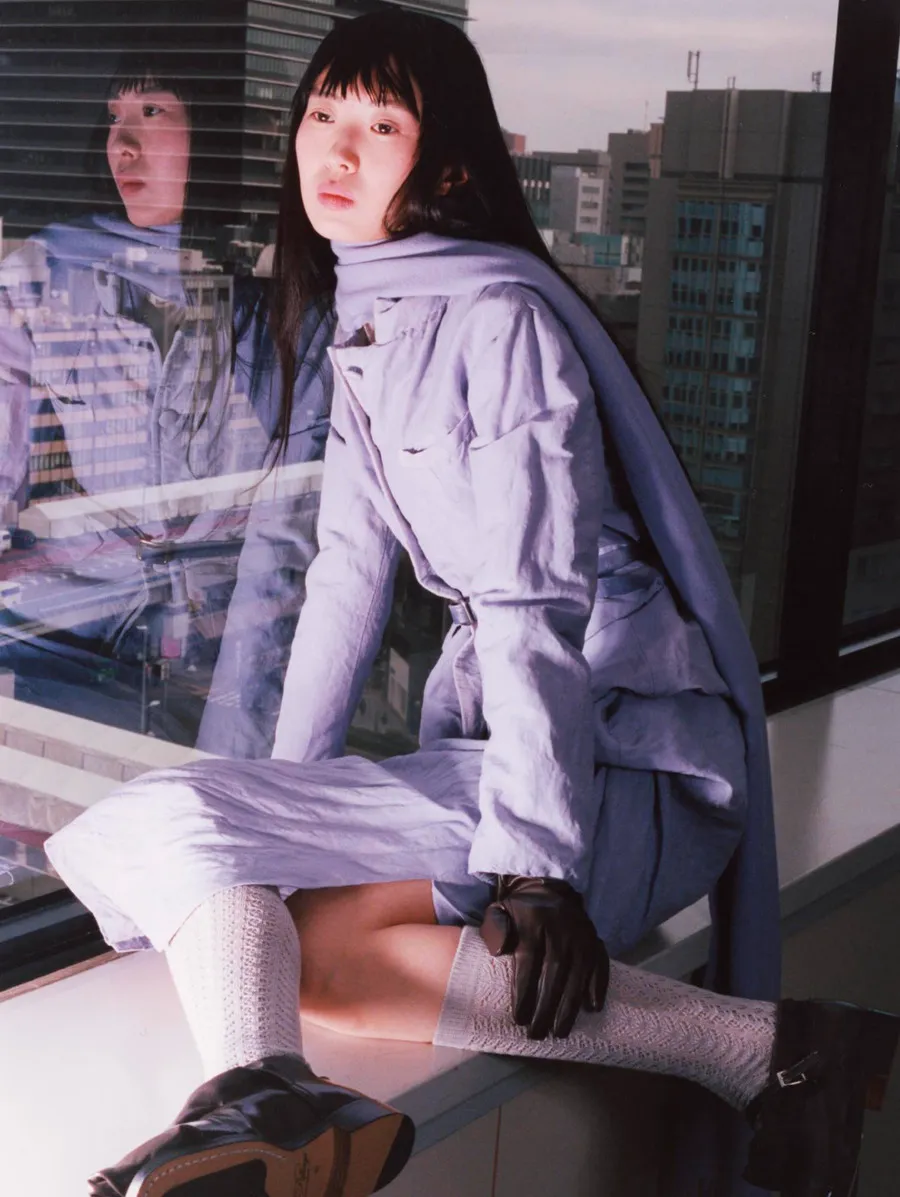
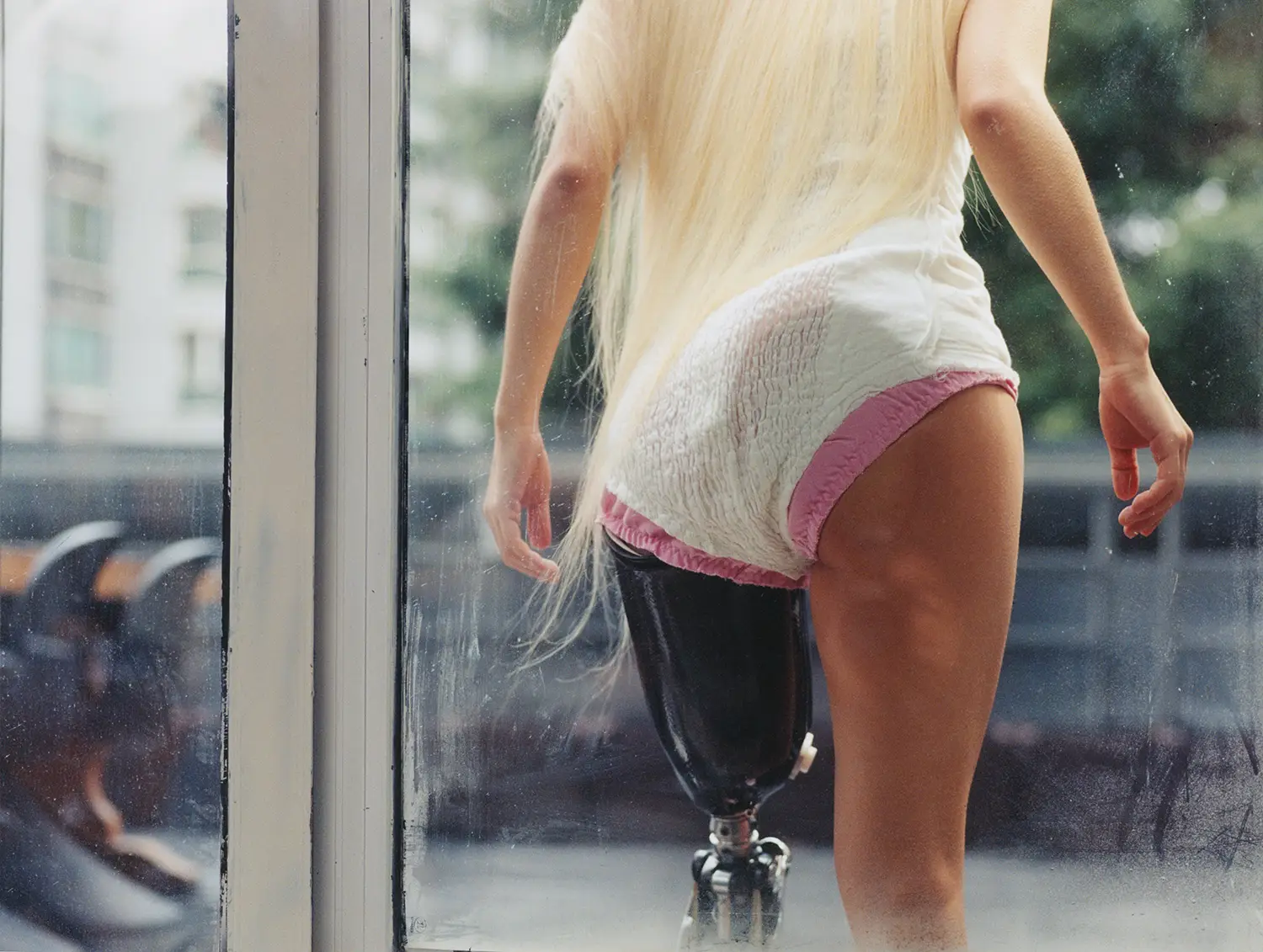
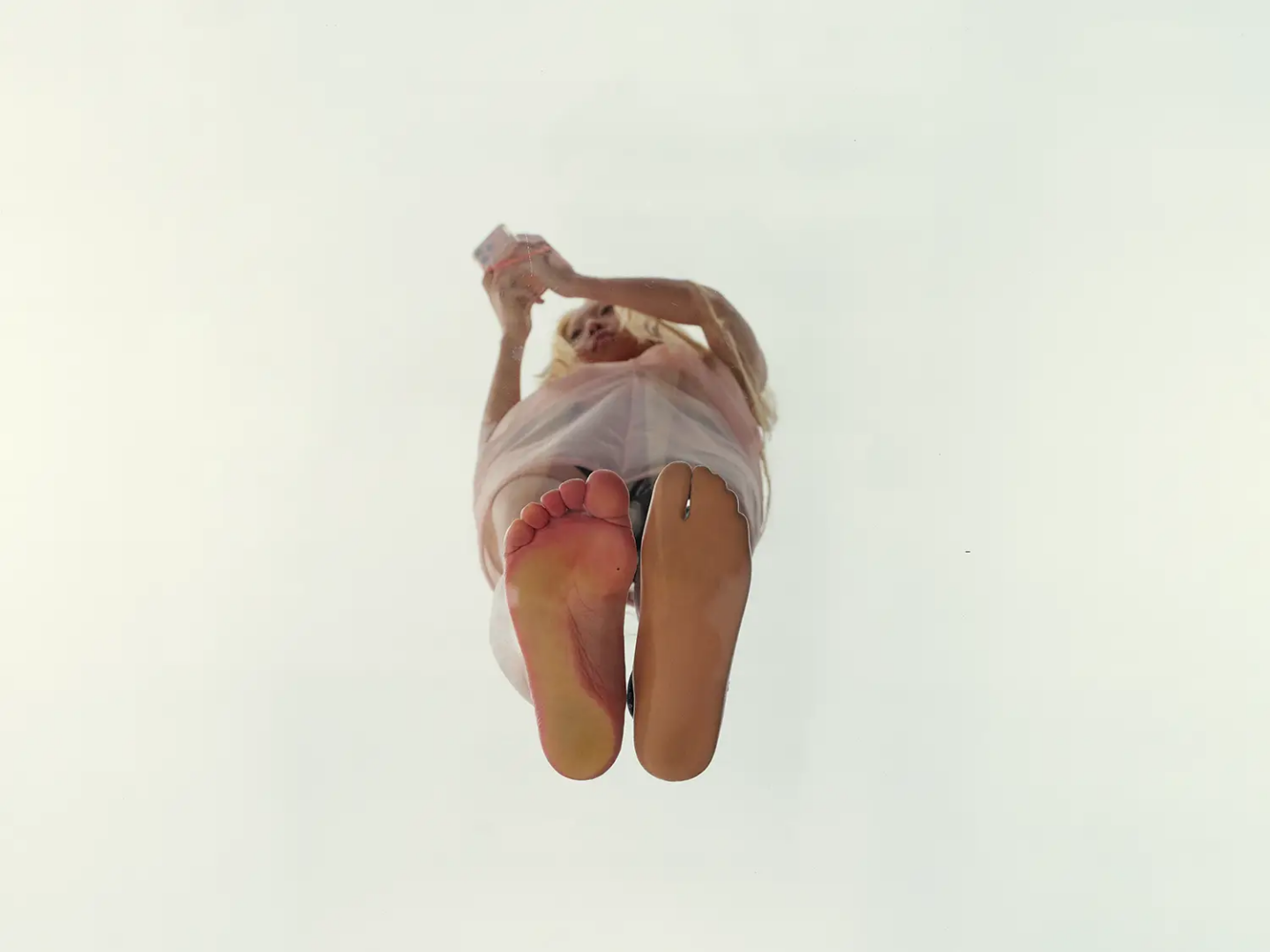
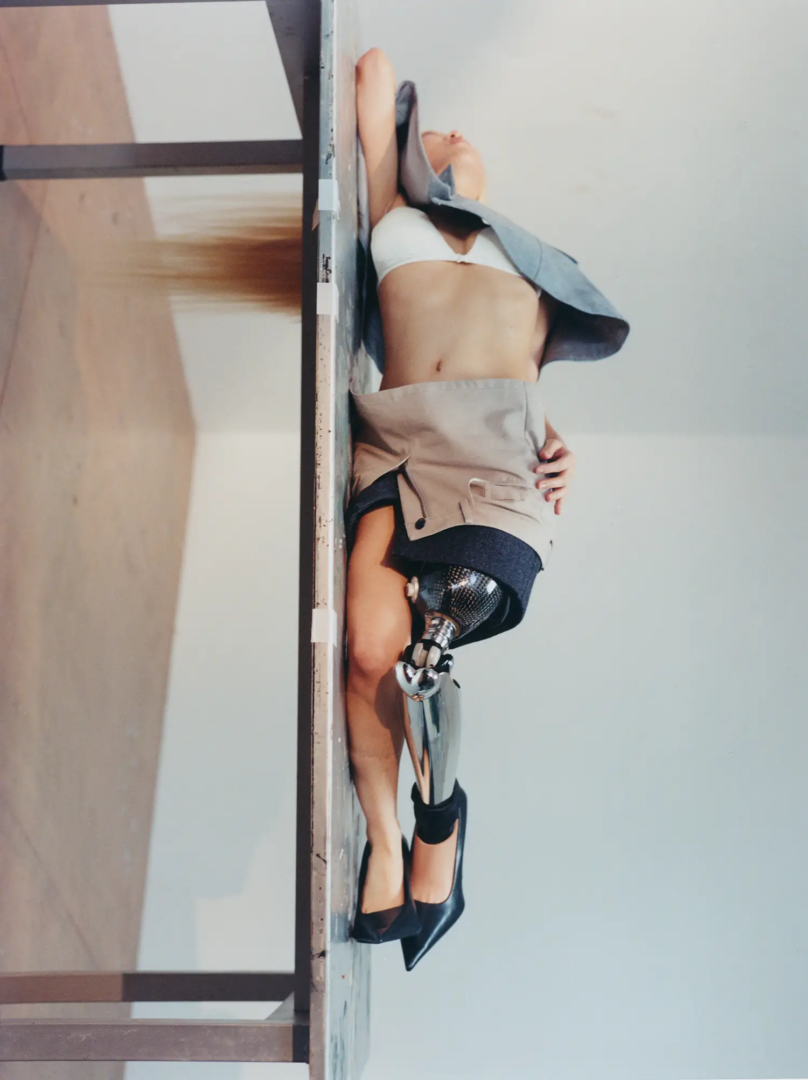
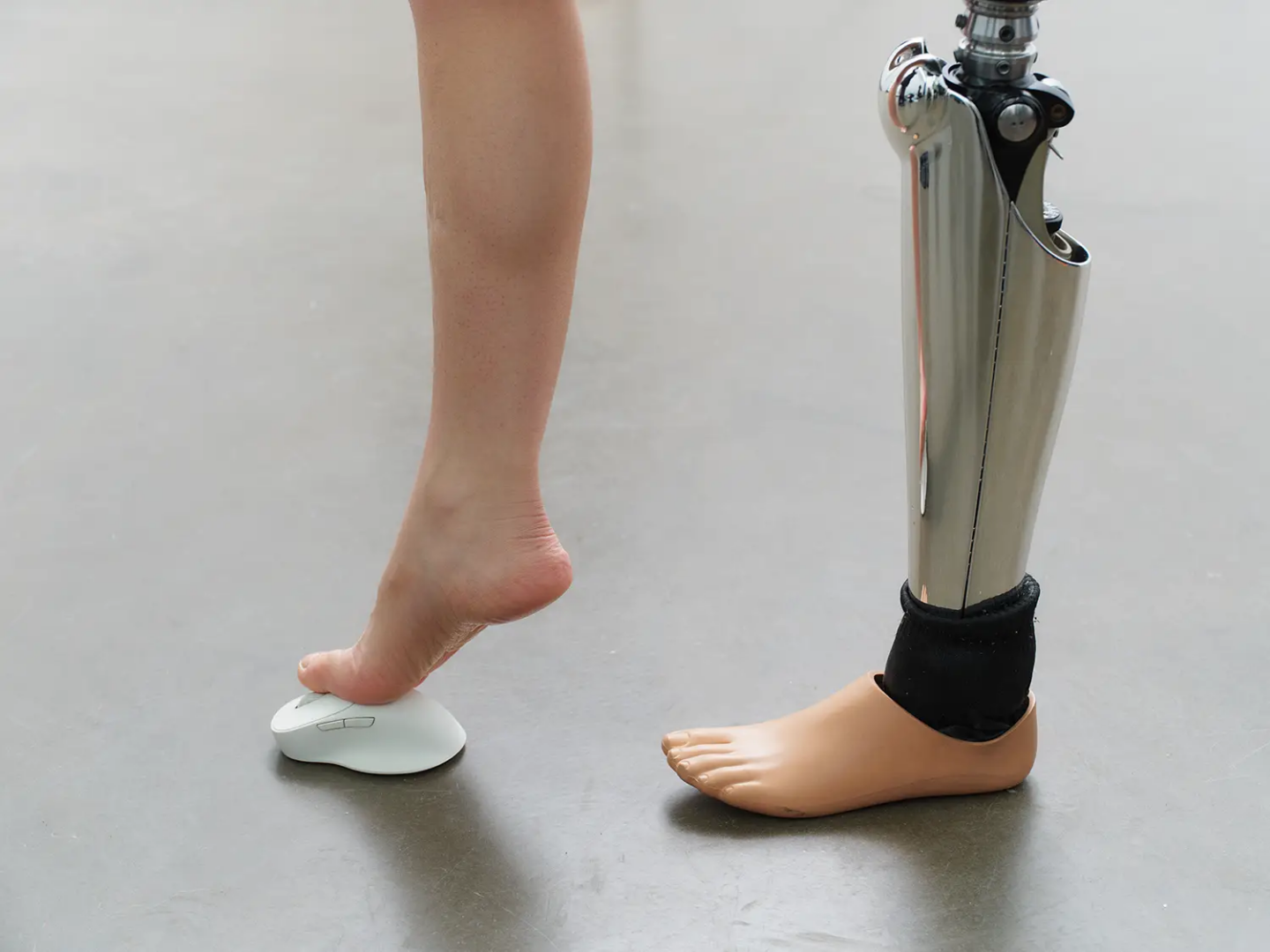
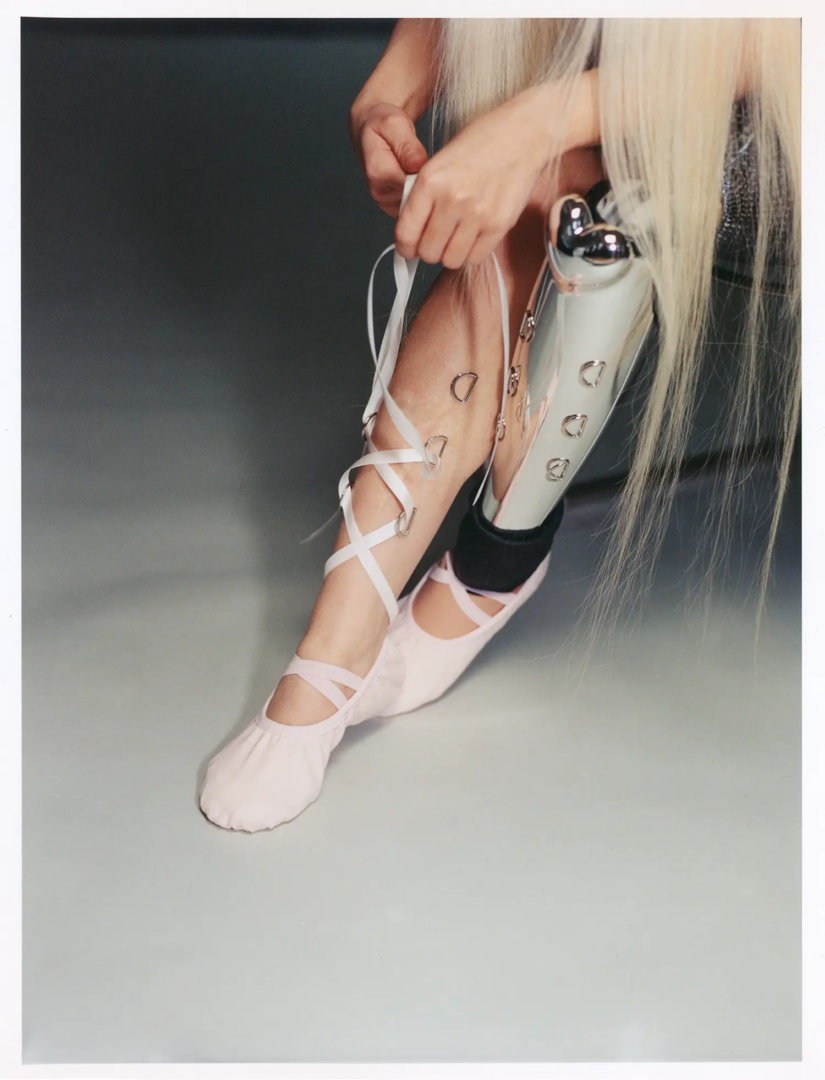
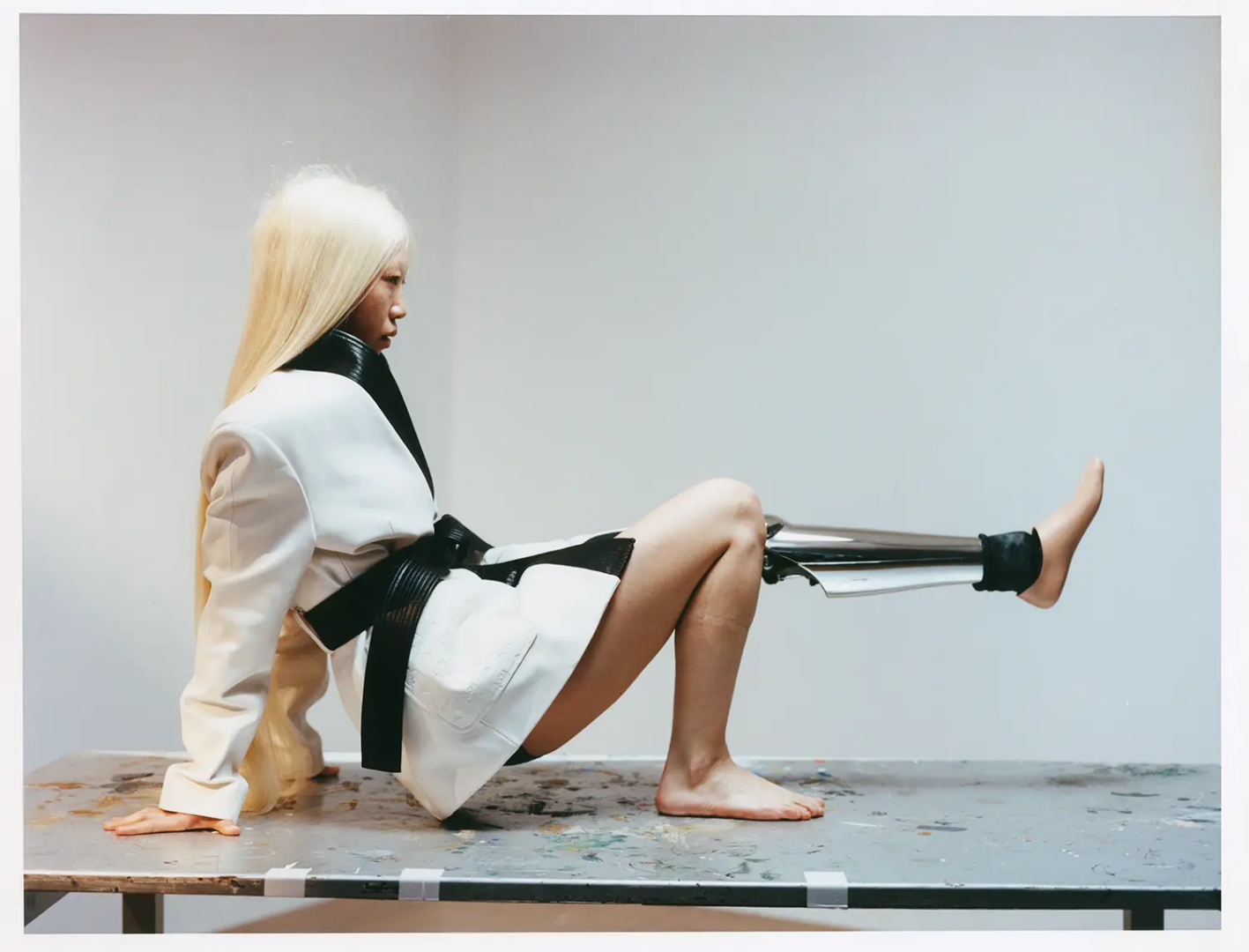
Xiao Yang: In fashion, you learn that a look is a system: every garment, accessory, and silhouette must interact. I view my body the same way. I don’t see the prosthesis just as an extension; it’s a core component of my visual and physical identity. On a shoot, the mechanical leg is part of the overall composition. It’s a hybrid entity, in which the organic body and the engineered hardware collaborate.
In contemporary visual storytelling, we are already moving past the “natural” body. We celebrate structured tailoring, extreme proportions, and artificial materials. My body pushes this further. It shows that human existence – and beauty – can be integrated with industrial design. It shifts the focus from a fragile, purely biological standard to a beyond-human aesthetic.
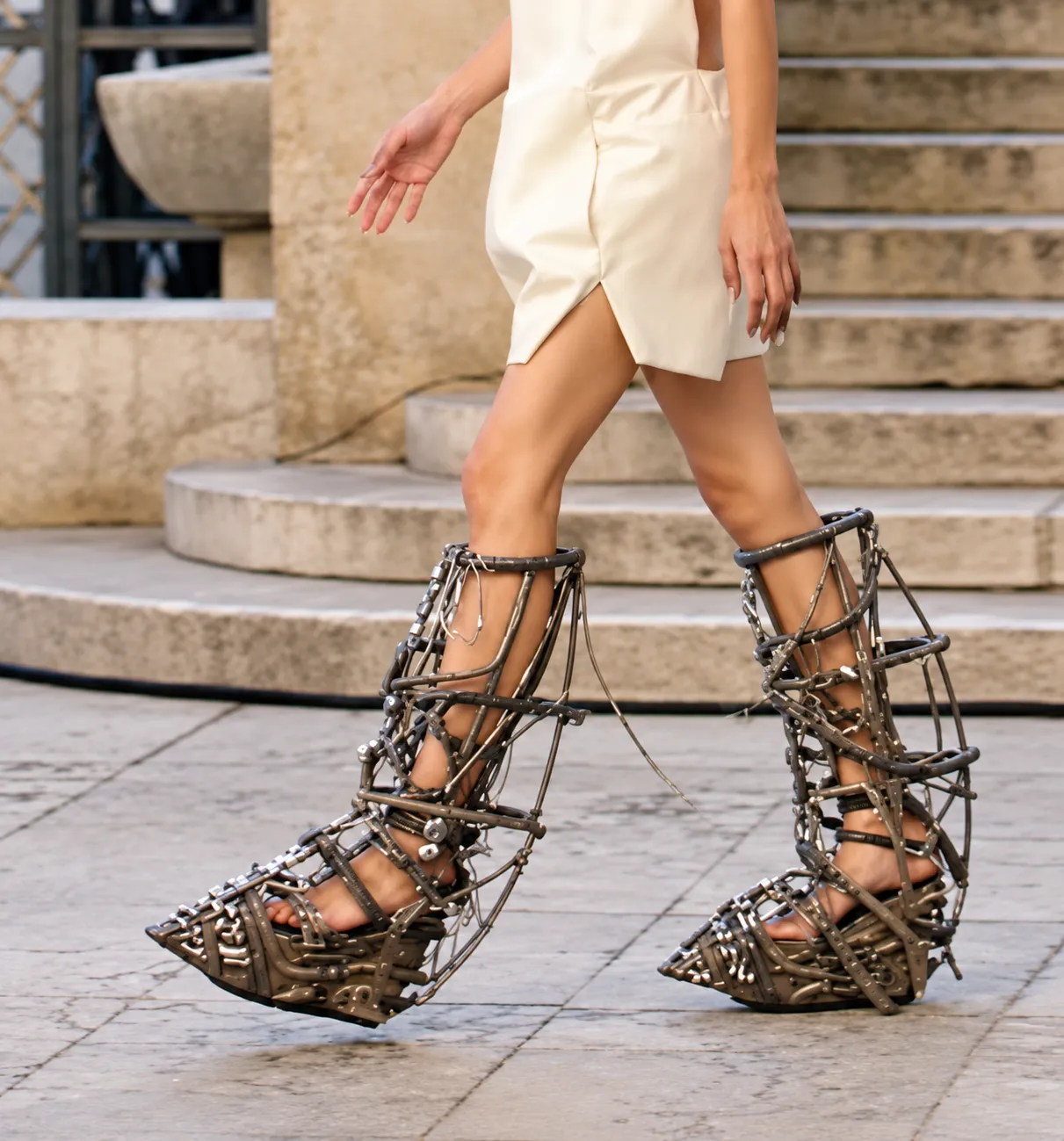
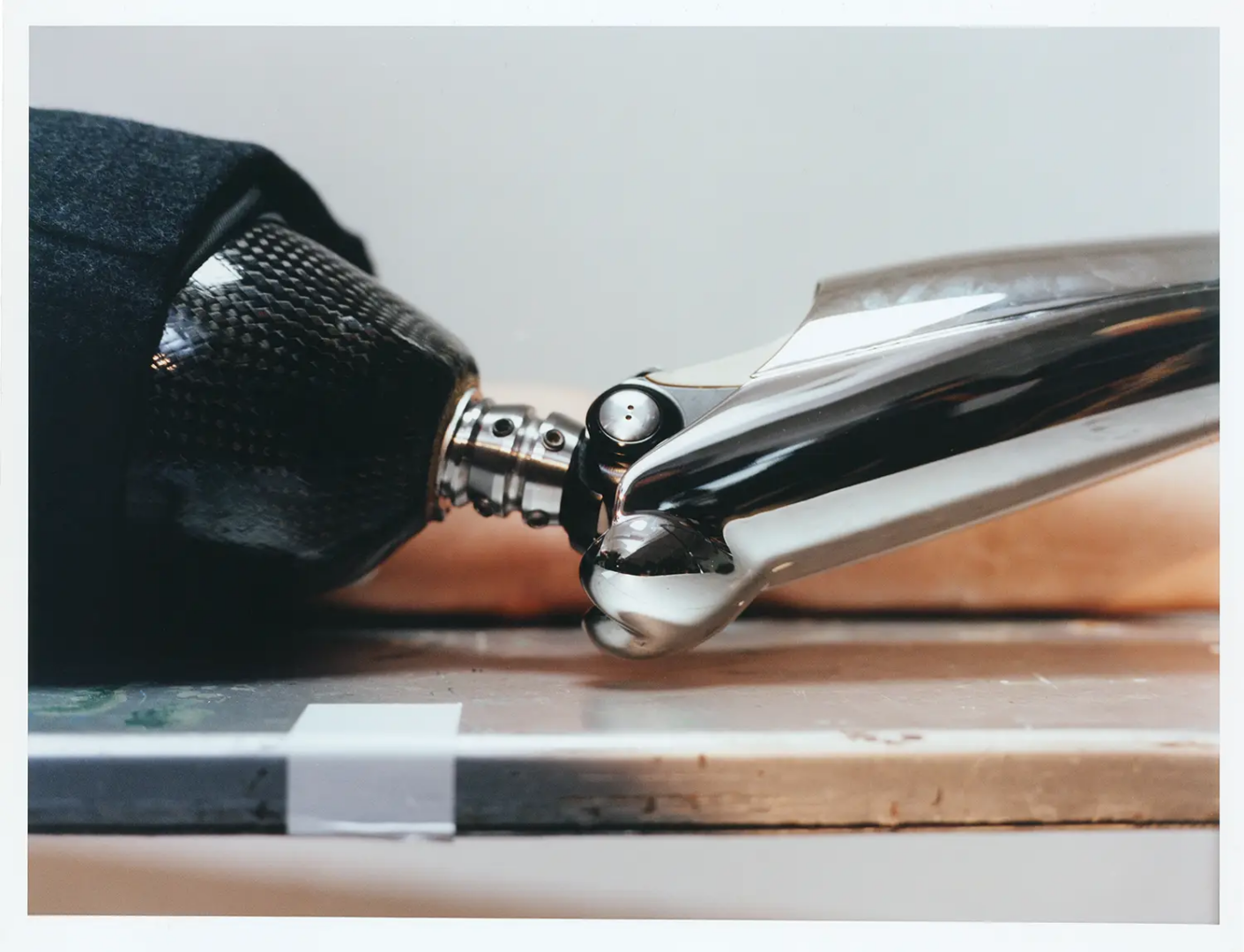
Metal is a premium texture. Visually, we often rely on contrasting materials: soft against hard, matte against gloss. Metal represents a deliberate evolution. While organic body parts are vulnerable, the metal is unyielding. When contrasted with refined fabrics, the coldness of the metal elevates the warmth of the garment, creating a visual tension that is striking.
Living with a prosthetic leg: Xiao Yang Bure on balance, muscle adaptation and viral visibility
SVB: How does your prosthetic leg interact with flesh, bones, muscles, and balance on a daily basis?
Xiao Yang: My muscles have to adjust to the weight and balance of the hardware. The turning point happened when I came of age and gained a stronger sense of autonomy. I chose a new, grey-black mechanical joint. It was sporty, designed more for men, and adapting to it was difficult. In order to visually observe my movements and gauge how well I was adapting, I had to put on shorts for my training sessions – outside of this functional necessity, I never wore shorts. Pacing back and forth in front of the mirror, forced to confront my complete, unvarnished reflection for the sake of practice, something shifted. It stopped feeling external.
When my first photos openly showing the prosthesis went viral overnight, I wasn’t surprised. I foresaw it. I knew that kind of radical release and self-examination would be recognized by the public. I was waiting to recognize myself first. I use the gap between my internal physical sensation and the public’s visual perception as a tool, choosing how much of the mechanism is exposed in any given look.
Getting dressed is no longer just putting on clothes; it’s an act of engineering. The process of attaching the prosthesis and aligning it requires absolute precision. It changes my relationship with time: everything requires more calculation, whether it’s navigating the complex logistics of styling a major seasonal collection shoot, or understanding the exact physical effort required to hold a specific pose in front of the lens.
From medical device to fashion statement: Xiao Yang Bure, custom prosthesis and YVMIN collaboration
SVB: You transform the prosthetic leg into an aesthetic element by decorating it, painting it, playing with it like a fashion accessory.
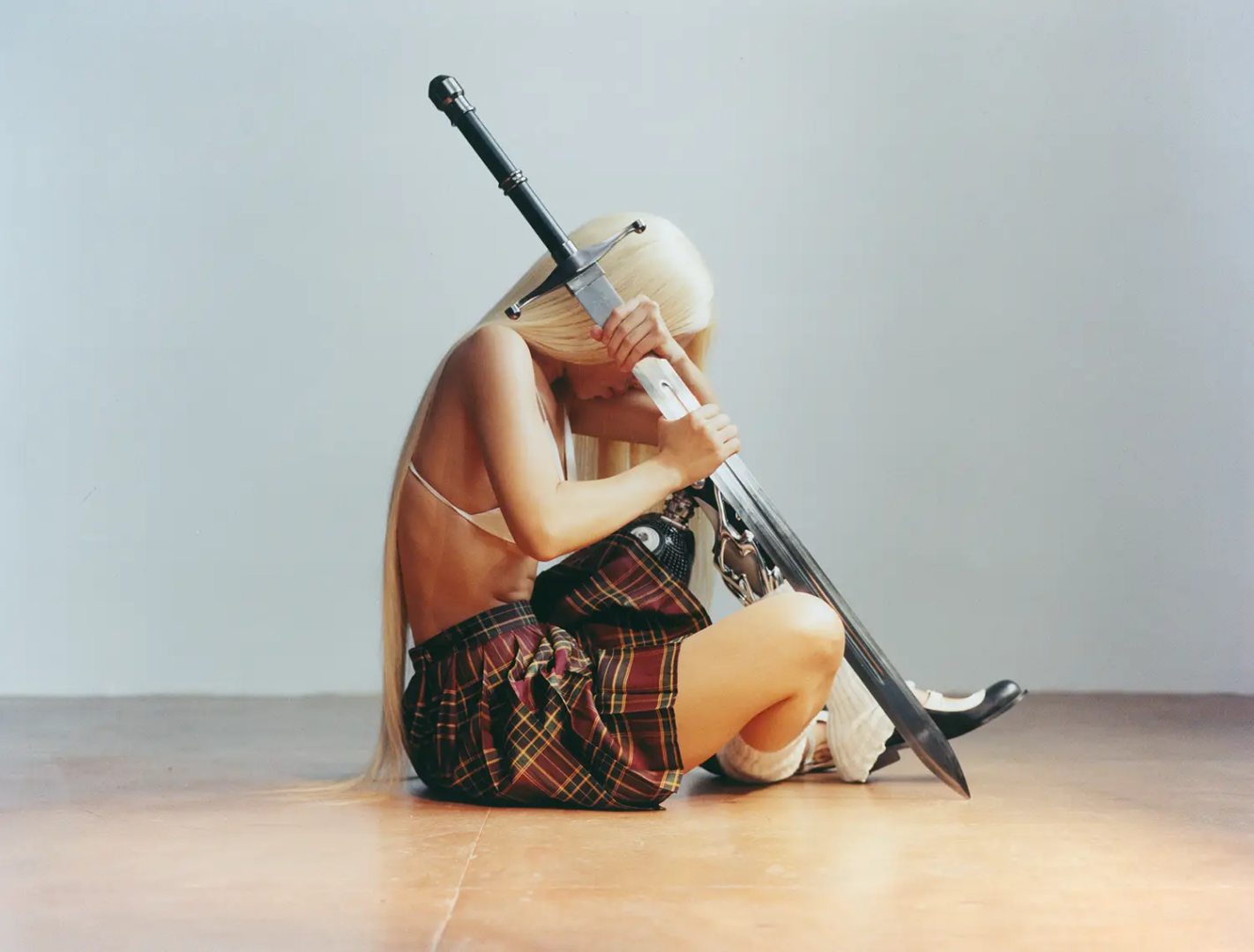
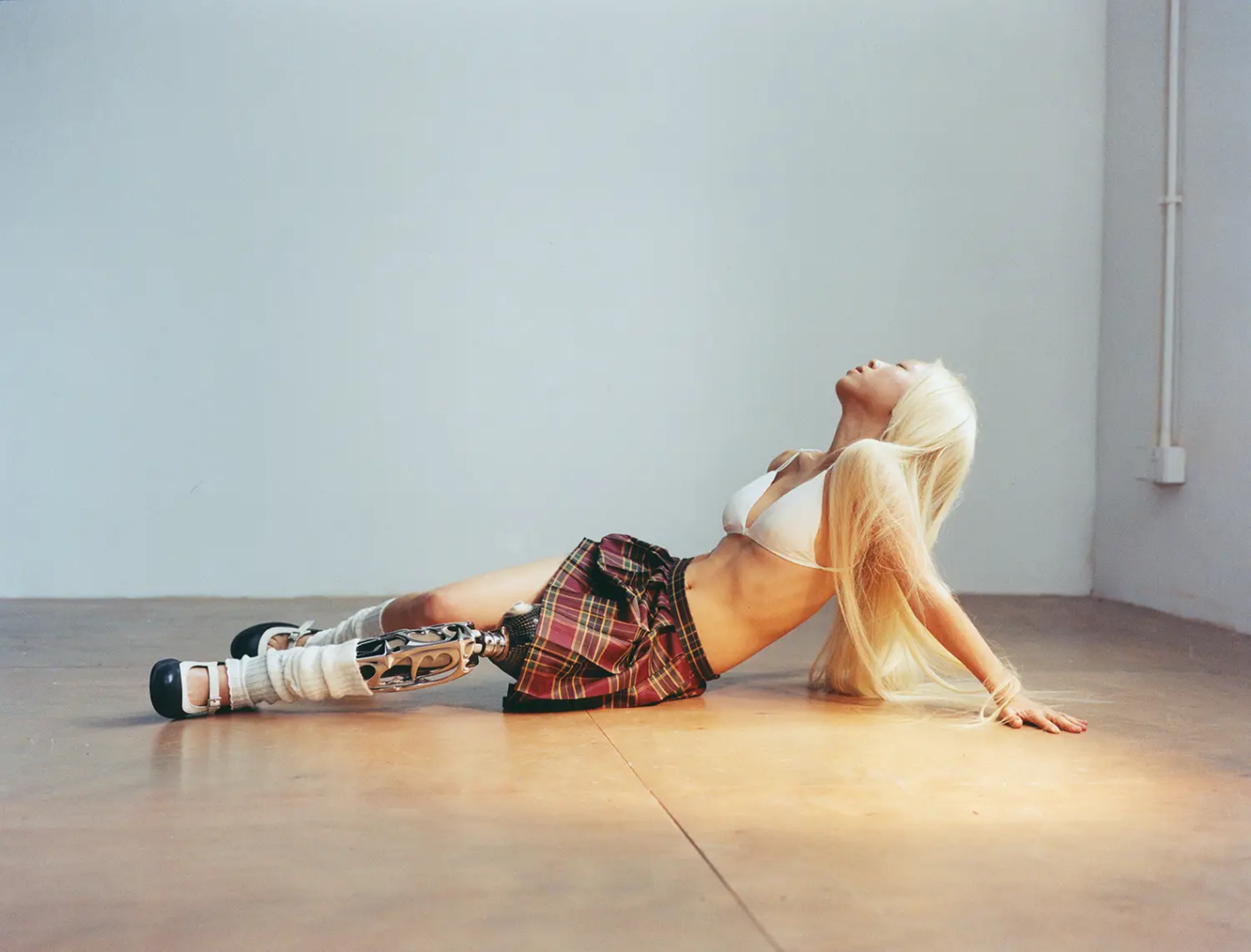
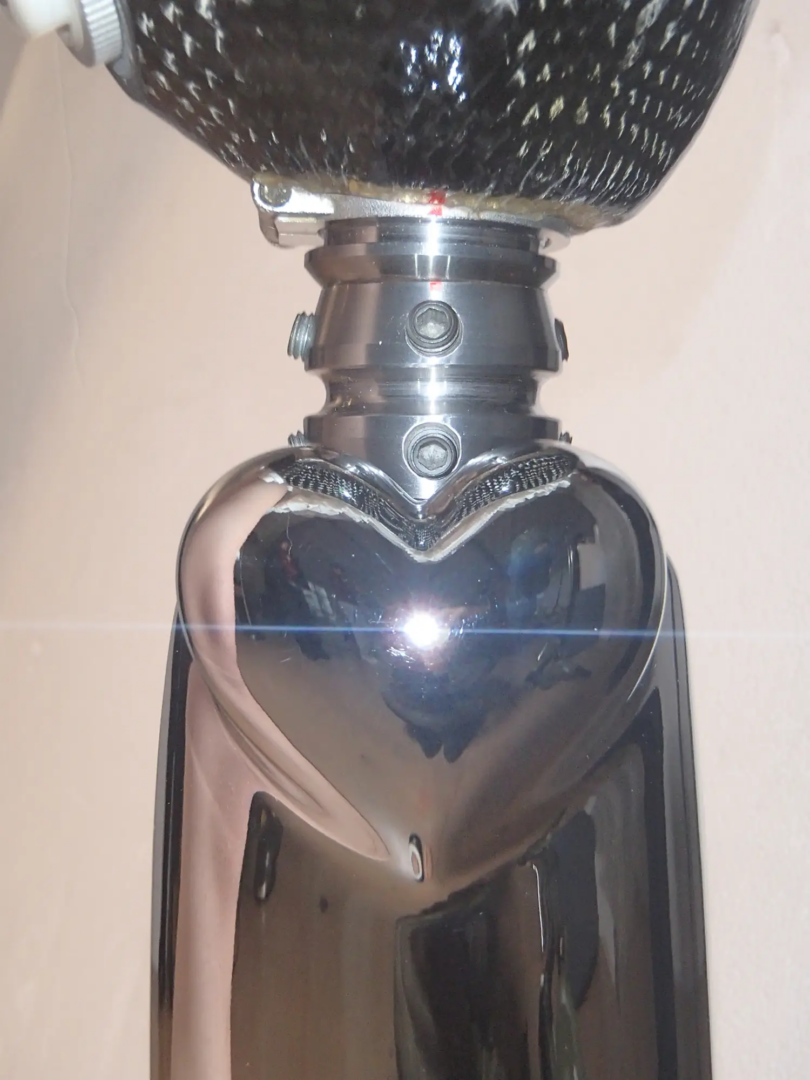
Xiao Yang: I started imagining different looks in my head, mostly just skirts at first. Later, after finishing a rehab training session, I went to a mall and happened to see a skirt. By coincidence, it looked like what I had been imagining. I had an unprecedented urge to wear it. I bought it, put it on, took a photo, and posted it. Tasting that validation gave me the courage to start executing all the styling ideas I had only kept in my head. Because my acceptance level became so high, it led to my collaboration with YVMIN. They designed various aesthetic shells for me, providing new inspiration. That was when it fully shifted from a medical necessity to a dynamic, expressive object.
I remember looking at that raw, grey-black mechanical joint in the mirror during those training sessions in shorts, taking a photo, and thinking, “Isn’t this cool?” And my own aesthetic answered: “Yes.” I redefine beauty by rejecting the idea that it must be entirely organic. High-end visual creation is inherently artificial; it is about constructing an ideal. Beauty can be found in the architecture of a machine just as much as in the curve of a natural limb.
Styling the hybrid body: Xiao Yang Bure, empathy, beauty standards and Chinese futurism
SVB: You expanded your role from model to stylist. This feels like a natural evolution of your exploration of the body.
Xiao Yang: Empathy isn’t just useful in styling; it acts as a sort of superpower that releases itself. Things that project a similar sense of resilience infect me. When I observe someone in their everyday clothes, I might be captivated by the beauty of their eyes or a physical detail. Everyone has their own way of radiating beauty, and everyone holds an infinite space for transformation. Whether they choose to change or not, the process itself – its timeline and its ultimate form – is unknown, and that unknown is fascinating to me.
SVB: How has Chinese culture influenced your relationship with the body, technology, and visibility? How does healthcare function in China when it comes to prosthetics?
Xiao Yang: The fashion and cultural landscape in China is moving fast; there’s an appetite for futurism and visual innovation. Working within the styling industry here, I see firsthand how modern Chinese aesthetics are becoming receptive to tech-integrated bodies, even while traditional views still value bodily integrity. It provides a highly dynamic stage for my visual experiments and constantly pushes the boundaries of what we consider avant-garde.
The infrastructure for functional prosthetics in China is expanding, providing a baseline for mobility. The intersection of advanced technology and high-end aesthetics is still a niche space. Having the resources to not just walk, but to customize the hardware so it aligns with a specific visual identity, is an evolution that requires navigating both medical systems and personal aesthetic investments.
Advanced bionics, access and inequality: Xiao Yang Bure on prosthetics and mechanical aesthetic
SVB: Mechanical innovation is advancing, but access is not equal.
Xiao Yang: Working with fashion every day, I see how advanced bionics function almost exactly like the exclusivity of haute couture. Prosthetics that offer both fluid movement and sleek, engineered designs are expensive. There is a real risk of creating a divide where premium aesthetics and optimal function are accessible only to a few. True inclusivity will only happen when highly engineered prosthetics are no longer treated as luxury items, but as standard options.
I foresee a future of hyper-visibility and sharp contrast. My concern is the visual of the mechanical body being co-opted as a seasonal trend in fashion. We must ensure that when we push this aesthetic into the mainstream, we are honoring the actual physical and psychological realities of the people who live in these bodies every day.
Sara van Bussel
TEAM photography Ziyu Wang, styling Wendong Lyudd, hair Keweitao, make up Olly, set design Jjjjhow, production Wensong, styling assistant Jojo Zeng and Novakyeung