HempAge: The Evolution of Textile Hemp from Ceaușescu’s Romania to Germany
From Romania to Germany, Robert Hertel followed the last plants able to process hemp fiber, turning an industrial legacy into a European textile project
Romania And The Memory Of Europe’s Textile Hemp
Throughout the second half of the twentieth century, Romania stood among Europe’s leading centers for industrial hemp. By the late Eighties, cultivated land exceeded fifty thousand hectares, feeding a supply chain that spanned cultivation, retting, scutching, spinning, weaving, and garment-making. Alongside the plants, specialized research institutes worked on variety improvement and processing technology. Textile hemp supplied several markets: clothing, technical fabrics, heavy canvas, and rope, an industrial network built up over decades.
Each stage was designed around the one that followed. The timing of the harvest shaped retting, retting determined the quality of scutching, and fiber preparation shaped spinning. Farmers, technicians, and plant directors shared a body of knowledge developed on the production lines.
After 1989, this supply chain broke down. The privatization of state enterprises, the loss of Eastern European markets, and the restructuring of the industry led to the closure of most plants. Within a few years, textile hemp nearly disappeared from Romania’s manufacturing landscape. Technicians, maintenance staff, production directors, and specialized operators left the sector, and many lines were dismantled and sold as scrap.
The loss involved industrial knowledge. Processing hemp requires settings that cannot be standardized: they change according to fiber length, degree of retting, humidity, and the yarn count to be achieved.
Hempage: Searching For The Fiber Europe Had Lost
Robert Hertel arrived in Romania in the early Nineties. After experience in Guatemala, Nepal, and India, he was searching for a natural fiber with characteristics different from cotton:
«In Romania, I saw an industrial hemp production for the first time. From that moment, this became my life.»
Mr. Hertel understood that the value of that supply chain lay not only in the plants but in the people who ran them. Yet a few years later, everything changed:
«Factories with thousands of employees were closing one after another. Workers left on Friday afternoon, and when they came back on Monday morning, the machinery was gone. It had been sold for its scrap metal value.»
The closure of the plants cut off the transmission of expertise built up over generations. Each factory had developed its own procedures for adapting processing to the fiber available. Many of those settings had never been formally documented:
«Some qualities Romania achieved back then still haven’t been matched elsewhere. That knowledge was lost. It was a kind of Library of Alexandria for hemp.»
Mr. Hertel then set out to rebuild an industrial hemp culture in his home country, Germany. In 1999, he founded HempAge, a company specializing in the design and production of clothing made from hemp fiber, at a time when the material had nearly vanished from the European market. Mr. Hertel’s goal is to recover the technical knowledge he observed over his years in Romanian factories. He aims to show that textile hemp can compete with other natural fibers in contemporary clothing as well.
Hemp Fiber Beyond Genetics
In recent years, the revival of hemp in Europe has centered on variety improvement. New cultivars, higher yields, and adaptation to different climates make up a share of agronomic research. For Mr. Hertel, however, the quality of hemp fiber is determined before genetics comes into play. It continues to change up to the point when the raw material enters the factory:
«Genetics plays a limited role. Planting density and harvest timing matter more. If you harvest too late, you get stiffer fibers. If you harvest earlier, the fiber stays finer and more flexible.»
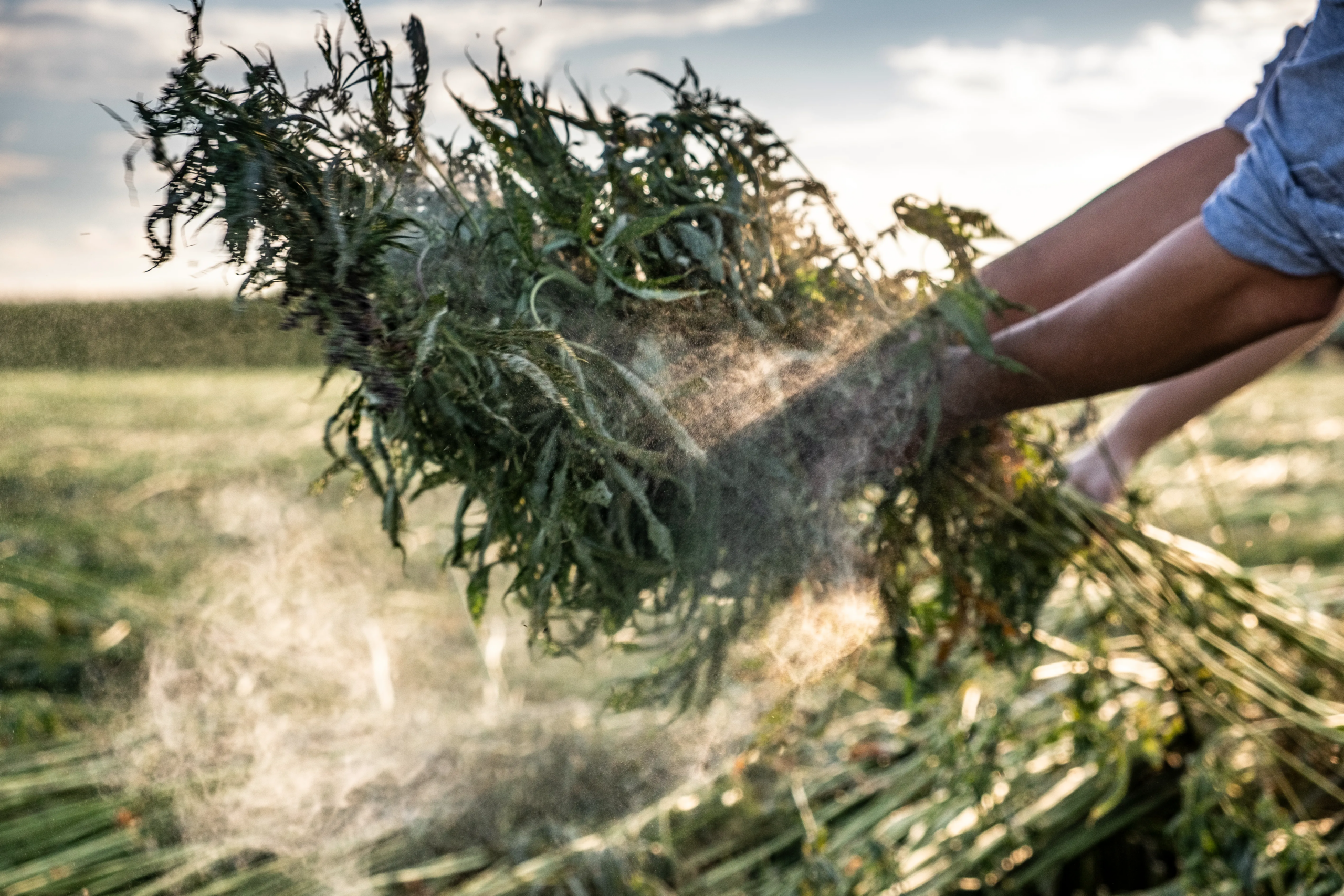
Hemp fiber intended for clothing is harvested before the seed fully matures. At this stage, the bast fibers show less lignification and retain elasticity and fineness, qualities essential for producing fine yarns. Delaying the harvest increases the amount of biomass available. It instead changes the fiber’s structure, making it better suited to technical applications than to textile production.
Planting density also changes how the plant grows. Dense plantings encourage long, sparsely branched stalks, yielding continuous, more uniform fibers. Lower density produces sturdier stalks, but also greater variability in raw material quality. Hemp fiber is the result of a balance between agronomic practices, harvest timing, and environmental conditions, not of the variety alone.
The next stage is retting, the biological process that separates the fiber bundles from the hurd through the action of moisture and microorganisms. Insufficient retting makes scutching difficult; retting that goes on too long weakens the fiber and reduces its strength. There is no fixed time that works for every harvest. Each season calls for different judgment, tied to climate, humidity, and the condition of the plant.
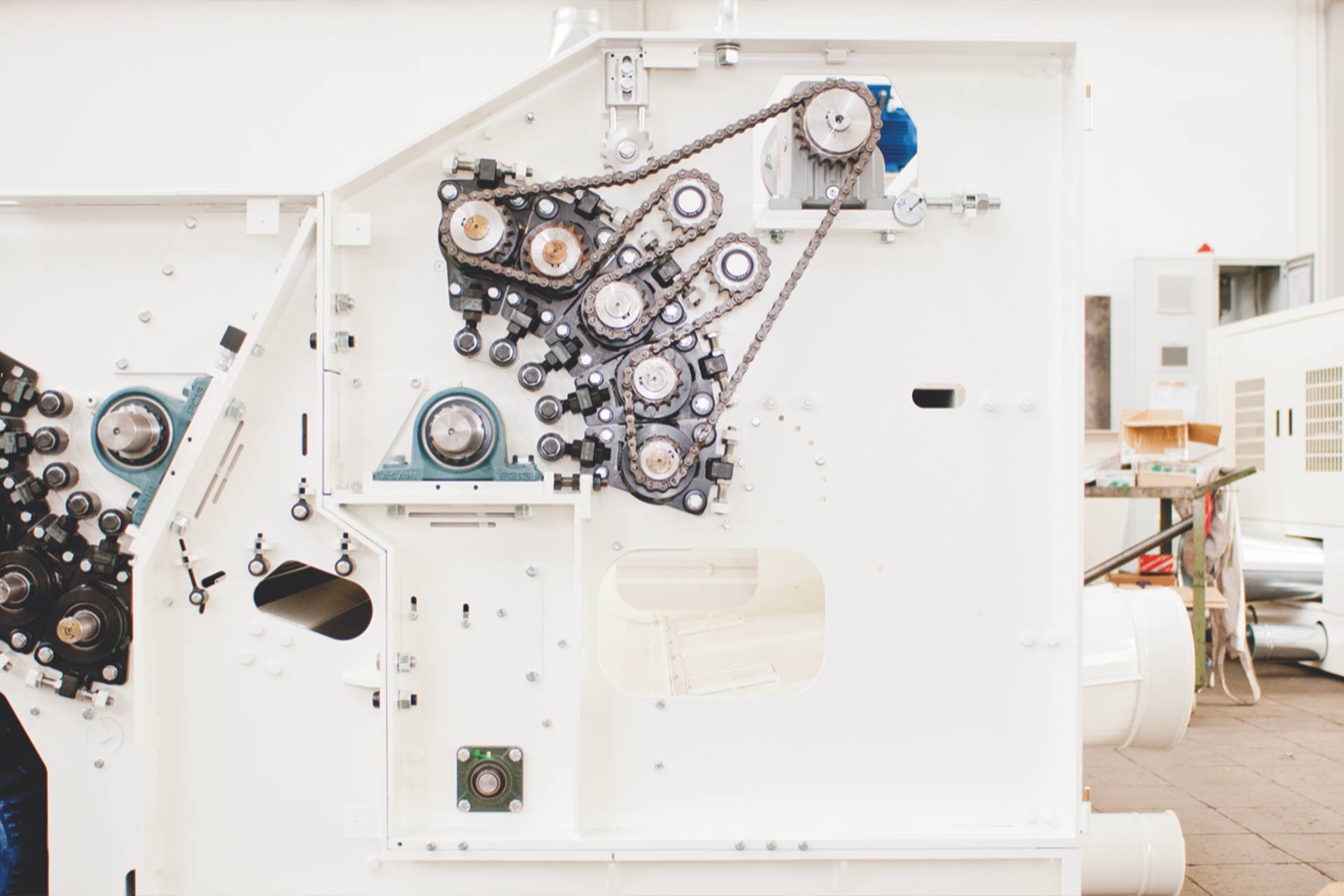
Scutching completes this process. Through a series of rollers, beaters, and combs, the woody matter is removed and the fiber is progressively cleaned and aligned. This is the stage where it is decided whether to preserve the original length of the fiber bundles or break them. Much of the yarn’s quality depends on this step.
The Fiber Changes From One Machine To The Next
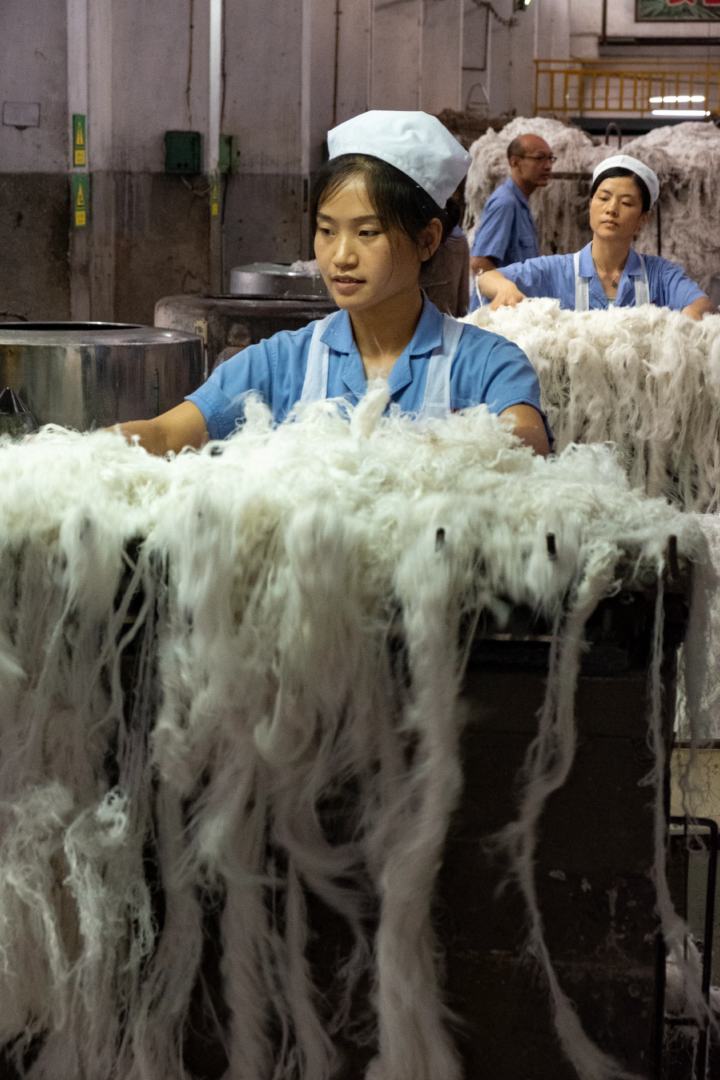
When hemp fiber enters the plant, the work is far from finished. The qualities achieved in the field can be preserved or lost within a few processing steps. This, according to Mr. Hertel, is where the value of the Romanian industry was concentrated.
The machines used for hemp did not replicate those designed for cotton. They processed fiber bundles that were longer, coarser, and more irregular, which had to be opened up gradually without losing continuity. Each adjustment changed how the material behaved in the steps that followed:
«We started changing settings, passes, and speeds. Within a few months, we were getting finer yarns.»
Today, HempAge’s production starts from long hemp fiber, selected according to the fabric’s intended use. Depending on the properties required, the hemp is spun on its own or blended with organic cotton, linen, or wool, producing fabrics suited to both lightweight clothing and more structured garments. Production includes plain weaves, twills, and denim, as well as jersey and knitwear made with yarns of different counts.
Hemp fiber does not pass through a sequence of independent machines. Each department prepares the work for the one that follows. Excessive tension can shorten the fiber bundles; overly aggressive combing increases waste; a change in roller speed alters the evenness of the sliver destined for spinning.

Sustainability In The Textile Industry: An Industrial Question
Mr. Hertel points out that sustainability in the textile industry cannot be measured starting from the field alone. Often, fiber grown in Europe has to be shipped elsewhere for processing, or it fails to meet the market’s quality standards. This reveals the fragility of a supply chain that remains incomplete.
Romania’s crisis shows that cultivation can survive even after manufacturing disappears. The reverse is more difficult. Without scutching plants, preparation lines, spinning mills, and specialized weaving, raw material loses much of its added value. This is why Mr. Hertel chose to move part of production to China, in search of a production continuity that had broken down in Europe:
«In Europe, we had lost almost everything. In China, by contrast, that knowledge had kept evolving. If we wanted to produce certain fabrics, we had to work where the expertise still existed.»
Over the past thirty years, China has kept an industrial infrastructure dedicated to hemp active, investing in plant modernization and training specialized technicians. Europe, over the same period, has concentrated most of its investment on reviving cultivation, leaving the rebuilding of the supply chain’s intermediate stages in the background.
Mr. Hertel believes that rebuilding a European textile hemp supply chain takes more than growing the crop. It requires a return to spinning, weaving, and turning it into fabric, with the same production continuity that once made Romania one of the world’s leading centers for this material.
Debora Vitulano