LVMH, Chanel – why are the big groups buying up Italian artisans?
It may look like a new form of colonization – but there are positive outcomes, and protections: a reflection on the Italian manufacturing district
The Italian industrial district and materials – LVMH Métiers d’art and Chanel
The local industrial district. If a young person enters the world of work and doesn’t feel comfortable in a company – for whatever reason – within the context of an industrial district, they can find an alternative at the company next door, perhaps a competitor, continuing their formative path, finding other points of view, other environments, regenerating and improving themselves. A young person who doesn’t feel at ease in one structure can go on doing what they’re learning to do at the plant next door, finding better comfort in contexts that are, perhaps, simply organized differently.
LVMH Métiers d’art is a holding company within the LVMH group that gathers shareholdings in suppliers to the group’s houses. Italian tanneries as well as Japanese spinning mills. Leather, metal and fabric. The creation of the garment or the bag remains with the fashion house – LVMH Métiers d’art takes care of what comes before. It is not an investment fund, it does not accept outside investors. LVMH Métiers d’Art takes majority stakes, and at other times minority stakes. The founder must retain the entrepreneurial mindset, forward-looking. We can also operate through exploratory partnerships, depending on the state of the art within the company.
The comparison with Chanel is legitimate – after the recent acquisitions of Italian manufacturers: Leo France, Mantero, Vimar 1991, these are specific names, these are publicly announced assets. Suppliers that have a key product for one or more companies. The entry of the groups into the shareholding structures aims to bring about tomorrow what you are doing today. With fewer chemical additives, with reduced water consumption. Sustainable processes require costly investments. Human resources have to learn the new technology – that too has a cost. The purpose is to contribute to the cohesion of the community in order to attract new generations of workers and give them a path within their district, a desire to stay there. To attract new generations you have to show that you work in a modern way.

The narrative of the master artisan and the young artisan’s path
In Italy, the industrial fabric is active, it doesn’t need to be preserved: it is operating at full strength. The district feeds the production system. You need a component, or rather the phone – you’re in Italy: in ten minutes you’ve found it.
Talking about the master artisan artist, about the dust and the magic of handmade work is not enough. Artificial intelligence, machines, career – no longer in the poetic and romantic manner of the workshop – or, at the opposite extreme: to spark in young people who grew up in the provinces the desire to become master artisans, attempts are made to reach them through digital communication, through influencers. A short circuit.
A young artisan doesn’t want to stay in the same place, at home, forever. From Florence he wants to go to Singapore, from Singapore to Japan, from Japan to the United States and only then, come back to France or Italy. A group’s network in different places around the world allows for cultural cross-contamination between manufacturing districts with different characteristics. Another lever: economic compensation. When a group enters a company, it is predictable that the average salary will rise for everyone.
In Italy there’s a problem with the word “fashion.” Today, even more than before, it causes irritation, it brings to mind the superfluous. If you talk about textiles, people understand. If you use the word fashion, instead, there’s distance. Even among politicians.
There are family businesses that still haven’t had access to new technologies. New ways of working, new operating systems, plant and center configuration. Some companies prefer to close their doors and say no. Within the same district, artisans and entrepreneurs didn’t speak to each other, didn’t even greet each other. It seemed like being back in the days of the Guelphs and Ghibellines. Now they sit down at the table, they talk: I did this, what did you do? We’re cousins, part of the same family. The tanning recipe is the industrial secret. Carrying out joint tests and experiments used to be unthinkable – by working as a system, the financial resources for experimental testing are greater.
Setchu and the crocodile in Zambia
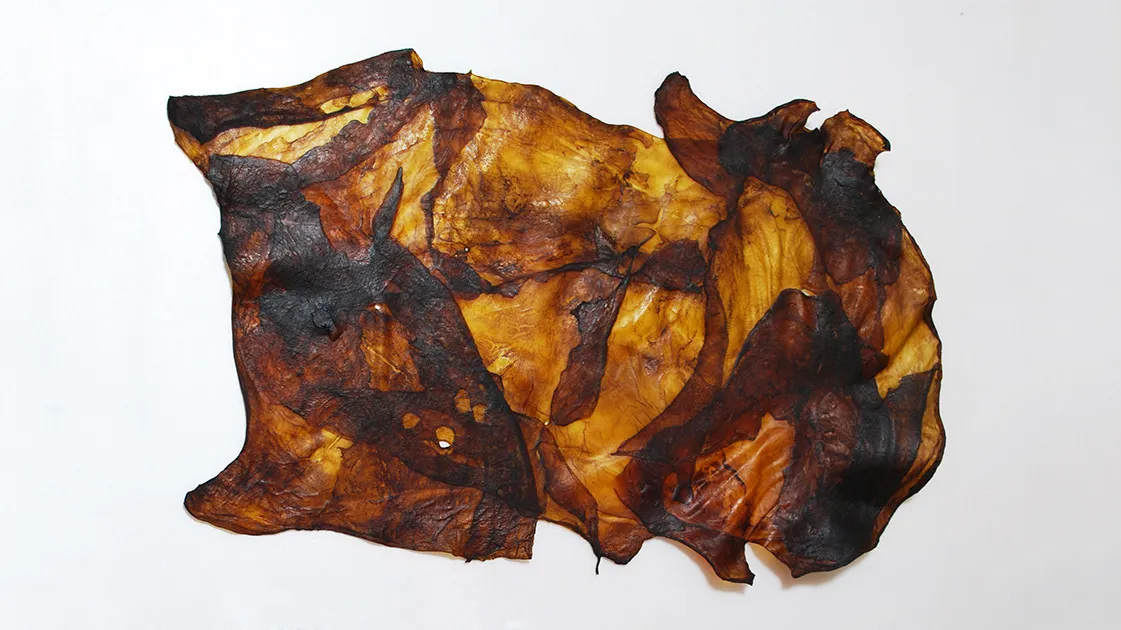
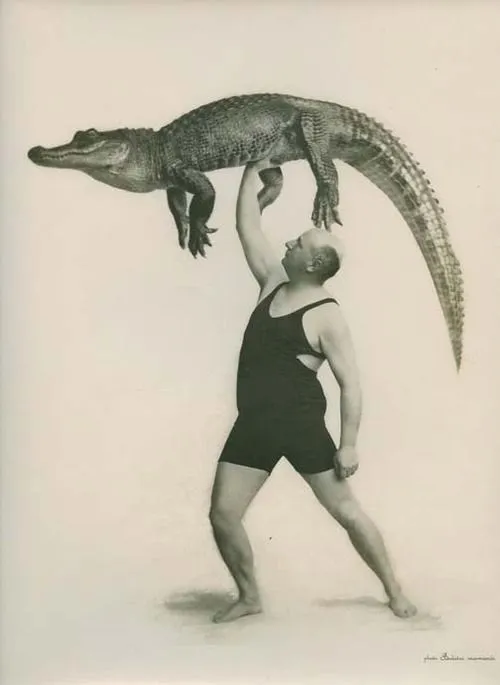
We understand welfare in terms of the relationship between people, nature and animals. The care of animals. Veterinarians must receive funding to carry out research into the physiology – and therefore the possible pathology – of cattle. Crocodile farms. In Zambia as in Australia, LVMH Métiers d’art works to preserve a reserve of land dedicated to Aboriginal peoples: teaching them new working techniques, strengthening their factories. Setchu visited the district in Zimbabwe: he wanted everyone there to help him in creating the collection. Vetiver was planted for the perfume chain, and from the vetiver leaves skirts and woven hats were made for his collection and for his show. Setchu was able to choose the crocodile that had been rejected by luxury brands for minor defects.
An emerging brand. Setchu is Japanese, lives in Milan because he produces with materials that he can only find in Italy, but with a Japanese point of view. The crocodile was an endangered species. The veterinary field dedicated to crocodiles began looking after their wellbeing. Thanks to the farms, research has progressed and has led to the strongest animals being reintroduced into the wild. The species is now out of danger. Cortisol is measured in all the animals every week. A great deal was known about dogs and cats, but exotic animals had no scientific literature.

Experiments and investments in the Tuscan tannery, the Santa Croce district
Some data show that 25% of the world’s tanning industry is in Tuscany. To manage this volume of processing, Tuscany has to import 98% of the leather it works on. No one wants more intensive cattle farms in Italy. There are systems whereby the wood used to build the barn is insecticidal. Bonus for every woman under thirty.
CO2 and nitrogen emissions from the plant are counted. The calculation methodology needs to be looked into more closely. Whether the emission is calculated per unit for the tannery or for the food supply chain. The cattle are raised with low stress levels. The meat for the food supply chain is higher quality and sold at the area’s retail outlets. This helps define the distinctiveness of a geographic district – beyond manufacturing, at the gastronomic level too.
In Italy, Santa Croce is one of the only places in the world with a treatment plant connected to more than two hundred tanneries. The costs of this treatment plant are shared and split evenly among the companies. There is nowhere else in the world that offers this kind of service. Relocating a district like this doesn’t seem feasible.
Asian companies are moving into Europe. They buy up sections of the supply chain, from the farms to the leather processors, the tanning, and so on. They buy, dismantle, take it away and reassemble it. Back to the difference with France, where the industrial heritage is smaller but better protected. We take it for granted here, there’s no dialogue with politics on these issues.
Carlo Mazzoni
The French Métiers d’Art – what are they?
There is a list of 281 Métiers d’Art recognized by the French Ministry of Culture. A list that can be consulted on the ministry’s own website. A list of professions – from cabinetmaker to embroiderer, weaver, puppet maker, hardstone engraver – and likewise in other fields, gastronomy: the artistic ice-cream maker, the chocolatier, the maker of aged cheese.
An artisan, or an artisanal manufacturer, must register with the Registre des Métiers through the French Chamber of Commerce, and as part of that registration, indicate that their trade is one of the Métiers d’Art. Once registered, the artisan must pass a verification process in order to obtain the title of Artisan d’Art. They can then take part in further recognition and verification processes that will further define its value.
Furthermore, in France, around 1,500 manufacturing companies are recognized as Entreprises du Patrimoine Vivant – EPV. It is not necessary for a company to belong to one of the 281 Métiers d’Art in order to be an EPV.
Who are the Living National Treasures (Ningen Kokuho) in Japan?
In Japan, some artisans are recognized as Living National Treasures (Ningen Kokuho) – a title granted under a 1950 law for the protection of cultural properties. A rare title, an honor – today there are about 120 living Ningen Kokuho.
The title requires recognized artisans to teach and pass on their technique to new generations – also because Ningen Kokuho recognition is granted to masters capable of rare, complex work – such as urushi lacquering, Bizen ceramics. The title is always conferred by the Ministry, which grants an annual subsidy of about 2 million yen (about 10 thousand euros).
The Historic Italian Workshops – the form of recognition for craftsmanship
In Italy, there is recognition as a Bottega Storica [Historic Workshop] (with at least 50 years of activity); the title of Maestro Artigiano [Master Artisan] (regional recognition); and the Maestro del Lavoro [Master of Labor] recognized by the President of the Republic, for which the Quirinale’s website lists the Masters without reference to the specific skill for which such Mastery is recognized.