Eighty million bacteria per kiss: saliva, and everything it does when nobody’s watching
Saliva digests, protects, transmits, ferments and cleans centuries-old paintings — a biological interface running on distributed chemistry that requires no central command
Inside the mouth, saliva goes unnoticed. The moment it crosses the lips its status changes. The same fluid turns up in an insult or in a kiss. It depends where it lands.
It is a fluid through which the nervous and immune systems make contact with the environment. It forms below the threshold of attention. Molecules do most of the work: amylase, which breaks down starch; lipases, which act on fats; lysozyme, an antimicrobial; and mucins, the glycoproteins that give saliva its viscosity. It has a hand in taste, in defense against microbes, in intimacy, and in the breakdown of matter. Its composition shifts depending on which of these roles is running.
What follows tracks this fluid through physiology, taste, sexuality, ritual, and the restoration of paintings — five contexts in which the substance is put to different use. Saliva is a form of bodily intelligence: tissues and fluids that generate complex responses through evolved, distributed biochemical regulation, outside centralized neural control.
Why saliva heals wounds faster: growth factors, opiorphin and the case for licking
Wounds inside the mouth heal faster than comparable wounds on the skin, and scar less. Saliva carries growth factors — EGF and VEGF among them — that support tissue repair, along with histatins, peptides with antifungal and wound-healing effects. It contains opiorphin, a compound that has produced pain-relieving effects comparable to morphine in animal studies.
Licking, whether self-directed or aimed at another animal, doubles as both hygiene and social bonding. But cat saliva shows the trade-off: it carries antimicrobial compounds such as lysozyme and lactoferrin, and it carries Pasteurella multocida, a bacterium that can cause infection in bite wounds. The same secretion both heals and spreads disease. Dogs, with few sweat glands, cool themselves by panting — evaporating saliva from their tongue and airways.
In humans, saliva maintains tooth enamel. Rich in calcium and phosphate ions, it offsets the demineralization caused by dietary acids and bacterial activity.
It works like a trap. Large glycoproteins called mucins, MUC5B and MUC7, give saliva its viscosity and carry structures resembling receptors on human cells. Viruses and bacteria bind to these decoys, get swallowed, and meet stomach acid.
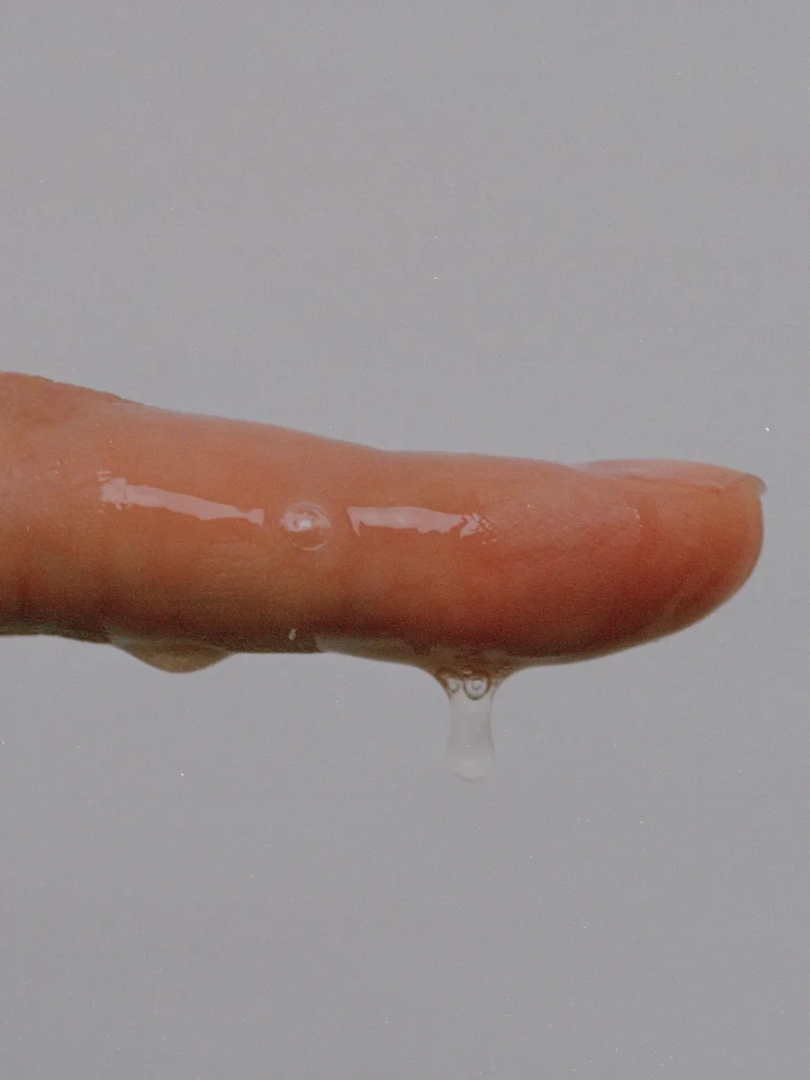
How saliva shapes taste: why flavor is assembled in the mouth before a receptor detects it
Taste needs a wet tongue: taste buds detect flavor only once it dissolves, and saliva is the solvent. Flow starts before food arrives, triggered by sight, smell, or the thought of a dish.
Each taste depends on saliva differently. Sweet and umami compounds only need to dissolve to be detected. Salt and sour work through ion channels, tuned by the sodium and hydrogen concentrations that saliva sets on the tongue. Bitter compounds clear at different rates depending on the molecule — that’s why bitterness fades in seconds for some food and lingers for others. Amylase adds its own effect: chew bread or rice long enough, and sweetness appears that wasn’t there at the first bite.
Texture runs on the same fluid: the ratio of saliva to food decides whether something reads as creamy, dry, or chalky. Astringency — the puckering from tannins in wine, unripe fruit, tea — happens when tannins strip lubricating proteins from saliva, leaving a dry, rough feel across the mouth.
Composition shifts with hydration, time of day, medication, and age — that’s why the same dish tastes different from person to person. Sjögren’s syndrome, which reduces salivary flow, alters taste with it.
What a kiss transfers: eighty million bacteria, MHC signals and a drop in cortisol
A kiss causes the exchange of saliva, and with it, chemical information — molecules reflecting diet, hormones, immune status, and the mouth’s microbial population. Among them are compounds linked to the major histocompatibility complex (MHC); studies on mate choice suggest people favor partners whose MHC differs from their own, mostly through body odor. A kiss delivers a closer version of the same signal.
The exchange coincides with physiological change: oxytocin rises, cortisol falls, and arousal can trigger salivary flow before contact happens.
Saliva shared with a stranger, it reads as contamination; shared with a partner, the same fluid reads as closeness — the composition holds steady, the context moves. A ten-second kiss transfers about eighty million bacteria, and couples who kiss often converge in oral microbiota over time. Some research has looked at copulin-like compounds in saliva as possible attraction cues, though evidence in humans stays inconclusive.
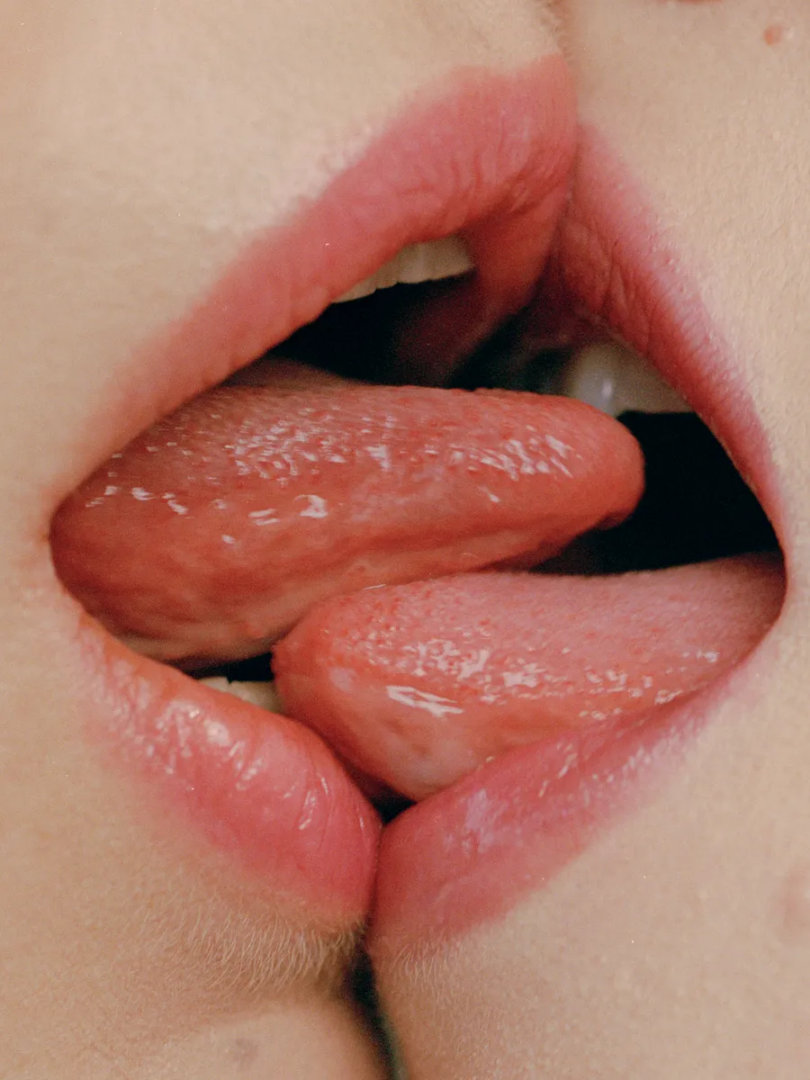
Saliva in ritual and custom: chewed fermentation, sealed agreements and the meaning of spitting
Before industrial chemistry, several cultures used saliva to start fermentation. In Andean chicha and comparable drinks across the Pacific and the Americas, people chewed maize, tubers, or rice and left the mash to ferment — amylase breaks starch into sugars yeast can use, a mechanism that worked long before anyone understood it.
Andean accounts link the chewing of chicha mash to the acllas, chosen women bound by ritual status. Once fermented, the drink moved to communal use. Fermentation extended its life and made it safer than water.
Spitting carries a meaning of its own: an expression of contempt, and a folk gesture of healing — the Gospels describe saliva mixed with earth restoring sight, and Pliny the Elder, in Naturalis Historia, records fasting saliva being used against snakebite. Elsewhere it turns social: sealing a handshake in parts of the Middle East and Africa, warding off the evil eye in Mediterranean and Slavic tradition.
Spit cleaning a Picasso: how saliva entered the conservation laboratory and became a formula
Saliva is used to clean historical paintings in restoration labs — spit cleaning: a conservator dips a cotton swab in saliva and passes it across the paint.
Before modern chemistry, restorers used raw potato or stale bread to lift soot, leaving residues that invited mold. Synthetic solvents later became standard — effective, toxic, and strong enough to dissolve original paint binders. Saliva stayed in use as the selective option.
Isabella Villafranca Soissons, director of conservation at Open Care in Milan, describes the chemistry: “The grime that dulls a painting is a matrix of fats and fatty acids trapping protein residues. Saliva — more than ninety percent water but carrying hydrolytic enzymes — breaks it down. Amylase clears starch deposits and glues; lipases emulsify grease without touching the original oil binders; lysozyme disrupts biological crusts and acts as an antiseptic. Each enzyme recognizes its own substrate.”
At MoMA, conservator Anny Aviram used the method on Picasso’s Vase of Flowers; at the MFA Boston, Rhona Macbeth used it on two Rembrandt portraits from 1634. A 1990 study by Portuguese conservators Romão, Alarcão, and Viana confirmed the mechanism; the 2018 Ig Nobel Prize in Chemistry later recognized the work. Heating saliva to denature its proteins stopped the cleaning effect, while removing its mineral salts changed nothing. The enzymes were doing the work.
Natural saliva resists standardization. According to Ms. Villafranca Soissons, “Natural saliva is alive, and unmanageable — its pH and viscosity shift with hydration, diet, and time of day. Applying a raw biological fluid to an artwork carries a risk of microbial contamination.”
That unpredictability, along with safety protocols introduced during the pandemic, pushed the field toward standardized, water-based synthetic saliva — built on the aqueous cleaning systems Richard Wolbers developed in the nineteen-eighties.
The methods are now reserved for professional training. Salvatore Amura, CEO of Valore Italia, an organization specializing in heritage conservation education, describes their role in current instruction: “Innovation in restoration often arises from the ability to reinterpret ancient practices in the light of scientific research. The use of enzymatic methods and biologically based cleaning systems today represents a model of conservation that is more selective, sustainable, and respectful of the artwork, as well as a component in the training of restorers responsible for safeguarding cultural heritage in the future.”
One method, tested one swab at a time, reproduced as a formula and incorporated into the syllabus.
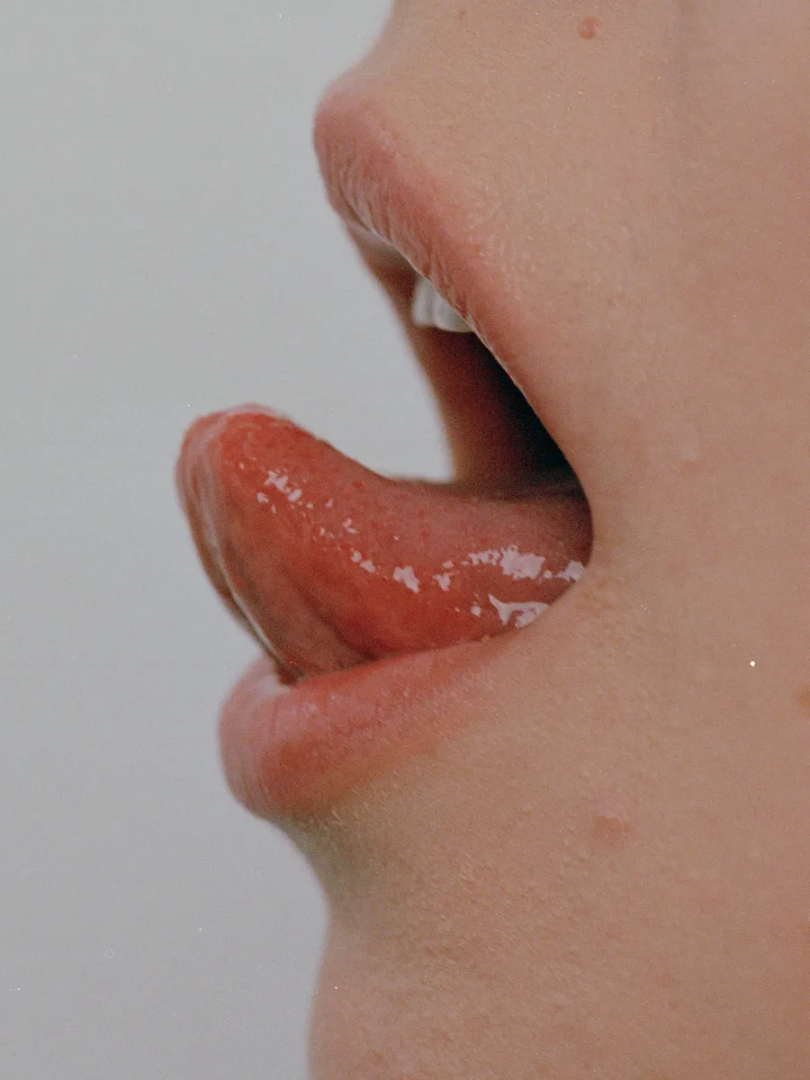
The evolution of saliva: from the first land vertebrates to venom, blood-feeding and silk
Saliva’s history begins with the move from water to land. Submerged in water, early life needed no oral secretions to stay moist — most fish still produce little or none. Saliva emerged as vertebrates moved onto land, needing new ways to lubricate tissue and process food.
Frogs were one of the earliest cases: their saliva switches between liquid, keeping the mouth moist, and viscous, letting the tongue stick to prey. In mammals, saliva starts digestion in the mouth — amylase and lipases get to work while mucus binds food into a bolus, before it’s passed into the stomach.
Salivary glands continued to diversify further. In some snakes, and lizards such as the Gila monster, they evolved into venom glands, producing toxic proteins instead of digestive ones. In mosquitoes, fleas, and ticks, saliva carries anticoagulants and pain-dulling compounds — the itch after a bite is an immune response to these proteins, and the same saliva spreads disease. In silkworm larvae, modified glands secrete silk instead of digestive fluid, solidifying into thread on contact with air.
Saliva as a distributed interface between body and world
Across biology, culture, and technology, saliva serves as a digestive fluid, protective barrier, carrier of chemical signals, tool of fermentation, and instrument of conservation. Cells, molecules and fluids regulate their relationship with the environment through processes that respond to conditions with no conscious direction.
No single molecule drives this. Across every context, its role holds steady while its function shifts. Enzymes, proteins, minerals, and signaling compounds each handle a piece of the process — regulation without a central command.
Saliva Intelligence
This project investigates saliva as a multifunctional biological fluid operating at the intersection of physiology, chemistry, and cultural practice. Across contexts ranging from evolution, immunity and digestion to ritual fermentation, interpersonal contact, and art conservation, saliva functions as a selective biochemical interface between organism and environment. The work combines perspectives from biology, anthropology, and material science to describe how distributed chemical processes contribute to regulation, exchange, and transformation across living and cultural systems.
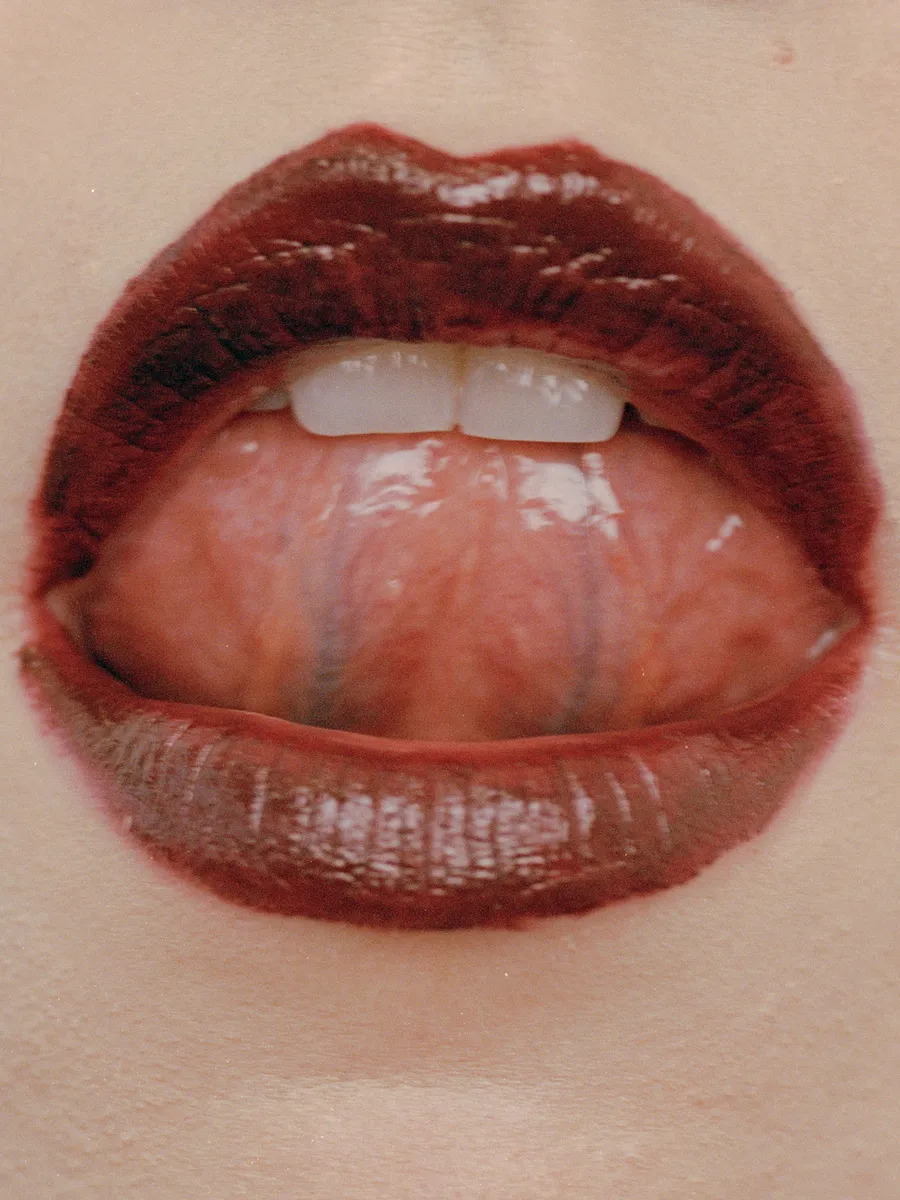
The photographs accompanying this article were taken by Frederik Ruegger exclusively for Lampoon Magazine.
Riccardo Proietti
Makeup Olivia Nwachukwu Rouge Coco in Rotonde Chanel, Luminous Silk foundation 1 and 3 tone Armani Beauty.