Saliva and chewed rice, spat into a jar: kuchikamizake and what Japan offered to the kami
Saliva saccharified the rice before koji mold did, and the drink went to the gods first: a journey through Japanese fermentation, from the Kojiki to a biotoilet built on sake technology
Rice was steamed, taken into the mouth, chewed into a gloopy paste, and spat back out into a jar, oozing with saliva. The amylase in the saliva broke the starch into sugar; bacteria in the mouth and wild yeasts drifting through the air did the rest. The drink that came out was cloudy, milky-white, thick with unfiltered rice, and it was called kuchikamizake, mouth-chewed sake. As far as the ancient records show, the chewing was done by young women or shrine maidens, and the drink was never meant for the people who made it. It was made for the gods.
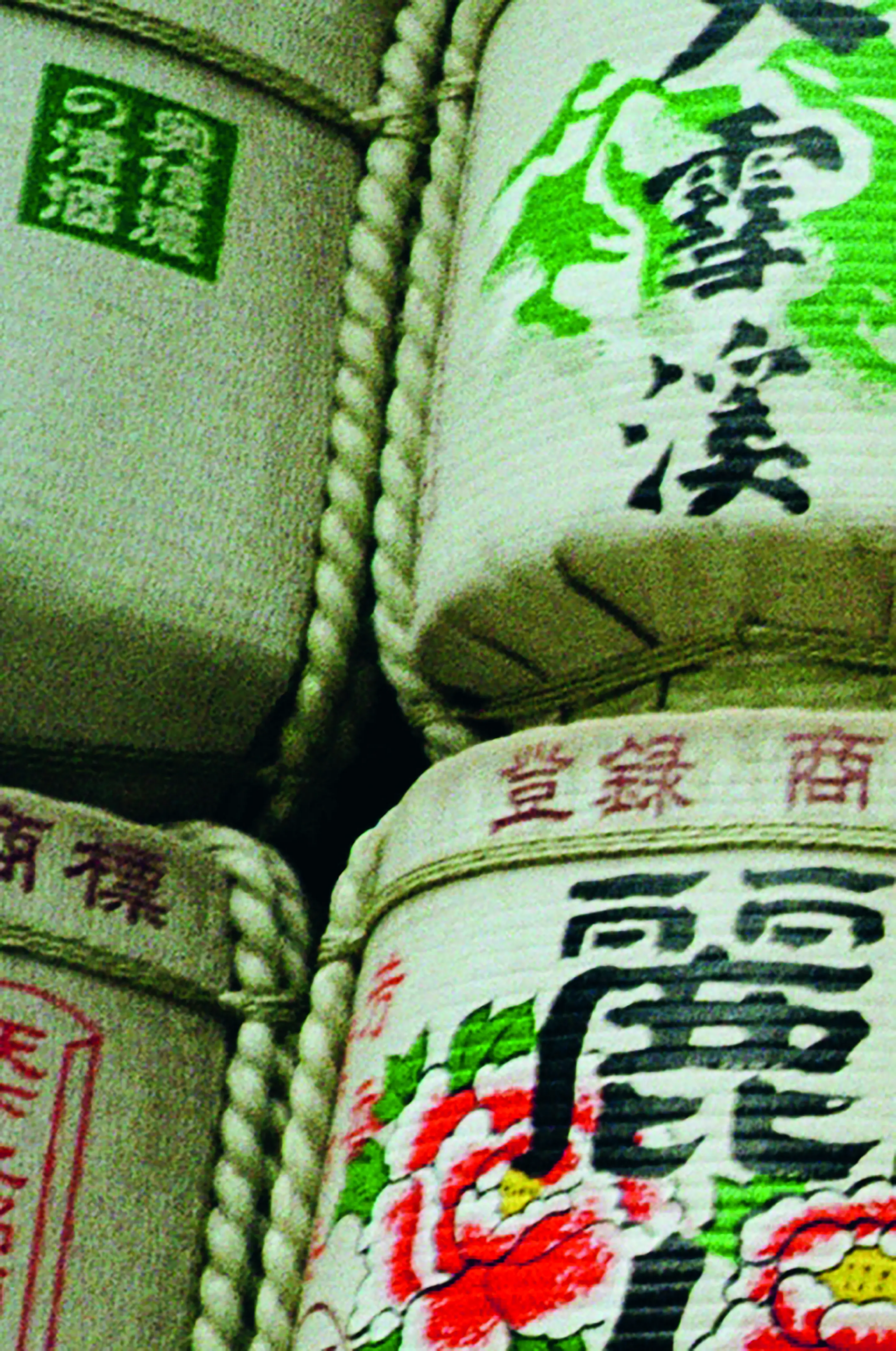
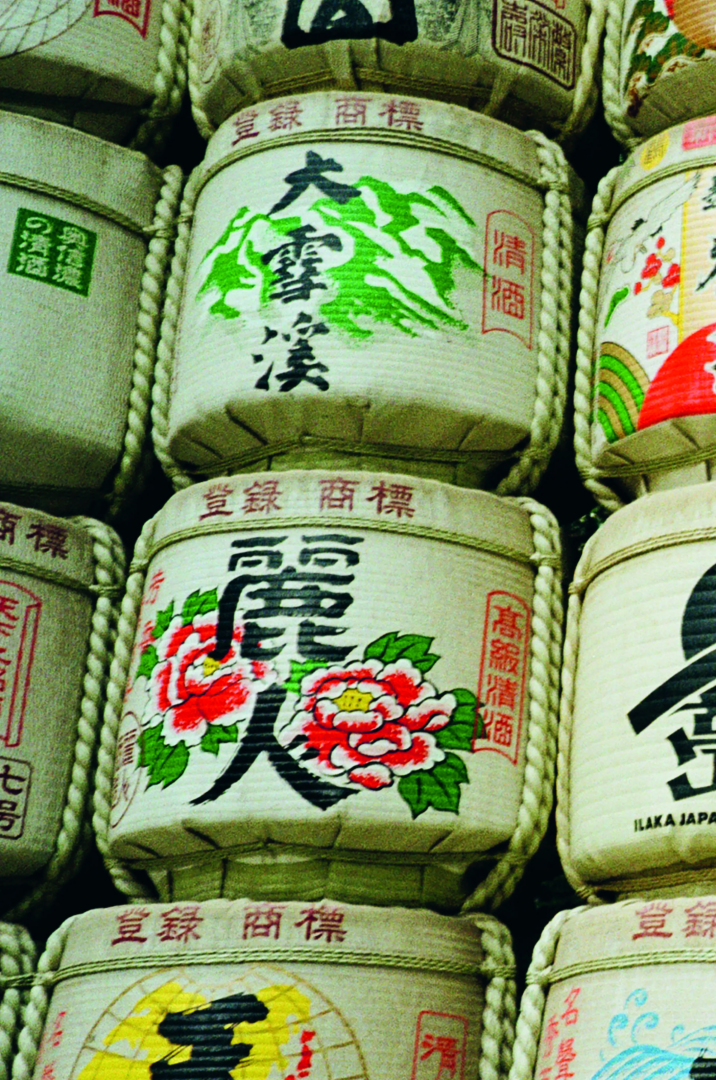
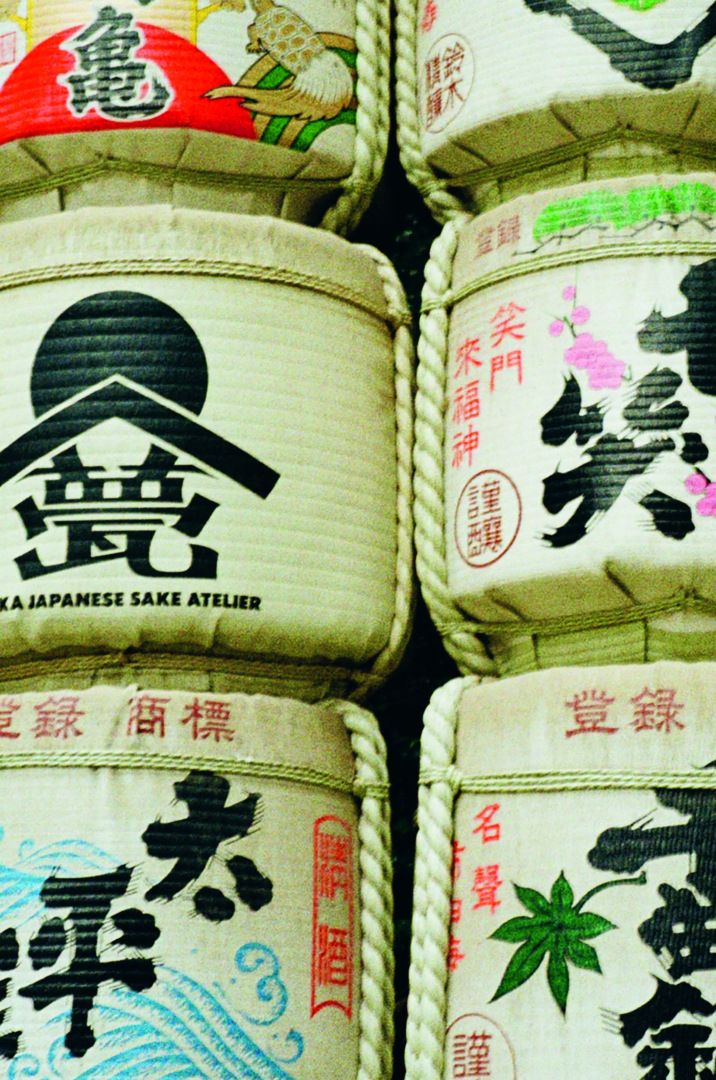
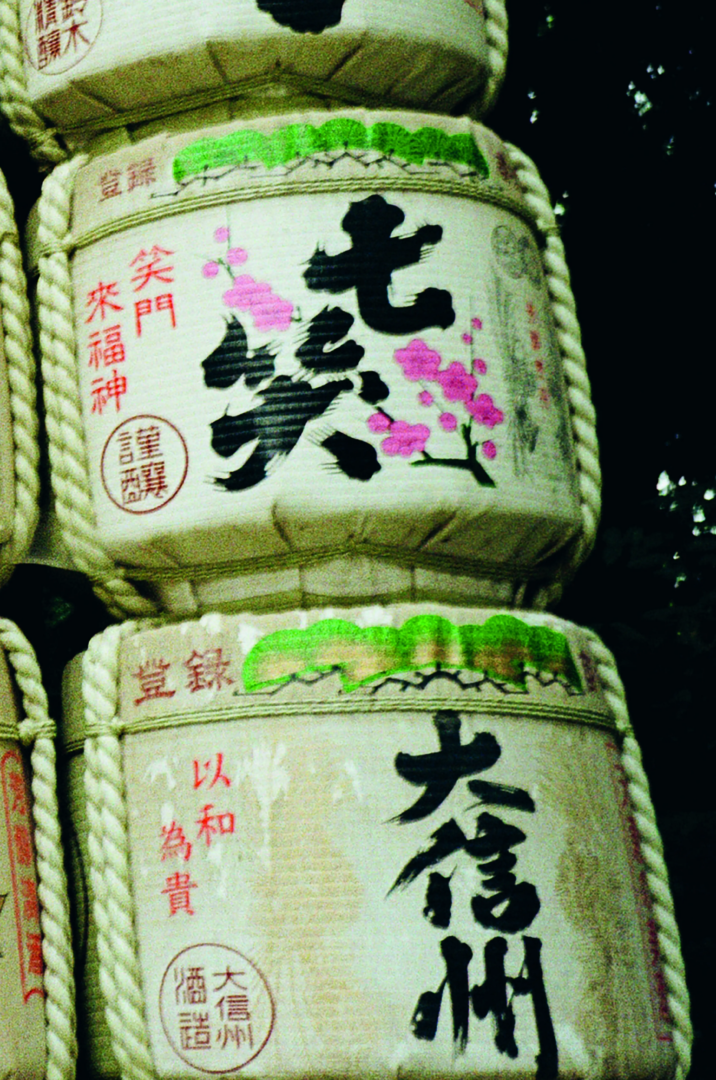
In the Shinto worldview there are eight million kami, and all of them love sake. Shrines are still stacked high with barrels and bottles, and presenting each year’s new sake to the kami remains a duty for the local brewery. What the community received came afterward, through a rite called naorai, in which what the gods had been given was passed back down and eaten or drunk by everyone present. Offering first, sharing after: that structure, more than the chewing itself, may be the part of kuchikamizake with the longest afterlife.
I make my living organizing journeys through Japan for chefs, restaurateurs and fermentation researchers. They come looking for something absent from Tokyo or Osaka: back alleys and forgotten sacred sites where the breath of ancient Japan still lingers. It is in these places, in old houses that look as though they might collapse at any moment, that the flavors of Japan survive.
Sake for the eight million kami: kuchikamizake and the enzyme in saliva
Sake was once made by temples and shrines as well as breweries. Japan is a mecca of fermented food: mineral-rich ground dotted with hot springs and spring water, a climate far more humid than Europe’s, forests and soil alike blanketed in moss, and food that rots if left unattended. Fermentation here was a condition of survival. Modern sake, in which yeast, lactic acid bacteria and koji mold saccharify and ferment rice at the same time, is the pinnacle of that accumulated knowledge.
This kind of culture exists beyond Japan. Among the Indigenous peoples of Taiwan, such as the Amis, there is a tradition of chewing millet to make liquor, and similar fermented drinks have been recorded across the Pacific Islands and Africa. In most of these traditions, as in Japan, it was women, young and unmarried, who took on the role of chewing. That women held this role across such distant cultures has less to do with biology than with their position as intermediaries between the community and the gods, and as symbols of purity, vitality and fertility: a catalyst for the magic of fermentation.
The body of Ōgetsuhime: a goddess whose death became grain
One of the stories recorded in the Kojiki, the creation chronicle of Japan, tells of a goddess of abundance named Ōgetsuhime. When Susanoo, brother of Amaterasu, the sun goddess and supreme deity, demanded food from her, this goddess who governed sustenance drew delicacies from her nose, her mouth and her rear, offering them to him. Susanoo flew into a rage, accused her of feeding him something defiled, and killed her on the spot. From the corpse, it is said, silkworms grew from her head, rice seeds from her two eyes, millet from her ears, red beans from her nose, wheat from her genitals, and soybeans from her rear.
The myth reflects a worldview in which food is born from the body of a god, and kuchikamizake reads as its ritual enactment. Just as the five grains were born from the body of the goddess, rice is transformed into sake by passing through the saliva of a woman: a fragment of the body of a god passes through a human body and becomes an offering to the gods again. By sharing in that sake, the community binds itself together. Sake is a device for drawing the life force of the land into the body.
From koji to ubusuna: the shift from surrender to control
Koji belongs to a different technical lineage than kuchikamizake, and it changed the relationship of Japan to fermentation. Koji mold is used in nearly every category of Japanese fermented food, from miso to soy sauce; depending on the strain, koji can be toxic. Beneficial strains were selected, cultivated and passed down across generations as a stable resource, making possible a saccharification carried out by cultivated mold, in place of the one-time, body-born saccharification of saliva. Fermentation shifted from a singular bodily act to a repeatable technology, a revolution on par with the agricultural one.
It is tempting to read koji as mouth-chewing externalized from the body, a sacred role once held by the female body shifted onto microorganisms. Something got traded away in gaining that control: the sense of surrendering fermentation to the land and to the body.
The guardian spirit of the land is called ubusuna. Even as a Japanese person I had forgotten this word until I began traveling the remote places of Japan with people from abroad. The sensibility is rooted in passivity. Japanese is full of passive constructions, phrases that frame an action as something one is allowed to do by some greater force. Fermentation is the same: something is fermented by something great, rather than people fermenting something. It is a passive act.
The sense of being allowed to live in a place must have been stronger in ancient times, and it persists: many Japanese people still hold a jichinsai, a prayer to the guardian deity of the land, before building a house. To be accepted, granted permission and forgiveness by the spirit of one’s own land, is the disposition with which Japanese people have lived. Italy calls it genius loci. It was believed that one received life force from one’s ubusuna, and upon death returned to that same land.
For nearly two thousand years, this cyclical view of life sat at the foundation of Japanese thought. Edo-period Japan built technology and culture around returning human waste to the fields as fertilizer: people ate, excreted, and that waste became soil, which became food again. What changed, more or less by force, during postwar modernization was the arrival of another framework: hygiene, contamination, germs, layered on top of the older one and replacing it.
TOILETOWA: sake technology reborn as a toilet that regenerates soil
One place uses the fermentation techniques behind sake-making to revive that circular relationship with the land. TOILETOWA is a circular biotoilet that integrates every technology for regenerating soil into a single fermentation system driven by microorganisms. It sits in the forests of Musashino, about an hour from Tokyo, the same forest made famous by the Studio Ghibli film My Neighbor Totoro.
It is a flush toilet connected to no sewer system. Waste is broken down by microbial activity within 48 hours into something resembling water, odorless, tasteless, rich in enzymes. Diluted and applied to the land, it makes roots grow, keeps plants disease-free, and activates the microbial life of the soil.
The technology was developed by Dr. Yasuhide Takashima, a microbiologist who comes from a long-established sake brewery in Numazu, Shizuoka Prefecture. The inspiration traces back to sake brewing. Sake is made through multiple parallel fermentation, in which saccharification and fermentation, two separate stages, proceed within a single tank, driven by several microorganisms working together. Few fermentation processes anywhere are as sophisticated. A person who had mastered the microbiology of this process applied that knowledge to another domain, the decomposition of waste.
Just as kuchikamizake used a bodily fluid to transform rice into an offering to the gods, TOILETOWA uses enzymes and microorganisms to decompose waste, returning it to soil and water. One is a transformation that occurs at the entrance of the body, the other at its exit, and both extend from the same philosophy of technology that Japanese fermentation culture has cultivated over centuries. Fermentation from rice into sake, and fermentation from waste into purified water, turn out to be closer than one might expect. Even now, whether we notice it or not, our bodies are continuously fermenting something.
Sake carries too much meaning in the Japanese spirit to be dismissed as rice alcohol. It stands as proof of a covenant with ubusuna, the point where body, microorganism, land, and the earth, water and air of Japan dissolve into one another. In recent years, the world of sake has seen a movement back toward this origin, toward what might be called natural sake. Breweries like Terada Honke choose a brewing method called kimoto, which forgoes additives and cultivated yeast in favor of the wild lactic acid bacteria and yeast that live within the brewery itself. Sake as cloudy and white as the ancient brews is enjoying a revival under the name doburoku. On Awaji Island, Sake Underground has taken an approach reminiscent of qvevri winemaking, fermenting in the earth. These movements read as an expression of longing: a desire to return to that old sensibility of surrendering fermentation to the body and the land.
Carlo Nesler: sake was a way of creating community before it became a beverage
Carlo Nesler is one of Italy’s leading fermentation experts. He founded CibOfficina Microbiotica in Viterbo in 2016, now Nesler – Cibo Vivo, where he makes miso, shoyu and other ferments from local Italian ingredients, without soy.
Carlo Nesler. Methods similar to kuchikamizake have existed in other parts of the world. Chicha in South America is a fermented drink made by chewing grains or other starchy ingredients; it is believed to predate the Inca Empire, and traditional methods survive in parts of Peru and Bolivia. In ancient times, people did not understand that amylase could be produced through grain germination or the action of koji and other molds. They used the enzymes in saliva instead. It is a simple method, so it may have been discovered in several regions that had no contact with one another.
YS. In parts of Okinawa, records suggest the whole community chewed the rice.
CN. The value of kuchikamizake resided beyond the finished drink. People gathered, performed the same act, produced one beverage together, and drank it together. The process bound people to one another. It was a ritual for producing food and drink, and at the same time a ritual for creating community. Chicha had a similar quality.
YS. Contemporary sake production: Temperature, management, rice and technical fermentation control.
CN. There is too much emphasis on technical precision, and the cultural and communal elements have been stripped from both product and process. We have a similar problem with wine in Italy. The grape harvest was communal; for children it was an initiation into community life. At festivals people drank the last of the previous year’s wine to empty the barrels for the new. Something similar must have once existed in Japan. Harvesting rice, making koji, preparing the fermentation starter, brewing on the scale of a family or a farming community: all of it was collective.
YS. Did rituals also pass on technical knowledge?
CN. People did not understand the mechanisms of microorganisms and enzymes, so they relied on rituals and rules, mostly unwritten. Actions that appear irrational to us could have embodied knowledge accumulated through generations. Modern production methods for sake, wine and other fermented drinks have lost this dimension. A small minority of producers are reviving traditional processes and involving people through communal events. Our economic system rewards business, not community: producers must make these activities viable or struggle to sustain them.
YS. At Terada Honke, the brewery workers sing and move rhythmically as they make sake. Could that influence the quality?
CN. It can, though no scientific equation explains the effect. When there is ritual, community and emotional commitment, the result is better. I cannot say that putting one’s heart into something changes its molecular structure. The main tangible factor is that people care more. In a large factory, workers may feel the product belongs to someone else, and those who work only for a wage rarely take pride in it. When people are involved through ritual and community, they commit to doing their best. Minor tasks, cleaning equipment or labeling bottles, get more care, and those small acts of attention add up in the final quality. Making sake is also about preserving culture, building community, and caring for the land. When people see their work as extending beyond the product, it shows in the result.
YS. Vibes has entered food language, and sake now speaks of the brewer’s attitude and the energy of place.
CN. Vibes and energy — there is no reliable way to verify them. When people say a sake is spiritually superior or has good vibrations, the claim cannot be assessed. Everyone may begin using the same language, and the words will lose their meaning, as they have through greenwashing. Today almost everyone calls their activities sustainable, and the word no longer means much.
YS. Perhaps people are noticing the invisible behind food.
CN. We need to reconnect with producers, the land and the environment through food. Someone drawn to the sake of Terada Honke may visit the brewery, stay a few days, help with the work. After that, drinking the sake becomes a ritual. The person may share the bottle with friends and tell them what happened at the brewery. It spreads more slowly than mass media, and more deeply, from one person to another. If we understand vibes as something that encourages these connections, the idea has value.
YS. Does your mental state matter when you make koji? Some producers won’t start fermenting when angry.
CN. Making koji is a kind of mental training. The work begins in the afternoon or evening, when I soak the grains and try to connect with the raw material, whether barley, emmer or another grain. I need quiet, without too many people around me making noise. That does not mean another person’s negative energy changes the fermentation: their state affects my concentration. When people working with me were upset, I have sometimes chosen not to make koji. During the days when I produce koji, I schedule no unrelated work.
YS. Traditional koji makers named each temperature and could feel small changes by hand.
CN. I touch the koji first to judge its temperature, then use a thermometer to confirm what I am sensing. The desired temperature changes at every stage. I decide whether to remove the koji from the kojimuro, warm it, mix it or leave it untouched by observing temperature, aroma, texture and moisture. Working with koji regularly develops a refined sensitivity. I teach my students to go beyond the numbers on a thermometer: they must smell the koji, touch the grains, feel how the texture changes. A recipe may say, do this after three hours, but if you cannot sense what the koji needs at that moment, you get everything wrong. It is similar to caring for a small child. On the first day you do not understand why a baby is crying. After a few months you recognize whether it is hungry, tired or needs changing, even if the cries sound identical to anyone else. The child is not explaining in words; you have come to know the child. It is the same with koji.
YS. Why the renewed interest in doburoku and unpasteurized, naturally brewed sake?
CN. The industrialization of food has reached its peak and people are looking for something different. Products such as sake, which retain the possibility of artisanal production, can recover their individuality by returning to less industrial methods. Travelling around Japan you taste many sakes. They may all be good, and difficult to tell apart. You visit one brewery and drink a good sake, the next day another, and without the labels you would not know which is which. If all people were the same, life would be boring. Sake is interesting for the same reason: each one should be different. Natural brewing, unpasteurized sake and the changes brought by ageing can recover those differences. I drank a bottle I had brought back from Japan three years ago. It was different from how I remembered it, and the difference stimulated my senses.
YS. So “technically” good sake is no longer enough?
CN. The culture of drinking mass-produced sake as an alcoholic beverage will decline. If the only purpose is to become intoxicated, there are cheaper alternatives. Interest will grow in sake that comes from the soil and reflects the environment of a place, the sensibility of its artisans, the culture of its community: something that could only have emerged there. Alcohol consumption is declining around the world. People are asking themselves why they should drink at all, concerned about health, driving, other responsibilities. If they choose to drink, they will select something worth drinking. People will drink less and become more mindful of what they drink.
YS. Today sake comes with storytelling.
CN. What will matter is whether the story is true. If I hear a long story about a wine, and the wine tastes ordinary, I will not buy the bottle again. The words of the producer are not enough: the drink must be convincing. Trust emerges when the story and the taste correspond. If a close friend came to visit me, I would offer them some nihonshu. I would tell them where I found it, who made it, how it was produced. We would drink it together while sharing our time and our stories.
Yasunobu Tamari: kuchikamizake was never the only ancestor of sake
Cultural anthropologist Yasunobu Tamari researches food, land, and ritual under a practice he calls context design. He pushes back on some of the cleanest claims in this piece.
Yasunobu Tamari. Rice never grew wild in the Japanese archipelago. Cultivation begins in the Jōmon period, and the Jōmon people themselves were migrants: humans reached the archipelago around 36,000 years ago, so rice can’t be older than that. How it arrived is unsettled — from the Chinese mainland, island by island, or overland through Tsushima when sea levels were lower. It came from somewhere else, and so did the idea of turning it into alcohol. Making alcohol from rice can be traced back to the upper Yangtze region of China. Alcohol itself is close to universal: fruit ferments the moment it falls and is left alone. There’s a story of elephants in Africa getting drunk on fermented fruit, and Japan has its own legend of monkey sake, sarusake, wild alcohol that happens in the forest. Beer in Mesopotamia goes back more than ten thousand years; mead is old in northern Europe.
YS. Where does kuchikamizake fit?
TY. The connection between sake and the sacred starts in the Yayoi period, with the people who brought wet-rice farming, as grain became bound up with ritual. That religious impulse may already have existed among the ancestors of the Yayoi on the Korean peninsula, and arrived with them into northern Kyushu. Kuchikamizake could have been one form among others. Koji didn’t exist yet, so describing kuchikamizake as an early stage of koji brewing is inaccurate. They are two separate technical lineages. The discovery of koji was enormous for the archipelago, and the record around the Kamakura period shows people experimenting with all kinds of fermentation methods. They are different technologies, arguably different purposes: both keep sake tied to a relationship with the kami. Modern sake — parallel multiple fermentation, several organisms working a single tank in a stable, repeatable way — is its own achievement. It doesn’t need to borrow the authority of kuchikamizake to be remarkable.
YS. Why do the kami love sake?
TY. Dionysus isn’t sober either. Grain-centered societies began around ten thousand years ago, once agriculture made multi-year storage possible. The history of alcohol runs alongside the history of grain. Before alcohol there was a much older world of hallucinogens. When I was researching South America, that kept coming up, something like ayahuasca. A shamanic culture built around hallucinogens may have existed across the whole Eurasian continent, maybe fifteen thousand years ago, and shifted toward alcohol as societies organized themselves around grain. A grain-based society needs a lot of people doing the same coordinated work at the same time, and a hallucinogen that violently awakens the individual power of one person is dangerous for anyone trying to hold a cooperative society together. Alcohol releases the unconscious moderately. It may have been chosen, deliberately or not, as the tamer substitute.
YS. In kuchikamizake, the chewing is done by young women or shrine maidens. What is a miko?
TY. A medium: someone through whom something gets released. People with unusually strong intuition end up in that role, different pieces of information overlapping in the mind until a vision appears.
YS. It reminds me of the priestesses at Delphi, who spoke prophecy after gas seeped up from the ground, and were required to be virgins.
TY. A good parallel, and probably not a coincidence: gas with hallucinogenic properties, a young woman required to be pure. Why a young woman specifically, I haven’t researched closely enough to say.
YS. Were Japanese people easygoing about waste and defilement?
TY. They were sensitive to kegare, ritual impurity. It was among the most feared things: a bad rice harvest could be blamed on someone having secretly eaten a four-legged animal, a taboo that runs through both Shinto and Buddhist thought. The category was different from our modern idea of hygiene. Kegare is sometimes read as ki-gare, a withering, a weakening of life-energy, rather than dirt in the germ-theory sense. That is closer to why, in some regions, food cooked for a menstruating or pregnant woman was prepared over a separate fire: a sense that vitality had temporarily thinned, rather than disgust at contamination. Alongside that fear there was real technology given to turning waste into something valuable, human waste as fertilizer, the whole cycle back into the soil. It describes a culture that feared impurity deeply and, separately, knew how to transform what a body puts out into something the land could use again.
YS. If kegare is energy running low, then saliva, chewed by a young, healthy body, might have been understood as the opposite: something full of life-force.
TY. It had to come from the mouth of a young woman. Saliva is alive, full of enzymes, still warm, still carrying the energy of a living body. Kuchikamizake put something charged with ki directly into the rice, beyond turning starch into sugar. It offered the kami a drink that still held the vitality of a living body inside it. What people feared was energy running out, and what they offered the gods was energy at its fullest, caught in a mouthful of saliva and spat into a jar.