Saliva, hygienic or erotic? Tomasz Kręcicki paints a hole in a sock
From Domenico Gnoli to Lucio Fontana, Tomasz Kręcicki works on transparency, cropping and roughness, painting overlooked materials until they hold more meaning than they should
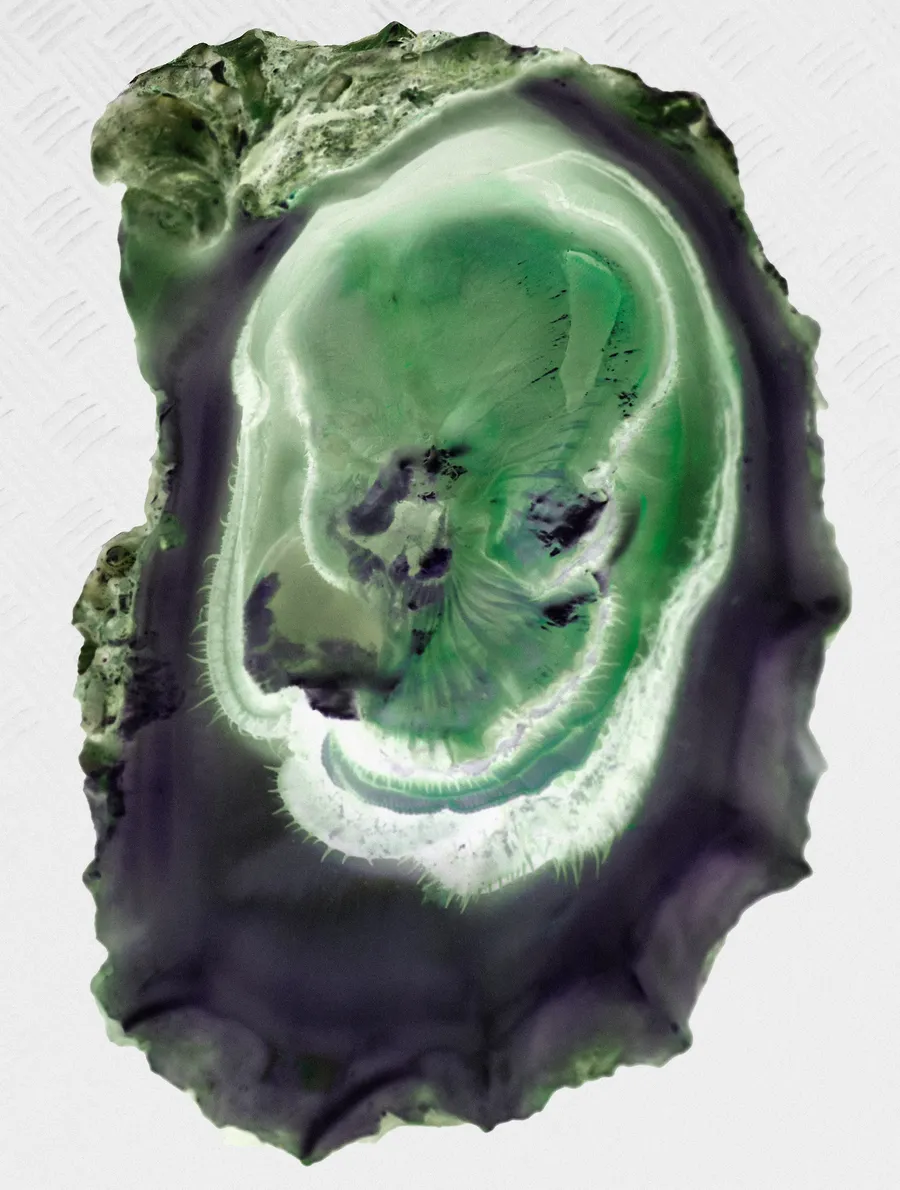
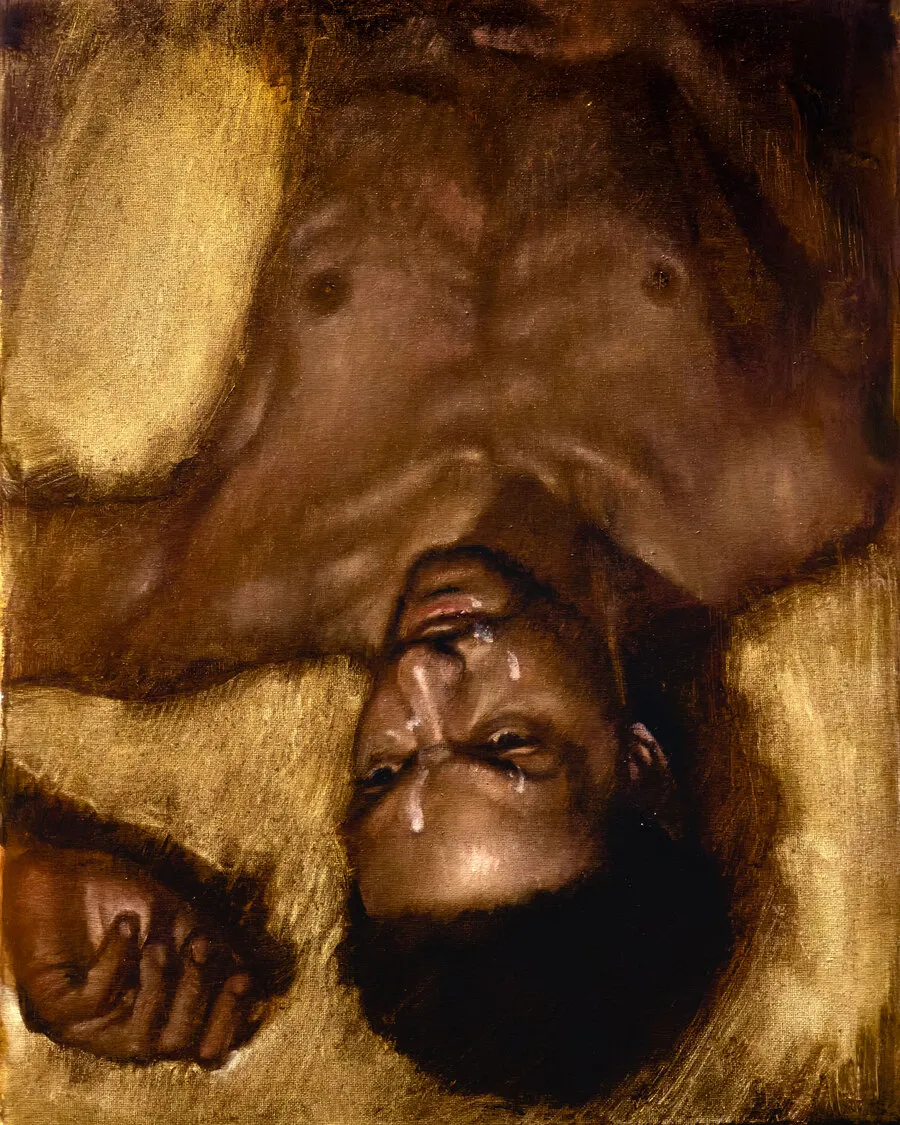
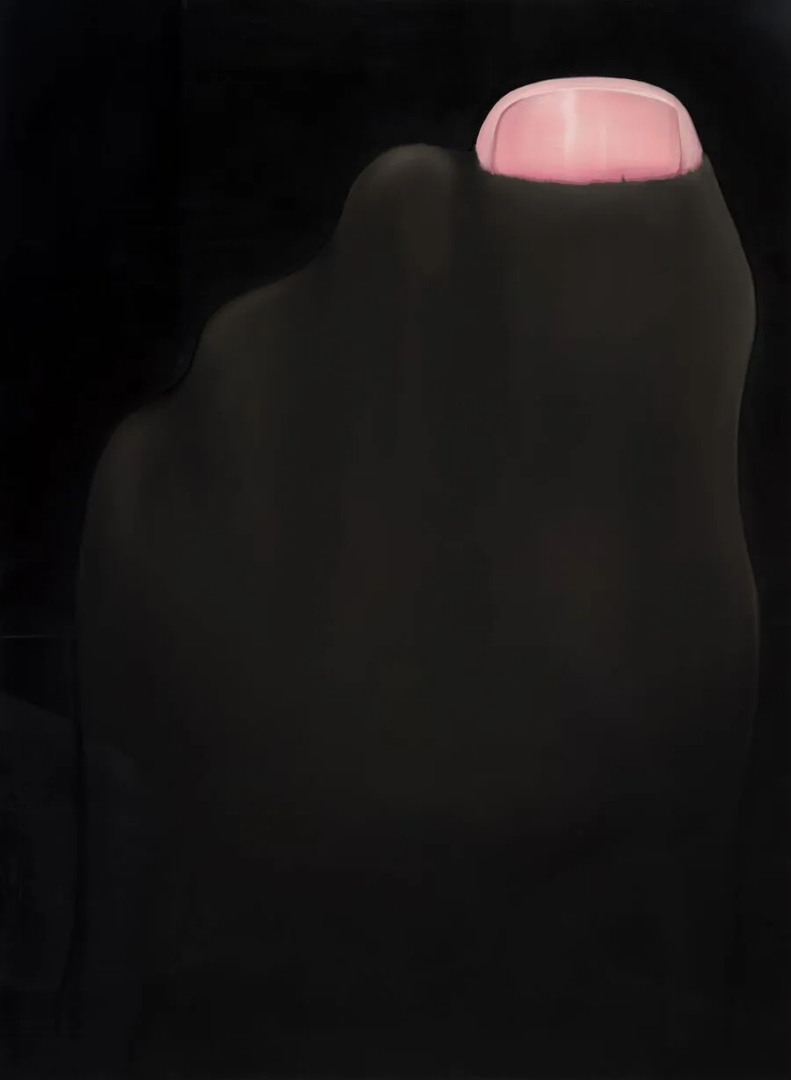
Mr. Kręcicki works in Kraków. He paints a tube of gel, a hand, a towel, a sock, a sponge — objects he enlarges until scale changes what they carry. Me and my sock, conceived and created exclusively for this Lampoon issue, holds the structure of a portrait: posture, a head where a head has no business being.
Tomasz Kręcicki: This sock — you can see a part of my body, the tip of it, from the other side. It becomes a portrait in reverse. It’s a sock, and it could look like a head. Fragments of the body: lips, a nose, an ear. It is a kind of self-portrait.
Gel, Sticky, Pasta: the substance between hygiene, medicine, and the erotic
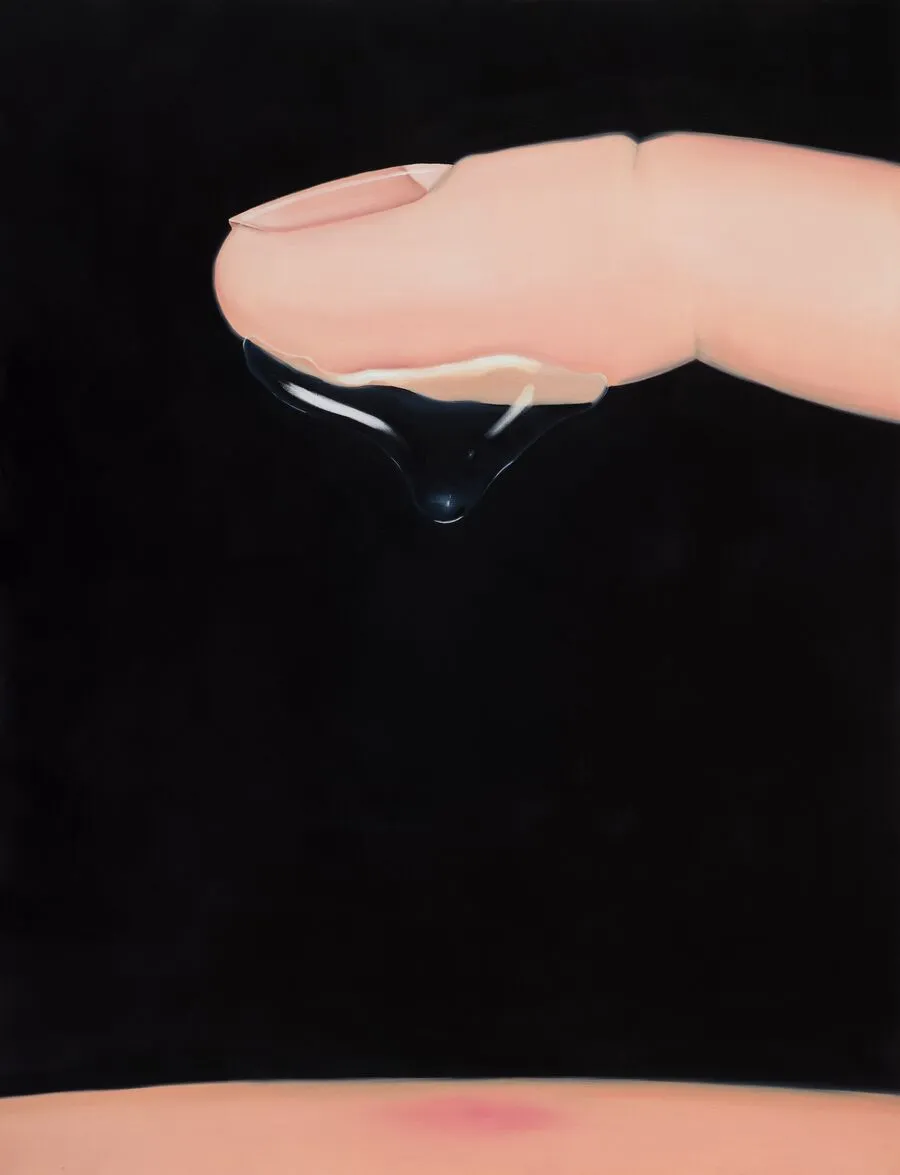
A hand squeezes a substance from a tube. A finger holds a bead of liquid. In Gel (2023) and Sticky (2026) the body stays outside the frame.
Tomasz Kręcick: The gel could be hygienic, medical, or erotic. It stays open, and several readings are held at once. I keep explanations out of the titles. Layers interest me, like the optical distortion the gel creates — the moment when the material bends or disturbs the background. Over time I’ve developed an inventory of objects and situations that work as starting points.
Oil paint is opaque by nature. Saliva and fingernails put the problem at close range.
Tomasz Kręcick: There are questions only painting can answer, questions I work through as I paint. They pull me toward the same territory — fingers, nails, everything close to our daily actions. My paintings are built on contrasts, something organic and something technical at once. A hand, a surface, moisture, skin, pressure, as in Pasta. Where the paintings stop before the erotic. My paintings read at first glance, and after some time they resist a single reading — erotic, political, any of them. The object exceeds what it depicts. I’m looking for subjects and compositions that hold this ambiguity, where the meaning keeps shifting.
Extension cords and recycled motifs: an ecological reading
Tomasz Kręcick: I recycle motifs and themes. After painting a series of extension cords, I realized that before my studies, more than fifteen years ago, I had actually already painted my first still lifes, centered on cables and power strips. You could read this as an ecological manifesto, a call to use what’s local and available. We don’t have to fly to Mars. By painting these objects, I give them significance; later, in exhibitions, people see them in a different light. Painted, framed, they become a metaphor for larger themes. Every object I choose carries contexts and references to art history or to history. Through these ready-made objects, I convey how I perceive the world.
Realism as attention: painting overlooked objects at close range
Mr. Kręcicki’s paintings are described as realist. Cropped to the edge of abstraction, they work on attention, where realism usually works on illusion.
Tomasz Kręcick: Reality is the starting point, and then I work with imagination. I begin with photographs or sketches made from observation. As I work, those studies change. I stay free of a fixed reference. I combine things in my head before making a drawing or color sketch, and then I transfer it onto the canvas. It changes during painting. When I find a motif, I choose something that will hold the viewer. I play with scale, and that creates meaning. An object demands attention. Set against a history painting, I’m asking the viewer to spend time with one detail. These objects and moments are with us, and we don’t notice them. Stories hide behind them. They accompany us through moments of our lives, and through political or social change. An object can become a souvenir of those events. For me, the detail matters. The subjects from my daily life are where I keep finding material.
From Domenico Gnoli to Ed Ruscha: the lineage Tomasz Kręcicki paints inside
Tomasz Kręcick: A few years ago, I saw a Gnoli exhibition in Milan at Fondazione Prada. These families of painters in the history of art, and I would place myself alongside him. I look at reality in a comparable way. I came to his painting late — I had been painting for a long time already — and when I discovered it, it felt close to how I see things. People mention Ed Ruscha.
Cinematic cropping: where recognition tips into uncertainty
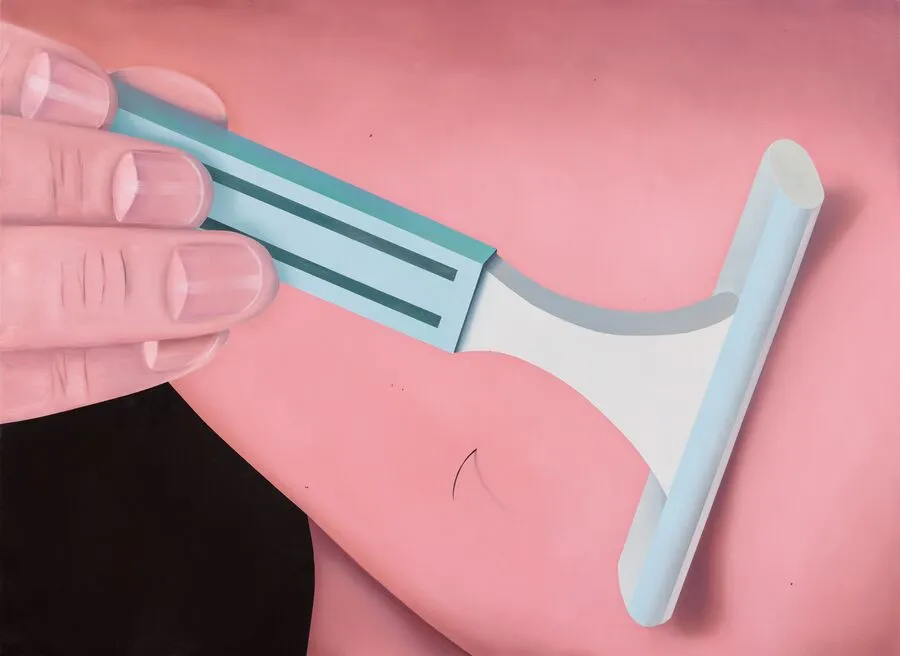
Tomasz Kręcick: In the past, I’ve looked at movies while searching for subjects, and that stayed with me. Finding a subject the audience recognizes matters to me. Through scale it shifts. There are photorealistic moments in the work. It’s about light, shadow, and cropping. Recognition brings someone into a world they know, and then something shifts inside it.
Roughness in painting: the cut canvases of Lucio Fontana
Tomasz Kręcick: The cut canvases of Lucio Fontana held my attention. For years, the gesture remained opaque to me, so I kept looking for reasons behind it. Seen without art history, they read as a gesture. For me that’s part of what roughness is: the moment where something shifts and the reason stays out of reach. I’ve tried to recreate that gesture on my own terms. I work in a controlled way. It can be rough in another sense, with sharp lines and a worked surface.
Humor as transfer: irony as a route toward other meanings
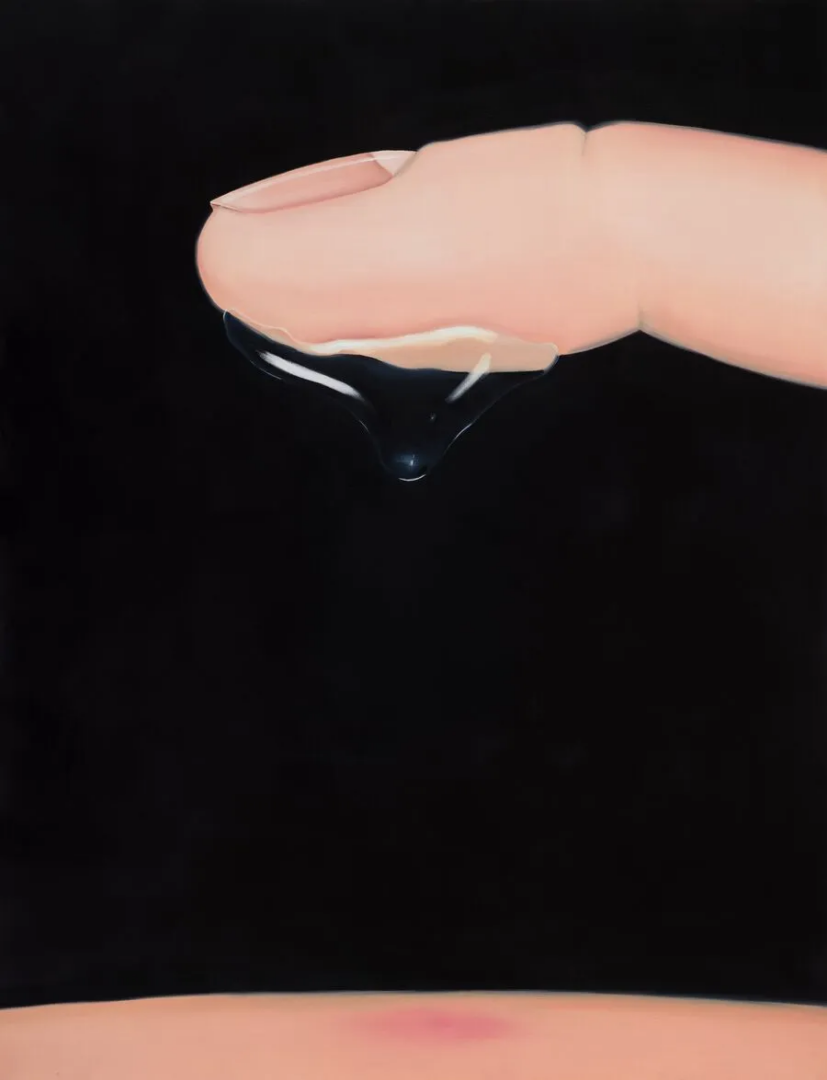
Tomasz Kręcicki: Humor is a sense for me, irony above all, and I want my paintings to carry weight as well. Humor works as a transfer, moving the viewer toward other meanings. It’s about the painting itself, the medium, like my works with gel or carpet. I play with the medium of painting, and it stays a tool. That aspect reaches painters.
Every inch of my paintings has a connection to touch. What interests me is a synesthetic way of looking at painting. Touch counts, and so does sound — my paintings are also about sound. They involve figures squeezing something or touching something.