Half the Perrier-Jouët vineyard is now regenerative, with 2030 as the deadline
In 2026 the house took the programme to 33 hectares, with biomass and floral covers, 1,200 trees planted at Cramant and wines vinified parcel by parcel in the new cellar
Between the flowering of the vine and the harvest, Champagne counted for generations on one figure: 100 days. The average now sits around 90. In 2025 it was 81. Grapes ripen faster, harvests move into August — 25 years ago they fell between September and October — and in a single season the vines take heatwaves, drought, intense rainfall, hail, frost and higher disease pressure. Maison Perrier-Jouët has built the overhaul of its vineyard on that shortening season.
Perrier-Jouët, 33 hectares of regenerative viticulture toward 100% by 2030
In 2026 the house brought its experimental regenerative viticulture programme to 33 hectares, half of its own vineyard, with a target of 100% by 2030 and sustainable-viticulture certification extended to as many as possible of the partner winegrowers who supply the majority of the grapes.
The starting point is a 2021 diagnosis: the vineyard soils were compacted and impoverished. From there, three objectives — restoring soil health, improving vine nutrition, preserving the biodiversity of the territory — and a set of agronomic practices.
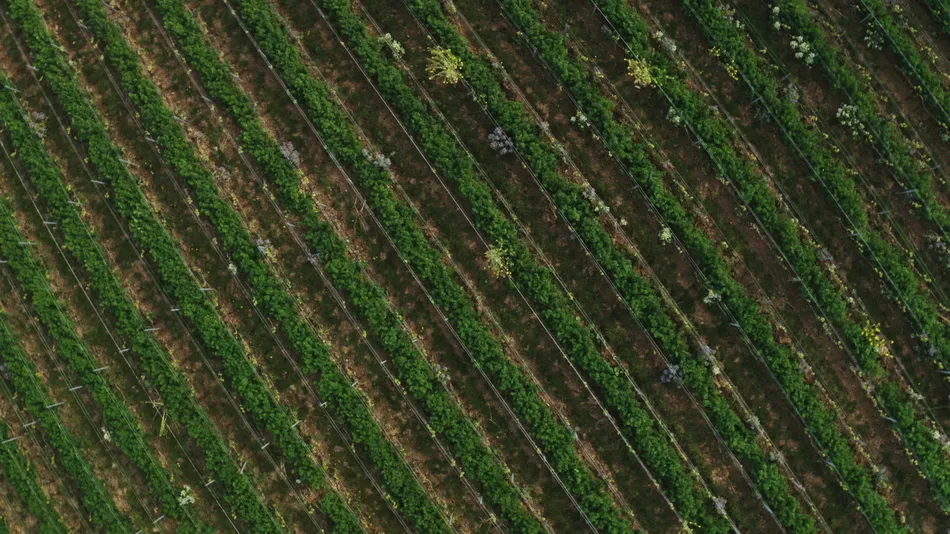
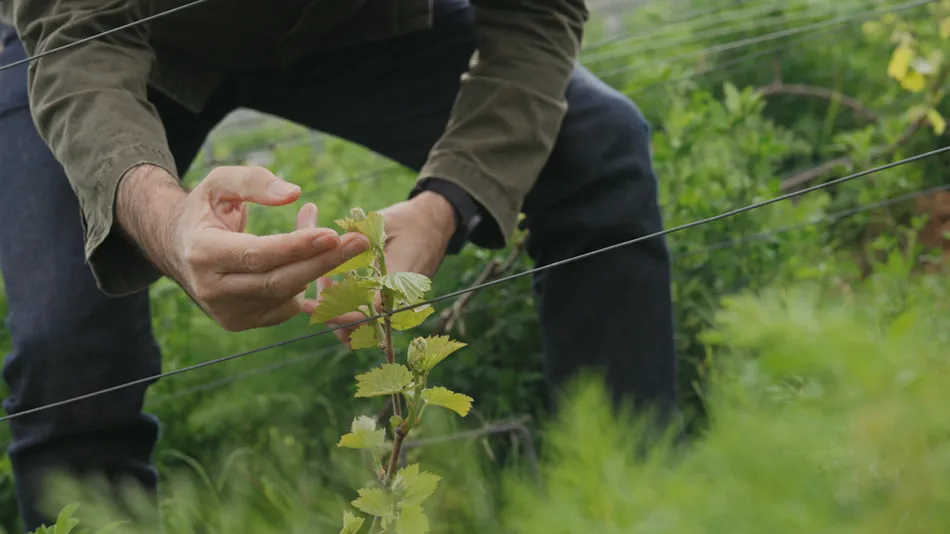
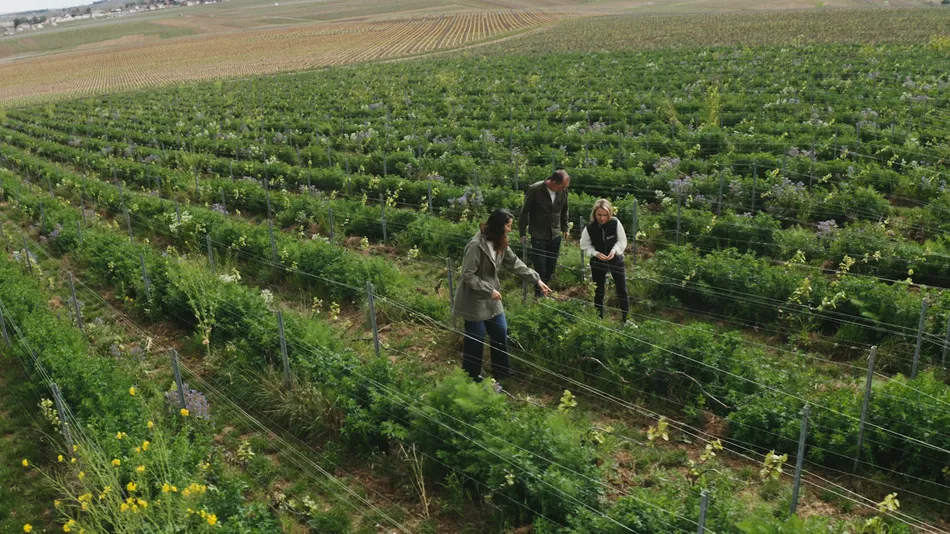
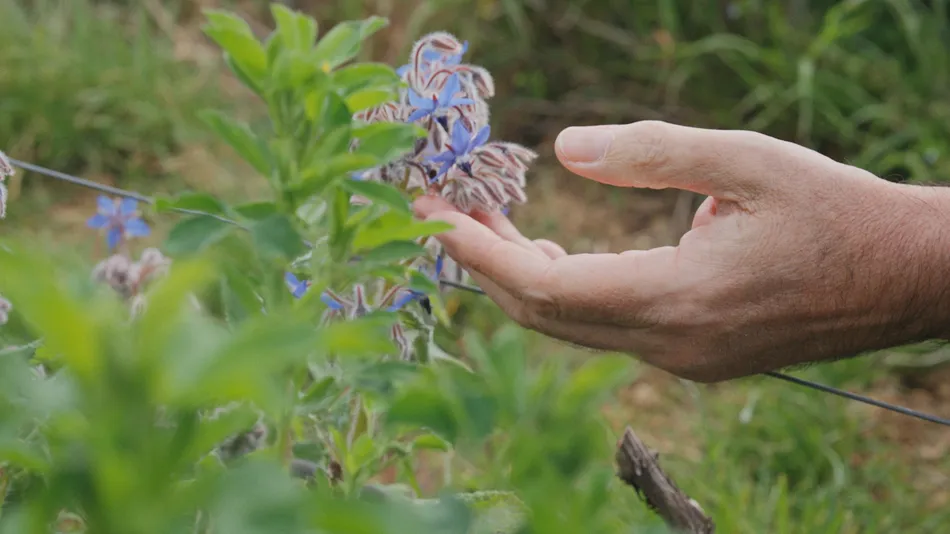
Biomass plant covers are sown after the harvest, grow through winter and spring and are ploughed down in early May: decomposition feeds bacteria, fungi and earthworms, and the organic matter spread between the rows improves porosity, aeration and water management. The mix under trial — rye, broad bean, squarrose clover, crimson clover and turnip rape — is about 60% legumes, which fix atmospheric nitrogen and return it to the soil. Floral covers work another way and are sown every 4 years: 14 melliferous species, from borage to buckwheat to sweet yellow clover, chosen to flower in sequence across the year and feed pollinators while their root systems open the soil.
Since 2020, mechanical soil preparation has replaced herbicides, across a vineyard with plant cover over its entire surface, worked in part by Bakus, an all-electric robot, lighter than a tractor and therefore less compacting.
Vitiforestry at Cramant, 1,200 trees, bat boxes and birds of prey among the vines
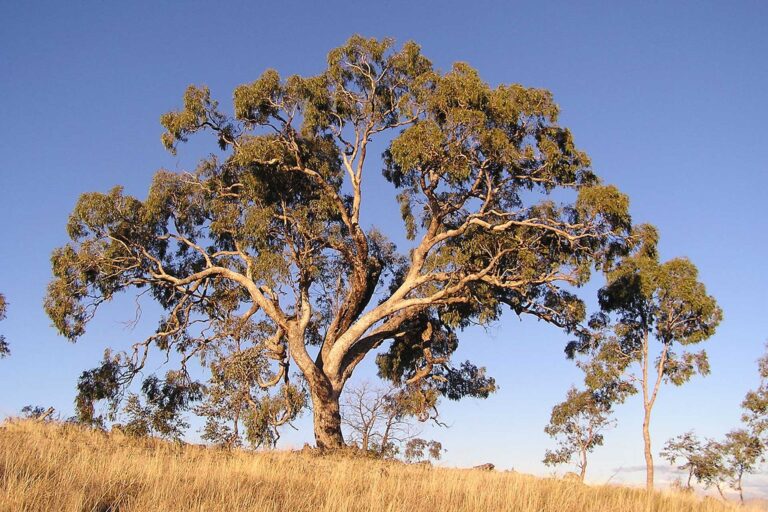
In February 2023, with the consultancy Biosphères and the organisation Reforest’Action, the house planted around 1,200 trees and shrubs on the historic Bourons parcels at Cramant — sweet cherry, field maple, whitebeam, dogwood, buckthorn, blackthorn — arranged as hedges, islands and copses, enriched the following year with floral covers.
The expected effects are three. Trees and hedges create a climatic bubble that shades the vines, cools them through evapotranspiration and limits evaporation and wind stress. Leaf and branch litter returns organic matter to the soil. Tree roots structure the ground, improve water retention and bring up deep minerals, exchanging with the vine roots through mycorrhizas, the symbiotic associations between roots and fungi.
Hedges and forestry islands form green corridors, planted with native species, along which auxiliary fauna can move, feed and reproduce. In 2026 the bat boxes built by Perrier-Jouët employees go into the vineyards at Cramant and in the Montagne de Reims, and perches for birds of prey, designed with the common kestrel in mind, are installed on the trial parcels at Mailly and Cramant. The Champagne-Ardenne region counts 24 documented species of insect-eating birds — tits, black redstarts and great spotted woodpeckers among them — which nest where they find trees and shrubs.
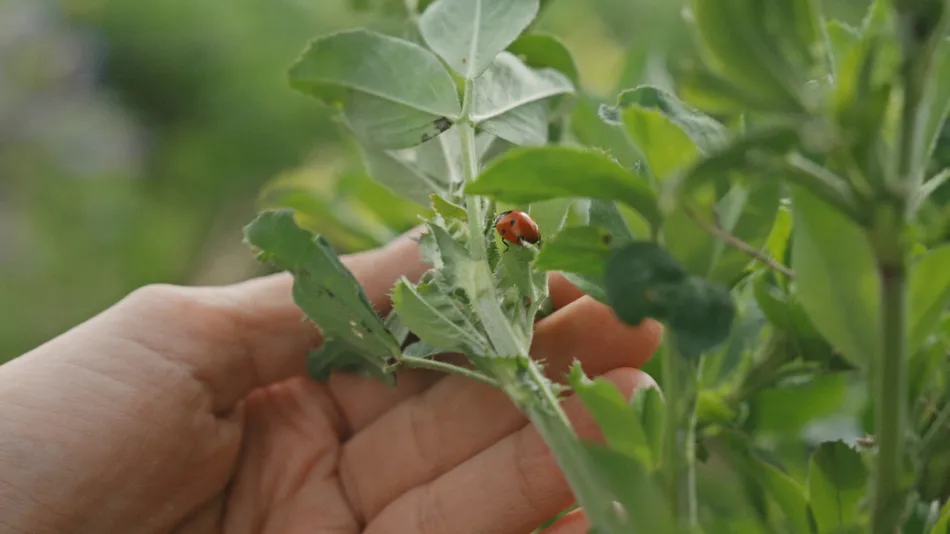
Monitoring insects in the Perrier-Jouët vineyard
Johanna Villenave-Chasset, a doctor in entomology and landscape ecology, walks the vineyard on fixed dates between May and July, in dry weather with little wind, counting beneficial and harmful insects on 30 vinestocks: in the parcels under sustainable viticulture, in those of the experimental regenerative programme, and in control parcels.
«Between 2023 and 2024, with the same protocol, we recorded greater biodiversity in the parcels managed with regenerative viticulture», says Villenave-Chasset. «These results show the weight of biodiversity islands which, close to the vineyard, act as reservoirs for auxiliary insects. Planting different strata — flowers, shrubs, trees — enriches the organic diversity of the vineyard».
The species counted are the ones that do the defensive work: ground beetles, which devour aphids and mites on the plant and larvae and slugs on the ground, up to 3.4 times their own weight a day; ladybirds, whose larvae take aphids, mites and scale insects, with some species feeding on powdery mildew and rust; hoverflies; green lacewings. Earthworm presence has risen in the plant covers too.
«The plant cover acts as mulch and protects the soil, keeping it fresh and moist. The biomass covers, 60% legumes, supply the soil with nutrients», says Mathilde Chinchilla, vineyard site manager.
The cellar of the viticulture of the future, vinified parcel by parcel
With the 2024 vintage Séverine Frerson, cellar master, inaugurated a cellar dedicated to the viticulture of the future: wines from the regenerative parcels are vinified separately in small stainless-steel vats, parcel by parcel, distinguished by the type of plant cover.
«Tasting the clear wines from the last harvest, I noticed that grapes from the parcels with biomass covers give a tension and a freshness consistent with the Perrier-Jouët style, while floral covers add complexity and elegance», says Frerson. The aim is continuity: «We are changing the way we make the wine so that the style of the wine stays the same». Ripeness analyses now come with tastings of individual grapes, and from the start of flowering the vineyard is observed daily.
Partner winegrowers and Viticulture Durable en Champagne certification
The house vinifies a minority of its own supply: most of the grapes come from partner winegrowers, and the figures on their certification weigh as much as those of the estate vineyard. Perrier-Jouët takes its partners toward Viticulture Durable en Champagne certification with training and individual mentoring: 67% of partners were certified in 2025, against 42% in 2021. The appellation as a whole is aiming at 100% by 2030, from 8% in 2014.
Regenerative practice enters that network more slowly. A group of pioneer partners, gathered under the name Mon Terroir Vivant, is trialling plant covers and testing bioalternative products — biocontrols, micro-organisms, biostimulants, natural substances. The winegrowers are brought into the house vineyard to see the experiments, and a recurring appointment, the Matinale des Vignerons, circulates practice among them.
«We now have a data scientist who collects and analyses impact data and pilots the decision-making tools, a contact for bioalternative treatments and a technician specialising in precision viticulture», says Jessica Jazeron-Schneider, vineyard transformation manager. The house works with Biosphères, with the Centre de Développement d’Agroécologie and with the association Pour une Agriculture du Vivant, which it joined in 2022.
18 biodiversity projects beyond the vineyard in Champagne
In 2023 the house launched a call for projects with the Mission Coteaux, Maisons et Caves de Champagne (UNESCO) and the Comité Champagne, first on the territory of Ambonnay, extended in 2024 to the Côte des Blancs and in 2025 to the Vallée du Petit Morin. Three editions have selected 18 initiatives, open to companies, associations, municipalities and private individuals: 500 linear metres of native hedging at Fontaine-sur-Ay and the restoration of wetlands along the river Livre; a 1.3-hectare biodiversity haven at Ambonnay with flower strips, hedges and fruit trees, plus 142 metres of forest-edge conservation with the Parc naturel régional de la Montagne de Reims; the removal of invasive species at Ludes; pond restoration in the Marais de Saint-Gond; herbaceous embankments and shrub hedges at Mutigny; orchard enrichment at Avenay-Val-d’Or; biodiversity workshops with the schools of Ambonnay and Condé-sur-Marne.
«The question of biodiversity has to be addressed across the whole territory, by encouraging a network of reservoirs and creating green corridors through which species can move or find shelter», says Sonia Le Masne, CSR director.
Recycled glass, sailing ships and Perrier-Jouët’s Scope 3
Carbon accounting began in 2015: more than 90% of the house footprint sits in Scope 3, indirect emissions, largely agricultural production and packaging. Pernod Ricard, the group it belongs to, has a decarbonisation strategy validated by the Science Based Targets initiative in May 2024, with 2030 and 2050 reductions aligned to 1.5°C.
Glass accounts for three-quarters of the packaging footprint. Since May 2025, with few exceptions, all cuvées are cellared in green glass containing up to 87% recycled material, which cuts the carbon impact of the glass by 30% and shields the wine from light. Bottle weight has gone from 900 to 835 grams, with 800 under study. In 2025, 89% of bottles left without a box; those that travel with one use the Ecobox, mono-material and recyclable, in natural fibres from FSC-certified forests, with inks and glues free of mineral oils: 136 grams for the classic collection, 118 for Belle Epoque. A second box recovers the untreated wood left over from cutting barrel staves, collected at Bellême from a family cooperage.
All production sites run on renewable electricity, and in 2026 the Epernay sites began connecting to the town’s biomass heating network. Air freight was 0.01% of shipments in 2024. An agreement signed in 2021 with TOWT, the Brittany company that builds sailing cargo vessels, carried the first bottles across the Atlantic under sail in 2024, on the Le Havre-New York route, with an 85% reduction in emissions. More than 88% of packaging production waste is sorted and recycled; pomace and lees go to a local distillery, uprooted vine stocks are turned by EcoCep into boxes and insulation, and waste from the surrounding farms returns to the regenerative parcels as compost.
From Pierre-Nicolas Perrier to Emile Gallé, botany and Art Nouveau
Founded in 1811 by Pierre-Nicolas Perrier and Rose-Adélaïde Jouët, the house has botanical roots. Perrier and his son Charles were known as botanists and horticulturists: in 1853 Charles published the treatise De la maladie de la vigne, on the fungus behind powdery mildew, argued for steam to clear woodworm from vine stakes and championed the Picot pruning technique against frost damage.
The decorative line runs through Emile Gallé, botanist and founder of Art Nouveau, who painted four magnums with Japanese white anemones. Since 2012 the house has commissioned a project each year from contemporary artists and designers; since 2024 it has backed projects built on knowledge and solutions for biodiversity, with a working group of artists, designers, a philosopher, a writer, a botanist and scientists.
Perrier-Jouët and biodiversity, what can be verified and what remains an expectation
Some figures can be checked over time, including by third parties: the certification rate among partner winegrowers, bottle weights and the share of recycled glass, the percentage of air freight, the hectares under the regenerative programme, the insect counts against control parcels. Others are statements of expectation: the benefits trees and hedges should deliver in the years ahead, the nitrogen cycle the covers should rebalance after a few seasons.
The deadline is 2030, when the house has committed to 100% of the vineyard under regenerative viticulture. At 33 hectares and 50% in 2026, the second half runs against a season that keeps shortening: 81 days, and the count is falling.
Editorial Team