Loewe Spring/Summer 2027: McCollough and Hernandez stage the collection as theater
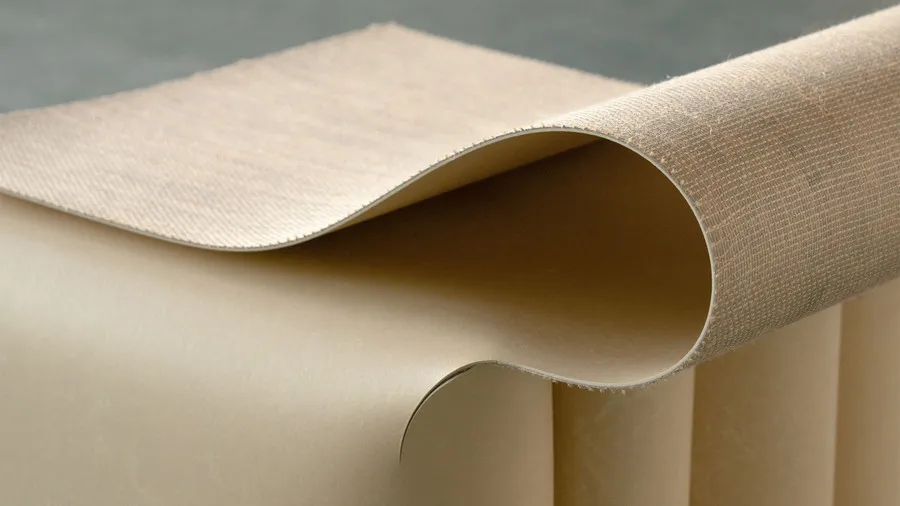
McCollough and Hernandez’s third show, at the Château de Vincennes for the Loewe spring/summer 2027 collection: balloon skirts like stacked paper, plasticised collars, leather with the seams erased
Loewe Spring/Summer 2027 runway: the show at the Château de Vincennes
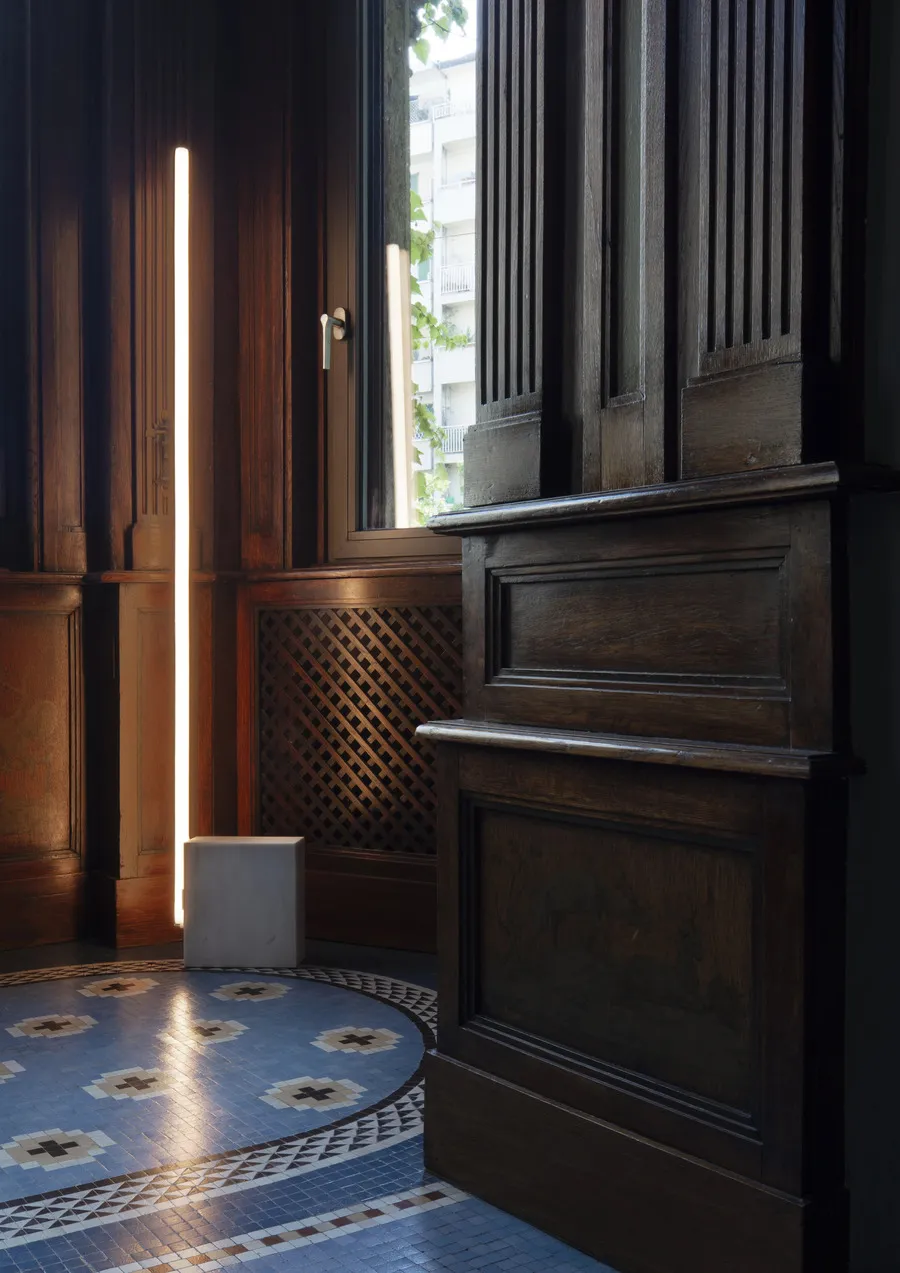
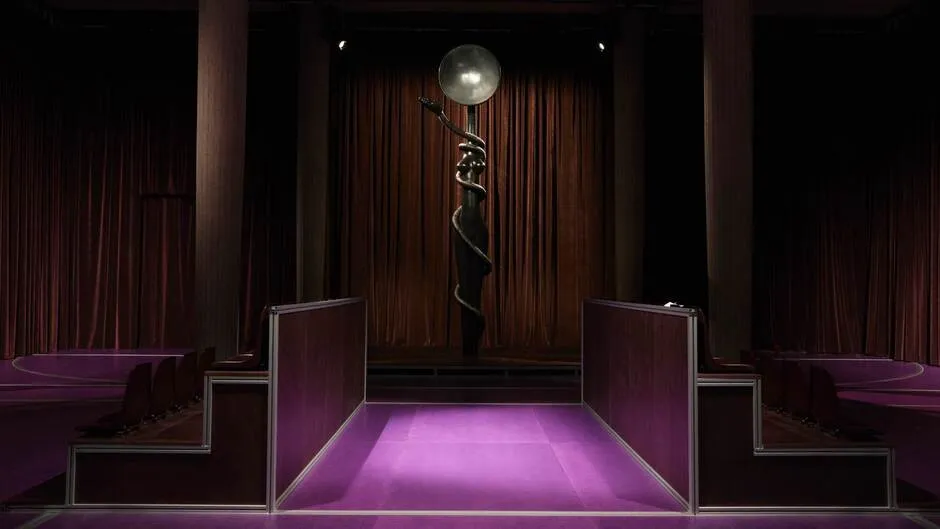
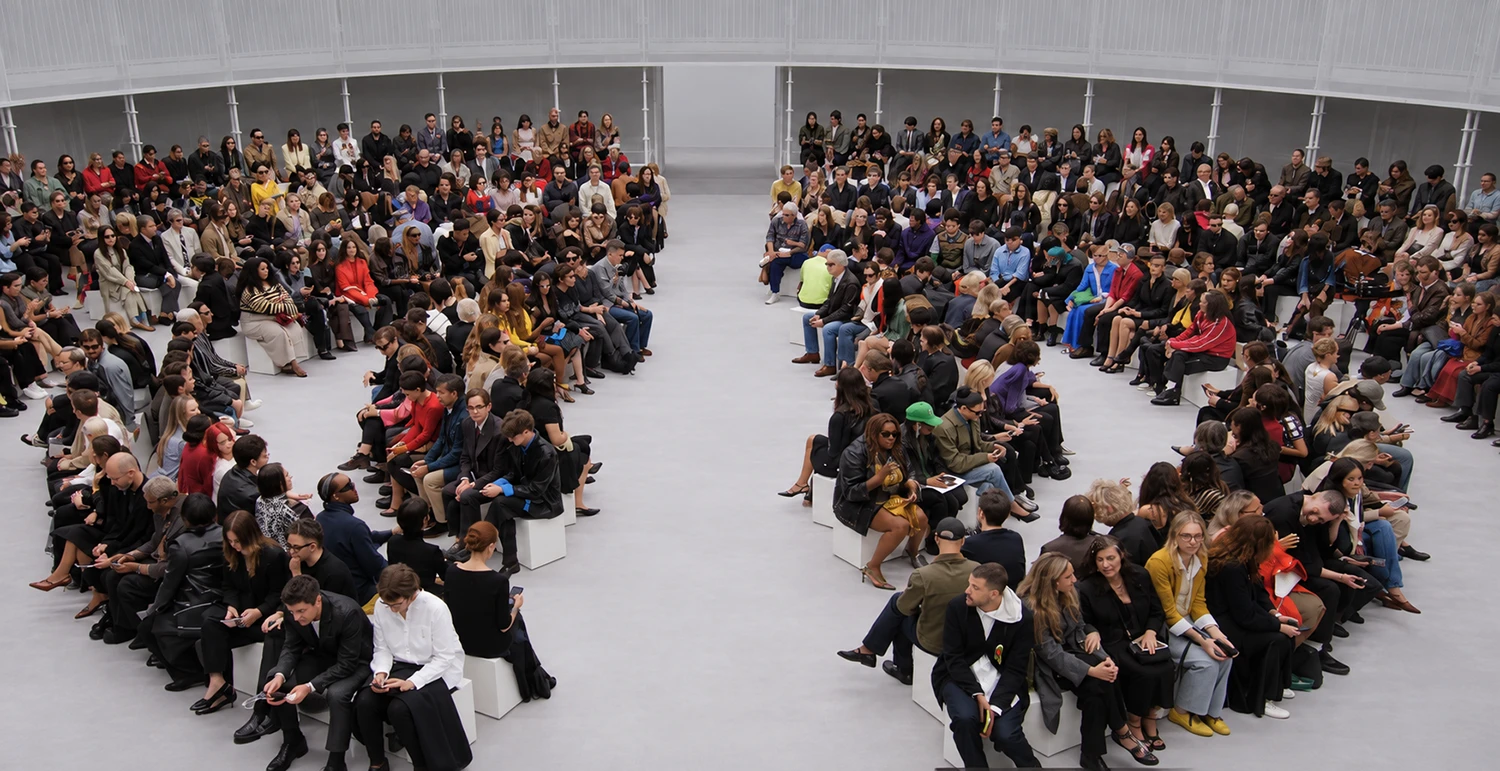
For the Loewe Spring/Summer 2027 collection, Jack McCollough and Lazaro Hernandez chose the Château de Vincennes: a circular, two-level structure built on the model of amphitheaters, stadiums and arenas. “From the Anatomical Theatre of Padua to the Globe Theatre in London, from the Detroit gasometer to the Teatro alla Scala in Milan, the space recalls sport as spectacle, ritual drama and performance, placing at its center the energy of a shared, live human experience,” read the show notes. Fashion as shared human experience. Let the show begin.
This is the duo’s third collection for Loewe, and the direction is set. Where their predecessor drew on a cabinet of curiosities, McCollough and Hernandez stage the vivid dream of a New Yorker in Spain. The road trip they took last summer with the critic Cathy Horyn — Madrid, San Sebastián, Bilbao, by way of Segovia — says it plainly. The visual cues released beforehand said the rest: a stack of folding fishing traps woven with green twine; clear water covering what looked like a glass piece of green-and-blue abstract geometry; yellow ceramic whistles. Summer, again, and handwork.
The Loewe SS27 collection: falling hems, cut-outs and a citrus palette
A run of glossy, tactile images sets up the show: a flower hit from above by a pour of live paint, a sewing machine threaded in white, water, bubbles, foam. Then the looks, like objects moved by the same current. It opens on a short white layered balloon skirt with a blue pullover and a checked shirt; then miniskirts of the same cut, built like sheets of stacked paper, and straight-line dresses with plasticized collars in gold or fire red. Semi-sheer midi skirts, in several tones, meet leather bombers; the long floral dresses, opened by central cut-outs, seem to sag downward, pulled by gravity.
It is a wardrobe that opens, gathers and drops: skirts caught at the waist, others left open at the bust like flowers in bloom. The same principle passes to the men’s trousers, tailored but open, drooping. The construction becomes a question: who wears a skirt or a trouser that opens exactly where the body begins? They are flares in a collection whose silhouettes are otherwise cut with a knife.
The palette runs on earthy colors, multicolor stripes and hole motifs. There are color-block jackets, accessories in colored leather, short trenches, bombers, caps close to swimming hats. The women’s shoes carry small heels topped with oversized bows. Then the micro babydolls, the micro floral shorts, the simple mini dresses dotted with 3D flowers. Practicality is treated as an exercise: to make a jacket-and-trouser suit desirable on sight, dye one of the two bright yellow or vivid blue, or work the collar. Some pieces play on the surface: transparent central panels, flounced skirts, tops that read as sponge from a distance and as plush up close. The music, first keyed to the models’ steps, softens as it goes, like an end-of-summer dream.
After Anderson: McCollough and Hernandez bring America to Loewe
A little over a decade ago, Jack McCollough and Lazaro Hernandez — founders and former designers of Proenza Schouler, soon emblematic of a generation of American designers for building one of recent history’s most promising labels from scratch — were in the running to lead Dior. They never took it. Running Proenza Schouler independently, the brand of American women attached to the kind of comfort that makes you feel powerful and faultlessly dressed, turned into an infernal game of Tetris: unpunctual investors, and a proliferation of independent labels mostly collapsing on slippery business models. The confidence never broke. From its 2002 debut, Proenza Schouler climbed to the status of a modern classic, on the sum of its founders’ individual parts.
It is worth the irony: last year Dior went to JW Anderson, and at the same time the Proenza duo left their own label for Loewe — the Spanish house Anderson had revived. Anderson turned a historic brand, born in Madrid in 1846 as a collective of leather artisans, into an experimental gallery, offering idiosyncratic clients eclectic things they would never have thought to want. Across his eleven years, Loewe produced cucumber bags, tomato bags, plasticine shorts, soap-bubble bodices, dresses pierced with pins — closer to provocations than outfits — and enough oddities to make the house a synonym for the pursuit of the peculiar. A fashion cerebral enough to make the comparison with McCollough and Hernandez, if not necessary, at least automatic.
Lessons in casualness: easy, happy, uncomplicated clothes
Last September, a week before their Loewe debut, “the Proenza boys” posted a teaser on the house’s Instagram of what, the following Friday behind the Université de Paris in the 14th arrondissement, would turn out to be their first show: a pomegranate seed adrift on a liquid surface; ice cubes spinning on candy pink; a cubist still life of flowers and foam; a freckled face, sunburnt and beaded with sweat; cherries in spirit. On the day, they released an image of Ellsworth Kelly’s Yellow Panel with Red Curve (1989) — a yellow panel beside a red curve. The title says what you see; in a note, the designers said what it meant to them: vitality, chromatic intensity, form, contrast, optimism. The same Kelly installation greeted guests like a shot of energy, yellow and red the chromatic equivalent of a citrus multivitamin. Sun, sea, Spain — and, less obviously, Americanness, the casualness and easy fashion that Europe, Paris above all, sends back to New York as a demotion.
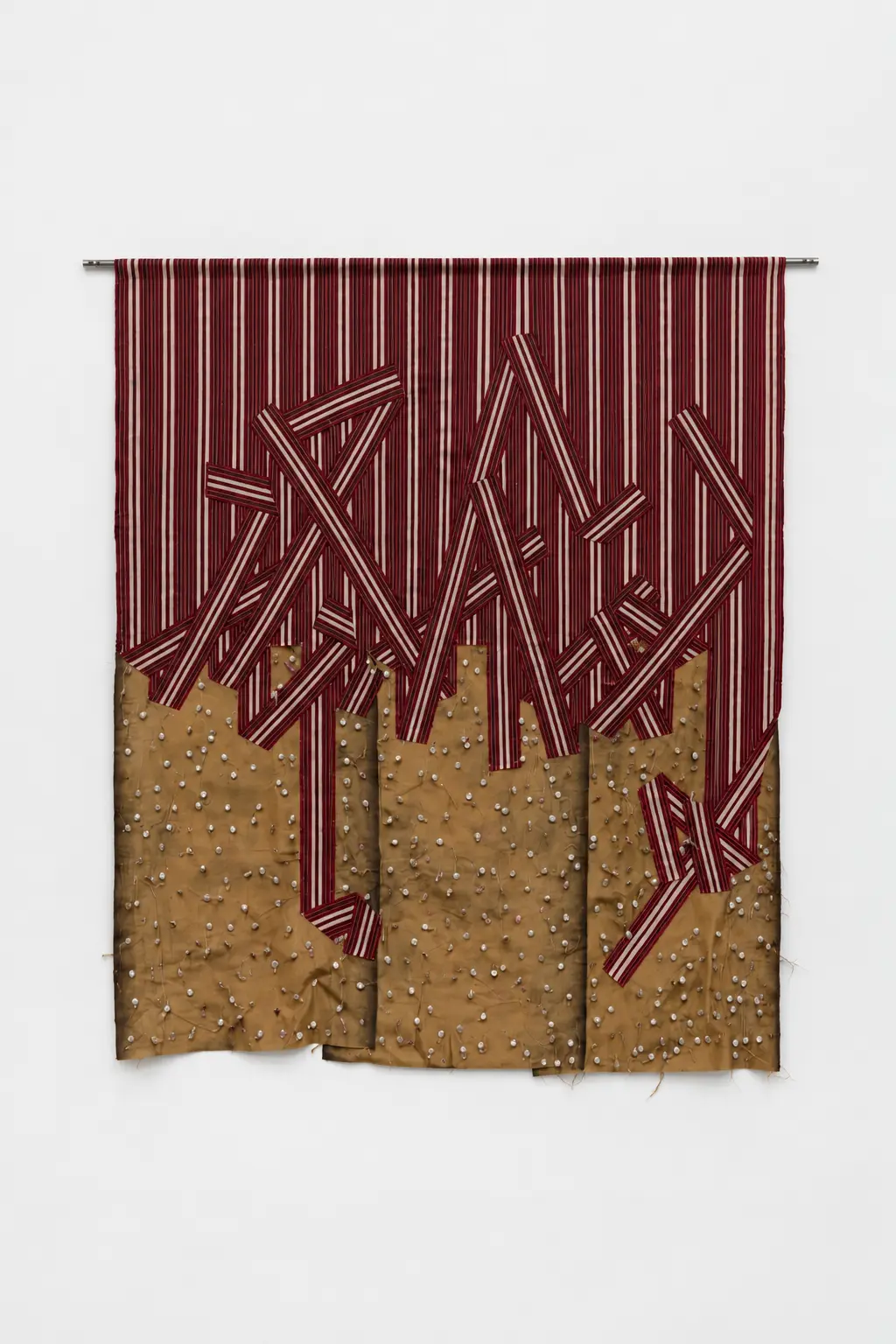
The duo keeps part of Loewe’s conceptualism — the clever nod to the Swedish artist Klara Lidén’s layered poster paintings in a series of multi-layer cotton shirts. But their sense of clothing is concrete, built on cut, proportion and silhouette. Where the ode to craft has lately grown so loud that designers leave seams, imperfect hems and techniques visible as supposed proof of the handmade, McCollough and Hernandez show little interest in the forced display. Miuccia Prada, who made a leitmotif of a laddered skirt’s roughness, is one thing; the rest are another. In their Loewe leather pieces the seams are invisible, just as Kelly’s paintings hold no gradation between one color and the next. It is a clean vision: the point of the shaped leather jackets was to erase the traces of the work. They recalled the uncomplicated ease of Claire McCardell, the patron of the sportswear all of Europe turns its nose up at — sometimes rightly, here wrongly. The result is a refreshing collection, the memory of a summer spent drinking iced mezcal on the Costa Brava.
Stella Manferdini