Rick Owens Spring Summer 2027: the womenswear collection turns stone into light
Stone, the Rick Owens Spring/Summer 2027 womenswear collection, reads the stone as stoicism, liberation and resistance to intolerance, and moves the palette from white to burgundy and black. The millefoglie jackets take 45 hours each
Stone can be a response to fear: to freeze, to stiffen, to become incapable of reacting. In the Stone Spring/Summer 2027 womenswear collection, Rick Owens widens the metaphor. The stone stands at once for stoicism — holding one’s ground against difficulty — for liberation, in the stone rolled away from Christ’s tomb, and for resistance to intolerance, the stones thrown at those considered different, which Owens sets his work against.
Against that background the palette reads differently. The show moves from beige and white to burgundy and black. Light is neither innocence nor the absence of darkness: it is the possibility of facing darkness without surrendering to it. The reading tracks a position Owens set out in an October 2025 interview, when he described, in a world confronted by war, a determined, if hesitant, sense of joy, and the wish to balance his dystopian image with warmth, acceptance and hope. Black is still there, no longer dominant. The stone has not forgotten the darkness; it has learned to exist in the light.
Stone womenswear: the millefoglie jackets, industrial nylon turned to duchesse, washed denim
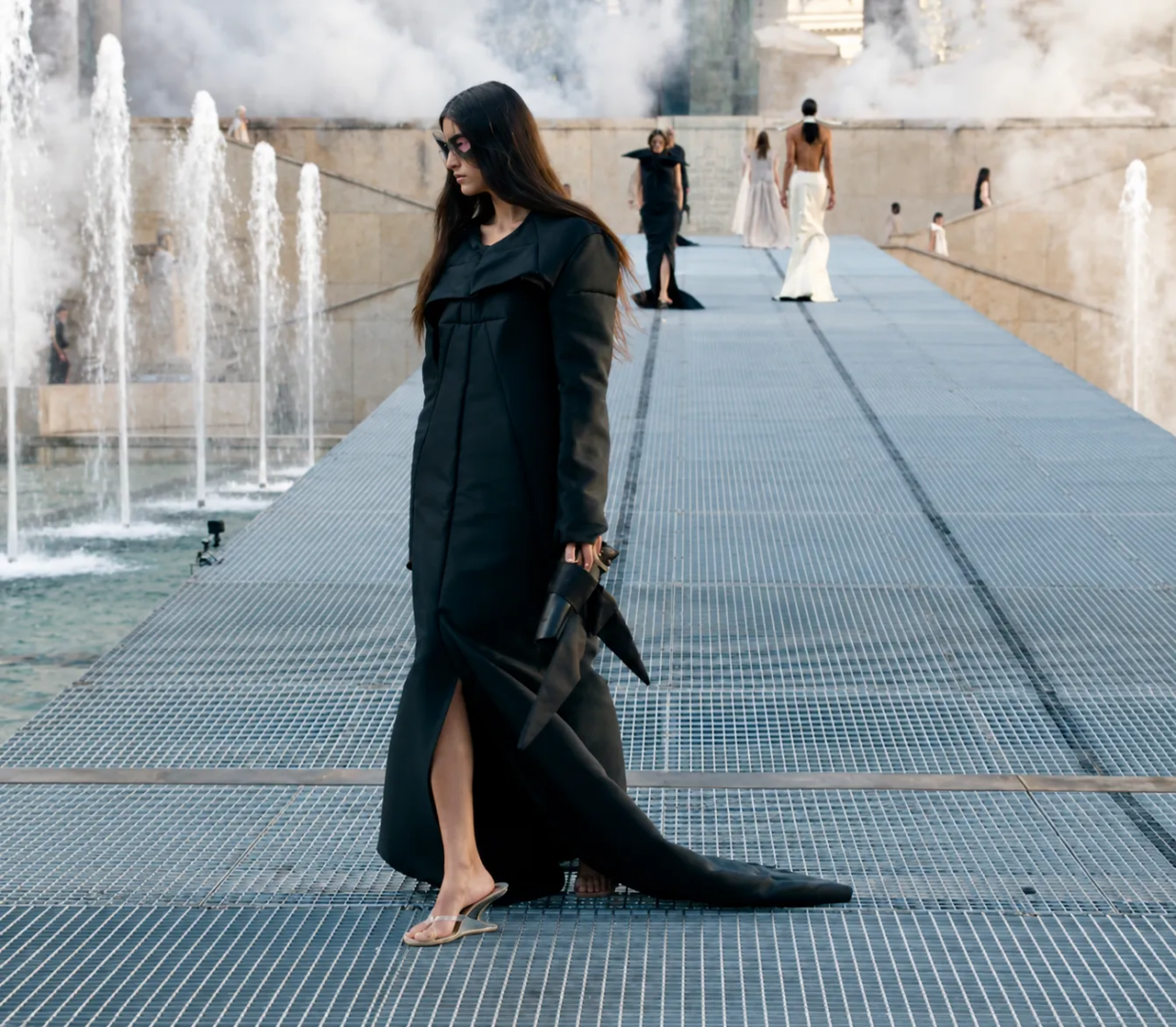
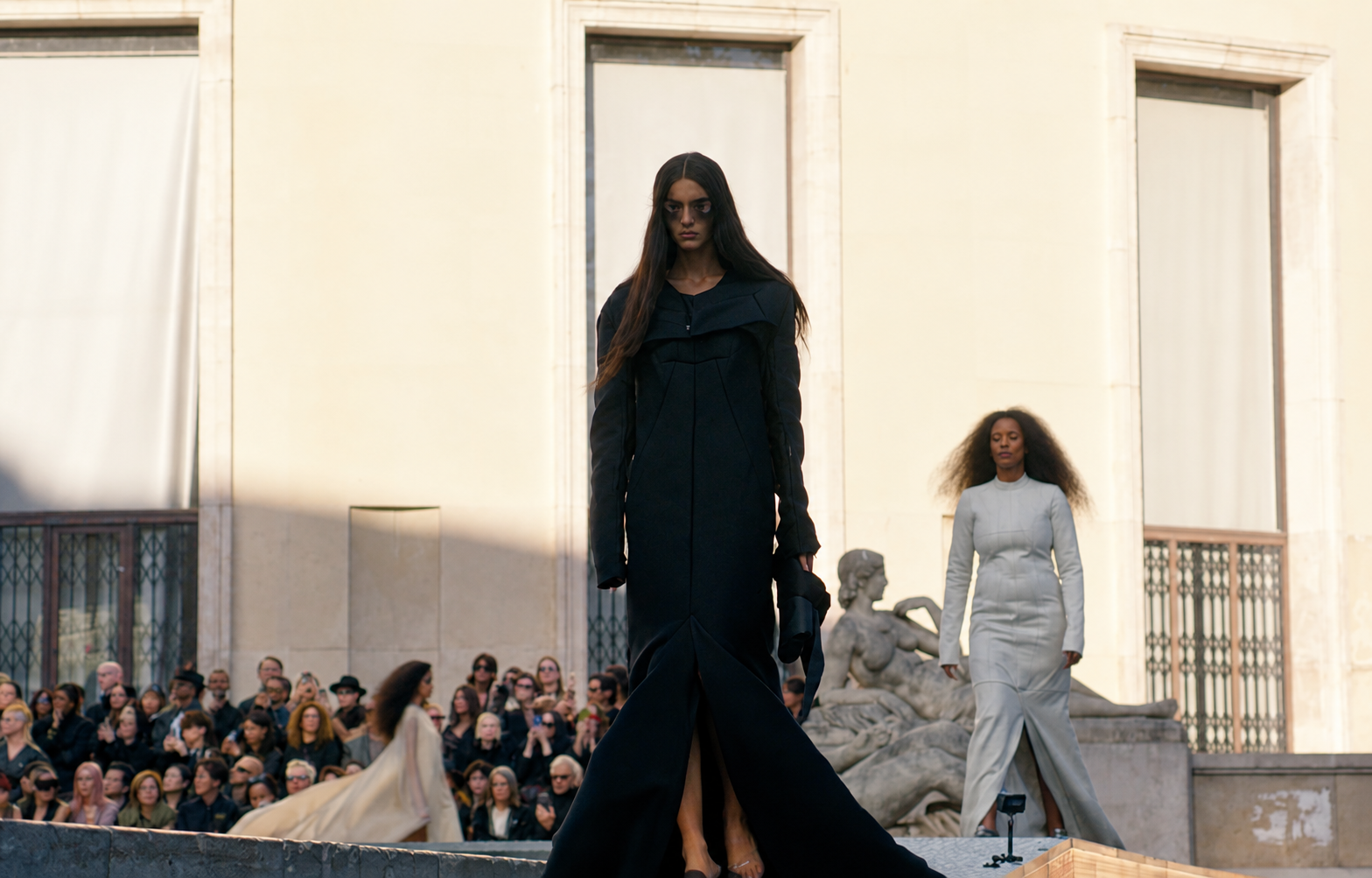
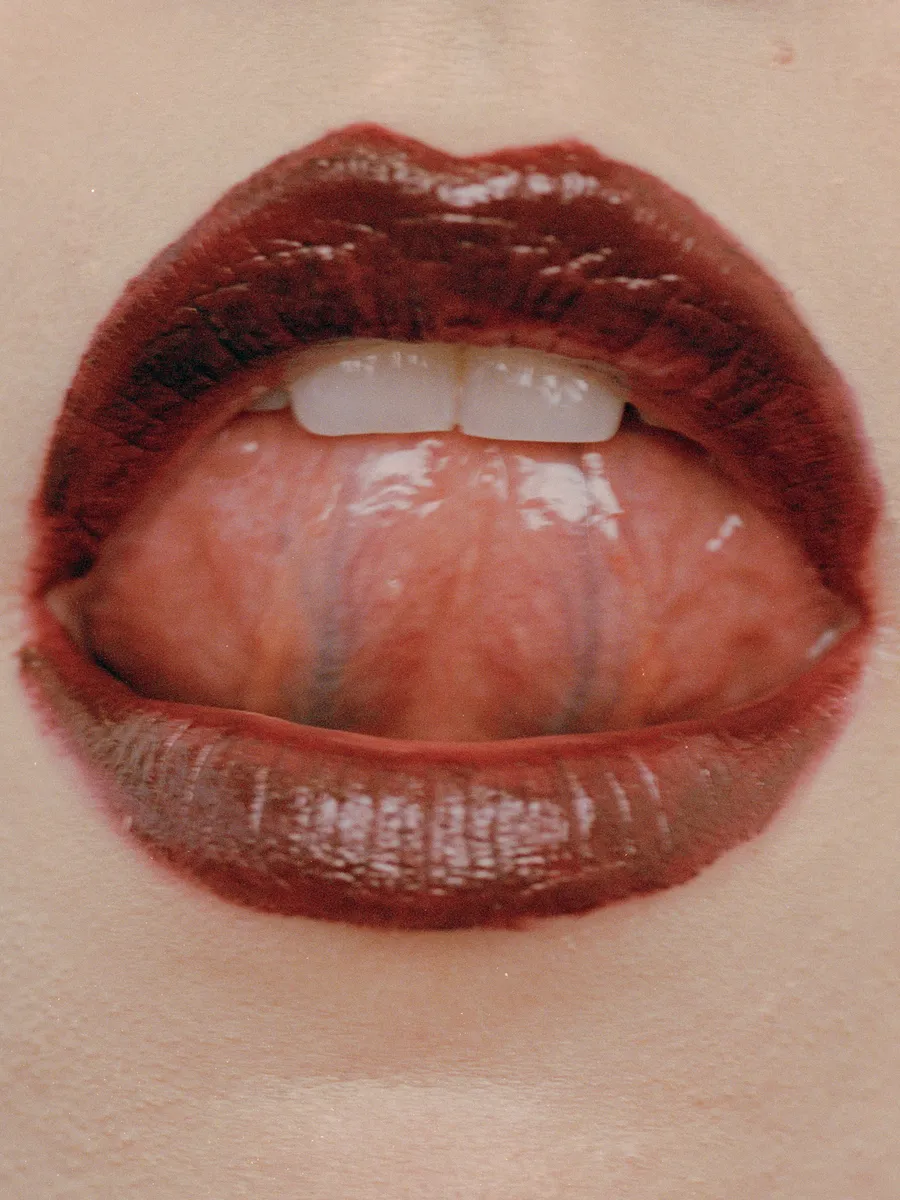
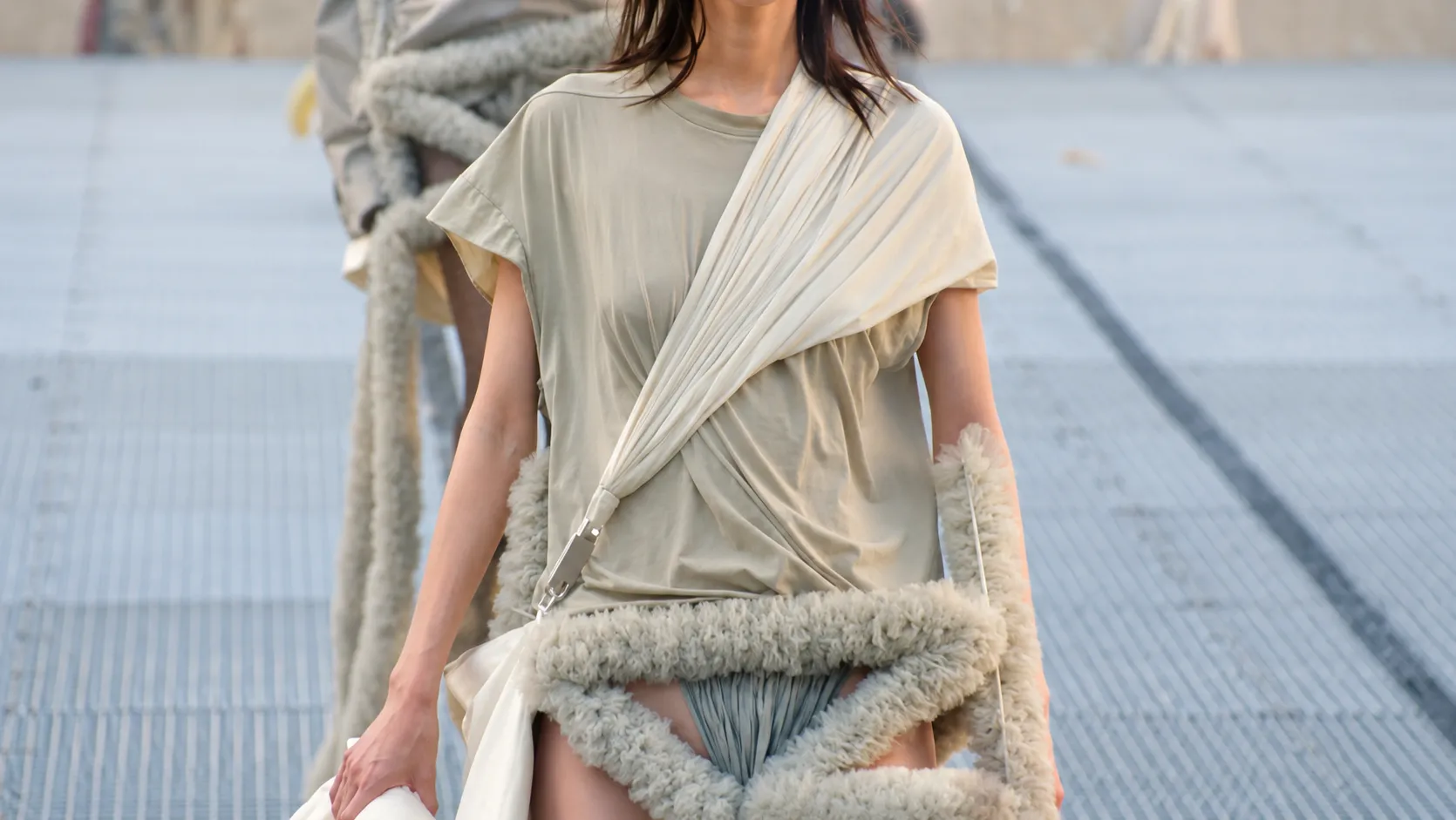
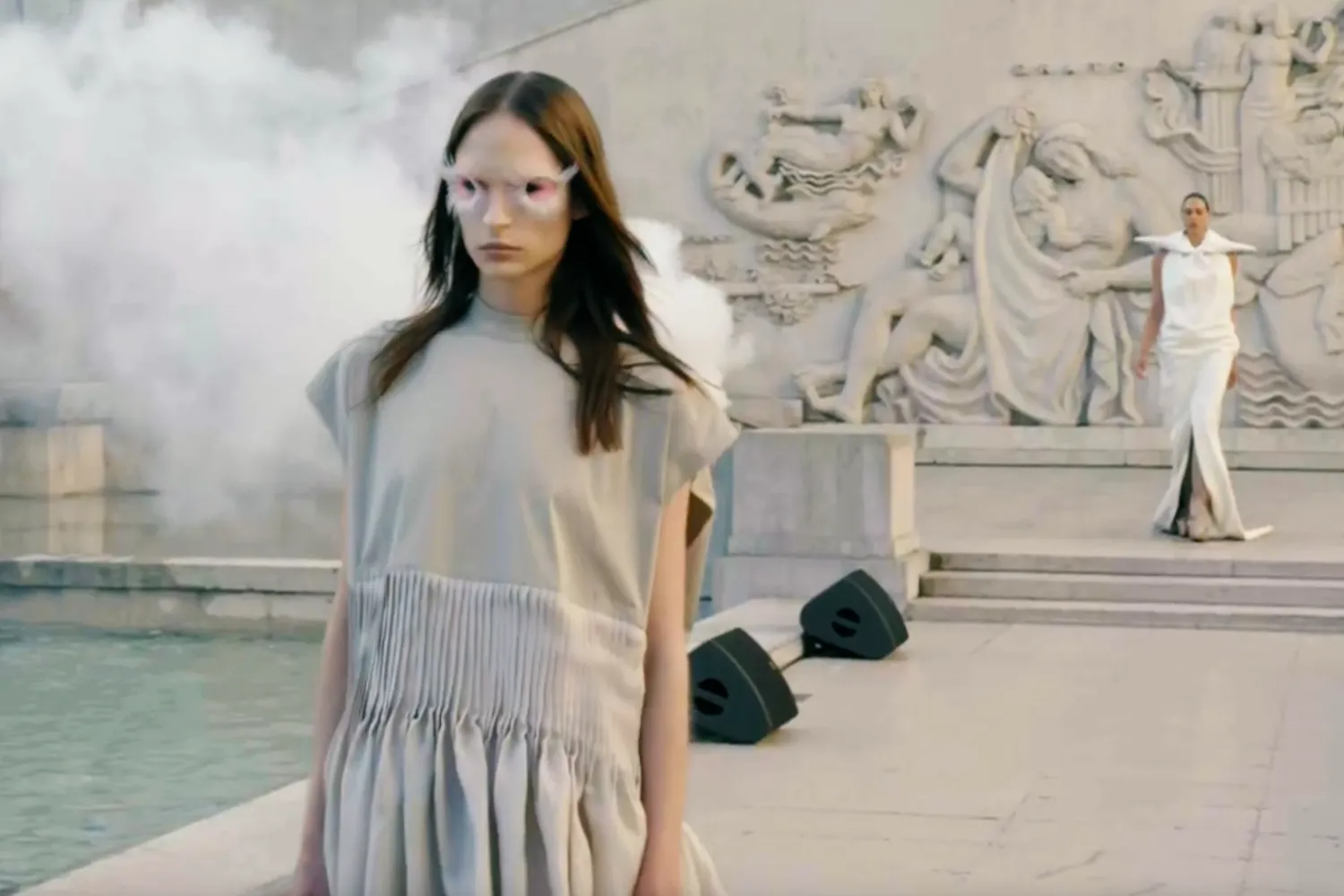
The collection makes the idea physical through its construction. The show opens in light tones, greys and whites, then moves to burgundy and black, with occasional green. Washed denim builds very wide volumes, long skirts and high collars; among the lighter pieces are a white dress with a long train and a look in black organza. Skeletal structures and three-dimensional volumes wrap the body, and the makeup sets feather-like elements around the eyes.
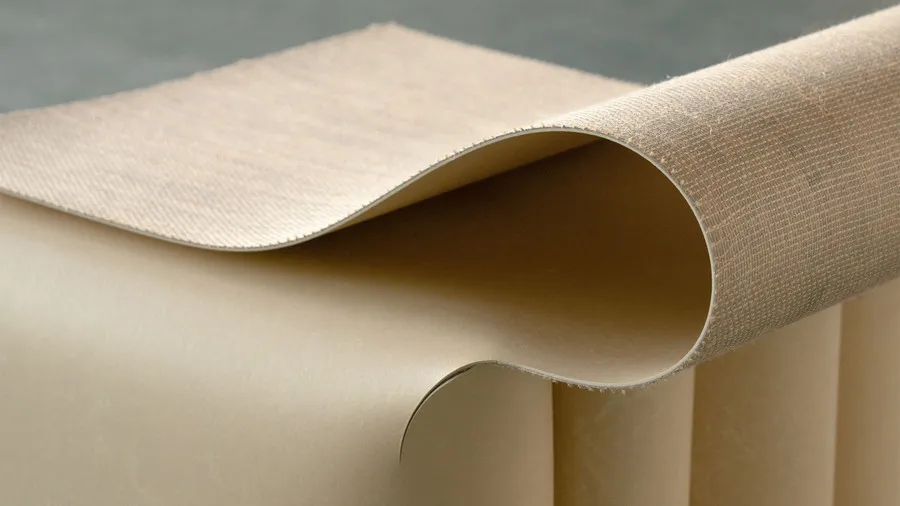
Three materials carry the method. Owens started from a heavy industrial nylon strap, the kind used to move shipping crates, and had a Como supplier turn it into fabric, a heavy double duchesse. Alongside it runs a heavy duchesse in pure silk, woven in Como through a slow process of about 30 metres a day.
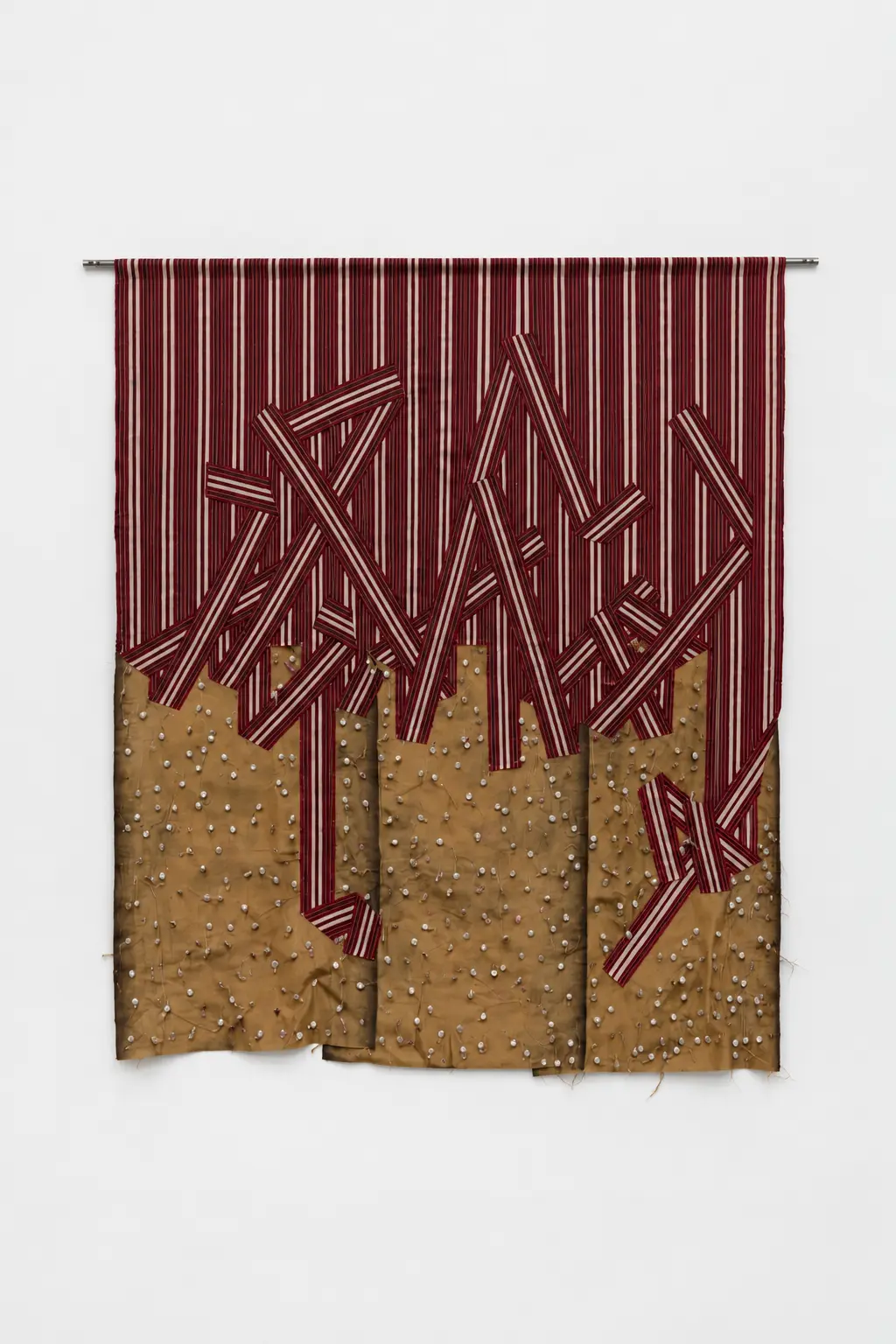
The millefoglie jackets concentrate the handwork. Each is built from thousands of circles cut one by one in recycled nylon tulle, certified to the Global Recycled Standard. A single jacket takes almost 200 metres of fabric and about 45 hours: the circles are sewn individually onto a tulle base, shaped on the body, then applied by hand onto a support of heavy cotton poplin.
The pentagram runs through the collection as a declared position. Owens takes a symbol often demonized and uses it against the moralistic judgement the collection sets itself to oppose, the same judgement as the stones thrown at whoever is seen as different.
Why Rick Owens divides: the body outside the canon
Owens works on the proportions of the body, and the garment alters them: it extends, compresses, protects or redraws the figure. He founded the label in Los Angeles in 1994, made his runway debut in New York in February 2002 with Sparrow, and moved to Paris in 2003 with Michèle Lamy, his partner and collaborator. From the start he set precise cutting against degraded materials, the meeting of glamour and grunge he named glunge.
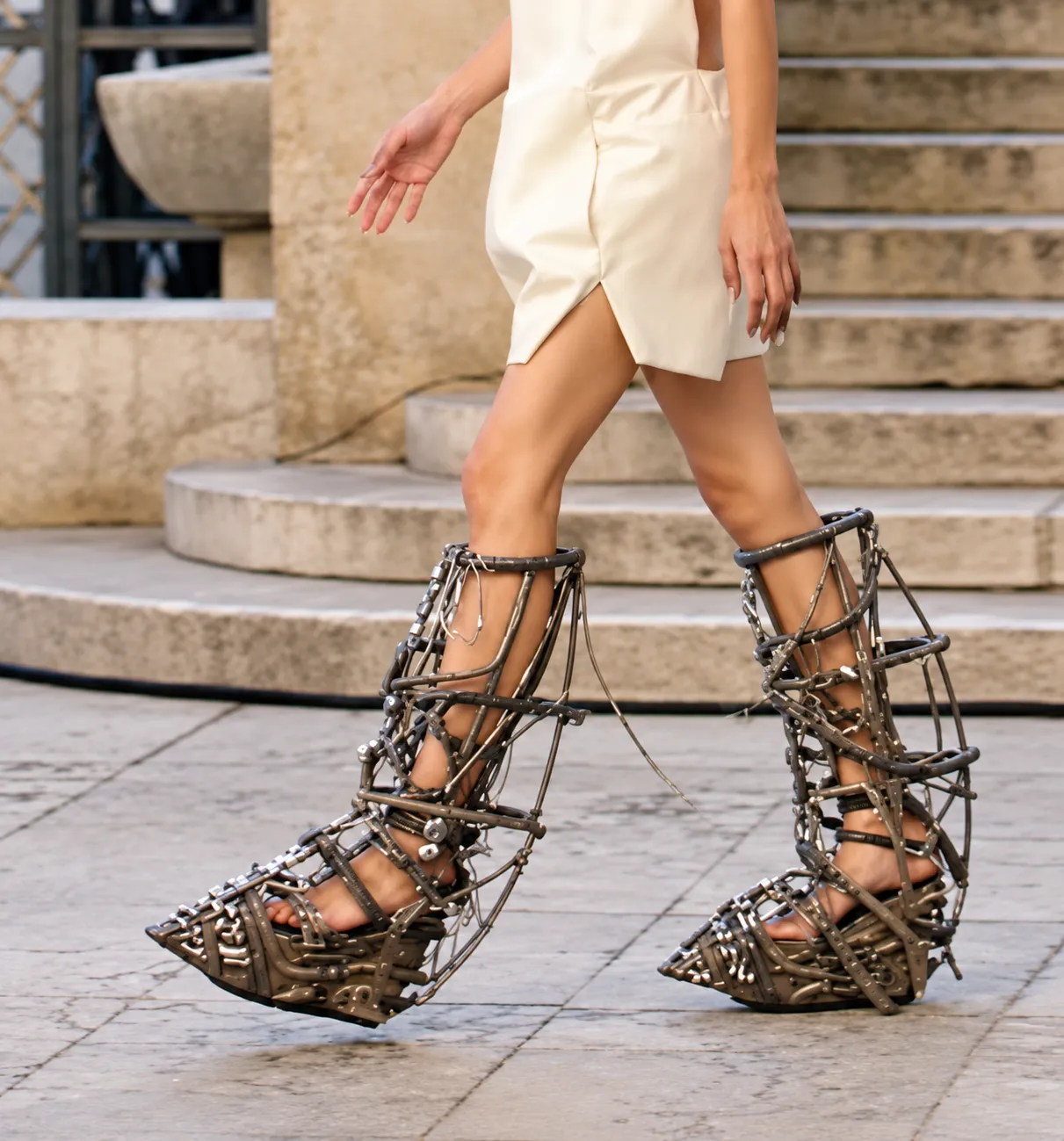
He treats the body as a structure destined to fail: lengthened, wrapped in volumes that erase its outline, set on platforms that make the step uncertain, with surfaces that imitate wear instead of hiding it. It is a vocabulary about mortality inside an industry built on the opposite promise, and it is what divides opinion. Those who reject him react to the surface of the image; those who follow the work read the construction under it. The distance between the two is the distance between looking at a runway photograph and seeing how a garment is made.
The material method: Tower and the menswear Stone
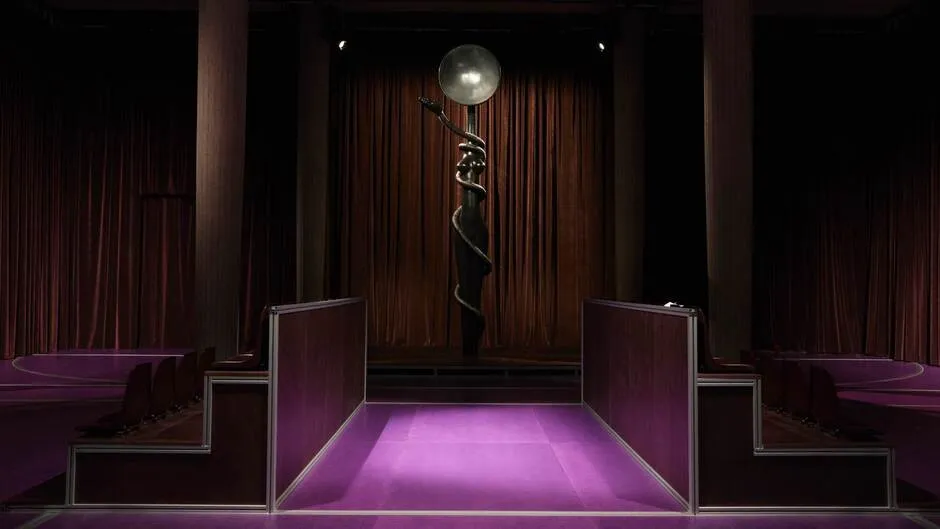
The womenswear Stone continues a method visible in the two preceding collections. For Tower, the autumn/winter 2026 womenswear at the Palais de Tokyo, Owens wove Kevlar — the aramid fibre of protective workwear — in Como, so the dresses keep a volume of their own while the body moves, and used a Himalayan wool felt 8 millimetres thick from Bikaner; the long macramé dresses, developed with Lucas Moretti, take about 4,000 metres of waxed cord and more than 50 hours each.
For the menswear Stone, shown in June 2026, he worked on tension: leg structures in foam and latex built around the body like an exoskeleton, and the return of Adidas, with inflatable Climacool pieces that cool the torso before activity. Protection on one side, a wearable device acting on the surrounding conditions on the other.
Rick Owens Furniture and the current exhibitions
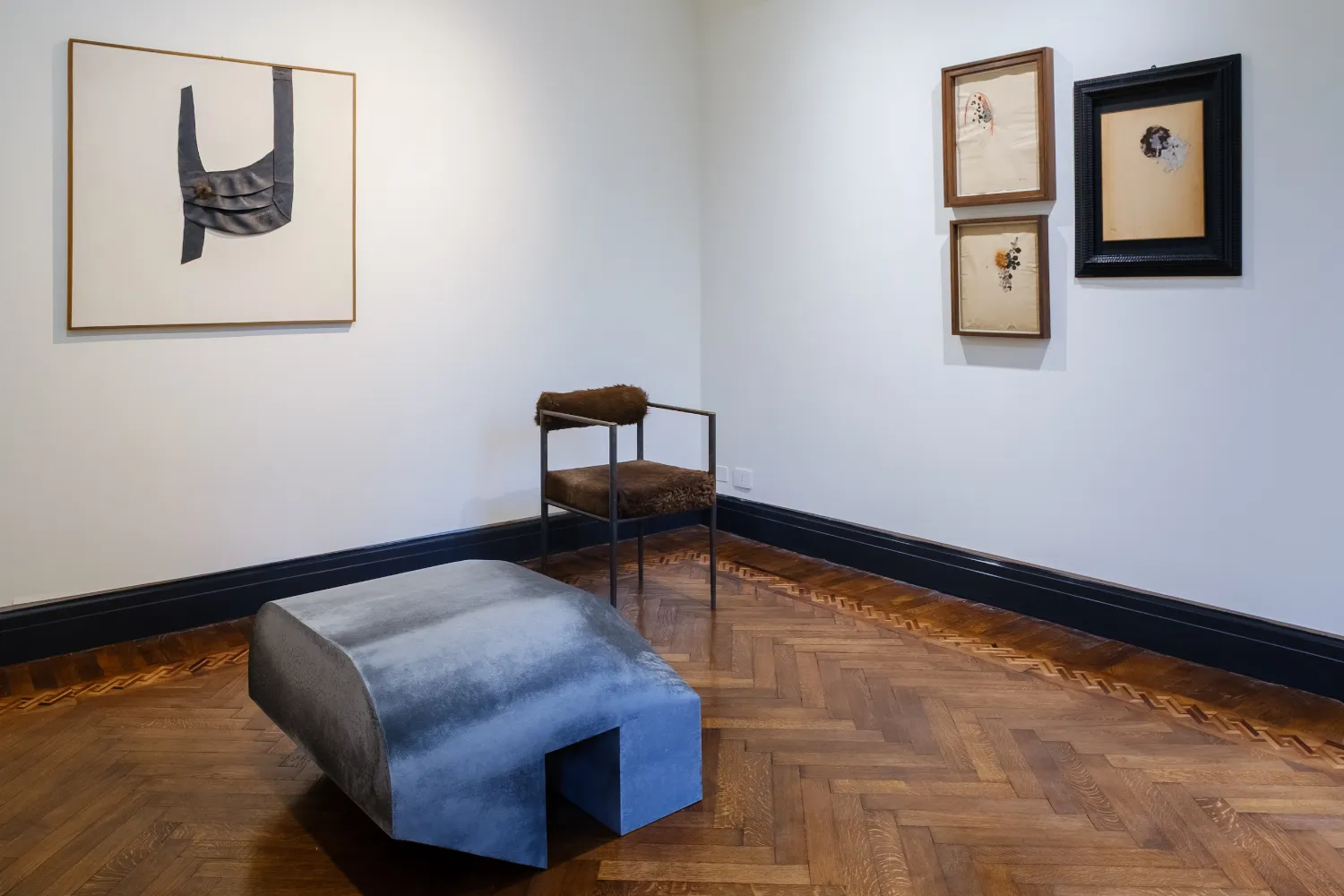
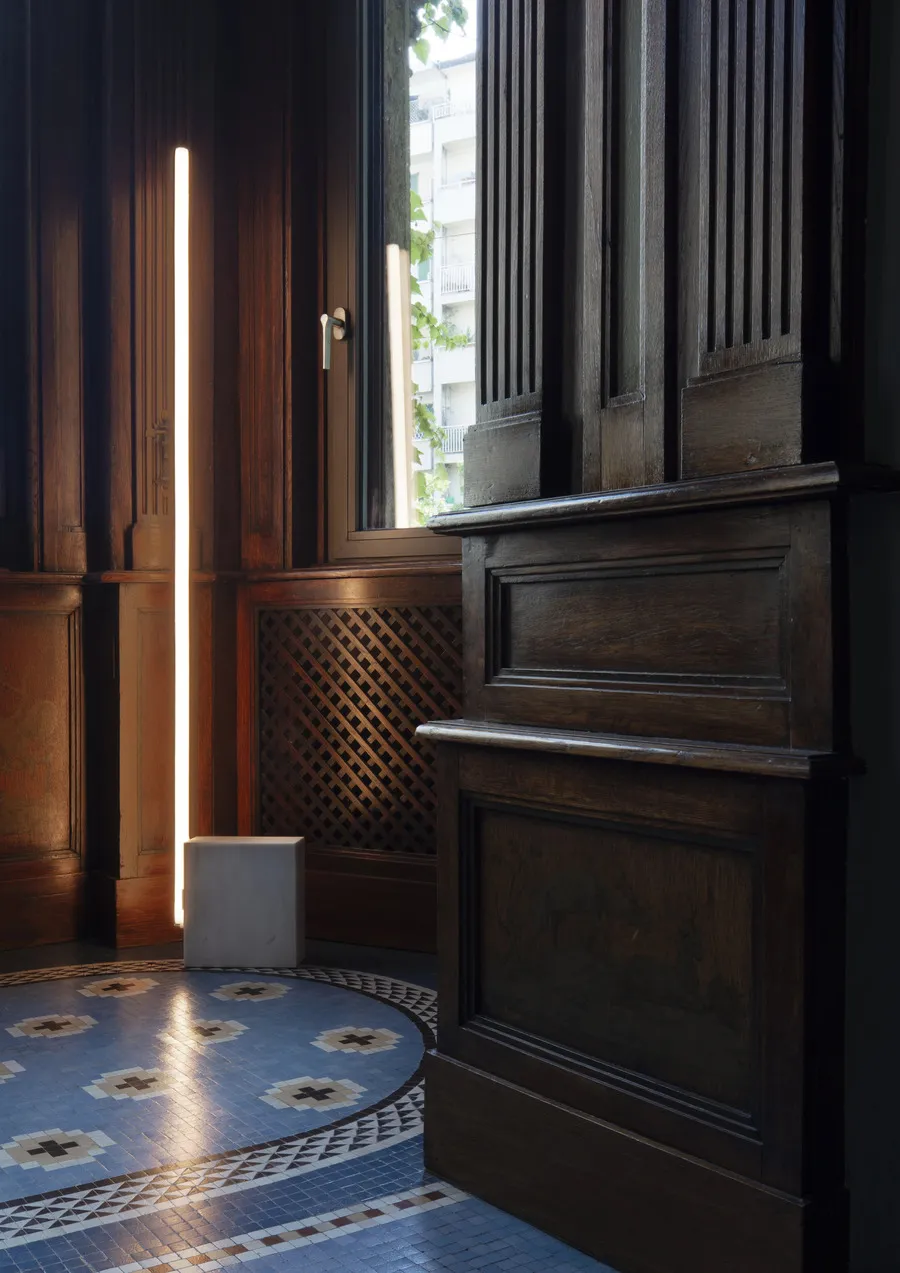
The same logic runs through Rick Owens Furniture, the atelier he and Lamy consolidated in 2007: plywood, concrete, bronze, petrified wood, bone and antler, in pieces like the Tomb Stag Chair, with declared references to Eileen Gray, Jean-Michel Frank, Claude Parent and the concrete fortifications of the Normandy coast studied by Paul Virilio. The furniture is on view now in Milan, at the VOENA gallery in via della Spiga 1, in DIALOGUES. Carol Rama with Rick Owens Furniture, to 20 November; and in Paris at the Carpenters Workshop Gallery, which opens Five Easy Pieces on 20 October.