Balenciaga Summer 2027: Pierpaolo Piccioli rebuilds the basque through the seam
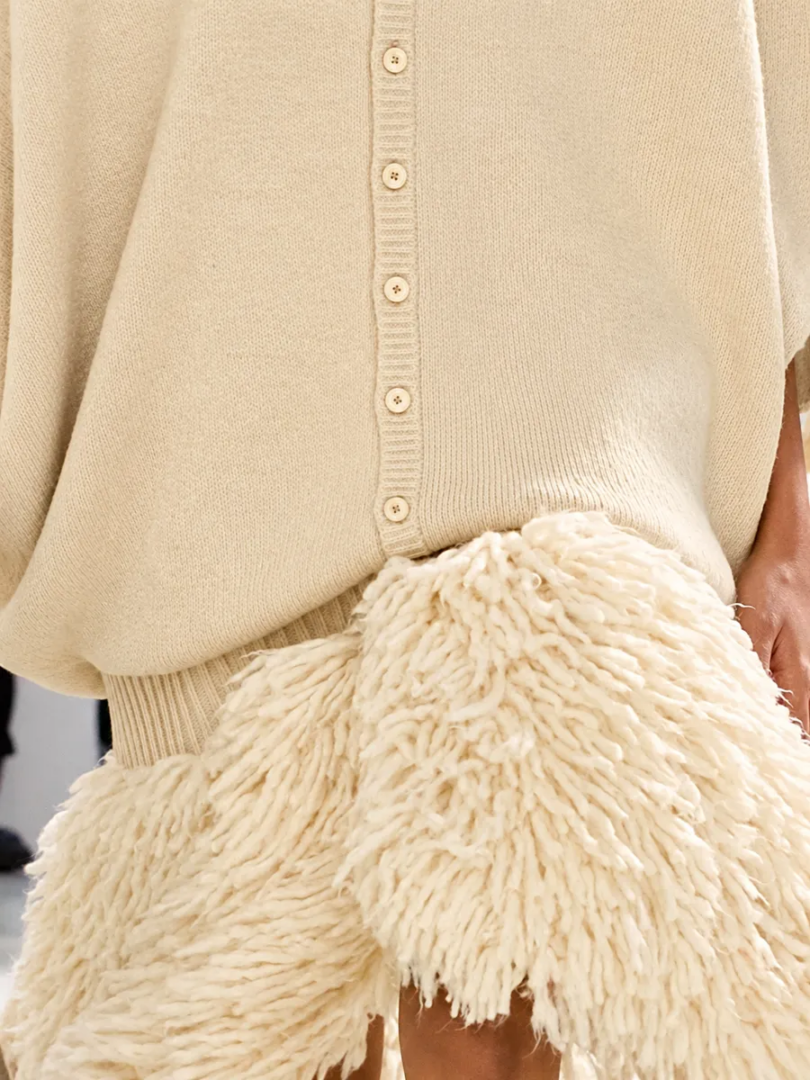
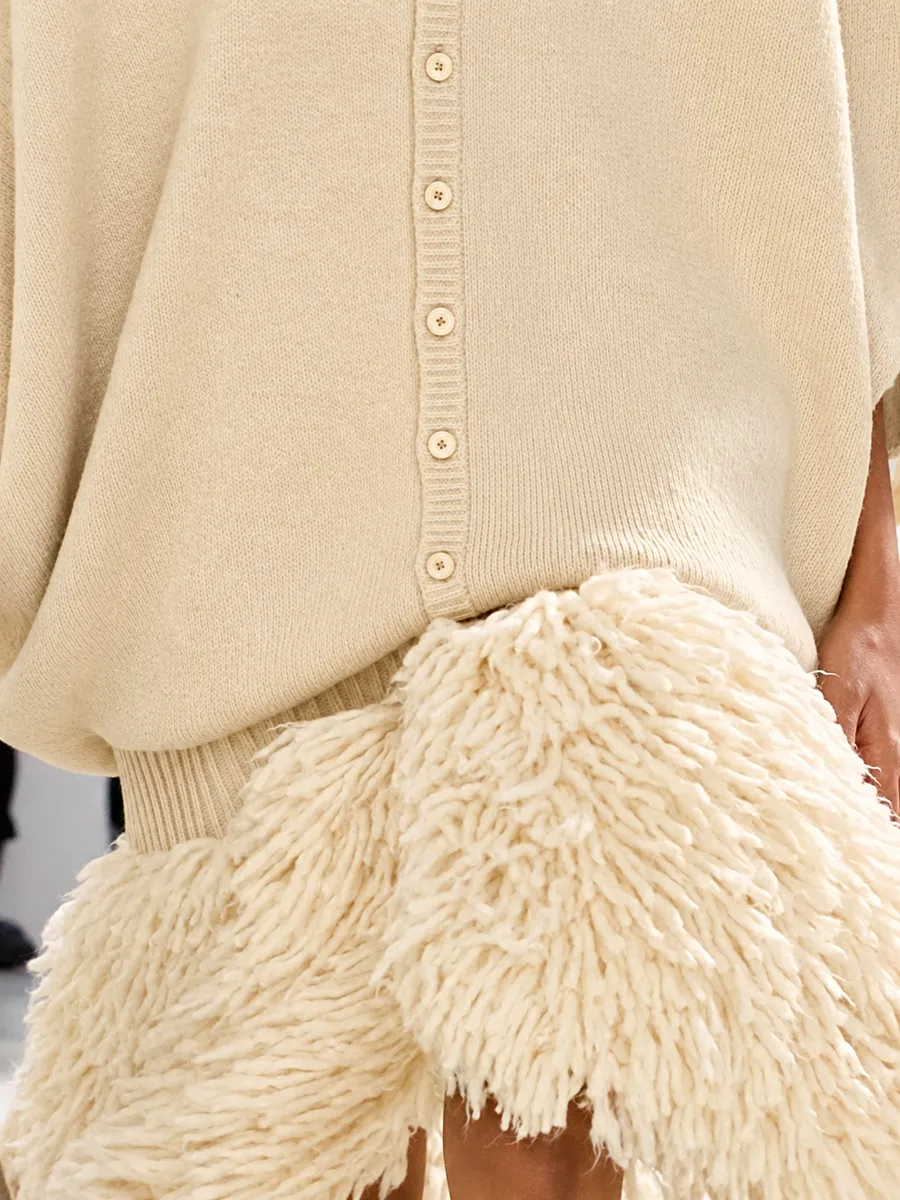
For Balenciaga Summer 2027, Pierpaolo Piccioli takes basque shapes from the house archive and transfers them onto T-shirts and leather jackets, using exposed seams to build volume from everyday garments
The basque is usually part of the internal architecture of a garment. At Balenciaga Summer 2027, Pierpaolo Piccioli brings that construction to the surface. Shapes taken from the Balenciaga archive appear on T-shirts and leather jackets, where the seam itself produces volume and changes the relationship between fabric and body. The technique comes from tailoring, where structural work normally remains concealed inside the garment. Piccioli reverses that logic: what would usually stay hidden becomes visible and determines the silhouette. The method first appeared in his July 2026 haute couture collection for Balenciaga; for Summer 2027, it moves into the everyday wardrobe.
A T-shirt is therefore no longer treated as a flat layer of jersey. Its construction extends from the body through a basque-like volume, while leather jackets undergo the same process, with seams becoming structural lines rather than finishing details. The reference to Cristóbal Balenciaga is not reproduced as quotation. It is transferred into another category of clothing. This movement between archive technique and ordinary garment is central to Les Coraux de la Liberté, Pierpaolo Piccioli’s Summer 2027 collection for Balenciaga, presented in Paris on 1 October 2026.
Balenciaga Summer 2027 starts from red coral
A branch of red coral provides the collection’s conceptual starting point. Coral resembles a plant but behaves like mineral matter. It is built by colonies of tiny animals, polyps, which secrete calcium carbonate and create a skeleton layer after layer. Mediterranean red coral, Corallium rubrum, grows by only millimetres each year, and every branch develops differently, dividing according to current, light and environmental conditions. There is no fixed geometry, and it is precisely this principle of progressive, irregular growth that Piccioli translates into garment construction. Shape is accumulated rather than imposed. Seams, layers and cuts progressively generate structure, allowing familiar pieces to acquire new volumes.
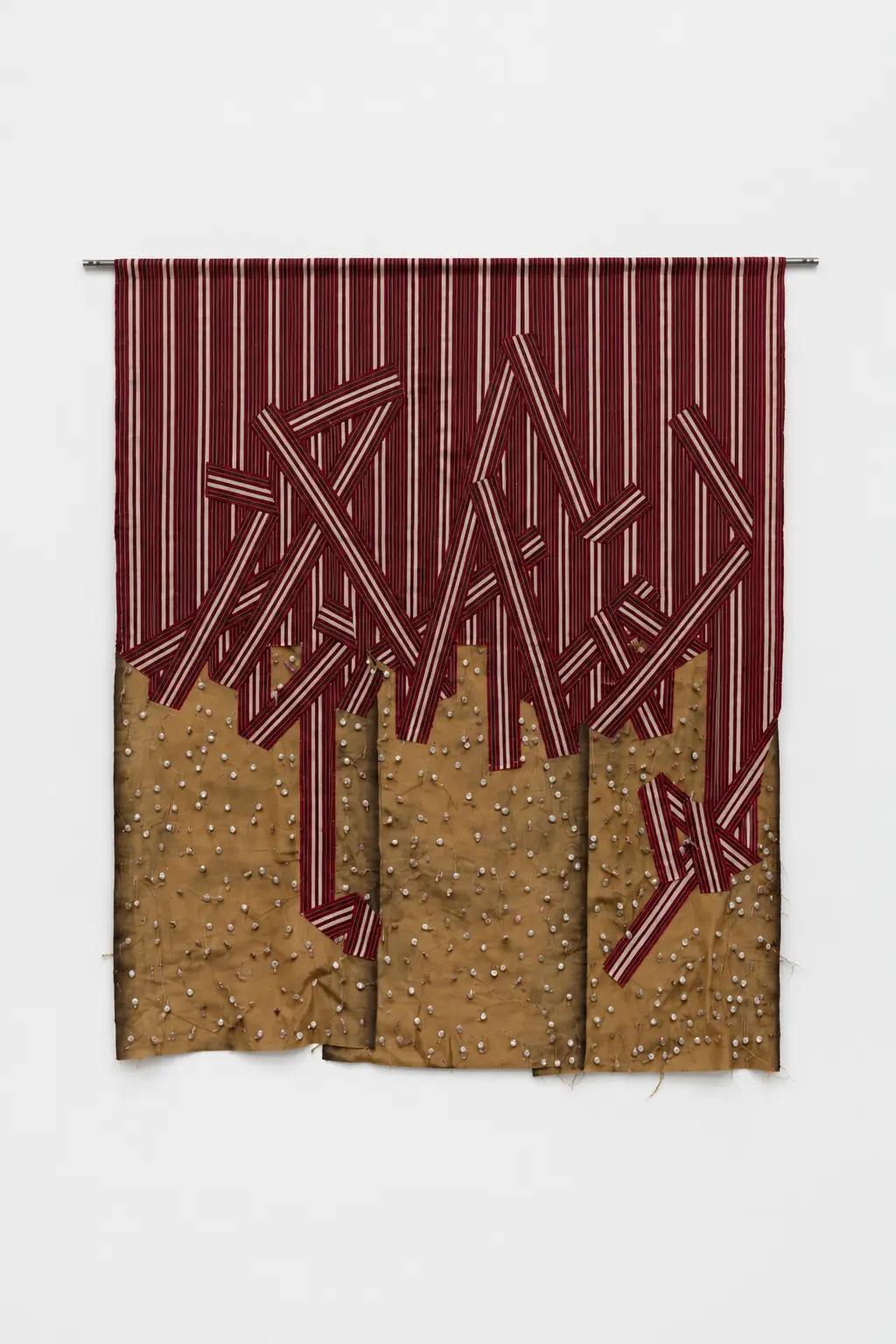
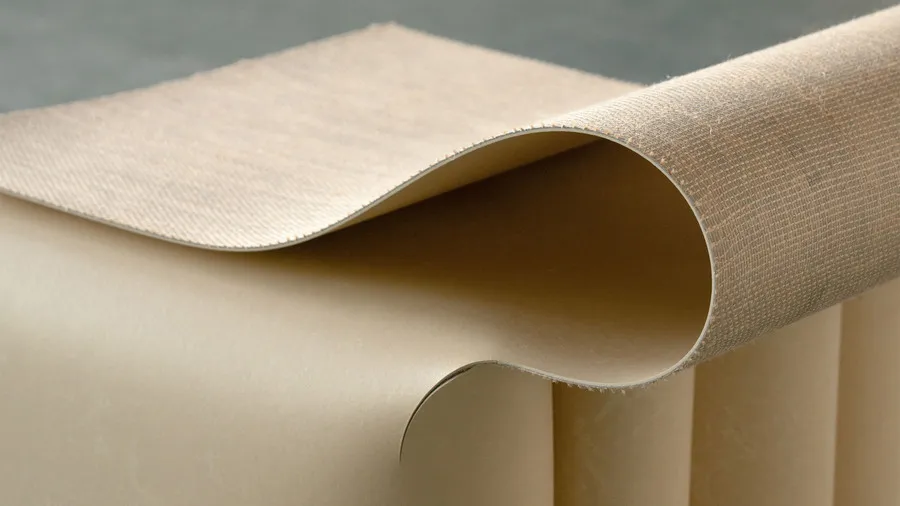
The title Les Coraux de la Liberté also refers to a 2025 work by French artist Aude Franjou, constructed entirely from wrapped linen. Fibre is wound, layered and built by hand until it can support its own form. The process offers a direct material analogy for the collection: textile construction becomes visible, structural and autonomous. Piccioli’s relationship with the sea is also biographical. He grew up in Nettuno, on the coast south of Rome, and before joining Balenciaga in 2025 he spent twenty-five years at Valentino, including eight years as sole creative director. Summer 2027 is his third ready-to-wear collection for Balenciaga, following his debut in October 2025 and the Autumn-Winter 2026 collection shown in March. Between them came Resort 2027 and, in July 2026, his first haute couture collection for the house.
The fabrics of Balenciaga Spring-Summer 2027
Piccioli works through the relationship between fabric and structure. Sheer textiles alternate with firmer materials, while different techniques control how each garment stands, falls or moves. The wardrobe retains Balenciaga’s architectural approach to cutting while changing its weight, surface and behaviour. Tailoring meets softer construction, and leaving the structure exposed increases the technical difficulty: proportions and volumes have to hold without relying on the usual internal supports.
Gazar remains one of the central references. The stiff silk fabric is able to support shape by itself and became closely associated with Cristóbal Balenciaga’s experiments with volume. For his July 2026 couture collection, Piccioli reintroduced it as Neo Gazar, using the fabric both externally and as an internal structural element. In Summer 2027, that approach expands into other materials. The relationship with coral is carried through surfaces as much as through silhouette, with construction developing through repetition, accumulation and layered interventions rather than through a single rigid form. The exposed seam used to create the basque shapes is one example: a tailoring technique usually kept inside the garment becomes the visible mechanism through which volume is produced.
Bias cutting moves from eveningwear to jeans and menswear
Bias cutting is another technique Piccioli removes from its expected context. It appears on evening dresses but also on jeans, shirts and men’s tailoring. The garments remain immediately recognisable, but cutting fabric diagonally to the grain allows it to move, stretch and fall differently, altering the relationship between garment and anatomy without changing its basic typology. A pair of jeans remains a pair of jeans, a shirt remains a shirt and a suit retains its familiar structure, but their behaviour changes through cut. This transfer of atelier methods into ordinary garments becomes one of the main technical propositions of Balenciaga Summer 2027.
Calais lace, cutwork and air-filled organza flowers
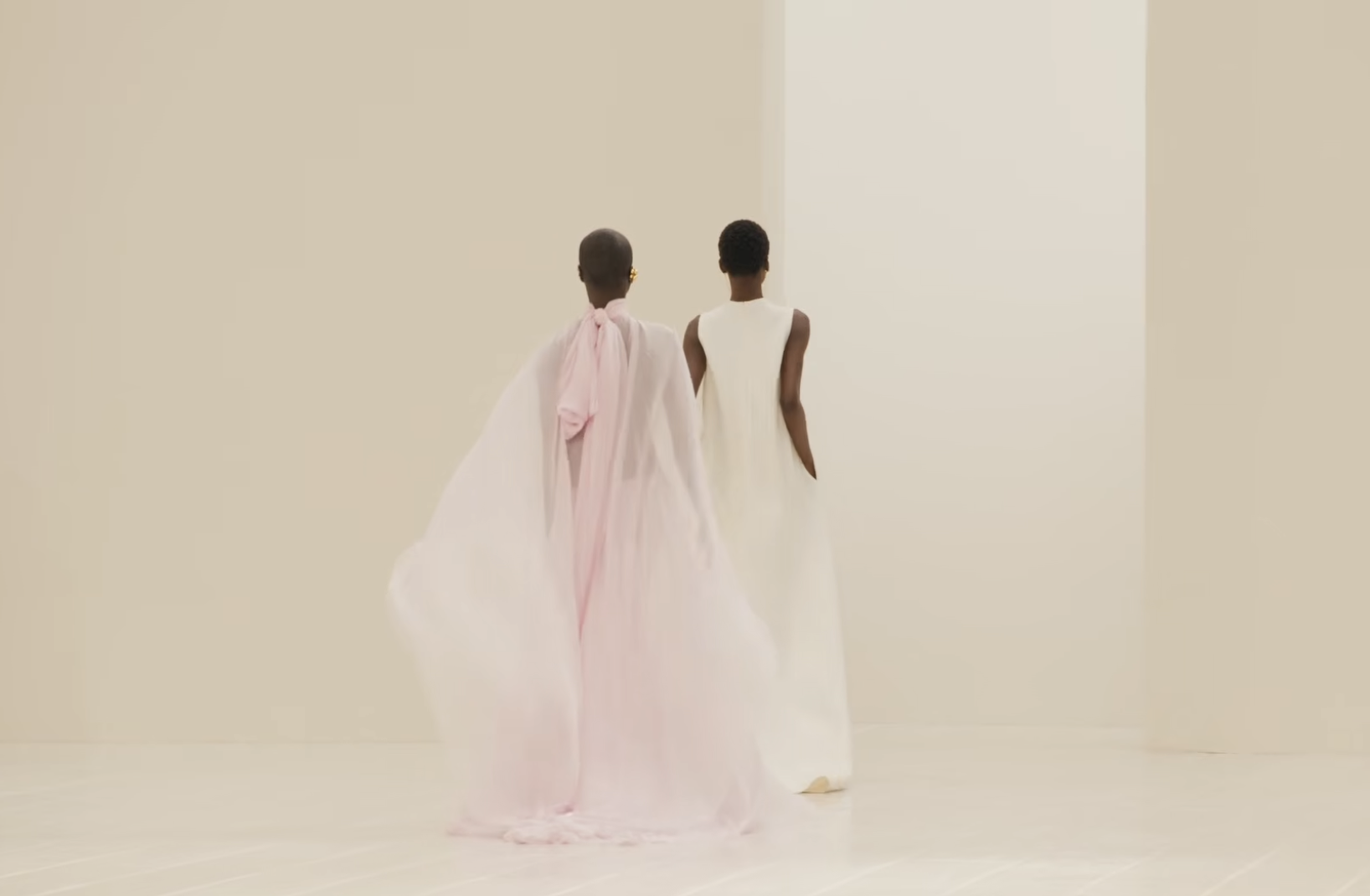
Other parts of the collection introduce openings into the fabric. Calais lace insertions and cutwork expose sections of skin while remaining part of the garment’s architecture. The openings do not simply decorate the surface; they participate in the construction of the silhouette. The flowers work in a similar way. Rather than functioning as naturalistic ornament, they appear as abstract organza forms filled with compressed air and arranged in a controlled, repeated rhythm across the garments, extending and reproducing their volumes. Again, the logic is cumulative: small elements build a larger structure.
Balenciaga SS27 silhouettes: volume changes through movement
The Balenciaga Summer 2027 silhouette comes from the alternation of volumes, lengths and surfaces, but it also changes according to the position of the body. When the wearer stands still, the structure becomes legible; in movement, openings, folds and suspended layers change its profile. The garments are designed to register walking, turning and reaching rather than to maintain one fixed outline. Archive references appear through smaller construction details, with drawstrings and buttoned collars bringing back gestures associated with Balenciaga without reproducing historical garments literally.
Material has always been one of the house’s primary fields of experimentation. Cristóbal Balenciaga treated fabric as a building material, cutting it so that it could stand away from the body. The semi-fitted suit, tunic, sack dress, cocoon coat and balloon skirt all developed from that principle, as did his use of gazar. Spring-Summer 2027 continues that line of research across the full wardrobe. Thin layers of cloth fall, catch and lift around the body, and architecture comes not only from firmness but from movement. The clothes acquire shape through use rather than holding a single predetermined outline.
Couture construction enters the everyday Balenciaga wardrobe
This shift had already begun in Resort 2027, where Piccioli introduced the idea of unsized garments made from techno taffeta and cotton poplin, designed to stand away from the body according to how the wearer chose to inhabit them. Featherlight fabrics appeared beside glove-weight napa, making the distinction between rigid architecture and soft movement less fixed. Summer 2027 develops the same idea by taking methods associated with couture and applying them directly to everyday clothing.
Jeans, shirts, T-shirts and bombers begin in the atelier. They are draped and formed on the stand before being cut, and their architecture is determined through that process. The garments themselves are basic, but the way they are constructed is not. It is one of the clearest ways in which Piccioli reframes Balenciaga’s technical history: not by reproducing archival silhouettes, but by transferring their logic into clothing that belongs to the contemporary wardrobe.
From Neo Gazar to Balenciaga Summer 2027
In July 2026, Piccioli presented his first haute couture collection for Balenciaga, the fifty-fifth couture collection in the house’s history. There he brought gazar back as Neo Gazar and used several looks to isolate the relationship between silhouette and construction. Some appeared twice, with the second version rendered entirely in black, removing colour and surface distraction so that the eye followed only proportion, cut and volume.
Summer 2027 takes those couture methods and redistributes them across ready-to-wear. The transition is visible in the exposed seams, the basque construction, the bias cutting and the treatment of surface. Couture is not inserted into the collection as a separate category. Its techniques are absorbed into garments associated with daily use, reducing the distance between atelier construction and ordinary dress.
Balenciaga Summer 2027 shoes, bags and Getaria jewellery
The same reduction of internal structure appears in the accessories. The Wave Thong Sandal is a flat shoe made in toile canvas, the Dahlia Mule introduces a heel, while the new Lounge Sneaker eliminates internal structure almost entirely. The Nodo and Silhou Tote are made in supple leather and shaped by hand through draping rather than rigid construction. The arms of the Bow Mask sunglasses are braided by artisans.
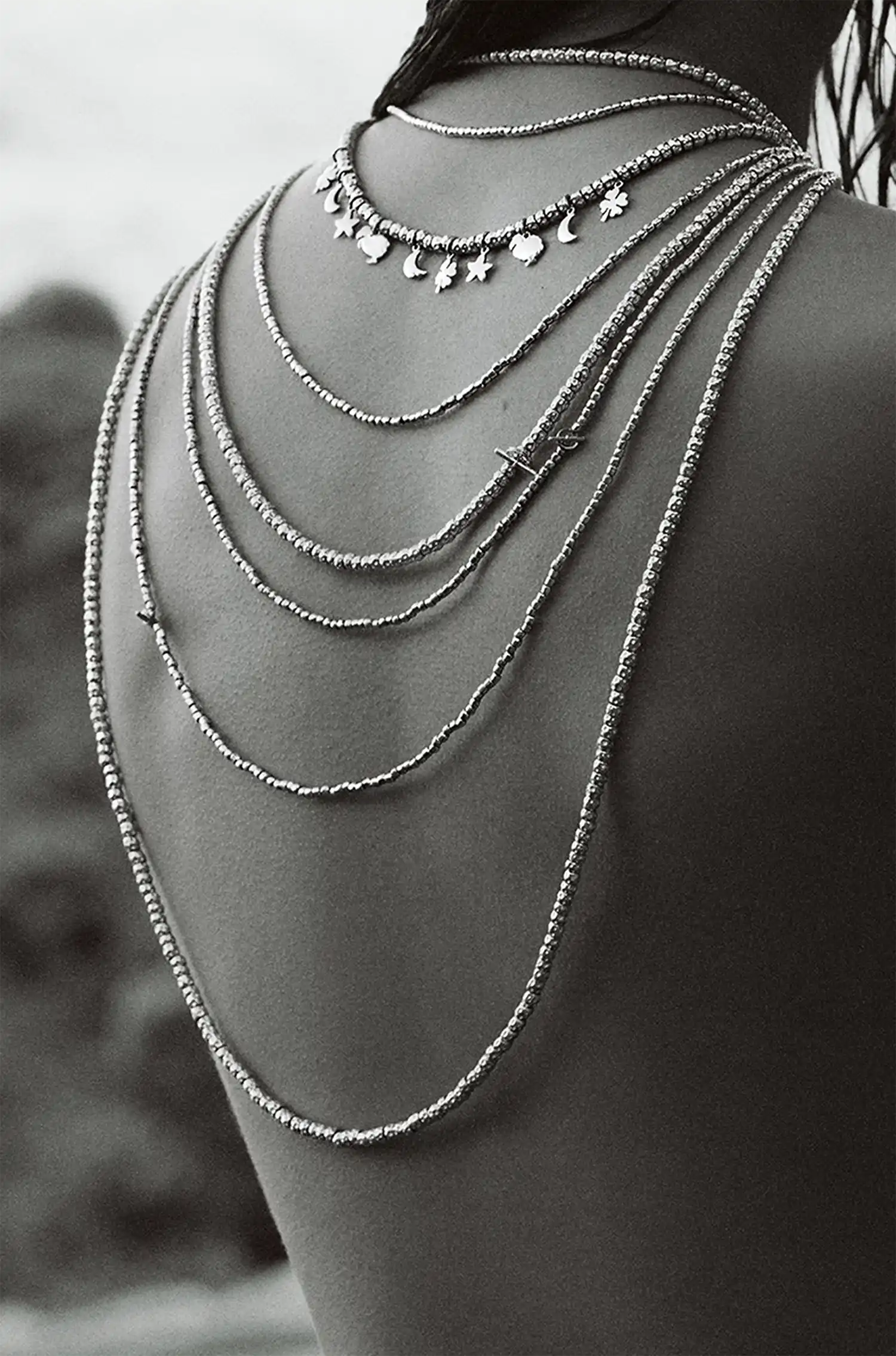
Jewellery extends the relationship between body and line. A necklace rises toward the earrings, connecting neck, jaw and ear through a single vertical movement that responds to the horizontal line of the shoulder. The jewellery is called Getaria, after the Basque fishing town where Cristóbal Balenciaga was born, and its forms refer to seashells. The sea therefore returns at another point in the collection: through Piccioli’s own biography, through Aude Franjou’s coral sculpture and through the geography of Balenciaga’s founder. Between them sits the construction of the clothes, with seams building outward, fabric accumulating into volume and garments taking shape from the body moving inside them.
Melis Ozek