The Manner, or how Milan learned to live in New York
At 58 Thompson Street, Soho, Hannes Peer composes a design symphony for New York, drawing on Milanese masters and excavating, like an archaeologist, the layered beauty of the world
The Manner New York in SoHo: design, rooms, and a hotel without screens
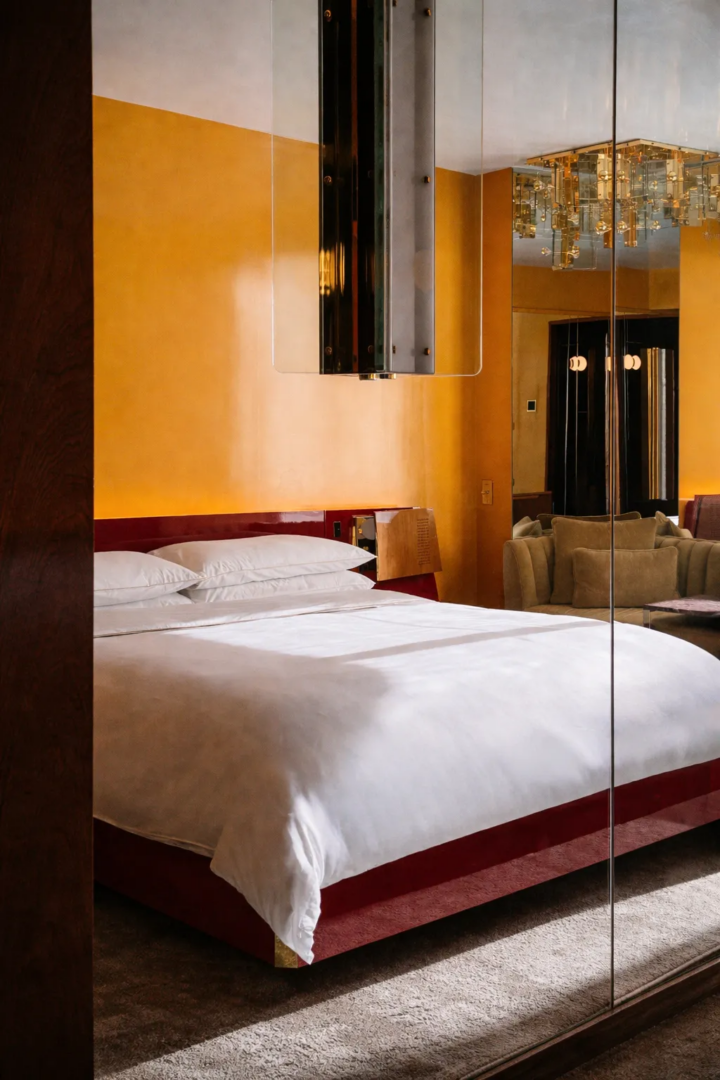
There is no television in the room. The lacquered headboard rises against a wall mirrored floor-to-ceiling, so that the room reflects itself into a kind of infinity — two amber-lit versions of the same space folding into each other, warm, slightly vertiginous. The marble bathroom holds its silence. An integrated audio system breathes low music into the air. Outside, Thompson Street is lined with trees and almost entirely still for SoHo, which is itself an achievement. If Charles Baudelaire had been born in 1980, had money, and had chosen Lower Manhattan as his permanent arrangement with the world, this room would be the room he refused to leave.
The Manner: the genesis of a SoHo boutique hotel
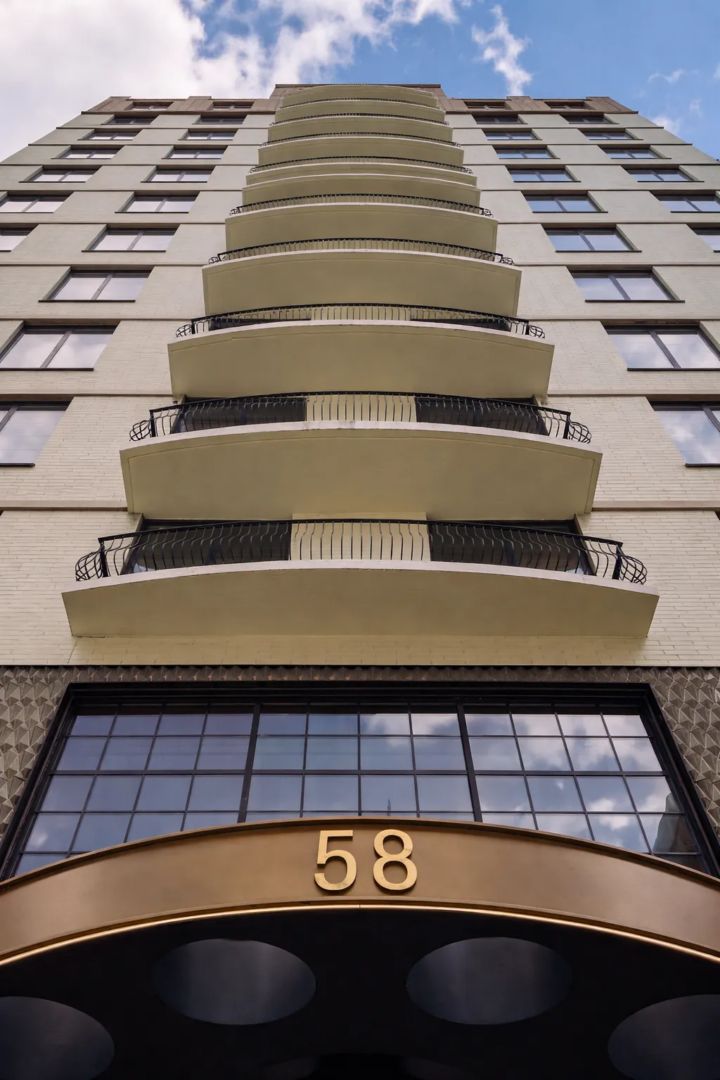
The Manner moves the other way: discretion, intimacy, filtered access, a controlled atmosphere that resists the social noise of the contemporary lifestyle hotel. The project’s architecture and interiors were entrusted to Hannes Peer, a Milanese architect and designer, working in close collaboration with Verena Haller, Chief Design Officer at The Lifestyle Group by Hyatt. The architects of record were Lubrano Ciavarra Architects; lighting was designed by LightIQ.
Hannes Peer at The Manner New York: interior design, architecture, and spatial composition
Hannes Peer was born in Bolzano and trained between Milan and Rotterdam. At The Manner, he acts as a director: he does not simply design interiors, but composes a sequence of spaces that function as distinct movements within a single structure.
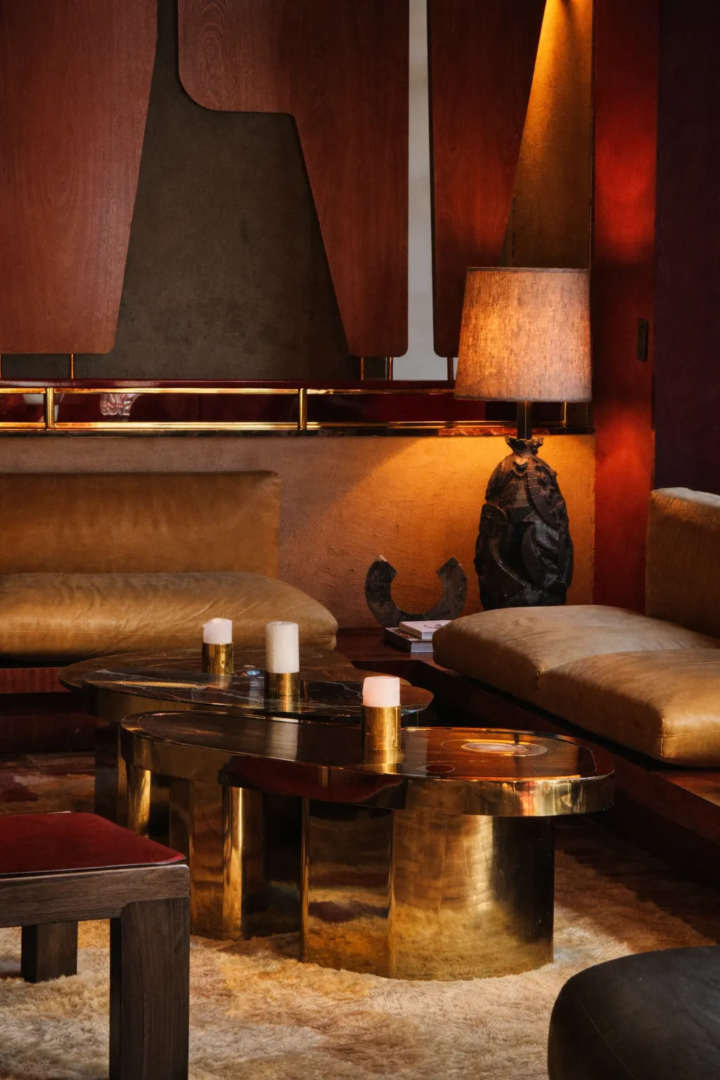
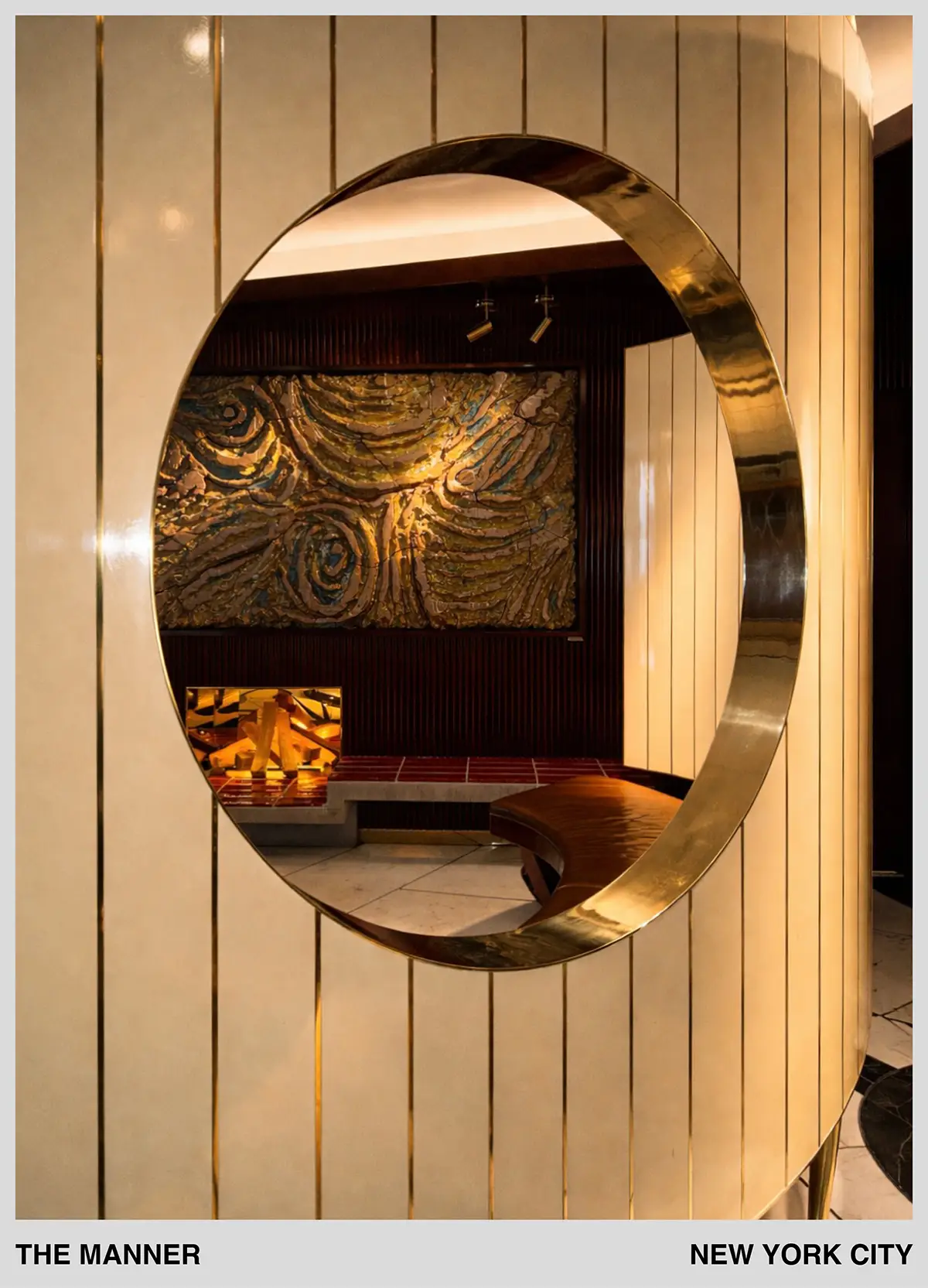
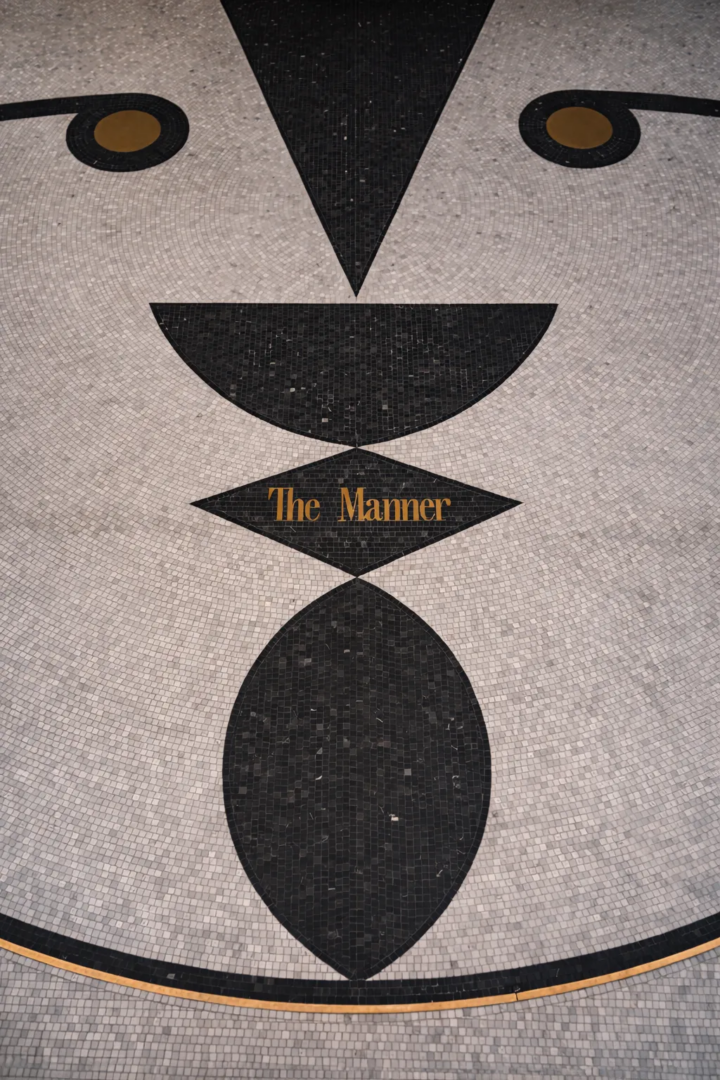
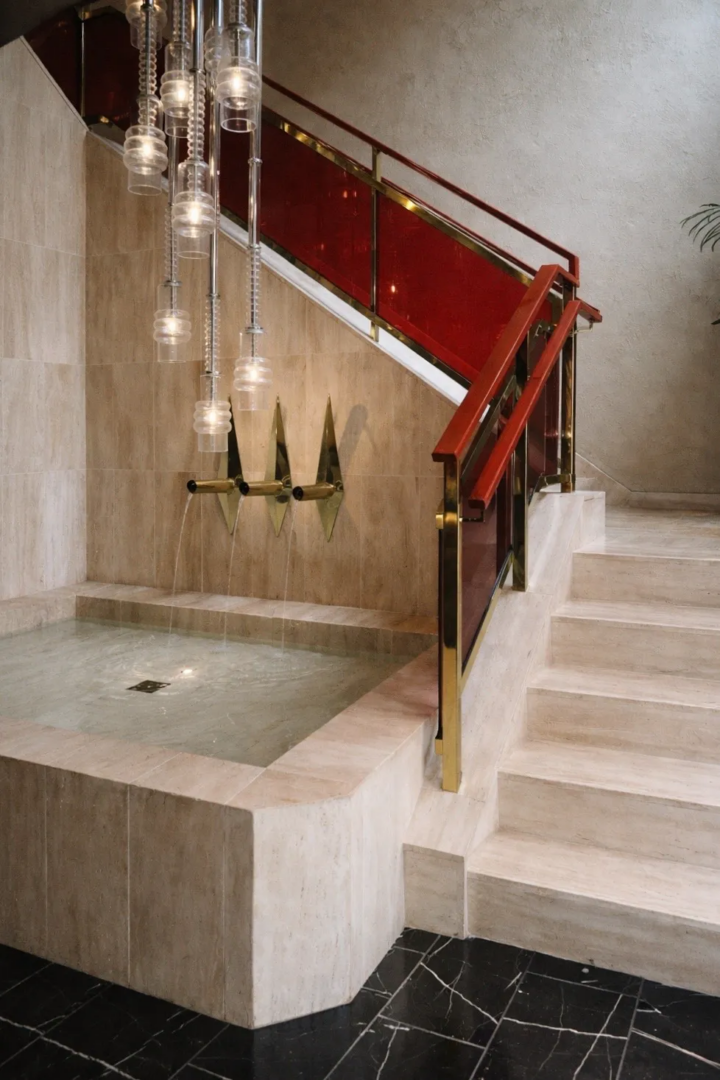
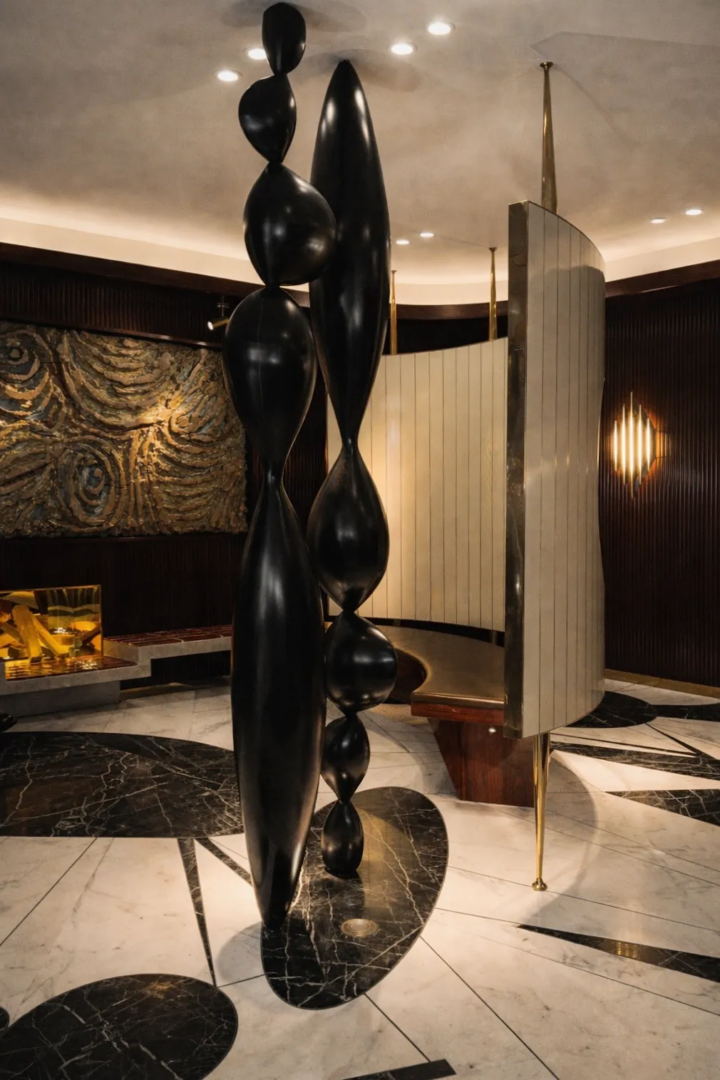
The lobby is the opening act. Marble floors, a golden fireplace, water features, polished surfaces, and totem-like sculptures define a space that is controlled yet not rigid. If the exterior remains restrained, the interior unfolds as a scenographic device. The Apartment, the guest-only lounge, is the conceptual core of the project. Pompeian red walls, floor-to-ceiling mirrors, dark woods, and partitions organize the space into a sequence of rooms. The remaining spaces — restaurant, bar, rooftop — follow the same logic. Each room has its own identity, yet all operate within a shared vocabulary: reflective surfaces, dense materials, saturated tones.
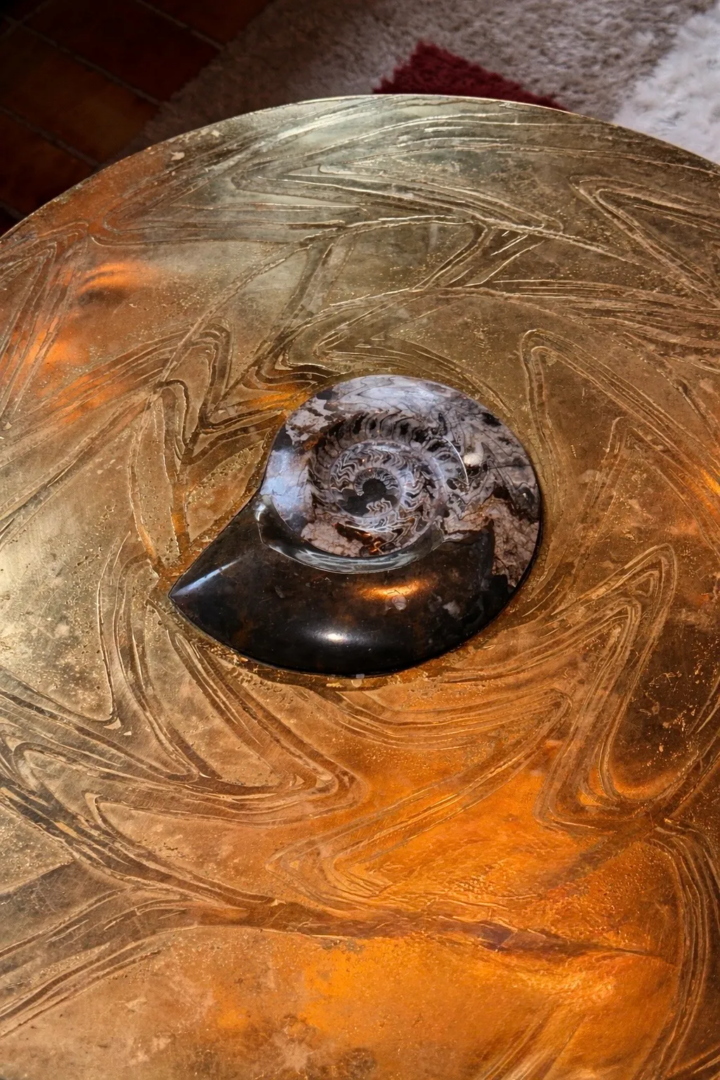
Within this system, primordial forms appear incised into stone and furniture, as signals of a design archaeology. The atmosphere remains suspended in time. Cultivée, without display. The environment suggests a resolved civilization — one that has absorbed its past and rearticulated it without nostalgia. There is no decorative excess. Each element is placed with precision. To achieve this, Peer brings together artists and makers integrating their contributions into a single composition.
Art and material at The Manner: Giovanni de Francesco and Nicholas Shurey
A large ceramic wall installation by Giovanni de Francesco welcomes the guests in the lobby: a hand-glazed terracotta frieze that runs across one wall, composed of modeled elements of irregular surface and varied depth. The glazing preserves the marks of the hand — incisions, raised forms, chromatic variations born of the firing. De Francesco’s practice moves across sculpture, painting, and object; his works tend to present hybrid figures, masks, torsos, and fragments that oscillate between figuration and abstraction, between the made and the found. In the context of this lobby — all lustre, mirror, and Milanese glamour — the terracotta acts as a counterpoint: a surface that reads as stratified rather than new, almost archaeological, as though it had been uncovered rather than installed. The opacity and roughness of the clay against the surrounding reflective surfaces is not accident. It is a carefully calibrated friction.
Standing nearby, the polished-wood totems by Nicholas Shurey extend the same logic into three dimensions. Shurey was born in the United Kingdom and is based in Copenhagen; his formation is in architecture, and his practice has developed toward a mode of sculpture and furniture-making that sits, in his own words, “somewhere between furniture, object and sculpture.” His pieces are carved by hand in solid wood, worked toward forms that are continuous and organic — compressed bodies, curved masses, forms that evoke the human figure without naming it. The pair of towering black totems he contributed to The Manner lobby are vertical presences in a space that might otherwise read as pure set design. They introduce something corporeal, something that stands.
The Apartment at The Manner: a private club without calling itself one. The columns by Ben Medansky
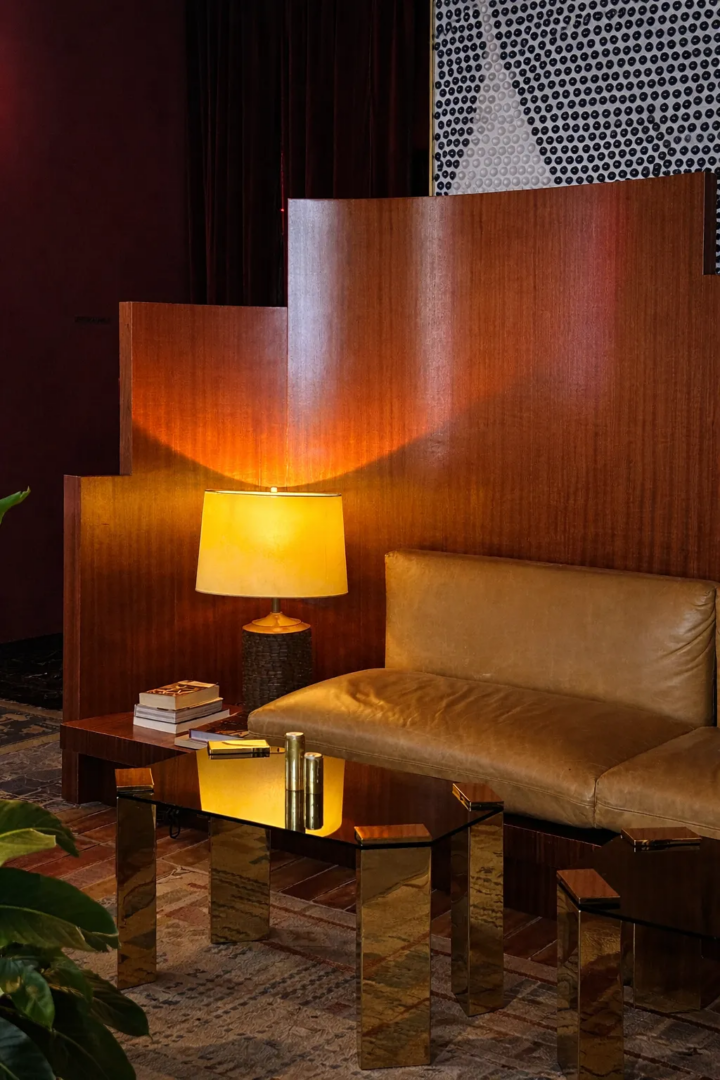
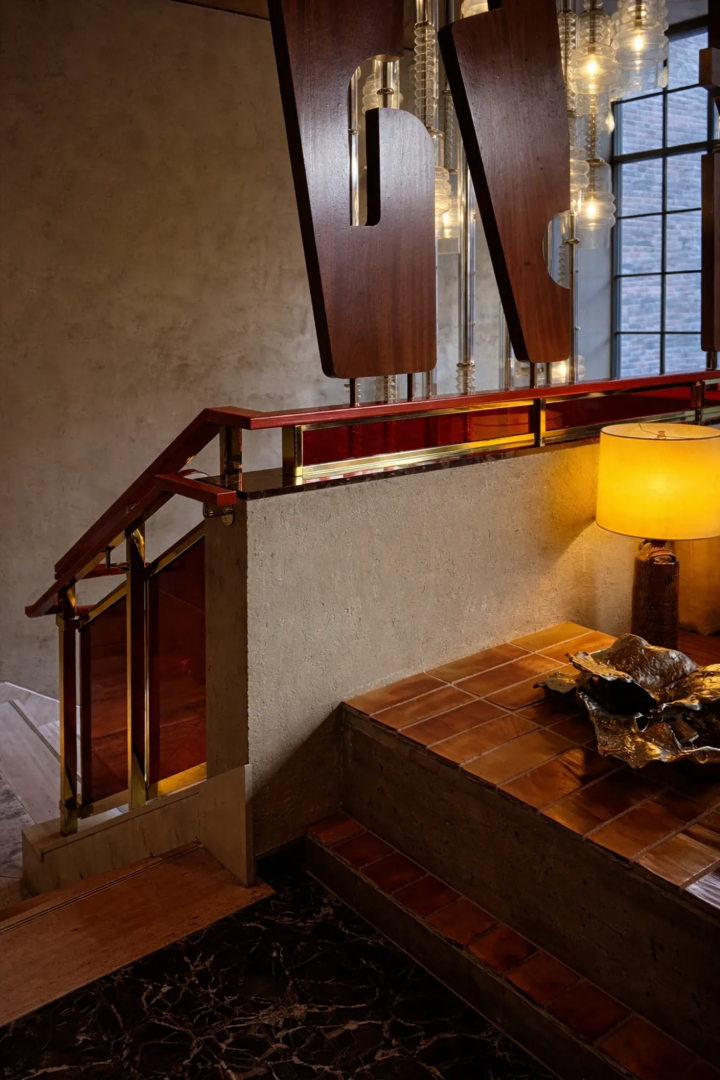
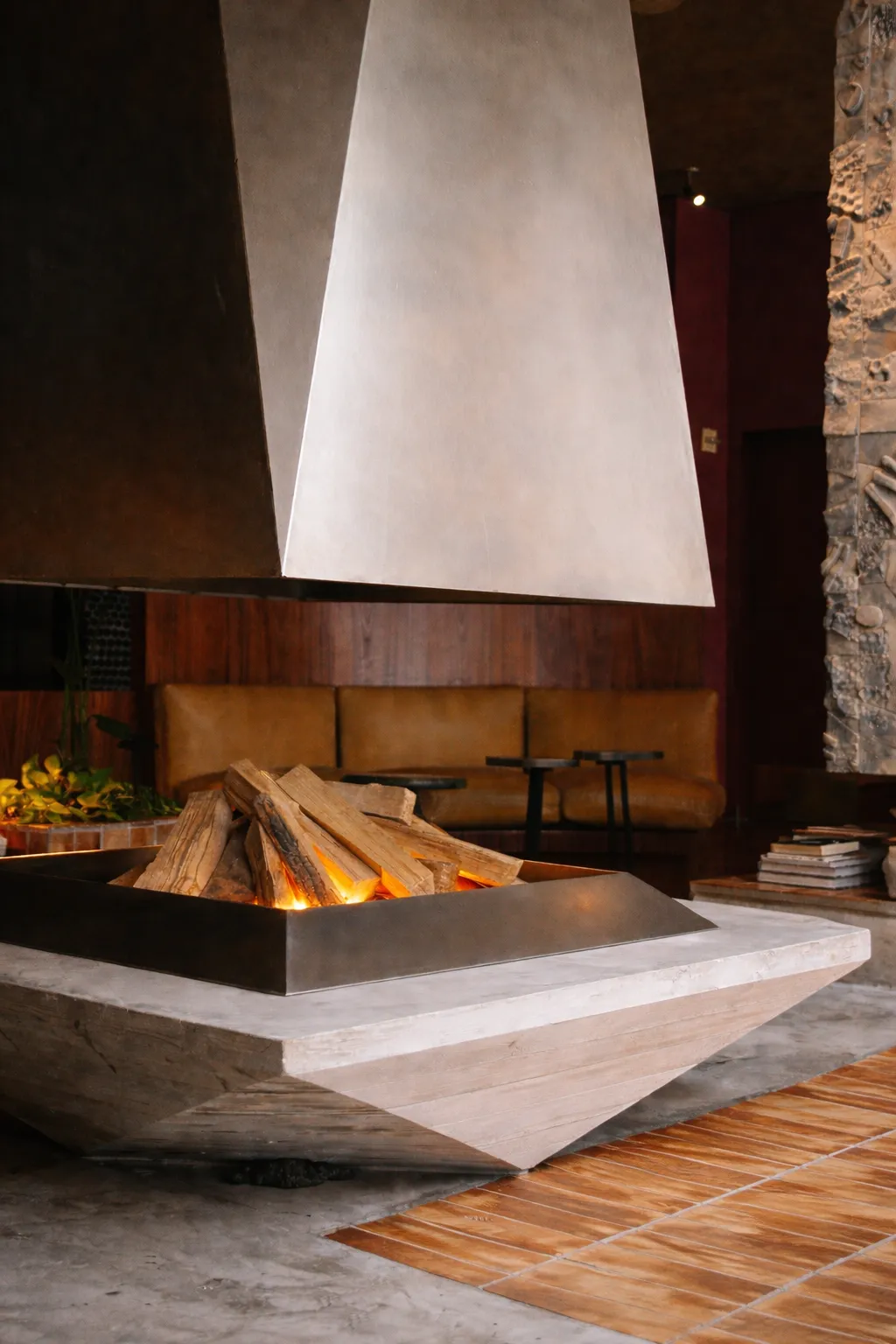
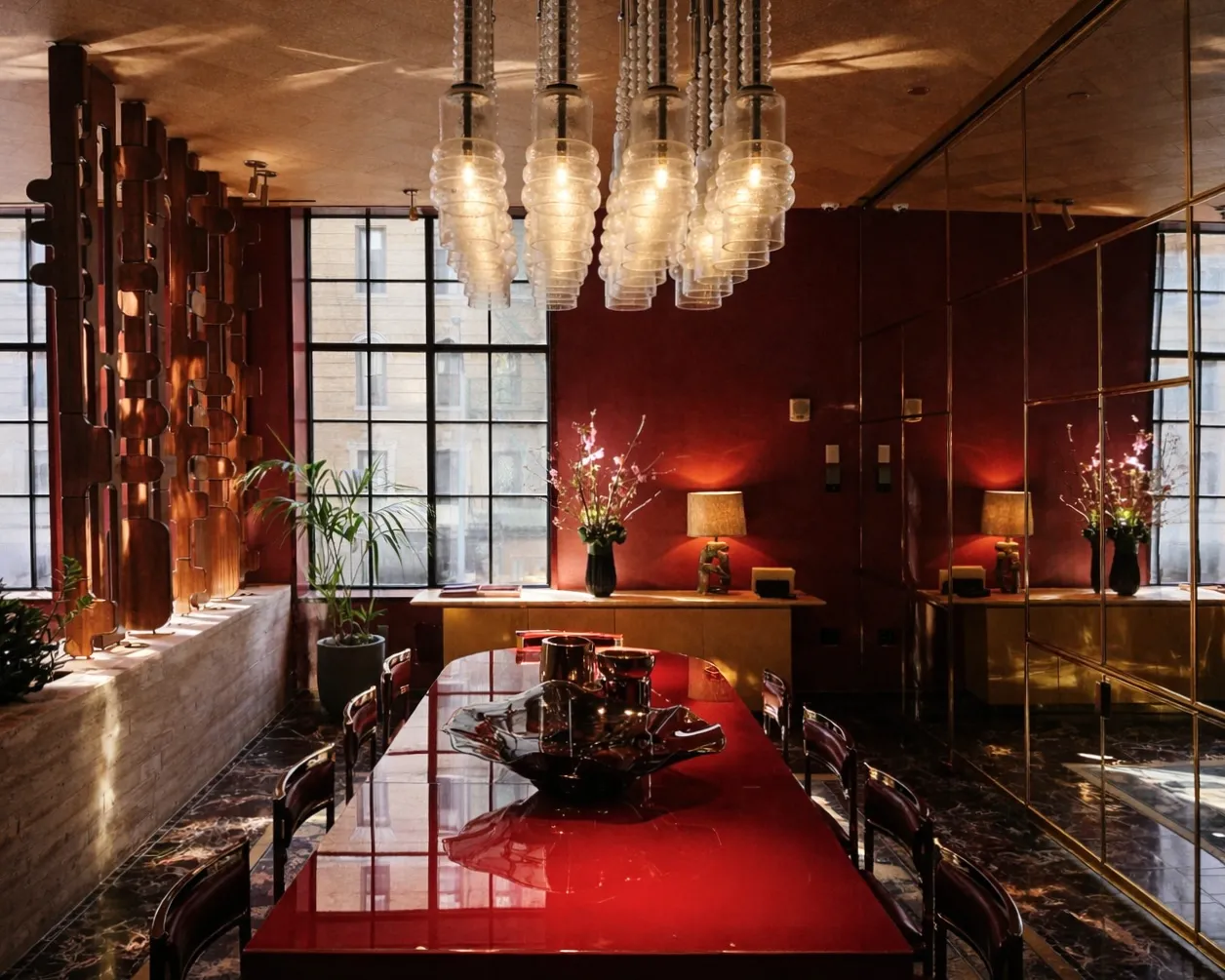
If the lobby is where The Manner declares its intentions, The Apartment is where the project’s ideology becomes a lived proposition. The room draws on Gio Ponti as its explicit reference: full-height bronze mirrors, mahoganized plywood dividers, a sculptural fireplace. It is the space that makes the hotel’s positioning as “private club without naming itself a club” concrete. Light breakfast fare is served here, included in the room rate. Through the day there are snacks and an à la carte menu. In the evenings, aperitivo and canapés.
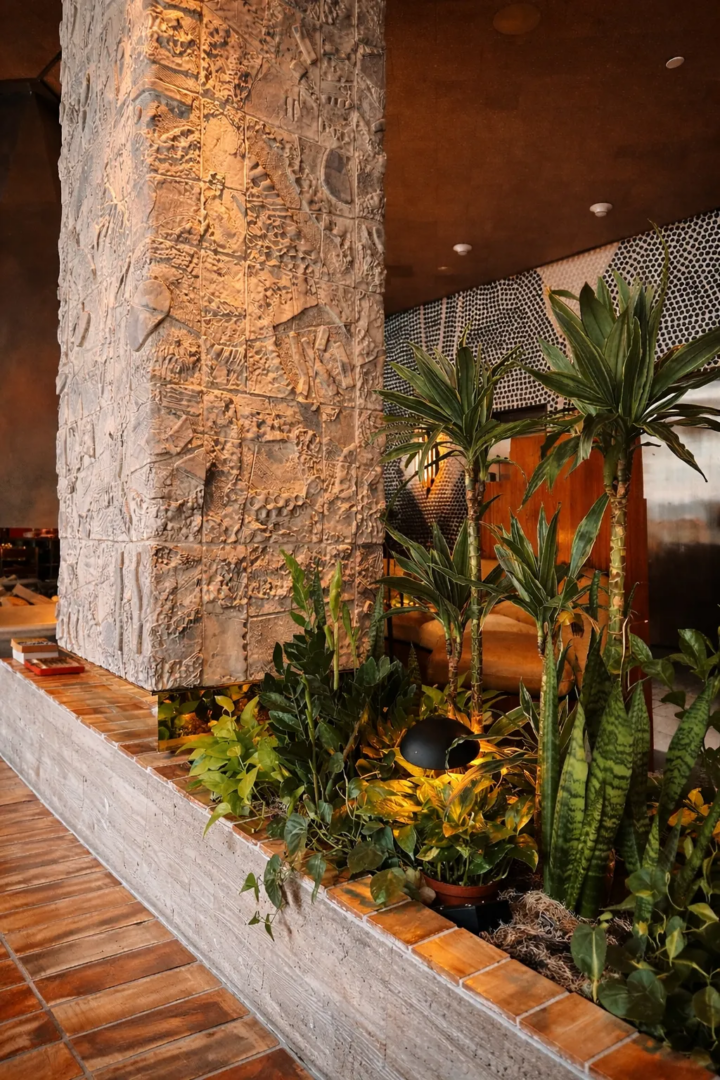
The columns in this room are the work of Ben Medansky. The California-based ceramicist clad a series of architectural columns with terracotta and glaze — surfaces dense with texture, marked by the material’s own resistance, carrying what might be called a geological quality. Medansky’s larger practice is animated by a single ambition: to expand ceramics out of the scale of the domestic object and into the scale of architecture. At The Manner, a structural element that is ordinarily neutral — the thing you pass without seeing — becomes a surface to read. The ceramic makes the column into a body: something with weight, texture, temperature. Something present.
Elvira Solana at The Otter: a mural of New York landscapes and fragmented scenes
Two further artists complete the picture. Alex Proba contributed ceiling interventions, activating the upper plane as a chromatic and spatial layer, dissolving the neutrality of the ceiling into a surface of movement and light.
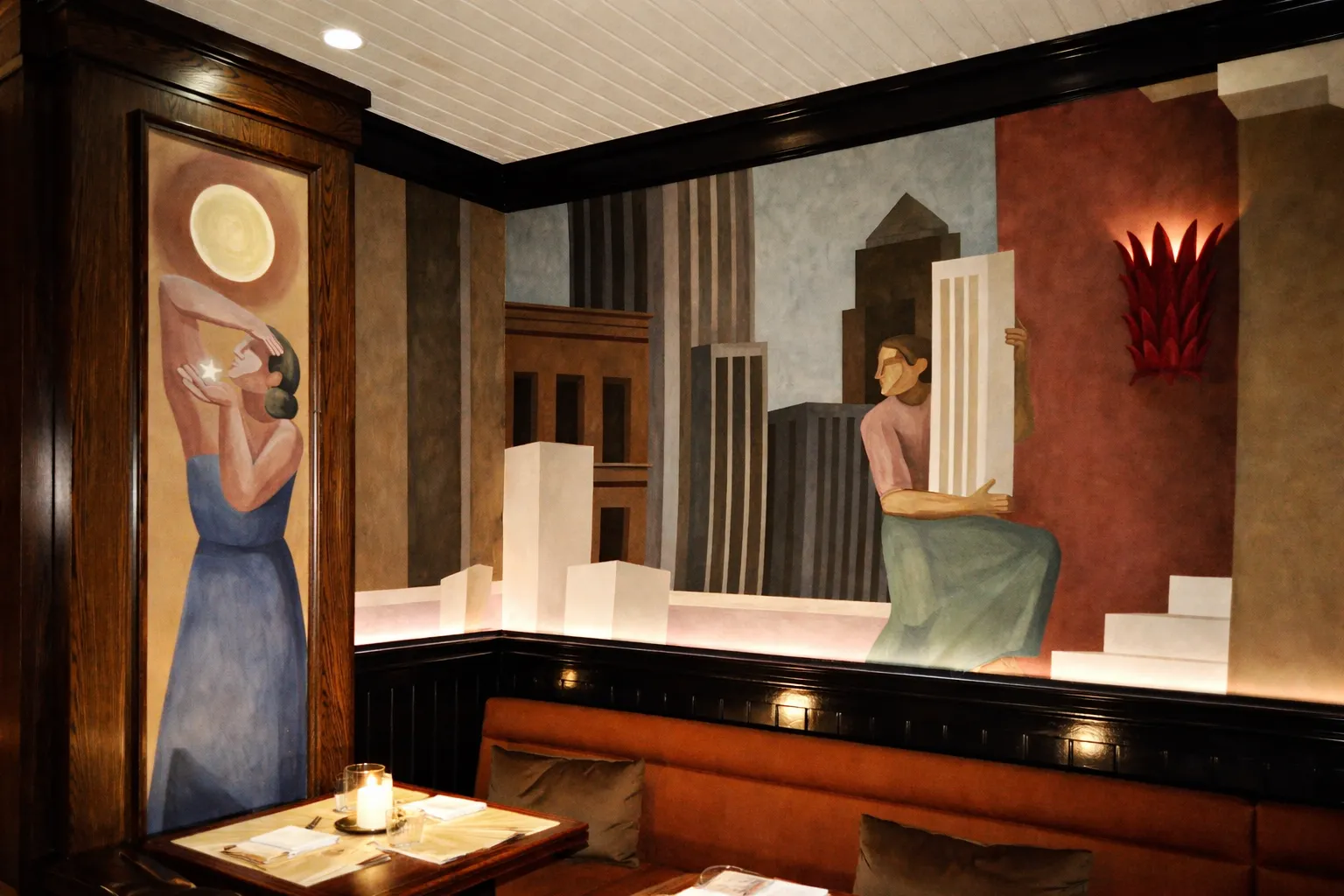
The work of Elvira Solana unfolds in its full scenographic dimension at The Otter, the seafood-driven restaurant inside The Manner. Here, Solana constructs a mural that occupies the dining room as a continuous visual field. The wall becomes landscape. Not a literal depiction, but a recomposed image of New York assembled through fragments. Forests, coastline, urban density — Bear Mountain, Manhattan, the Hamptons — coexist within the same plane. Geography collapses. The city is no longer mapped; it is condensed.
The composition draws from a Mediterranean pictorial tradition, recalling the chromatic and narrative approach of Salvatore Fiume. Figures, architectures, and natural elements are flattened into saturated color fields. There is no central perspective, no hierarchy. Scenes accumulate. The image remains suspended between figuration and abstraction.
The Otter restaurant in New York: Alex Stupak’s seafood concept and menu
Led by Alex Stupak, already known in New York for Empellón, The Otter is structured as a seafood-driven restaurant without adhering to a defined culinary tradition. The menu is intentionally concise and built around daily sourcing, with a focus on fish and seasonal ingredients rather than fixed categories. It is organized across raw preparations, small plates designed for sharing, and a limited selection of main courses centered on simple techniques—grilling, roasting, and crudo. The approach prioritizes clarity: few elements per dish, controlled use of acidity and fats, and minimal manipulation of the ingredient.
The cocktail bar and rooftop at The Manner: speakeasy atmosphere and skyline views
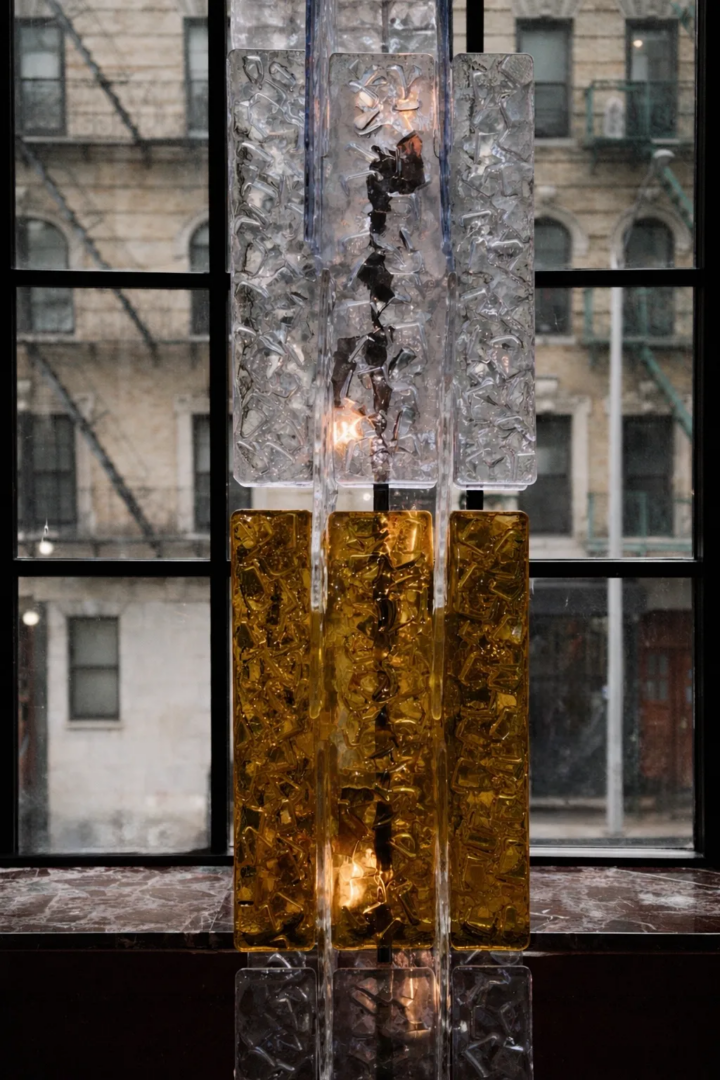
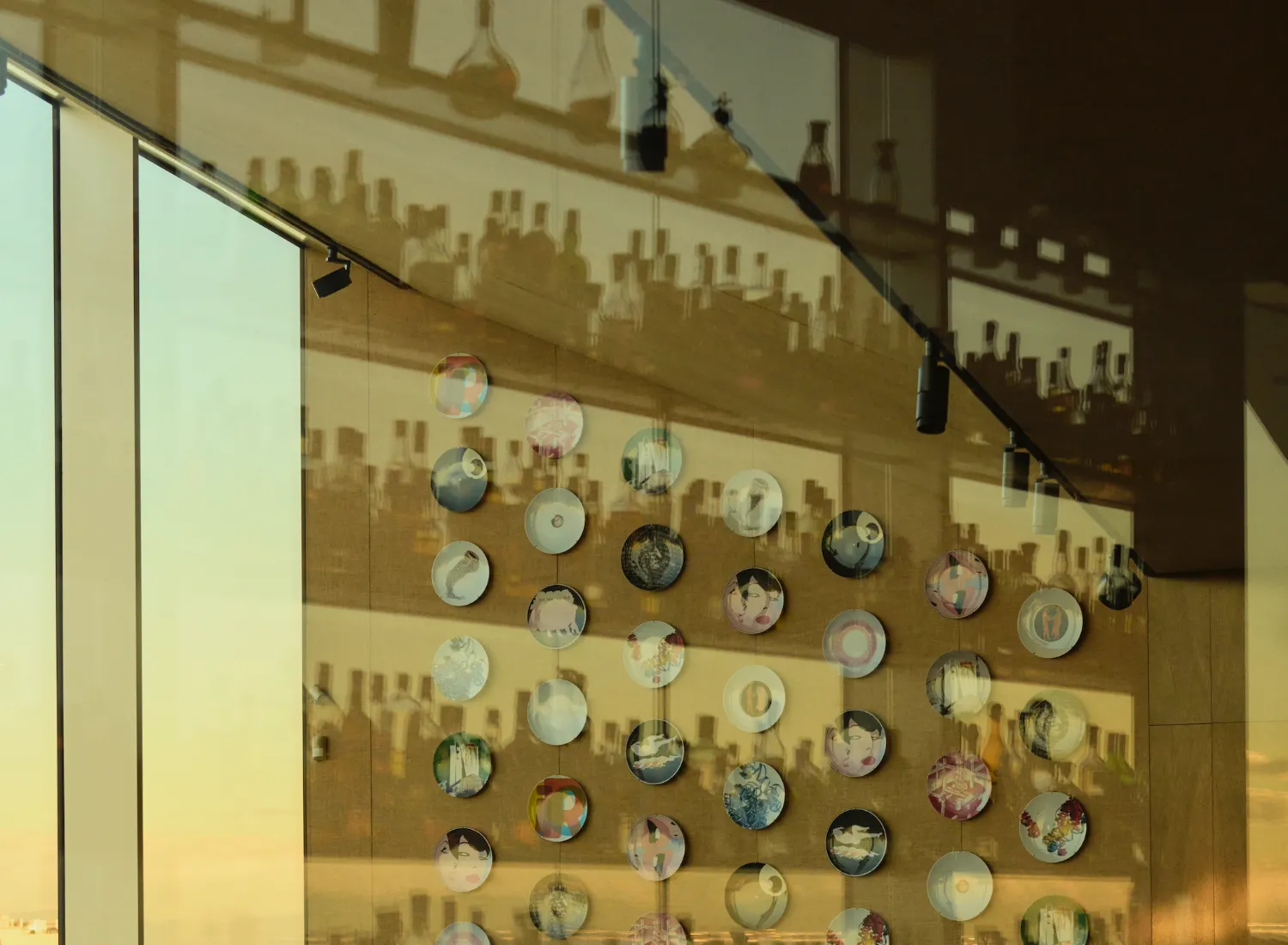
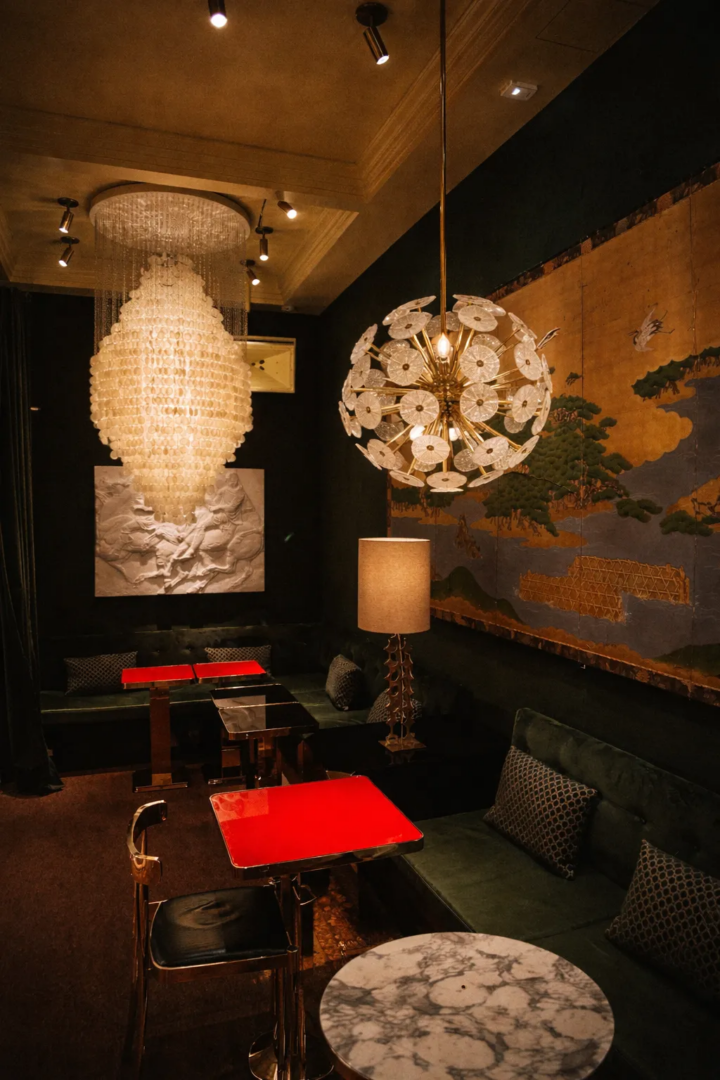
On the second floor, a cocktail bar reads more as a speakeasy than as a lobby bar. Access is discreet, the atmosphere controlled, with low lighting and a spatial layout that favors enclosure over openness. A cosmopolitan interior brings together chinoiserie, Japanese prints, Murano glass, classical effigies, and Art Deco details. The result is a space that feels deliberately other—an interior removed from the city, yet shaped by it, a point of arrival for a transient community of global citizens.
The rooftop extends the experience vertically and operates on a seasonal basis. From here, the skyline unfolds in two directions: toward the Financial District and the One World Trade Center on one side, and toward Upper Manhattan with the Empire State Building on the other.
Rooms and penthouse at The Manner New York: Halston references and interior design
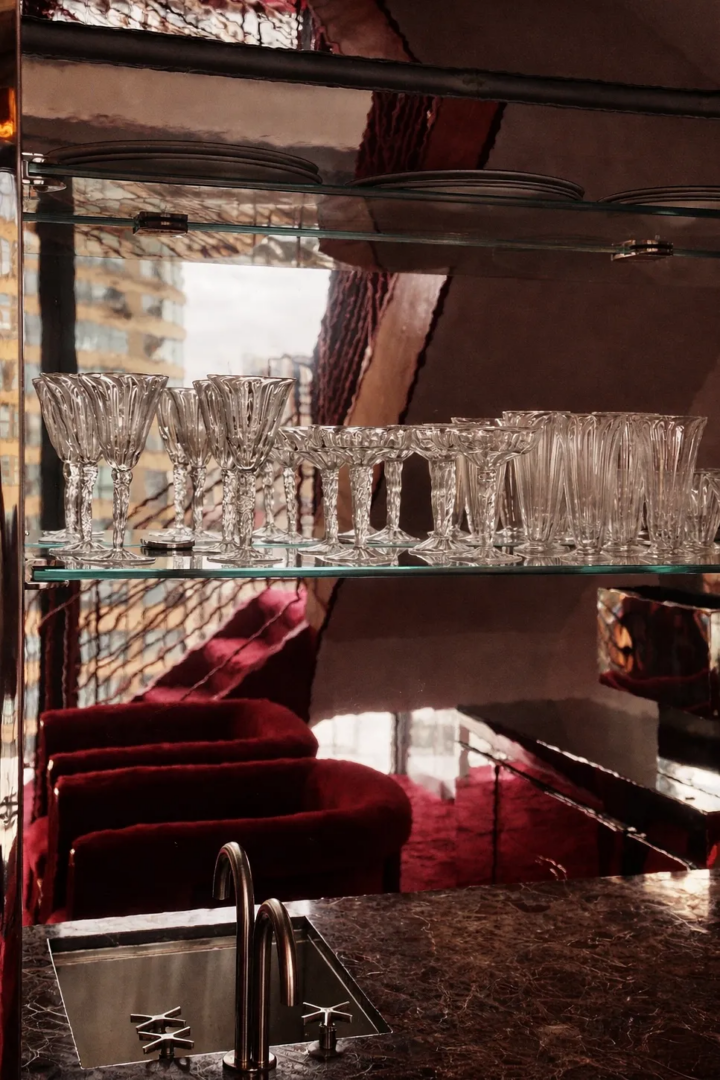
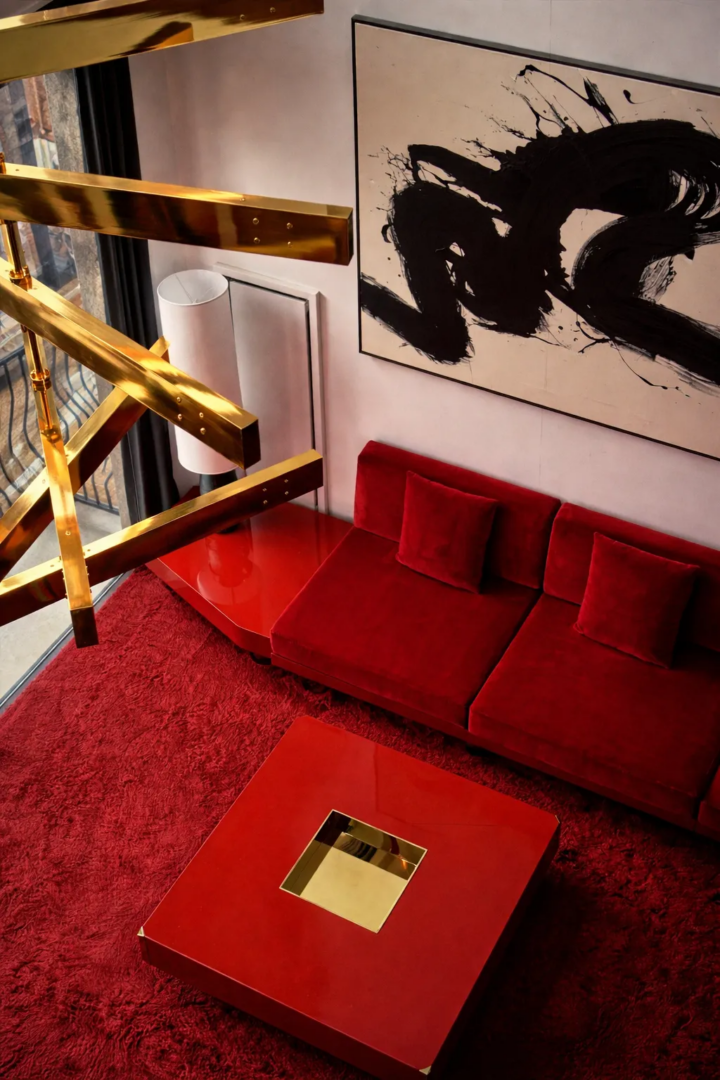
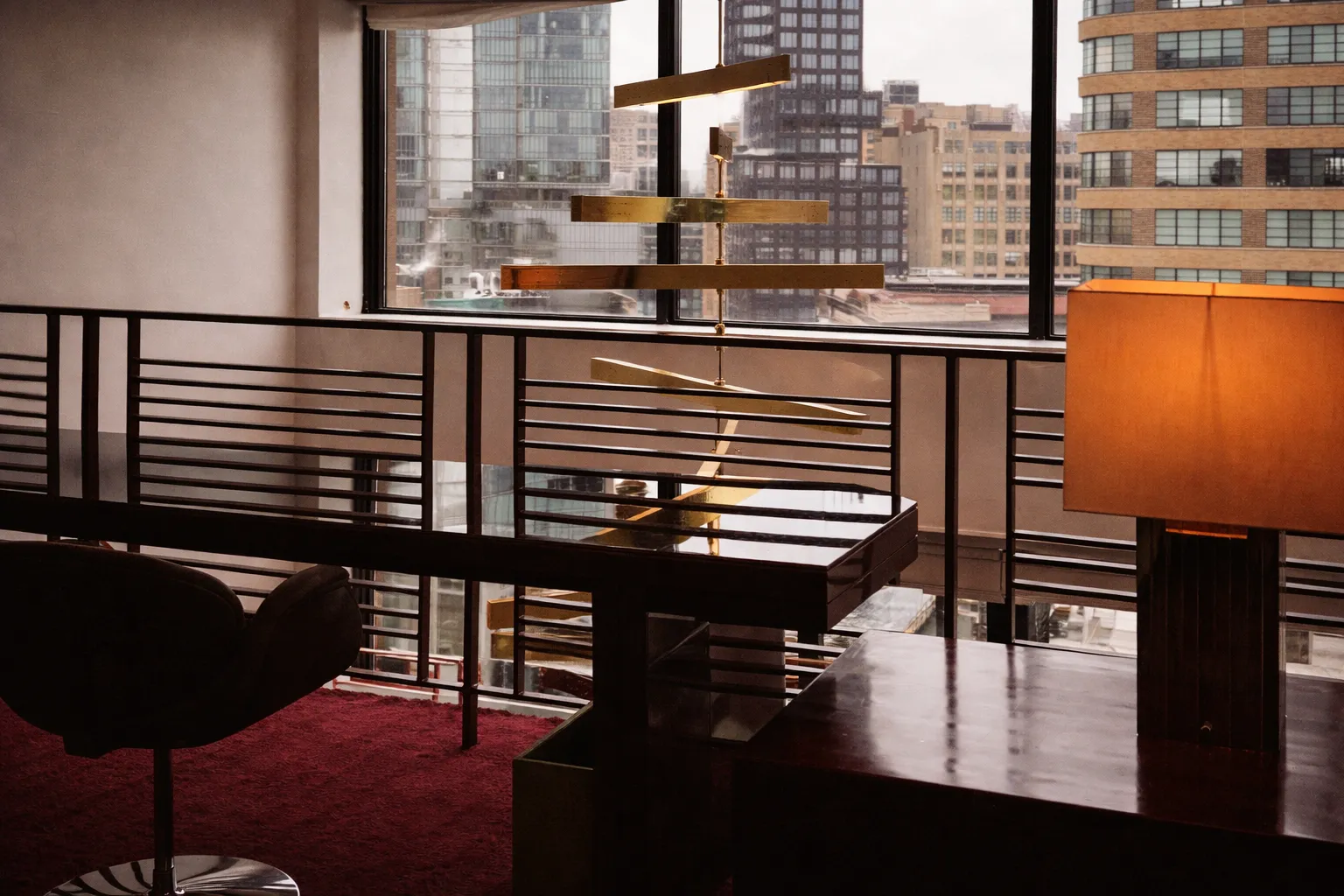
The 97 rooms range from standard to duplex penthouse, all carrying the same design language from entry to top floor. The penthouse occupies floors twelve and thirteen and is presented as a tribute to a particular idea of New York glamour — one explicitly referenced to the modernist offices Halston kept at Olympic Tower. Lacquer red, double-height volumes, a wraparound terrace, private rooftop access. It is not the room for someone who wants to be anonymous in the city. It is the room for someone who wants to feel the city is performing for them.
Matteo Mammoli