Clara Hastrup: the artist wiring living systems into kinetic sculptures
Clara Hastrup’s fish machine sculptures transform aquariums into instruments, using light beams and DIY electronics to test autonomy, intention and control
How fish play music: inside Clara Hastrup’s Fishphonics
Fish play music. To achieve this feat, Clara Hastrup created a mechanical sculpture where the light reflected from the fish’s movement triggered instruments. The result is a slightly otherworldly, blue-tinged installation punctuated by a “fish scale” played on the xylophone. The relationship Hastrup constructs allows us to hear the animals – albeit without their awareness. It’s Fishphonics: Accelerando (2024) at MATTA.
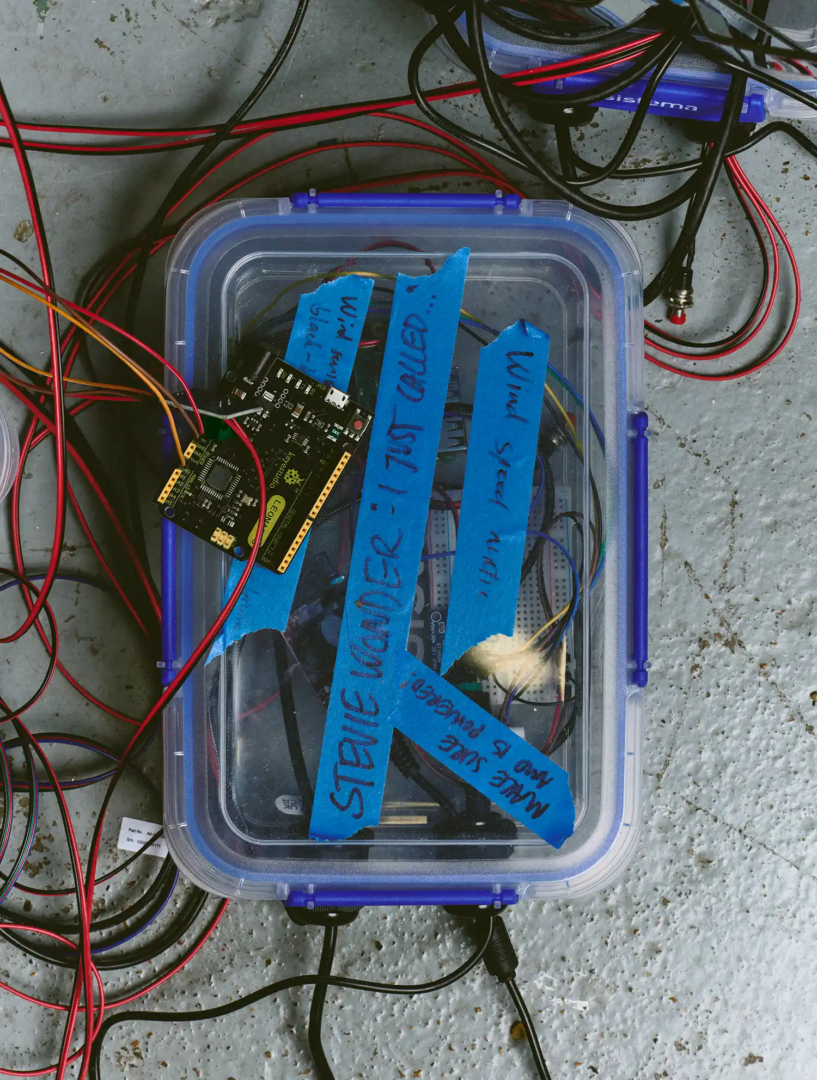
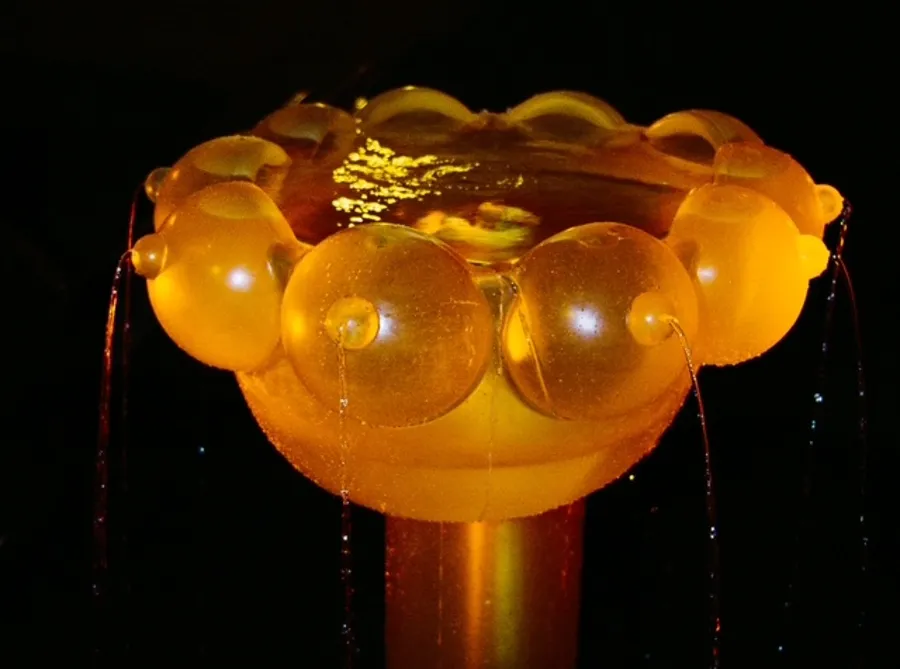
With a similar focus on overlapping systems, the Denmark-born, London-based artist made Untitled (2024) at Van Gogh House. Here, a vintage teacup nestled on a bedside table spin seemingly randomly – rotations determined by the direction of the wind, measured by a pane on the roof.
These manufactured connections between organic materials and technology, global systems and domestic objects, run through much of Hastrup’s work. Her 2021 degree show at the Royal Academy Schools let fish ‘drive’ a toy Lamborghini, triggering other objects like a hairdryer along a racing circuit. It received the Patrizia Turner Prize for Sculpture.
For Hastrup, who I interviewed in the lead-up to her upcoming installation at Standpoint Gallery, these installations probe the “collision between order and uncertainty.” By collapsing scales and the lines between disparate systems, they highlight the limits of human control.
An interview with Clara Hastrup on smell, guinea pigs and her wall of bad ideas
Clara Hastrup: I didn’t play with Lego or dolls. I had guinea pigs and a tortoise. I built little houses and created fictional scenarios around them — making little hats for the guinea pigs and marrying them. I was fascinated by card tricks and illusions. Ecology and nature are complex, and you often cannot directly see causality. There is something about this type of interconnectedness that feels strange and magical.
My work is about constructing relationships between otherwise unrelated elements. The connections are real, but they are also illusory because they are deliberately manipulated to interact. Unlike magic, the illusion is then disrupted by revealing the mechanisms behind the system. In a sense, I am exposing the magic trick.
JB: Today, you’re in your studio. What are those papers on the wall?
Clara Hastrup: That’s my wall of bad ideas — notes, projects, different systems I have developed. If I get stuck, I go back to them. Plus, there’s something nice about tracing where ideas begin, seeing how they develop. Though I’m trying to be more organized. I’ve taken a lot down from the wall.
I have stuck to my structure for many years. I wake up early and go to a café. I sit there and do the boring stuff — emails, admin — and I read, write down ideas, sketch. I’ve just read The Forgotten Sense by Jonas Olofsson, which is about the new science of smell, and now I’m reading Forms by Caroline Levine. I’m normally in the studio from ten until the evening. Sometimes the days are about set-up, practical shit like soldering or collecting materials. Since I work with technological systems, a lot of time is spent testing and trying to understand what’s going wrong.
JB: You’re reading about smell.
Clara Hastrup: We interact through smell, and so much of how this works is still unknown. It can be overpowering, but I enjoy working with materials that have ingrained smells. We often forget certain sensorial aspects of moments because we memorize through images, which replace the physical experience with visuals. When I worked with Doritos in a previous exhibition, the strong smell was a part of it. It was amplified through a giant, crushed pile of chips. It was not appetizing.
How Hastrup builds her systems: process, materials and happy accidents
JB: Is your process about connecting individual parts to create a larger system, or about realizing a holistic vision by breaking it down into its smaller components?
Clara Hastrup: Which came first, the cog or the machine? I work on multiple projects at once and wait for them to become something more. With what became Fishphonics (2024), I was trying to make a xylophone play. I had worked with fish before, and I decided to bring them back and see if they could create something musical.
Fishphonics (2024), the work itself is the system. I created it with light beams and photoreceptive sensors below the tanks so that when the fish swim, they trigger notes on instruments. They’re playing a fish scale, you could say. It is about intention. They are not trying to manipulate the instruments.
The relationship is making the noise. I have engineered this setup with rules and functions, but once I step away, I am not involved. It’s about taking away human control. Then, we can witness and observe.
When things go wrong: unpredictability in Hastrup’s kinetic installations
JB: What happens when things don’t go to plan?
Clara Hastrup: There is an intention behind every system I create — but it’s experimental and things go wrong — especially with cheap technologies, thin wires, and my DIY approach. I have accepted that things may not always go as planned. I’m also interested in the chaos or variations that you cannot predict within my controlled system. The unpredictability is exciting. Some things are fragile and I will try to fix them if they break.
Fishdriver (run free) (2021), my degree show at the Royal Academy Schools, featured a small fish triggering a remote-control Lamborghini. It ran out of charge a few times, and I had to go into the middle of the sculpture and replace the battery in real-time. If there’s water, I also have to mop it. It can damage the wires, people can slip. That is part of the work. It makes it more theatrical and staged. Even though we can step back and say it is an autonomous environment, it still needs to be upkept.
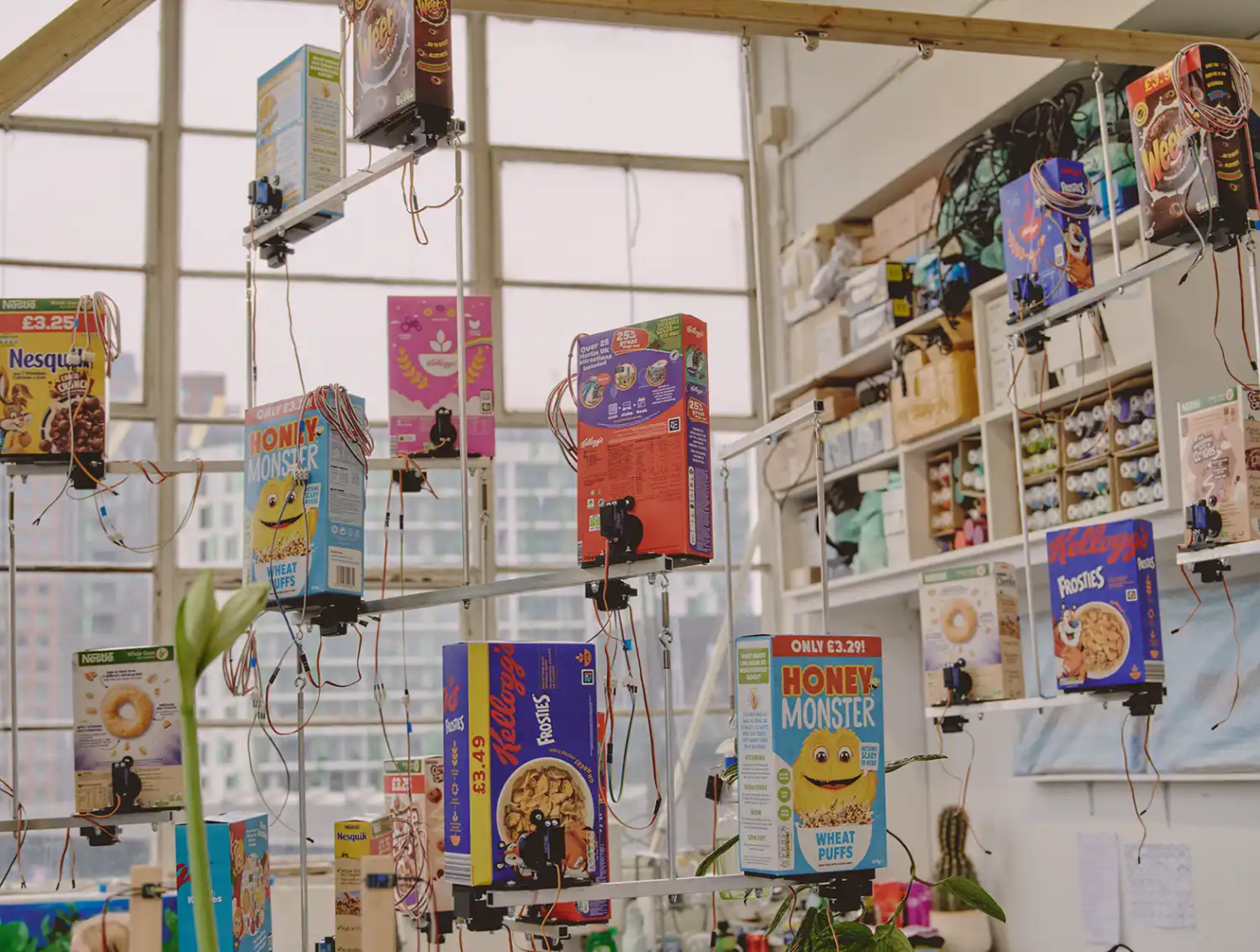
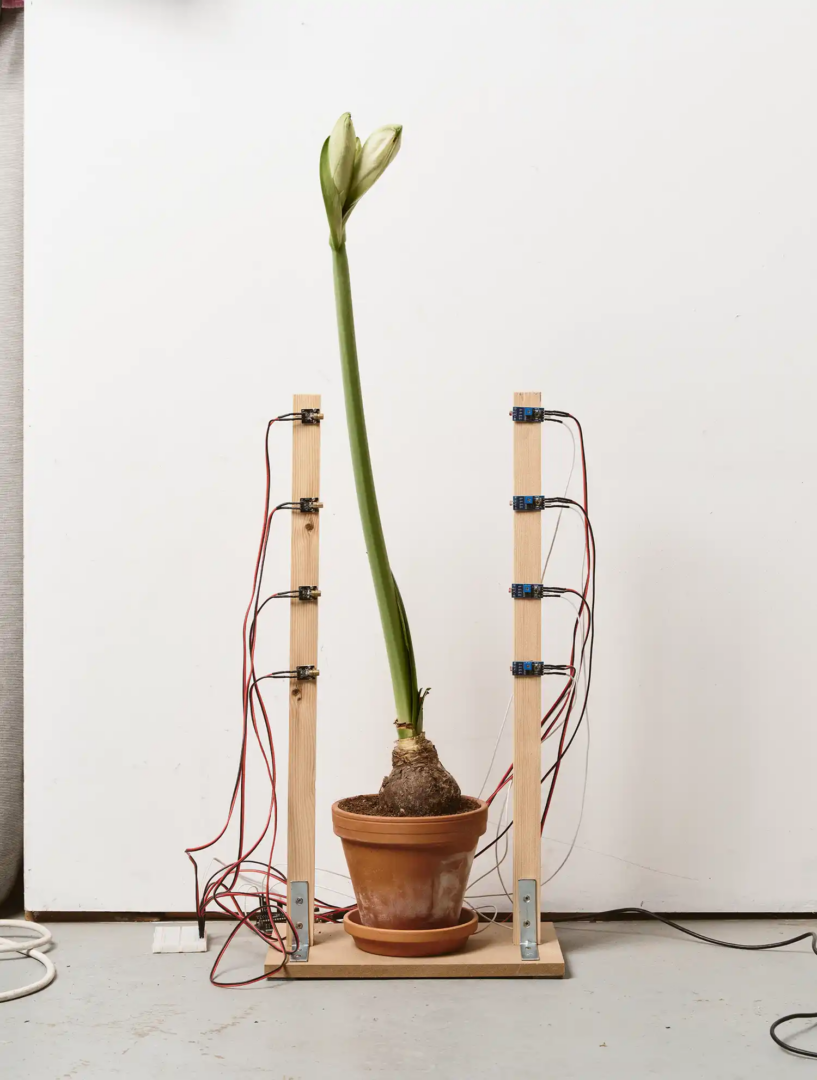
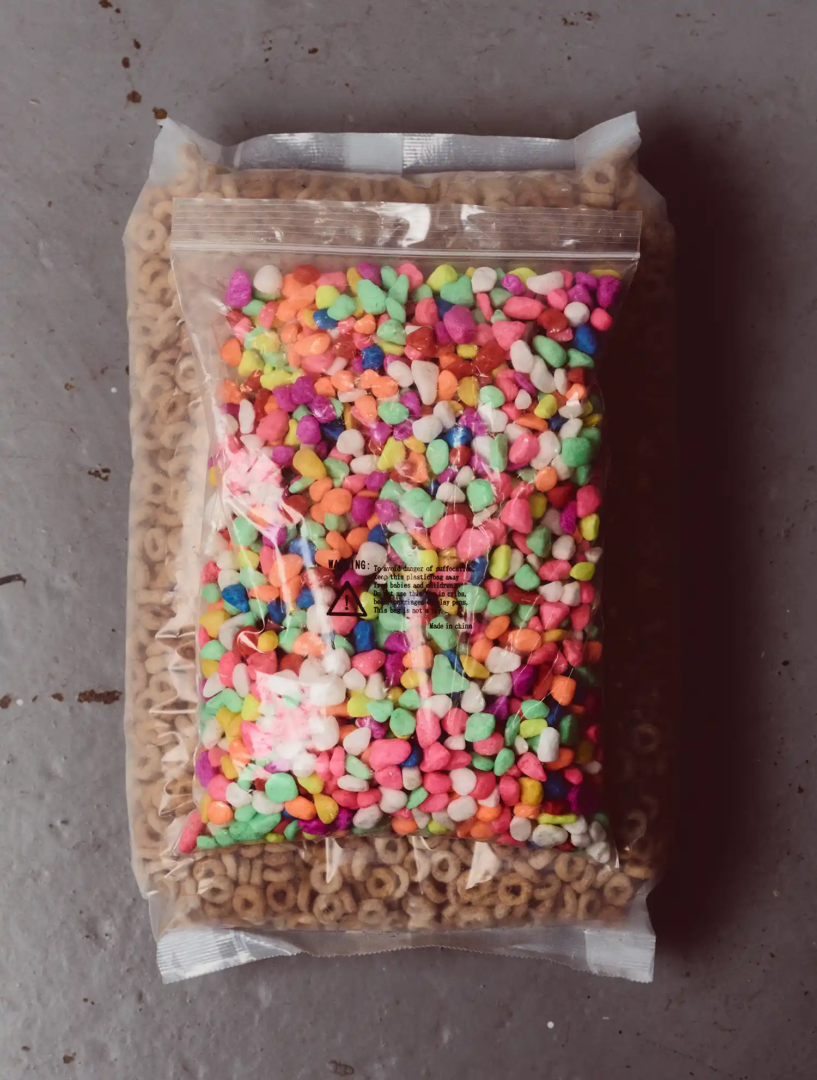
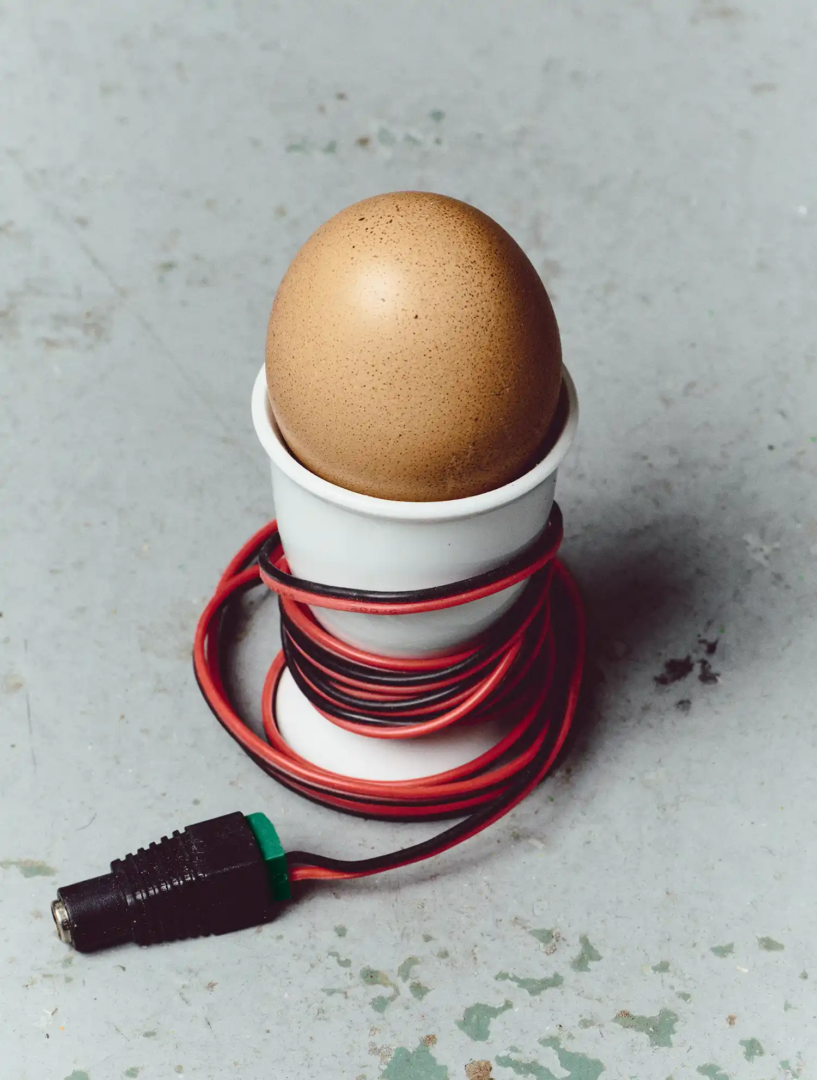
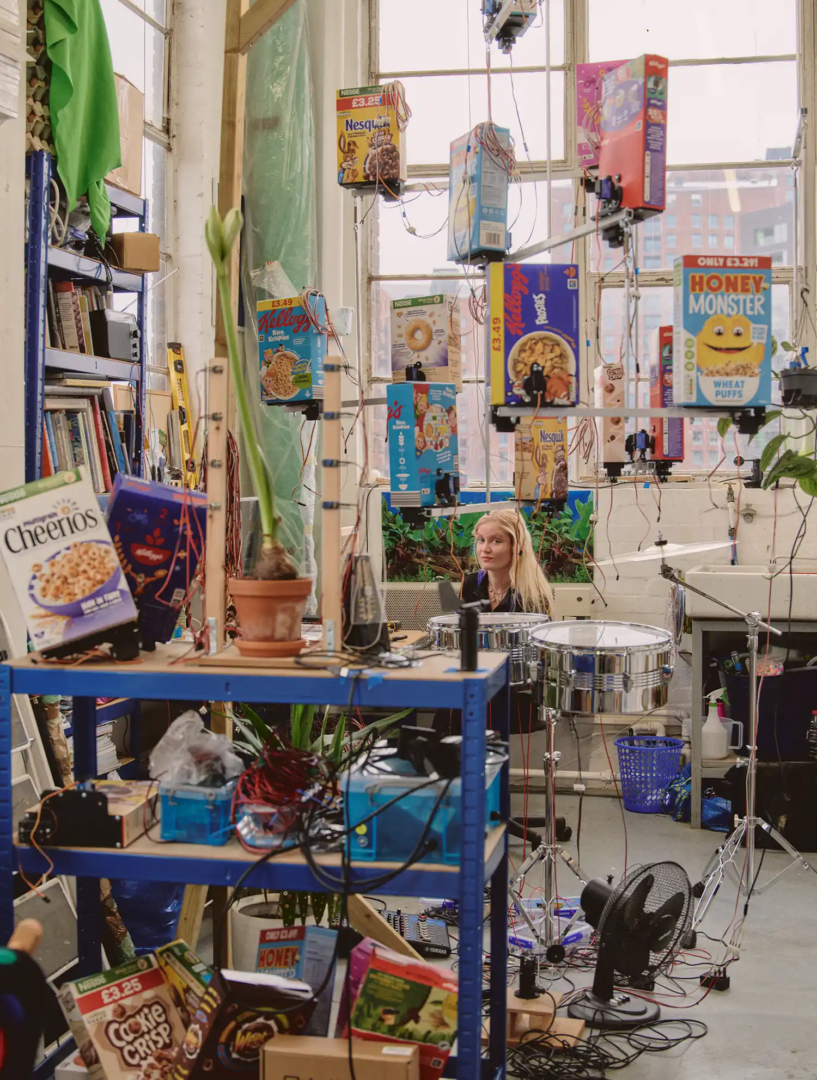
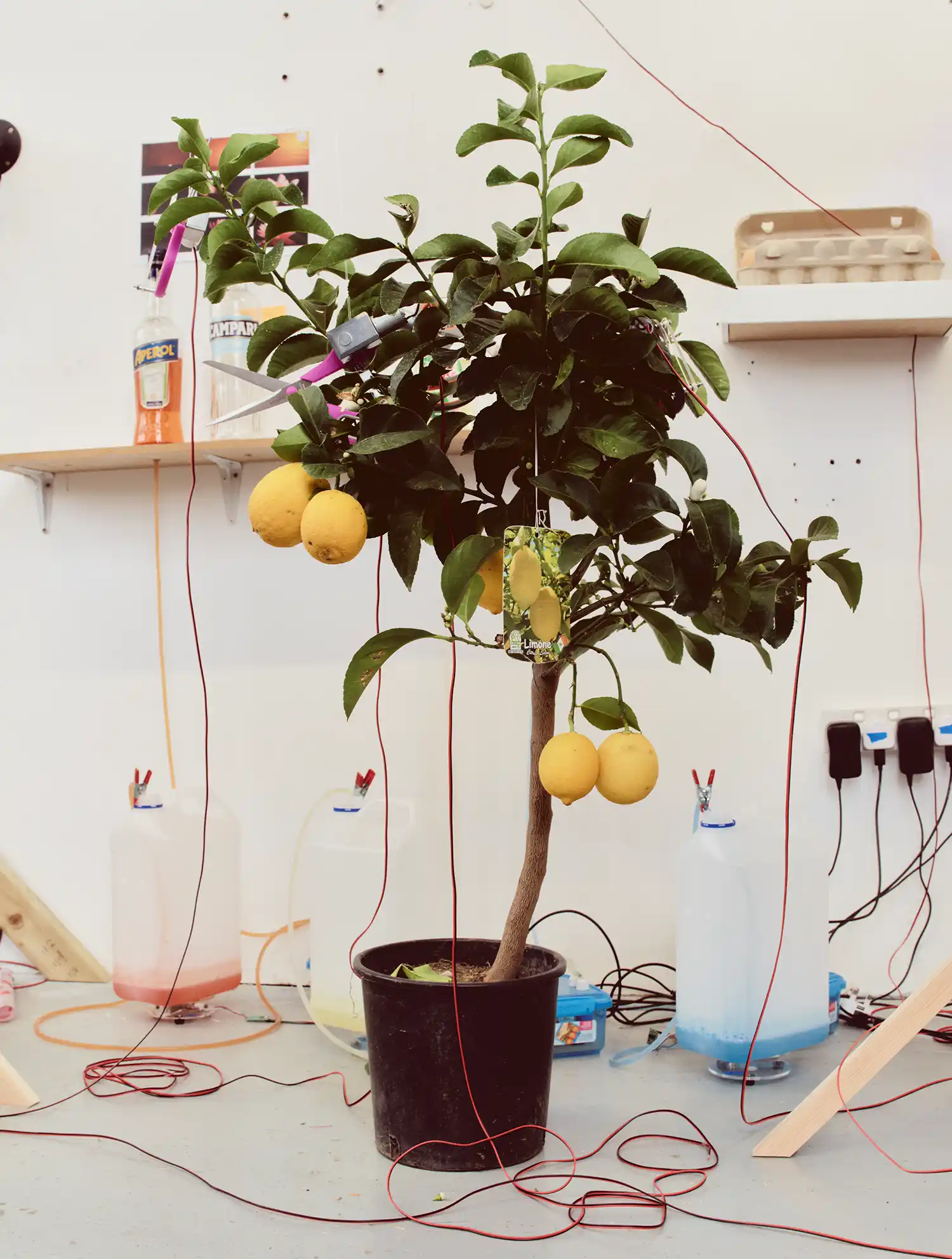
I also see the cables as roots — which power and connect everything. Sometimes, I make it more obvious. In Arbor Cerealis (2024), I made a metal, tree-like structure to hold cereal boxes, and the wires were exaggerated to echo vines and branches.
Fish, wind and butterfly effects: Hastrup on art, causality and global systems
JB: There is a phrase in the exhibition text for your show at the Van Gogh Museum: “The world turns, the wind blows, and a teacup moves.”
Clara Hastrup: The butterfly effect shows how systems that appear predictable — like the weather or wind levels — produce indeterminate outcomes at smaller scales. By inserting the wind and its chaos into a controlled, domestic environment tied to everyday rituals, I was able to explore the collision between order and uncertainty. The teacup became unfixed.
JB: We think we can create all these systems, but ultimately, we can’t control the weather.
Clara Hastrup: We must understand causality and how things interconnect on a global scale — small things can push systems past their tipping points if we’re not careful. My role as an artist is about questioning reality and its complexity, looking through different lenses at the relationships between objects and materials, patterns that might connect and recur.
When I was younger, I travelled a lot. On these trips, I met other artists who helped me realize that being an artist was something you could actually pursue. Without them, I may have gone in a different direction.
I will never stop feeling like an outsider here in London. I wasn’t born here. It’s a position I find freeing. As an artist, I don’t feel confined. It’s also a fast city. You can become addicted to this pace of working, of being. I’m trying to slow down. Art is a slow process, but I like London’s pace. Though big cities are hard — nearby my studio, it’s dirty and grim. I’m always wishing I was somewhere else. That longing is always there.
The gallery is only ten minutes from where I live. I’m going there today to double-check where the power sockets are located. I’m going to make a map of the circuits. A lot of the work involves electricity — if that blows, everything goes.
Joshua Beutum