Fashion underdogs: the time has come for a revolution
A violent aesthetic built on cuts and lacerations that critics would lazily reduce to the label “Hiroshima chic” – but Kawakubo was excavating something far deeper – the realm of the unconscious.
Few people actually knew him. Most had only heard his name in passing; almost no one had ever seen him. He never appeared at the end of runway shows, was rarely photographed, didn’t move in the usual circles. In his early thirties he was the ghost behind the haute couture renaissance at Maison Margiela. Then Phoebe Philo’s right hand at Céline – widely considered the well-kept secret behind Philo’s collections. Then the ingredient behind the new image of Calvin Klein, alongside Raf Simons, before the entire team was let go (but that’s another story).
His name is Matthieu Blazy, and almost nobody knew it. The same could be said of Alessandro Michele before 2015, or Daniel Lee before 2017. They are the most famous designers you’d never heard of – the ultimate fashion underdogs, the hidden forces shaping fashion from the shadows – the ones who spent years waiting to bark. They are barking now. What are they saying? A new fashion.
Underdogs – a brief synopsis of the fashion film never released in theaters
A fashion underdog is rarely visible at first glance. Not on stage. Not in the seats that matter. Not in the final moment of recognition. It is the junior figure, the background presence, the name that doesn’t stick. It works off-camera. Observing. Refining. “Under,” outside the structure. “Dog,” pushed to claim its own direction. It learns the system only to step away from it. And then, eventually, it becomes visible.
The camel-colored coat problem – why fashion underdogs matter now
Much has been speculated about the causes behind the seismic shifts in fashion’s creative leadership. The “designer musical chairs” game has become a staple of fashion news over the past decade. People have cited a slowdown in luxury spending, inflation (whatever that actually means – everyone mentions it, nobody explains it), Trump-era tariffs, geopolitical uncertainty. For the most part, the industry has sought refuge in the comfort of a camel-colored coat. In the assumption that what sold well in the past will sell well in the future. The focus has shifted to commercial over creative – and that has been a mistake. This is exactly where the fashion underdog emerges: in moments of stagnation, when repetition replaces risk.
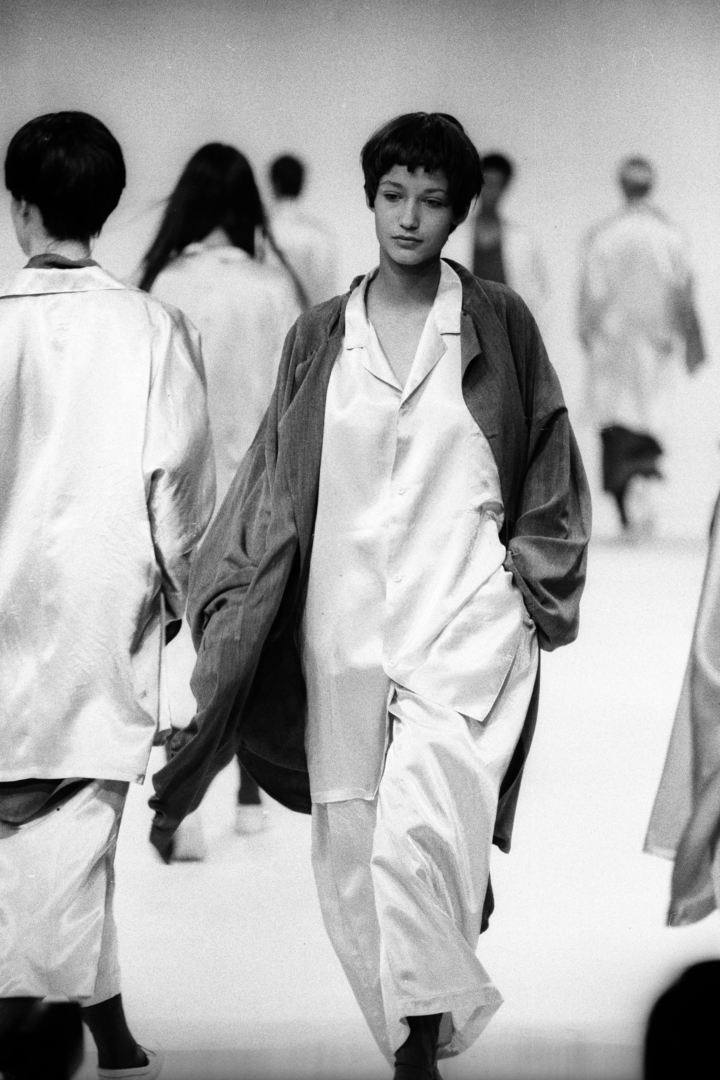
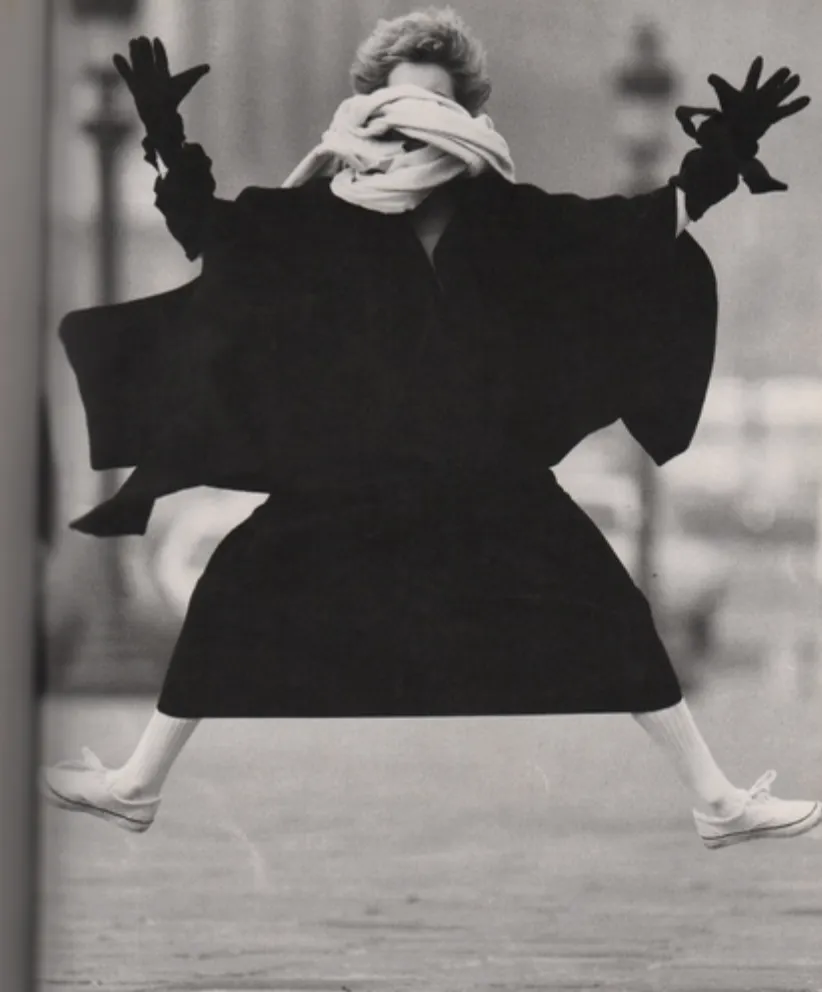
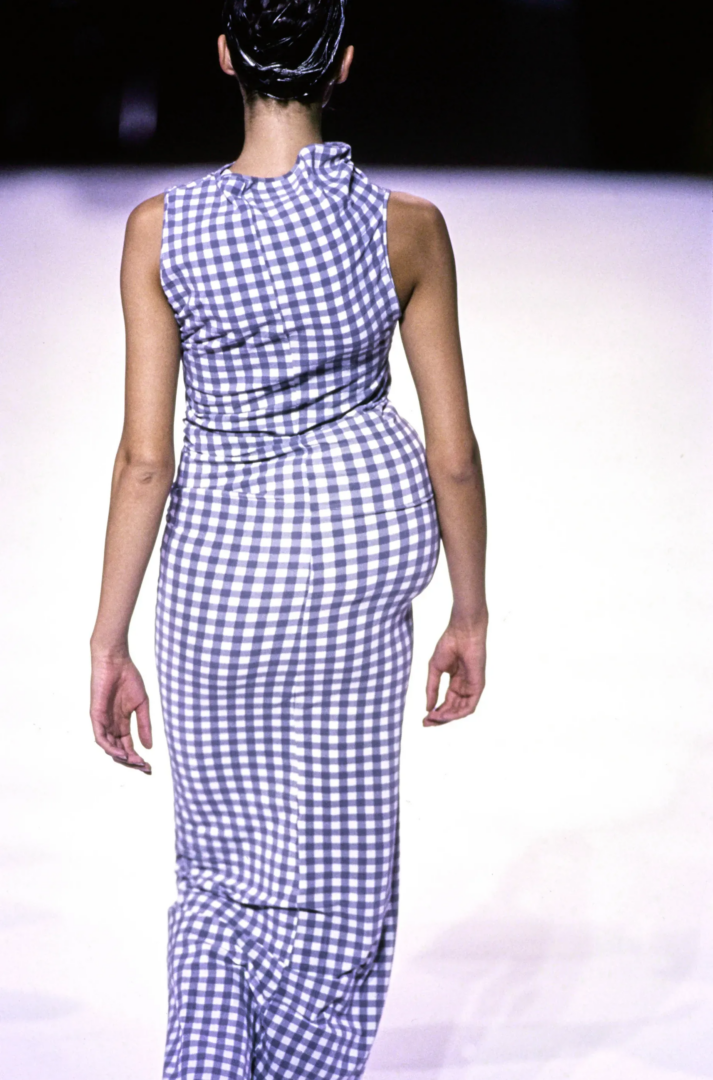
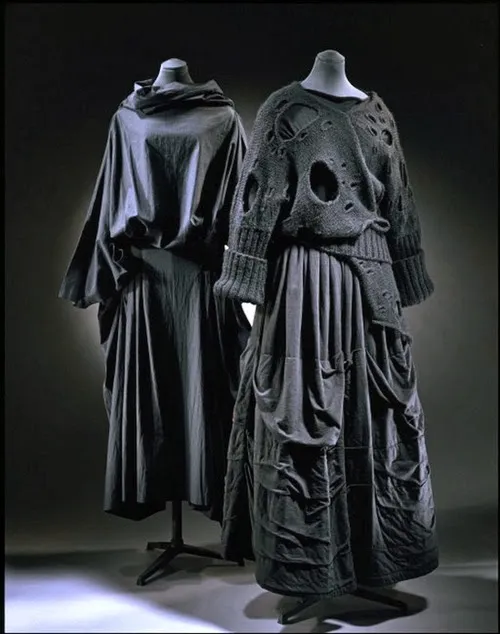
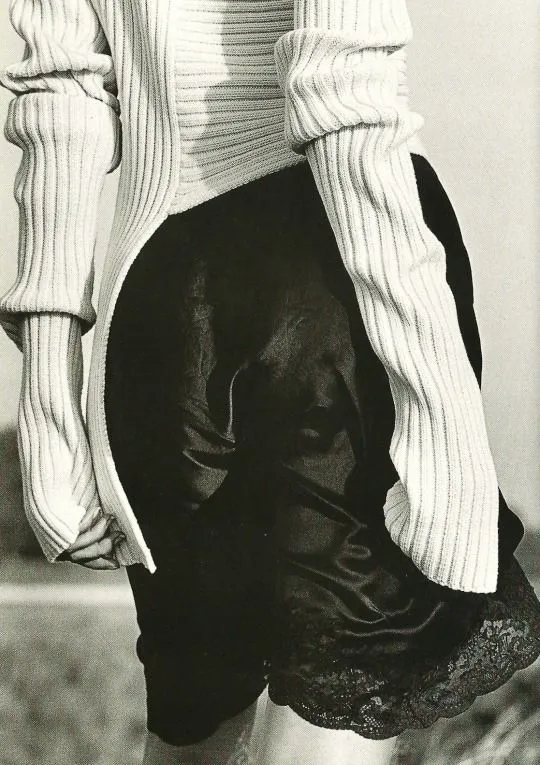
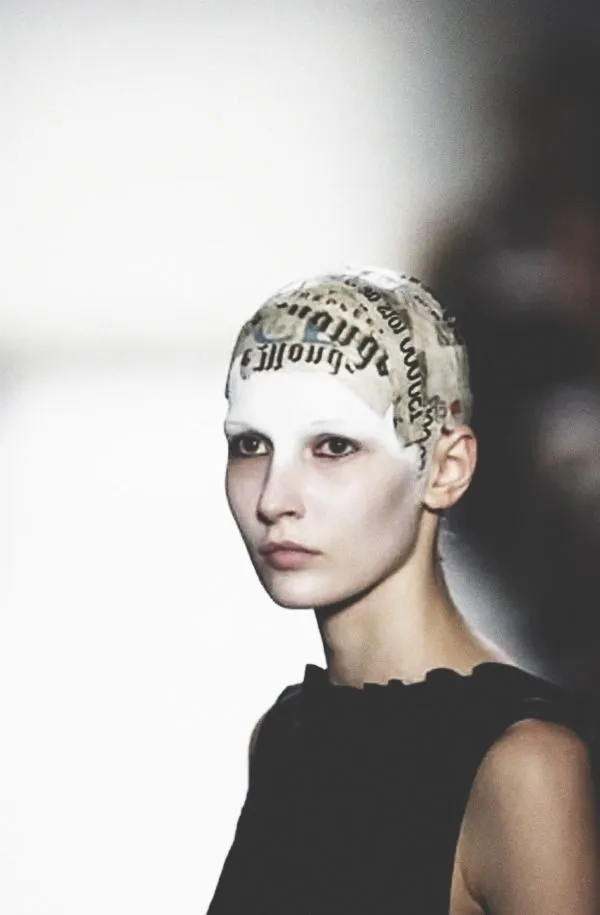
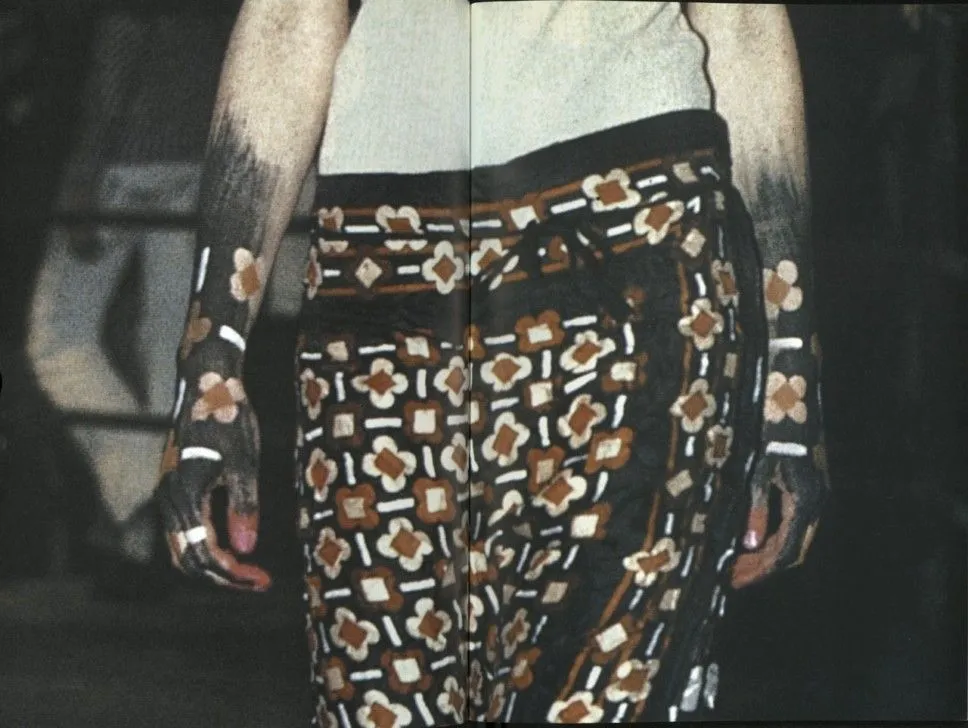
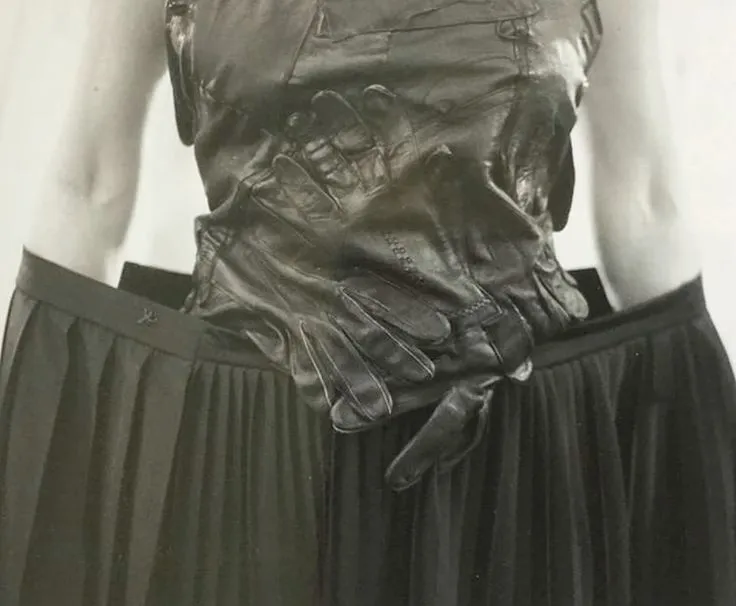
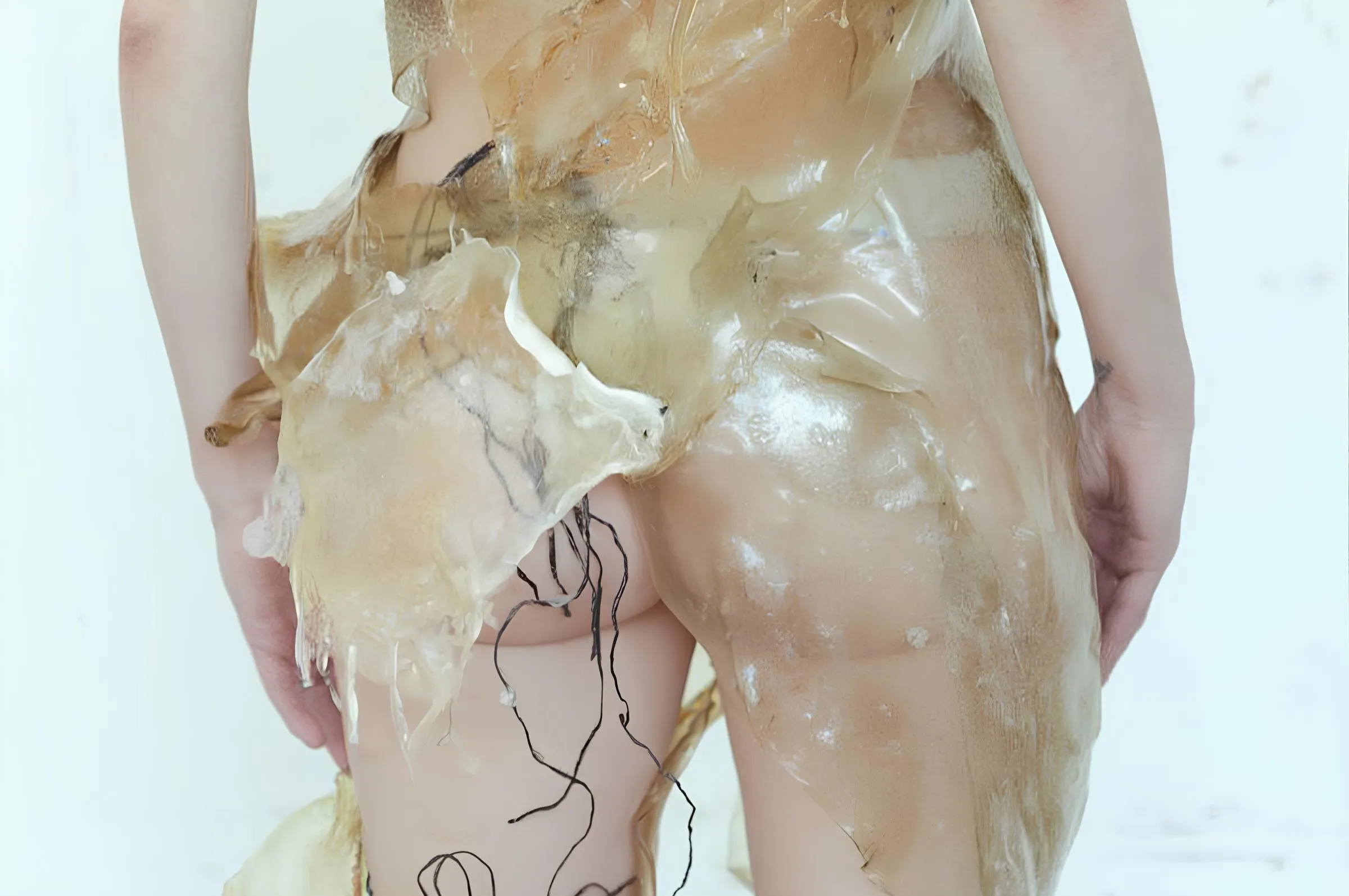
The time has come for a revolution. Like the one Rei Kawakubo of Comme des Garçons launched in the 1980s, when she wielded needle and thread as weapons of mass destruction, obliterating gems, crystals, gold, and sumptuous wealth in a single blow. A violent aesthetic built on cuts and lacerations that critics would lazily reduce to the label “Hiroshima chic”- but Kawakubo was excavating something far deeper – the realm of the unconscious. Not unlike the sleeping reason that breeds monsters Francisco Goya depicted in 1797. The world is a body covered in bruises, and Kawakubo is an artist determined to overturn the too-easy impression of a grim fashion. Her monsters are not sci-fi sorcerers – they are clichés, ordinariness, the camel-colored coat. And today’s fashion underdog fights the same enemy: predictability.
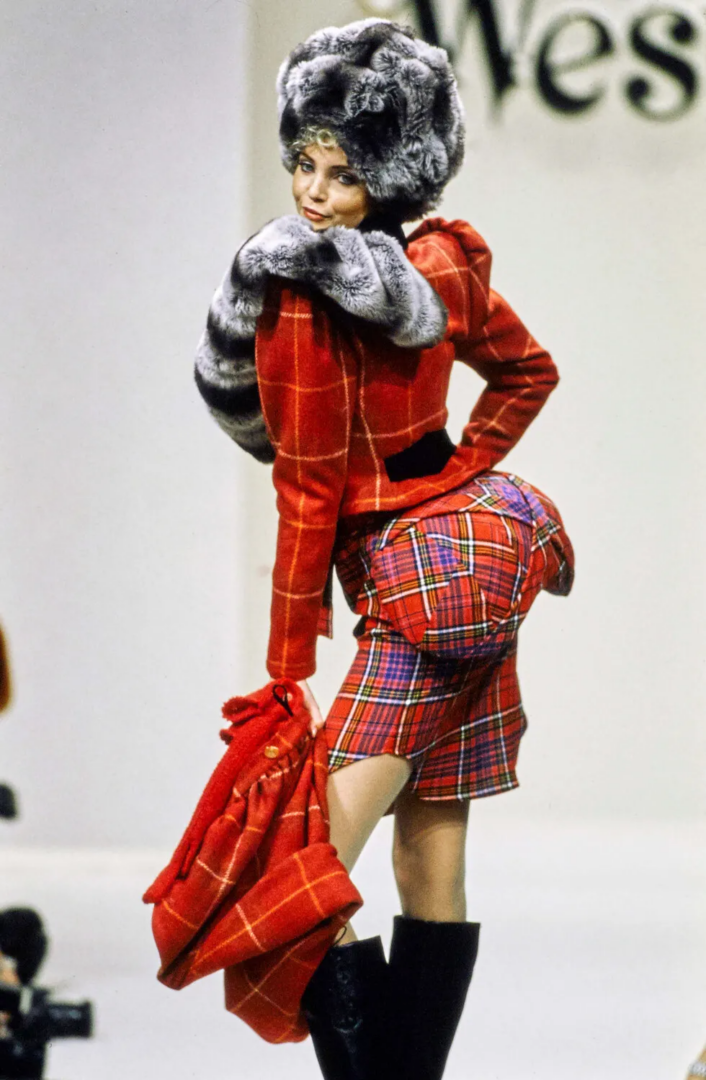
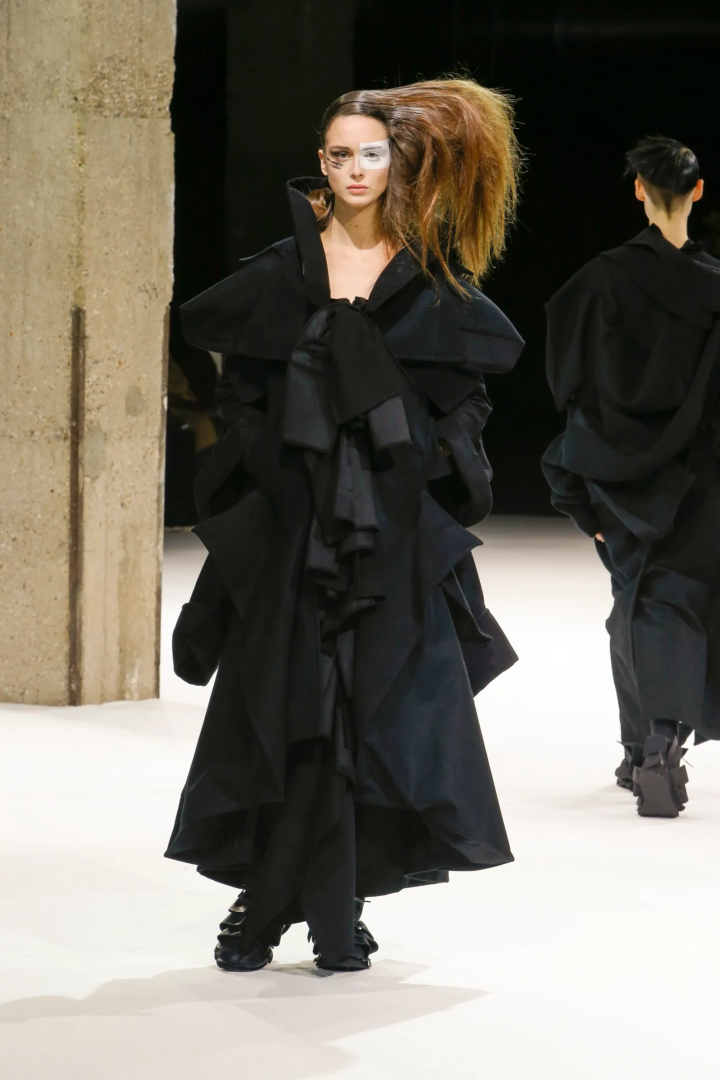
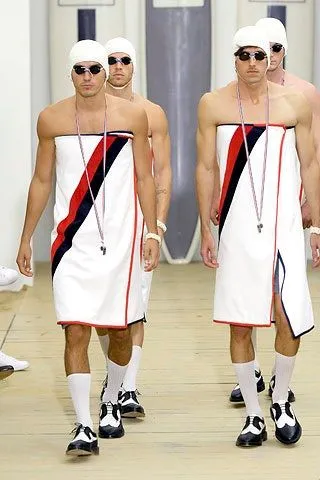
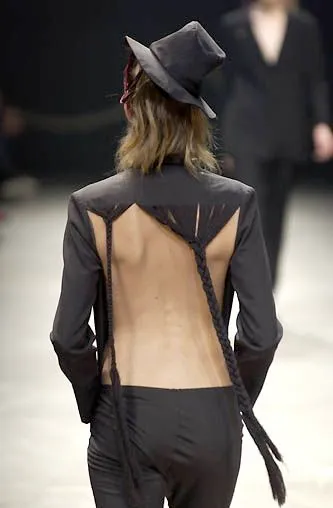
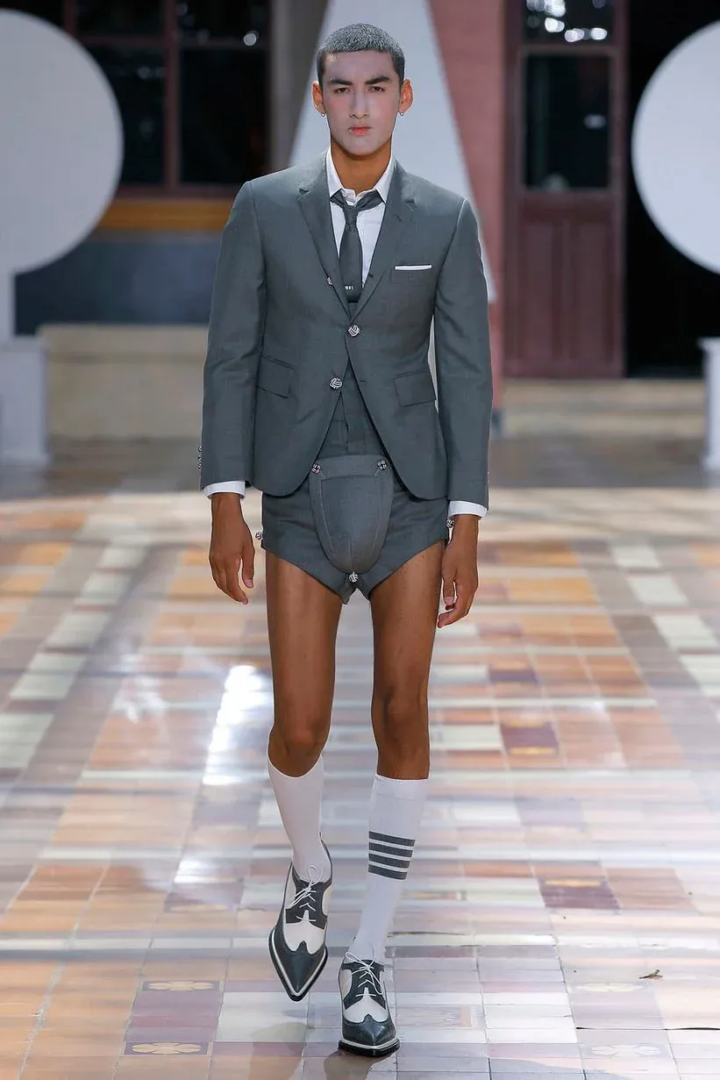
Around the same time, Thom Browne was being mocked for putting men in short trousers and shrunken jackets; Yves Saint Laurent had adapted the men’s tuxedo to the female silhouette – a move so transgressive that socialite Nan Kempner was thrown out of New York restaurant La Côte Basque for wearing a pair of trousers. Designs like these shocked and then enchanted: the acclaim that followed was a sign of appetite for something that didn’t look like what had come before. A sign that the door is still open for people who stop reinventing codes and start inventing instead. If the result is outrage, so much the better – outrage with a purpose. The kind of lesson that pays off in the end. Like Yohji Yamamoto, “an animal that makes clothes” by his own definition, a brutal and savage designer, furious at cultural encrustation, thought stereotypes, and daily ritual. The so-called routine. The rage of routine. It is no coincidence that his book of poetics is titled My Dear Bomb.
Alessandro Michele: beauty can be as frightening as a dog barking in the dark – a fashion underdog manifesto
“Fashion right now is like an old lady dying in a bed.” That was Alessandro Michele in 2017. He believed the time had come to let her go. A year later, journalist Frank Bruni asked whether what the then-creative director of Gucci was doing might be described as a kind of post-fashion, a post-mortem of that old lady. After letting the question settle, Michele said it rang true. Fashion, as such, didn’t interest him. What interested him was communicating a message: that the way you dress is the way you live. And that this is an irregular, imperfect process. “Your life can be like a laboratory.” This is the philosophy of the fashion underdog: no rules, no hierarchy, only experimentation. In Michele’s laboratory, not a single inch of skin is left unused. It is a flea market, a hat full of ideas. There is no indiscipline or indecision – only the impulse to share every conceivable form of beauty. “I am shameless. For me, creating means regurgitating, subverting, and assembling everything I’ve been – and am constantly – traversed by.”
His work does not spring from nothing but from cultural theft so habitual it has become his signature. For Michele, a vase by designer Gaetano Pesce, one from IKEA, and a Babylonian one all belong to the same horizon of experience – a vast, legitimizing beauty that collapses the distance between the ancient and the immediate. The fashion underdog sees no difference between high and low – only meaning. Standing side by side before a panoramic window overlooking Lower Manhattan, Frank Bruni once saw a chaos of buildings born out of utility, with no unifying aesthetic. He would have wanted to put them in order. Michele, on the other hand, saw a story, a testimony, an exciting mess. A mosaic of Victorian details and 1930s lines.
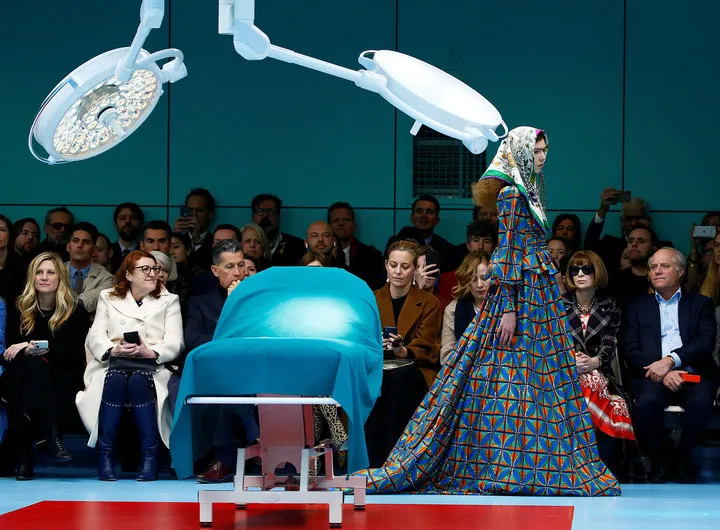
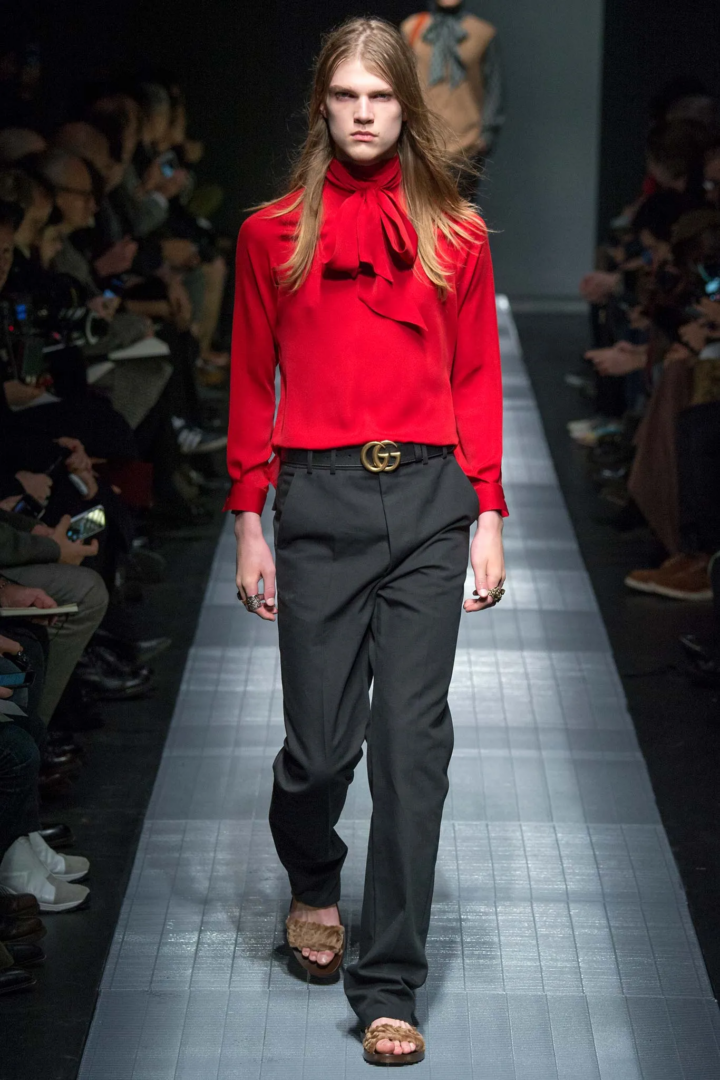
Before 2015, Michele was known only modestly outside the companies he had worked for. His career had unfolded at the Italian knitwear brand Les Copains, then at Fendi, then at Gucci – where he designed bags for creative director Tom Ford, and later became associate designer to Tom Ford’s successor, Frida Giannini. Everything changed when, in 2014, Marco Bizzarri – Gucci’s new CEO, tasked with finding a replacement for Giannini — met the forty-two-year-old Michele for a coffee. The goal was to better understand the company. By the end of that coffee – a conversation about art history, life, and goods – Michele was on the shortlist. Before confirming the role, Bizzarri issued what would become a legendary challenge: there was one week until the 2015 menswear show. Giannini had already completed it – it communicated nothing in particular, generated no conversation. It was scrapped. Michele was given the task of creating thirty-six looks and a set design from scratch. Every single detail was changed. The show was the moment pussy-bow blouses, lace, pink, berets, scarves, and a certain ironic intellectualism flooded the online and offline space at once.
Michele arrived at a house known for its nouveau-riche mix – breathless late-night glamour, Fordian minimalism, and Jackie Kennedy aspirations – and transformed it into a community for geeks and freaks where the definition of LGBTQ stretched further than anyone expected. His fur-lined bedroom slippers drew lines stretching around the block outside stores. Everyone was welcome in Gucciland: his fashion was a big idea. It still is — though, since last year, it lives inside the palazzo of Maison Valentino. His first Roman collection for the Italian house was called Interference, precisely because Michele sees himself as one. “Valentino perfected those lessons, and I’m always a little crooked.” Sometimes he feels Jurassic. He often looks back to find something that makes the present feel relevant. Most of the time what he’s looking for is, still, beauty. Which can sometimes be as frightening as a dog barking from the dark – the one you didn’t notice was there.
Daniel Lee: being a shadow designer, beyond being British
The success Gucci achieved with Michele was one of the factors that, in 2017, led François-Henri Pinault, CEO of the Kering conglomerate, to appoint another near-unknown as creative director. Daniel Lee – “an Englishman, but not eccentric,” as Pinault described him. “More austere, minimalist. Capable of thinking beyond being British.” In his three years leading Bottega Veneta – the house that put Lee’s name on the map – he built an identity so clear that a brilliant shade of lime green became known as Bottega Green. Counterintuitively, he deleted the brand’s social media accounts and stepped away from the official fashion week calendar, preferring instead mixed-gender shows organized when and where he saw fit. In doing so, he returned Bottega Veneta to the center of consumer consciousness. He created the Pouch Bag – “the fastest-selling bag in Bottega Veneta’s history” – at the very moment the concept of the It bag had been declared dead. Soft and pillowy, the Pouch was inspired by the bag Lauren Hutton carried in American Gigolo: a brilliant, counter-trend idea that would be followed by equally strong ones – oversized-scale intrecciato weave, quilted leather coats, and square-toe mules.
Even after winning four British Fashion Awards for the brand’s revival – more than any other designer in the event’s history – Lee remained largely a behind-the-scenes figure. After shows he would participate in brief press meetings where he often repeated the same sentence several times. He looked like he was suffering, as if swallowing something sharp. In 2022, the need to revive another house in an identity crisis – Burberry – carried Lee’s talent toward it. Burberry is not simply a brand; it is a cultural ambassador of Britishness, one of the rare labels to have colonized a truly global imagination. Lee’s kiss to the English Sleeping Beauty went like this: take a set of stereotypically British things – roses bright with thorns, hunting accessories, trench coats from the trenches, rain galoshes, plaid and check patterns – filter them through 1990s grunge, add a dash of drowsy cream-of-England humor. It worked. Since September 2024 the brand’s stock price has more than doubled. Burberry has re-entered the popular consciousness. In the meantime, at Bottega Veneta, the third underdog of our era has taken up residence – Matthieu Blazy.
Matthieu Blazy: the anti-Pharrell fashion underdog who makes clothes — and Chanel pandemonium
In recent years, a fault line has opened up in the industry: on one side, designers who produce clothes; on the other, designers who produce content. The appointment of Pharrell Williams as creative director of Louis Vuitton was the apotheosis of content-first fashion. Matthieu Blazy is the anti-Williams. He is a designer opposed to the cult of the individual – he believes, instead, in the appeal of individuality.After three years as the number two to Bottega Veneta’s creative director Daniel Lee, in 2022 Blazy was called to take the top position. He set himself two challenges: create wearable pieces; engage with the world we actually live in. He put aside computers, lined his office with a warm domestic wood, hung paintings and other artworks — he prefers to have money on the walls than in the bank — and restored craft as Bottega Veneta’s defining technology.
Just under a year ago, he moved into the most prestigious creative seat of all: Maison Chanel. His March show freed the French house from its old constraints — the pearls, the camellias, the double Cs, the tweed. Just as Mademoiselle Chanel liberated women from corsets, Monsieur Blazy – or the fashion underdog – has liberated them from their grandmothers’ Chanel. The day the pieces arrived at the Rue Cambon boutique, store staff described scenes from The Hunger Games. A pandemonium comparable only to the frenzy of Alessandro Michele’s first season at Gucci. The most-asked question of the day: Do you have the new Matthieu?
Stella Manferdini