Getting high without getting drunk
Mixology, herbs, ritual and Eli Martinez Bello at YAPA’s fourth Liquid Dialogues chapter — Altered states that has nothing to do with the alcohol
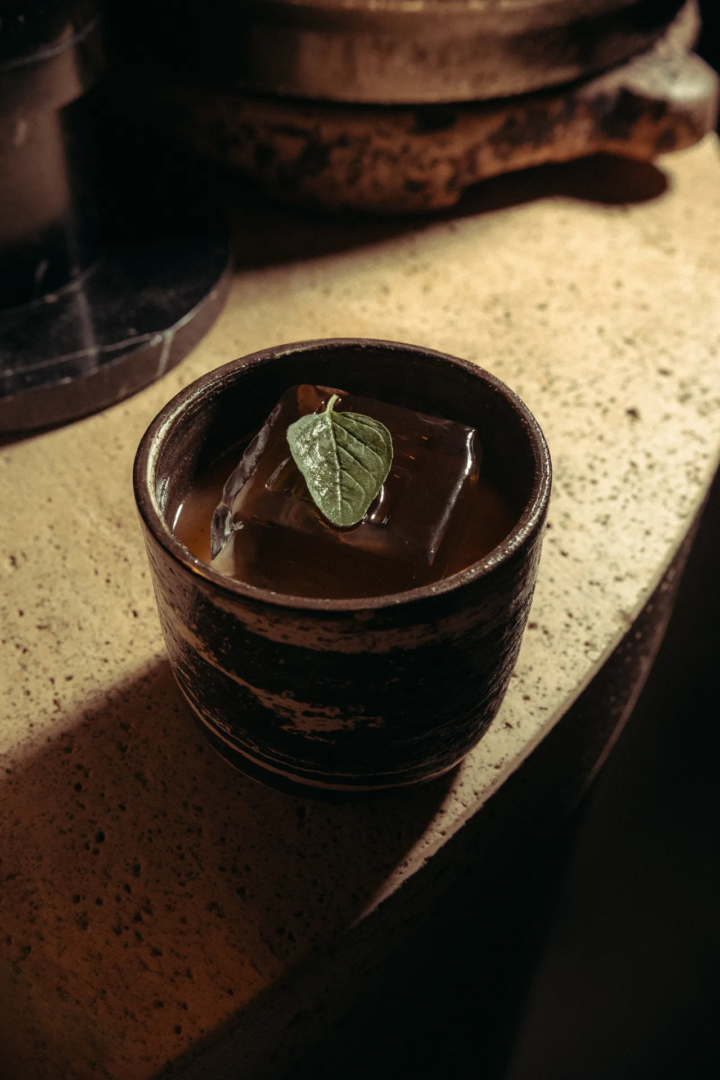
Bottles circulate with a name, a region, a process. A drink arrives built from whiskey, Ancho Reyes, triple sec, tamarind syrup, citrus, and oregano flower. The ingredients are presented as references. Tamarind — native to tropical Africa, absorbed into Mexican street culture over centuries — carries histories of migration and adaptation. The oregano is not a garnish. It is a marker of regional tradition: the same plant that, dried and brewed, has circulated as a domestic remedy in Mexican households for generations. The drink functions as a route into a conversation.
HOSPITALITY IS STRIPPED TO AN EYE-TO-EYE ENCOUNTER WITH CRAFT
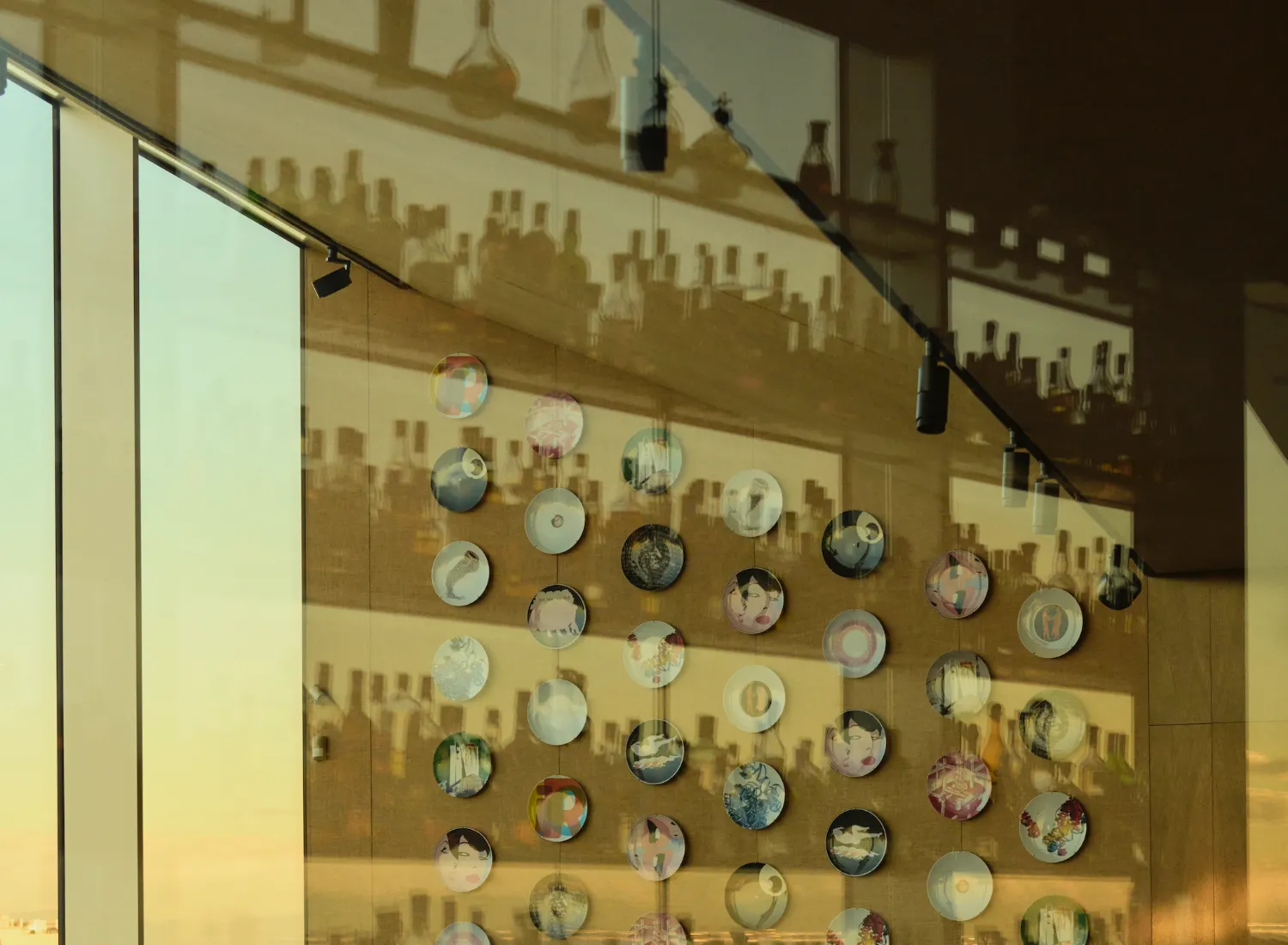
This is the fourth chapter of Liquid Dialogues, a guest mixology and culinary series produced by YAPA Milan. The platform is built for cultural exchange — bringing together different voices, traditions, and approaches to hospitality, mixology, and gastronomy. International guest bartenders collaborate with YAPA’s team to produce low-waste cocktails that bridge global and local ingredient cultures. The curatorial vision, shaped by Chef Matteo Pancetti and mixologist Matias Sarli, rests on a strict circular architecture where the liquid and edible realms occupy equal footing. Operating on a shared flavor matrix — acid, savory, umami, bitter — the two reject ornament in favor of process. The eight-seat counter functions as a live test bench: raw materials and structural by-products move in a continuous loop between bar and kitchen. Nothing is waste. The space operates as a vessel for direct storytelling, where hospitality is stripped to an eye-to-eye encounter with craft.
THE PRACTITIONER INVITED FOR THE FOURTH CHAPTER IS ELI MARTÍNEZ BELLO
Co-founder and head bartender of Tlecān, Martínez Bello, a mezcalería in Mexico City’s Roma neighborhood named after the Náhuatl word for place of fire. The question her work raises is more specific and more difficult. What happens when a tradition enters the market? What survives? What is the thing being transmitted — and what happens when it becomes, instead, the thing being sold?
When an Aztec ingredient is used as a superfood and a Mexico City bar uses the same ingredient as a cultural rite, what’s actually different? And what does that difference reveal about who gets to define elevated?
WHEN CULTURE BECOMES INGREDIENT
A pattern runs through the global plant economy. Matcha becomes a wellness staple. Turmeric enters the latte menus of health-conscious cities. Ashwagandha moves from Ayurvedic tradition into the supplement aisle. Sage travels from indigenous North American ceremony into products sold at airport shops. In each case, the plant is embraced. In each case, the process of making it respectable involves removing it from the ritual context that produced it.
The wellness industry has borrowed extensively from traditional medicine — the adaptogen vocabulary, the sacred plant lexicon, the language of ancient wisdom — and repackaged these as systems of individual self-improvement. The borrowing presents itself as appreciation. As the democratization of ancestral knowledge. What it removes, in the process, is the thing that made the plant meaningful: not the compound, not the effect, but the context.
Mezcal spent a decade negotiating the line between trend and tradition. Pulque remains largely unknown to the generations that should have inherited it. Coca leaf will not arrive in the wellness aisle — not because it is more dangerous than the plants already there, but because its origin community is too present, too attached, for the rebranding to function cleanly. A plant becomes respectable, it turns out, when its ritual context has been removed. The detachment presents itself as clarification. What it offers is the plant without its meaning. And the meaning was the substance.
«It’s very important for me to try to put pulque back on the table. Right now, the new generations — they don’t know anything about pulque. I’m not sure they’ve ever had a borachera with pulque in their lives. Don’t forget the ancestral.»
THE PLANT IS NOT A TOOL FOR SELF-IMPROVEMENT. IT IS A CARRIER OF COSMOLOGY.
Two parallel movements are happening in drinking culture. Almost no one is connecting them. The first is the global functional beverage boom: adaptogens, nootropics, CBD mocktails, ashwagandha tonics — a rapidly expanding non-alcoholic category engineered to make sobriety feel like an upgrade. The second is a renewed interest in ritual drinks and ancestral plant traditions. Here, pulque and tejuino appear on menus that were never conceived as cocktail lists. They were sacraments.
Both movements use herbs and plant language. Both invoke ritual. But they point in opposite directions. One uses plants to optimize the self. The other uses plants to connect the self to something larger than itself. The agave plant is the same in both contexts. The fermentation process has not changed across centuries. What has changed is the frame — and the frame is assigned, not discovered, inside systems of cultural authority that have consistently determined which traditions become elevated and which remain local.
Pulque — fermented agave sap — was, in pre-Hispanic cosmology, the physical embodiment of Mayahuel, the goddess whose dismemberment produced the first maguey. To drink it was to participate in a cosmological order. The fermentation was not a technique. It was a rite. By the time pulque becomes a probiotic-forward fermented beverage on a wellness menu in another city, something has been removed. The plant arrived. Its meaning did not.
«For me, a cocktail is an ideal reason to talk about Mexico. The plant is not a tool for self-improvement. It is a carrier of cosmology.»
BEYOND ALCOHOL — WHAT A PLANT CARRIES
Martínez Bello’s program runs on ancestral distillates — mezcal, pox, bacanora, sotol, raicilla — alongside pulque and tejuino, each sourced directly from craft producers and palenqueros, each presented with its name, geography, and community of origin. The menu does not market health benefits. A plant is cultural memory, ancestral knowledge, a carrier of stories, rituals, cosmologies, and ways of relating to the world that precede contemporary wellness discourse by centuries. Its value cannot be reduced to energy, focus, relaxation, or performance. It resides equally in the communities that cultivated it, the ceremonies that surrounded it, and the histories it continues to embody.
«Besides mixology techniques, what is most important to me is to share the origins of each ingredient and the community of Mexico that it comes from. I want people to get to know our culture via a cocktail and to share who we are via a spirit.»
RITUAL REQUIRES FORM. IT REQUIRES REPETITION. IT REQUIRES OTHERS.
The distinction between ritual and a wellness routine is structural, not sentimental. A ritual is a repeated, collective act with a fixed form. It asks the participant to set aside individual preference and submit to something older. The meaning is in the repetition. The closure is in the form. What the functional beverage market offers is the opposite: an open, flexible, endlessly improvable protocol. Nothing is final. The supplement can be upgraded tomorrow.
When a communal substance moves from one domain to the other, the shift is not visible in the ingredient. It is visible in the relationship. The seasonal, collective act of drinking pulque at planting time and the daily cortisol-management supplement are chemically adjacent. Culturally, they occupy different worlds. Martínez Bello restores the orientation: the insistence that a drink is a reason to know something, to ask something, to carry something forward.
«I don’t believe in overcomplicating things, nor trying to invent something new. My approach is to reconnect the dots from a vast and diverse tradition in Mexico — to remind people of what it was and to experience it anew.»
A MOLE FASHIONED AND THE WEIGHT AN INGREDIENT CARRIES BEFORE IT ENTERS THE GLASS
A Mole Fashioned, built from whiskey, a mole poblano fat wash, and chocolate bitters, condensed one of Martínez Bello’s recurring concerns. Mole is already a carrier of memory, technique, and collective labor before it enters a cocktail glass. Its name derives from the Nahuatl mōlli, meaning mix. Its recipe, traced to the Dominican nuns of a seventeenth-century convent in Puebla, layers more than twenty ingredients — indigenous chiles and cacao alongside spices that arrived with the Spanish. It is a dish inseparable from the ceremonies it has accompanied: weddings, baptisms, collective mourning. The fat wash transferred the sauce’s oils into the spirit. What remained was not flavor alone. The question is not what happens to the ingredient when it becomes a drink. The question is what happens to the drink when it inherits the cultural weight of the ingredient.
THE HIGH BEING CHASED IS NOT A BUZZ. IT IS PROXIMITY TO SOMETHING ANCESTRAL
What Martínez Bello’s practice argues — across two decades, built into every sourcing relationship and every refusal of ornament at Tlecān — is that the altered state worth pursuing in a bar need not be pharmacological. It is not a compound or a measurable shift in state. It is the experience of receiving something that carries more than the glass contains: a community, a land, a long accumulation of belief.
Ritual situates the individual within a world older and more demanding than the one currently on offer. It asks for submission rather than improvement. It does not produce a better version of the self. It produces, for the duration of the shared act, a self that is not entirely its own.
Martínez Bello is not asking her guests to convert to a pre-Hispanic belief system. She is asking something more modest and more difficult: that the act of drinking be understood as participation rather than consumption. That the glass carry something. That the something it carries be taken seriously.
WHETHER MEANING CAN SURVIVE ITS OWN POPULARITY
Martínez Bello’s answer is demonstrated, repeatedly, in the sourcing, the service, the standing room, the names on the bottles, the disc of death on the wall — in the form the bar takes and the relationships it maintains.
Her presence in Milan was not that of a trend ingredient introduced to a new market. The questions she raises — about which traditions are granted authority, about who decides what elevated means — do not belong to any single evening or venue. They travel.
And then there is the question she leaves open — the one that does not resolve, and is not supposed to.
Is that distinction even real, or is it the last polite fiction left in drinking culture?
Liquid Dialogues: Eli Martínez Bello is a Mexican bartender, co-founder and head bartender of Tlecān in Mexico City’s Roma neighborhood, and former beverage program leader at Pujol. Named after the Náhuatl word for place of fire, Tlecān’s program is built around pulque, tejuino, mezcal, pox, bacanora, sotol, and raicilla, sourced directly from craft producers and presented in the context of pre-Hispanic Mexican culture. Martínez Bello is the first Mexican bartender to win the Altos Bartenders’ Bartender Award, voted exclusively by industry peers. Liquid Dialogues is a recurring format produced by YAPA Milan, curated by Matias Sarli and Chef Matteo Pancetti. The fourth chapter took place on June 15, 2025.