Art Basel Paris 2026: Alice Diop’s Geste de Consolation brings the Public Program to Palais d’Iéna
At Miu Miu’s Geste de Consolation, Alice Diop turns spectatorship into part of Palais d’Iéna’s architecture, making visitors conscious of how they look, where they sit, and how they are seen
Art Basel Paris beyond the Grand Palais
Art Basel Paris opens its fifth edition at the Grand Palais on October 23, after Preview Days on October 21 and 22. Under director Karim Crippa, the fair gathers more than 200 exhibitors from 41 countries and territories. Part of the edition, though, happens outside the glass roof. The Public Program, organized with Parisian institutions and free to visit, places exhibitions, installations and performances in buildings across the city that rarely host contemporary art.
Palais d’Iéna, seat of the French Economic, Environmental and Social Council (EESC), has become one of the program’s fixed points. The building has a long history with Miu Miu: in 2011, Prada reached an agreement with the EESC to use it for cultural and artistic activities, and the brand has staged its runway shows there since its FW 2011–12 collection. Since 2024, it has hosted a Public Program project each year, realized with Miu Miu: Tales & Tellers that year, Helen Marten’s 30 Blizzards in 2025.
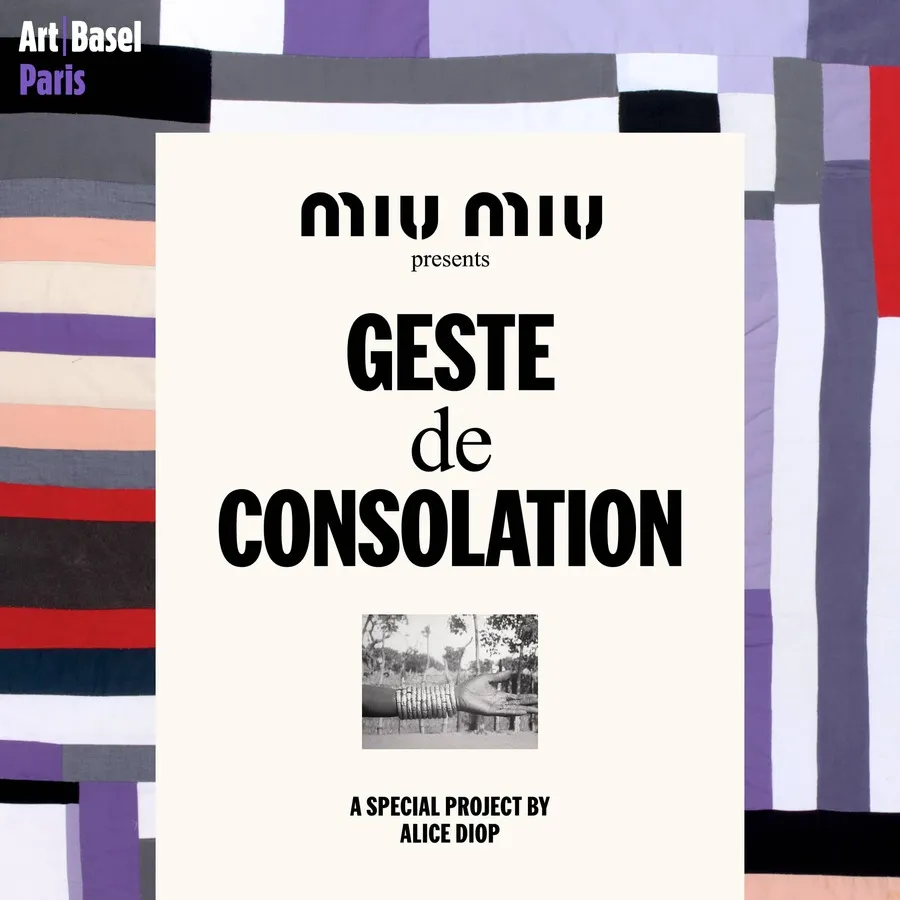
This year, the Public Program brings Geste de Consolation, realized with Miu Miu, to Palais d’Iéna. It is the first exhibition by French filmmaker Alice Diop. Open from October 21 to 25, it spreads film, photography, sculpture, literature, dance, music and live performance across four spaces, carrying a practice formed in the edit suite into architecture.
From Fragments for Venus to Geste de Consolation
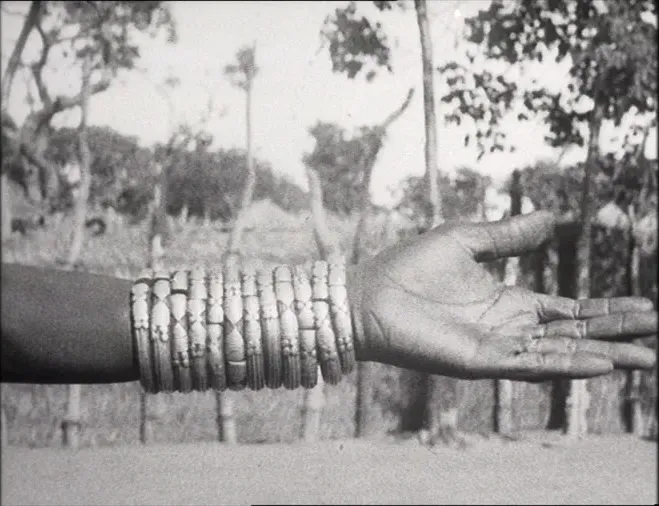
Diop arranges the disciplines as a sequence, each encounter setting up the next. Her starting point is the way Black women have been pictured, described and looked at in Western visual culture, and what that looking has done. Against that history she assembles work by women who have shaped her thinking. The project picks up from Fragments for Venus, her 2025 short for Miu Miu’s Women’s Tales series, in which a Black woman walks through a museum while a voice sets out the position Western art assigned to Black female bodies.
Geste de Consolation moves that argument off the museum wall and into a built environment. Zanele Muholi’s photography, Mary Lee Bendolph’s textiles and Simone Leigh’s sculpture share the space with readings, choreography and music. Diop calls it montage. There is no single narrative; meaning accumulates as visitors move between works and register what has been placed beside what.
Palais d’Iéna: Structure as a visual language
Auguste Perret designed the building for the 1937 Exposition Internationale des Arts et Techniques dans la Vie Moderne. Completed in 1939 as the Musée des Travaux Publics, it was built to display France’s infrastructure and engineering. The museum eventually closed and the EESC moved in. For Art Basel Paris, the building offers what the Grand Palais can’t: a civic, non-commercial setting at a remove from the fair floor.
Perret worked with reinforced concrete, monumental proportions and a repeated grid of columns. The concrete is the structure, left exposed, and he granted it the dignity architects had reserved for stone; polished finishes, openings and proportion make the material legible. Inside, the columns set a rhythm, and the open bays between them read as one continuous field. There is no ornament. The structure does the work.
Materiality: Perret’s concrete, Diop’s domestic space
Diop doesn’t try to match the building’s scale. She brings in a different material vocabulary. In Chambre à soi, a living room and library sit inside the concrete frame, laid over carpets by Mary Lee Bendolph. Furniture, books and fabric make the space domestic. Perret’s rigid structure now meets surfaces meant to be sat on, read from and handled, and the concrete looks different for it.
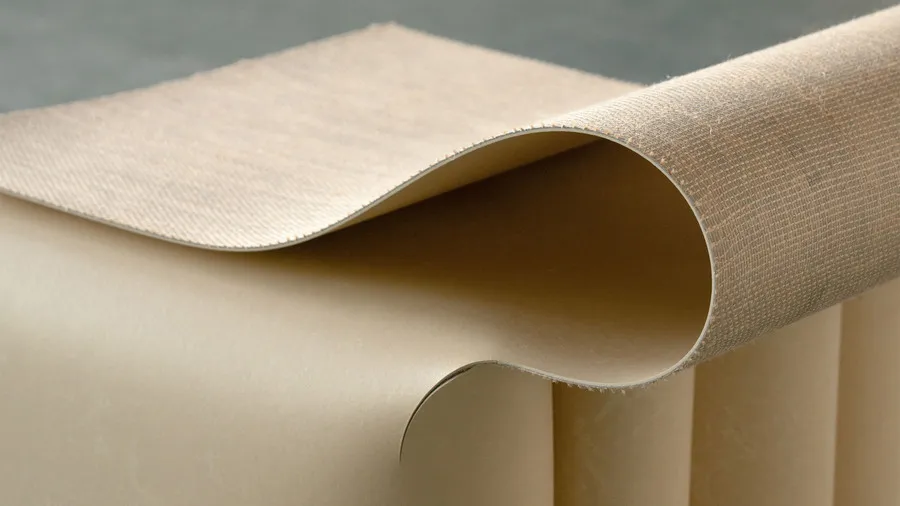
Bendolph’s work comes out of quilting and the Gee’s Bend tradition, where fabric keeps a record of how it was made: pieced, repeated, reused. Here it brings intimacy into a building designed to keep it out.
From image to monument
Muholi’s photograph and Diop’s two-screen video installation hold positions within the structure instead of hanging in a row. The photograph works through its surface, its scale and the distance it sets. Diop’s installation adds screens, light and duration, and image and room adjust to each other.
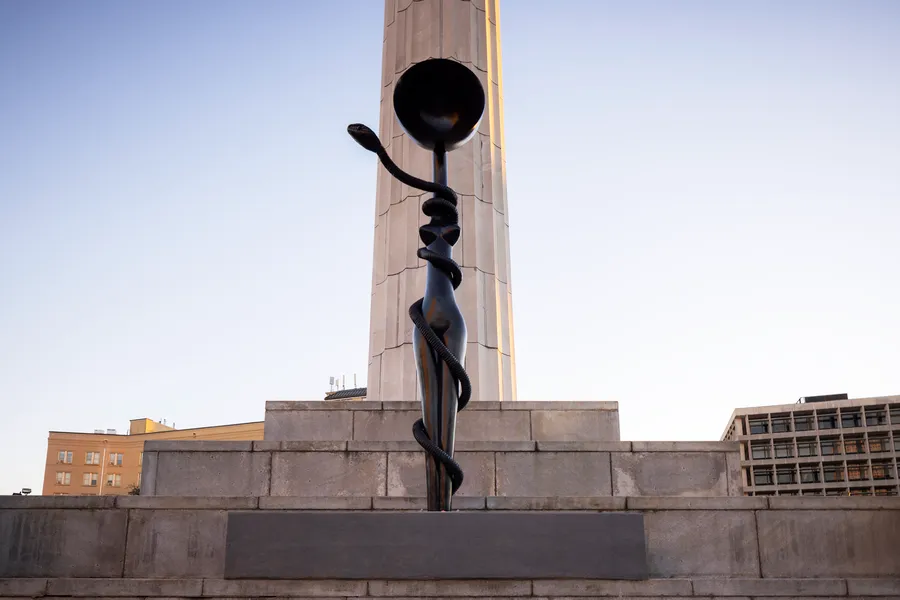
Simone Leigh’s bronze Sentinel (Mami Wata) is where these material meetings come to a head. The figure, which retains traces of the human form, carries a different physical authority. Bronze and concrete are both built to last, though made by different systems. Between them, books, carpets, screens, photographs and furniture alter the scale and weight of whatever stands nearby.
One composition, many practices
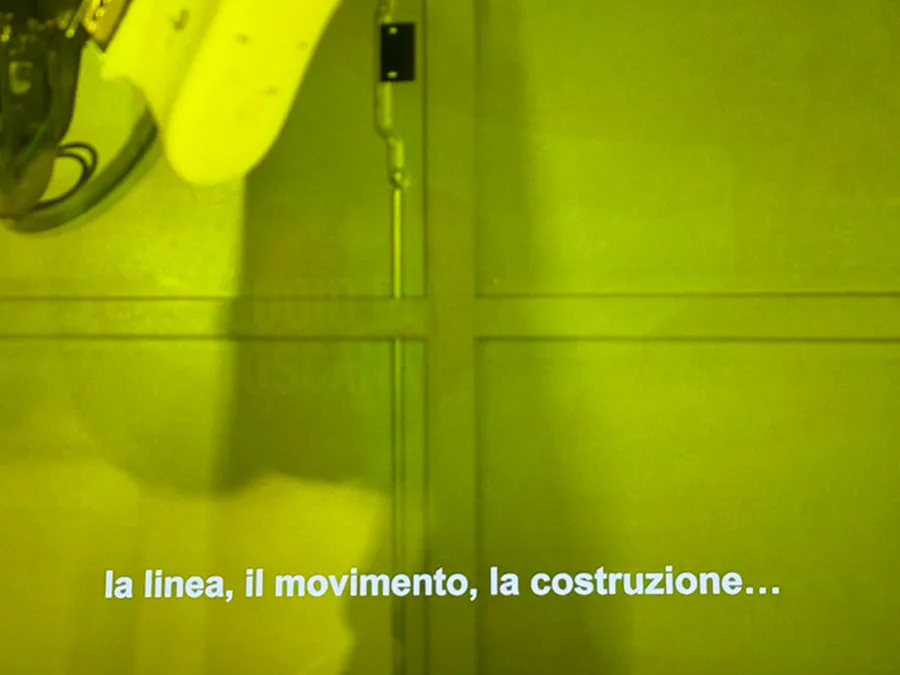
If the materials set the conditions, the practices hold the exhibition together, along with the way they play off one another. Diop comes from cinema, where meaning is made by selecting, ordering and colliding images. She edits her archival material through her own perspective, deciding what enters the frame and in what order. The exhibition applies that method at the scale of a building: the visitor’s walk between works, spaces, sounds and bodies takes the place of the cut.
Muholi slows things down. Her photograph asks the viewer to stay with one frame. Diop works by accumulation and editing, Muholi by sustained presence, and visitors pass between an image that keeps changing and one that won’t.
From quilt to spoken word
Bendolph moves the question from representation to construction. Quilting sits between art and daily life, made from repetition, salvaged fragments, inherited knowledge and individual choices. After Diop’s archive and Muholi’s portraits, it offers another way of keeping memory, assembled by hand, piece by piece.
Writing enters through the voice. Texts by Penda Diouf, Zora Neale Hurston, June Jordan, Audre Lorde, Marie NDiaye and Zadie Smith are read aloud, so an experience usually private and set to one reader’s pace becomes shared and bound to time. The words last as long as the reading. What stays is memory, not an object.
Bodies, sound, sculpture
Nadia Beugré’s choreography Prophétique carries the sequence from language into the body. Her dancers share the architecture with the audience, which unsettles the fixed distance a photograph or sculpture keeps. Visitors watch bodies that move, take up room and set its pace.
Angel Bat Dawid’s Sistazz of the Nitty-Gritty fills the space and reaches people whether or not they are facing the musicians. Improvisation sits awkwardly, and usefully, inside a project built on Diop’s sequencing. Film is edited before anyone sees it; live music happens once. The result is a different tempo, governed by listening and response.
Leigh’s Sentinel (Mami Wata) closes the exhibition in stillness. After the edited images, the photograph, the quilts, the readings and the music, the sculpture holds its ground. Here the montage resolves, built as much from time, attention and physical presence as from images, with each practice changing how the next is received.
The architecture of looking
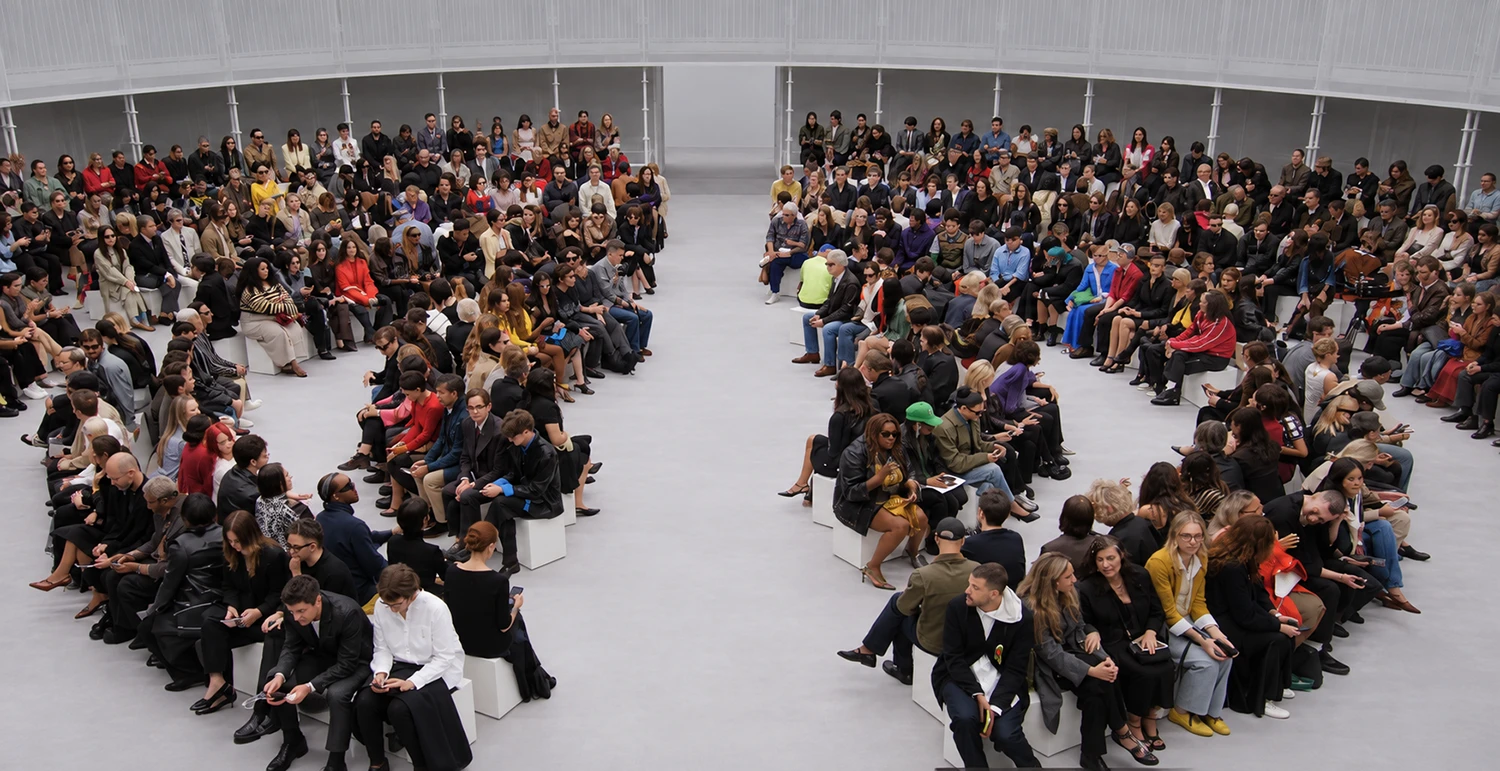
The first rooms show what the exhibition is made of. The performance space shows how it is seen. Diop’s tiered seating is part of the scenography: from it, visitors watch the projections and the performers and, across the room, other visitors watching. The gaze has nowhere fixed to land.
The exhibition responds to the gaze that has framed Black women, and it does so through situation as much as image. Moving from Chambre à soi to the performance area shifts the experience from private to collective. Seated in a group, the audience can be watched too, and the line between looking and being looked at thins.
During fair week, with the whole city occupied with looking at art, the effect sharpens. Visitors arriving from the booths of the Grand Palais, where looking is tied to appraisal and purchase, find their own way of looking on display.
By the time they reach Sentinel (Mami Wata), looking has shifted again. The sculpture shares the viewer’s space, and its height registers in the body. Image to room, room to performance, performance to monument: the exhibition returns the question of representation to physical space. It opens with images of Black women and ends with a female figure no image could contain.
The final gesture
The route brings Geste de Consolation back to Diop’s starting question: how Black women have been represented, and what another way of looking would require. She doesn’t answer it with more images. She gathers forms of presence.
Muholi’s photograph makes the Black woman a subject; Diop’s moving images layer archive and personal reference around her. Chambre à soi builds an intimate room, and Bendolph’s textiles enter it as a record of practice. Beugré’s dancers occupy the space with their bodies, Angel Bat Dawid and Sistazz of the Nitty-Gritty with sound. Each practice shifts the terms on which a Black woman appears here: as artist, author, performer, thinker and maker, not as someone represented.
Diop describes the exhibition as a journey of remembrance and repair. Repair, here, doesn’t erase the images that came before, and it doesn’t claim the history of representation can be corrected. It comes from adding voices, forms of authorship, ways of occupying the frame and the room. The exhibition starts with looking. It doesn’t leave Black women where that looking put them.
Within Art Basel Paris, Geste de Consolation shows what the Public Program can do: sit beside the fair, free to enter, organized around time and presence instead of objects for sale. At the Grand Palais, art is there to be seen and acquired. At Palais d’Iéna, Diop asks who has been seen, and on whose terms.
Susanna Galstyan