Black truffle in Umbria: one soil in Trevi yields two harvests a year
A truffle is the fruiting body of a fungus bound to tree roots. In Trevi, one soil feeds two species: Tuber aestivum in summer, Tuber melanosporum in winter
Pettine means comb. The name comes from the hill above the estate, and from the ridges that run down its flank like teeth. San Pietro a Pettine takes the name of the hill: twelve hectares in Trevi, central Umbria, a few minutes by car from Montefalco, nine of them cultivated truffle grounds, the rest olive groves and oaks.
Beyond the property line the family company holds exclusive harvesting rights over about two thousand hectares of natural truffle grounds, which run from the valley floor up the slopes of Monte Pettino. Carlo Caporicci owns the estate and runs the company, founded in 1948, which harvests, processes and sells truffle and today employs more than forty people.
La Cucina di San Pietro a Pettine, a dining room inside the truffle grounds
The business came sixty-five years before the dining room. Caporicci opened La Cucina di San Pietro a Pettine inside the property in 2013, a short walk from the plots that supply it, with his daughter Alice Caporicci in the kitchen.
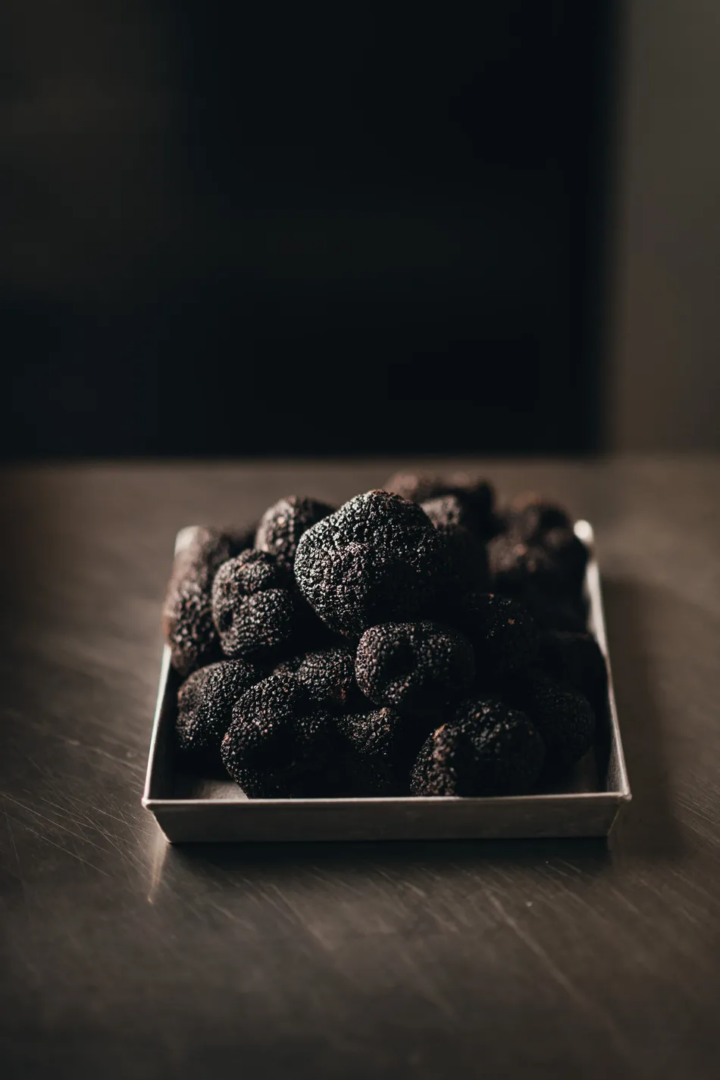
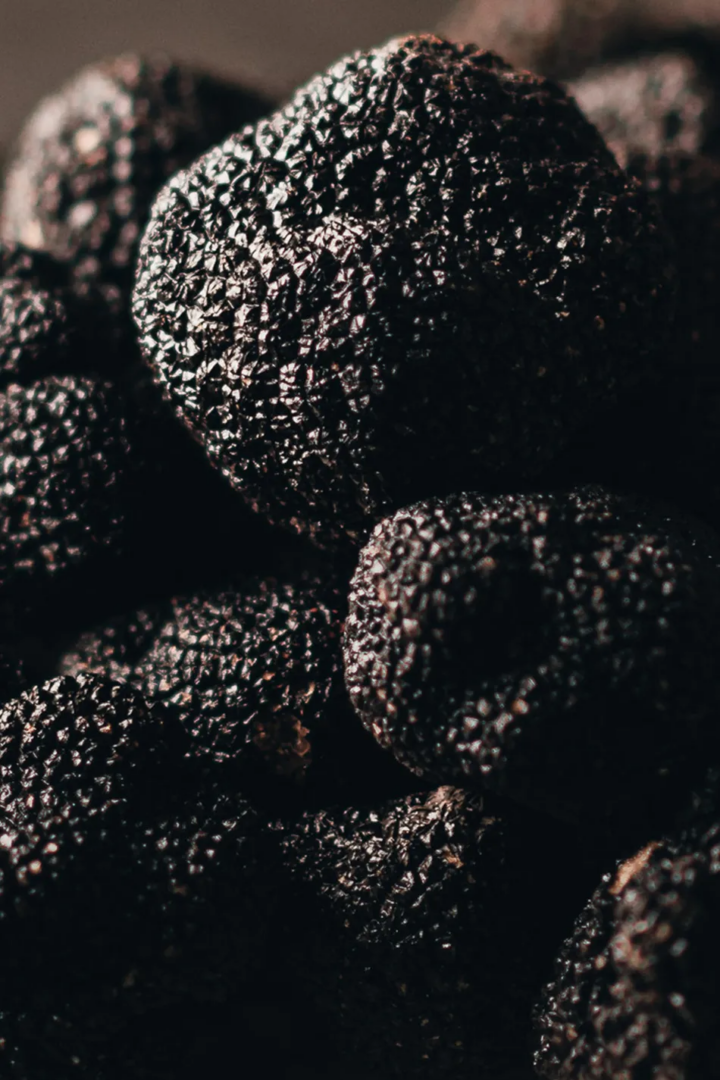
The ground carries two species of black truffle, which gives the estate two harvest windows in the same year: Tuber aestivum, the summer black truffle, and Tuber melanosporum, which ripens between late autumn and early spring. Yield changes from one year to the next with rainfall, temperature and the age of the host plants. In most seasons truffle from the property covers the bulk of what the restaurant uses, and the company sources and processes the rest for sale in Italy and abroad.
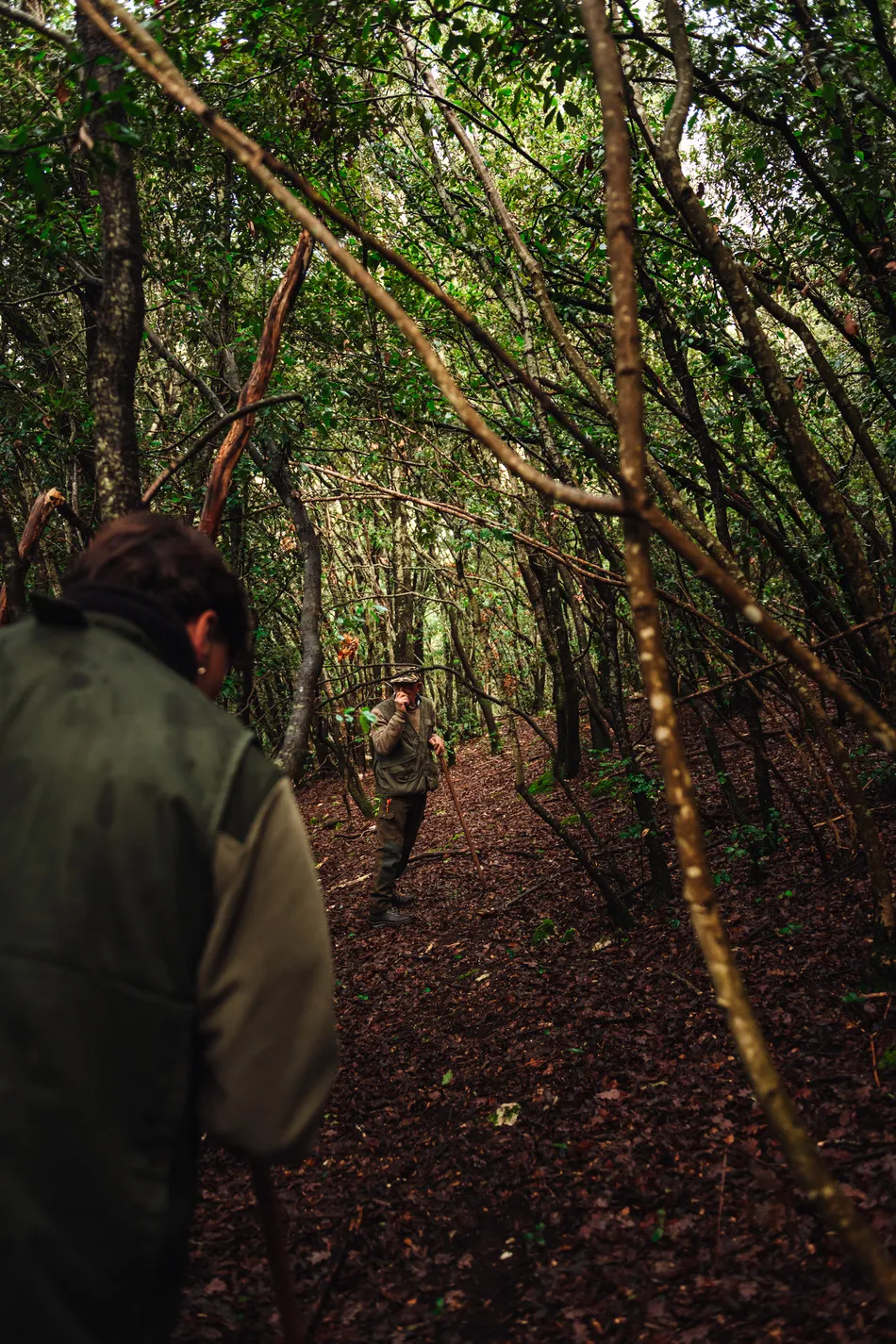
Truffle hunting at San Pietro a Pettine, the cavatore, the dog and law 752
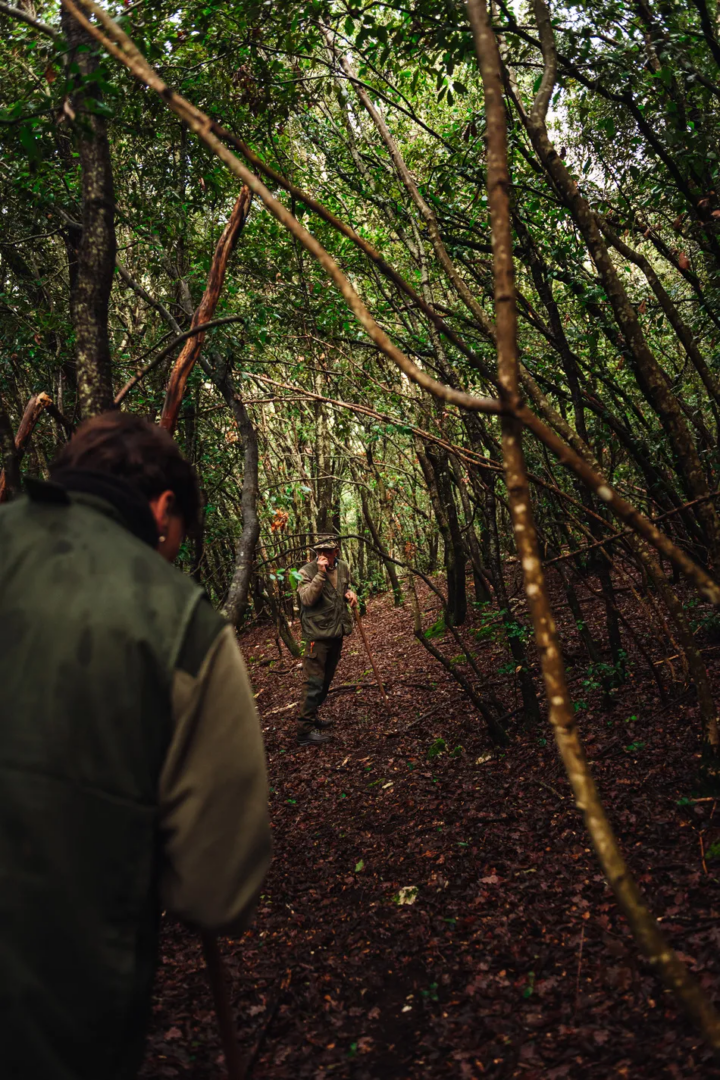
Truffle hunting in Italy follows national law 752 of 1985, which requires a licence issued after an exam and bans the use of pigs. Hunters work with trained dogs that locate the truffle by scent, dig with a small spade and refill the hole behind them. At San Pietro a Pettine the searches run inside the private grounds of the estate, led by a cavatore named Bruno with his dogs, who takes guests through the two species, their harvest periods and the techniques of the search. There are four formats, for individuals and groups of up to twenty.
Tuber Silva lasts about an hour and a half and pairs the hunt with a guided visit to the estate’s Romanesque church, ending with the merenda del cavatore, the hunter’s snack, served on the threshing floor facing Montefalco and the Valle Umbra: truffle bruschetta, cheese with honey and truffle, salami. Radici adds a light lunch at the restaurant, and Essentia, about three hours, ends with a three-course tasting menu. Petrus runs from late May to the end of August, leaving at nine in the morning, when estate vehicles drive guests to a reserved harvesting area at Ponze, in the municipality of Trevi, seven hundred metres above sea level, before the group returns to the restaurant for a tasting menu — about four hours and a half in all.
Alice Caporicci and a menu that follows the harvest
Alice Caporicci was born in 1986 at San Pietro a Pettine, the second of three sisters, and studied at the Accademia di Belle Arti di Perugia before turning to cooking. She worked at Cucinaa, the project of the chef Marco Gubbiotti, then in Rome with the chef Fulvio Pierangelini at the Hotel de Russie, and in London at The Queensbury Deli and at Jamie’s Italian, before returning to Umbria to take the kitchen here.
The menu follows the harvest of the estate, with truffle in Uovo Nero, an egg with black truffle, in a spaghettone, and in the desserts. The rest comes from close by: suppliers between Trevi, Montefalco and Perugia, meat from local farms, cheese from producers around Trevi and Montefalco, and wild herbs, fruit and vegetables from the herb garden, the truffle grounds, the olive grove and the woods, which a glass wall in the main dining room faces. Federico Foschi, restaurant manager and sommelier, runs the room and the cellar the staff built in wood during the pandemic, three hundred labels with a focus on small Umbrian producers. The restaurant also sells oil and preserves made with the family company.
Truffle scraps, oak prunings and a cistern turned into a cheese cave
Truffle scraps from the kitchen go back into the ground, used in the mycorrhization of the truffle grounds, the process that pairs fungus and host plant. Prunings from the oaks and the olive trees fuel the restaurant’s brazier. An old masonry cistern that once collected rainwater near the stables and storehouses is now a cave for ageing cheese, where pecorino bought from local producers rests through an extra phase of maturation before it reaches the table. Three hectares of Moraiolo olive trees grow inside the estate, picked by hand and pressed at an external mill, since the property has none of its own; the oil carries the name Aurelia.
The Romanesque church of San Pietro a Pettine and Saint Antonino Fantosati
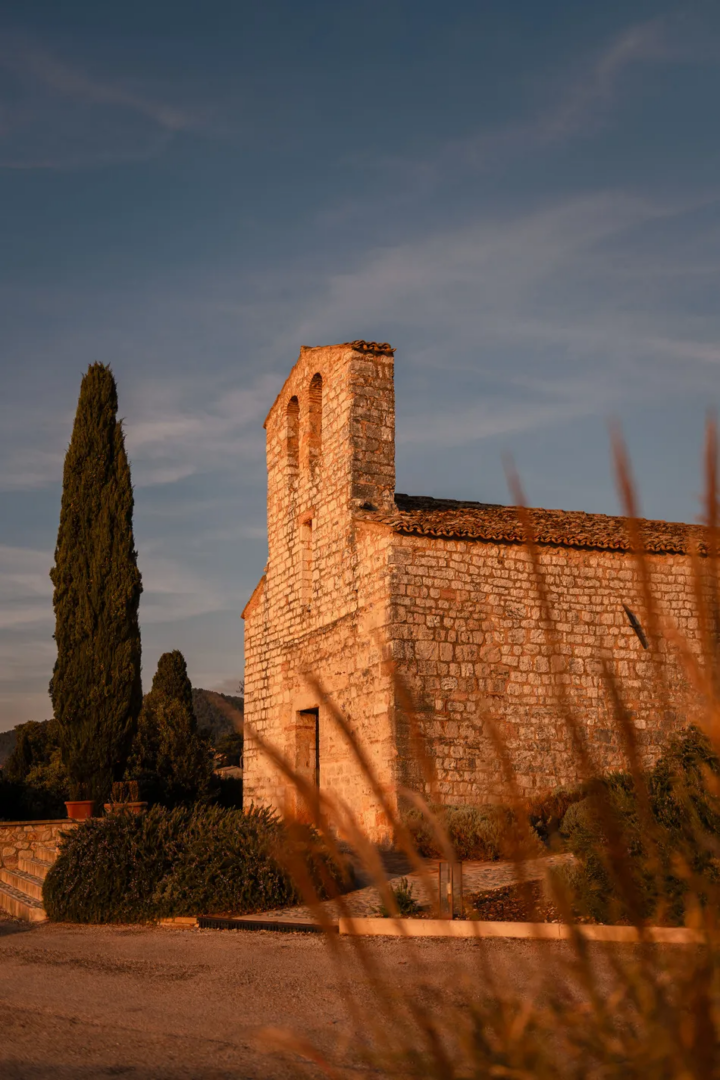
The historic core of the property is the church of San Pietro a Pettine, recorded before the twelfth century, where local tradition holds that Saint Francis and pilgrims bound for Rome stopped. The Caporicci family restored it at its own expense in 2012, and the work uncovered sixteenth-century frescoes with Saint Francis of Assisi and Saint Peter holding the keys; an altarpiece from the same period went to the Pinacoteca Comunale di Trevi as a donation. The church remains consecrated, and standing on private property it faces limits on official celebrations.
The cistern of the cheese cave belonged to a building linked to Antonino Fantosati, born in 1842 at Santa Maria in Valle, a hamlet of Trevi, who became a Franciscan bishop in China and died in Hunan on 7 July 1900, during the Boxer Rebellion. The Church canonised him in 2000. The church and the ruins of his house are open to the public free of charge.
From Trevi to Montefalco, bicycles, GreenHeart and the guest rooms
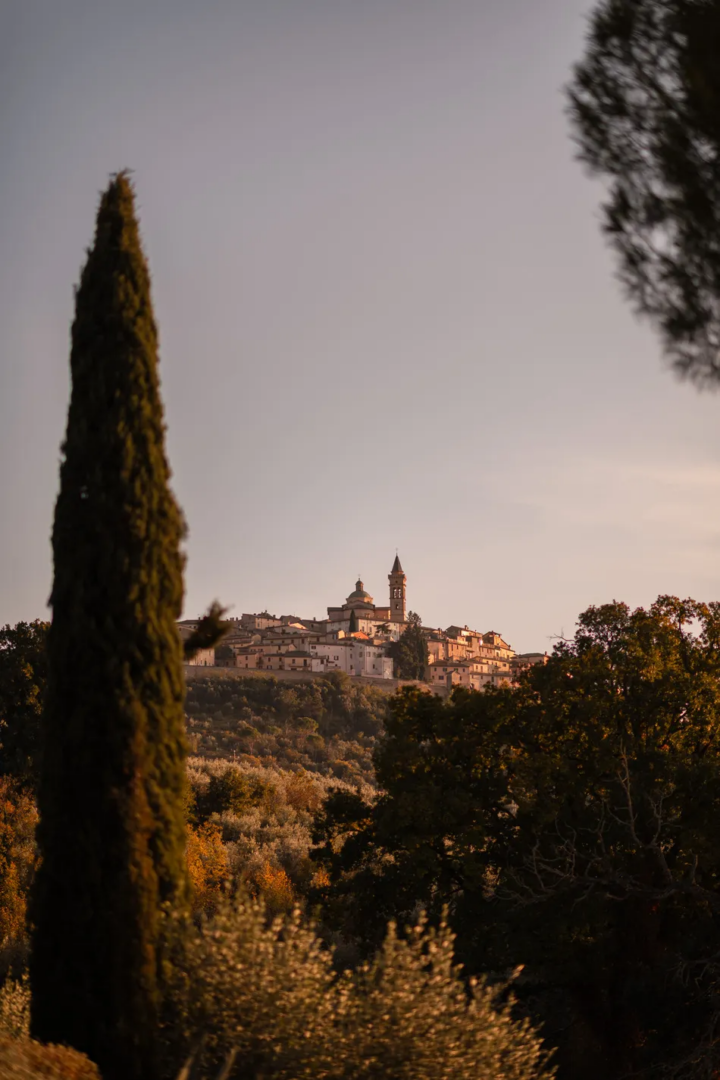
Montefalco is a few minutes away by car, Foligno about fifteen, Spoleto and Assisi about twenty, Perugia about forty, and the Umbria International Airport half an hour. External operators deliver bicycles and e-bikes to the estate, on routes that cross the Sagrantino vineyards for about twenty kilometres with stops at one or two wineries. Ten minutes away, in the mountain hamlet of Manciano, the GreenHeart microdistillery — in which the estate holds a stake — makes four labels from local botanicals: Amaro Ardelio, Gin Callidus, Aperitivo Audere and Bitter Furium, which the Tramonti bar serves in summer under a pergola facing the church. The guest rooms were private quarters for about fifteen years and opened to the public in 2025: five units for ten to twelve guests, with a pool.
Tuber aestivum and Tuber melanosporum, what grows under the oaks
A truffle is the fruiting body of a fungus that lives underground in symbiosis with the roots of a host tree, a relationship called mycorrhiza: the fungus passes water and minerals to the tree and takes sugars in exchange, and in central Italy oaks, holm oaks and hazels are among the common hosts. The Università degli Studi di Perugia studied the soil at San Pietro a Pettine and found ground conditions suited to both black truffle species, which is what gives the estate its two harvests in the same year.
San Pietro a Pettine
Estate in Trevi, Umbria, owned by the Caporicci family. Twelve hectares, nine of them cultivated truffle grounds, with harvesting rights over about two thousand hectares of natural grounds. On the property, a Romanesque church, a cheese-ageing cave, five guest rooms and the restaurant La Cucina di San Pietro a Pettine, opened in 2013. The family truffle company, founded in 1948, harvests and sells Tuber melanosporum and Tuber aestivum.
Editorial Team