ZERO Milano: the onyx, the iron and the Venini glass that haven’t aged
In 2006 Dordoni Associati designed the interiors of ZERO Milano, on corso Magenta. A backlit onyx wall, an iron structure and a Venini sculpture of 300 elements still define the Japanese restaurant, which marks 20 years with its new chef, Ichiro Nakagawa
ZERO Milano: the 2006 Dordoni Associati interior that still holds up
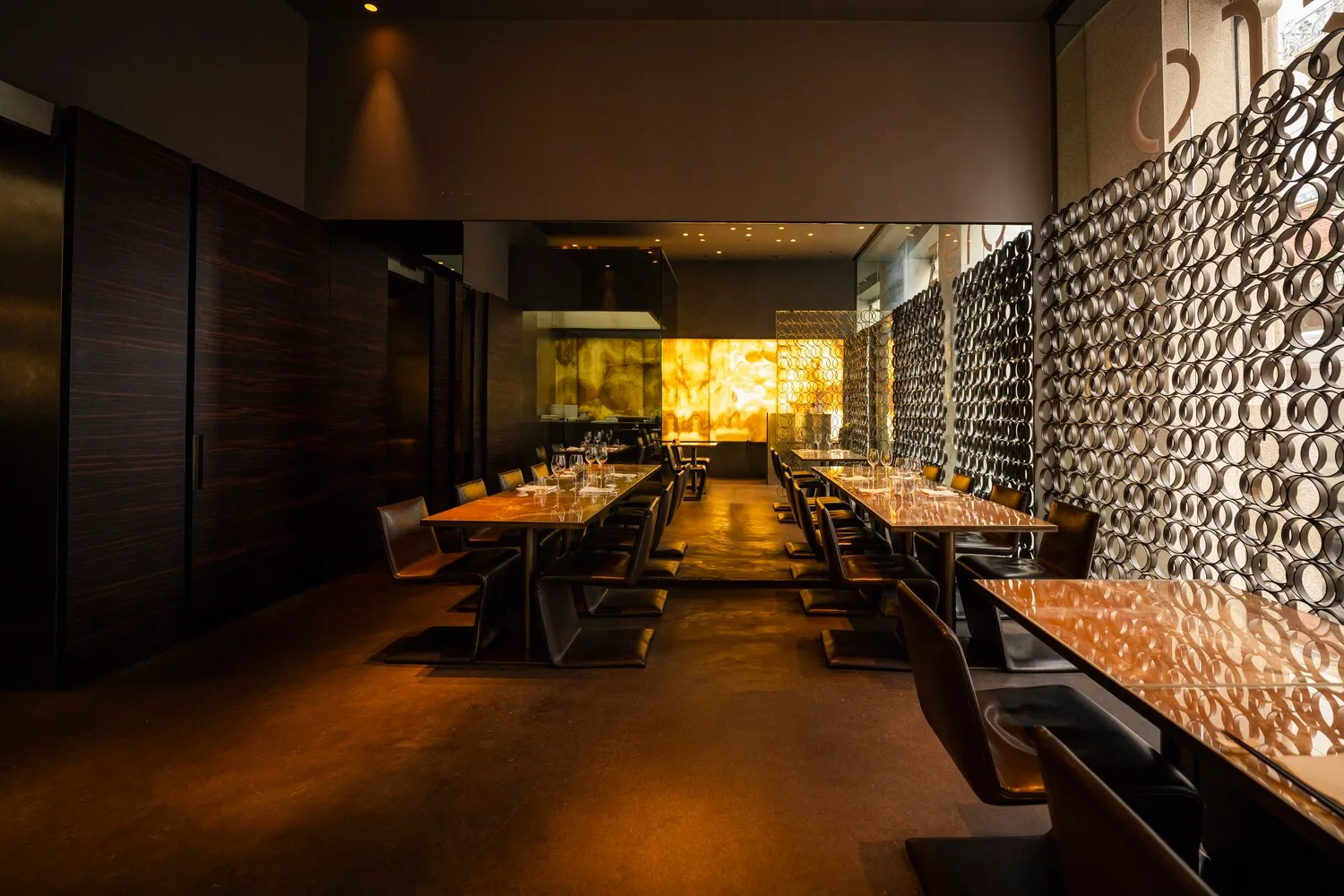
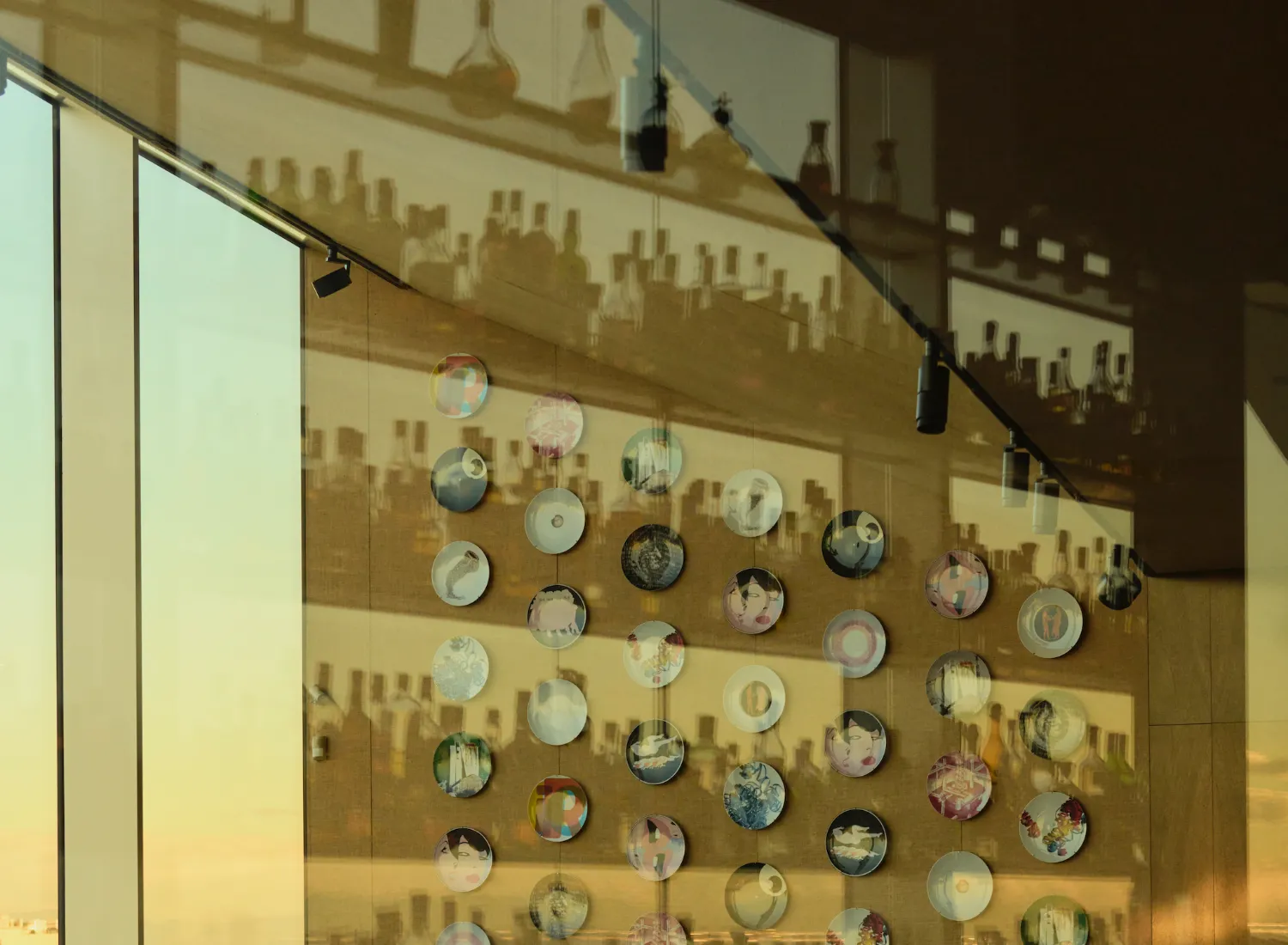
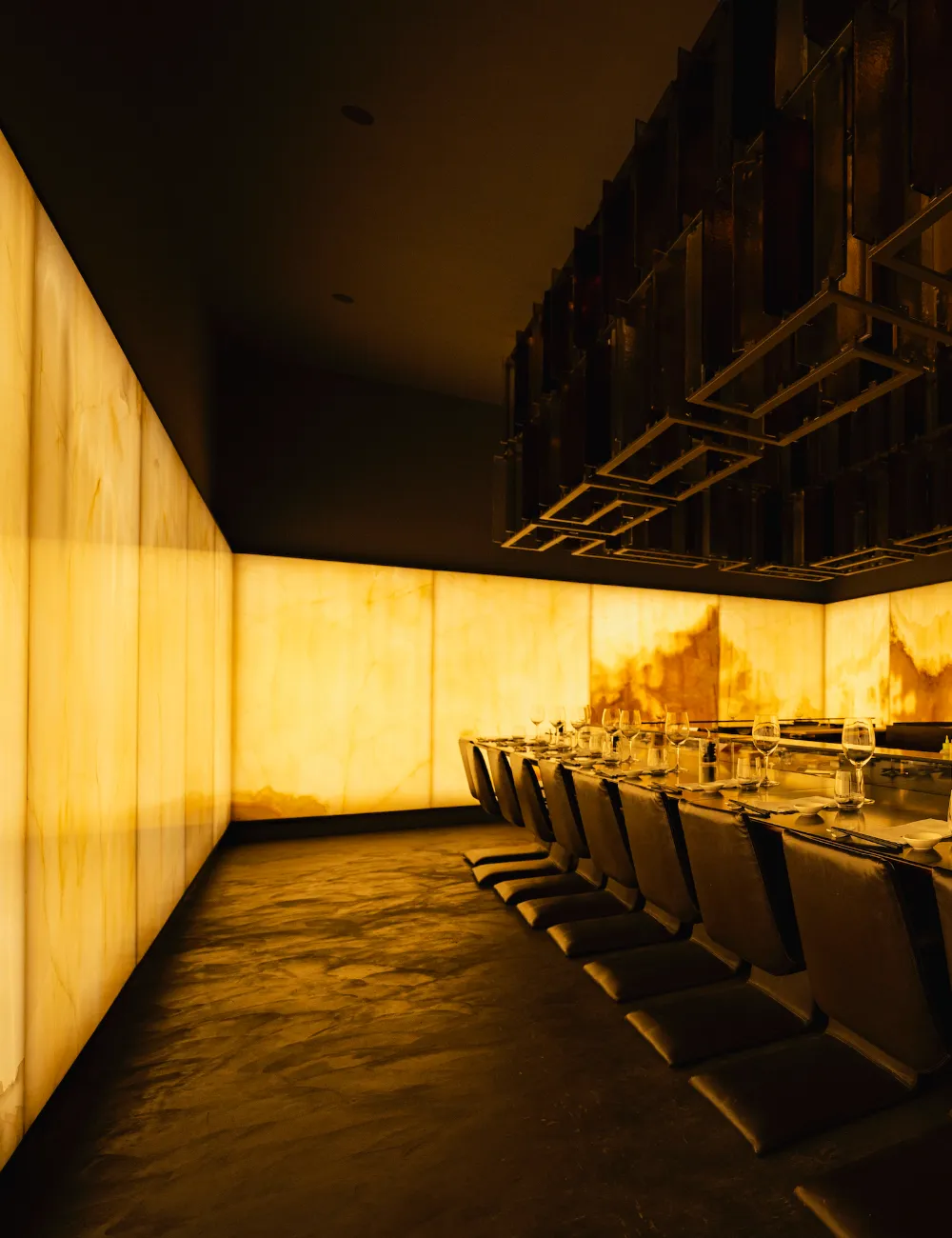
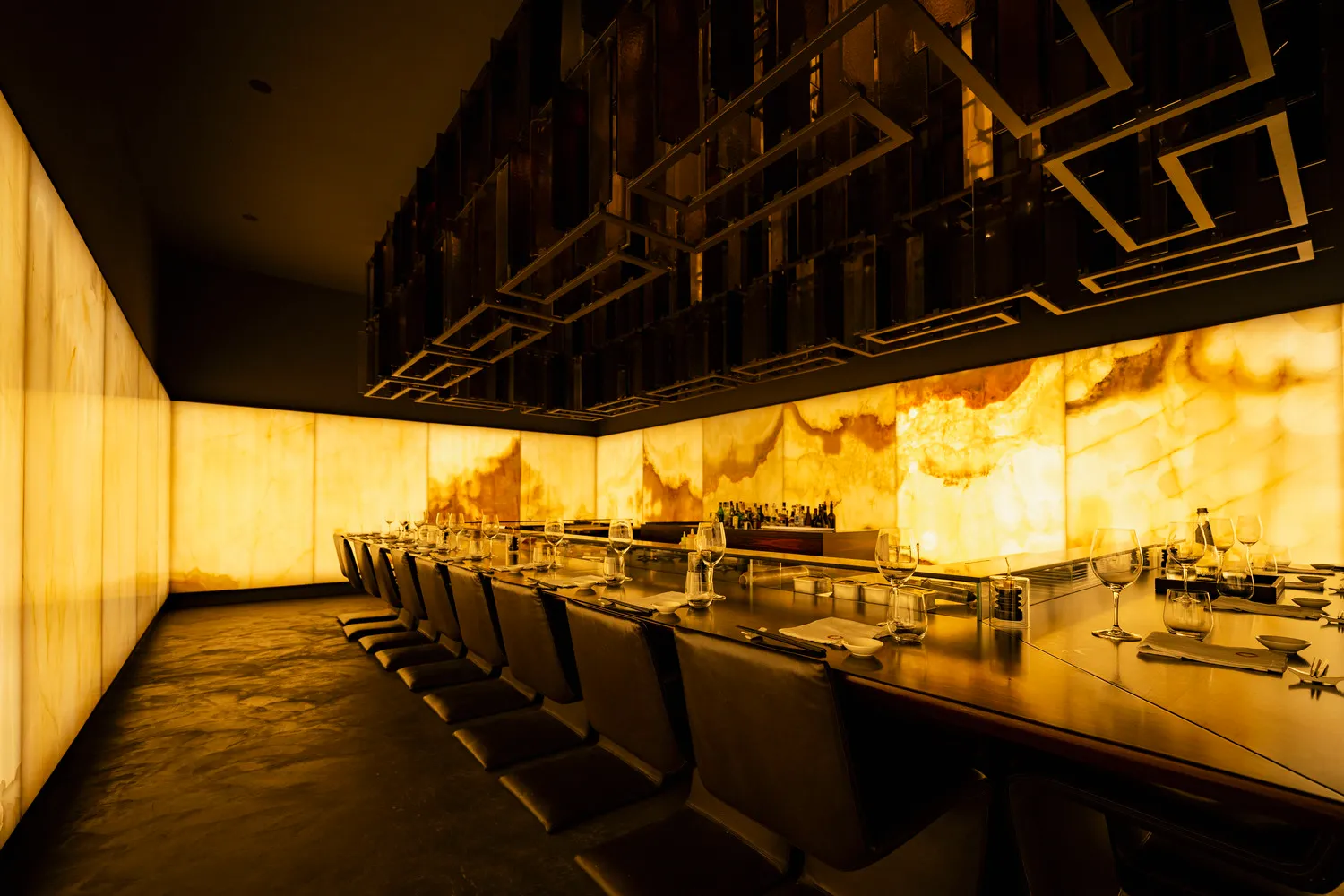
A backlit onyx wall, a decorative iron structure and a luminous Venini sculpture of 300 blown-glass elements. These are the materials and objects around which Dordoni Associati built the interiors of ZERO Milano in 2006. Twenty years on, the restaurant at corso Magenta 87 keeps the original layout, without having had to replace its main architectural elements to keep up with contemporary interior design.
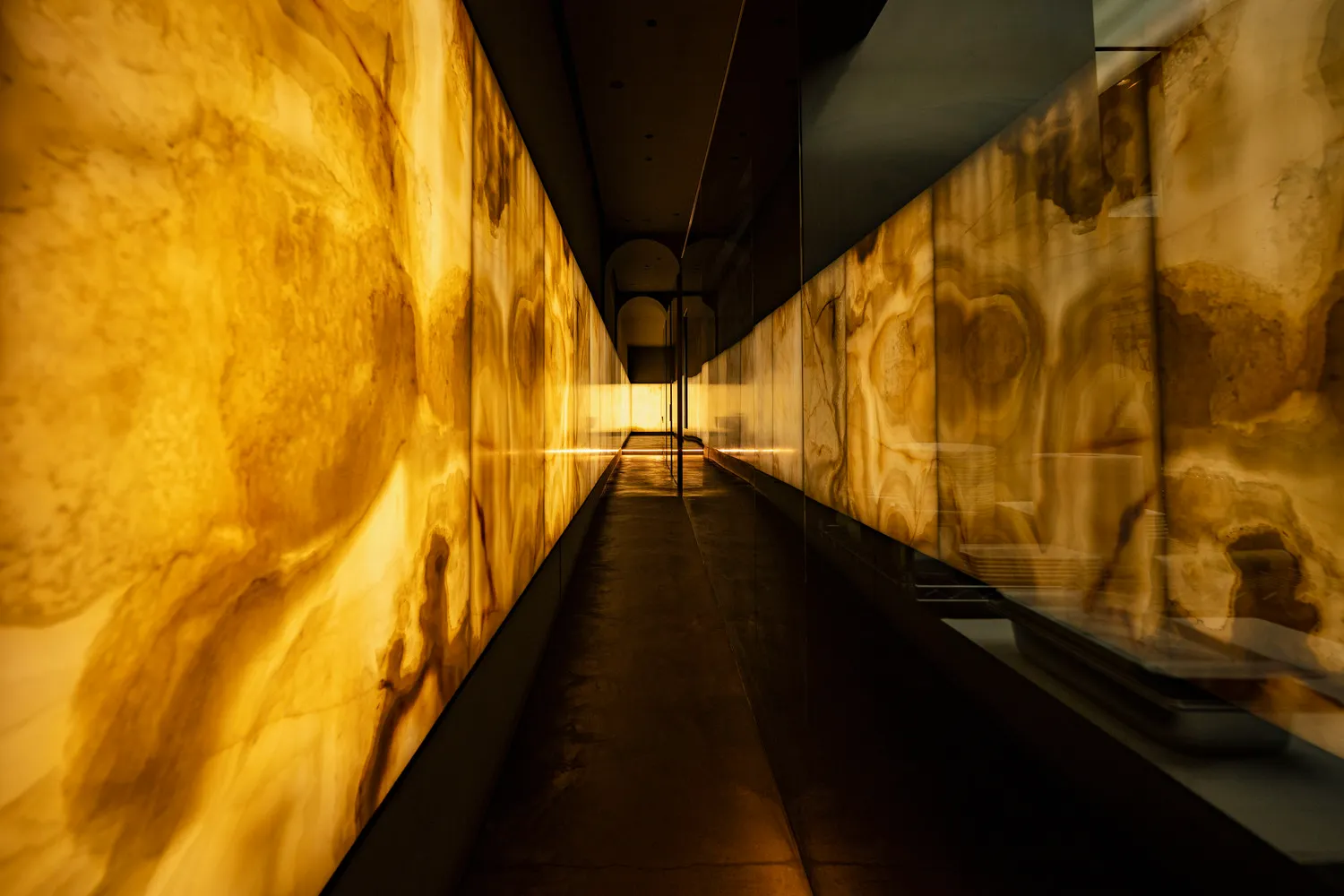
Onyx, in particular, has returned over recent years to a prominent place in hospitality projects and in high-end residential interiors. The backlit stone surfaces now common for counters, walls and dividers were already central to ZERO. The stone is not used only as cladding: light passes through it, bringing out the veining and turning the wall into a source of light.
The iron brings a more structural, graphic element. The decorative gate repeats the symbol of the zero, turning the restaurant’s name into a geometric motif. The wood of the sushi counter and the warm tones of the interior complete a room that avoids a literal reproduction of traditional Japanese architecture. ZERO was not conceived as a themed restaurant, but as a Milanese interior into which references to Japanese culture were set.
The 300-piece Venini sculpture and the backlit onyx wall
Above the sushi preparation area hangs one of the restaurant’s most recognisable elements: the chandelier-sculpture made by Venini, the Murano glasshouse. The work is composed of 300 blown-glass elements, assembled into a large suspended structure. Recalling the restaurant’s history during the twentieth-anniversary evening, founder Simone Binda noted the technical difficulty of the installation, tied to the size and weight of the structure.
Binda links the choice of materials to a wish to set two cultures in relation. On one side Japan, recalled through colour, wood and the organisation of the kitchen; on the other Milan, represented by marble and iron, which the founder identifies as materials of the city’s architectural tradition. The onyx’s luminous surface sits against the darker presence of the iron, while the glass adds a further layer of reflection and diffusion.
Twenty years on, these materials are still current in the language of contemporary interior design — not because of any recent refit, but because of the choices made when the restaurant opened.
ZERO Milano in 2006: Japanese cuisine before sushi spread across the city
When ZERO opened on 1 September 2006, Japanese dining in Milan was concentrated in a limited number of addresses. Sushi had not reached the spread it would see in the following decade, and the Japanese offer was tied mainly to a few long-standing restaurants. Nobu had already introduced an international model of high-end Japanese cuisine to the city, and it was from a meeting at Nobu that the professional relationship behind ZERO’s opening began.
The project was built around three elements: the sourcing of raw materials, the service and the design. On the first, Binda recalls the decision to work with first-choice fish and ingredients, with no compromise on quality. The second concerned the floor: at opening, ZERO ran one server for every two and a half guests, a high ratio that reflected the investment in hospitality. The third was the architecture, entrusted to Dordoni Associati, with the aim of serving Japanese cuisine inside a room coherent with Milanese design culture.
The restaurant now seats 48. The contained size keeps a direct relation between the room and the sushi counter, where the fish is worked and the nigiri prepared in front of the guests.
Ichiro Nakagawa returns to ZERO Milano: the new chef and the culture of sake
The twentieth anniversary coincides with the return of Ichiro Nakagawa, a Japanese chef who had already worked at ZERO about 15 years ago. After other experiences, Nakagawa now takes over the kitchen, picking up a path that began in the same restaurant. Trained between Hiroshima and Italy, the chef brings a particular competence in sushi and in the culture of sake, for which he qualified as a Sake Sommelier. The new phase does not drop the previous offer, but deepens the technique and the selection of ingredients.
One central point is the working of the rice. In sushi, the temperature, the cooking, the humidity and the acidity of the rice affect the balance of the nigiri as much as the quality of the fish, and the preparation demands precise control of the proportions and of the serving conditions. Nakagawa also intends to develop the pairings with sake: served at different temperatures, sake carries aromatic and structural profiles that shift with the rice, the processing and the fermentation.
Omakase at ZERO Milano: the chef’s tasting menu and the rice
ZERO’s offer includes an omakase, the Japanese format in which the guest entrusts the choice and order of the courses to the chef. The menu runs through two entrées, a red miso soup, eight nigiri chosen by the chef and a final course between prawn tempura and a house roll, at 120 euro a person, to be requested when booking. The format concentrates attention on the selection of the fish, the working of the rice and the order of the tastings; at the counter, the guest watches each nigiri prepared and served. Alongside the omakase remains an à la carte menu of raw dishes, carpacci, tartare and hot preparations.