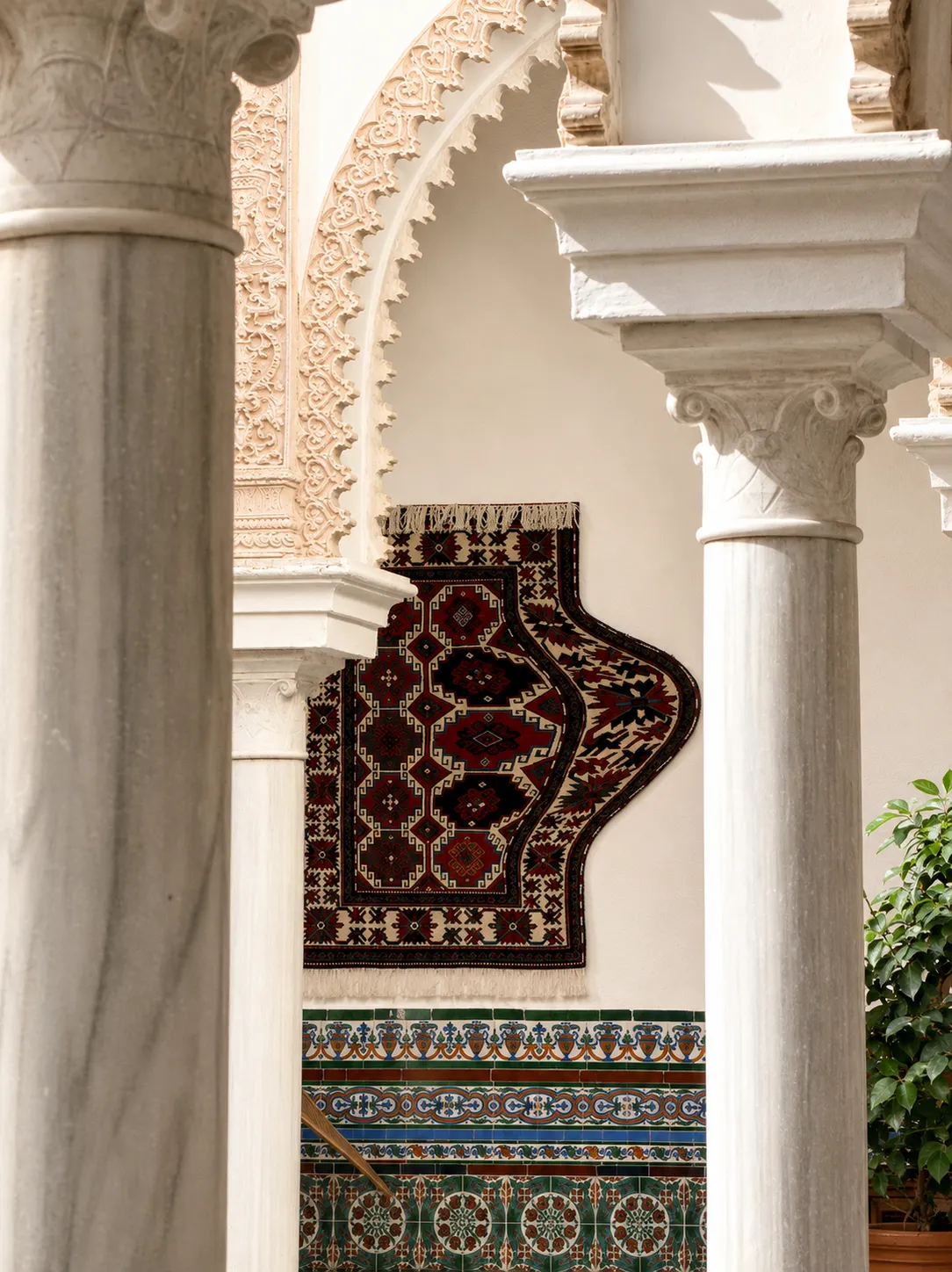
Casa del Limonero, the Sevillian house where eclecticism becomes instinct
The deer teaches you to move forward while looking back: the symbol of Casa del Limonero, a Sevillian casa-palacio where a collector turns what she has gathered into a buen retiro for travelers
Genius resists description. It flickers, it contradicts itself, it refuses to sit still long enough for a definition to take hold. The same is true of eclecticism: what single word accounts for a sensibility that sets chinoiserie beside Louis XIV, digital video beside Syrian inlay, a framed Hermès scarf beside a Renaissance fresco? The closest one can come to either idea is to walk through a heavy wooden door on Calle Guzmán el Bueno, in the old Judería of Seville, and enter Casa del Limonero, a house shaped by a demiurge who gave form to the chaos of a wunderkammer. The demiurge is a French art collector who prefers anonymity (we only know her name: Marie). She has built a buen retiro for the contemporary traveler and filled it with her own intelligence.
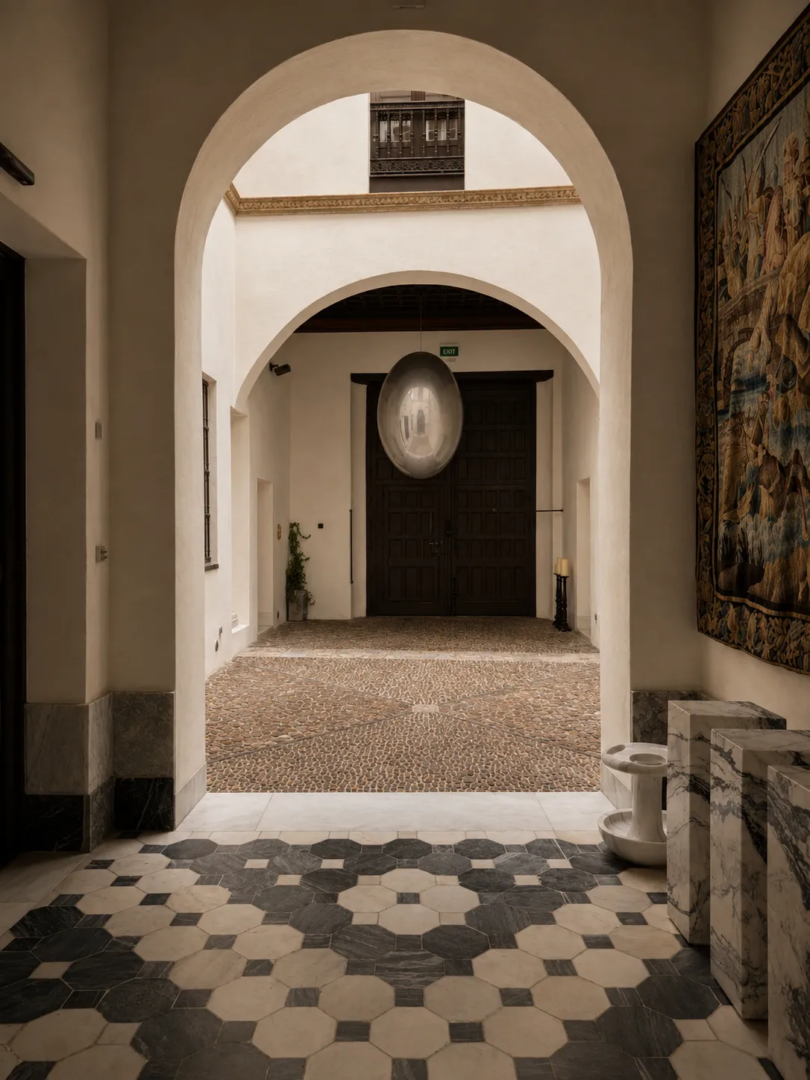
Outside is Santa Cruz at full boil: suitcase wheels drumming over the cobbles, tour groups wedged into lanes wide enough for two, the heat pressing down on a city that has become one of the most visited in Europe and, in summer, one of the hottest. This was the quarter of the Abades, in the shadow of the cathedral and the Archbishop’s Palace, a few streets from Renaissance houses like the Casa de los Pinelo; today it is ground zero of Sevillian tourism. Then the door closes, and the temperature of the experience drops. The air smells of cool stone. Time, on the far side of the threshold, agrees to move more slowly. Few hotels stage the transition between a city and a refuge with such economy: one door, two worlds.
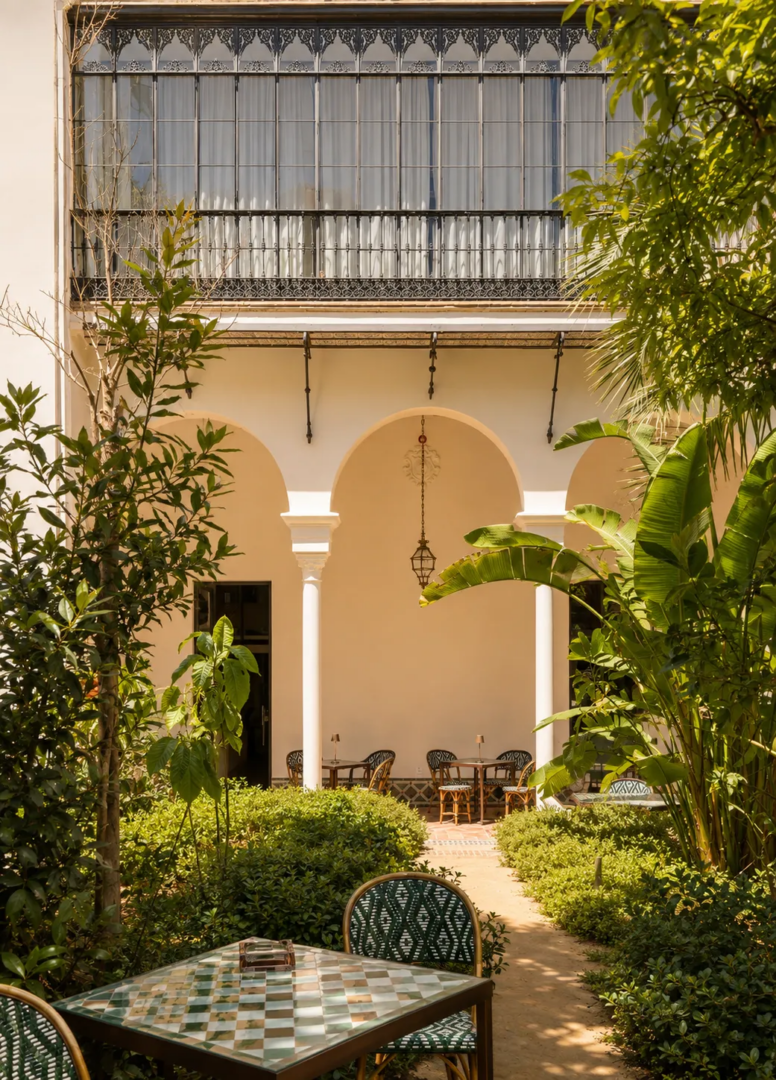
The name comes from the garden. “Marie was looking for a property in Seville,” says Martina Cam, the general manager. “She had in mind a traditional Andalusian house organised around a patio. She wasn’t expecting something this large — around 3,000 square metres initially felt like far too much. But then she visited the house, saw the garden, and fell in love with it.” She bought it in 2016. Two more years went into designing the project, and the restoration itself stretched across six, an archaeology as much as a renovation, conducted on a protected building whose morphology, volumes and character the city’s heritage plan obliged the project to preserve. The house opened to guests in February 2025: fourteen rooms and suites, a hammam, a library, terraces with the Giralda in view, and a policy of adults only, or nearly, with no guests under fourteen.
The almatraya and the stag: a fifteenth-century pavement that gave the house its emblem
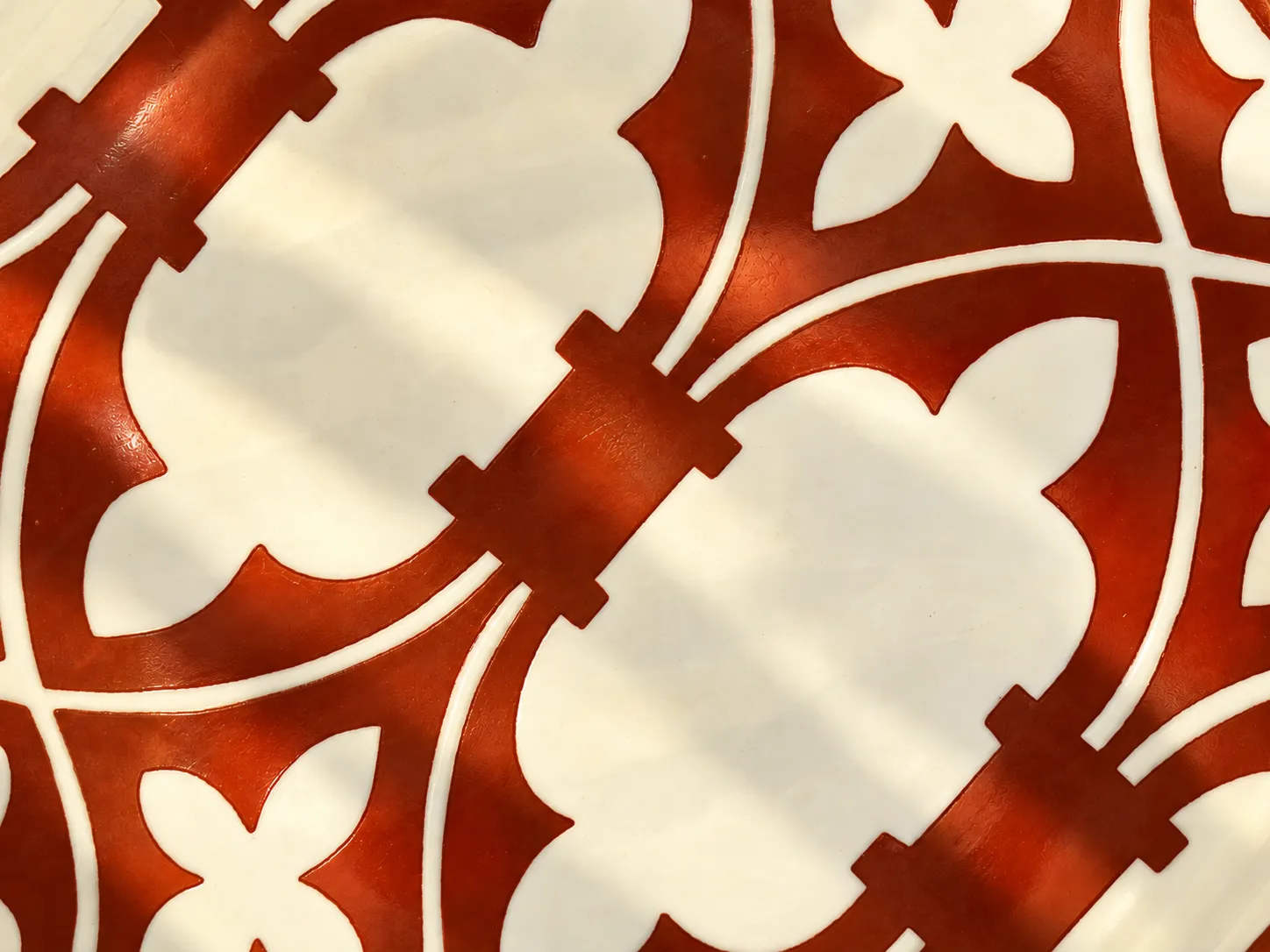
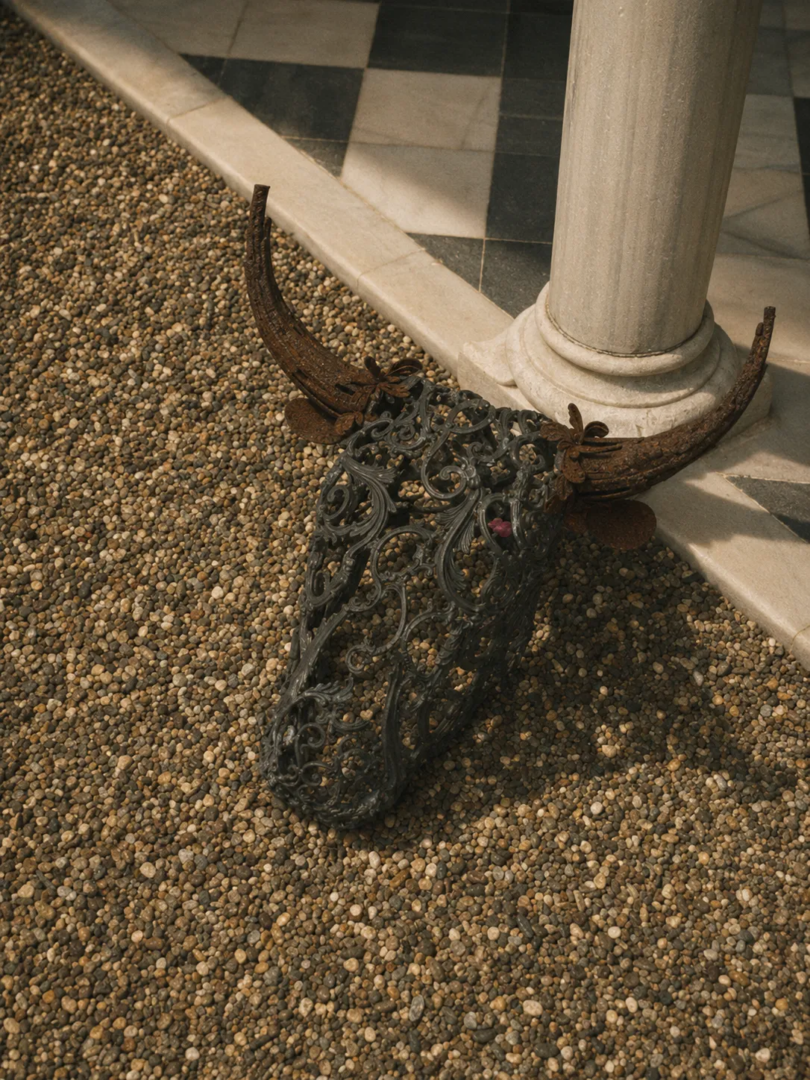
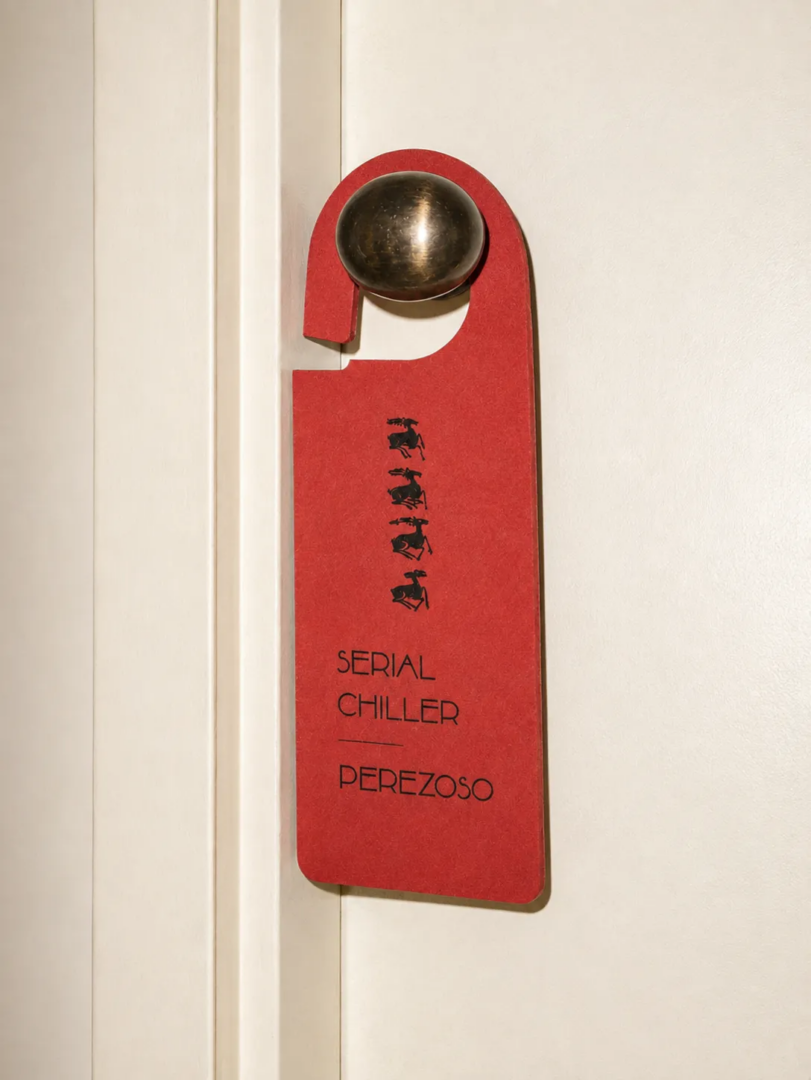
The emblem is a deer – not invented by a branding agency, but found in the ground. “The old ceramic floor — the almatraya — had been hidden underneath a later floor. It was only discovered during the works.” What surfaced was a decorative carpet of tiles around four and a half meters long, made in the cuerda seca technique, combining Gothic figuration with the Mudéjar traditions of Granada and Seville, its pieces fired both locally and in Manises, near Valencia; part of it has been left visible, so that the history of the house can be read rather than covered again. The recurring figure is a stag. The animal carries a double charge: deer iconography reads in both Christian and Jewish traditions, and the family that shaped the palace in the late Middle Ages, the Marmolejos, were judeoconversos, Jews converted to Christianity who rose to economic and ecclesiastical prominence in fifteenth-century Seville. The deer is an animal that looks forward and back at once: an emblem of a household that had to hold two pasts in a single image, and a motto for a restoration that learns from what came before in order to face what comes next.
From Don Diego Fernández Marmolejo to the Moreno de la Cova: five centuries in one facade
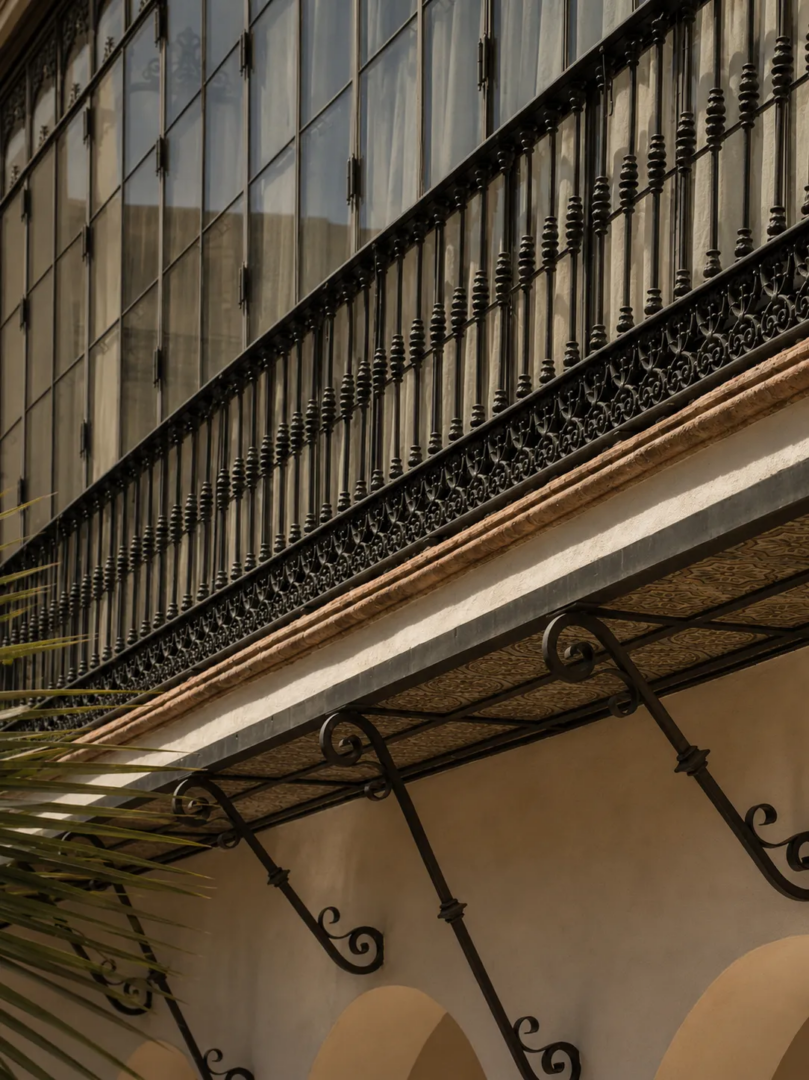
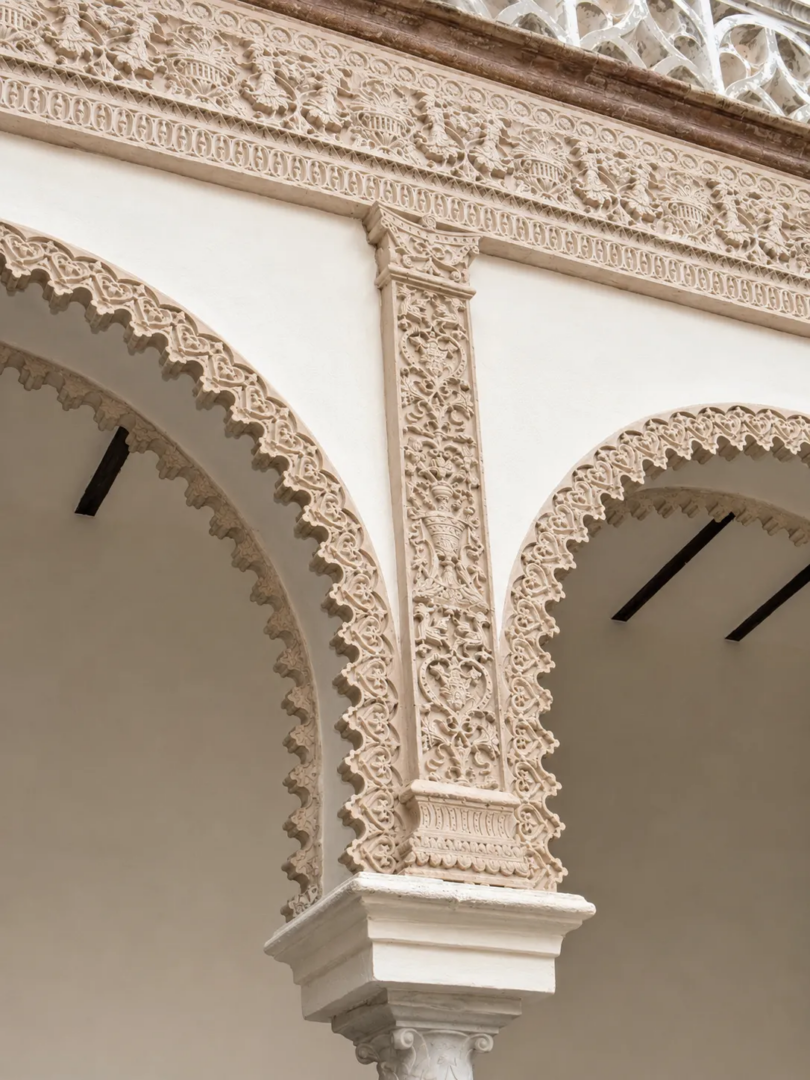
The building is a Sevillian casa-palacio whose documented origins reach back to the late Middle Ages: church records tie it to the entail of Don Diego Fernández Marmolejo, archdeacon of Écija, whose will dates to 1489. It was transformed in the Renaissance and layered ever since. The marble portal on the facade is dated 1560, when courtyards and galleries were reordered along Italian classicist lines grafted onto local Mudéjar construction; further dates, 1654 and 1856, are inscribed on the front like rings in a trunk. Beneath it all may survive a qubba, a domed chamber, from the fourteenth or fifteenth century. Cam reads the house as the city in miniature: “In Seville, the great families reused architectural elements from older buildings — columns, stone and other pieces became part of their houses. The city was constantly building with what had existed before.” The house passed by marriage to the Marquesses de las Torres in 1710 and, in the twentieth century, belonged to the Moreno de la Cova family before its current transformation.
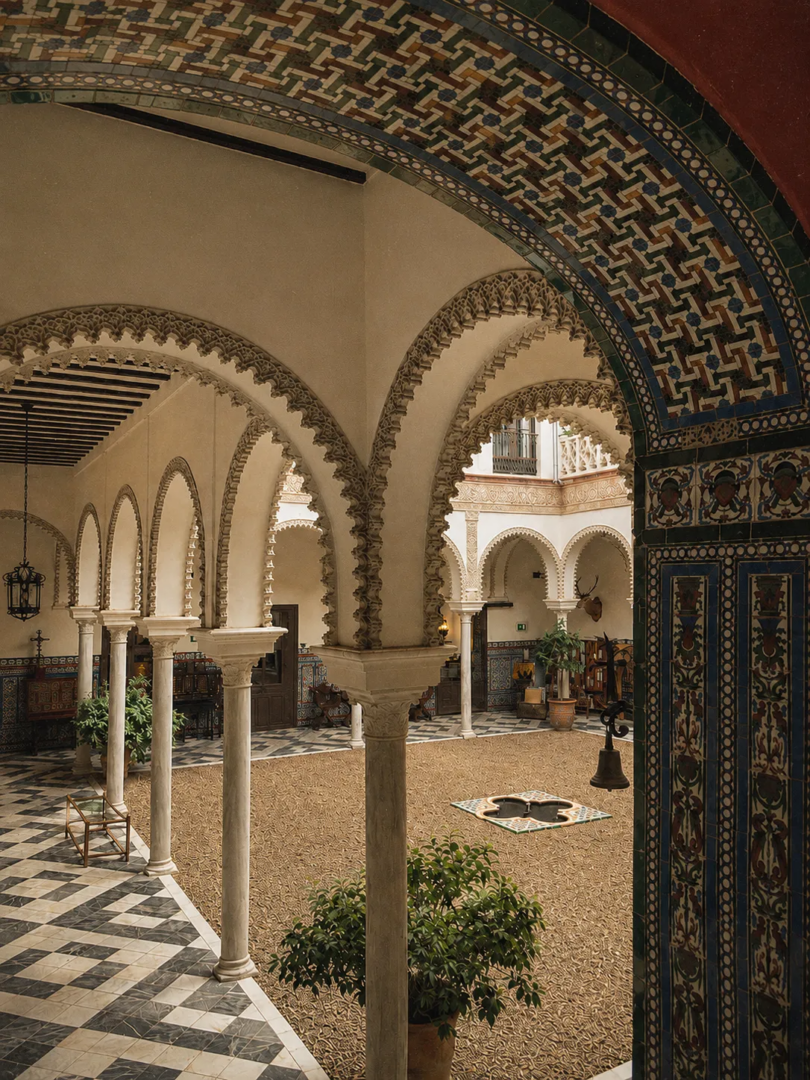
What the centuries never erased is the grammar of the grand Sevillian house, and the restoration has kept it intact: the sequence of entrance, apeadero and zaguán, the covered forecourt where carriages once set down their passengers and the vestibule that mediates between street and household, then the porticoed central patio with its fountain and lobed basin, the formal rooms, the bay window looking onto the green, and the large interior garden. This spatial syntax, refined over centuries against the Andalusian climate, is itself the object of the building’s heritage protection; the discipline of the project consisted in leaving it legible.
The first swimming pool in Seville, cut in half: water as a measure of decency
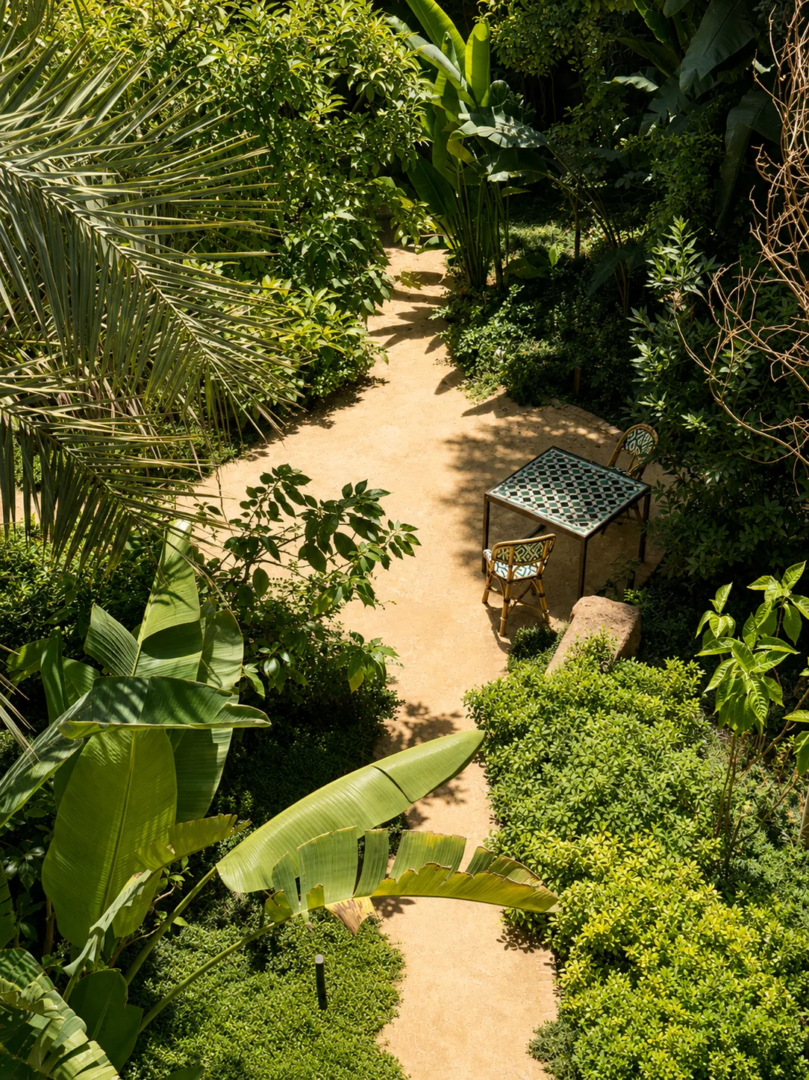
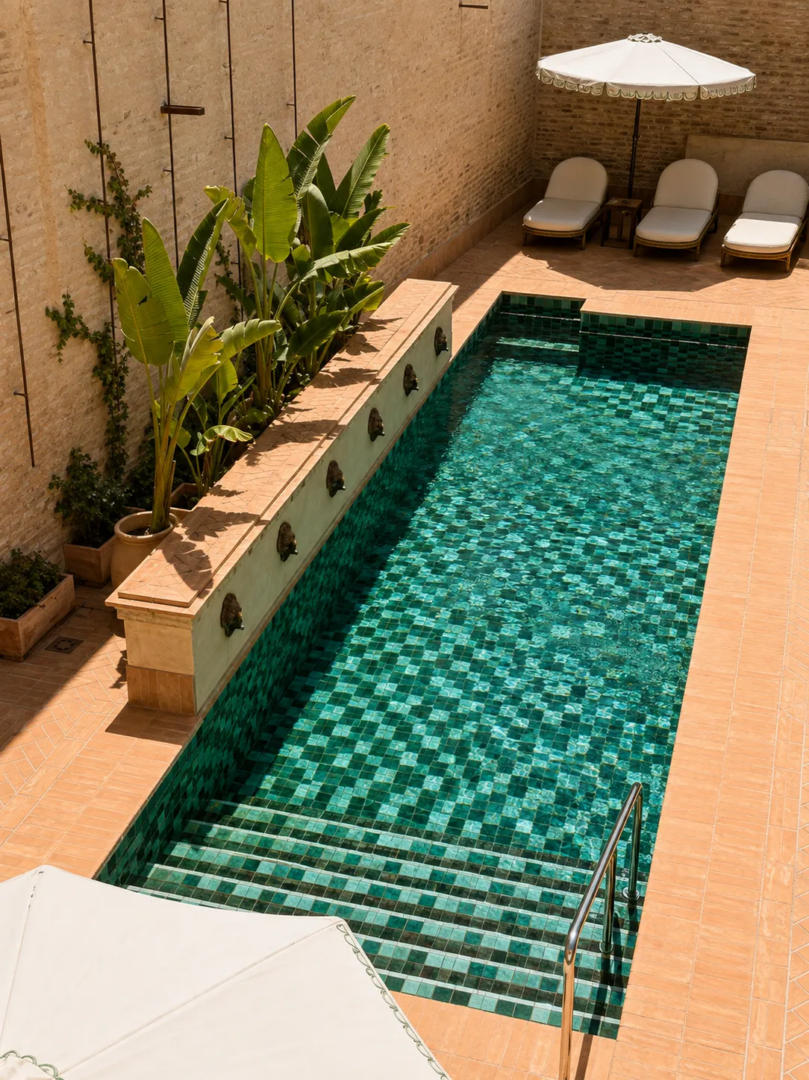
In most Sevillian houses the patio is the heart. Here the center of gravity shifts outward, to the garden. “The garden was already there, but it was completely replanted. The idea was not to create a French garden, but something much more tropical and predominantly green and white. She didn’t want pink, red or orange flowers.” Keeping it alive through a Sevillian summer is its own discipline: under this sun, the soil can turn dry again within days, and the watering is managed with corresponding care.
At the garden’s edge lies what is held to be the first swimming pool in Seville — an amenity foreign to the traditional Sevillian house, introduced in the 1960s by the Moreno de la Cova family, who gave the city a mayor, and in whose day an invitation to swim behind these walls was among the most sought-after favors in town; friends asked, and asked again, for an afternoon at the only pool in the old city. That memory still circulates in the quarter. “People from Seville sometimes tell us, ‘When I was a child, I used to swim in the Moreno de la Cova pool.’ It was the swimming pool of this house.”
The owner kept it, and then cut it. “The swimming pool was much larger. Marie reduced its size because she felt uncomfortable using so much water in a city like Seville, that grows hotter and drier each year.”
Ricardo Alario-López, Carmen Riego, Ernesto de Ceano: a Sevillian cast for six years of works
“The house needed much more than decoration. Large parts of the structure had to be reinforced. It was a very long process.” The restoration answered to a Sevillian cast. The architect, Ricardo Alario-López, has built his practice on interventions in the historic fabric of the city, and his approach here, adapt the program to the house and never the reverse, set the tone for everyone else — a discipline enforced, too, by the building itself, since in a protected structure in the historic center every intervention requires authorization and the logistics grow complicated accordingly. Even the arrival of the collection became part of the work. “Marie brought many of the pieces from France. Trucks would arrive with furniture, artworks and objects, which was complicated because Guzmán el Bueno is such a narrow street.”
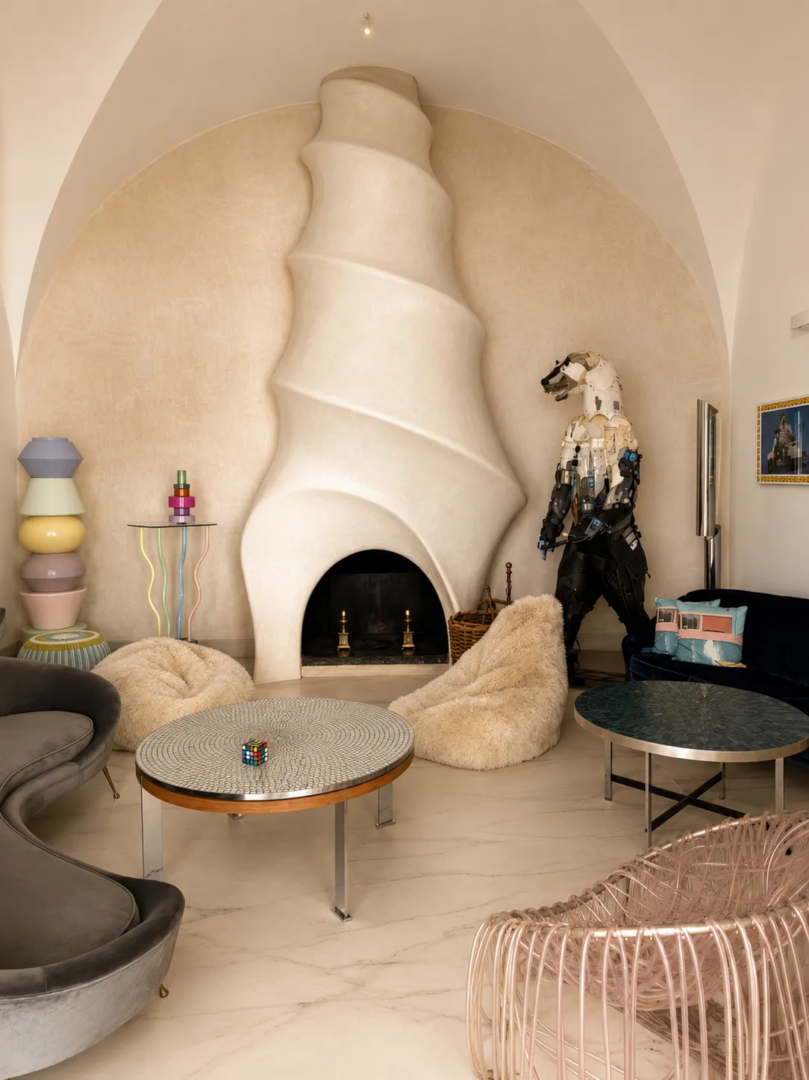
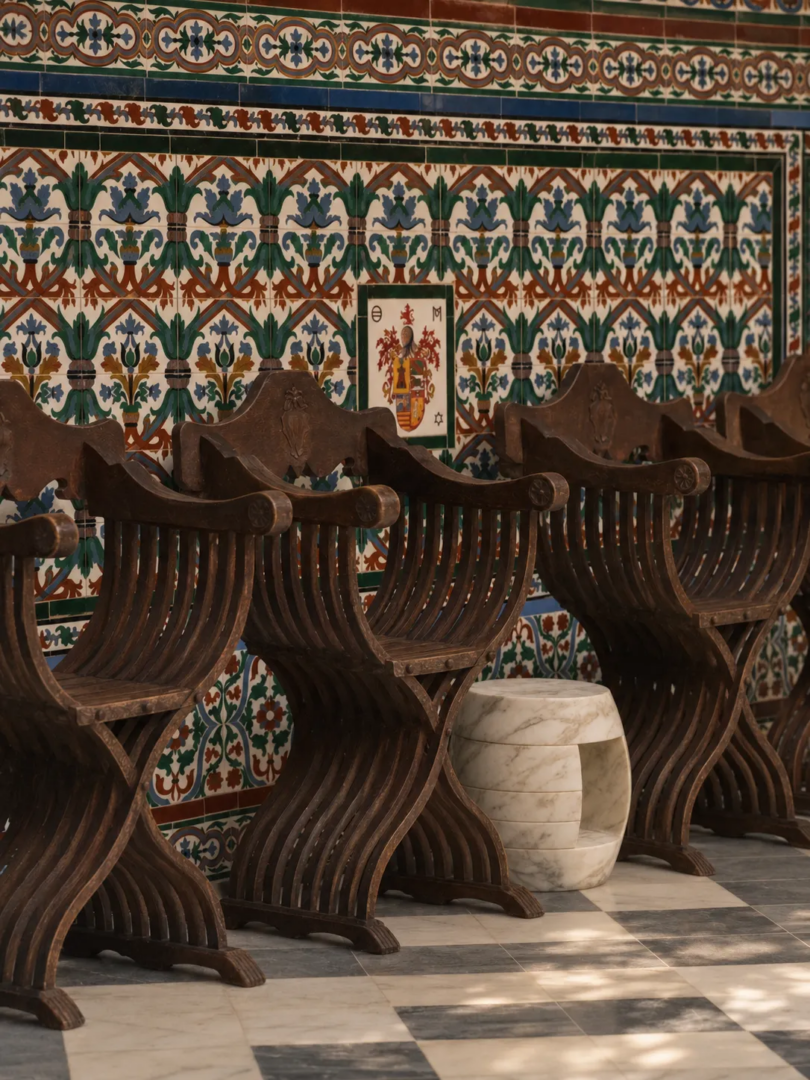
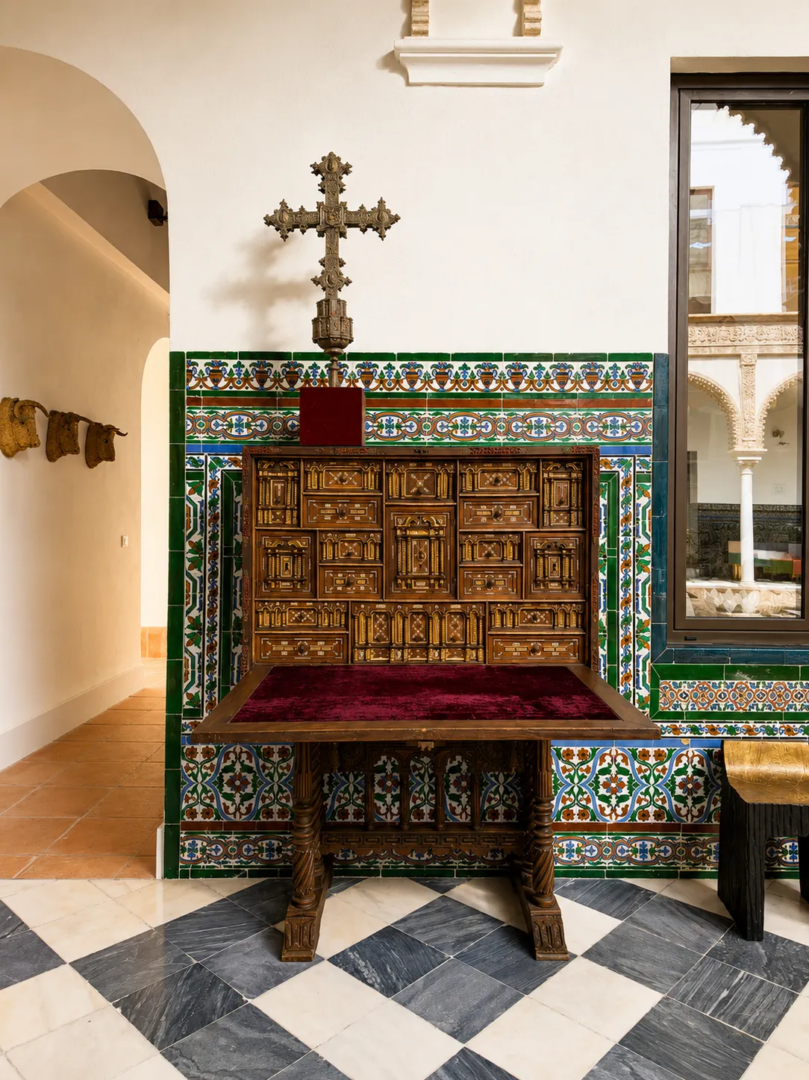
Carmen Riego, a local specialist in heritage conservation, took charge of the ceramics: thousands of azulejos from different eras, cleaned, consolidated and left in place rather than replaced with reproductions. Luis Balmaseda, a carpenter from Écija, the town of the archdeacon who founded the fortune of the house, worked the original timber, from doors to the salvaged coffered ceilings that remain overhead. The contemporary interiors fell to the Sevillian designer Ernesto de Ceano, whose sculptural stucco fireplace in the lounge, a white vortex rising through the room, has become the most photographed object in the house after the patio: new work, molded in a material and a plasticity the builders of the city would recognize.
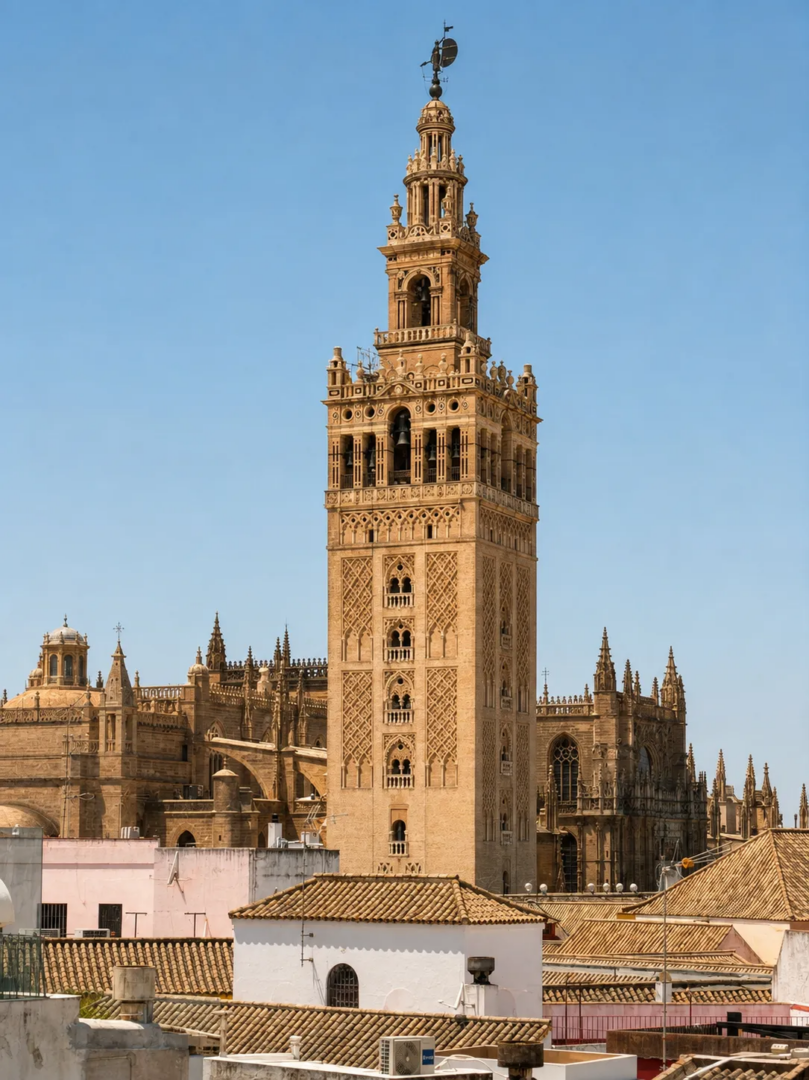
The same ethic governs the rooms. When a fifteenth-century find emerged in the suite called Mudéjar, the planned bathroom was redrawn around it; the historic fireplace of the room was dismantled, restored and returned to its place, ornamental now by regulation. In the Italiana suite, months of work recovered the frescoes. In Nubes, the bathroom is lined with glazed terracotta made by hand in one of the last working workshops of Triana, across the river. In Safari, old ceramics from the house were recomposed rather than replaced. This is restoration as a negotiation between epochs rather than a return to an origin, impossible in a building sedimented across five centuries. Cam extends the reading to the whole city: “Look at the Giralda: what is now the bell tower of the Cathedral was the minaret of the mosque. Seville itself is made through layers and transformations.” It is her conviction that the city cannot be separated from its Arab history — that it sits, permanently, in the structure of the streets.
Fourteen rooms, fourteen threads: from Poul Henningsen to sandals gathered on the beaches of Togo
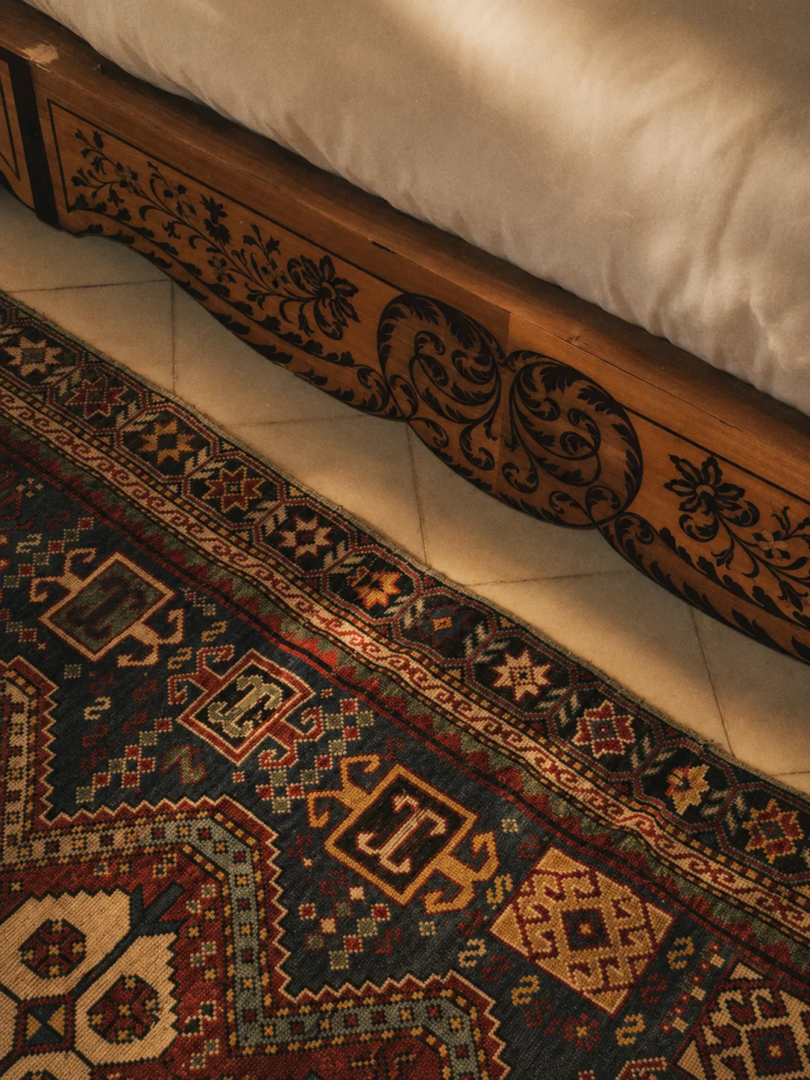
“There was no interior designer deciding everything. Marie gave the direction herself — the materials, the colours, the objects. It was very intuitive. She would enter a room and feel what belonged there.” Each room was approached individually, without a formula to be repeated through the hotel; each developed its personality through the objects, furniture and artworks that found their place there. “It wasn’t a question of following a design concept; it was much more instinctive.”
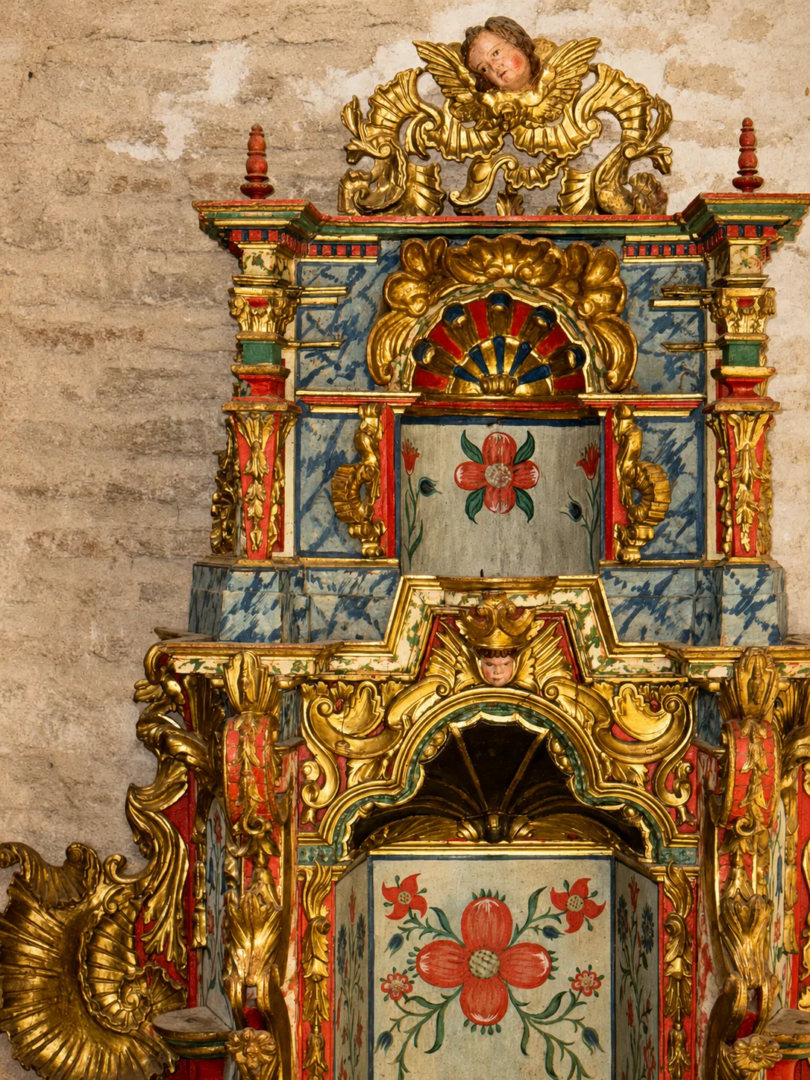
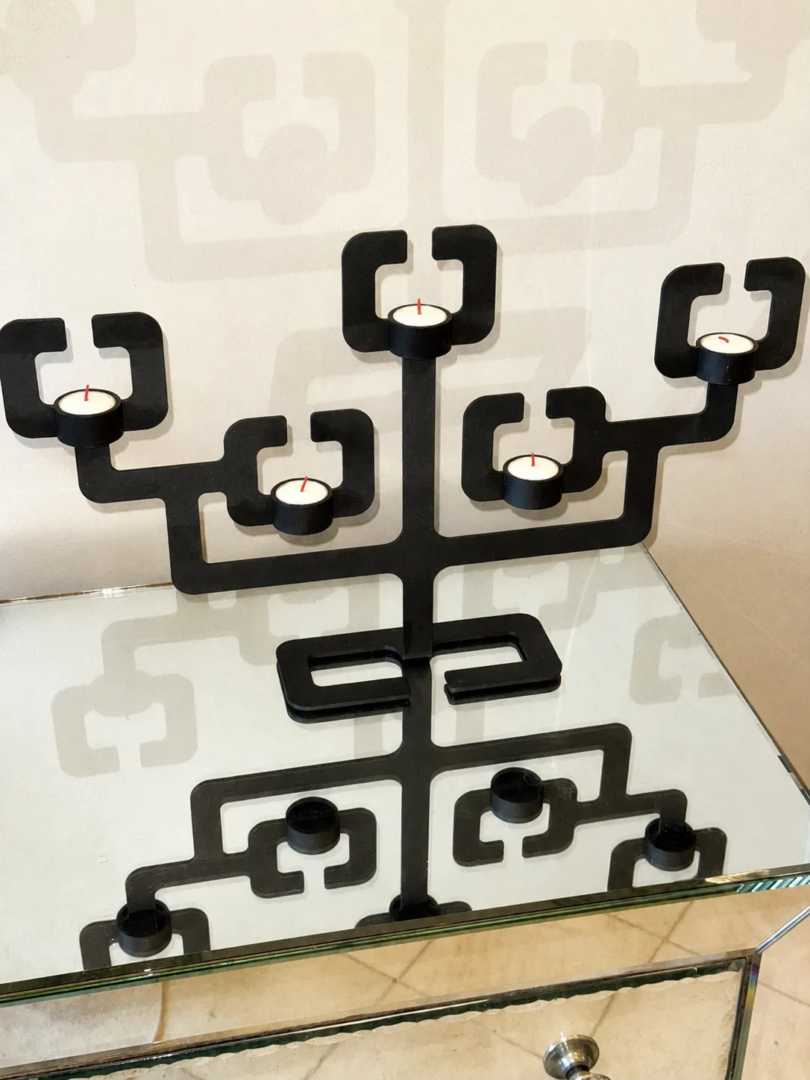
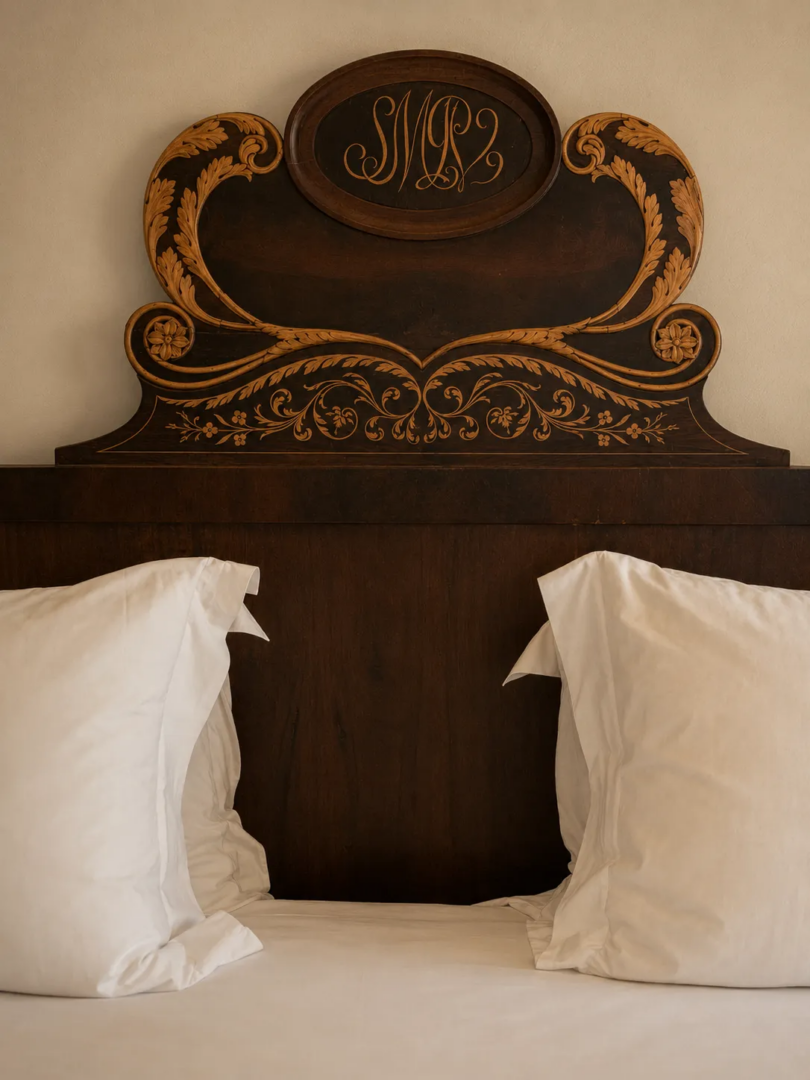
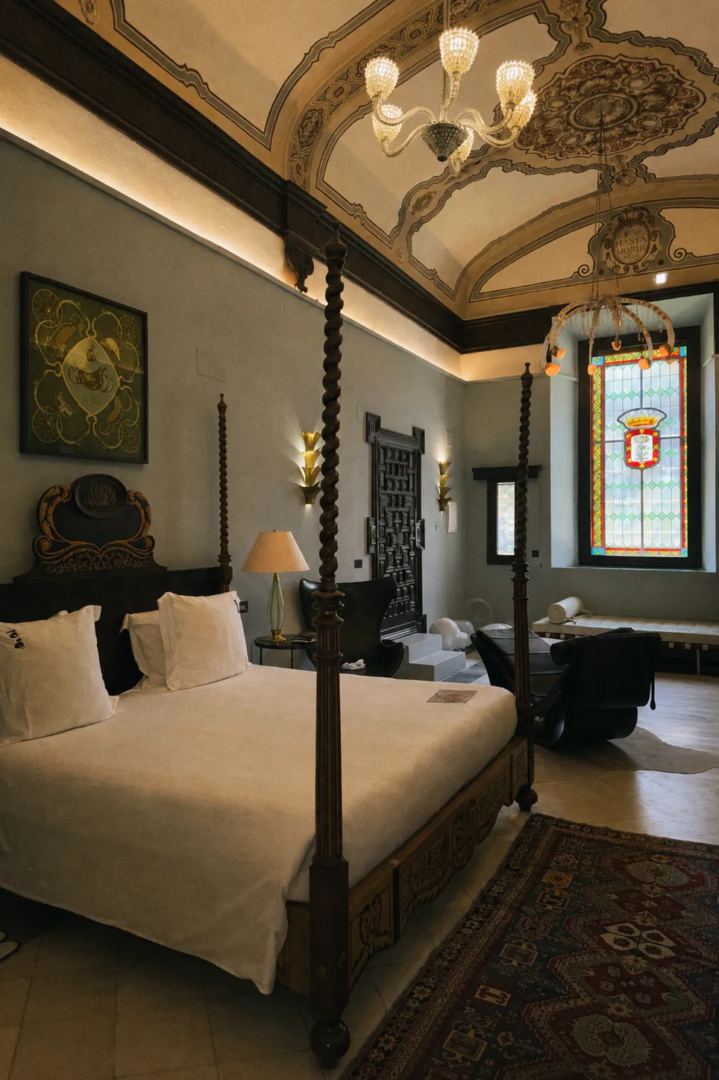
Gabinete de Curiosidades gathers objects accumulated through travels and friendships, nightstands by Fabio Novembre, a video work by Daniel Cherbuin, beneath an original coffered ceiling; the room was the office of the house’s former owner, and no room states more plainly that the collection is a biography. Nubes assembles Joe Colombo, Angelo Mangiarotti and the Eameses alongside embroidered photographs by Joana Choumali. Mudéjar sets the PH Artichoke by Poul Henningsen and Murano glass by Fulvio Bianconi against its archaeological bones, with a minibar fashioned from an aircraft galley cart. Italiana pairs its frescoes with Ercole Barovier glass, Egg chairs by Arne Jacobsen and a framed Hermès scarf. Verde Agua, the most Mediterranean of the rooms, hangs Hermès scarves nearly a century old beside a restored antique bed and furniture by Pucci Di Rossi, with the Giralda standing in the window. Safari, a duplex, holds Syrian furniture, Safari chairs by Kaare Klint and a sculpture by Tesprit assembled from sandals gathered on the beaches of Togo. Mirador, the smallest, claims the most direct relationship with the city: a terrace facing the Giralda, and underfoot, fifteenth-century ceramics recovered from the excavations.
To call this an art hotel would miss the point: a collection without hierarchy
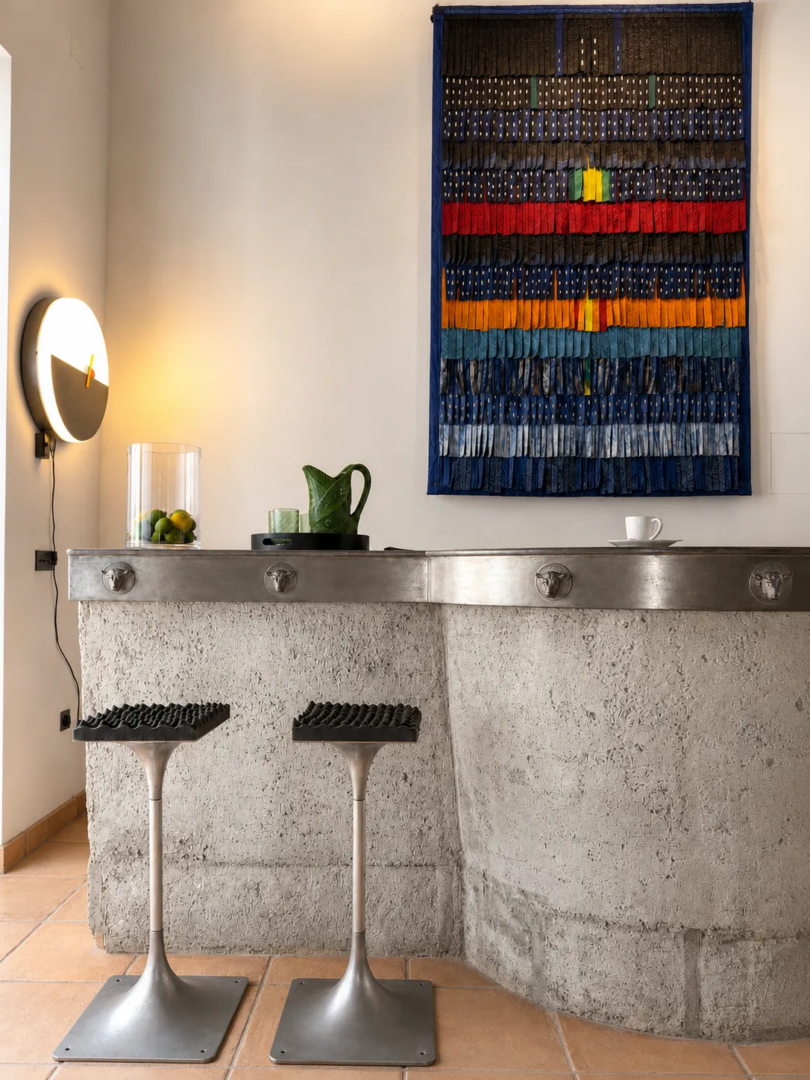
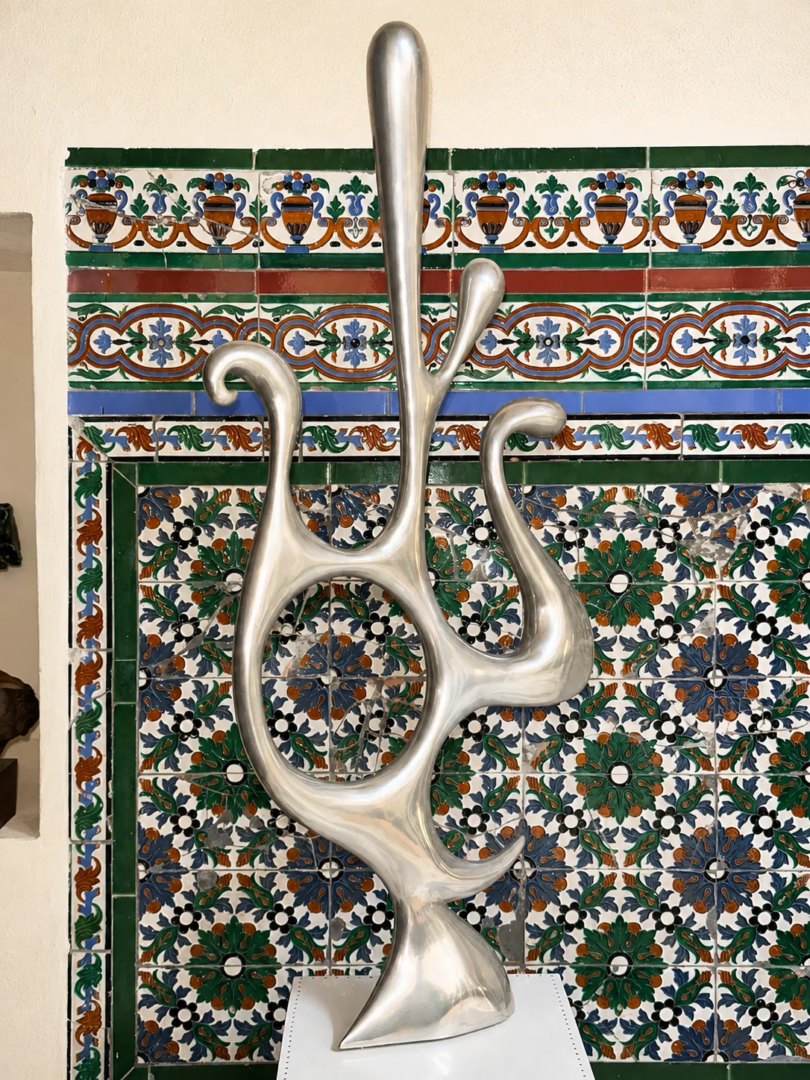
There is no white-cube logic here, no purchased package of works deployed to signal culture. “A lot of what you see comes from her travels, from galleries, from things she discovered over the years.” The collection spans Manolo Valdés, Olga de Amaral, Joana Vasconcelos, Mat Collishaw, Abdoulaye Konaté, Hassan Hajjaj, Bae Joon Sung; some twenty photographs by Malick Sidibé line the corridors. The design holdings run from Sottsass, Gio Ponti and Archizoom to Jacques Adnet, Doshi Levien and Mangiarotti, mixed without hierarchy among antiques, flea-market finds and objects with no pedigree. The elevator is lined with vintage Louis Vuitton trunks; wall sconces come from the Hôtel Lutetia in Paris.
The refusal of formula extends to the hospitality itself. “International hotels have become very standardised. You can travel around the world and find the same standards everywhere. It can become boring.” Here the reasoning runs the other way: the personality of the house comes first, and the conventions of the industry — the desk in every room, the room service, the restaurant kept open at all hours — are treated as options rather than obligations. There is no restaurant, by choice. “Running a proper restaurant requires an entire team and a completely different organisation. For a small house like ours, that is not the objective.” Breakfast is made in the house, with citrus picked in the garden; the kitchen is treated as the heart of the home and opens to guests who book the property entire, as one would lend a friend the run of the house. The house also runs on quieter economies: organic waste from the kitchen is composted and returned to the garden, and plastic, paper and cardboard are separated — while the building itself sets the limits, since in an old protected house new energy systems cannot always be introduced, and even finding room for technical equipment can be a negotiation.
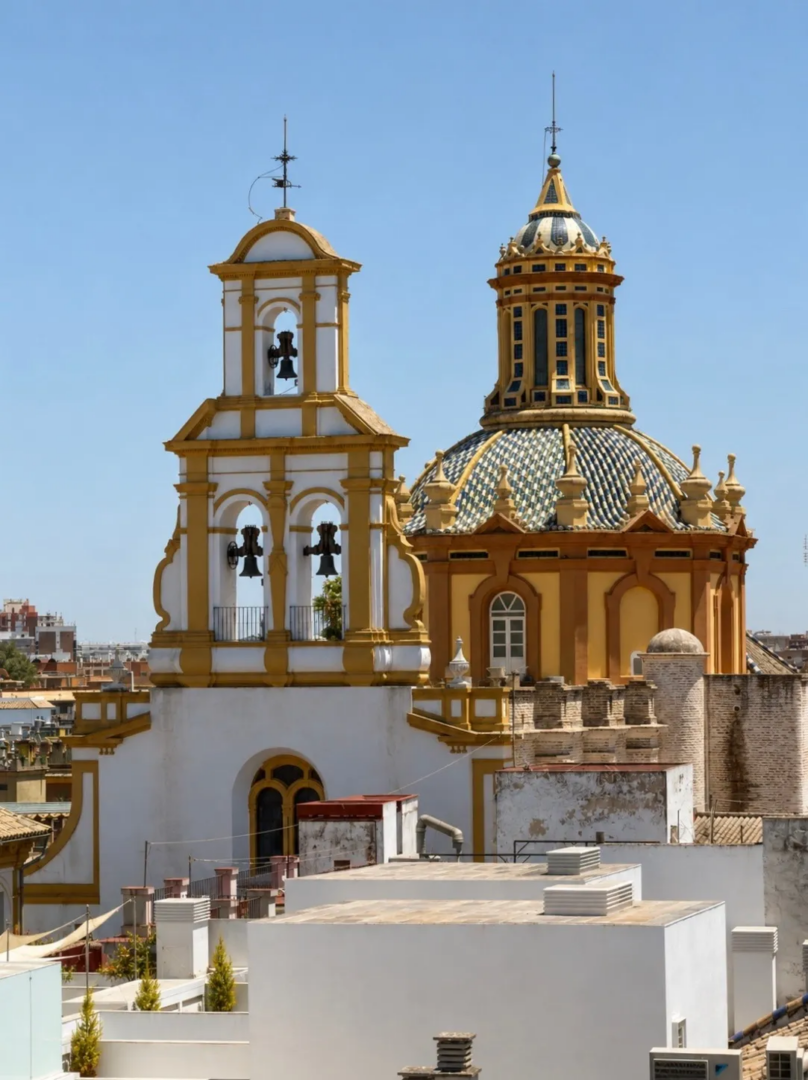
Days here have a shape the rooms suggest: the library for the hours of heat, the hammam and massage room below the garden, and at evening the rooftop, where the cathedral and the Giralda stand close enough to read the stonework, in one of the more privileged views the old city concedes. The service is the added value of the place, and inseparable from its success. “Marie chose the staff personally, and so did I,” Cam says. Among them is Rocío López Pérez— attentive to detail, kind, smiling, curious; she knows the history of every corner of the house, keeps herself informed about the artworks, and is glad to tell their stories when she senses interest on the other side, with a discretion and a natural elegance that come from gentleness of spirit. The manner, throughout, is that of a well-run private household rather than a hotel.
Text and Images: Matteo Mammoli