What is entropy? Bertrand Duchaufour applies it to perfume
With Festin, a fragrance built on blackberry, caviar, truffle, Galuchat leather and oud, the Paris house L’Entropiste turns a law of thermodynamics into a working method — and sets it in Nero’s Rome
Entropy is a quantity in thermodynamics tied to the number of possible microscopic configurations of a system and to the dispersal of energy. In everyday use the word has come to mean disorder. For the French perfumer Bertrand Duchaufour it is, above all, a creative principle: composing a fragrance means putting apparently incompatible materials in relation, building contrasts, and looking for a balance that does not resolve the tension between the ingredients. L’Entropiste, the Paris artisanal perfume house launched in 2025 after 40 years of its creative director’s career, is built on that reading.
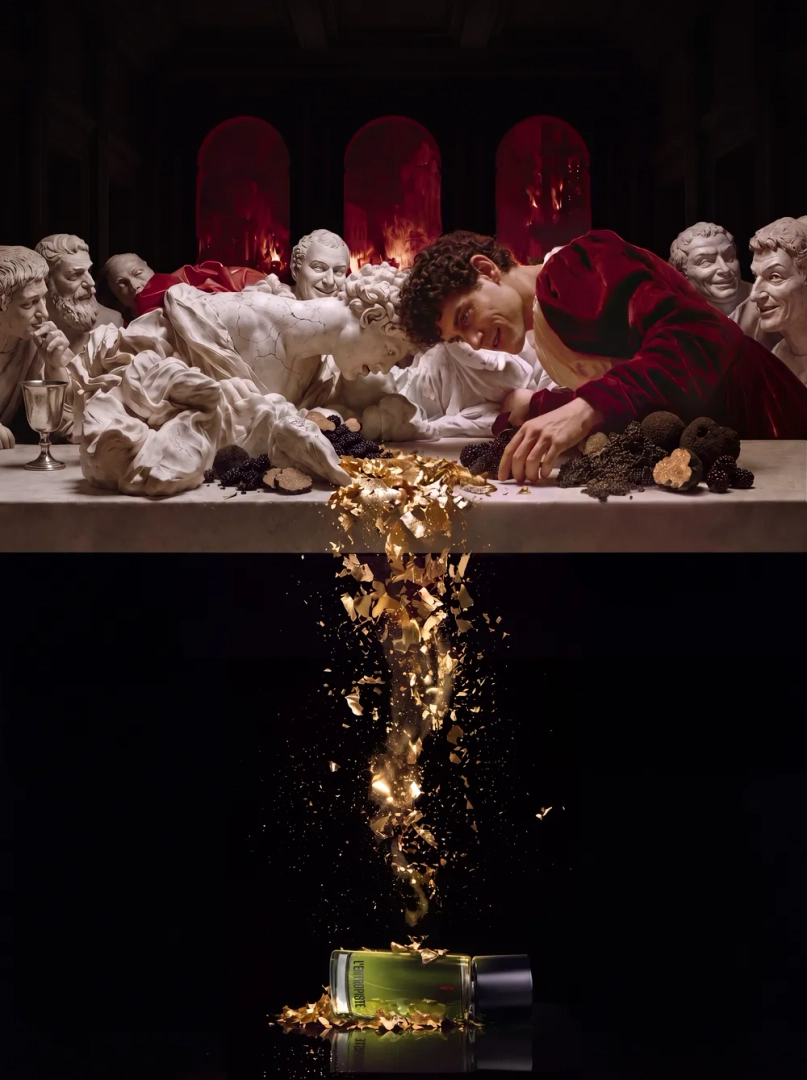
With Festin, its new fragrance, Duchaufour pushes the method toward a gastronomic and animalic register. Blackberry, caviar, truffle, Galuchat leather, oud and ambergris build a structure in which fruity, saline, earthy and leathery notes overlap. The narrative reference is the Rome of Nero — imperial banquets, luxury and ruin — and, more precisely, the myth of the city in flames during the fire of 64 AD, an episode around which centuries have assembled an image of the emperor where fact and legend blur.
Entropy runs through the whole of L’Entropiste, not only the formulas but the bottle design, the packaging and the retail spaces. Duchaufour set it out in a March 2025 interview: the work is to introduce a deliberate imbalance, playing on the meeting of natural materials and synthetic notes, of opulence and subtraction, of order and disorder. The house uses the phrase Master of Disorder for the perfumer’s role. Chaos is not read as randomness, but as a condition out of which a new arrangement of the elements can emerge.
Festin by L’Entropiste: Nero’s Rome, the fire of 64 AD and the imperial banquet
Rome burns while, inside Nero’s palace, a banquet goes on. The guests are surrounded by fabrics, dishes and aromatics; the emperor releases costly essences into the air while, outside, the flames take the city. This is the scene L’Entropiste imagines for Festin — a story built on the link between the emperor and excess, through a picture of antiquity that belongs mostly to literature and the collective imagination.
The great fire of Rome began in July of 64 AD and destroyed much of the city. Tacitus, who gives the fullest account in the Annals, places Nero at Antium when the flames broke out, returning only when the fire neared his residence. Direct responsibility has never been proven; the ancient sources carry accusations, suspicions and stories that hardened over the centuries into a reputation for cruelty and dissolution. Part of that image attaches to the Domus Aurea, the imperial residence built after the fire. Designed under Nero by the architects Severus and Celer, it held buildings, gardens, an artificial lake and rooms for receptions; Suetonius describes, among them, a main dining room fitted with a mechanism that let it rotate. The Domus Aurea is one of the best-known examples of the splendor of the Neronian age, but it was not the palace in which the emperor could have feasted during the fire: it came later.
Festin, then, does not attempt a historical reconstruction of Roman aromatic practice. Duchaufour uses the myth of Nero to build a composition on materials tied to luxury, sensuality and consumption.
Blackberry, caviar and truffle: the gourmand notes of Festin
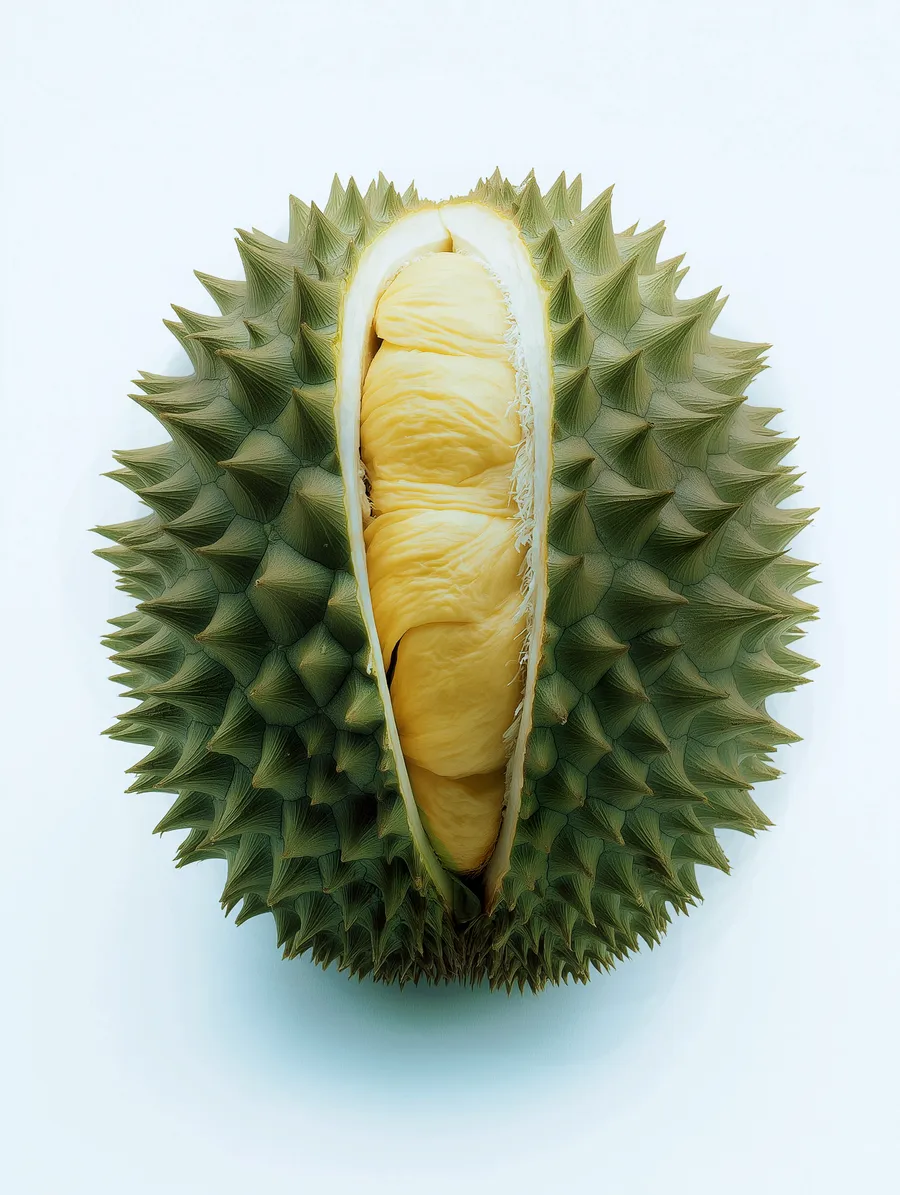
The composition opens on blackberry, with violet leaf and a truffle accord. The fruity meets the vegetal and the earthy, while caviar brings in a saline edge. The choice sets Festin apart from the better-known gourmand repertoire, tied by habit to vanilla, caramel, chocolate and other notes that lead back to pastry. Caviar and truffle belong to a different gastronomic imagination — products tied to rarity, to the cost of the raw material, to particular habits of consumption. In the perfume their role is not to reproduce a dish faithfully but to introduce scents that cut against the sweetness of the blackberry.
Olfactory notes are not the same as the ingredients actually used. A fragrance pyramid describes the sensations a composition means to evoke, not necessarily the raw materials in the formula: a truffle accord can be reached by combining different odorous molecules, with no recourse to the fungus, and a caviar note does not imply the food itself.
In the heart of Festin sits Galuchat leather, with marine accents. The base is carried by oud and an ambergris accord, two perfumery references tied to woody, animalic, long-lasting sensations. The structure moves from a fruity, vegetal opening through a leathery heart to a darker base, translating into scent the contrast between the richness of the banquet and the fire taking the city.
What Galuchat leather is: from stingray skin to luxury objects and perfume
Among Festin’s notes, Galuchat points to craft and the decorative arts. It is a worked leather, usually from stingray or shark, with a granular, hard-wearing surface recognizable by touch. The name comes from Jean-Claude Galluchat, an 18th-century French craftsman who specialized in sheathing objects. Working fish skin was already known in Asia, but Galluchat helped spread it through French luxury craft. The material covered cases for scientific instruments, boxes, small decorative objects and weapon grips, and could keep a pearl-gray color or be dyed, often green. In the 20th century Galuchat reached furniture, in particular during the Art Déco period, where its texture served as a decorative element on cabinets, panels and accessories.
The reference to Galuchat in Festin does not necessarily mean animal leather in the formula: it is a leathery note built to evoke the material through smell. The link to luxury, though, is exact. Duchaufour sets two categories of material in relation — gastronomic ingredients such as truffle and caviar, and a leather that belongs to the history of decorative craft — and the marine facet ties the caviar to the animal origin of the Galuchat.
Bertrand Duchaufour: 40 years from Comme des Garçons to L’Artisan Parfumeur and Amouage
Bertrand Duchaufour began in 1985 at Lautier Florasynth, in Grasse, one of the main centers of French perfume production. Across the decades he worked with many houses, building compositions around incense, spices, resins and accords made from the contrast between different materials. Among his best-known creations is Avignon for Comme des Garçons, part of the Incense series, built on the imagery of liturgical incense. Timbuktu, for L’Artisan Parfumeur, draws on West Africa through woody, spiced and smoky materials. He also signed Jubilation XXV for Amouage and Sartorial for Penhaligon’s. In 2008 he became the in-house perfumer of L’Artisan Parfumeur, later continuing as an independent, and he works with Technicoflor, the company that helped develop L’Entropiste.
His career rests above all on handling incense in different registers — liturgical, mineral, woody, smoky — which is one reason he has been called a Master of Incense. In 2025, after 40 years spent working for other brands, Duchaufour took the creative direction of L’Entropiste, a house that lets him build a collection whose fragrances share a compositional philosophy while starting from different cultural references.
L’Entropiste Paris: founders Denis Bellaïche and Kris Fang
L’Entropiste launched in January 2025. The venture came from Denis Bellaïche, CEO and shareholder, and Kris Fang, cofounder and early backer. Bellaïche comes from beauty and communications: before the brand he worked in haircare and founded the marketing agency Mister G Media, working with companies such as Wella, OPI and Clarins. The house was financed at first through private capital, with no outside investors; in 2026 Bellaïche and Fang set up Xions Group, a structure for developing luxury brands, which includes L’Entropiste.
The first collection arrived with 6 fragrances and 4 scented candles, drawing on literary, artistic and geographic references. Dorian’s Spleen takes off from Dorian Gray, the character in Oscar Wilde’s novel, and combines whiskey, dark chocolate, coffee and caramel with darker notes. Semence Douce turns to the photographic world of Robert Mapplethorpe, with an accord of tulip, saffron and almond. In 2026 Dorian’s Spleen won best niche perfume in the Rising Stars category for independent brands at the Fragrance Foundation France awards.
By company figures, in October 2026 L’Entropiste had reached 288 points of sale across 4 continents in about 18 months. Distribution covers Europe, North America, the Middle East and Asia, through specialist perfumeries and department stores including Jovoy, Aedes Perfumery, Nose and Galeries Lafayette.
The L’Entropiste bottle by Centdegrés: disorder becomes design
The house’s visual identity was developed by Centdegrés, the French branding and design agency, which handled the creative strategy, the art direction, the bottle and the graphic language. The bottle breaks the usual symmetry of a perfume flacon through an off-center geometry: the proportions and the shifted axis produce an impression of controlled instability, turning entropy into a three-dimensional object. The glass is produced by Verescence, a specialist in packaging for perfume and cosmetics.
The outer packaging follows the same principle. Made of recycled bamboo pulp, it uses a spare graphic language built on the contrast of black, white and red. Recycled bamboo pulp is a stated feature of the packaging, but it is not in itself a measure of the product’s overall sustainability: that would mean weighing the full life cycle, from raw materials through transport to end of life. The Centdegrés work makes Duchaufour’s approach legible before the scent — the bottle sets up a visual tension through form, the fragrance through the contrast between accords.
The L’Entropiste boutique in the Marais: lab, art and packaging
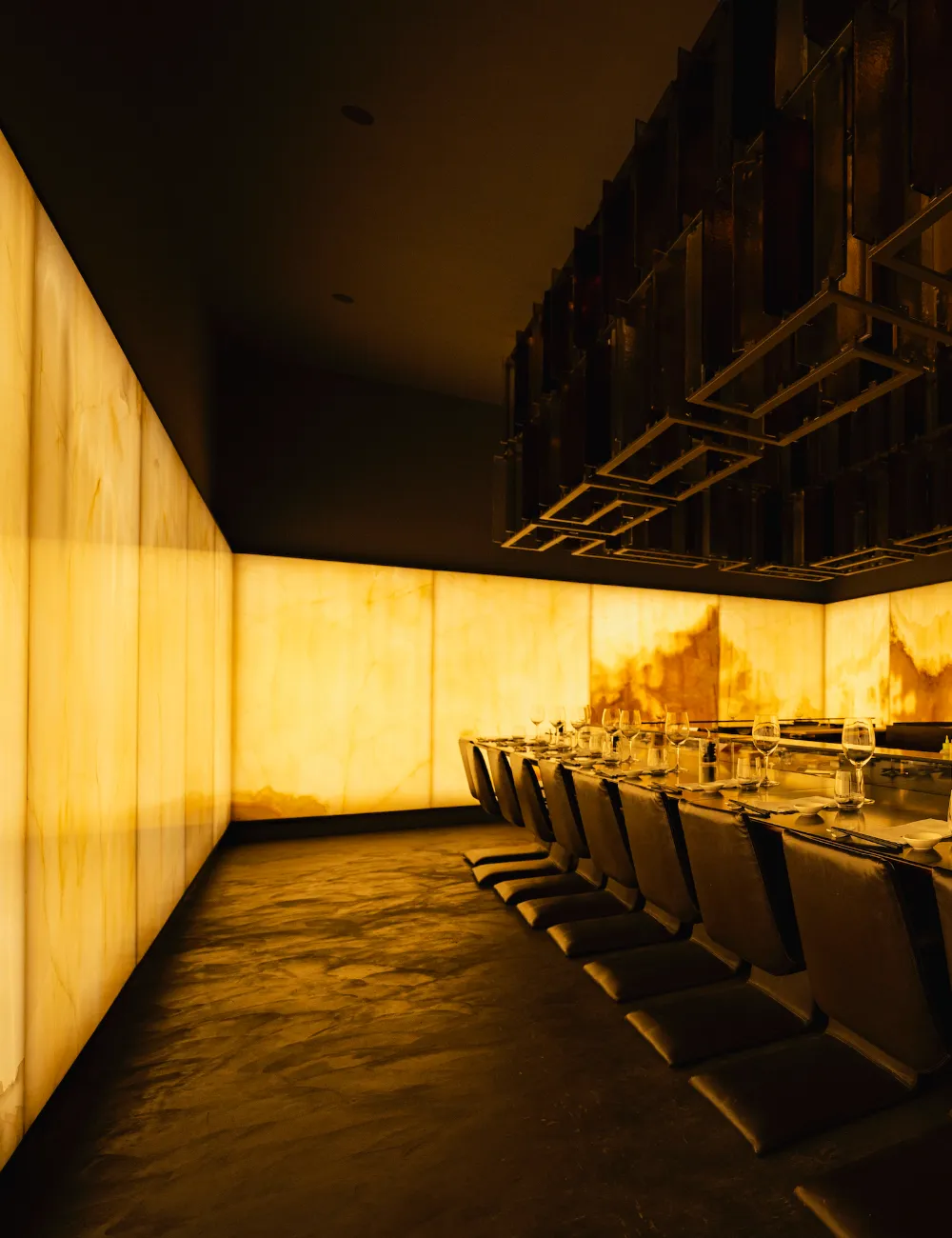
In March 2025 L’Entropiste opened its first boutique at 59 rue des Francs-Bourgeois, in the Marais in Paris. The space runs about 70 square meters and holds a sales area, an exhibition zone and a lab for weighing the formulas and filling the bottles. The fit-out uses three colors to which Duchaufour assigns set meanings: black for the earth, white for the world of spirits and the dead, red for life — the same combination that returns in the packaging.
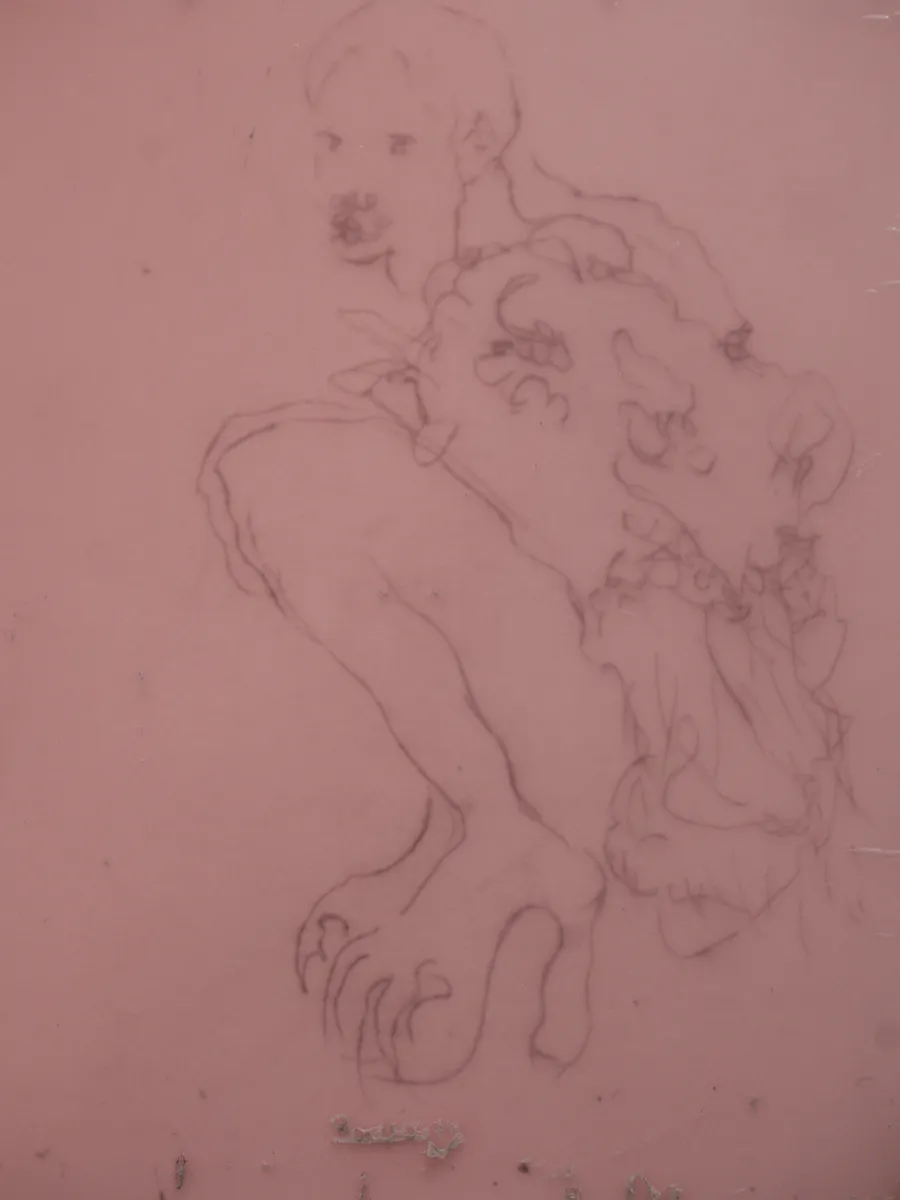
The boutique also shows drawings and paintings the perfumer has made over the past 30 years, alongside objects gathered on his travels; Duchaufour has spoken of an interest in African and Japanese art, which carries into the selection on display. The lab allows operations usually kept apart from the retail experience — weighing formulas, filling containers — and Duchaufour has arranged to be present there from time to time, together with the perfumer Alexandra Mettetal, whom he trained. The layout makes some of the work of creating and producing the perfume visible, set against the creative director’s own art.
Festin by L’Entropiste: sizes, prices and Italian distribution
Festin arrives in fall 2026 as a new L’Entropiste fragrance. The house labels it Cuir Oud Impérial, underlining the role of leather and oud in the structure. The stated notes are blackberry, violet leaf, caviar, truffle, Galuchat leather, marine accords, oud and ambergris.