The value of coconut husk fiber: what to do with the 85 percent we burn
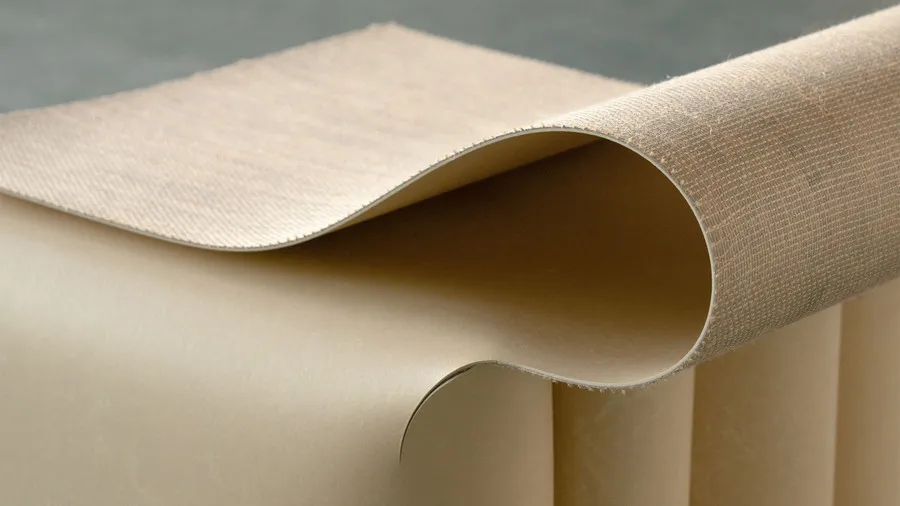
Coir board holds together without synthetic glue, using lignin present in the material. What happens when the waste stream becomes the raw material? Where the sustainability claim runs into trouble?
Producers grow roughly seventy billion coconuts worldwide each year. A portion is pressed into oil or exported whole; eighty-five percent of the total harvest is discarded and burned, adding carbon dioxide and methane to the atmosphere. The husk that surrounds the nut, historically treated as an obstacle between the picker and the product, is now being reclaimed across South-East Asia as feedstock for furniture, interior panels and automotive parts — a shift the International Coconut Community reports as a source of income for growers and processors alike, and one it outlined during its Best Practices for Coconut Husk Product Development webinar.
The environmental argument for doing so begins with an uncomfortable finding. A study financed by the University of Exeter reported that coconut oil production threatens biodiversity more than palm oil or other vegetable oils, because cultivation concentrates on tropical islands where endemic species have nowhere to retreat. Deforestation tied to coconut cropping, the research found, affects twenty plant and animal species per million litres of oil produced. Coconut has spent years occupying the wholesome end of the shelf while palm oil absorbed the criticism; the numbers complicate that arrangement.
Reclaiming the husk changes nothing about the cultivation problem. What it changes is the yield extracted from land already under cultivation.
What coir is: thirty percent fibre, seventy percent pith, and lignin holding both together
Once the flesh and water are removed, the husk separates into two fractions. Roughly thirty percent by dry weight is coir fibre — the coarse, springy material that has been twisted into rope and woven into matting for centuries. The remaining seventy percent is pith, also called coir dust: the corky material packed between the fibres, historically piled up beside processing plants and left there. Some of those piles in South-East Asia are thought to be a century old.
Both fractions are unusually high in lignin and phenolic content. Lignin is the compound that stiffens plant cell walls, and under heat and pressure it softens and then sets, behaving as a thermosetting resin. This is the property that makes binderless board possible: the adhesive is already inside the material, and pressing activates it.
The applications divide accordingly. Long fibre goes to twine, doormats, brushes, mattress filling and upholstery stuffing. Pith goes to horticulture, where it retains moisture, resists fungal growth and is sold as a peat substitute. Both go into composite panels, particle board, floor tiles and biodegradable packing material. Composite panels made from husk fibre have been developed into automotive trunk liners, living-wall planters and battery-pack covers for electric vehicles, with producers describing the material as stronger, stiffer and lighter than synthetic plastic fibre.
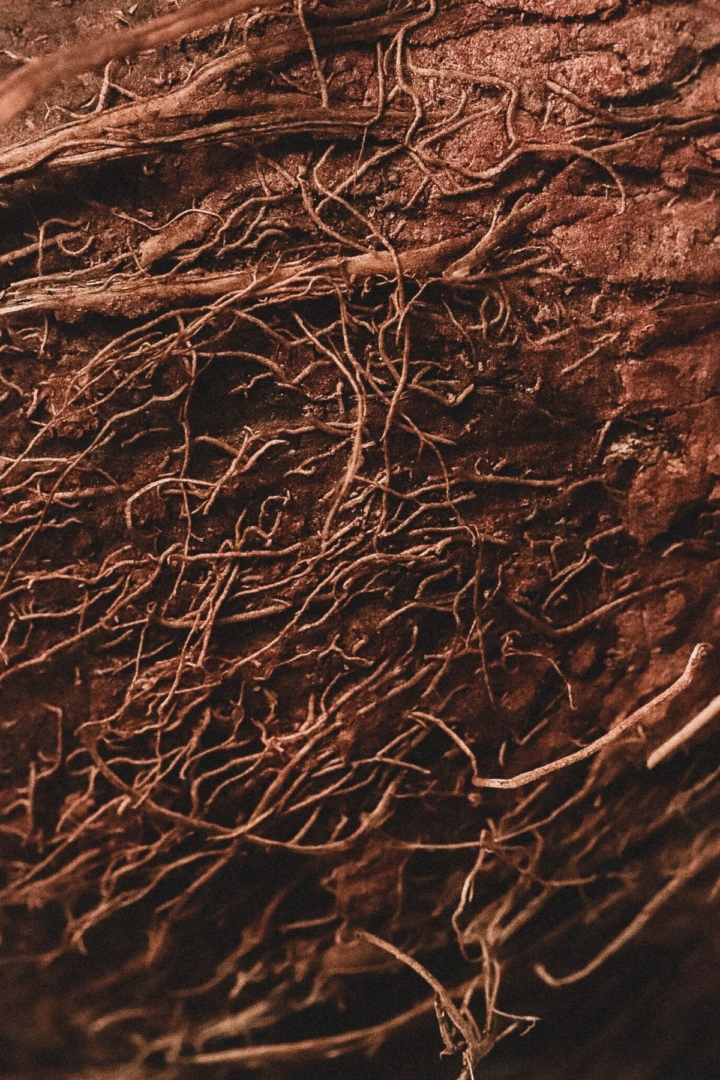
Goodhout: pressing coconut husk into board without formaldehyde
Goodhout, a Dutch company building interior and construction material from coconut husk, positions coir board as an alternative to wood.
“The pressure on the price of wood and the use of toxic agents in the engineering industry is making society demand materials that replace thermoset plastics or tropical hardwoods,” said Silvia ten Houten, founder and CEO, at the International Coconut Community webinar.
The company presses husk pieces into board under heat without adding synthetic glue, relying on the lignin in the pith. The resulting panel contains no added formaldehyde — a meaningful distinction in a category where urea-formaldehyde and phenol-formaldehyde resins are standard, and where off-gassing has driven two decades of indoor air quality regulation. Sturdiness and fire resistance are comparable to, or better than, medium-density fibreboard.
Independent testing supports the performance claim. Research on binderless coir boards has reported strength around 50 MPa and stiffness around 5 GPa, comparable to commercial MDF and well past particle board at 15 MPa and 3 GPa. Thickness swelling and water absorption run lower than MDF, and after immersion in water the coir boards have shown mechanical properties surpassing MDF by a factor of two. There is a trade-off: density comes in at 1.3 to 1.4 g/cm³ against 0.8 for MDF and 0.7 for particle board. The material is heavier, which matters for shipping and for any application where weight is a design constraint.
Goodhout sources husks already discarded rather than growing trees for the purpose, and runs its supply chain through twenty factories in Europe, where coconuts are de-husked by hand or by machine before the husks are sun-dried, milled and pressed. The first product line covered flat surfaces for interior use: countertops, room dividers, wall panels, shelving, tables, cupboards. Ten Houten’s team is developing applications for flooring, external façades, kitchenware and automotive dashboards.
Coconut Bowls and the shell: the second waste stream
The husk is one discard; the shell is another. Coconut Bowls sources shells that would otherwise be burned and turns them into bowls, spoons, forks, knives and chopsticks, employing local artisans and farmers. Outside processors remove the flesh and water first; the company then cuts, cleans and sands the shells before rehydrating them with organic virgin coconut oil.
The company offsets carbon generated by its shipments through Cool Effect, a not-for-profit that funds scientifically validated local projects, including biogas digesters that provide communities with access to clean energy. Offsetting is a contested instrument, and its inclusion here describes what the company does rather than settling whether it works.
The peat question: why horticulture is the largest market for coir pith
The single largest commercial application for coir has nothing to do with furniture. It is growing media, and the reason is regulatory.
Peat bogs accumulate over thousands of years and hold centuries of sequestered carbon; harvesting releases it, and regrowth is measured in centuries rather than seasons. The United Kingdom has banned peat sales to amateur gardeners from 2024 and to professional horticulture from 2030, and comparable pressure is building elsewhere in Europe. That creates a substitution problem at industrial scale, and coir pith is the most direct answer available.
The performance case is established. Researchers at Auburn University and the University of Arkansas compared peat and coir as horticultural substrates and found coir performing on par: it holds moisture well, wets more easily than peat, drains well, decomposes more slowly and withstands compression better. Its pH sits between 6.0 and 6.8, close to neutral, against peat’s acidic 3.5 to 4.8 — an advantage for most crops and an adjustment for growers used to correcting upward.
Where the sustainability claim gets complicated
Byproduct status is doing a great deal of work in the coir argument, and it deserves scrutiny.
Life-cycle analyses have found that coir’s environmental impact arrives through channels the “it’s already waste” framing tends to skip: transport from South-East Asia to European and North American markets, electricity consumption during processing, the calcium nitrate used to buffer the material’s high potassium and low calcium content, land occupation, and particulate matter from processing. Some assessments conclude that neither peat nor coir emerges clearly better on a full accounting. The data underlying these studies is limited, and the conclusion is contested rather than settled — but a material shipped ten thousand kilometres to replace one dug up locally carries a burden that the word byproduct alone does not discharge.
The land question runs deeper. Coir is a byproduct of coconut cultivation, and coconut cultivation is what the Exeter study identified as a biodiversity problem. Rising demand for husk products creates, at the margin, an incentive to grow more coconuts. The circularity argument holds as long as husk remains a waste stream being cleared; it weakens the moment husk becomes valuable enough to plant for.
The economics: who gets paid, and what it costs to make
Processing husk and shell avoids growing new trees to meet demand, since the raw material already exists. Natural adhesives extracted from the coconut itself remove the need for chemical binders, cutting production costs by around one third according to Goodhout. The resulting material is biodegradable: unlike polyester or plastic, it breaks down in soil within weeks and returns minerals and micronutrients.
Most suppliers operate in the Philippines, India, Vietnam, Thailand, Indonesia and Sri Lanka, with India and Sri Lanka together accounting for the large majority of processed coir output. Coordinating between local farmers and European manufacturers gives producing countries an added income stream while supplying manufacturers with raw material — provided artisans and farmers are paid according to global labour standards, which is the condition on which the entire social argument rests and the one least visible from the finished panel.
The coir industry employs large numbers of workers in India and Sri Lanka, much of it in small-scale and informal processing, and much of it female. Municipal initiatives have begun to formalise parts of the chain: a coir processing project launched by the Ranchi Municipal Corporation in January 2025 converts coconut waste into rope and compost, employing women organised through self-help groups.
Market projections for coir vary so widely between research firms — from a few hundred million dollars to several billion, depending on what each counts as the market — that citing a single figure would mislead more than inform. What the projections agree on is direction: growth in the high single digits annually, driven by peat substitution, controlled-environment agriculture, erosion-control geotextiles and, more recently, automotive interiors.
From doormat to dashboard
The trajectory of coir is the trajectory of a material moving up the value chain. It began as rope and matting, sold by weight. It became horticultural substrate, sold by volume. It is now being engineered into panels and composites sold by performance specification, which is where the margins sit and where the industry’s ambitions are directed.
The question that follows the material into its new applications is whether the waste framing survives success. A husk that would otherwise burn is unambiguously better used than wasted. A husk that becomes valuable enough to reorganise agriculture around it becomes something else — and the answer will show up first in the land-use data, well before it shows up in the marketing.
Editorial Team