Mapping the geography of Made in Italy beyond national borders
Diana Studio, the Prato-based knitwear producer, opens its factory floor to question what transparency in fashion means — and why production planning matters more than certifications
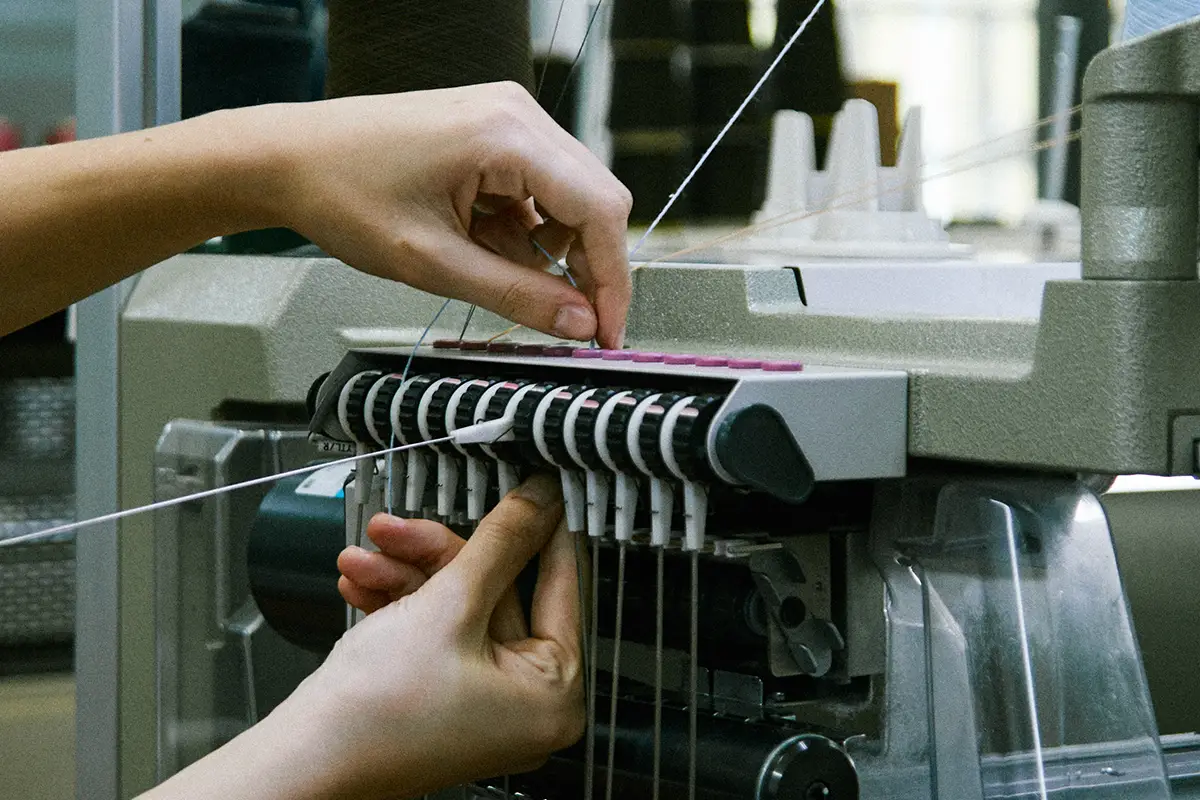
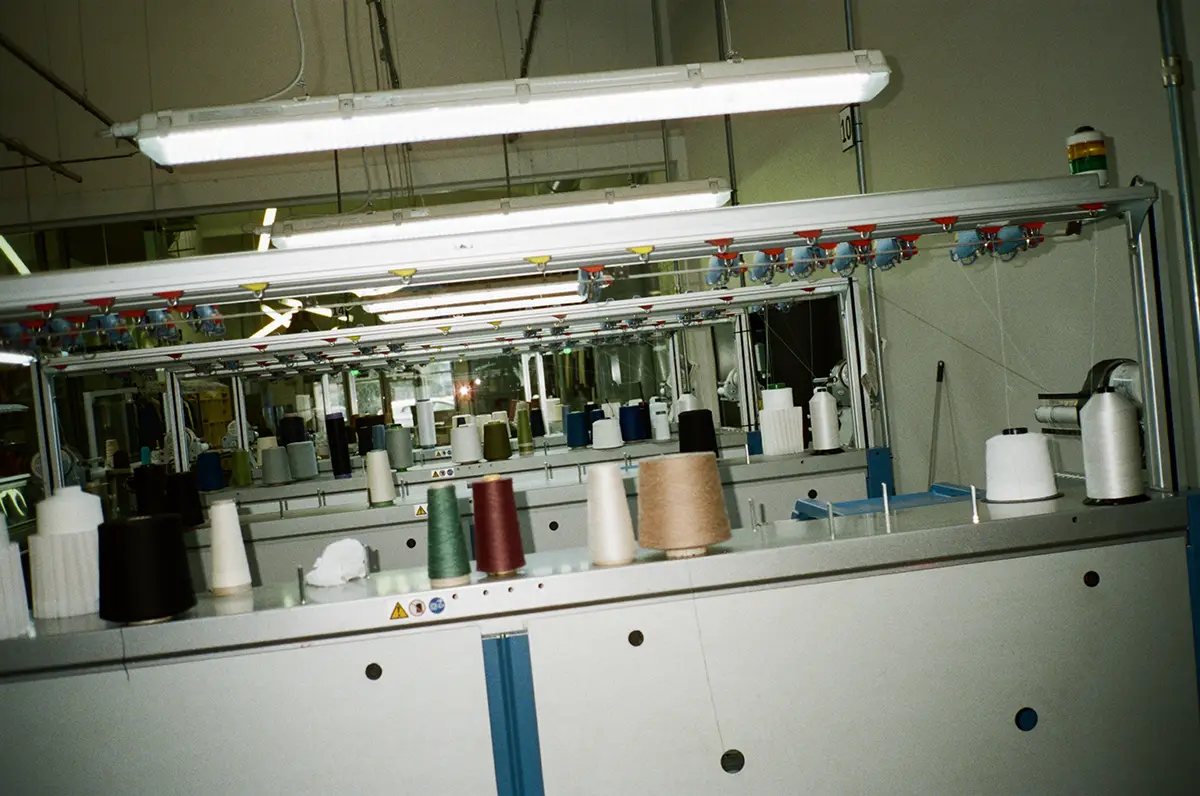
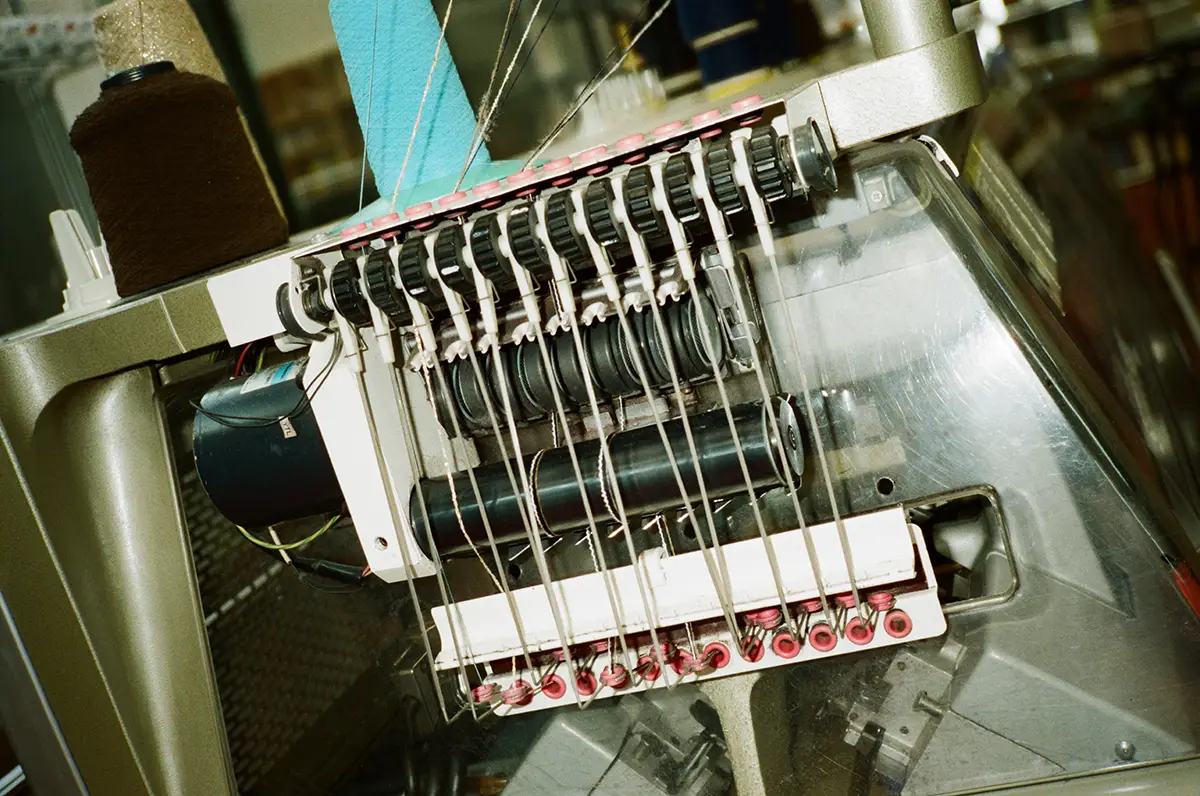
On June 19, Diana Studio will present Rumori Quotidiani in Milan, an event built around the sounds of knitting machines, yarns, production floors and manufacturing processes. The title refers to what usually remains outside the frame when fashion is discussed. In most cases, communication begins when a garment is finished. The production process stays hidden behind images, campaigns, showrooms and retail spaces.
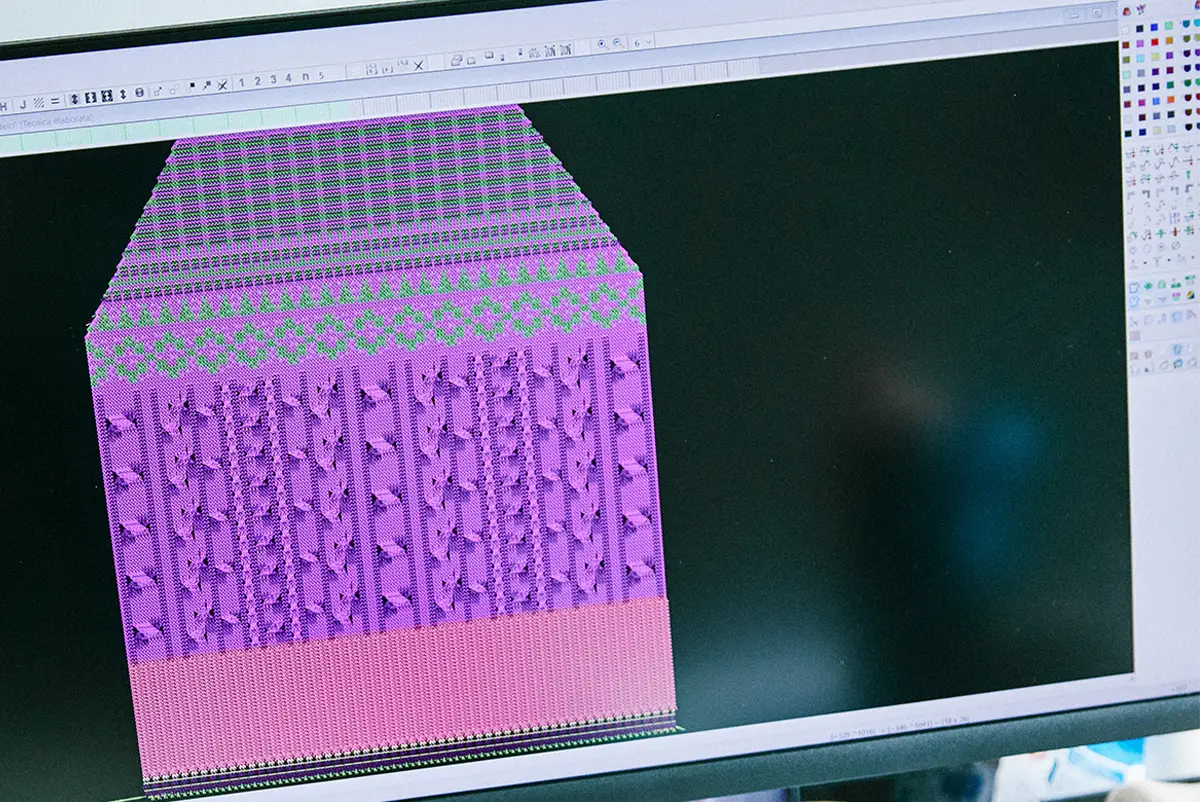
Diana Studio emerged from within Maglificio Diana, a textile company based in Prato with over fifty years of experience in knitwear development and production. The project developed through a reflection on production capacity, material sourcing, internal know-how and the relationship between industrial manufacturing and contemporary consumption. The result is a collection, but also a position on how knitwear is designed, produced and discussed today.
The event arrives at a moment when the fashion industry continues to debate sustainability, reshoring, traceability and supply-chain transparency.
Sustainable manufacturing and the cost of urgency across the supply chain
Within the textile sector, sustainability is frequently associated with fibers, certifications and material innovation. The conversation at Diana Studio begins elsewhere: «We were one of the first companies in the district to obtain all the possible certifications: RWS, recycled standards, responsible wool, recycled fibers, organic cottons. We have all the environmental certifications, all the social audits. But we never really talk about them. For us the environmental part is a prerequisite. What interests us is what happens afterwards», say Gianmarco Alessandrone, Business Development Manager, and Chiara Errica, Knitwear Product Developer.
They point to collection planning, product development and production forecasting as factors that shape resource use across the supply chain: «One of the main sources of inefficiency is the lack of a clear market vision. Too many prototypes are developed, too many products are sampled without ever reaching production and too many decisions are revised along the way. We prefer a more focused approach. A collection might include around forty styles. Reducing what enters the development process is often the first step towards reducing waste».
The same logic extends to logistics. Transportation rarely occupies a central place in discussions around sustainable manufacturing, yet it shapes the journey of every garment: «A large part of the problem lies in planning. When production is organized at the last minute, materials and garments move through the supply chain in the fastest way available, often by air. A yarn may start its journey in Biella, travel abroad for manufacturing and then move again before reaching the customer. The environmental footprint of a garment includes that entire route. Production schedules, transport choices and shipment planning all play a role».
The relationship between price, durability and consumption is also a theme: «A market built around low prices requires increasing volumes. More garments enter circulation, product lifespans become shorter and replacement rates accelerate. The pressure extends across the supply chain, from manufacturing to retail, creating a system that depends on constant turnover».
Every year Diana Studio develops Rev, a capsule collection created from surplus materials accumulated over the course of the year: «Towards the end of the year we collect the yarns left over from previous productions. We rewind them and use them to make blankets, bags and knitwear. Because production takes place within the company, we can reintroduce those materials into a new project. Otherwise, they often end up sitting in storage, moving through stock channels or being thrown away».
The Italian textile industry after volume: what remains when production leaves
The history of Prato is inseparable from the history of the Italian textile industry. Over recent decades, however, large-volume manufacturing has shifted towards other regions of the world, forcing many companies to redefine their role: «Maglificio Diana was originally organized around large volumes for major groups. Today that model has changed. Large-scale production is carried out by huge international organizations. We decided to focus on what we really are: a laboratory of experimentation. We enjoy working with knitwear across different markets, but our focus is now on added value rather than volume».
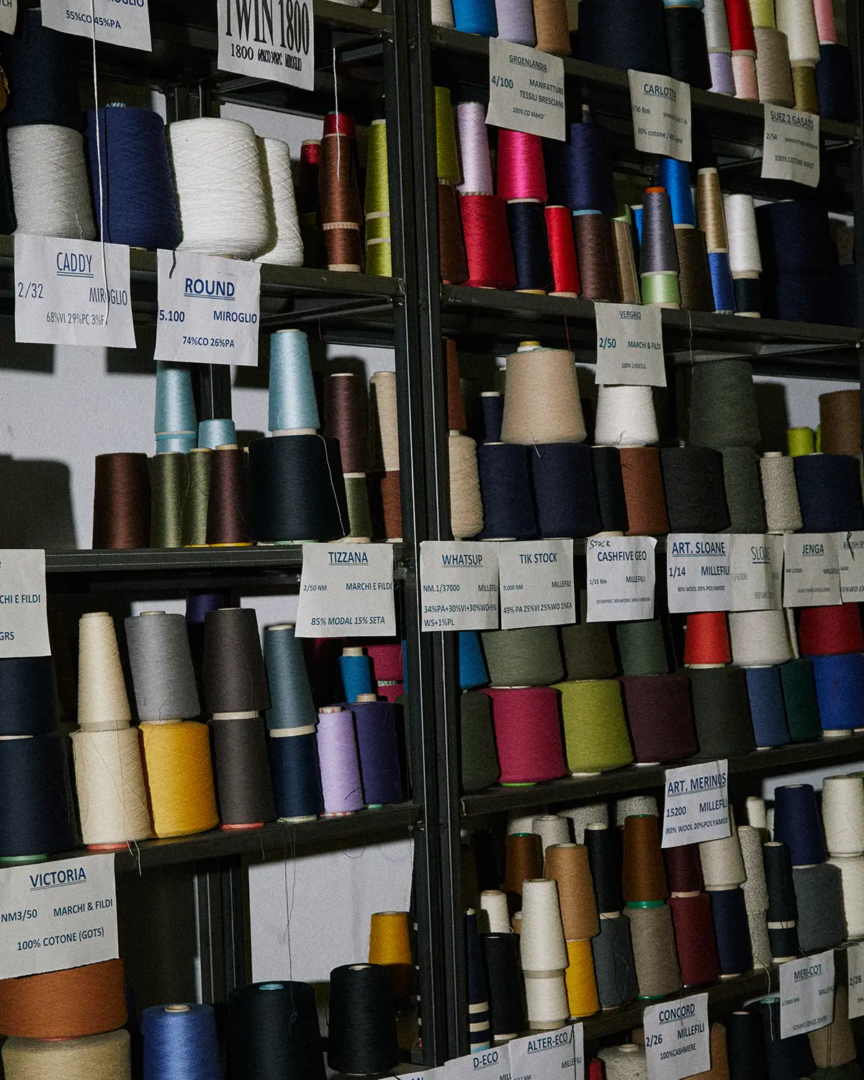
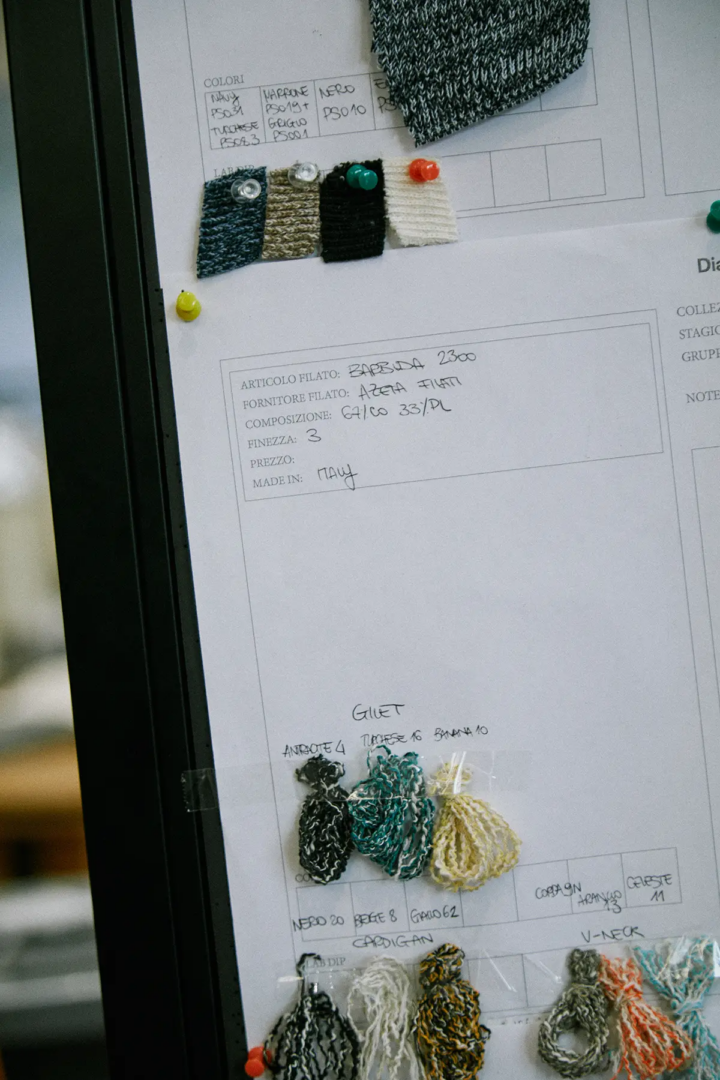
The material remains the starting point: «Everything starts with the raw material. It guides the process. Not every yarn works with every project and part of the research lies precisely in understanding those possibilities. The study of materials remains central because the yarn determines many of the possibilities that follow».
The Italian spinning mills continues to play a role within this framework: «Asian manufacturers often have advantages because they operate close to raw materials and transportation costs can be lower. What differentiates Italian spinning mills is the relationship that develops around a project. They participate in the process. They interpret ideas together with us. There is an exchange of knowledge that goes beyond supplying yarn».
Rather than presenting manufacturing geography as a question of national identity alone, they frame it as a question of competencies: «The future is diversification. Every country has strengths. Every sourcing destination has capabilities. Italy remains strong in certain areas; other countries are strong in others. Closing ourselves off would mean ignoring opportunities to learn and improve. We need to know what we do well, understand what other countries do well and build from there».
Reducing waste in fashion before a garment is manufactured
Overproduction remains one of the recurring themes. As volumes increase, product lifespans shorten and replacement rates accelerate across the market: «A market built around low prices requires increasing volumes. More garments enter circulation, product lifespans become shorter and replacement rates accelerate. The pressure extends across the supply chain, from manufacturing to retail, creating a system that depends on constant turnover».
Behind every garment sits a network of workshops, subcontractors and specialized suppliers whose continuity depends on production planning as much as demand: «For us sustainability also means taking care of the supply chain. There are small workshops around the district, sometimes highly specialized suppliers. Giving them visibility, planning production with them and avoiding constant pressure on prices is part of making the system work over time. Sustainability means sustaining something through time. If those workshops disappear, the knowledge disappears with them».
Bangladesh, Prato and the circulation of manufacturing knowledge
Part of Diana Studio’s production takes place in Bangladesh, where the company has worked for more than a decade: « Everything is created inside our company in Prato first—the yarns, the stitches, the product development.. What we produce in Bangladesh are mainly basic garments with larger volumes. To achieve consistent quality you need vertical structures, organization, investment and specialized machinery. Certain products require that type of system».
They reject the idea that manufacturing geography alone determines quality: «Made in Italy is often assumed to be synonymous with quality. The reality of manufacturing is more nuanced. There are situations in Italy where working conditions are difficult and quality standards vary, just as there are production facilities elsewhere operating with strong technical control and consistent standards. The question is not where a garment is made, but how it is made and how the process is managed».
The company maintains technical staff in Bangladesh and works through dedicated production lines: «We operate our own sample room on site, maintain a permanent technical presence and work through production lines dedicated exclusively to Diana Studio. The people we work with are trained on products that require a different level of technical expertise, allowing skills and manufacturing knowledge to develop over time rather than being confined to a single project».
Knowledge transfer operates in both directions: «Our colleagues from Bangladesh come to Italy, work alongside us and spend time on the factory floor. They see the machinery, follow the development process and become familiar with the way products are built. The decision to produce there is not driven by labor costs. Certain manufacturing structures simply allow specific kinds of knitwear production. What we contribute is the material, the technical know-how and the product development work».
Rumori Quotidiani: what fashion usually leaves outside the frame
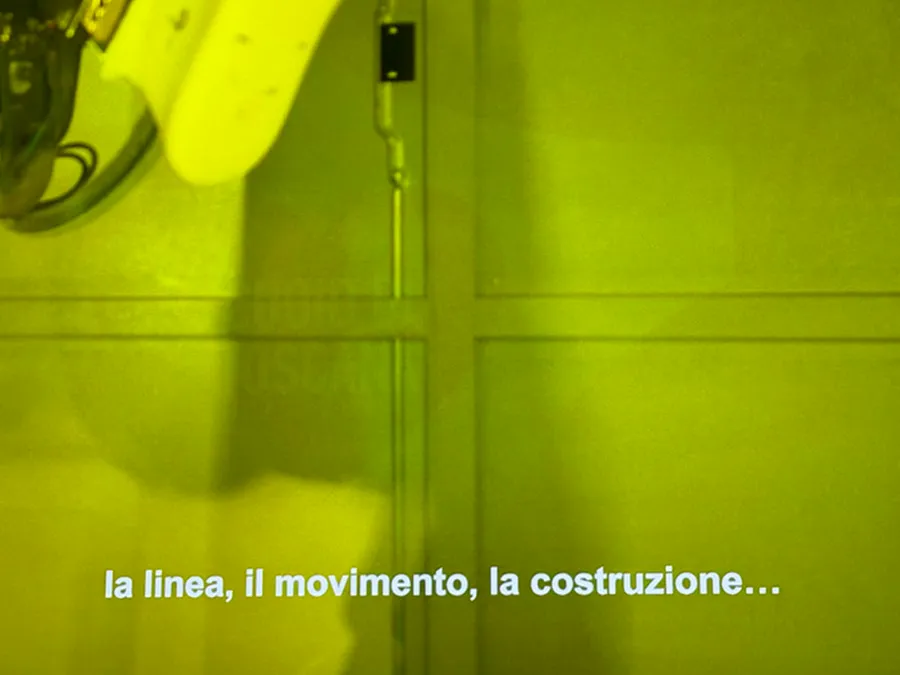
The exhibition includes production sounds recorded inside the factory, video documentation of manufacturing activities and displays dedicated to different stages of knitwear production. Visitors move through materials, stitches, machinery and finished garments as parts of the same process: «Many people can make a beautiful sweater. Few explain where they come from and who makes them. For us that is transparency. It is also a way of helping consumers understand their choices and what they are wearing».
The project also addresses authorship within fashion production: «Every stage contributes to the final product, from product development and production planning to logistics, quality control and warehouse operations. Fashion often places a single figure at the center of the story, while a garment is the outcome of work carried out by many people. We wanted to bring that process into view».
Opening the factory instead of adding another QR code
attached to garments across the fashion industry. At Diana Studio, transparency is associated with direct access to production spaces and manufacturing processes: «There is a form of transparency that feels artificial. Sometimes it becomes a game of certifications, codes and labels. For us, transparency is something tangible».
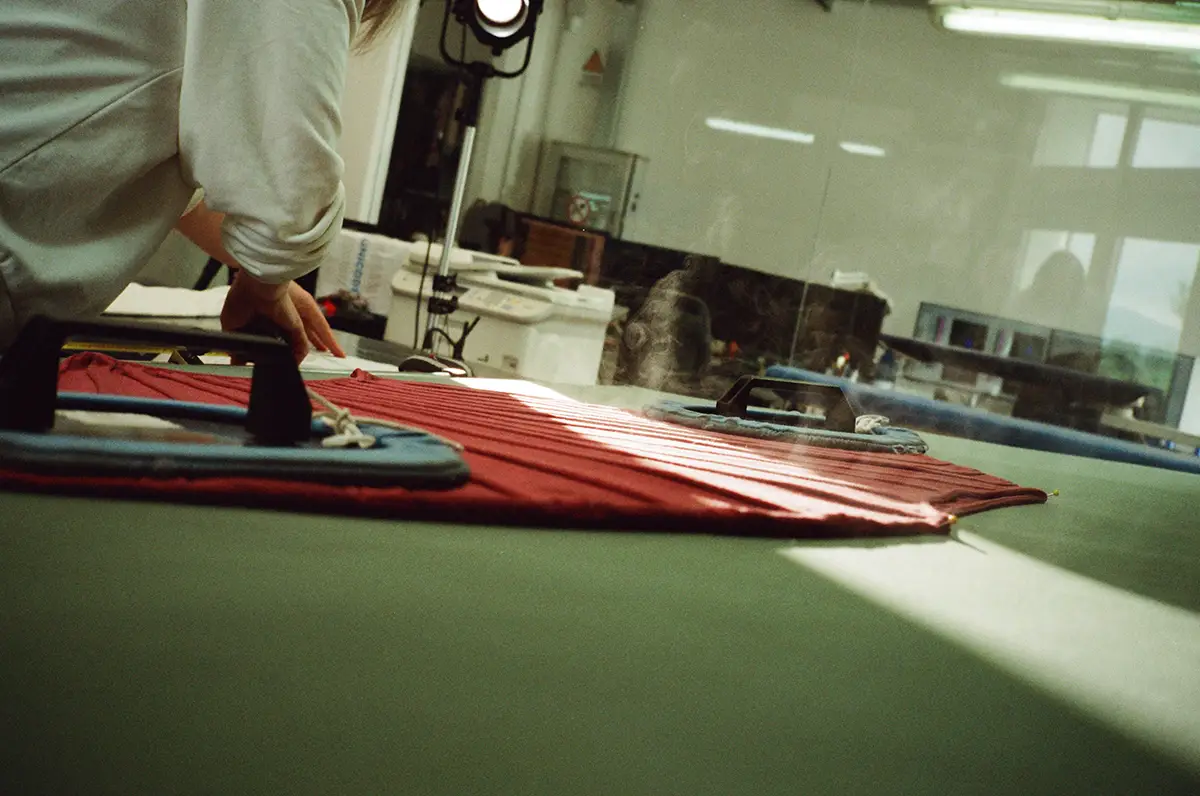
The company regularly receives visitors interested in seeing production spaces directly: «People come to visit us, often without any appointment. They want to see how knitwear is made. We take them through the factory, the quality control department, the washing area and the collections in development. They meet the people involved in the process and see how a garment takes shape. That experience conveys more than any label or certification».
Production spaces themselves reflect this approach: «Most factories hide production behind walls. Ours is built with glass. You can see everything. That is transparency for us».
Debora Vitulano