Beyond the Alpine Vernacular, a Contemporary Architectural Vision Emerges from the Landscape of the Dolomites
Designed by Peter Pichler, Schgaguler Hotel in South Tyrol reinterprets the forms of the Alpine house through geometry, materiality and a dialogue with the surrounding landscape.
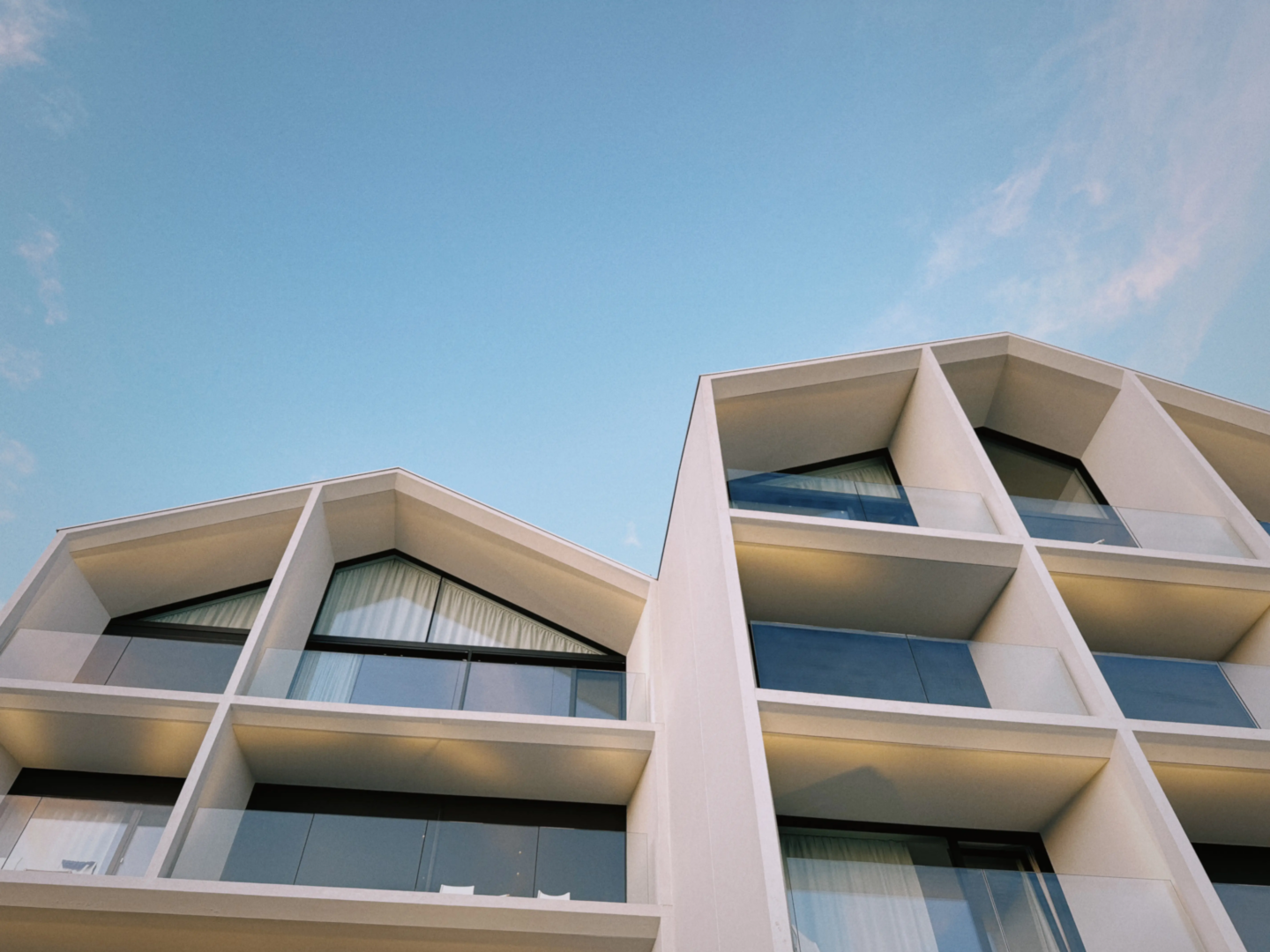
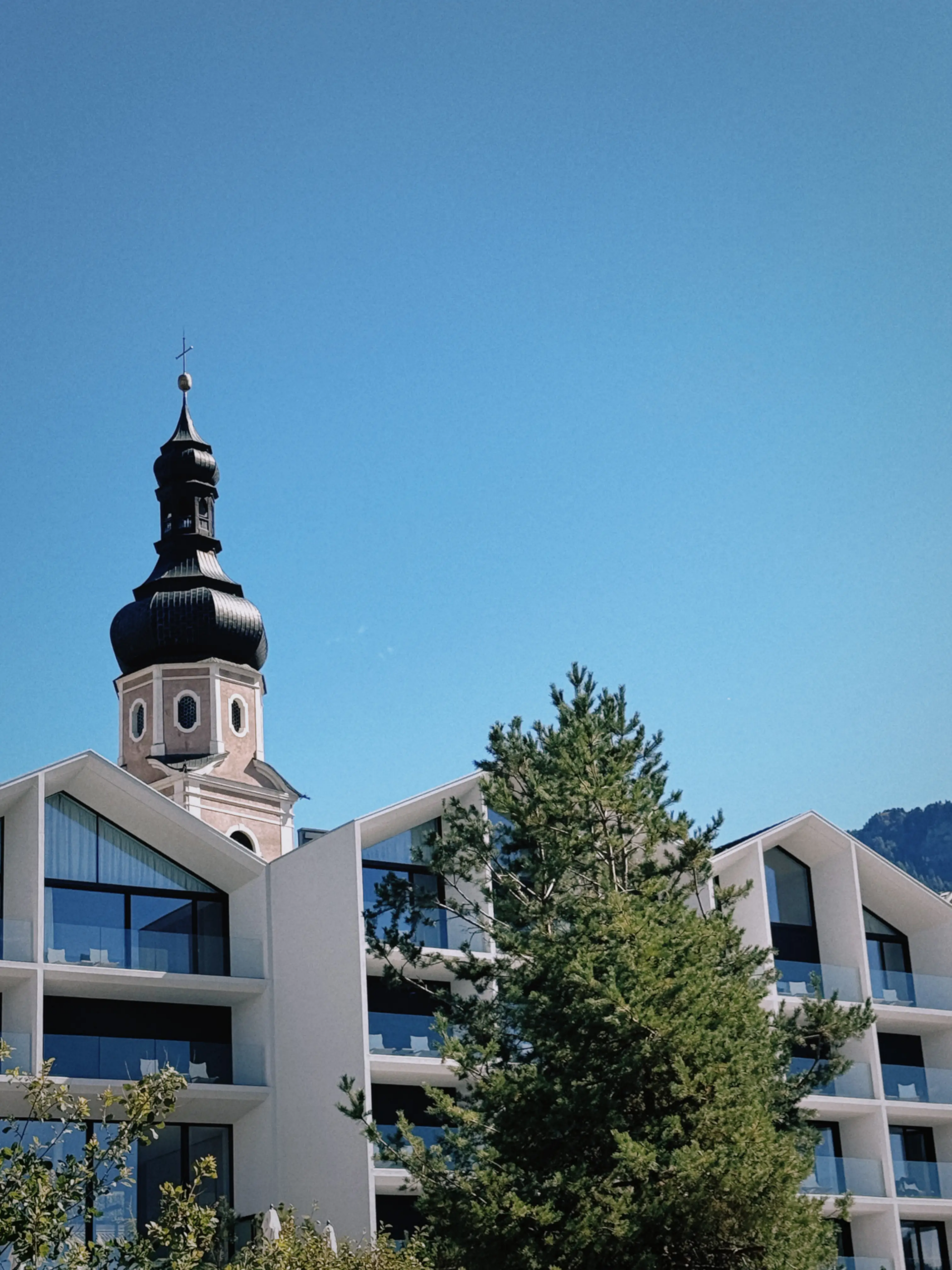
At the foot of the Alpe di Siusi, amid the Dolomites of South Tyrol, Schgaguler Hotel is a boutique hotel shaped by a contemporary reading of Alpine architecture. Designed by Peter Pichler, the building retains the pitched roofs of traditional mountain houses while reworking their proportions, surfaces and relationship with the landscape. Pale façades, geometric lines and expansive glazing replace the familiar imagery of the chalet with a more restrained architectural language. Rather than reproducing a vernacular aesthetic, the project works with the forms of the Alpine house, using geometry, material and light to reconsider its place in the mountains.
Three Pitched Roofs and the Contemporary Architecture of the Dolomites
The hotel’s renovation transformed a building dating from the nineteen-eighties, preserving its three pitched-roof volumes while changing their architectural expression. Completed in 2018, the project replaces conventional Alpine detailing with pale façades, deep-set windows and a geometric external framework.
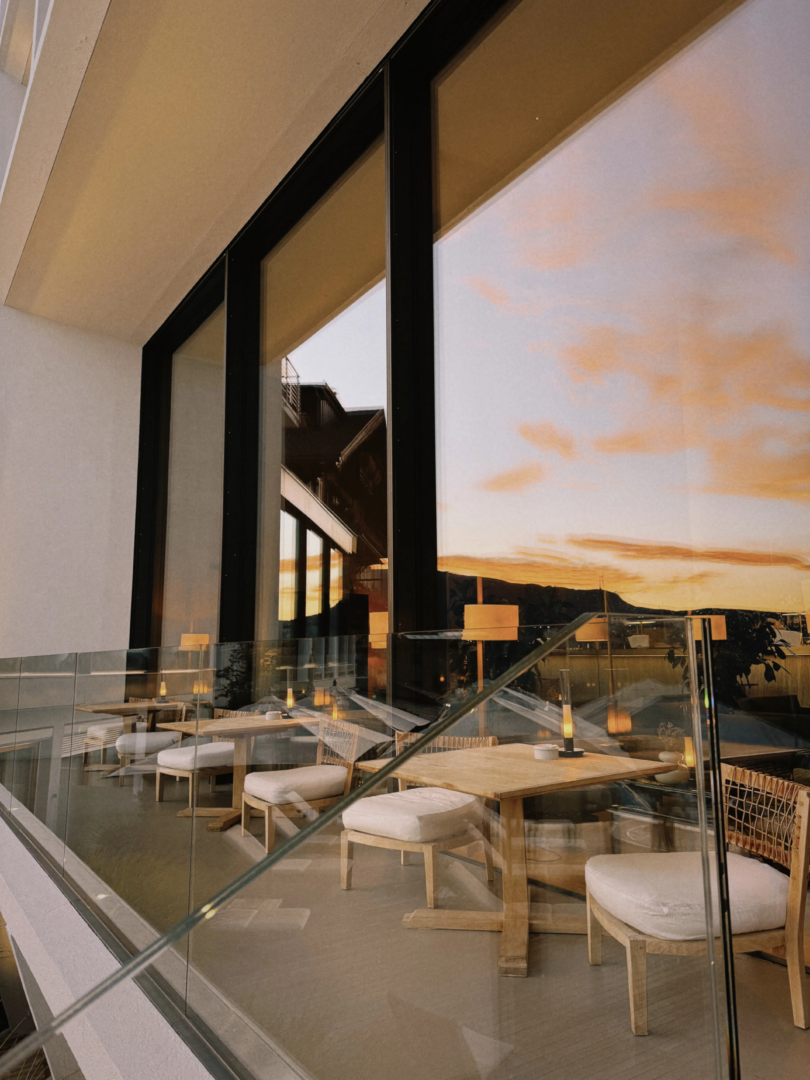
The framework gives the exterior depth. Its configuration varies with the building’s orientation, extending into loggias on the southern side. The pale gray finish refers to the mineral tones of the Dolomites, while the projecting elements create a pattern of shadows that changes throughout the day.
Pichler retains the recognizable outline of the Alpine house but changes its proportions and surface treatment. The pitched roof becomes part of a composition defined by geometry, light and the relationship between solid walls and glazed openings. Tradition remains visible without determining the entire design.
Natural Materials, Light and Proportion in Contemporary Alpine Interiors
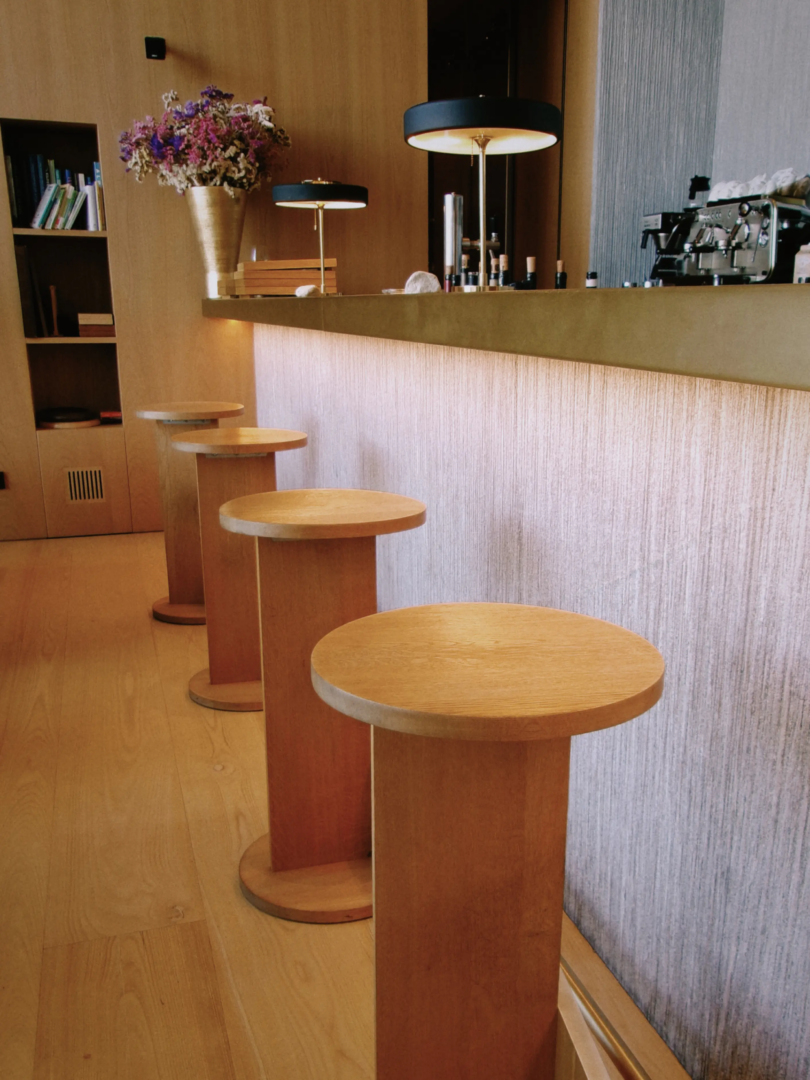
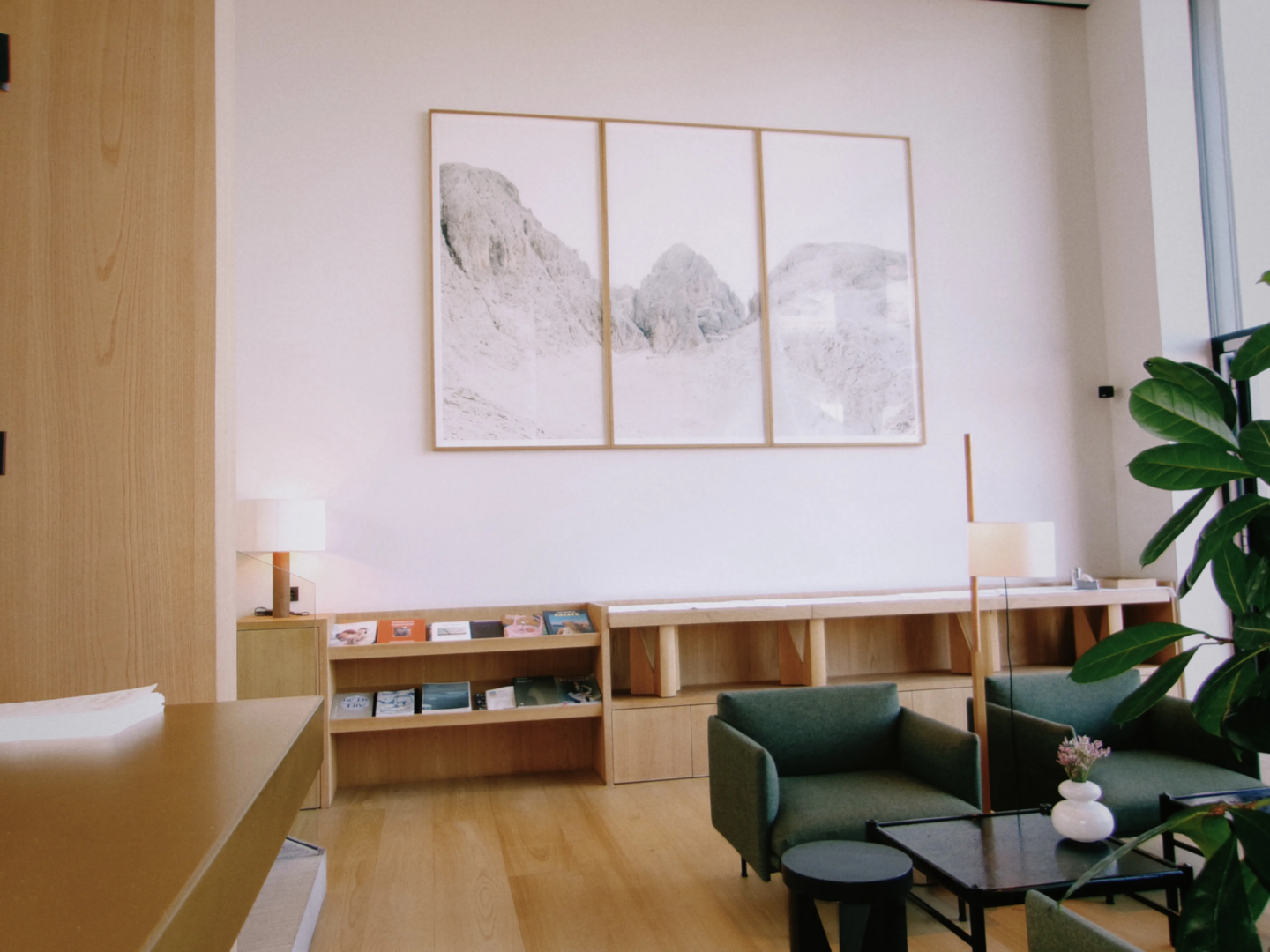
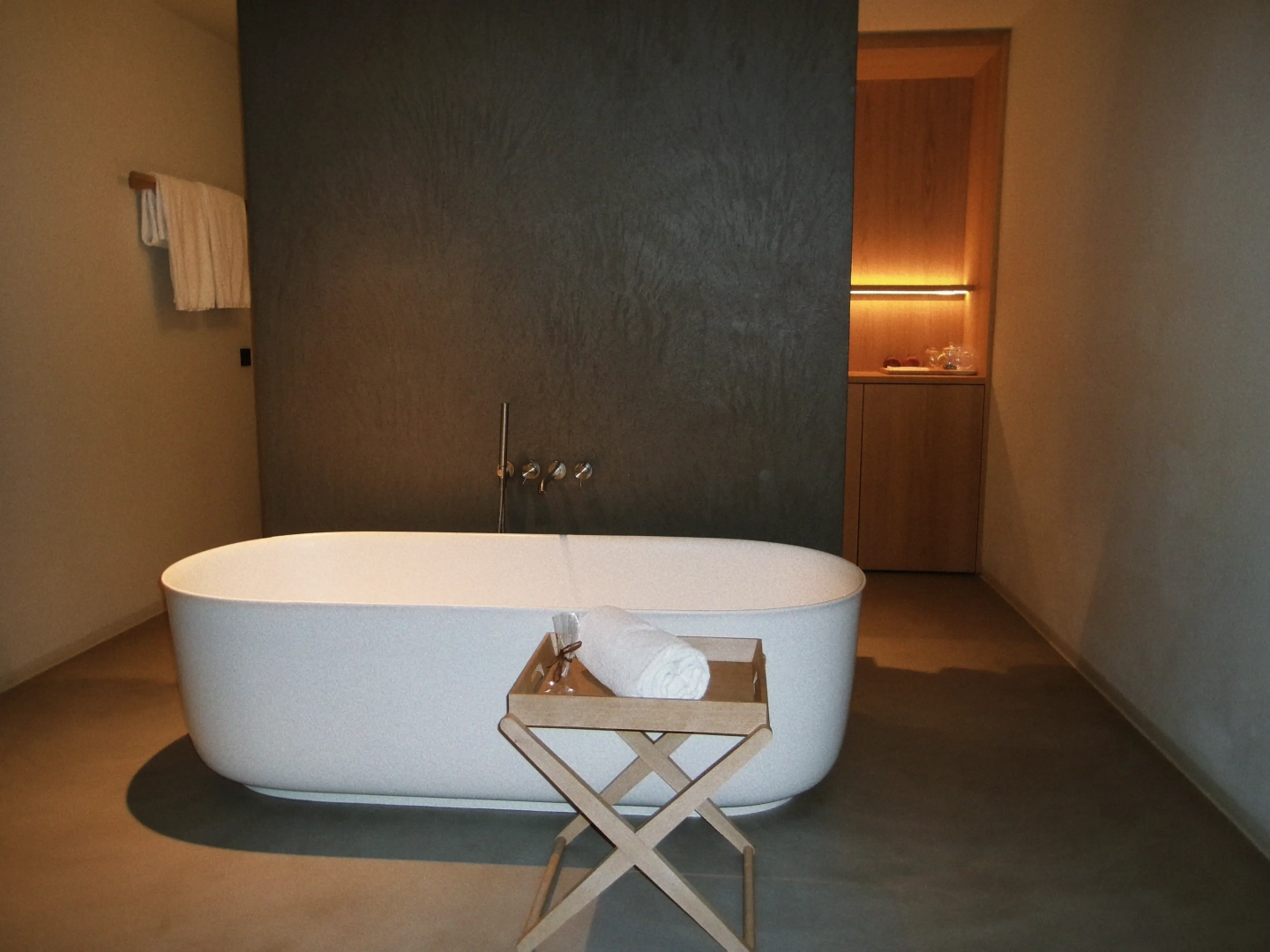
Inside, chestnut wood, stone and textiles establish a restrained material palette. Large windows frame the Sciliar and the surrounding peaks, making daylight and the changing landscape part of the interior.
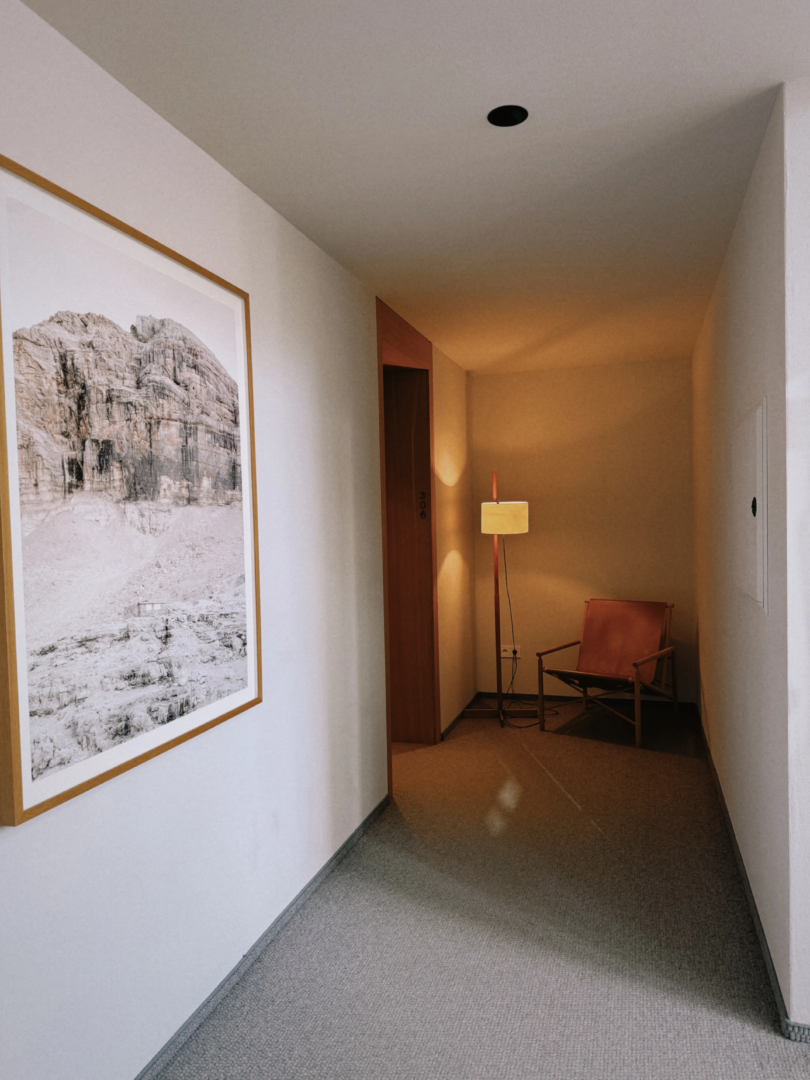
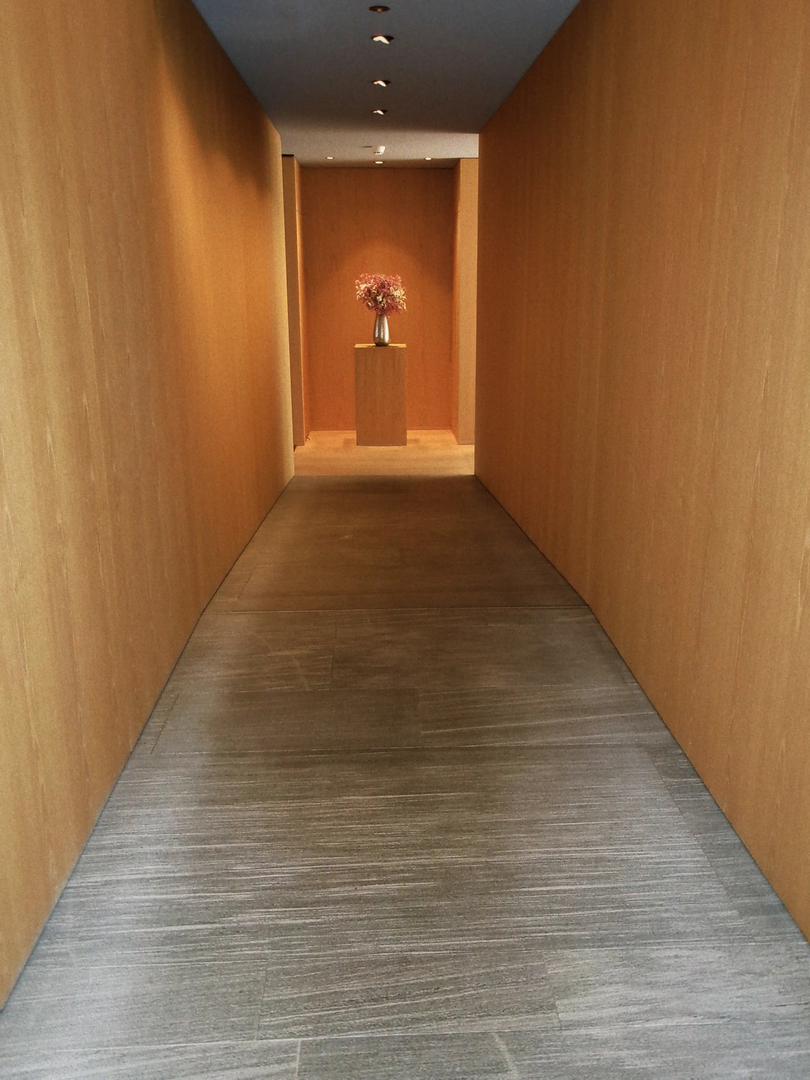
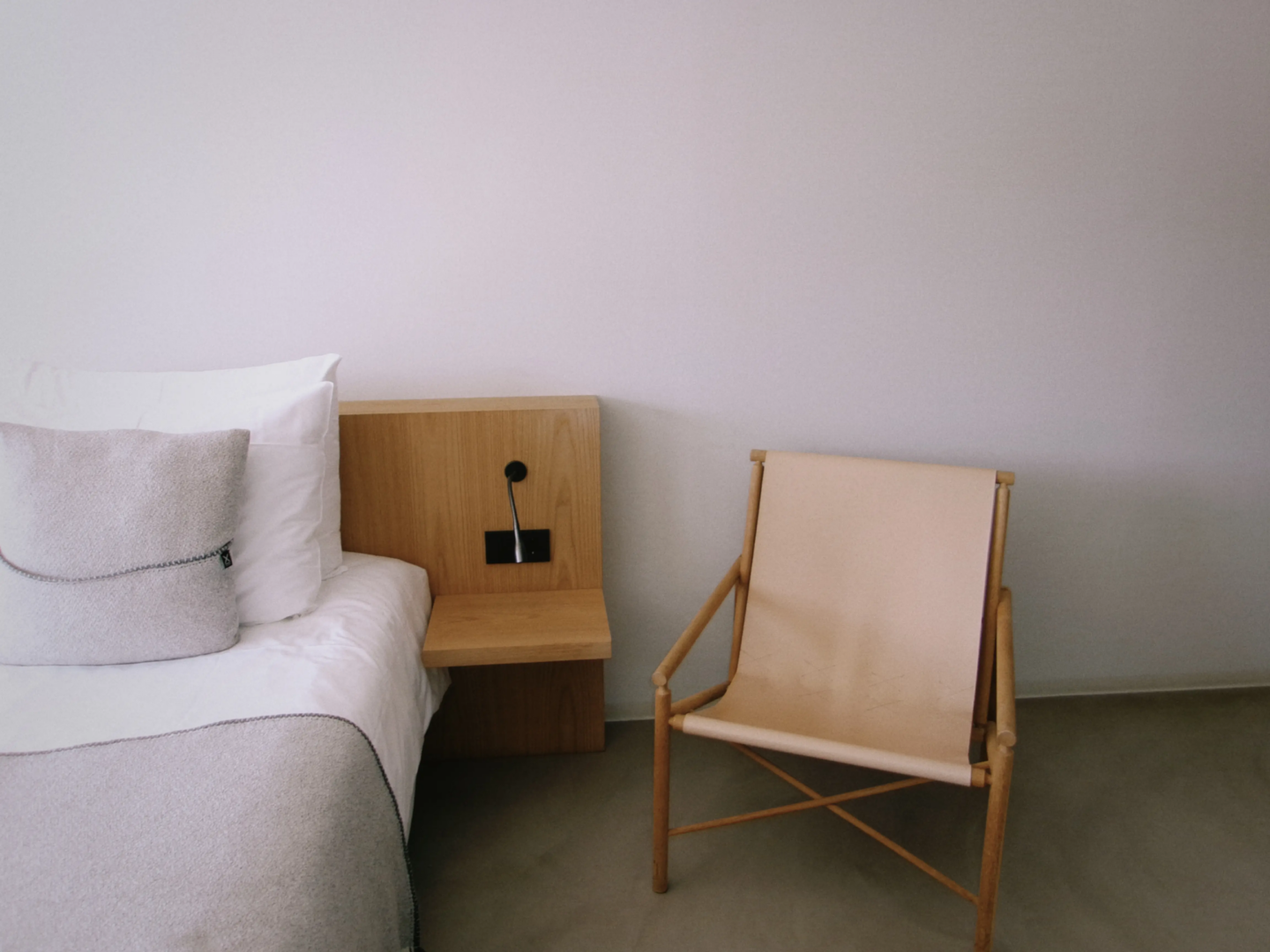
The rooms avoid a literal interpretation of Alpine domesticity. Rather than reproducing the appearance of a traditional farmhouse, the interiors work with regional materials through a contemporary vocabulary. Wood retains its grain, stone introduces a mineral texture, and glass defines the boundary between the room and the outdoors.
Minimalism here concerns the distribution of attention. With fewer decorative elements, the quality of individual materials becomes more apparent. The depth of a window, the junction between two surfaces and the transition to a loggia contribute to the character of the space.
The hotel’s elegance emerges through proportion, material selection and the organization of the rooms rather than through ornament. The mountain view is not an accessory to the interior. It remains an independent presence, framed by the architecture and altered by weather, season and light.
History and Family Management
The Schgaguler family opened the property in 1986 as a guesthouse for hikers and cyclists. In 2016, Peter and Tobias Schgaguler took over the business and initiated the transformation that led to the present hotel.
The renovation marked a change in the property’s architectural identity, while the business remained connected to its original setting. Its family management brings together different areas of work, including guest reception, creative direction, restaurant operations and outdoor activities.
Gottfried Schgaguler organizes excursions in the surrounding mountains, while Sandra Schgaguler oversees the restaurant and its wine pairings. Peter and Tobias contribute to the hotel’s management and development.
The family’s role is best understood through the daily operation of the property. Architecture determines the spaces in which guests stay and gather; management shapes how those spaces are used. Knowledge of the region also informs the practical organization of outdoor activities, from choosing routes to accounting for seasonal conditions.
This continuity connects the hotel’s contemporary design with a business established around mountain travel. The property has changed in form, but its relationship with the surrounding territory remains central to its operation.
Exploring the Alpe di Siusi and the Sciliar in the Dolomites
The Alpe di Siusi extends across a high plateau beneath the limestone peaks of the Dolomites. Its meadows, mountain pastures and walking routes change with the seasons, while the Sciliar provides one of the area’s defining profiles.
The landscape offers different ways to move through the region. Walking routes cross open meadows and connect mountain huts; more demanding excursions involve changes in elevation and exposure. Conditions vary with weather and season, making local knowledge relevant to the choice of route.
The hotel’s position provides access to this wider territory. Guided excursions organized by Gottfried Schgaguler connect the guest experience with the practical realities of mountain travel. The distinction between looking at the mountains and moving through them is significant: the first depends on a view, the second on distance, terrain and physical effort.
South Tyrolean Cuisine, Regional Wines and Alpine Food Culture
South Tyrolean cuisine reflects the region’s position between Alpine and Italian food cultures. Local ingredients and traditional recipes coexist with Mediterranean influences, forming a culinary landscape shaped by geography and historical exchange. At Schgaguler Hotel, this relationship extends from the kitchen to the architecture of the restaurant.
Sandra Schgaguler oversees the restaurant and its wine pairings. South Tyrol’s vineyards span different elevations and exposures, conditions that contribute to the character of the region’s wines.
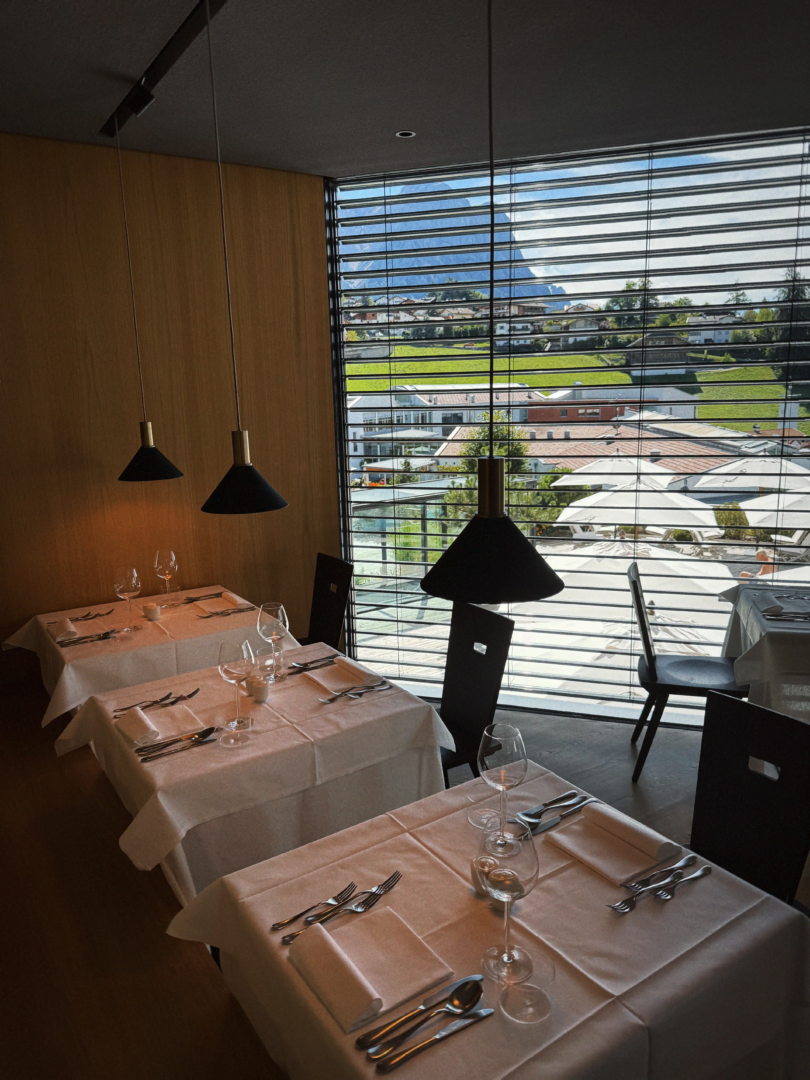
The restaurant’s interior draws on another aspect of Alpine culture. Wooden alcoves reinterpret the Stube, the traditional room of the farmhouse, historically conceived as a place for gathering and shared meals. Its sense of enclosure is retained, while its expression is stripped of historical ornament and incorporated into a contemporary setting.
The relationship between regional references and contemporary design follows the same approach found throughout the hotel. Tradition is not reproduced as an image, but reconsidered through materials, spatial arrangements and everyday practices. In the restaurant, this approach brings together the architecture of the dining room and the culinary culture of South Tyrol, connecting both to the region without reducing its identity to a familiar Alpine aesthetic
Cycling in the Dolomites: Sellaronda and the Mountain Passes of South Tyrol
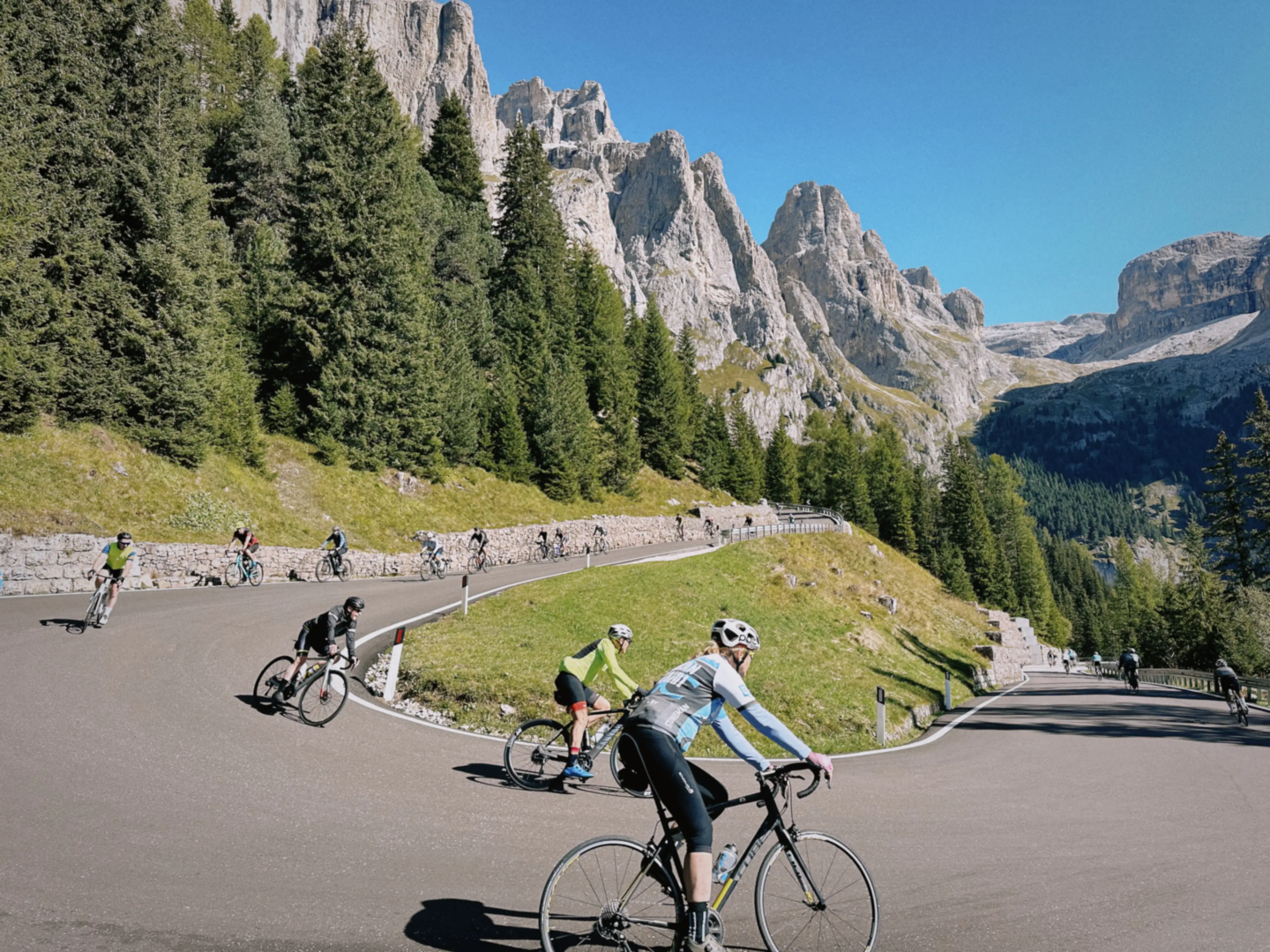
The relationship between Schgaguler Hotel and the Dolomites extends beyond the landscape framed by its windows. Cycling provides another way to encounter the region, following roads that connect valleys and cross mountain passes. The hotel’s cycling offer includes the Sellaronda, alongside routes over Passo delle Erbe and Passo Carezza. Distances and elevation gains vary, making the terrain itself part of the experience.
The Sellaronda follows a circuit around the Sella massif, crossing four passes: Gardena, Campolongo, Pordoi and Sella. The hotel’s proposed tour covers approximately fifty-four kilometers, with an elevation gain of around 1,780 meters. The road traces the contours of the massif, linking the valleys through a sequence of climbs and descents.
Sellaronda Bike Day offers a different way to ride the same mountain landscape. The event temporarily closes the four passes to motorized traffic, allowing cyclists to complete the circuit without ordinary car and motorcycle traffic. It is noncompetitive, with no official rankings or timed finish. Participants experience the route at their own pace, with the road becoming a shared space for cycling rather than a passage between destinations.
The distinction between a cycling tour and the Bike Day is relevant. One involves planning a route through the mountain passes; the other changes access to those roads for a specific day. Both make the topography central to the experience, from the sustained effort of the climbs to the changing perspective on the peaks during the descents.
At Schgaguler, cycling belongs to a wider approach to the Dolomites. Architecture establishes a relationship with the landscape from within; walking and cycling extend that relationship into the terrain. The hotel becomes a point of departure, while the mountains determine the direction, distance and pace of the journey.