How Vestigia Looks Beyond Collectible Design and Into Its Making
At Villa Marie in Tuscany, twenty-two designers bring marble, recycled materials and the production network of Pietrasanta into their work.
Contemporary Design at Villa Marie
At Villa Marie in Vorno, near Lucca, twenty-two designers and studios examine contemporary design through materials and production. The second edition of Vestigia, Don’t Call Me Collectible!, opened on July 5 and remains on view until September 26, 2026. Around half of the works were produced specifically for this edition.
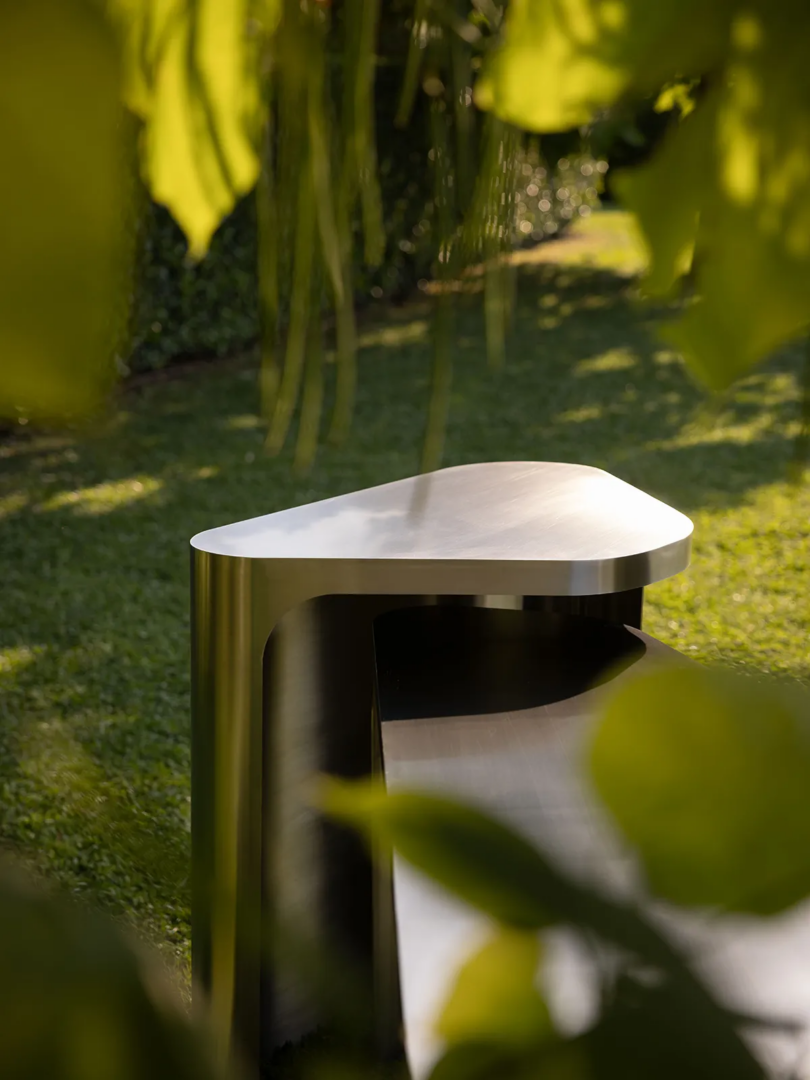
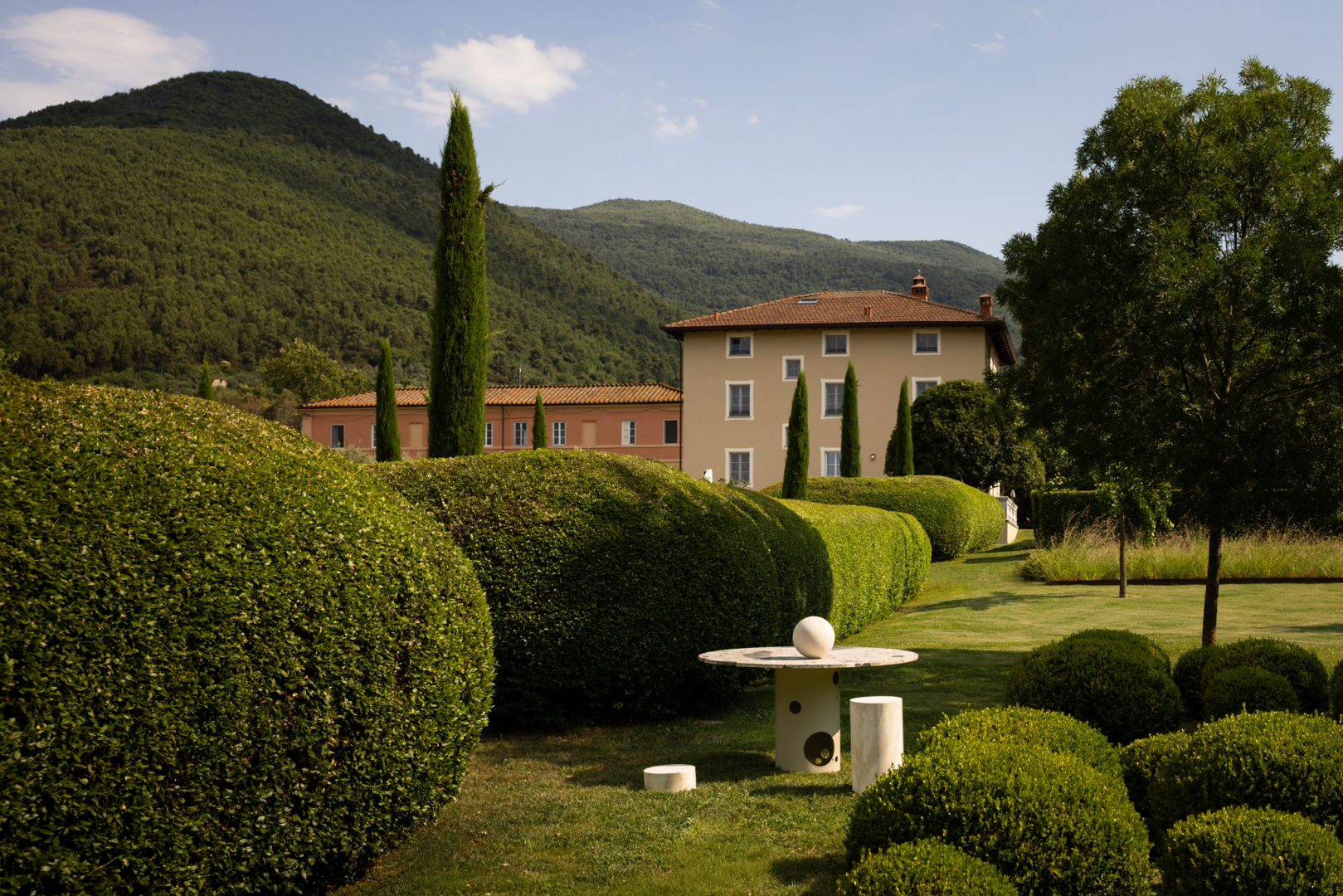
The exhibition occupies the villa and its gardens rather than a sequence of individual booths. Works appear across rooms, outdoor spaces and the property’s lake. Their position changes the relationship between the object, the architecture and the surrounding landscape.
Villa Marie and the Relationship Between Design and Place
The choice of Villa Marie is part of this structure. The property hosted the first edition of Vestigia in 2025, Design in a Real World. Curated by Jonathan Bocca, the exhibition brought together Bunker Gallery with a project by Ilaria D’Atri, Jonathan Bocca, Cosimo Bonciani, CCONTINUA+MAMT, Finemateria, FMM Design, Pietro Franceschini, Duccio Maria Gambi, Daniele Giannetti, Costantino Gucci, IAMMI, Millim Studio, Movimento Gallery and Sara Ricciardi.
Returning to the same location gives the second edition a physical continuity while allowing the project to expand its production network. The works are encountered according to their position within the property. A piece in the garden is seen through vegetation and open space, while a work near the lake responds to water and reflection. Objects placed inside the villa enter a different relationship with its architecture.
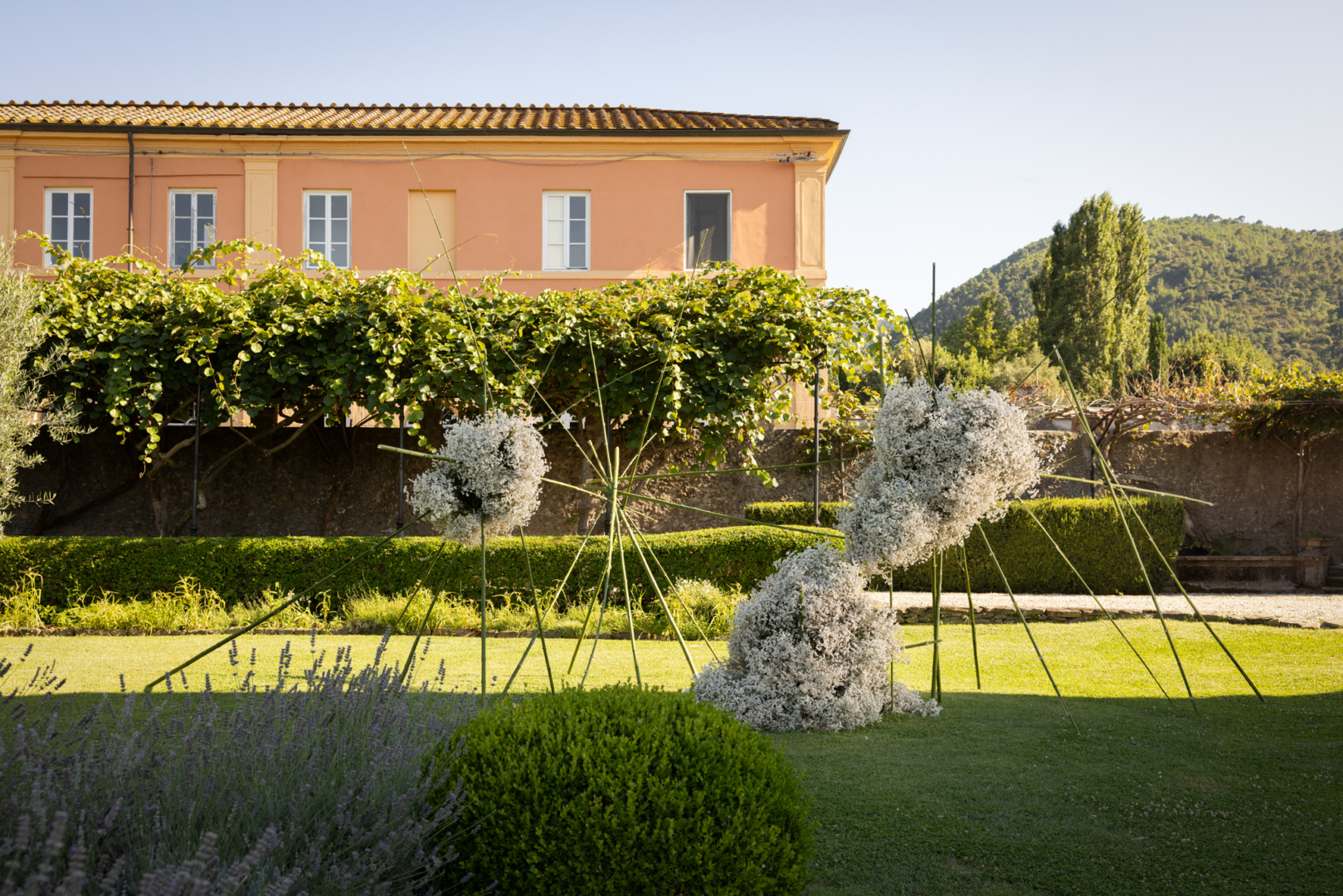
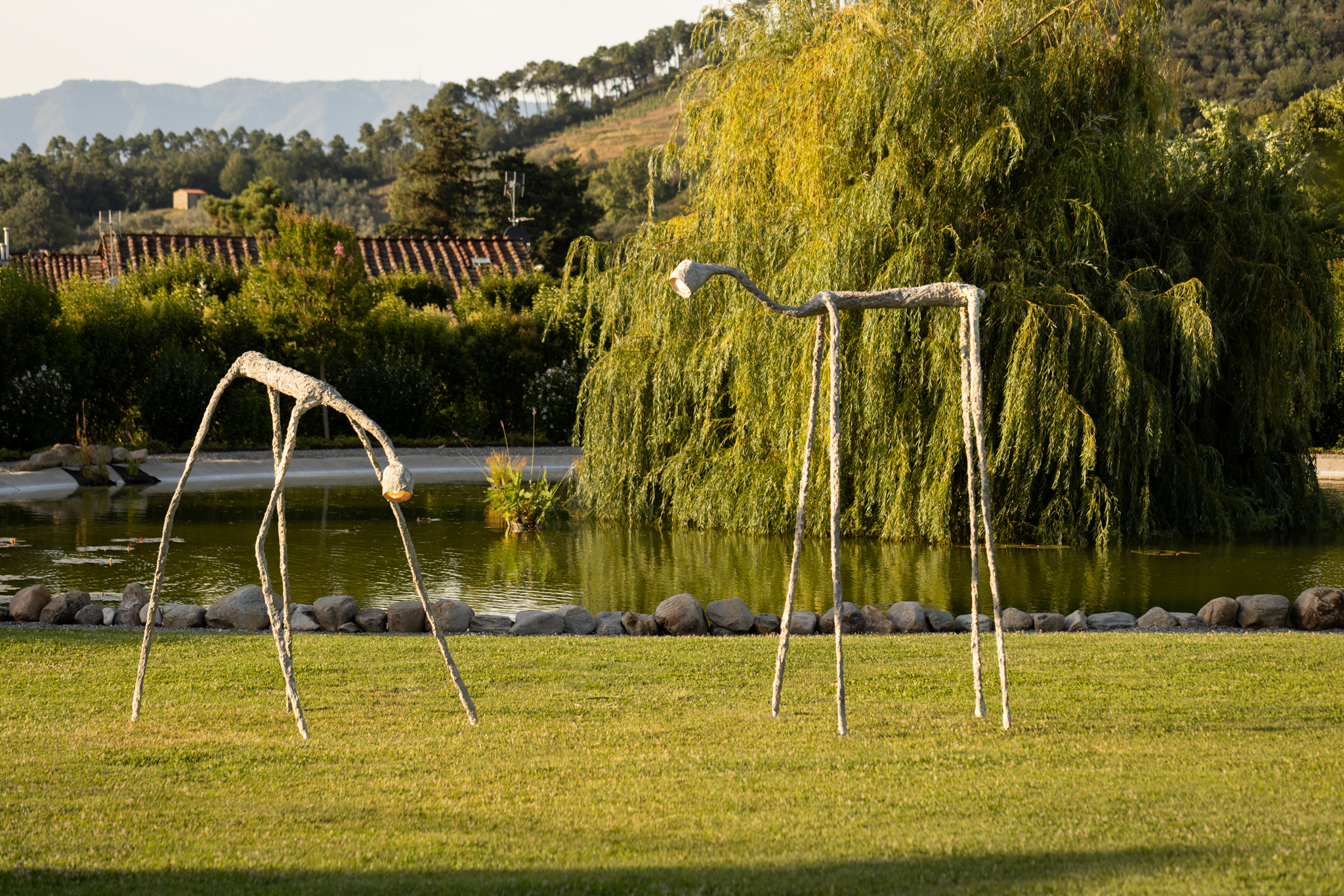
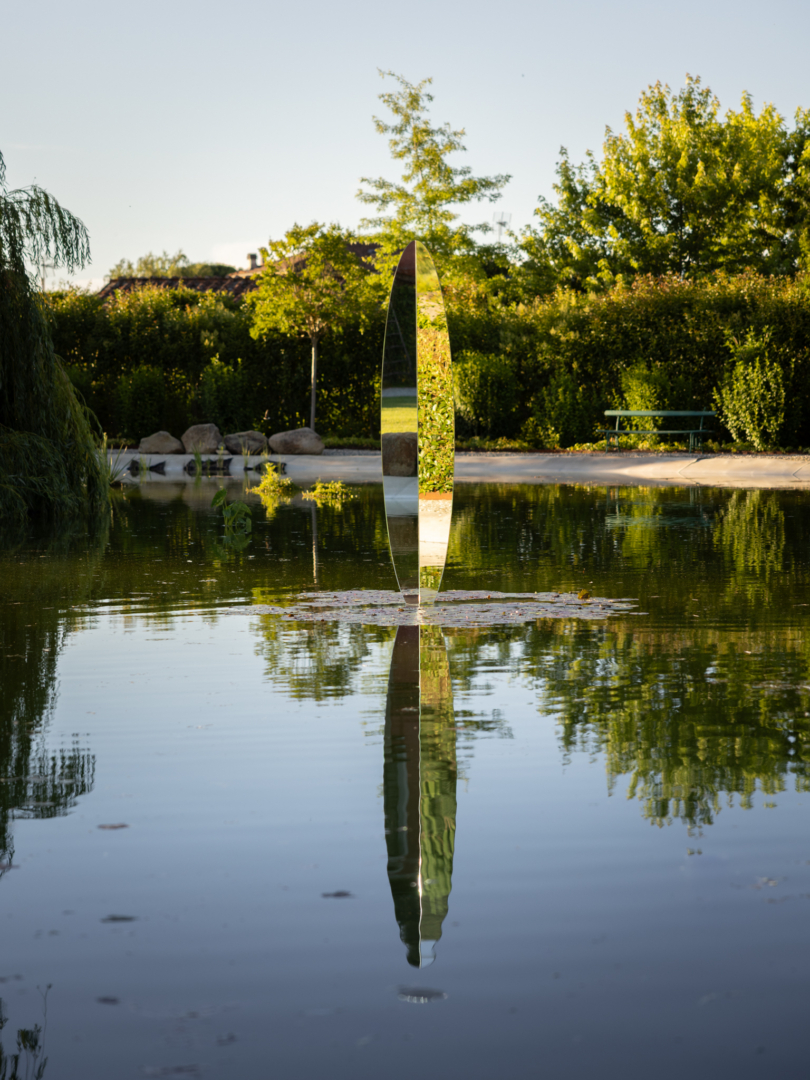
This is visible in two works by participants who are also involved in the development of Vestigia with curator Cosimo Bonciani. Jonathan Bocca’s Silenti was conceived for the gardens and uses Geolite for a group of figures positioned across the grounds. Costantino Gucci’s Altera occupies the lake, where its reflective surface incorporates elements of the surrounding landscape into the work. The two installations use the same property in different ways. Bocca works with movement through the garden, while Gucci works with reflection and water. Two pieces from the wider Forma Urbis series, presented at the second edition of Vestigia at Villa Marie, draw on Giovanni Battista Piranesi’s representations of Rome. Conceived as modular fragments with irregular geometries, the works move away from the orthogonal logic that usually structures furniture and interior space, giving the objects a more sculptural presence.
The Designers and Studios in This Edition
The exhibition brings together Bunker Studio, Costantino Gucci, Duccio Maria Gambi, ETEREO, Filippo Mannucci, Francesco Doria, Francesco Maria Messina, IAMMI IAMMI, Jacob Egeberg, Jonathan Bocca, Laurids Gallée, Leonardo Cappellini, Millim Studio, Moneyless, Nèeměsi, Older Studio, Shepherd Studio, TABLEAU x Bloc Studios, TERRÆSTUDIO, Tips Studio, Tommaso Pardini and Tommaso Spinzi.
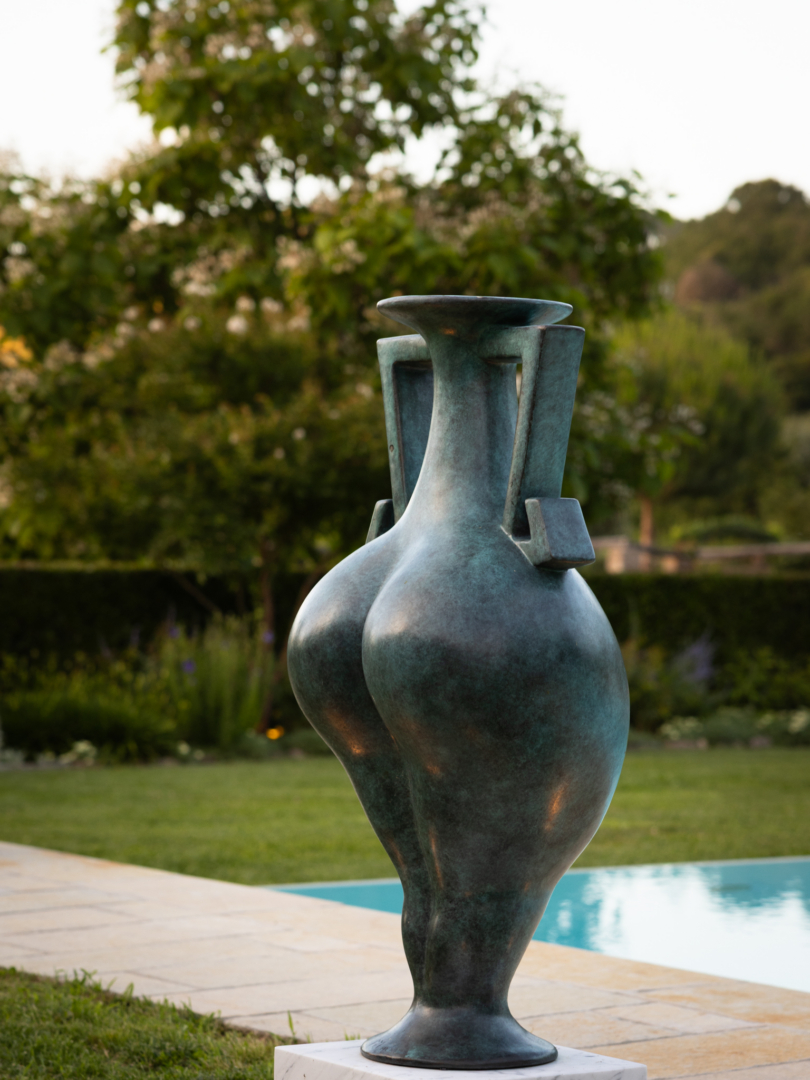
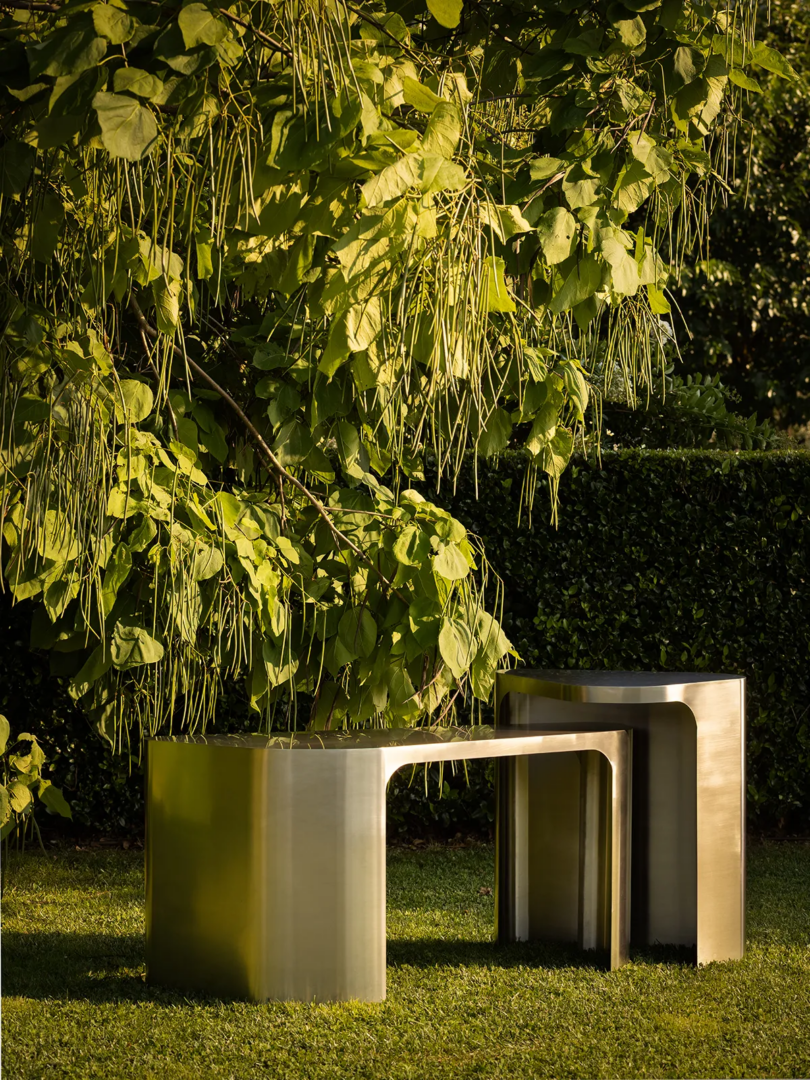
Their practices move between furniture, sculpture, architecture and installation. The materials range from marble and onyx to steel, glass, bronze and recycled industrial materials. Vestigia does not organize the participants by material or production technique. Instead, different approaches occupy the same physical environment. The common point is the transition from an idea to a physical object, and the negotiation with the materials and techniques required to produce it.
Pietrasanta, Marble and the Production Behind the Works
The geography of Vestigia extends from Vorno to Pietrasanta, in the Versilia area. The town and its surrounding territory have a production history connected with marble, bronze, sculpture workshops and related forms of fabrication. For the exhibition, this network provides access to workshops and technical expertise. Several works were produced in Tuscany even when their designers are based elsewhere.
The territory enters the project through production rather than representation. A designer does not need to reproduce the Tuscan landscape for the region to affect a work. Its influence can begin with the material available in a workshop, the dimensions of a stone block or the technique used by a manufacturer.
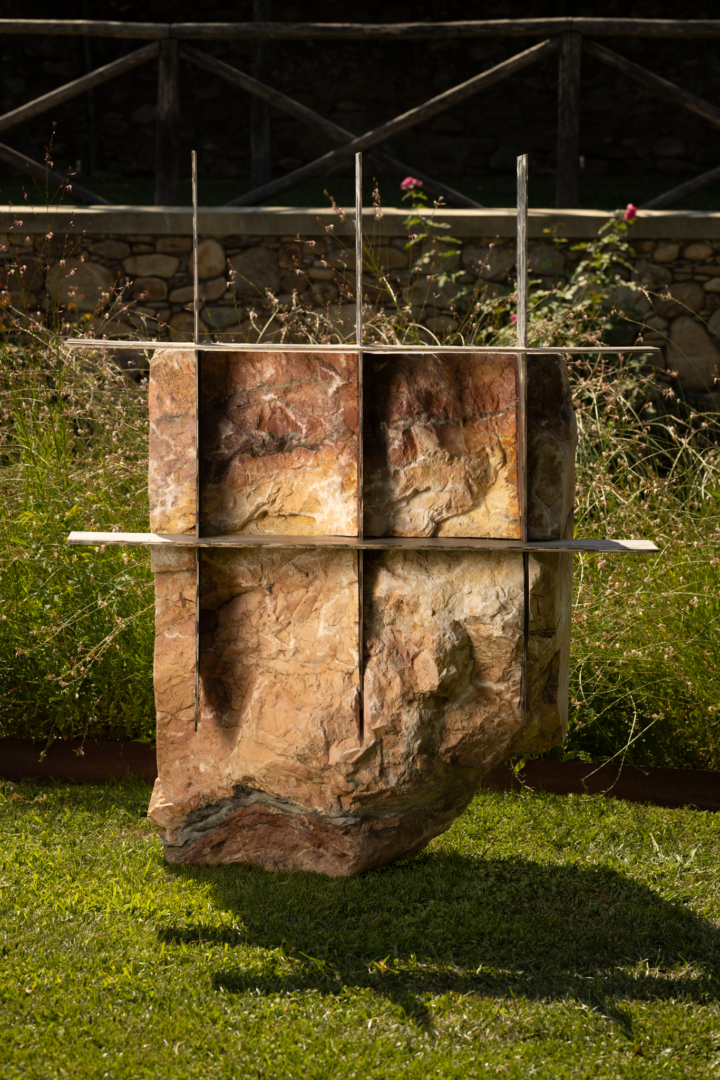
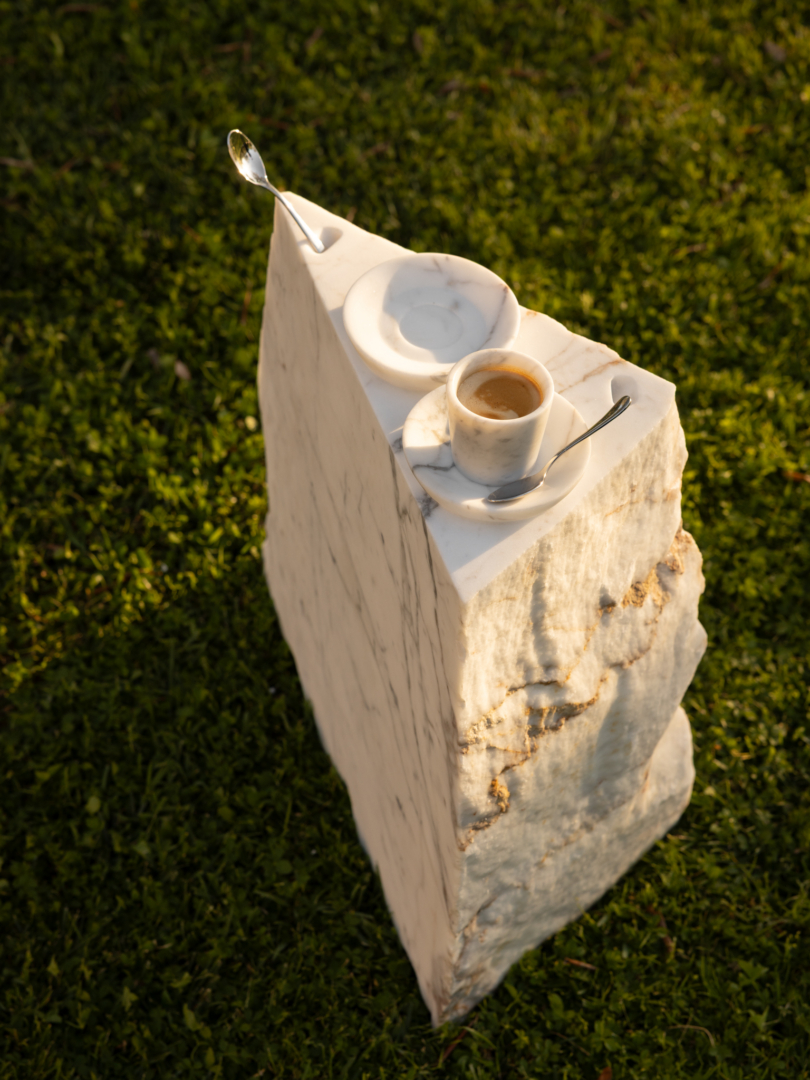
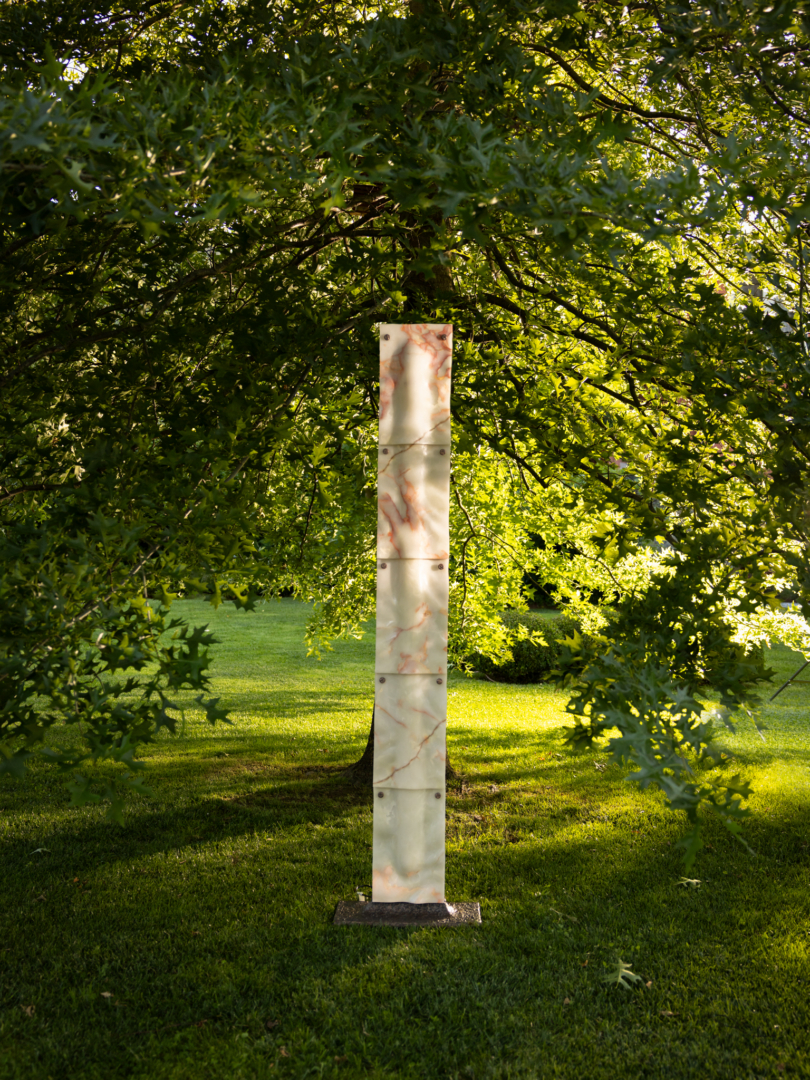
Several works make this relationship visible through marble. Francesco Doria’s The Coffee Break uses Carrara marble for a coffee service, while Francesco Maria Messina’s RUDIS combines Breccia Medicea dell’Acquasanta with steel. TABLEAU x Bloc Studios present Isole, made with marble and onyx. ETEREO’s Medusa also uses marble, while Laurids Gallée works with the material in Morph Horsies.
The works approach stone through different functions and processes. For Doria, marble enters an object associated with coffee and domestic use; Messina combines it with steel, while TABLEAU x Bloc Studios work with marble and onyx. ETEREO investigates the material through a different formal approach.
Marble has a specific weight, structure and method of fabrication. The block available to a designer can determine the dimensions of a work. Cutting and finishing require particular techniques. The material can alter the design during production, leaving the final object with the consequences of decisions made in the workshop.
This relationship extends through OUTSIDERS, a residency created with LABottega in Pietrasanta. The program brings designers into contact with local production and gives them time to develop projects within that environment. The workshop becomes part of the development rather than a destination reached after the design has been completed.
A technical constraint can alter a form, a material property can change a construction and a manufacturer can introduce another way of solving a problem. The final object can therefore contain decisions made during fabrication.
Reused and Industrial Materials in the Exhibition
Other works begin from materials that arrive with an existing function. Tommaso Pardini’s UFOs — Unfunctional Fictional Objects uses styrofoam previously employed in exhibition structures. Pardini reshapes the material and changes its surface, beginning with something that has already served another purpose. Its previous use forms part of the production history.
Nèeměsi’s 11.07 Violet Coffee Table, developed with Movimento Gallery, combines travertine with a hand-bent recycled metal structure. Two materials with different histories enter the same object, requiring different processes and production conditions.
Placed alongside the marble works, these pieces expand the question of material without creating a separate category for reused or industrial materials. A block of marble presents one set of conditions. Previously used styrofoam presents another. Recycled metal introduces a different production sequence. In each case, the material influences the route toward the finished object.
What Vestigia Means by Research Design
Vestigia describes this approach through the term “research design.” The expression places experimentation and production alongside the finished object. The stages that precede the final piece remain relevant once the work enters the exhibition.
This matters in the context of collectible design because the market often reduces an object to a concise set of information: designer, edition, gallery, material and price. Those elements establish the object’s position after production. They do not necessarily describe the work that took place before it.
A piece can require tests, prototypes, changes in scale, different materials or adaptations made during fabrication. Those decisions can involve manufacturers and craftspeople whose contribution does not appear in the final label.
Vestigia gives that process a place within the exhibition. The title Don’t Call Me Collectible! follows the same logic. It does not dispute the fact that the objects can be collected. It questions whether their market category provides a complete description. The exhibition places the production history beside the finished work.
How Vestigia Developed from Its First Edition
Vestigia began at Villa Marie in 2025 with Design in a Real World. The first edition established the property as a setting for contemporary design outside the conventional trade-show structure, connecting designers with the Tuscan territory and its production culture.
In 2026, the group expands to twenty-two participants, including designers from Italy and abroad. The connection with Pietrasanta also becomes more explicit through production and the OUTSIDERS residency.
The development is therefore not only a question of scale. The first edition established the relationship between objects, Villa Marie and the Tuscan territory. The second extends that relationship into production through the workshops and the residency in Pietrasanta, while the exhibition remains concentrated at Villa Marie.
The Production Behind the Design Object
At Villa Marie, the finished object remains connected to the conditions of its making. Marble, recycled metal and reused styrofoam carry different production histories, while works developed for the gardens or the lake remain tied to the site that shaped them.
The same applies to the relationship between designers and manufacturers. A material can impose a dimension, a production technique can require a change in form, and a workshop can introduce a solution that was not present at the beginning of the project. These decisions become part of the object even when they are no longer visible as separate steps.
Vestigia places these conditions alongside the finished works rather than treating them as stages that disappear once production is complete. The object remains the point at which materials, research, fabrication and place meet. It is complete, but its making remains part of the way it is encountered.
Photography by Dario Borruto