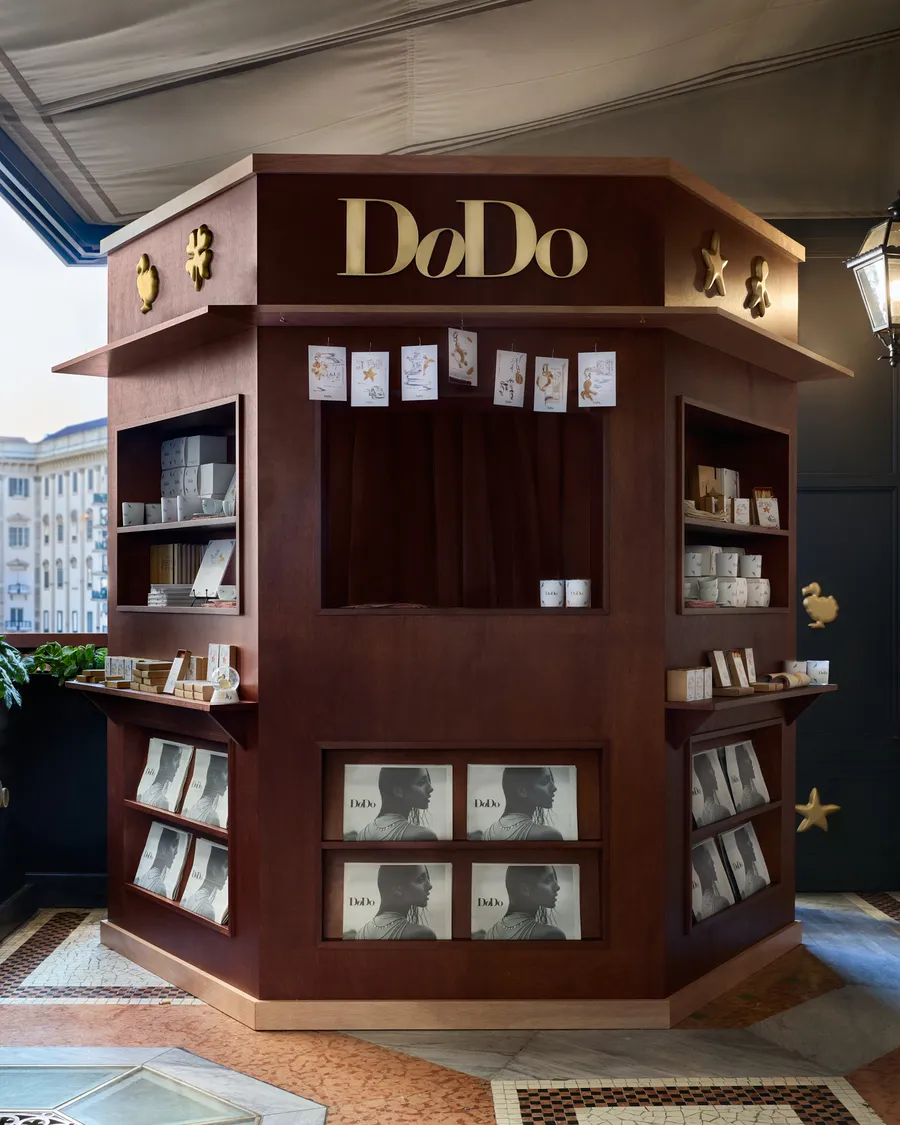
From cotton cord to gold, DoDo redraws the hierarchy of materials
DoDo enters a new chapter with its 2026 campaign, photographed by Bryan Liston and starring Yasmin Wijnaldum, while continuing its exploration of material contrast, modularity and personalisation
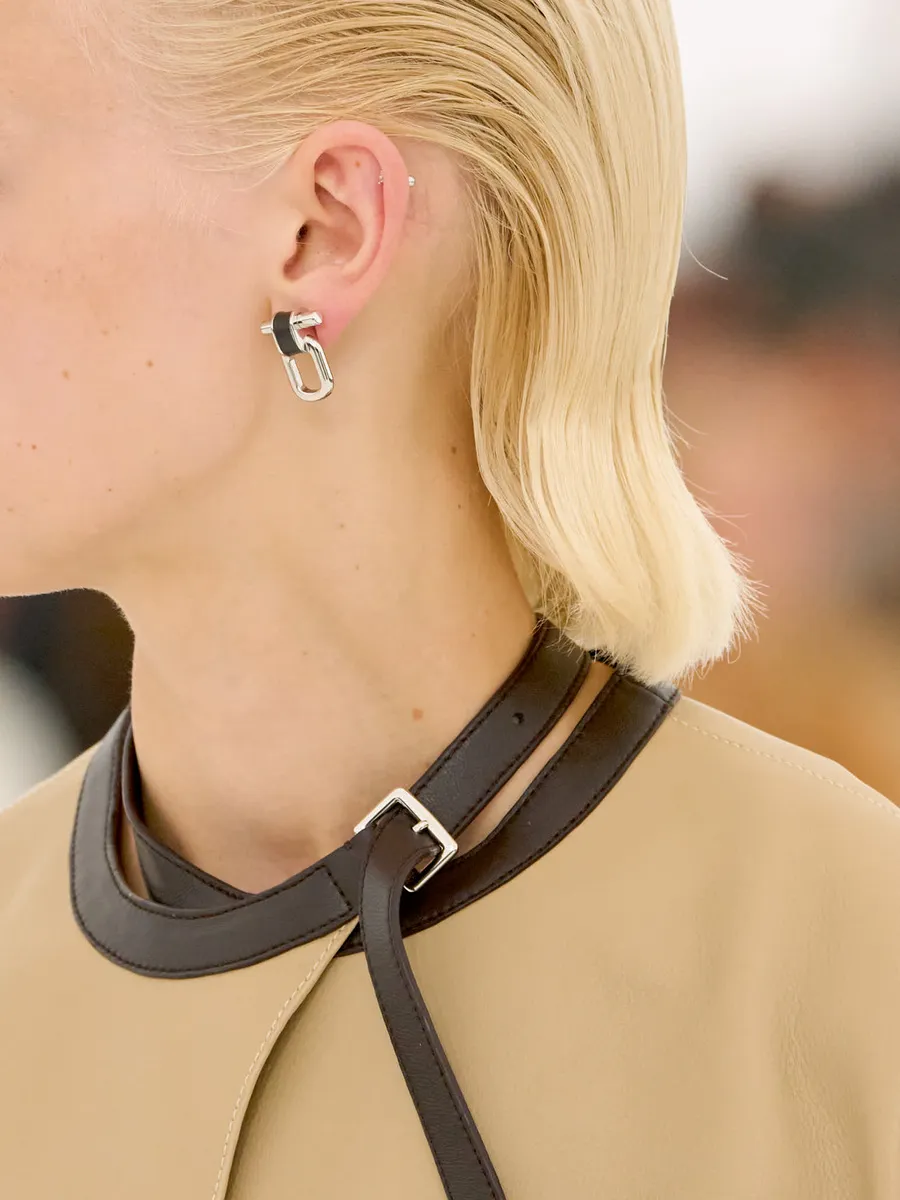
There is one element that holds all the others. The cotton cord: it closes with a knot. Where traditional jewellery has a clasp and a fixed length, here there is a gesture that can be undone. The knots allow personalisation, and allow the same bracelet to be worn in another way the following day. Along the cord sit the components, and their forms come from the way minerals accumulate: the grain of sand and the nugget, the shapes a material has before anyone works it. The cord can cross them, and so can a chain in silver or gold.
The charms have a form of their own: rounded edges, a full volume, a surface without corners. It is a domestic shape, closer to an object used every day – like a soap bar – than to a jewel kept in a case. Here the democratisation of jewellery becomes material: the purity of one gram of gold meets a common cotton cord, and from that encounter come infinite ways of wearing. Those are the elements the 2026 campaign puts back at the centre.
DoDo 2026 campaign: Bryan Liston, Yasmin Wijnaldum and the return of the charms
Per dire DoDo, to say DoDo. That is the title of the 2026 campaign with which the Milanese house opens a new chapter, in its creative choices as well. The photographs are by Bryan Liston, the protagonist is the model Yasmin Wijnaldum. Colour disappears: the images are in black and white, the set is a natural landscape of sea, wind, rock and open horizons. What remains is the piece of jewellery and the body wearing it.
At the centre of the campaign are the icons that have defined DoDo since the beginning: the star, the moon, the four-leaf clover, the octopus, the teddybear, the dodo. Each comes with a message and is conceived as a personal symbol, before it is an ornament. It is a return to the brand’s original alphabet, the one of charms to combine, accumulate and interpret. To understand how that alphabet has changed over the years, though, you have to look at what it is made of.
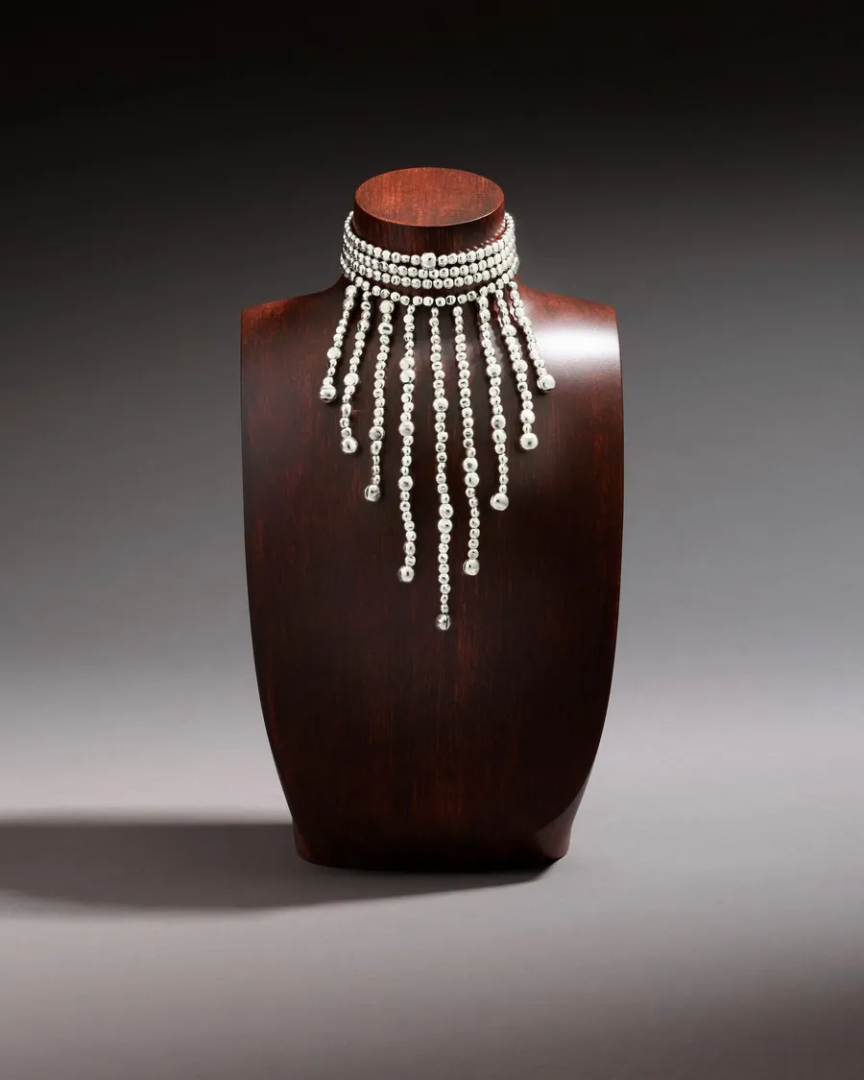
The materials of DoDo jewellery: gold, silver, ceramic, malachite, precious stones
Before the form, before the drawing, before the idea of a piece of jewellery, there is only material. A metal, a stone, an enamel. Elements to be extracted, melted, modelled, smoothed, polished. In some cases the finished piece stays far from the idea of a precious object with a settled form, the one we are used to.
This is the territory DoDo has worked in for more than thirty years. Founded in Milan in 1994 inside the Pomellato group, the brand started with gold charms weighing one gram. The charms could be combined, accumulated, interpreted. Jewellery became an open system.
The personal grammar of the object itself has changed along with the materials. Gold is still there, and so are silver and diamonds, and beside them stand ceramic, malachite, and precious stones: tsavorites, topazes, rubies, sapphires. They change the weight, the surface, the perception of the object.
DoDo gold and the Kering Precious Material Platform: where the material comes from
The birth of DoDo, part of Kering since 2013, belongs to the democratisation of luxury jewellery: gold becomes an everyday thing, and the provenance of the material has become part of the project too. Most of the gold comes through the Kering Precious Material Platform; the rest from suppliers that meet the requirements of the Responsible Jewellery Council Chain of Custody certification.
It is a step that describes a wider transformation, one that touches much of contemporary jewellery. The material now begins before the workshop: its story starts in the mine or in the recovery chain, in the certification systems, in the refining processes. The finished piece is the last stage of a longer road. Gold, which remains the material that carries the idea of preciousness, is one protagonist among others. It is quoted every working day, and the charm made from one gram carries that quotation, the work and the setting. The cord that holds it is cotton: it costs a fraction of what hangs from it, and it is replaced without a jeweller.
Ceramic and malachite in DoDo jewellery: the cameo clover and the heart pendant
In the DoDo catalogue the precious metals — gold, and the more accessible silver — take on new life through combinations that can be daring. Ceramic appears in the cameo four-leaf-clover pendant, where the clover rises against a flat ground and the technique of the cameo passes into a fired material. Malachite belongs to another family. It is a copper carbonate, and the green is the copper; the banding records the order in which the mineral was laid down. At 3.5 on the Mohs scale it is soft enough to be marked by a key, which rules out faceting: it is cut as a cabochon. In the heart pendant the cut runs so that the banding crosses the curve, and no two pieces repeat.
Diamonds, tsavorites, topazes, rubies and sapphires: the stones DoDo sets
The stars worn in the campaign are set with diamonds. Beyond them the charms carry tsavorites, the green garnet of East Africa, and topazes, rubies, sapphires. In the coloured stone the criterion shifts: what counts is tone, saturation, the way the cut holds the light. A tsavorite and a ruby on the same cord ask to be chosen by eye. Between malachite at 3.5 and diamond at 10 there are six and a half points of the scale, and they sit on the same cord. The question stays the one that runs through the catalogue: how much does the meaning of a material change when its destination changes?
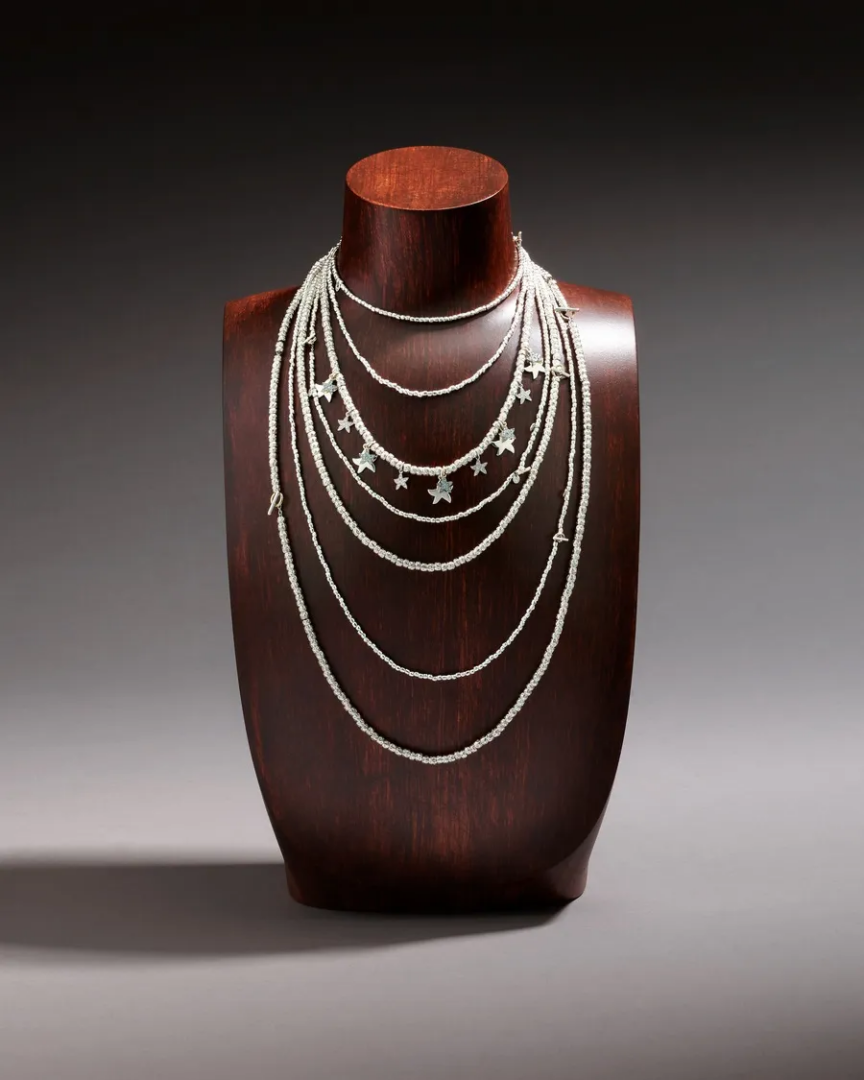
DoDo Granelli: the sand of Mauritius becomes form
There is one more point from which to look at this relation, and it is the furthest back in time: Granelli, one of the founding DoDo collections, which the brand launched in 1994 alongside the first charms, drawn from the sand of the beaches of Mauritius. The name evokes sand, and the irregular forms of the pieces are designed to recall surfaces smoothed by wind and sea. Granelli exists in gold and silver. It returns in the 2026 campaign, beside the icons and the Pepite collection.
The collection comes from an idea in which material and landscape are already inseparable. The sand is not reproduced literally: the piece becomes a kind of physical memory. It reproduces the behaviour of sand instead of the sand itself: the irregularity, the smoothing, the apparent softness of something made of countless particles. The value of a material lies in more than its rarity. It can lie in its capacity to suggest a form.