The semiotics of jewellery: Jewellery Was Never Innocent in Athens
The Great Design Disaster’s exhibition project draws to a close in the Greek capital. A wide-ranging study that questions – and challenges – the very notion of jewellery.
At Art Athina, the final act of The Great Design Disaster’s three-part project
From 11 to 16 November, during Art Athina (Greece’s leading contemporary art fair), the Ilias Lalaounis Jewellery Museum in Athens is hosting the exhibition Jewellery Was Never Innocent. It is the third and concluding chapter of a project that set out in August on Patmos, continued in Milan through September and October, and has now come to rest in the Hellenic capital. Through the creations of dozens of creatives of varied origins and training, the show sets out to probe the ontological status of so-called precious objects. As the title implies with its allusion to an unattainable “innocence”, a piece of jewellery is never neutral or static; it is, rather, a collector of notions that point to disparate realms, from custom to semiosis, from fashion to culture in the broadest sense. Hence its placement within the Athenian institution, custodian of more than 4,000 jewels and related artefacts, including those of the master goldsmith after whom the building is named, who died in 2013.
Creatives from different fields turn jewellery into an interpretive tool
The rooms of the Ilias Lalaounis thus welcome the works of the makers brought together by Joy Herro through The Great Design Disaster, the platform that curated Jewellery Was Never Innocent. These are creations that question – to the point of challenging and, in some cases, transcending – the boundaries of goldsmithing as commonly understood, positioning themselves at the crossroads of sculpture, ornament and everyday object. Not mere accessories, then, but prismatic signifiers bearing countless, ever-shifting meanings. Not by chance, they all carry the signature of figures from fields such as fashion, décor, architecture, photography and the plastic arts. As Joy Herro had remarked on the subject, “involving people who don’t usually work with precious pieces was a deliberate choice. I wanted to use jewellery as a tool to reflect on broader themes.”
Creations as polymorphous as the bodies that wear them
The starting point of the inquiry is the body, the first and indispensable support of every piece of jewellery. It was on this near-symbiotic relationship that the exhibition’s first act, held at the Patmion Cultural Center on Patmos from 18 to 23 August, had focused. What emerged, in Herro’s view, were “interesting questions, not so much about what jewellery is, but about what it does. How does it create value? What kind of relationship does it have with identity, power and memory, as well as with the body?”
For the second stage, the investigation into bracelets, rings et similia had moved to Milan, to The Great Design Disaster’s gallery space on Via della Moscova, from 22 September to 30 October. Here the focus of the show had widened, and new lines of reflection had come into play. In the curatorial text, Celia Claire Phillips had observed that “as an art form, jewellery is anchored in its connection, closeness and interaction with the human body. It interacts with the body, accentuating it, concealing it, extending it, transforming it. The body is its grounding point, its vehicle.”
Physicality, however, is not immutable but, by definition, in fieri: it is forever changing. In the catalogue for the Milan exhibition, the founder of The Great Design Disaster had stated her intention to consider “not the idealised body of fashion imagery or classical sculpture, but the real one. The body that moves, ages, desires, sweats, remembers, performs, and constantly negotiates its relationship with the world around it.”
Pieces of manifold meaning that become an extension of the wearer
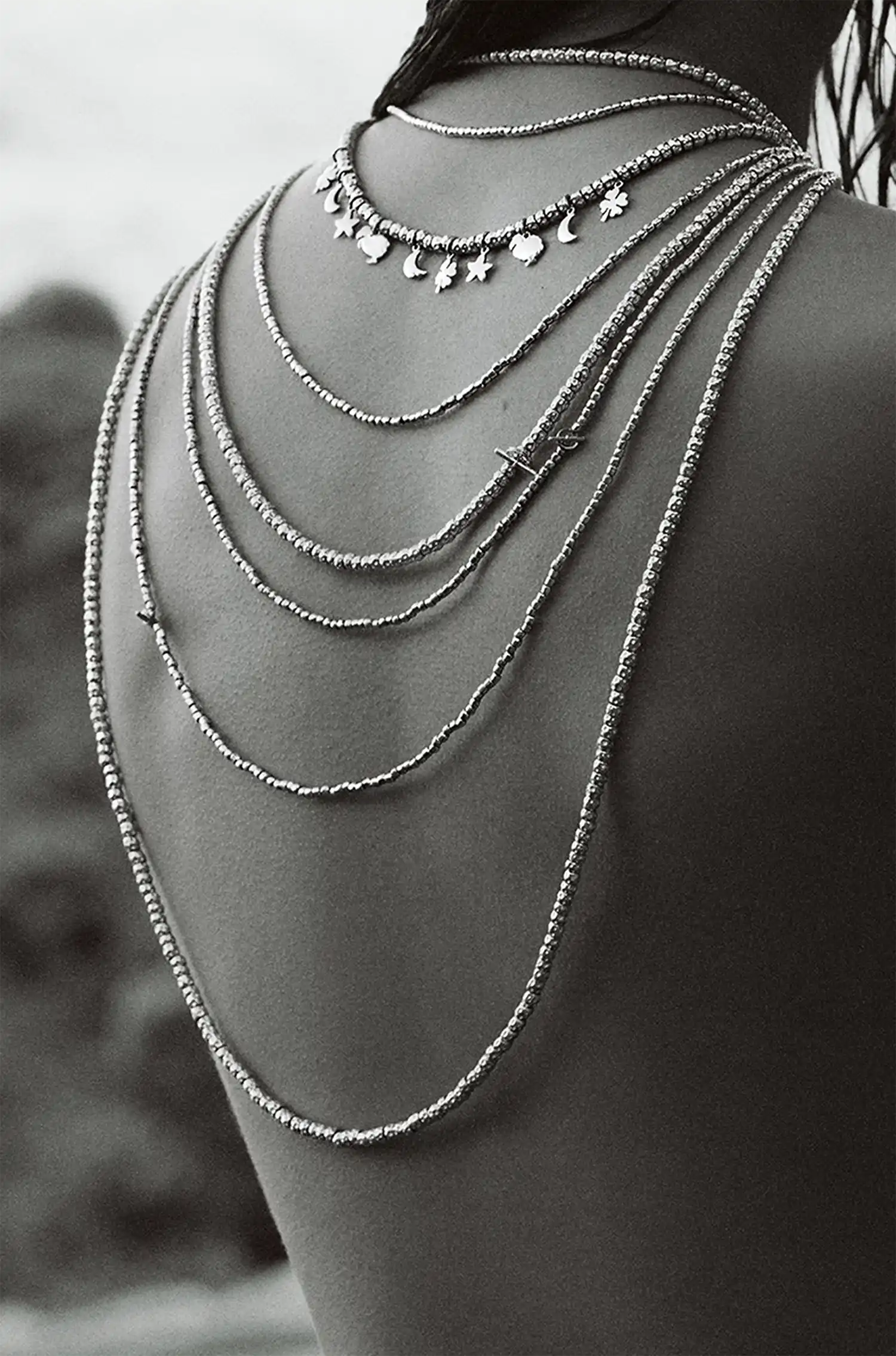
Far from being an ornament for the outfit of the day, earrings, necklaces & co. act as an extension of the self, mirroring that vast being – a container of multitudes, to paraphrase Walt Whitman – that is humankind. Over the centuries, after all, they have served countless functions: tokens of love or markers of power and prestige, magical instruments or media charged with political, social and religious significance. Herro had rightly recalled that “Jewellery has historically carried an extraordinary range of functions. It has signalled wealth, devotion, grief, authority, seduction, love, superstition, resistance, and status. It has acted as protection, disguise, declaration, inheritance, and promise.”
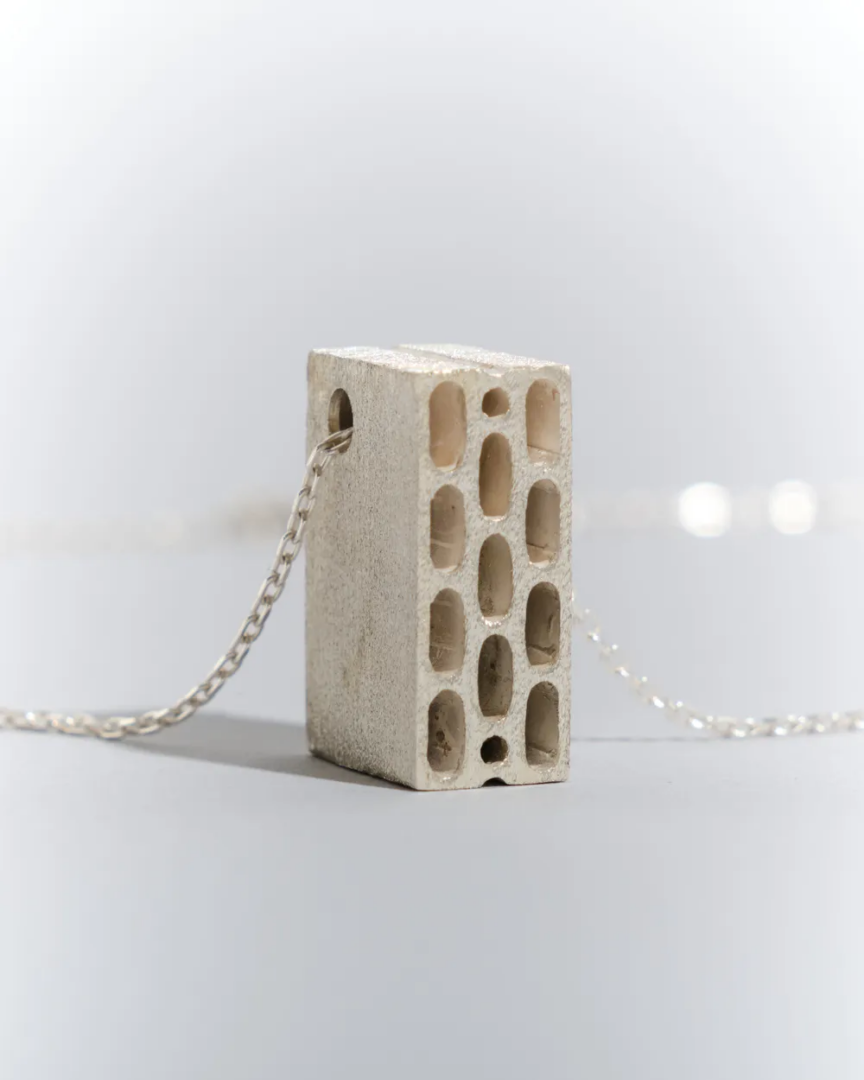
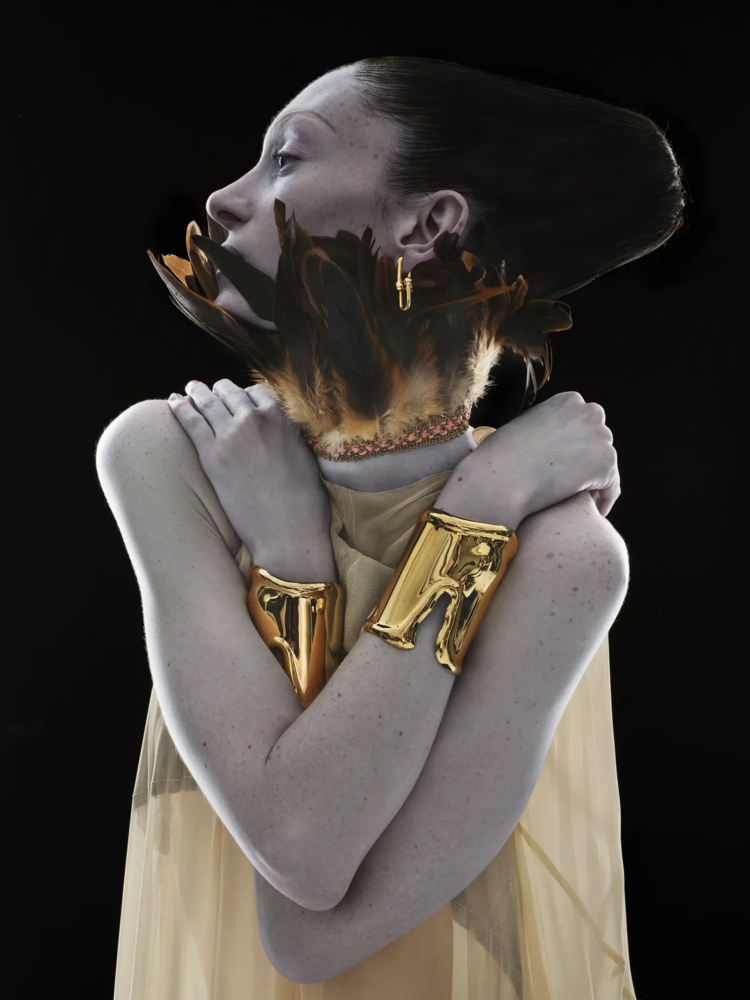
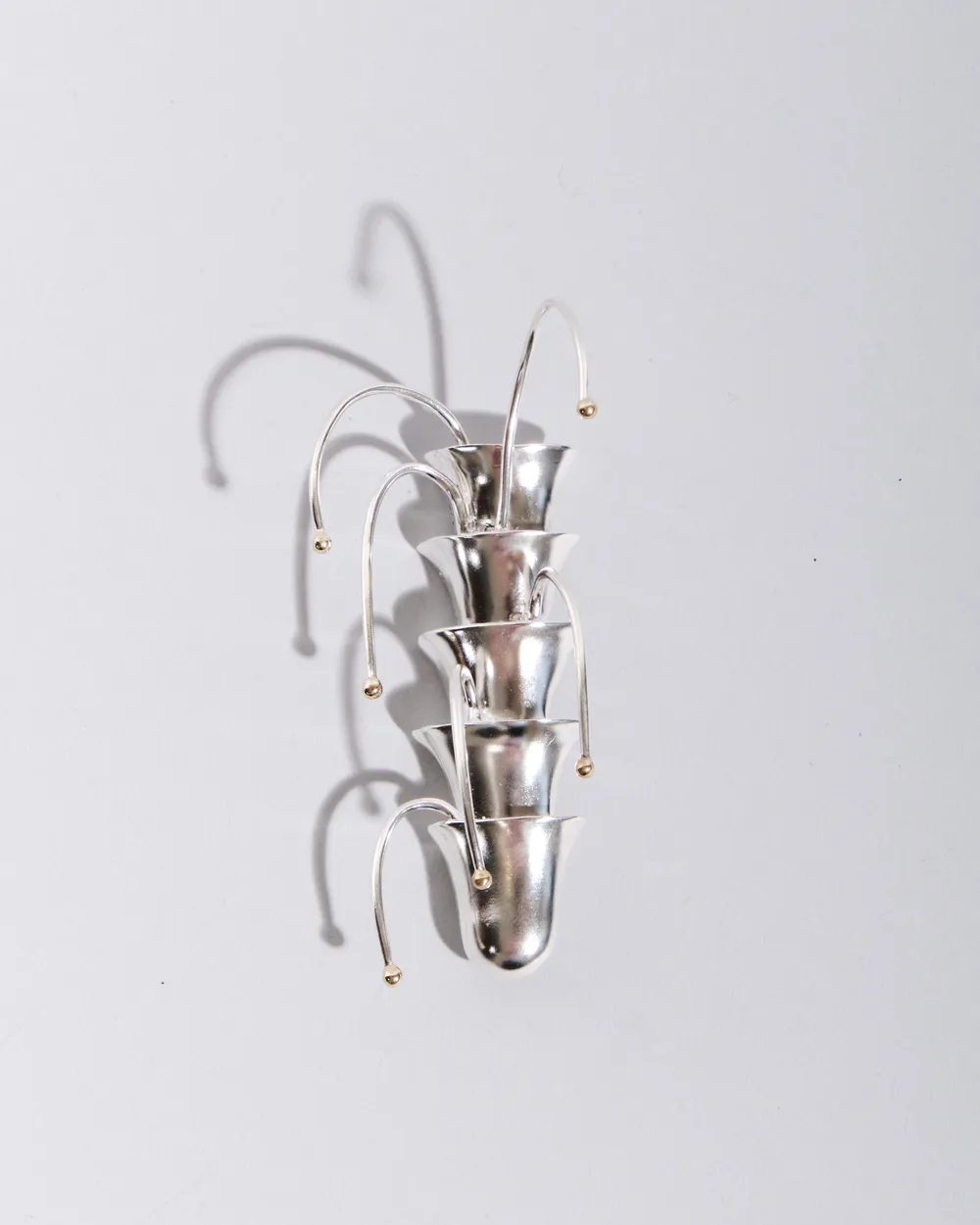
Transferred to people who do not usually work in the jewellery industry, such considerations have generated a body of work as broad as it is polymorphous. The variations on the theme by the professionals of Jewellery Was Never Innocentappeared, and still appear, unorthodox. Herro did not fail to underline the diversity of the proposals: “The works presented here offer no single answer. Some operate as wearable sculptures that alter posture and movement. Others function as relics, traces, devices, fragments, architectural structures, fictional creatures, or material experiments. Some depend on a body to become complete. Others seem to imagine a body that has disappeared altogether.”
The Athens stage of the exhibition questions the very status of jewellery
In the final passage to Athens, the discourse pursued by The Great Design Disaster grows sharper still, thanks in part to the chosen venue: a museum devoted to jewellery, to the artisanal mastery that underpins it, and to its evolution. The question now concerns the very raison d’être of these ornaments which, once estranged from the body and placed behind a glass case, begin to resemble something else entirely. The gallerist, who has Lebanese roots, asks: “Is jewellery defined by its material, its function, its value, its relationship to the body, or simply by someone’s decision to call it jewellery? Does a ring remain a ring if no finger can accommodate it? Can a necklace exist without a neck? When does a wearable sculpture become an unwearable ornament, and who is responsible for the distinction?”
Museums, she goes on, “collect, classify, preserve and explain objects. They give them names, histories, categories and, occasionally, considerable importance. But objects are not always cooperative. Something precious can be made from waste. Something designed for the body can survive perfectly well without it. An ordinary object can become extraordinary simply by changing its context.” Before concluding: “Perhaps jewellery is not a fixed category but a constantly renegotiated agreement between maker, wearer, viewer and institution.”
Architects, artists, designers, image-makers: a diverse body of work
Compared with the two previous stages, the Athens selection is more concise. Pieces by a handful of new names (Argyro Pouliovali of Arp, José María Balmaceda, Rich Aybar, Tiffany Loy, Love from Nubia) sit alongside those already shown on Patmos and in Milan. The body of work, as noted, is diverse – and could hardly be otherwise, given the heterogeneity of the professionals selected by Joy Herro (who, for her part, had tried her hand at creating Alchemy, a steel ring set with Swarovski crystals and fitted with a secret compartment, reminiscent of the poison rings once worn by aristocrats).
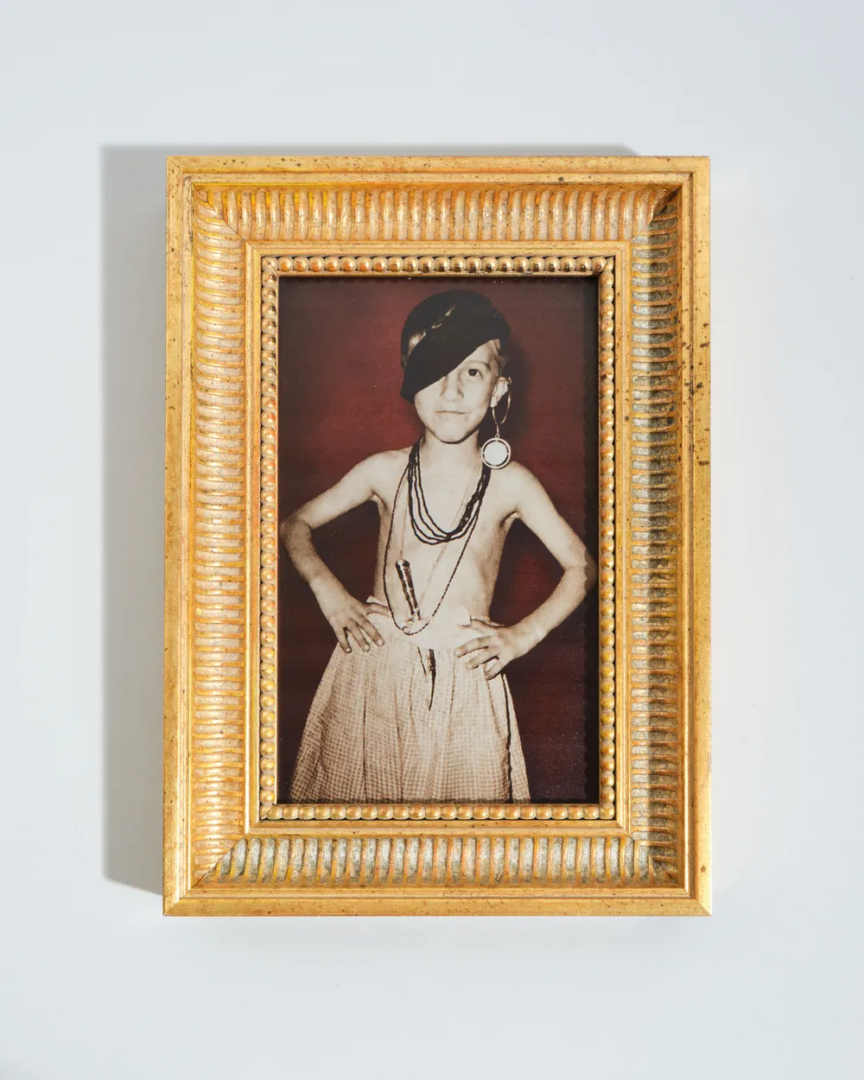
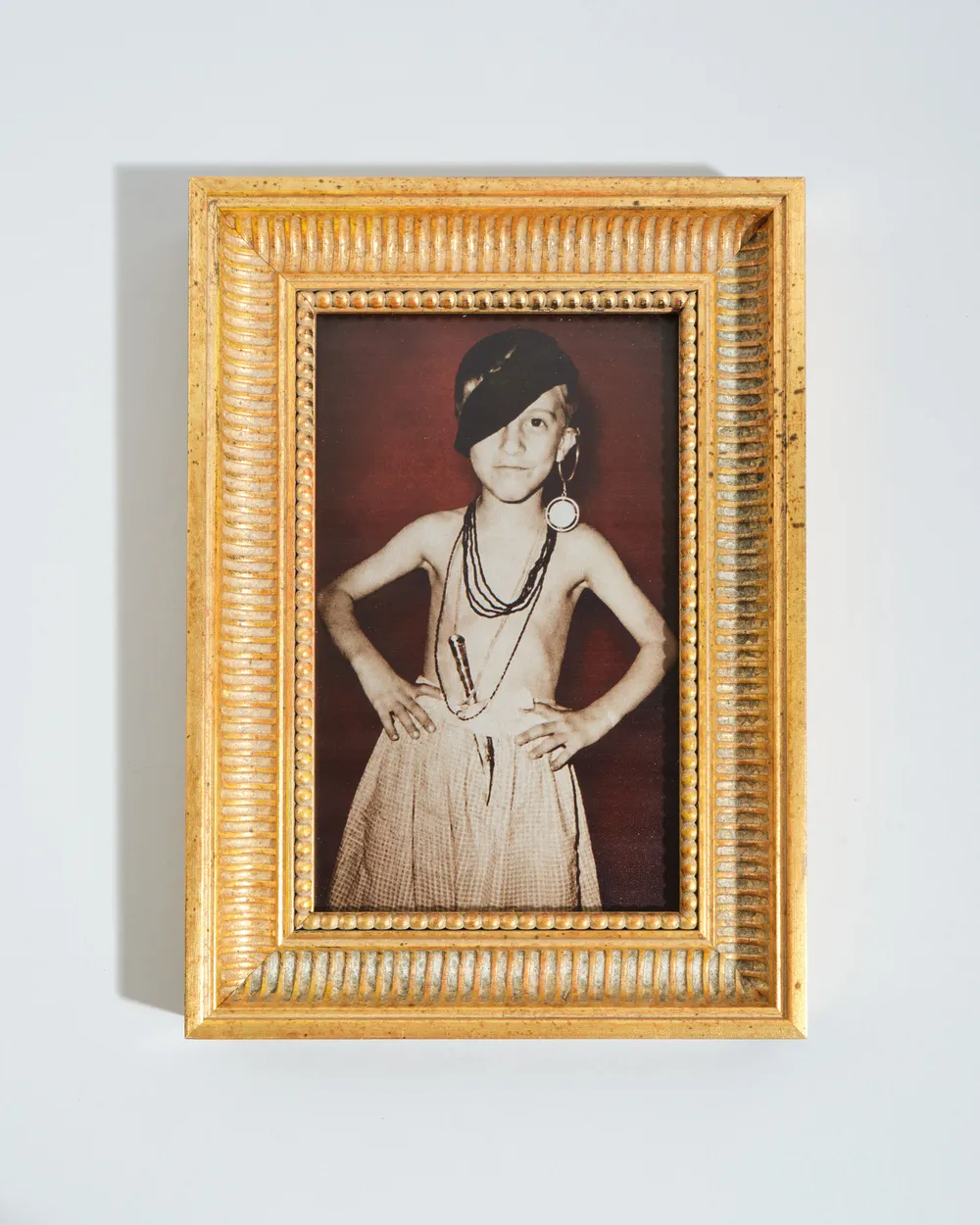
Camille Rousseau, for instance, in Shard of the Eye breathes new life into fragments of artillery shells from both World Wars, recovered in the forests of the Vosges: objets trouvés whose irregular appearance is preserved, cast in polished bronze. Colvin Harvey, meanwhile, with Boleadoras reworks the American bolo tie in steel and aluminium. Twofold is the contribution of the Italian Giovanni De Francesco, who draws on homoerotic imagery both in Pan Pan, a bronze composition whose tip unmistakably recalls a butt plug, and in Kiss #1, a reworking on photographic paper of a still from a porn film.
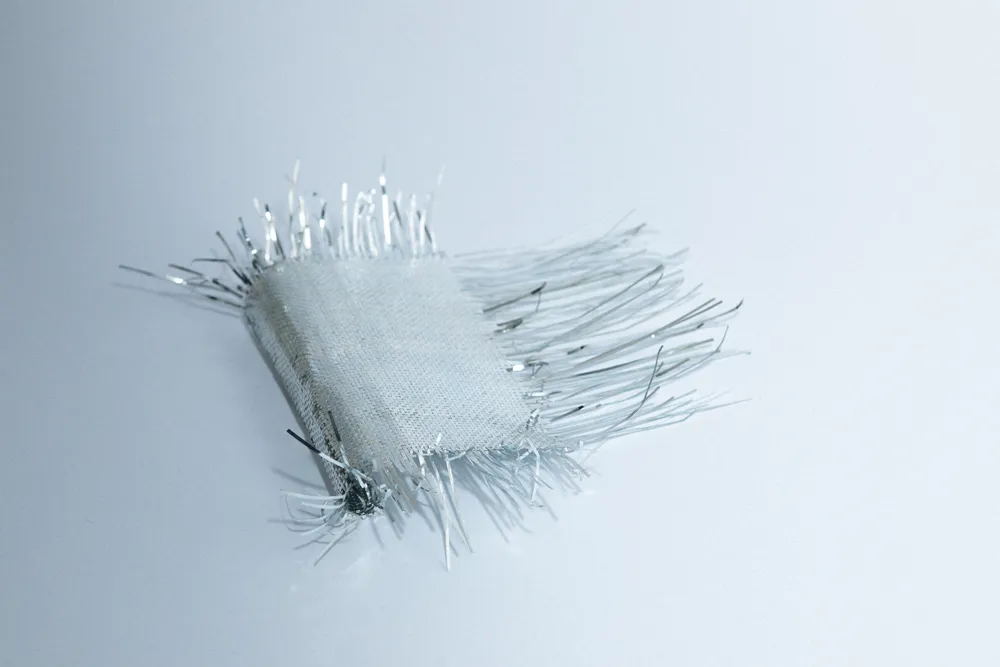
Fellow Italians, the trio behind the brand Lessico Familiare – Alice Curti, Alberto Petillo and Riccardo Scaburri – have crafted All Dynasties After All: a tiara that negates itself, eschewing preciousness in favour of a fragile blend of tissue paper, lace and voile. More evanescent still is Lora Ujkaj’s contribution with Theatre of innocence 01, 02, 03, 04, 05and Your Uncertain Matter: respectively, shots of minerals laid out on the tables of street vendors in the Namibian desert, and a photograph of a fossilised trunk in the Petrified Forest of Khorixas, also in Namibia. At the opposite end, Botanic Jewellery by Marcin Rusak exudes a sense of solid concreteness: discarded flowers are set in a resin matrix and combined with brass, eternalising the natural process of decay in the resulting bangle and ring.
Naeem: Riyah al-Nil, Tommaso Fantoni reinterprets ceremonial jewellery
Among the names present from the outset is the Italian Tommaso Fantoni, an architect with a certain eclecticism in his repertoire. In 2011, in fact, he founded Tomo Projects in Milan, a multidisciplinary collective moving between architecture, interior design and art – from the design of private residences to the renovation of the Fondazione Arnaldo Pomodoro, from furnishing accessories to an unclassifiable project such as Garden’s Jewel, a habitable sculpture co-created with Loris Cecchini for Galleria Continua.
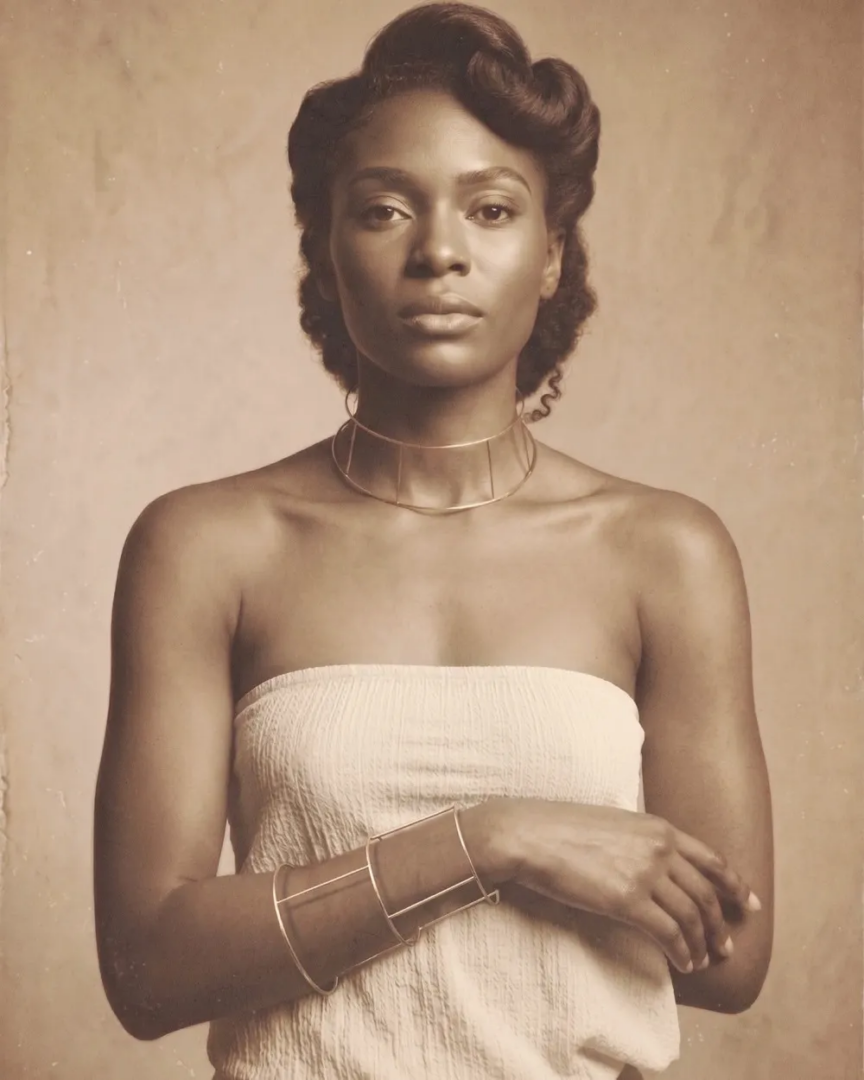
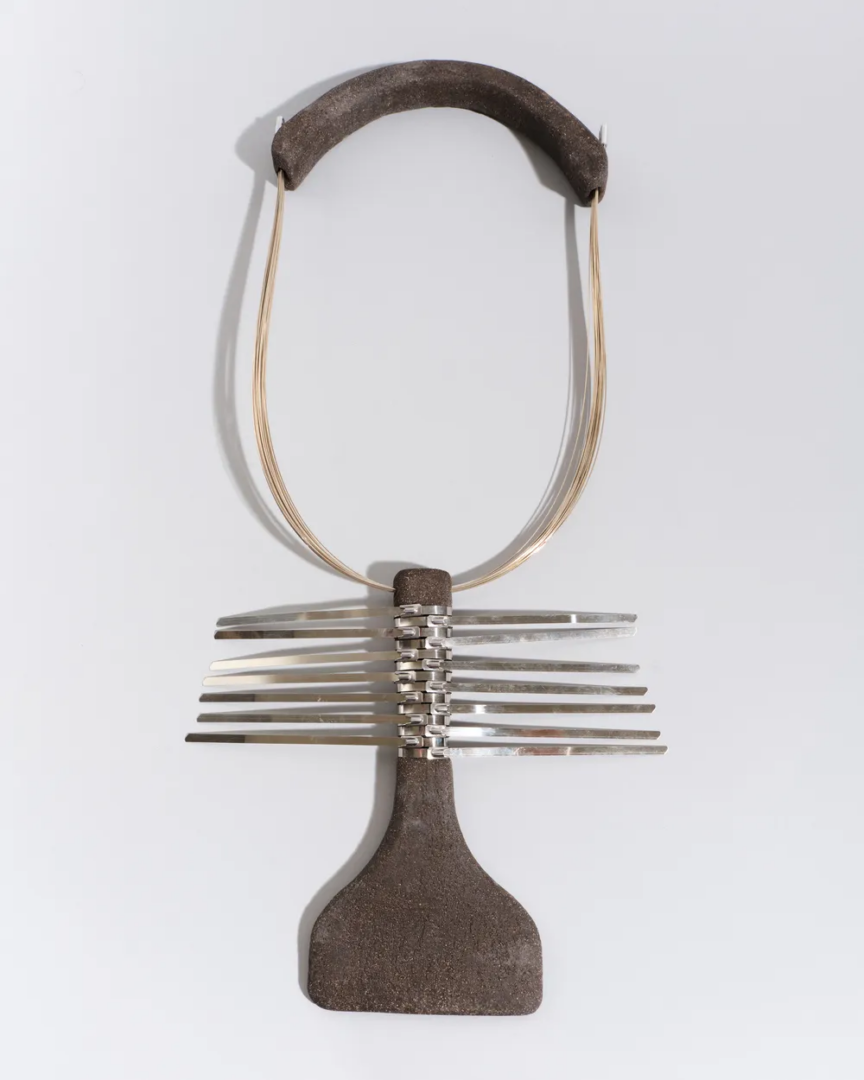
For Jewellery Was Never Innocent he has created Naeem: Riyah al-Nil, two series built on the pairing of necklace and bracelet which – nomen est omen – look to Pharaonic Egypt and to the ornamental traditions of East Africa. Fantoni reveals that “once I received the request, my first inspiration was a boat trip down the Nile last year, during which I visited the tombs of Luxor, with their colourful, three-dimensional carvings. They mostly depicted deities and rulers, many of them laden with large, colourful jewels. I thought of all this as a thread connecting the pharaohs to present-day peoples, the Maasai and other African tribes, with their traditional jewellery – simple, yet extraordinarily rich in its own way. Above all, collars and bracelets: thick, tight, as if they had to hold up the head or the arms. Starting from these visions, I then looked for photographs and made some sketches, finally arriving at the jewellery itself, a hollowed-out, lightened variation on those I’ve just mentioned.”
Silver, gold and steel forge light, harmonious jewellery
Following the process, the pieces thus take on a structure as sinuous as it is weightless, with tapering profiles and a rhythmic alternation of solids and voids. As for materials, the choice fell on silver, spring steel and gold. The founder of Tomo Projects explains in detail: “There are four pieces in all, two distinct pairs: one in silver, the other in spring steel and gold. They are metals with different characteristics, of course, but they both convey a natural lightness. There’s no waste of material; I used the smallest possible amount. In terms of production, it was interesting to design and adjust them little by little, together with the artisans. As for timing, it took up to a year of work.”
For Fantoni, this was his first foray into jewellery-making, a debut he says he is pleased with because “I’ve always loved jewellery, especially when it’s designed by architects and designers. They are truly precious objects, with a very particular allure, especially for women.” Asked what makes an exhibition like Jewellery Was Never Innocent relevant, he mentions “the gazes arising from so many different perspectives, none of them native to the jewellery industry. The result is multifaceted.” His contribution, like the others, takes part in an interpretive symphony which shows how, for jewellery too, Lavoisier’s maxim holds true: “nothing is created, nothing is destroyed, everything is transformed.”
With the exhibition Jewellery Was Never Innocent, at the Ilias Lalaounis Jewellery Museum in Athens from 11 to 16 November, The Great Design Disaster concludes its inquiry into what jewellery is, and what it represents, today. Attempting to answer are creatives from the most diverse fields, from photography to architecture, from fashion to design. A showcase of creations poised between wearable sculpture, ornament and objects sui generis. Among the many works is that of the Italian Tommaso Fantoni of Tomo Projects.
Marco Marini