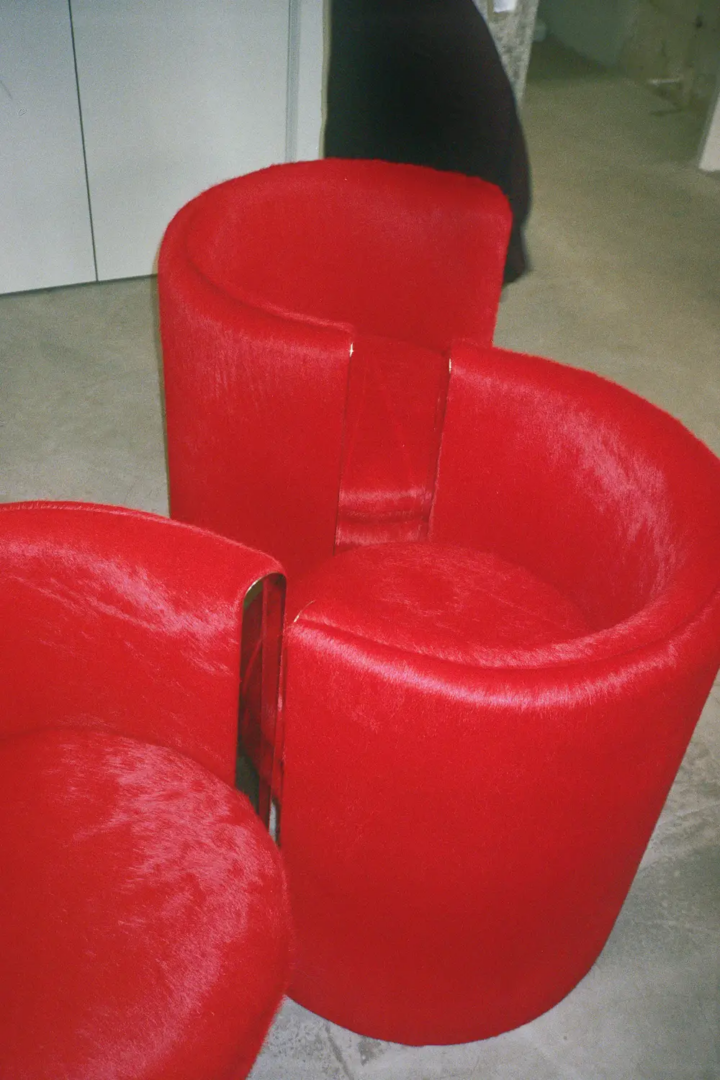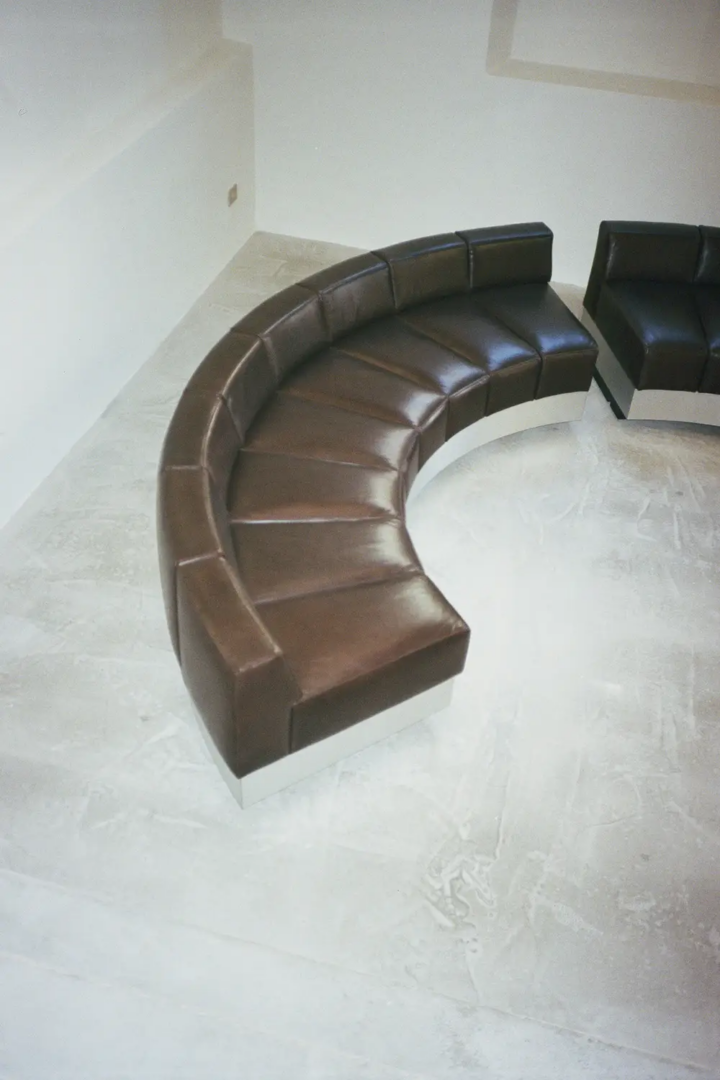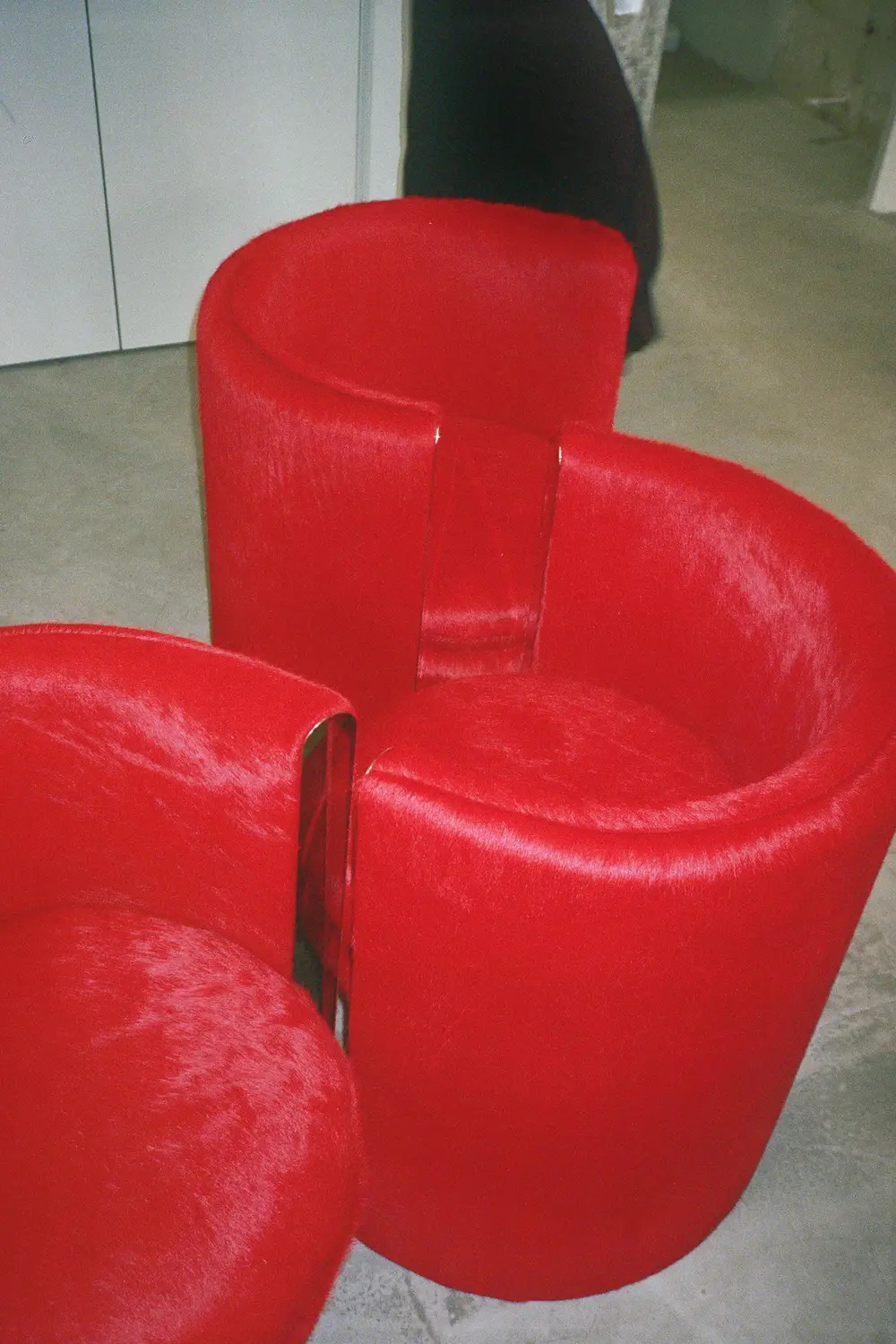
Order as instinct: Milan Design Week 2026 and the focus to raw materials
Captured on analog film, a material reading of Milan Design Week 2026: wood, glass and metal as structural languages, carrying form, memory and spatial intent
Walking through the installations and exhibition spaces at Milan Design Week 2026, a pattern emerged — not in the decorative sense, but in the deeper, almost psychological one. Creativity was present, abundant even, but it was compressed. Folded into geometries. Held inside repetition. The impulse driving much of what was shown was something closer to governance than expression: the desire to draw a line and make it stay there.
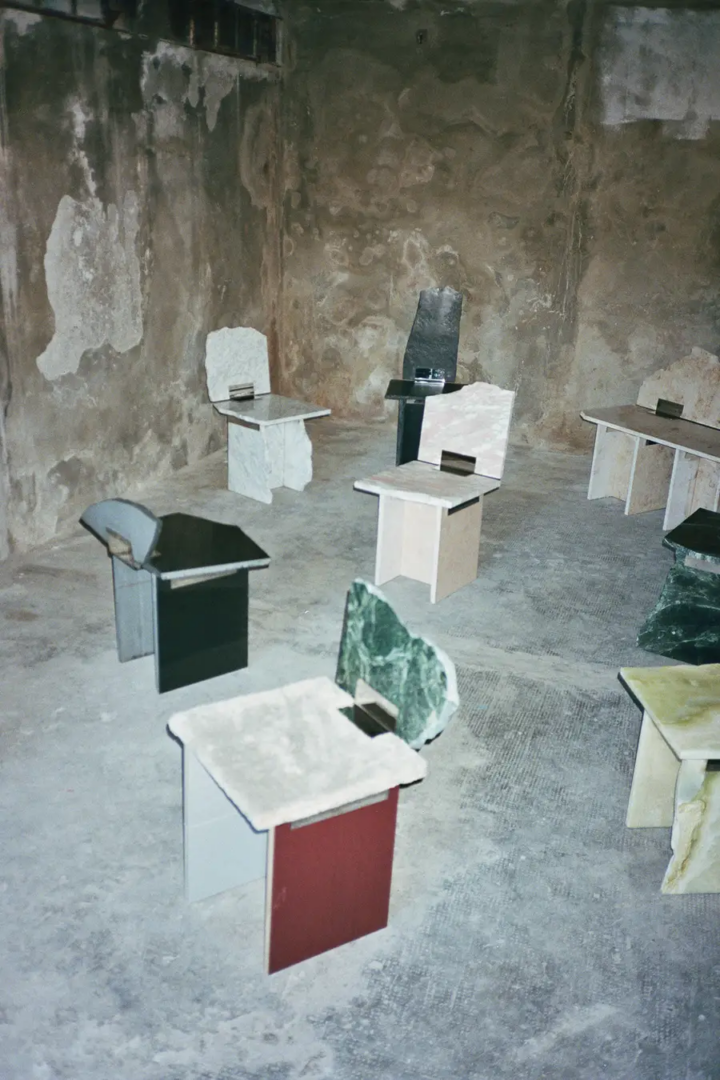
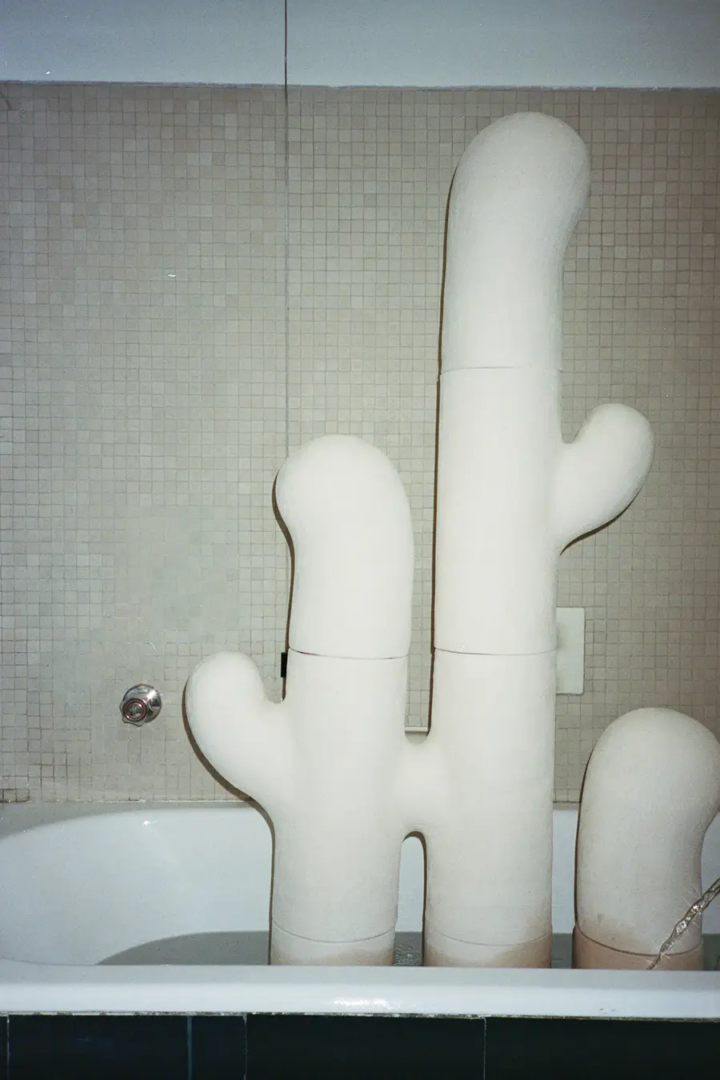
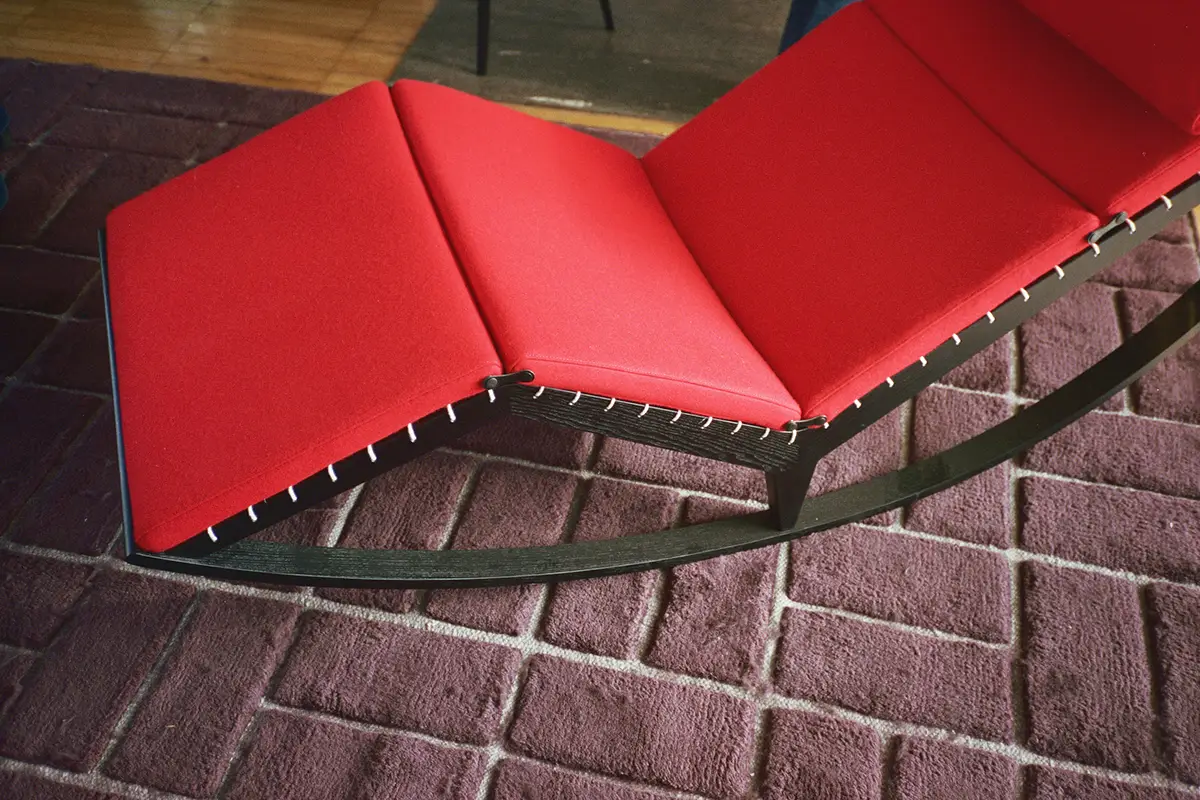
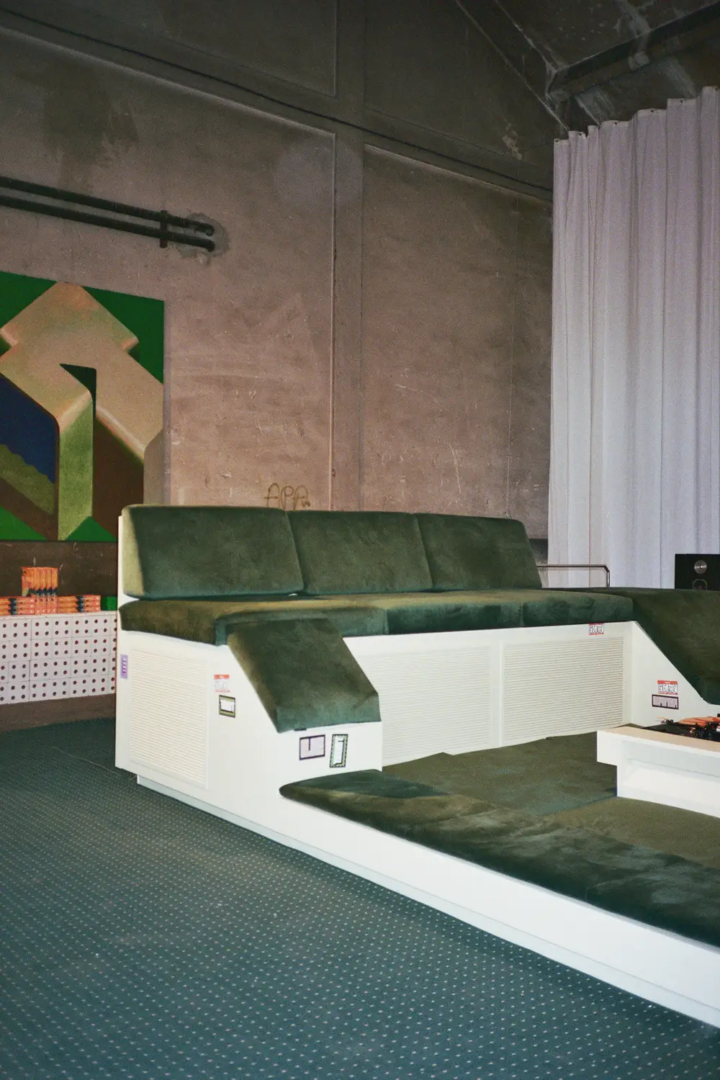
Calling this minimalism would be too easy. What felt more accurate was control as an aesthetic response to instability. In a moment of genuine geopolitical uncertainty, designers and brands reached — almost involuntarily — for order. For modules, sequences, structures that could be trusted. For materials ancient enough to carry their own authority. Wood, glass, metal, fabric. Materials with memory, with their own geometry and proportion built in. We captured on analog film what inspired us.
Wood: craft, structure and the return to material honesty
Jun Fujisaku used wood as a structural language within a broader argument about domestic space
Thick cuts, visible grain, joinery left exposed. Studios are going back to the logic of the craftsman — where the material dictates the form, and the form commits to it.
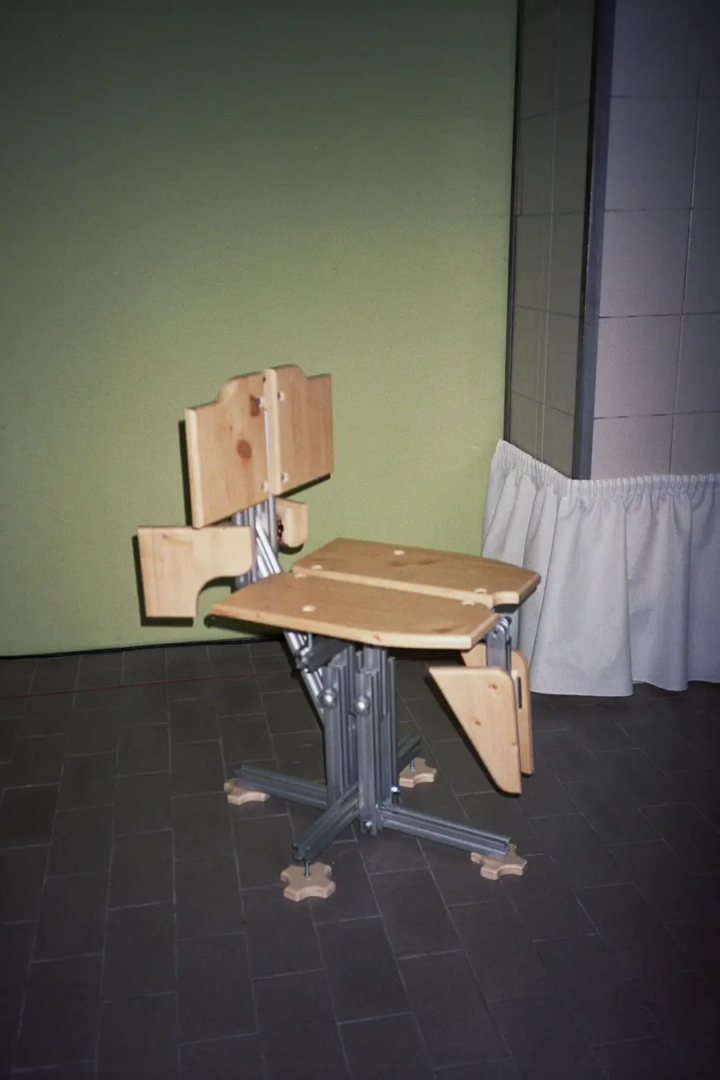
At Alcova 2026, Jun Fujisaku — Japanese designer born in the US, based in Eindhoven — used wood as a structural language within a broader argument about domestic space and the roles embedded in it. His practice examines how everyday objects encode gender and function. Fujisaku recalls playing with both Transformers and Barbies as a child with his twin sister — transformation, the shift from toy car to human figure, as a way of resisting fixed categories. That logic carried directly into Transcenders: objects that move between domestic tools and office equipment, collapsing the symbolic boundary between women’s work and men’s work. A broom becomes a briefcase. A cabinet turns into a desk. An ironing board converts into an office chair. Aluminium frameworks emerge through pine wood, the industrial and the domestic held in the same object. The material is unpretentious, structural, chosen for what it can do rather than how it looks.
Japanese woodworking meets industrial precision: Karimoku x Waka Waka
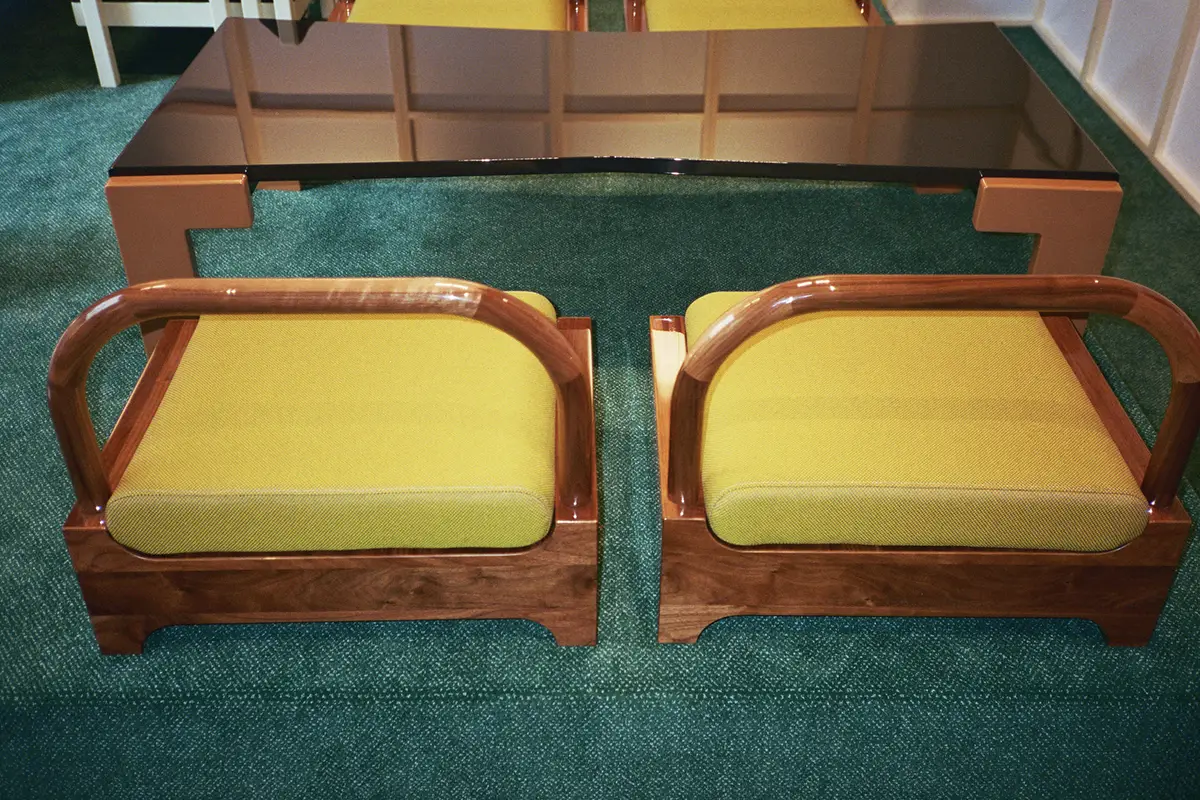
At Capsule Plaza, Karimoku Research collaborated with Waka Waka — the Los Angeles practice of Shin Okuda, known for geometric furniture reduced to its essential logic. Their joint project Wagetsu drew on Japanese woodworking tradition filtered through industrial precision. Karimoku brings manufacturing depth and control over material sourcing; Waka Waka introduces formal reductiveness. The result was calibrated volumes, tight tolerances, repeated modules. Grain remained visible but regulated. Joinery defined proportion. The object operated as a measured system — nothing added, nothing softened.
Wood as architecture: Giuseppe Porcelli at Via Comelico
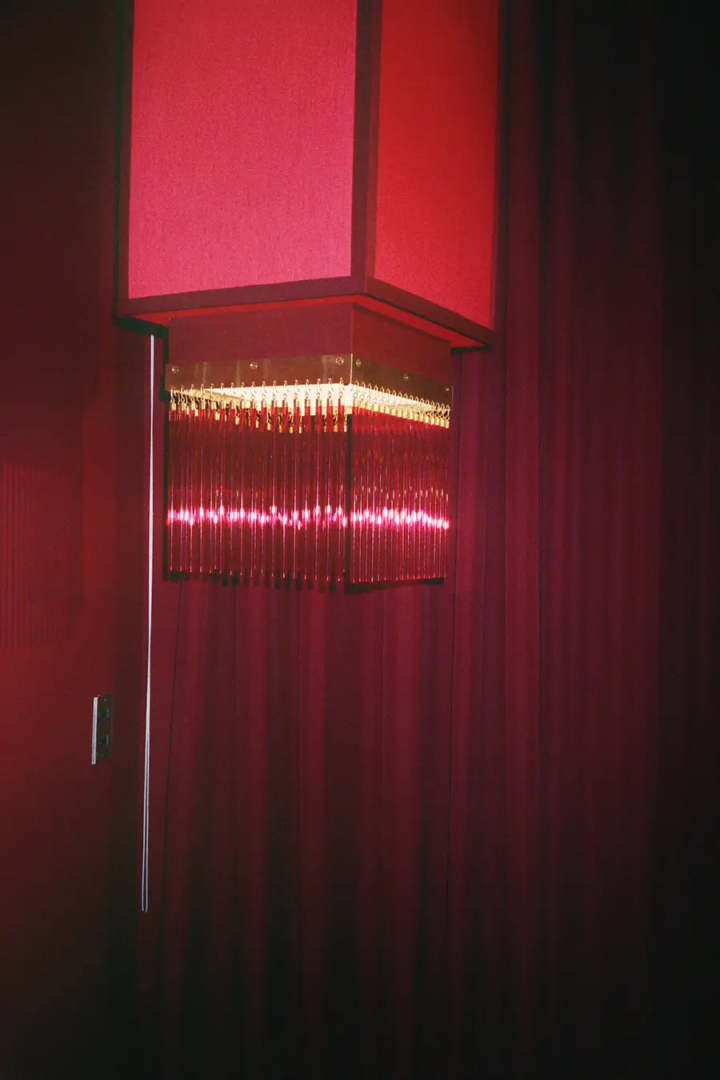
In Via Comelico, Giuseppe Porcelli presented Luci Rosse inside his own studio. Porcelli works across interior design and collectible furniture, staging environments rather than isolated pieces. Wood here structured the room through mass and placement. Under red light, volumes gained density, surfaces absorbed rather than reflected, and the boundary between furniture and architecture became a single continuous composition. The installation functioned as a controlled interior — furniture, light, and spatial sequence pulled into alignment.
Across all three contexts, wood operated through construction logic. Joinery, section, proportion. Craft as method. Structure as the thing that carries meaning.
Glass Design at Milan Design Week 2026: light, history and structural argument
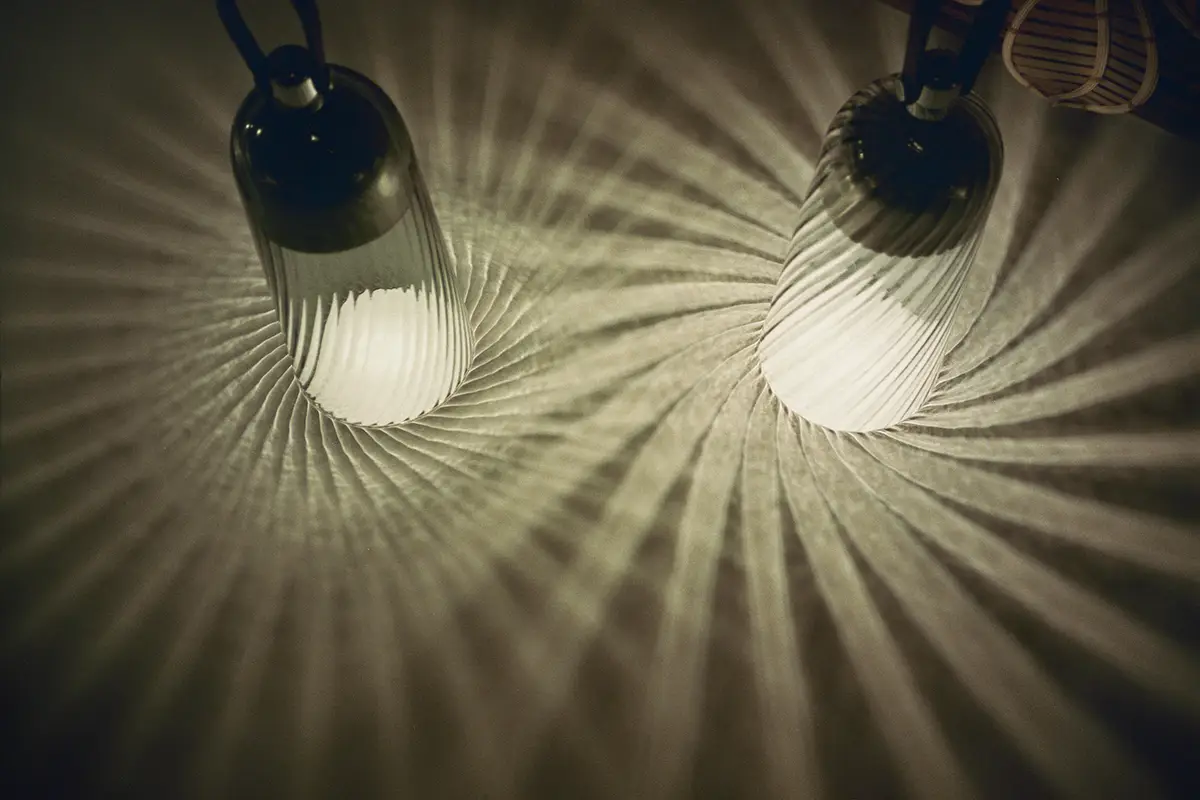
Glass is, on paper, a responsible material. Sand-based and infinitely recyclable in its standard form — Europe is building circular models around it, and the upcycling market is growing. The complications arrive with artistic glass: the coloured, the cast, the worked. That material sits outside the recycling stream entirely. The sand itself is becoming scarce. And yet designers return to glass season after season, because it does something few materials can — it carries light, history, and structural argument simultaneously, often within the same object.
6am for Bottega Veneta: Batch at Piscina Romano
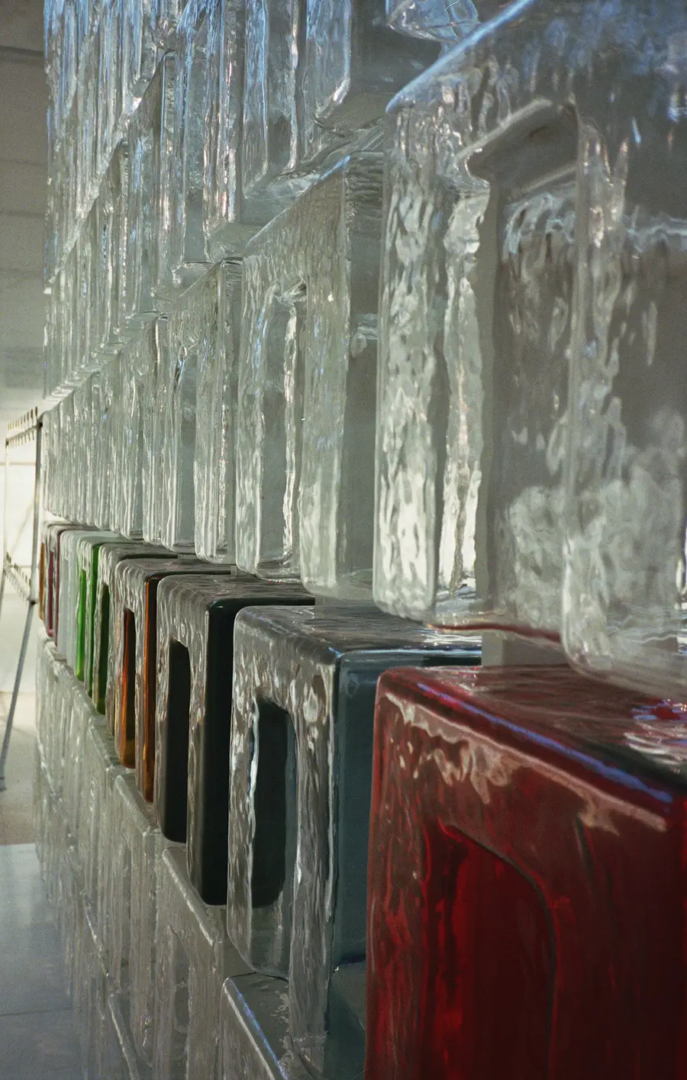
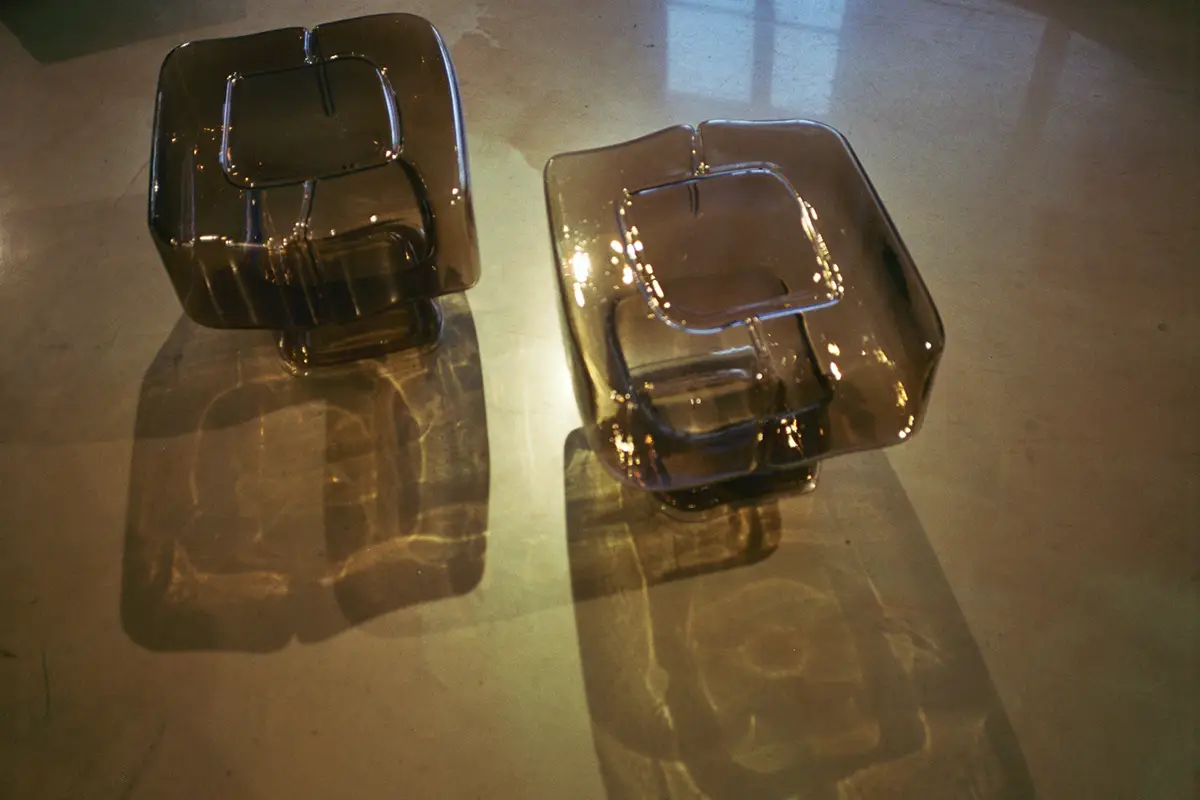
At Piscina Romano — a rationalist building from the 1930s, its walls lined with glass-brick that still moves architects today — 6am presented Batch: blown glass cubes originally created for the set design of the Bottega Veneta Summer 2026 runway show, shown here for the first time in an exhibition context. Installed to form an architectural element at the centre of the space, the cubes accumulated into something monumental through seriality rather than scale. Light moved through the units with patience. Around them, freestanding coat racks — still numbered, still standing in the middle of the room — held their ground as quiet witnesses, the residue of daily routines long discontinued. The glass-brick walls earned their place in the conversation: an architectural language that gains rather than loses meaning over time.
Hannes Peer: cast glass and the charged room
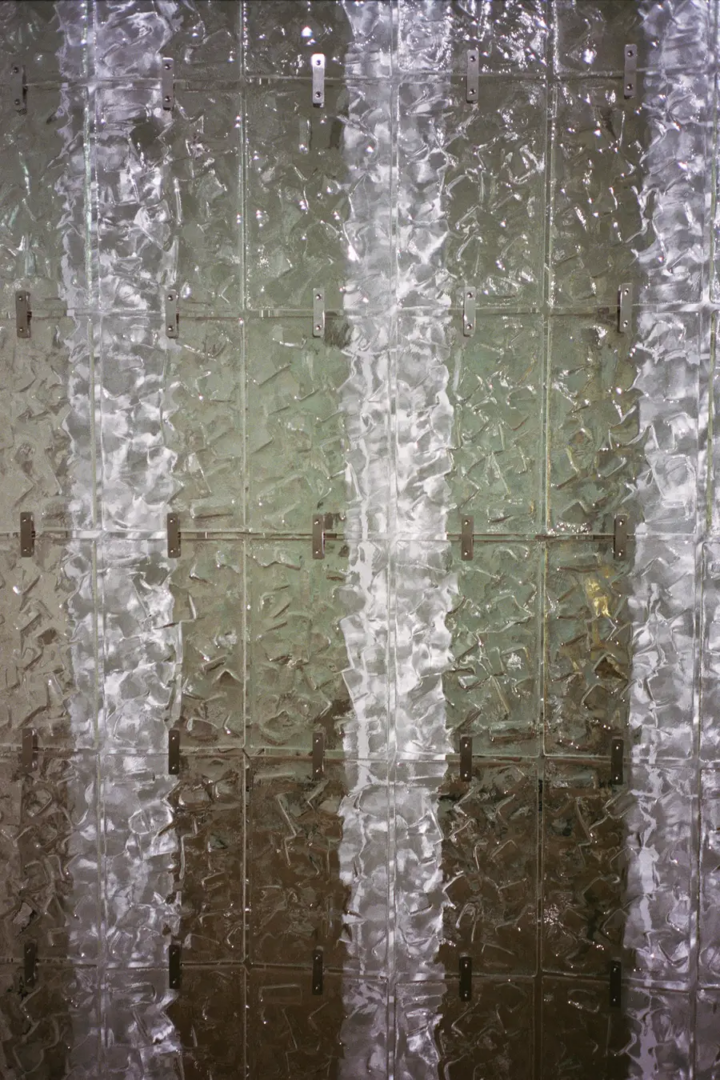
The old changing rooms of the same pool became the stage for Hannes Peer’s cast glass light sources. His Paysage panels and Lina lamps, presented in a limited-edition textured black cast glass alongside new earthy tones, inhabited the space with cool clarity. Cast glass caught and refracted light from the tall windows in a way that read as attention rather than imposition. The room already held a charge. The work amplified it.
Gallotti & Radice: 70 Years of glass as design Manifesto
At Palazzo Meli Lupi di Soragna, Gallotti & Radice marked seventy years with Tales in Glass, staged by French architect Sophie Dries as a continuous journey through the brand’s history. Textiles, ropes, and glass moved through the palace’s historic rooms as a soft layer over deep time.
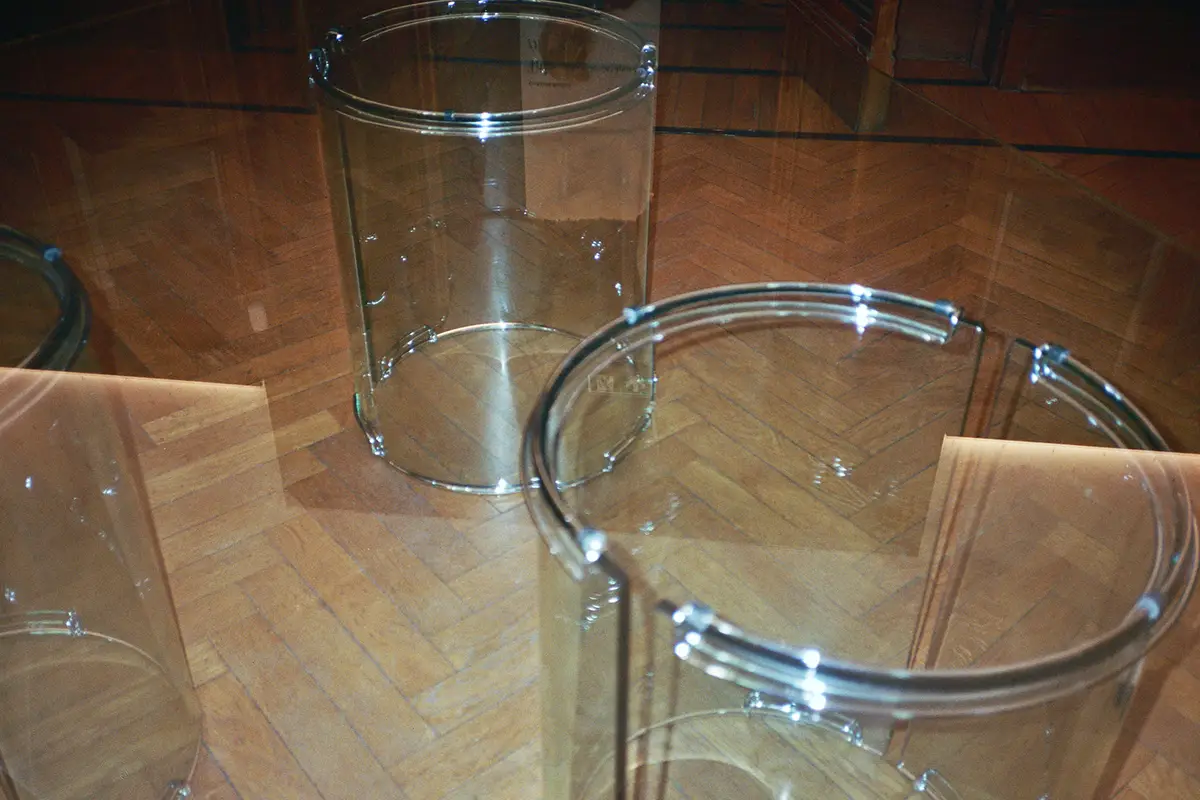
The entrance was the strongest moment. The Adam table by Luigi Massoni (1971) — the company’s first piece made entirely of glass — was positioned as a threshold, and the choice was a declaration. The structural support of the table is fully visible: not concealed, not resolved away, but present as design in its own right. For Gallotti & Radice, construction is drawing. The joint, the hinge, the connection — these are the object.
On the walls, framed pencil sketches showed how each archived piece was conceived, jointed, and resolved. Seventy years of material thinking made legible. That archive was placed in dialogue with six new commissions — Valentina Cameranesi Sgroi, Ivania Carpio, Estudio Persona, Rania Hamed, Fumie Shibata, and Miminat Shodeinde — each working within the company’s material language from a different cultural and design position, each reinterpreting rather than repeating.
The thread connecting all of it remained glass.
Metal in Interior Design: industrial strength and spatial precision
Cold, clean, reflective as a mirror but solid under the hand. Metal does not negotiate with the space around it — it asserts. Where wood absorbs light and glass transmits it, metal throws it back, hard and precise. It maps the room onto itself.
Metal has become a natural companion to the minimalist impulse — its structural honesty fits the mood without effort. But the more interesting work this week pushed past that reading. The same material that strips a room down can, in different hands, carry institutional memory, define assembly logic, or redirect the perception of an entire interior. That range — from reduction to density, from the cold to the charged — was where the most considered work lived.
Dimore Studio: the vault as spatial device
At Dimore Studio, occupying a former bank on Via San Vittore al Teatro, the vault was retained as the central spatial device. The project engaged the building’s original metal systems — reinforced doors, locking mechanisms, technical skins — without softening them. Metal here carried its institutional function intact: custody, restriction, calibrated access. Contemporary pieces were placed within this sequence without harmonization. Surfaces absorbed light. Circulation tightened around thresholds. The environment read as a chain of enclosures — metal organizing the plan, compressing depth into something deliberate and charged.
Linde Freya Tangelder for Cassina: metal as connector
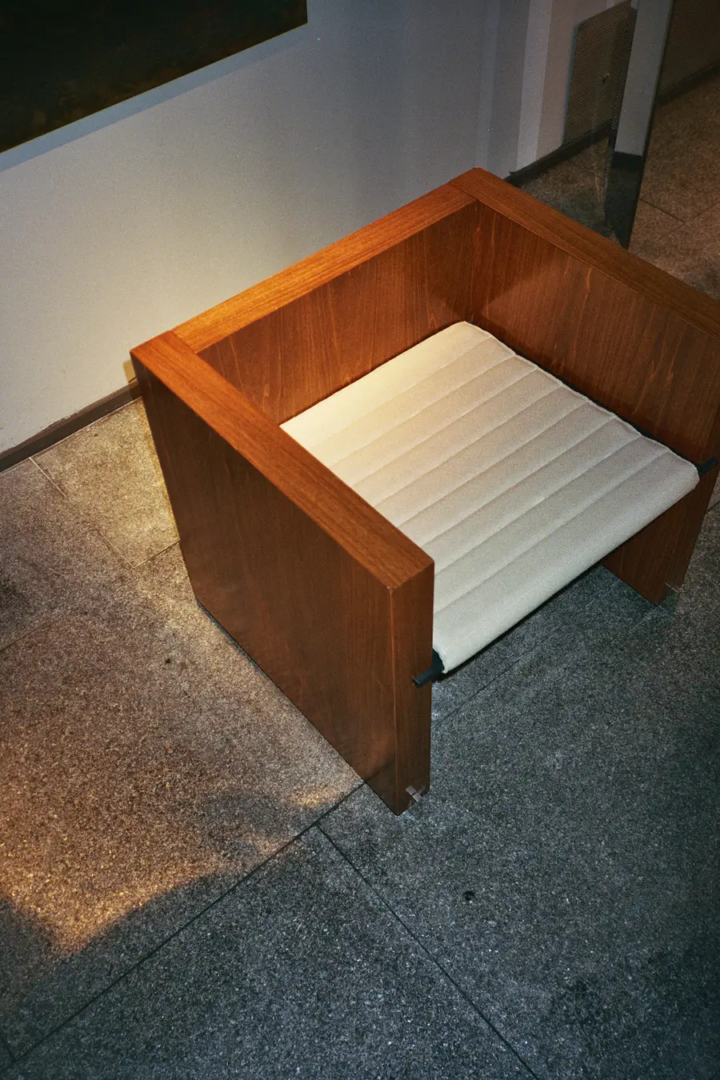
At 10 Corso Como, Linde Freya Tangelder’s Fluid Re-Collection for Cassina approached metal from a different angle entirely. Here it appeared not as surface or structure but as connector — the technical interface between glass, wood, and lacquered volumes. The emphasis lay on junctions: semi-exposed metal inserts, calibrated tolerances, block-like compositions held in tension. The visual field remained matte and controlled. What the eye followed was edges, seams, alignments. Metal defined how elements met, stabilizing transitions across materials and scales, enabling the shift between studio practice and industrial production that characterizes Tangelder’s work.
Interni Venosta: precision insertions in a Borsani Interior
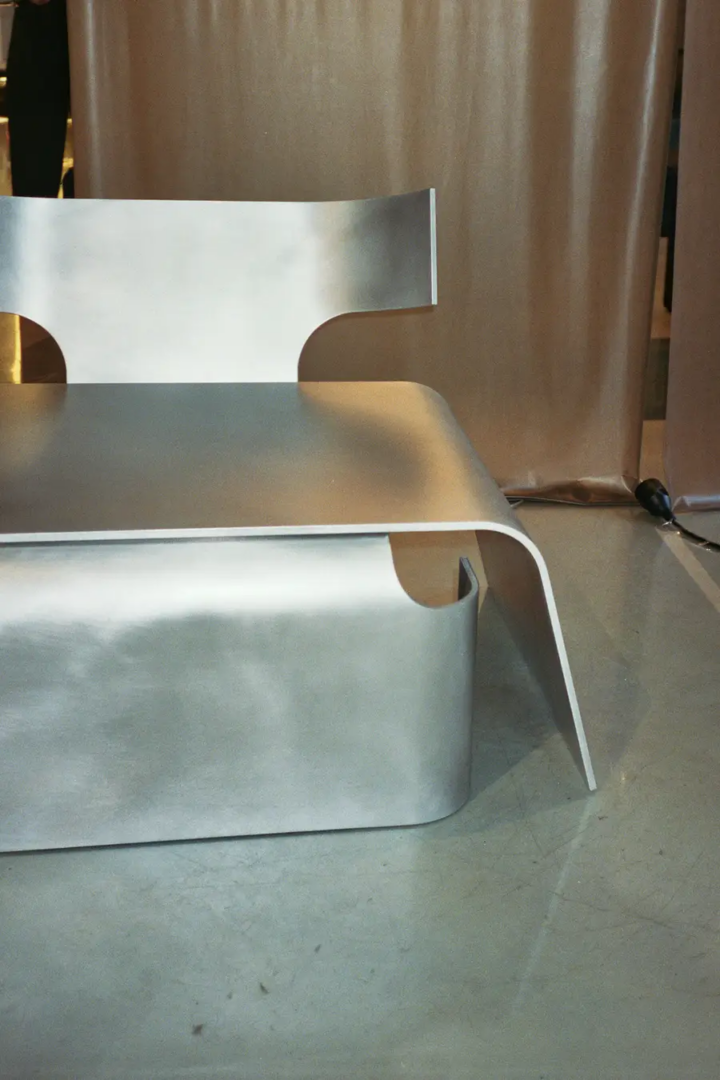
At Interni Venosta on Via Bigli, the context was a Borsani-designed apartment from the late 1940s — a continuous field of wood, plaster, and domestic proportion. Metal entered as a precise insertion: brass and steel, polished or lightly patinated, limited in number. Vessels, small furnishings, reflective elements placed with enough deliberation to redirect attention without displacing the room’s identity. Localized highlights within a warm palette. Reflections that fragmented sightlines. Each metal element adjusted the perception of depth through placement alone. The apartment remained itself — metal introduced a series of calibrated deviations that sharpened how the whole was read.
RedDuo Galleria
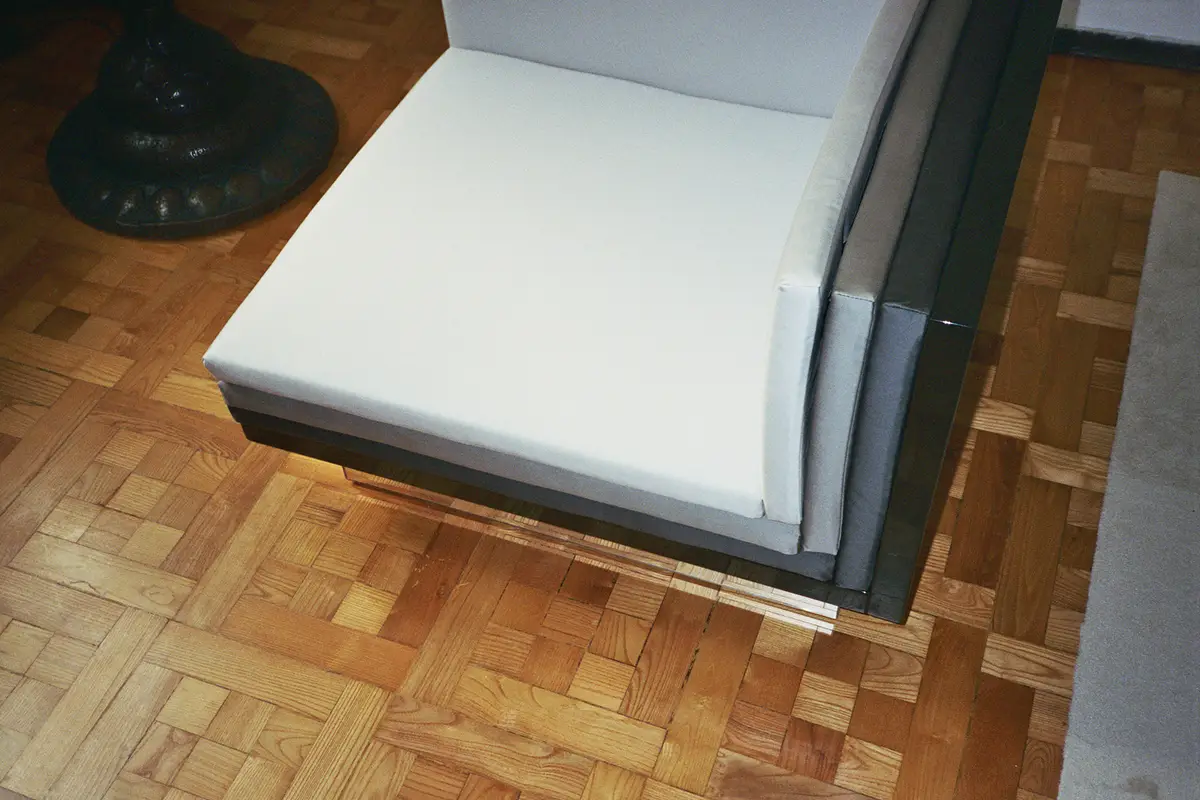
In the Porta Genova district, RedDuo Studio — founded by Fabiola di Virgilio and Andrea Rosso — returned to their first home and reopened it as a temporary gallery for the week. The space operated as a lived-in exhibition: objects, furniture, and materials arranged through rooms that moved between domestic and curatorial without fully committing to either. The reference to Japanese architecture was present in the proportions, in the balance between solid and void, in the quality of stillness the rooms held. Light and texture did structural work.
The project brought together a constellation of collaborators — Bitossi ceramics, Del Savio 1910 marble surfaces, bespoke woodwork by Ebanisteria Quacquarelli, rugs by JOV, lighting by Leucos, plant-based fur by Savian by BioFluff — each contributing to a shared material narrative rather than asserting individual presence. What held it together was an editorial logic: the studio treated the domestic space as a sequence of decisions, each one considered, none of them decorative for its own sake. The result was a space that invited attention to the relationships between things rather than to the things themselves.
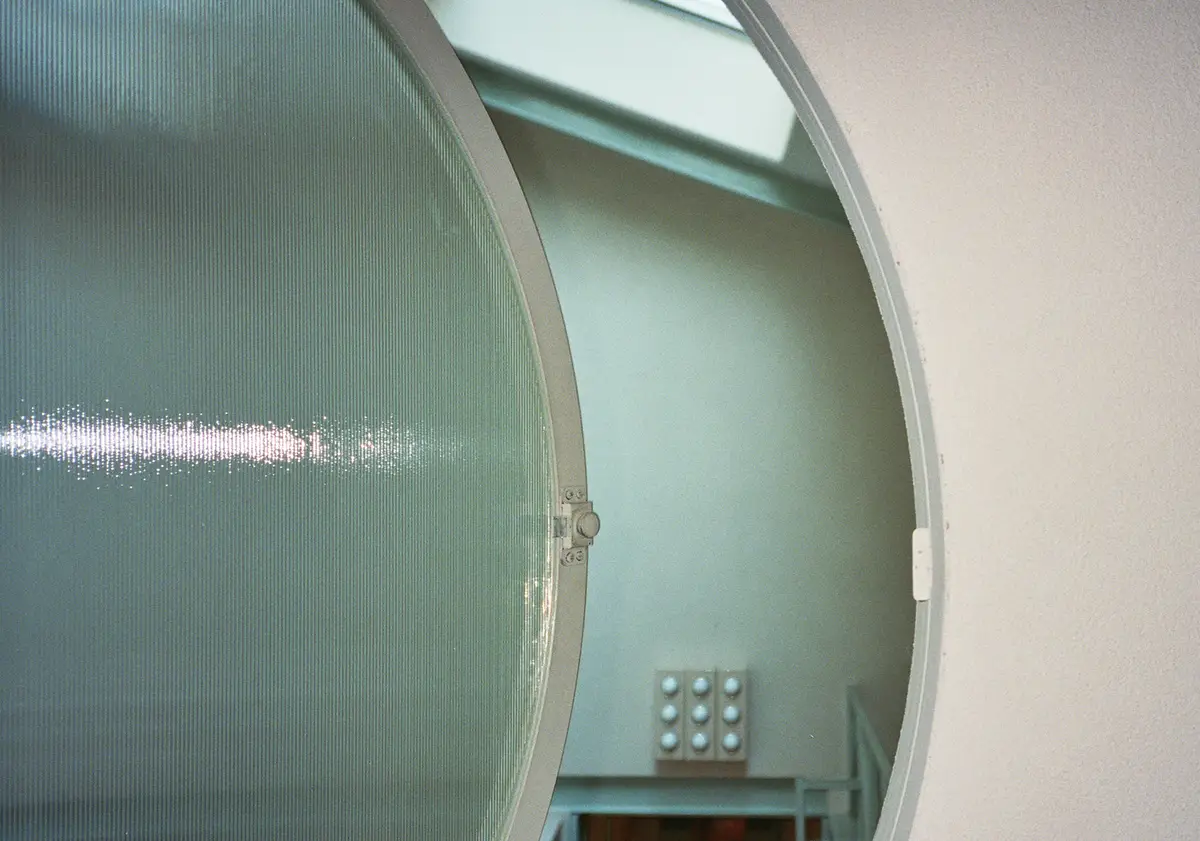
Armani/Casa — Origini
At Corso Venezia 14, Armani/Casa presented Origini — a collection and exhibition conceived as a journey through the evolution of the brand’s design language. Eight iconic pieces were installed in the street-facing windows, each shown alongside its updated version. The staging worked on contrast: the original visible on one side, its evolution glimpsed through opaque glass on the other, revealed only upon entering. The ground floor used large black fabric drapes as theatrical backdrops for golden display cases. The architecture of the show was confident and deliberate.
On the first floor, three living environments were defined by large hand-painted watercolors referencing the interiors of Giorgio Armani’s own residences — the painting wall of his Milanese apartment, a fireplace room, a seascape evoking Pantelleria. Furniture ranged from the new BORGONUOVO games table in jacquard BRIGHTON fabric to the modular BRANDO sofa in sandblasted light grey oak with chiné silk cushions. The material palette — linen with stonewashed chenille, natural leather combined with canaletto walnut, satin black ash with gold metal borders — expressed a consistent grammar: restraint in form, density in material. Origini proposed continuity as a design value: the Armani sign strong and timeless precisely because it keeps moving, on solid roots.
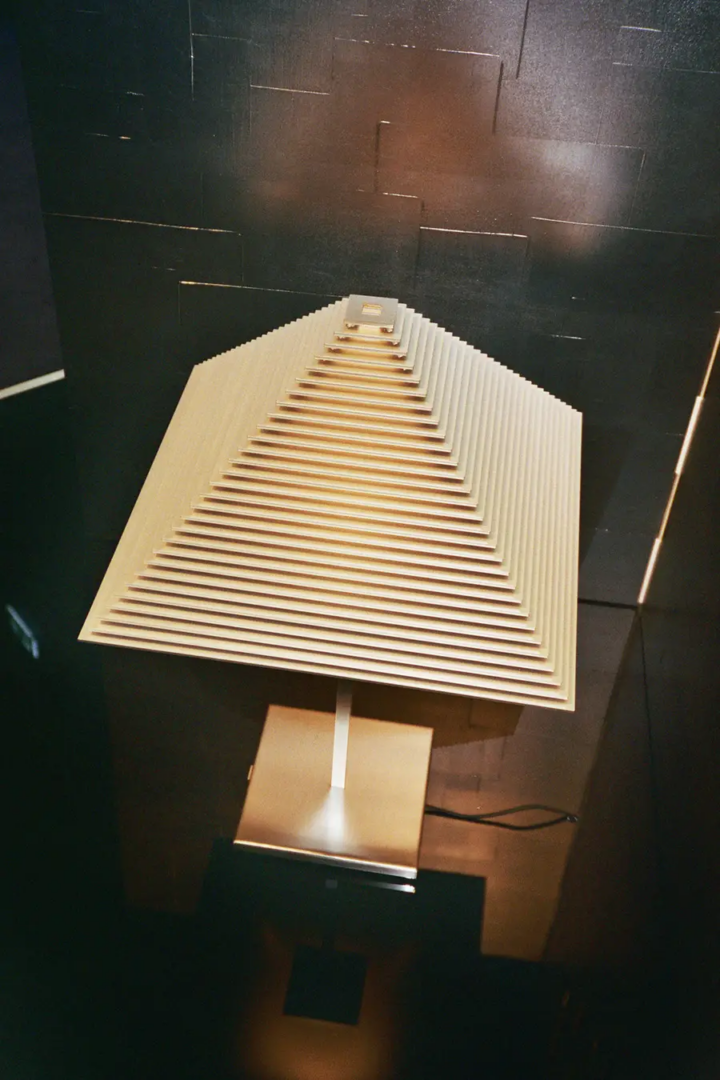
Hermès — Collections for the Home 2026
Hermès presented its home collection around a central proposition: the material speaks, the object tells a story. The Palladion d’Hermès line — hand-hammered palladium-finish metal combined with horsehair, leather, and wood — brought the house’s silversmithing heritage into domestic space with directness. The centrepiece reads as a shield. The jug distills ancestral techniques — spinning, stamping, flame brazing, hammering — into a single restrained form extended by a cassia wood handle. Metal and dark wood as light and shade. The Palladion Casaque vases wrapped cylindrical hammered forms in geometric Epsom calfskin and goatskin panels, the color combinations drawn from jockey silks. Material intelligence applied to the object at every scale.
The textile work was equally considered. The Clamp & Dye cashmere throw operated through resist-dyeing and geometric paneling — four sections assembled by hand, color circulating through successive impressions. The H Letter throw used bojagi, the traditional Korean art of sewing textiles together, with panels of hand-woven linen voile and cashmere stitched with colored silk thread: hundreds of hours of work producing something that reads as almost weightless. The Sangles Sellier brought equestrian webbing directly into the weave structure, fringe and ligature at the extremities. Across all the textile pieces, the process was the surface — craft made legible without being announced.
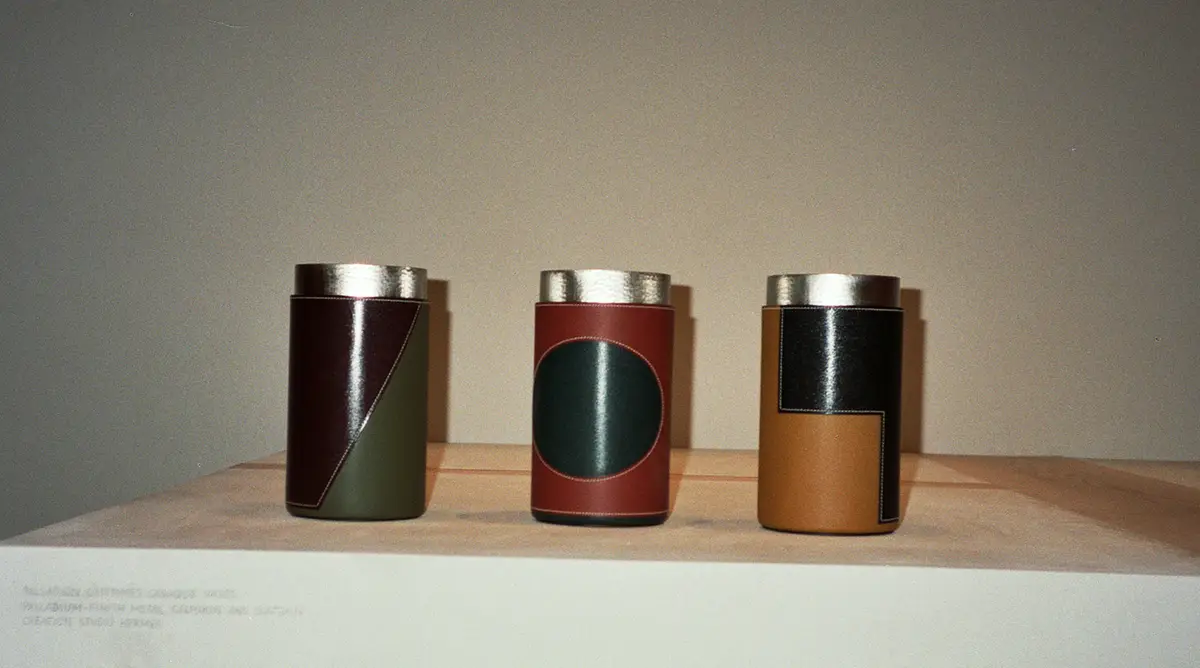
Louis Vuitton — Objets Nomades 2026
At Palazzo Serbelloni, Louis Vuitton structured its Fuorisalone around Pierre Legrain (1888–1929) — decorator, bookbinder, illustrator, and close collaborator of Gaston-Louis Vuitton from the early 1920s. The Collection Hommage Pierre Legrain reissued the 1921 coiffeuse — the Maison’s first piece of furniture, an omega-shaped dressing table in lacquered wood and Nomade leather — alongside a Chilienne Riviera chair in oak with mother-of-pearl inlays, a wooden screen with oblique marquetry, and a selection of textiles, objects, and tableware drawing on Legrain’s compositional and chromatic language. The geometric rigour of Art Déco, translated through the house’s current material vocabulary.
The installation moved through six rooms of the palazzo as a sequence of chapters, each built around a different palette and set of objects. The courtyard held a tridimensional installation developed with students from the Brera Academy of Fine Arts, based on Legrain’s illustration for a 1917–1929 bookbinding album — geometric volumes extruded from the original drawing, surfaces to be completed by the students over the course of the week. Alongside the historical reissues, new commissions from Raw-Edges, Estudio Campana, and Franck Genser pushed in other directions: the Cocoon Dichroic armchair with hand-cut iridescent dichroic leaves requiring three months of manual work; the Stella lounge chair from Raw-Edges with optical-illusion upholstery; the Aqua table by Genser with a slightly curved black marble top referencing the leather closure of the Speedy bag. History and contemporary production held in the same rooms, each chapter of the sequence giving each its own territory.
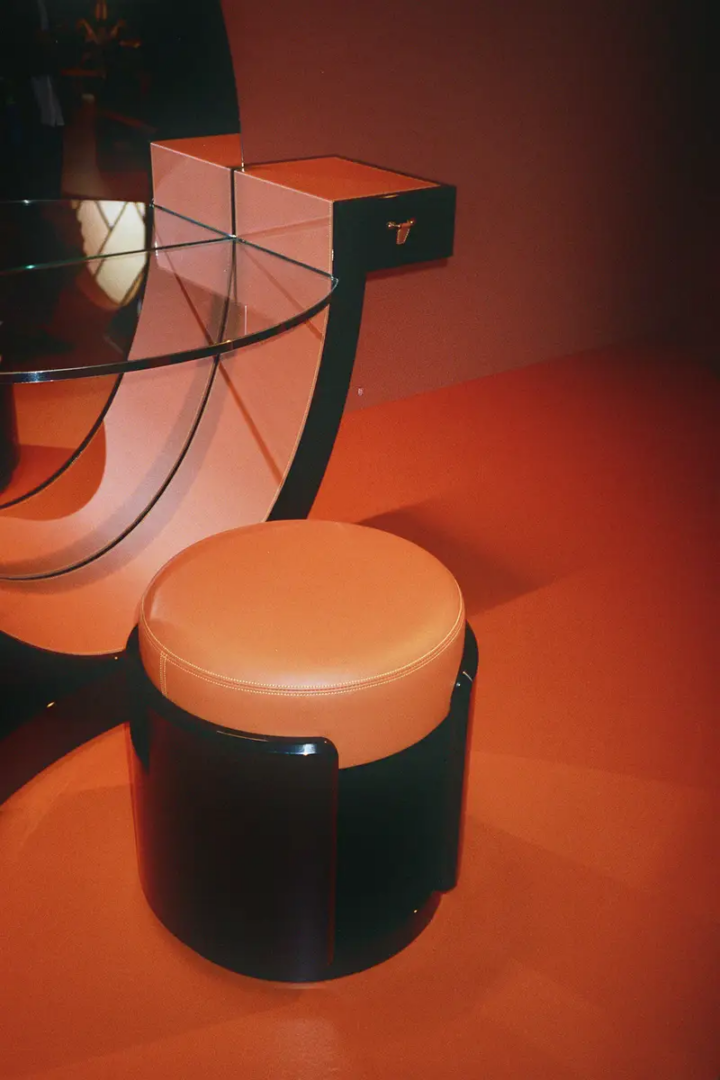
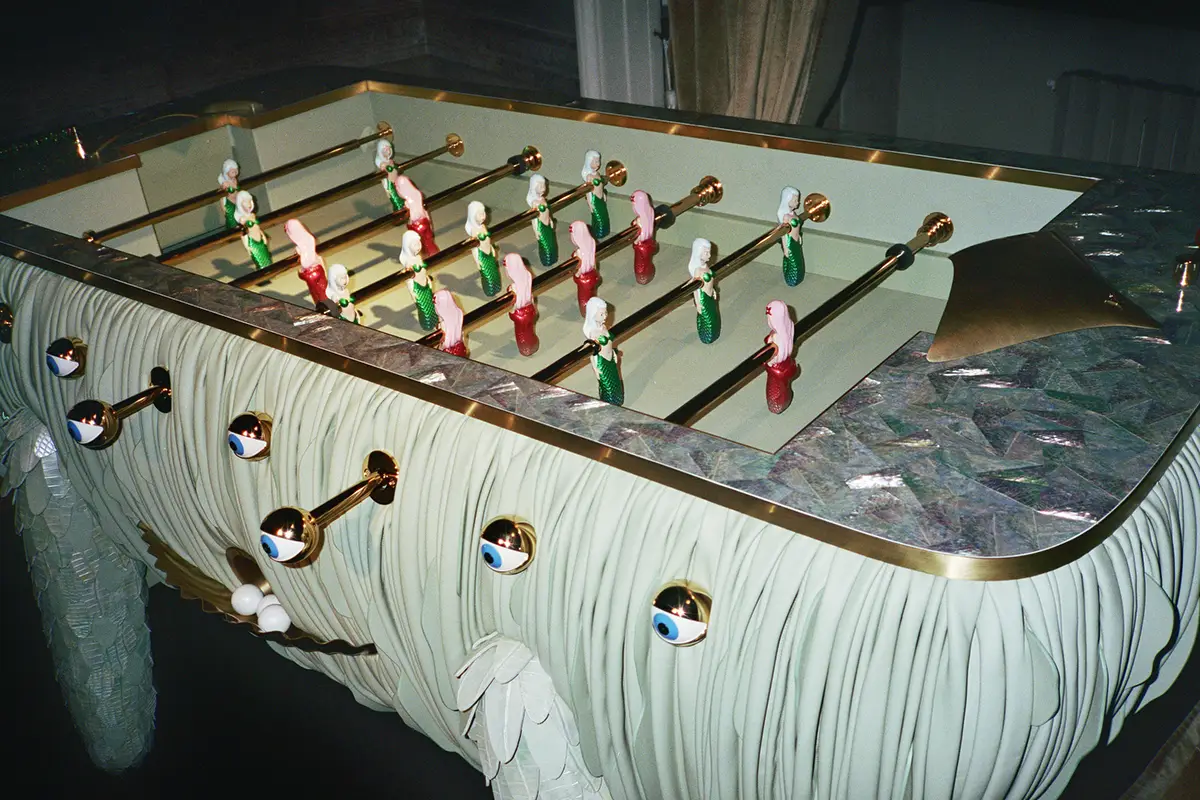
Muller Van Severen x Apartamento — Silhouettes: Celebrating 15 Years, Ordet
At Ordet, Via Filippino Lippi, Apartamento presented Silhouettes: Celebrating 15 Years — fifteen life-sized aluminium candleholders by Muller Van Severen, each an abstract reinterpretation of recurring forms from the studio’s fifteen-year practice: chairs, cabinets, lamps, vases, structural elements. The works functioned simultaneously as sculpture and as self-reflection — the studio’s formal vocabulary turned back on itself at human scale, in raw aluminium. Each silhouette was legible as a memory of the objects it descended from.
The exhibition ran alongside the launch of A Lot of Work, a new monograph edited by Nicolás Barreto and Nacho Alegre tracing both the shared studio practice and the individual trajectories of Fien Muller and Hannes Van Severen. A limited production series of four candleholders — radius, rectangular, L, and triangular — in 100% raw aluminium, developed with BD Barcelona, was available for purchase during the week. The bookshop ran throughout. The whole event read less as a retrospective and more as what it was: a pause, a stock-take, the kind of breath a fifteen-year practice occasionally needs.
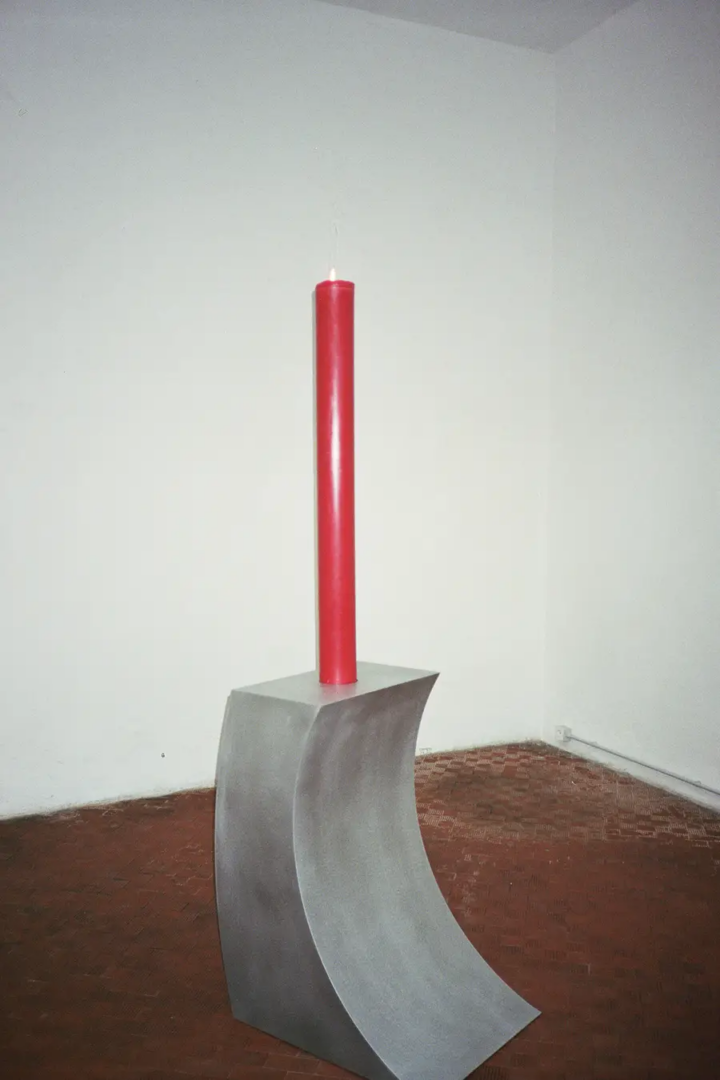
Tacchini — Material Anthology by Faye Toogood, Casa Tacchini
For the Fuorisalone, Faye Toogood took over Casa Tacchini with Material Anthology — a site-specific sculptural intervention built from the manufacturer’s own raw materials. Toogood worked through the Tacchini studio, workshops, and archives, curating offcuts, samples, and base materials into room-by-room sculptures that traced the tonal palette already present in the building’s natural inventory: the blue veins of a marble block, the blushing pink of a timber knot. The intervention did not import a language — it amplified one already there.
At Salone del Mobile, Tacchini’s stand was conceived by Studio Cameranesi-Pompili and Studio LYS as a suspended textile architecture, lightweight and permeable, referencing the logic of a nomadic encampment. Suspended fabrics defined the space without building it. Inside, the Butter collection — originally modelled from a slab of Cornish butter and now expanded into a full system including armchair, three-seater sofa, poufs, and storage cabinet — occupied the central environments alongside Le Mura XL by Mario Bellini. Eleven new lacquer finishes, drawn from a nature-based chromatic research titled Notes for a Herbarium, ran across the collection. Re-editions by Tobia Scarpa, Vico Magistretti, and Gianfranco Frattini — including a limited edition of 100 Grand Sesann sofas marking the centenary of Frattini’s birth — completed a collection that moved between new production and recovered history without treating the distinction as a problem.
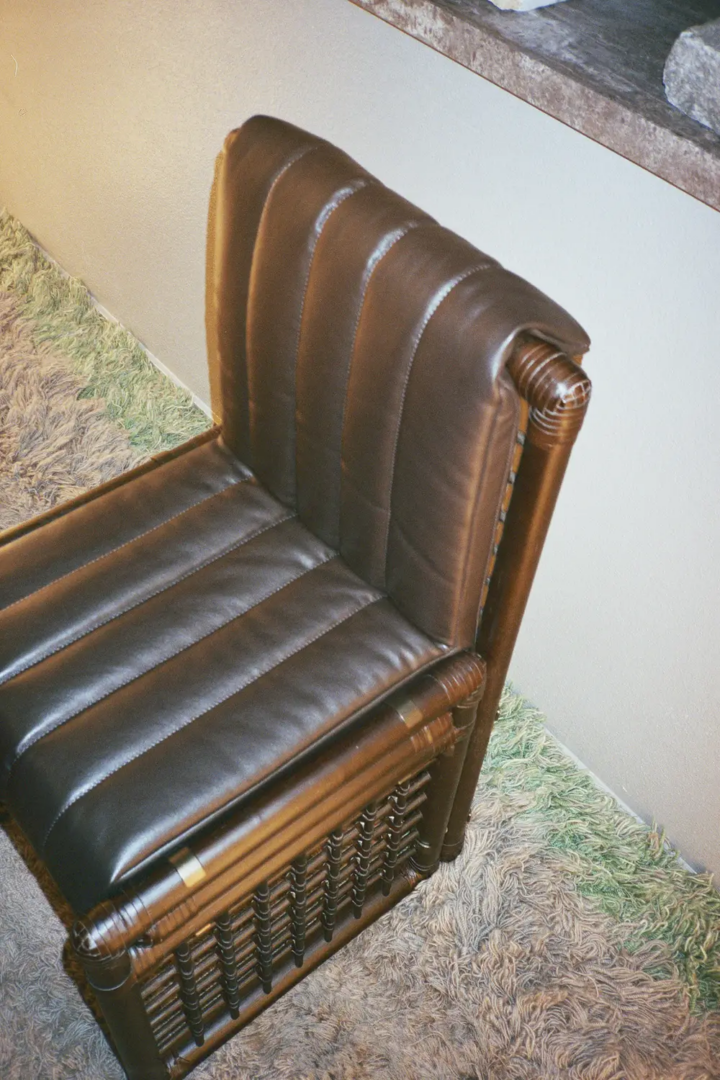
Yves Salomon Éditions × Michael Bargo — Kentucky, Paris: An American Private Room, Casa Mascagni
Kentucky-born interior designer Michael Bargo brought a transatlantic proposition to Milan Design Week through a collaboration with Yves Salomon Éditions. The project, Kentucky, Paris: An American Private Room, was installed at Casa Mascagni — a 1960s Milanese residence — as a fictional apartment: the home Bargo might have made had he been born into the Yves Salomon lineage and relocated to Milan. The domestic fiction gave the pieces psychological weight. Objects were lived with, not displayed.
The collection operated on two registers. Nine fur quilts drew directly on traditional American patchwork patterns — flower-basket motifs, geometric constructions, the asymmetric “crazy quilt” tradition of late nineteenth-century America — translated into mink, fox, marmot, and rex rabbit through the Paris ateliers, using archival hides from previous fashion commissions. Three iconic American chairs — a Frank Lloyd Wright angular wooden chair, a Paul Frankl rattan lounge chair, an Eero Saarinen Tulip chair — were recovered and re-upholstered through Yves Salomon’s material vocabulary: dark green mink on Wright’s disciplined geometry, skunk hide on Frankl’s looping bentwood silhouette, pale astrakhan on Saarinen’s sculptural calm. Each intervention preserved the structural identity of the form while adding a layer of material memory. American design history and French fur craftsmanship in the same objects, holding their separate logics intact.
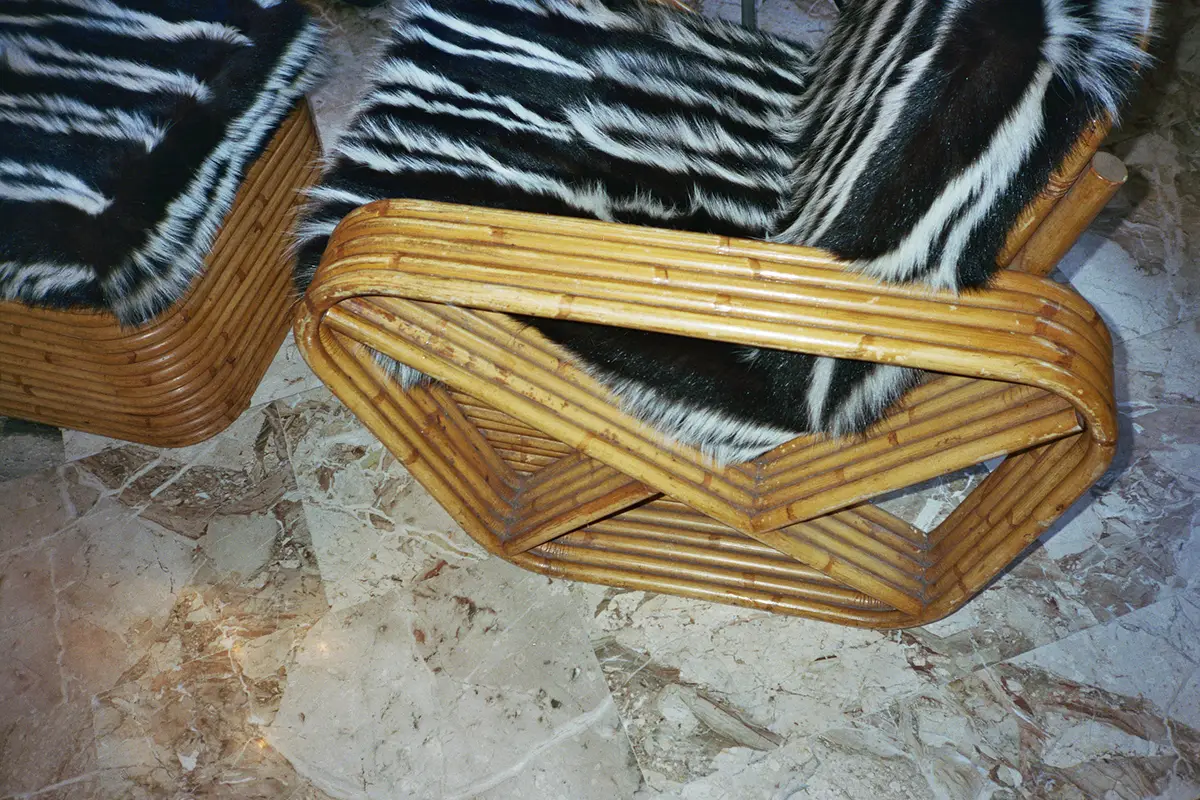
HEAD – Genève — No One Sees Them Like We Do, Alcova
At Alcova Milano 2026, HEAD – Genève presented No One Sees Them Like We Do. Notes on Animal Interiors, developed within the MAIA programme under Youri Kravtchenko. The exhibition unfolded as a sequence of micro-architectures built around the presence of animals in domestic space. Animals were treated as spatial agents. Each project operated through use rather than form: sound, movement, hydration, proximity, care.
A device activated by doves through rhythm and landing. A garden structured for dogs through texture and scale. Water infrastructures embedded for frogs. An object simulating companionship without a living body. A table shared with rats. A space dedicated to animal death. The projects worked through infrastructure rather than objects. Materials remained secondary. What defined the interiors was behaviour. Within the broader discourse of the week, the exhibition introduced a shift: space not as composition, but as a system of coexistence.