Perimeter Books, Melbourne: when curating, research and publishing come together
Perimeter Books in Melbourne treats independent publishing and the photobook as one process
Perimeter treats independent publishing as an ecology of attention: selecting the book, shaping its physical intelligence and constructing its audience
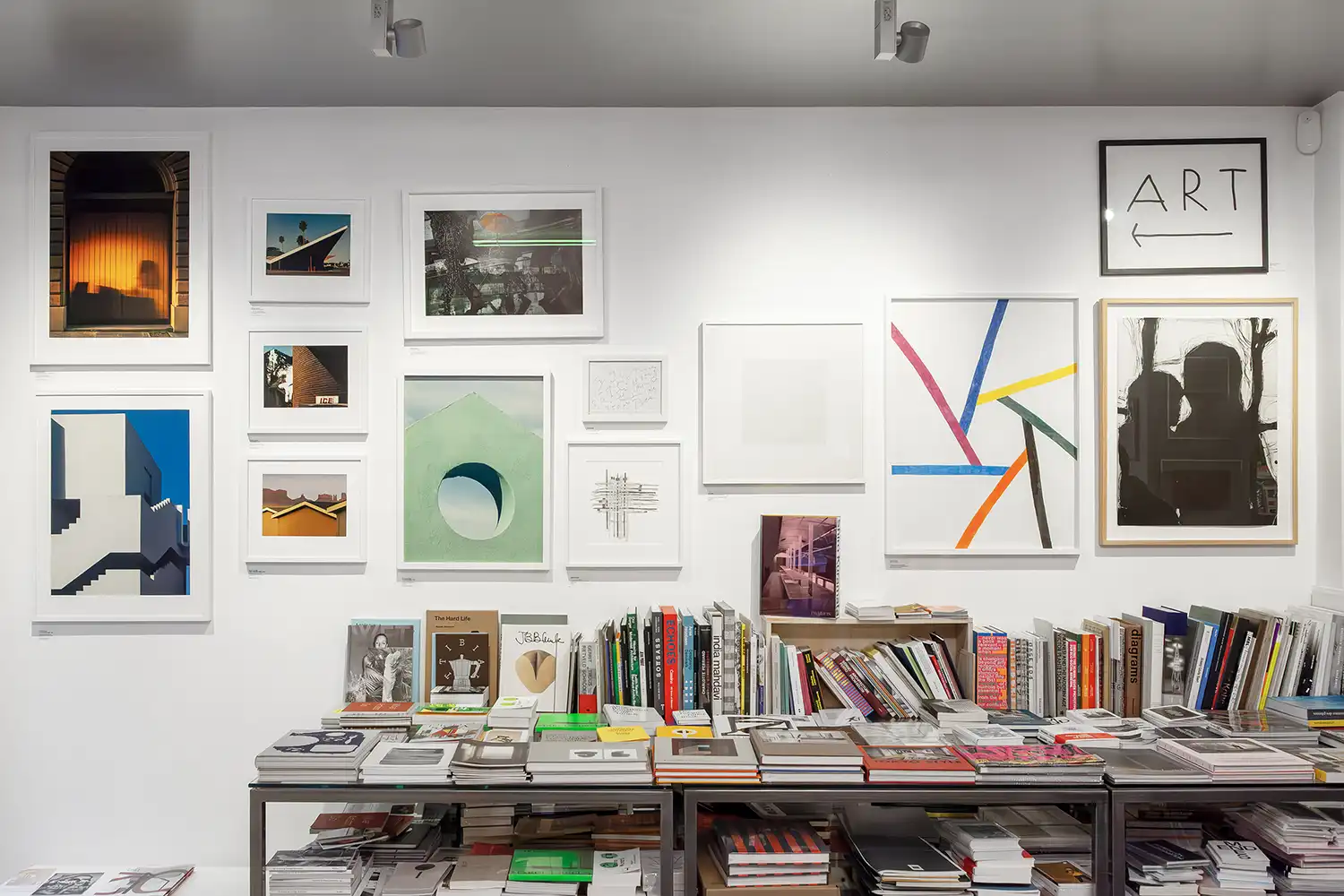
Perimeter Books, a bookstore in Thornbury, Melbourne, selects titles by how they are edited, designed and produced, as well as by subject. Dan Rule and Justine Ellis founded it in 2011. From that selection grew an imprint, a distribution house and a public program.
Mr. Rule has said the shop turns down titles on grounds of production. He places the selection in the interests and tastes he shares with Ms. Ellis. The shop does not claim to map publishing as a whole.
The catalog points to the criteria. Titles use exposed sewing, softcovers, non-standard formats and changes of paper or image scale. Bindings set the rhythm of reading. In Perimeter’s account, each material choice follows from the work.
Perimeter Books in Thornbury: independent publishing as one process
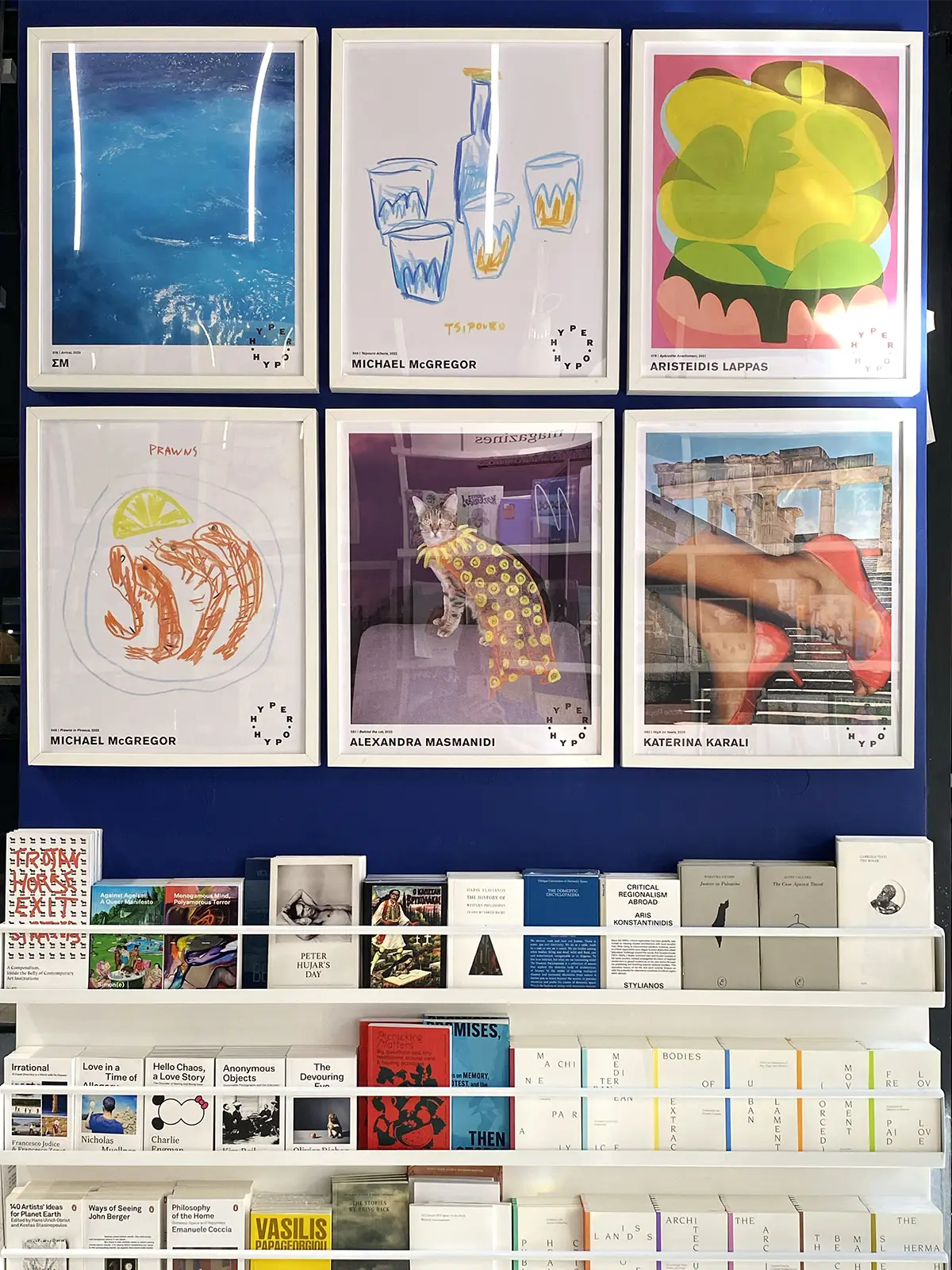
Perimeter Books occupies a shopfront at 734 High Street, Thornbury, a suburb in the north of Melbourne. It stocks books, editions and zines from independent publishers on photography, art, theory, design and architecture. Fifteen years on, the shop is one of four operations under the same name. Perimeter Editions, its imprint, began publishing in 2012 and lists more than one hundred titles. Perimeter Distribution, founded in 2013, supplies independent presses to retailers in Australia and New Zealand. A program of exhibitions, talks, launches, workshops, prizes and art book fairs completes the structure.
Mr. Rule and Ms. Ellis are co-directors and editors in chief. The four operations share one process, in which selection, production and circulation inform one another.
From Brooklyn to High Street: the origins of Perimeter Books
Before the shop, the pair ran a small press, ERM Books, whose titles they later sold on their own shelves. Mr. Rule came to publishing as a writer, with a background in poetry. The idea of a store took shape during a trip to New York. In Brooklyn, the pair visited a bookshop called By and By. They returned to Melbourne with the plan and set it aside.
The opportunity arrived in 2011. Modern Journal, a distributor of art books, had leased premises on High Street, Thornbury, earlier that year. It offered Mr. Rule and Ms. Ellis the front of the building. The fit-out drew on time the two had spent in Japan. The name followed the map. The store stood at the edge of Thornbury, on the perimeter of the suburb. At the opening, the founders described two aims. The first was to support independent publishers. The second was to present small press and art books to readers who did not know them.
The founders limited the selection. In the first year, they did not buy stock on sales grounds alone. Ms. Ellis described the shop as a selection of books with little or no presence in Australia. Each title came with a text on the shelf describing it.
Perimeter Editions: the photobook as a work in itself
The imprint describes its titles as works in themselves, made in collaboration with photographers, artists, curators and writers. Editors and designers work on content and form at the same stage. Design and copy editing happen in-house, within a unit called Perimeter Bureau.
For Mr. Rule and Ms. Ellis, a photobook does more than collect images. Sequence, syntax, rhythm and material translation reorganize the photographs inside it. The form of the book responds to its content. The result has its own duration and structure. It does not function as a catalog, a portfolio or an exhibition souvenir.
The process rests on collaboration between artist, publisher and designer. Mr. Rule describes the projects he values as those built on dialogue and critique among the three. Each party can move the work in another direction. The publisher acts neither as a technician nor as an authority that imposes one design across titles.
Eliza Hutchison’s Family Photos: how Perimeter Editions sequences a photobook
The making of Eliza Hutchison’s Family Photos shows the method. The artist, Perimeter and the designer Paul Mylecharane worked without a chronology. They worked through cropping, recurrence, fragmentation and pairs of images. The aim was to render the instability of memory. Mr. Rule described the process as improvisation, led by psychology rather than narrative.
Two titles from the catalog have received awards. In 2017, Steve Carr’s Variations for Troubled Hands won the Australian Photobook of the Year Awards, an award shared with the publisher. Family Photos reached the same shortlist. In 2018, To Note: Notation Across Disciplines won the Cornish Family Book Prize in the art and design publishing category.
Book series at Perimeter Editions: KNOWN and the CCP zines
Part of the catalog runs in series. KNOWN, co-published with Agency, an organization based in Collingwood, presents Aboriginal and Torres Strait Islander artists. Each volume pairs an artist with writers, with the aim of exchange between communities. The first two volumes focus on Marrnyula Munuŋgurr and Katie West. Munuŋgurr is a Yolŋu printmaker from Yirrkala, in Arnhem Land. In 2020, she won the bark painting category of the National Aboriginal and Torres Strait Islander Art Awards. West is a Yindjibarndi artist. She works with textiles, dyes, video, sound and social practice.
With the Centre for Contemporary Photography (CCP), in the suburb of Fitzroy, the imprint issues a numbered zine series. Issues include Patricia Sofra’s Subside and Hussein Abdirahman Mohamud’s Street. Institutional histories form a further strand. Dredging up the Past: Gertrude 2005–2025 documents two decades of Gertrude Contemporary, Perimeter’s partner at Same Page.

Colonial history, gender and research in the Perimeter Editions catalog
Other books extend the list beyond photography. Michael Cook’s Conditioned reworks the imagery of colonization from a Bidjara perspective. Ying Ang’s Fruiting Bodies uses the mushroom as a metaphor, from a feminist position, to question the imperative of reproduction. On Country centers First Peoples’ relationality, and photography as truth-telling, self-determination and collaboration.
The CoVA program applied the same process to research. It organized publishing around postnational art histories, feminism and intersectionality, and art and science. Its books combined research in progress, dialogues between academics, artist responses and essays.
Two book prizes: the Perimeter Small Book Prize and the International Photobook Prize
Perimeter runs two prizes, each held every two years. Both end in a publication rather than a cash sum. The Perimeter Small Book Prize began in 2018. Its first winner was Second Sight, by the Melbourne photographer Sarah Walker, who went on to develop the book with Perimeter’s editors.
The second prize runs in partnership with PHOTO, the photography festival held in Melbourne. Perimeter Editions publishes, promotes and distributes the winning project through Perimeter Distribution. The photographer works with Perimeter’s designers and editors on sequencing, materials and page count. The first edition drew more than one hundred thirty submissions from around the world. The jury selected David Rothenberg’s Roosevelt Station, launched during the festival in 2021.
Perimeter Distribution: circulation as part of independent publishing
Perimeter Distribution represents independent publishers of photography, art, design and theory, and sells their books to stores across Australia and New Zealand. It also acts as the sales agent in both countries for Idea Books. The Amsterdam house supplies art books to retailers and institutions. The distribution arm closes a loop. A title can move from the Bureau’s desks to the shop and to other bookstores within one company.
For Perimeter, publishing does not end when a book leaves the printer. Mr. Rule lists the work that follows: sales appointments, emails, logistics, promotion, packing, travel and relationship-building. In his account, this work decides whether a title reaches readers abroad. He describes Perimeter as a business based in Melbourne that operates across countries, not one bound by its geography.
Another activity extends the shop beyond High Street. Perimeter selects and installs book collections for institutions, galleries, hotels and brands. Clients have included COMME des GARÇONS, the Centre for Contemporary Photography and the Powerhouse Museum in Sydney. In Brisbane, it has worked with the Institute of Modern Art.
Independence as infrastructure: the economics of Perimeter Books
Mr. Rule describes Perimeter as a project that became a business out of necessity. The model grew from finding ways to survive, and later to expand. In 2021, he noted that drawing a wage had taken many years. Independence, in this account, does not mean working outside commerce. It means building a business structure that protects the choices of the editors.
Each arm carries part of the risk and the knowledge. Retail shows what readers respond to. Publishing produces the books. Distribution extends reach and supports presses whose lists align with Perimeter’s. Fairs and events build visibility and relationships. Perimeter does not publish figures on finances, print runs or sales.
Same Page and Volume: art book fairs in Melbourne and Sydney
Perimeter co-presents two art book fairs. Same Page, organized with Gertrude Contemporary, has run every year since 2023. The 2026 edition takes place at Gertrude, at 21–31 High Street, Preston South, on October 24 and 25. The fair focuses on independent publishers, with talks, launches and workshops beside the stalls.
Perimeter presents Volume: Another Art Book Fair in Sydney with Artspace and with Printed Matter. The New York organization also runs art book fairs in New York and Los Angeles.
From Thornbury to Paris: Perimeter at art book fairs abroad
The imprint has exhibited at fairs in the United States, Europe, Asia and the Middle East. In May 2026, Perimeter exhibited at Printed Matter’s LA Art Book Fair in Pasadena. It presented Takashi Homma’s This Is Not My Cat, Louis Porter’s Search Engine and Jesse Marlow’s (De)Compositions. In November, Perimeter exhibits at Paris Photo. Selection, publishing and distribution now run from High Street.
Perimeter
Perimeter is a bookstore, publisher, distributor and platform for art publishing in Thornbury, Melbourne, founded in 2011 by Dan Rule and Justine Ellis. The store stocks books, editions and zines from independent publishers on photography, art, theory, design and architecture. Its imprint, Perimeter Editions, has published more than one hundred titles since 2012. Perimeter Distribution, active since 2013, is the Australian and New Zealand agent for Idea Books. 734 High Street, Thornbury, Victoria 3071, Australia.
Editorial Team