At Prada Frames, Alfredo Jaar spoke about images without showing a single one
Alfredo Jaar returned to the argument at the center of his work: images do not represent reality, they construct it. From Real Pictures to Searching for Africa in Life, why visual culture is always a political act
Alfredo Jaar has come to believe that the photograph lies. Not through manipulation or bad faith, but through the irreducible distance between the person who lives inside a reality and the person who arrives to document it. That distance — geographical, cultural, historical, existential — cannot be closed by proximity, technique, or good intention. It can only be acknowledged. And the acknowledgment, when it is serious, changes everything about how an image is made, withheld, or destroyed.
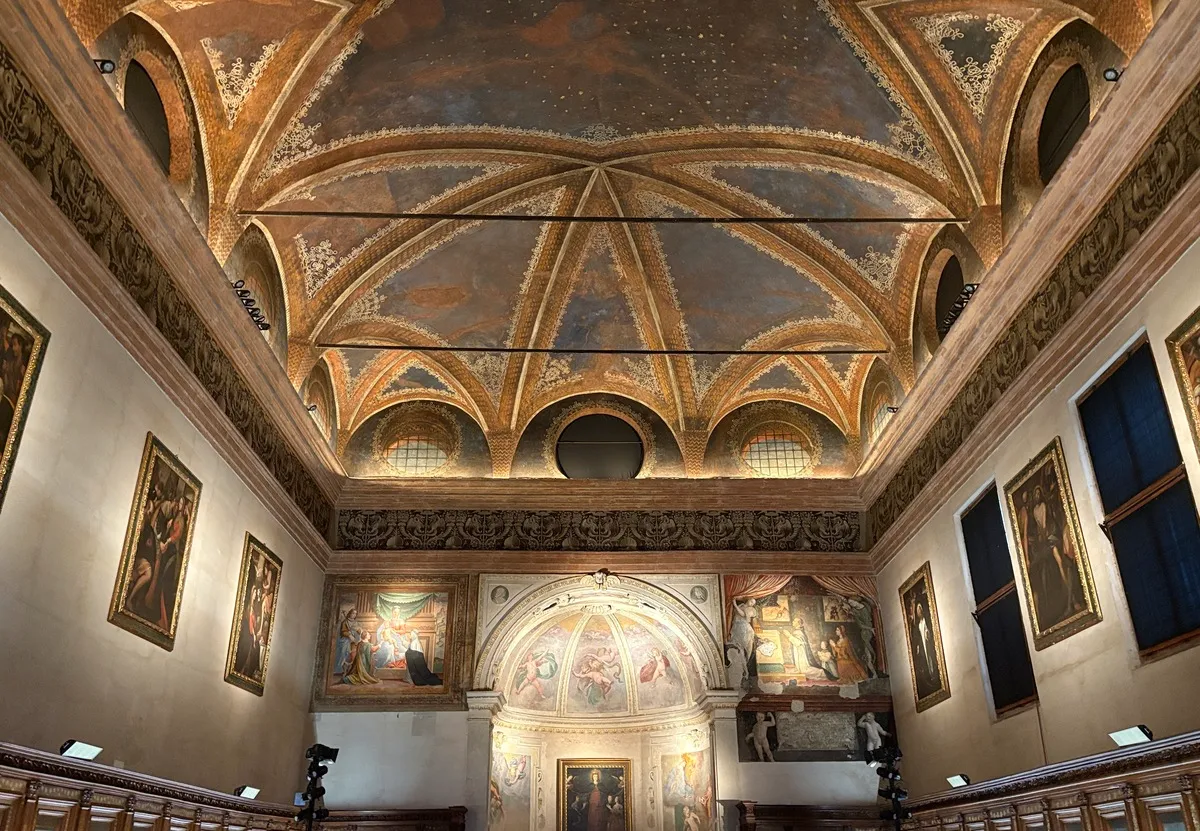
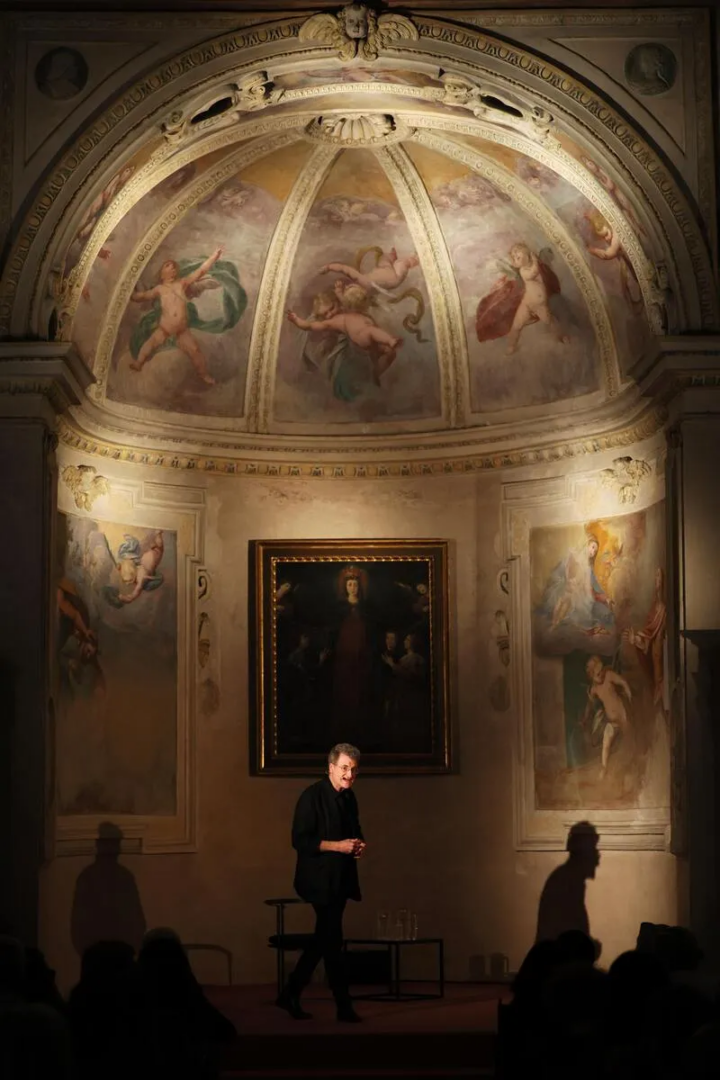
This is the argument at the center of Jaar’s practice, and it surfaces with particular clarity at Images and Political Imagination, a panel held as part of Prada Frames — Prada’s annual cultural program, curated this year by Formafantasma — in the Sacrestia Nuova of Santa Maria delle Grazie in Milan, where Jaar appeared alongside Alice Rawsthorn and Jonas Staal. Political imagination, for Jaar, is not a metaphor. It is the faculty that the image, when it works, is supposed to activate — and the one that its failure most consistently destroys. Jaar speaks at length about photographs. He shows none. The choice is not incidental. It is, as with every formal decision in his work, a thesis.
To make an image is a political act. To be careless about it is not neutrality. It is complicity.
The premise he returns to, borrowed from Chinua Achebe, is that art is our attempt to change the order of reality that was given to us. Jaar uses it not as a quote but as an operational principle — the thing that determines, before any formal decision is made, what a project is actually for. Images, he argues, do not represent reality. They construct it. Each one carries a position, a point of view, a will to shape what is perceived as true. The billions of images circulating at any given moment are not documentation. They are arguments — advanced with varying degrees of self-awareness — and their cumulative architecture determines what is seen as real, what registers as human, and what is granted permission to matter.
What interests him most, and what has driven his practice for four decades, is the specific failure of the image to produce the moral response it was assumed to guarantee. The belief that showing atrocity would compel action — that the photograph of suffering would, by virtue of its existence, generate the conscience necessary to stop it — has proved, repeatedly and at great cost, to be false. Jaar knows this from experience. In July 1993, three months after the plane carrying the presidents of Rwanda and Burundi was shot down over Kigali, triggering a genocide that would kill one million people in fewer than one hundred days, he traveled to Rwanda. He spent three weeks on the ground, speaking with survivors and moving through refugee camps. He returned to New York with more than 3,000 photographs. Similar images had already reached the press. The world had seen Rwanda and had done nothing. “Since you did not react when you could see,” he says, “perhaps you will react when you cannot.”
Alfredo Jaar’s Real Pictures: The Ethics of the Withheld Image
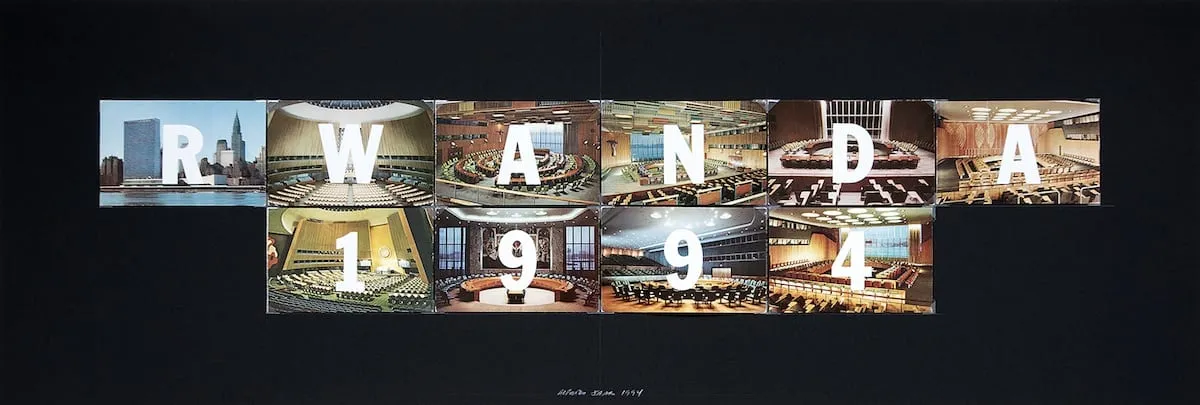
Real Pictures, completed in 1995, was built on that inversion. Five hundred of the most difficult images from Rwanda, each sealed inside a black archival box. On the exterior of each box, printed in white: a written description of the photograph inside. Visitors walked through a dark room among them. They could read. They could not open anything. The moral work the image had failed to initiate was transferred to language, and to the imagination that language, in the right conditions, can compel. It was not concealment. It was, Jaar explains, an act of preservation — holding the photographs for a future moment when society might be ready to look at them with the seriousness they required.
The question sits at the core of photography ethics: whether the choice not to show violence directly still functions as a political gesture — or whether, in a context of total visibility, it risks being read as evasion rather than protection — is one he takes seriously. The strategy of absence only works, he says, if it creates pressure. “Subtraction that asks nothing of the audience is not a political act. It is aestheticism with a clear conscience.” The difference lies in the precision of what surrounds the void — in the construction of the encounter, and in what the absence forces the viewer to bring to it. Withholding is not the same as omitting. The sealed box is not a refusal to look. It is a redirection of where the looking happens: inward, where it cannot be scrolled past.
This distinction has only sharpened in a media landscape where the image of atrocity has become so available as to produce a kind of permanent numbness. The photographs from Gaza — when they exist, when they are not destroyed along with the people who made them — enter a visual system already saturated with evidence that the world has proved incapable of converting into action. The photographers being targeted are not collateral. They are the target. Because the image, when it exists, forces a confrontation that power prefers to avoid. The logic runs continuously from Rwanda to the present: not a failure of documentation, but a failure of the system within which documentation circulates.
Six Seconds: Alfredo Jaar and the Honest Blur
Within the Rwanda project — five years, twenty-five distinct works — there is one image that became the axis of everything. Jaar had gone to a refugee camp to interview a young girl who had witnessed the murder of her parents. When he approached her, she turned and walked away. She could not speak. In that moment of total inadequacy — of language, of presence, of every instrument he had brought with him — he raised his camera. The photograph was out of focus.
For five years he returned to it. He wanted to use it – he could not. He is, by his own description, a perfectionist, and a blurred image felt like a failure. But at the end of those five years, exhausted and resolved to make one final piece before closing the project, he looked at it again and understood. He was an artist from Chile, living in New York, trying to convey the experience of that girl to an audience in Paris or Milan. The distance was absolute. The idea that he could represent that reality with precision was not a limitation to overcome. It was the structural condition of what he was attempting.
“Everything you do,” he says, “is out of focus. It was not a technical failure. It was an honest description of the distance.”
He titled the work Six Seconds — the estimated duration of his time with her. It became the closing piece of the Rwanda project and its clearest argument: not about genocide, but about representation itself. About what it means to stand outside a reality and try to speak it into the world. The blur is not a flaw. It is the only accurate description of the gap between the person who was there and the person who was not — between the experience and the account of it, between the image and the world it cannot fully hold.
This condition does not belong only to Rwanda. It is the structural condition of every attempt to represent a reality one does not inhabit. It is what makes the refusal to show — the sealed box, the withheld image, the decision to let language carry what the photograph cannot — not a retreat from responsibility but its opposite: an acknowledgment that the easy image, the one that offers the viewer the comfortable position of witness without implication, is itself a form of dishonesty. The obscene is not the image of suffering. The obscene is the image that makes suffering consumable.
Language is occupied: from Rwanda to Gaza
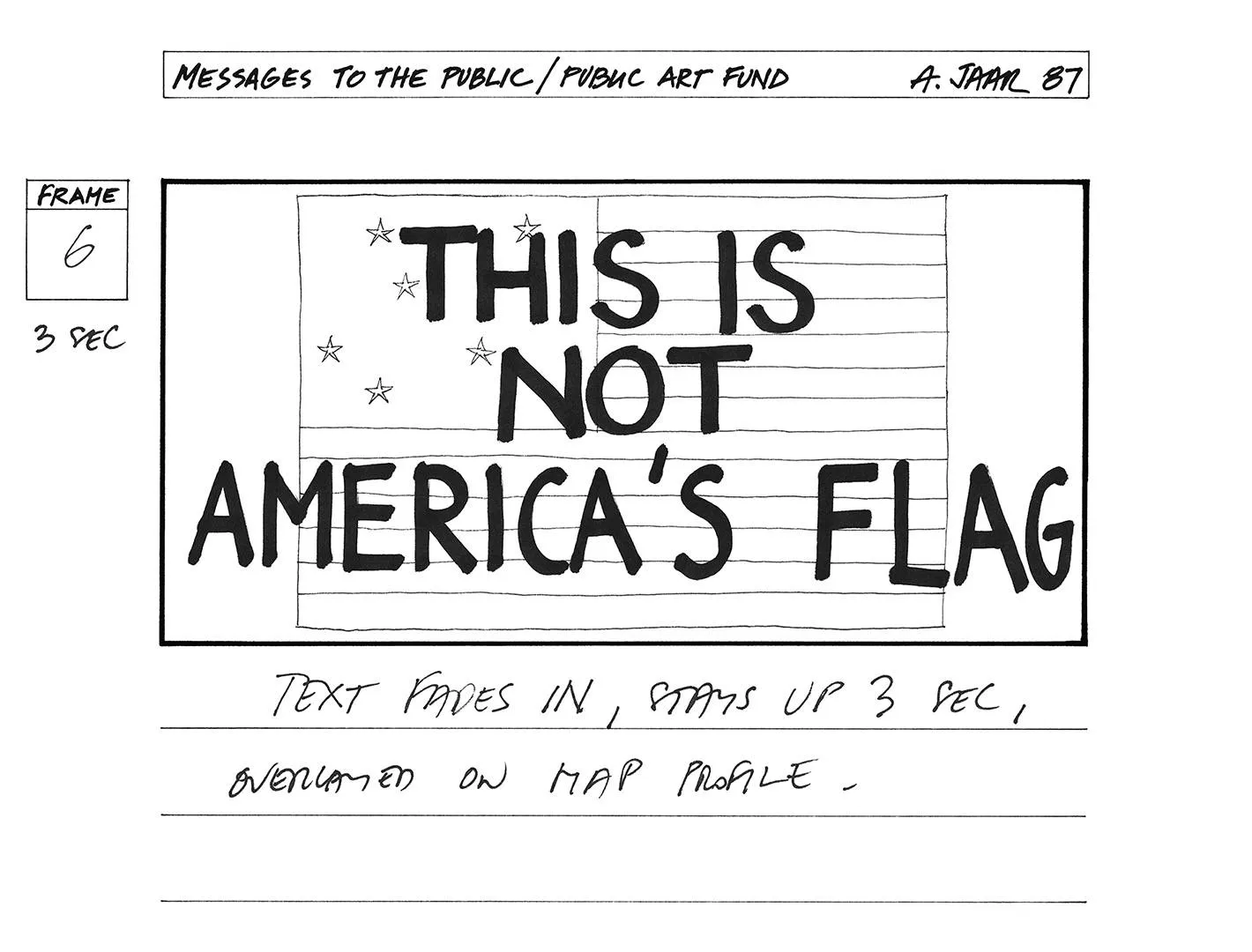
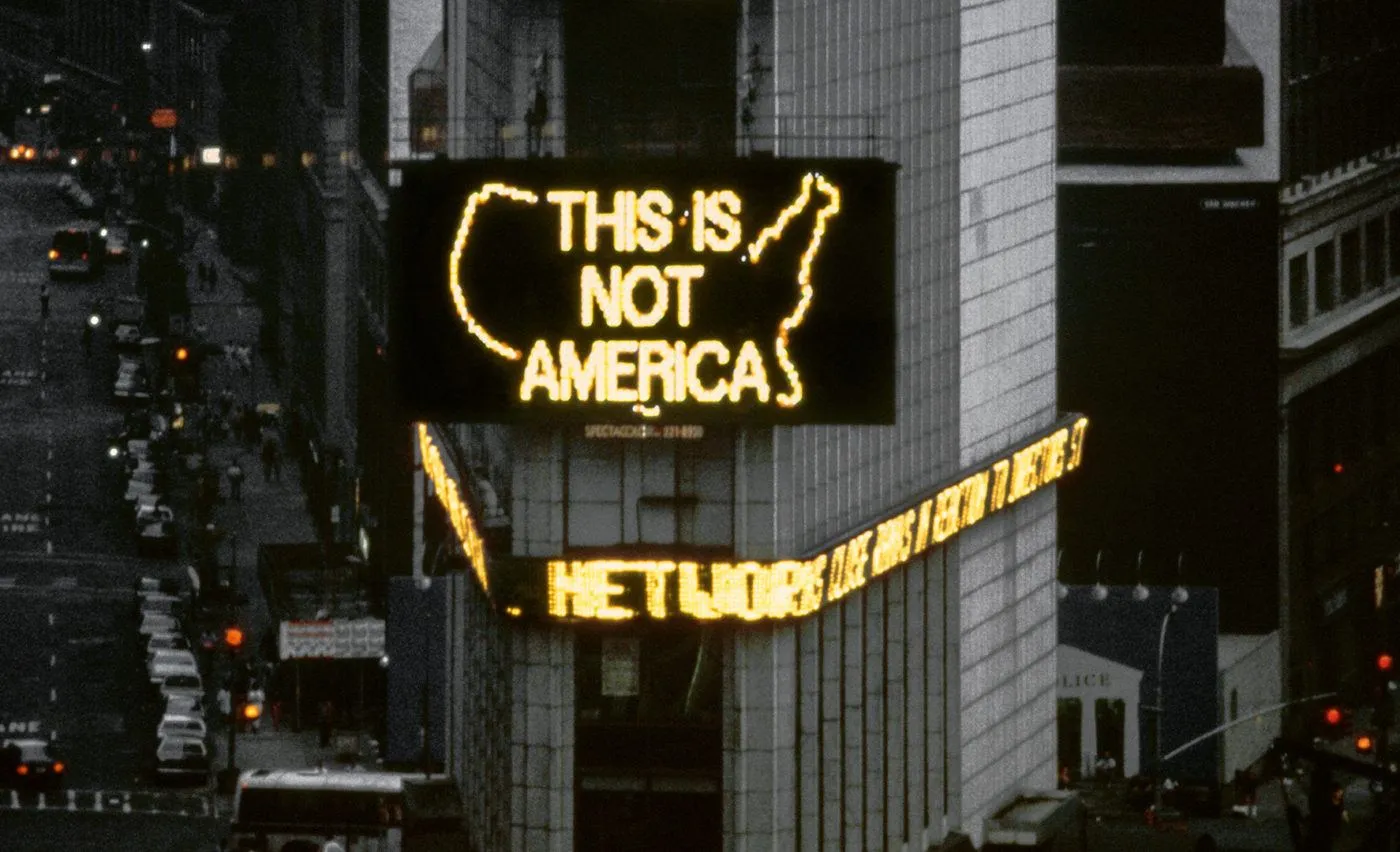
In Messages to the Public: A Logo for America, made in 1987, Jaar was already working on a related occupation — that of language by power. Words are seized by states and returned to the public emptied, stripped of the meaning they once carried, converted into instruments of the very exclusion they once named. Language, he says, is not innocent. Language is always a reflection of geopolitical reality.
The observation, made nearly four decades ago, has not aged into irrelevance. In a period when the occupation of physical territories runs in parallel with the occupation of semantic ones — when words like refugee, resistance, ceasefire, terrorism are managed as carefully as land, when algorithms decide which realities are allowed to appear and which are made to vanish — the system he was describing in 1987 has not changed. It has accelerated. “The system that decided Africa would not appear on the cover of Life,” he says, “and the system that decides which images from Gaza are allowed to circulate are not metaphorically similar. They are operationally continuous.”
What remains for the artist when even language is occupied? “Precision,” he answers. “The specific, the named, the counted. These are what power finds hardest to absorb, because absorption works through generalization — flattening the particular into the category, the person into the statistic. A name resists that. A duration resists that. Six seconds resists that.”
Searching for Africa in life: the visual infrastructure of systemic racism
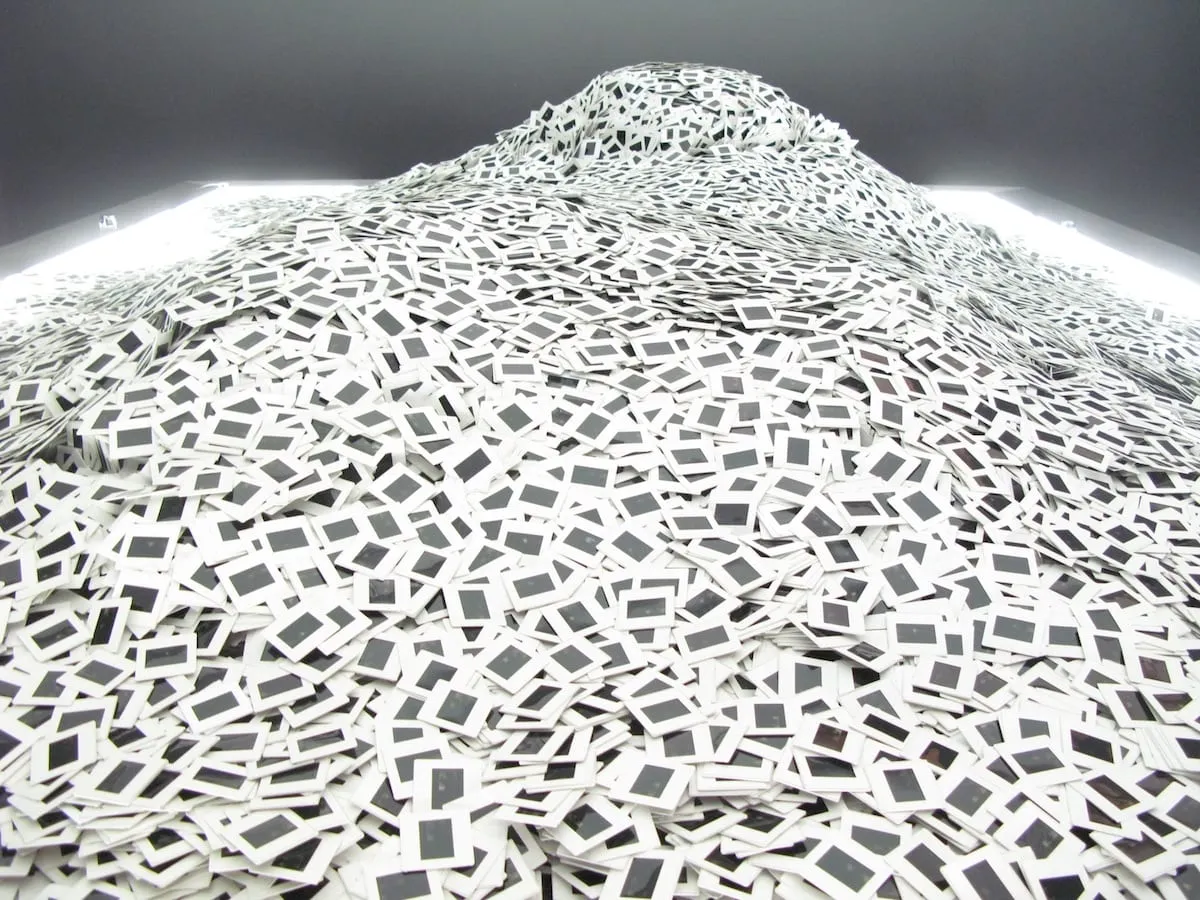
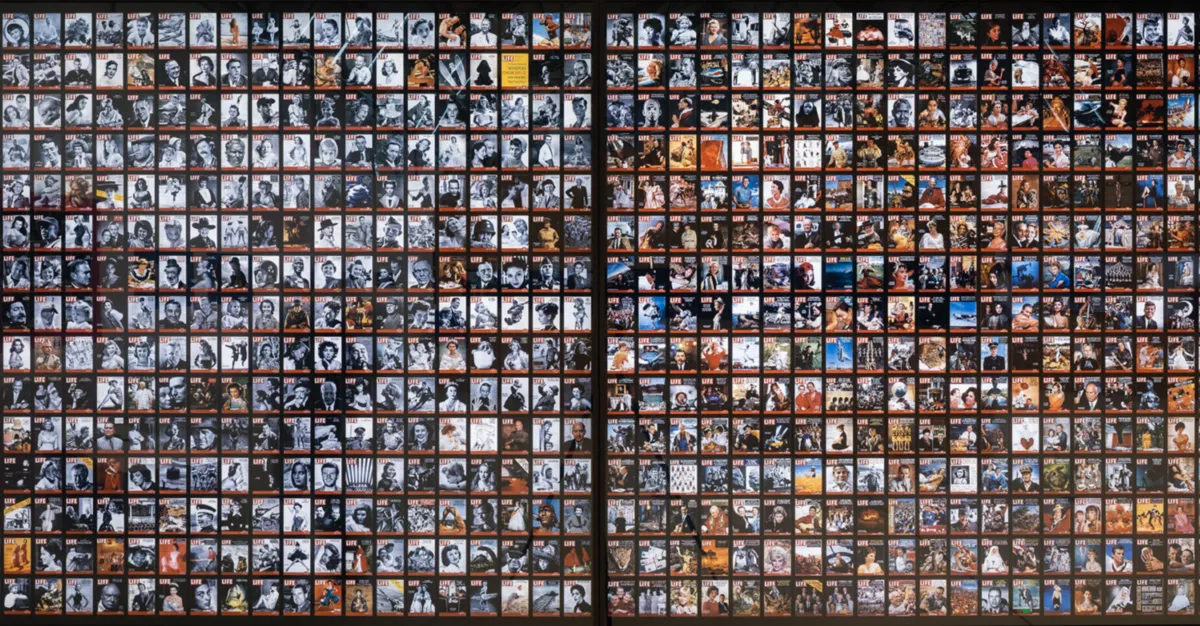
The structural conditions that made Rwanda not only politically but visually possible are what Jaar examined in Searching for Africa in Life — a work in which he reproduced all 2,128 covers of Life magazine, from 1936 to 1996, in sequence, unaltered. Moving through sixty years of covers, what you find is a handful of images related to Africa, most of them tied to conflict or crisis. The Africa in which a substantial portion of humanity lived, created, governed, and suffered across those decades is essentially absent from the archive that claimed to document the world. This is systemic racism not as ideology but as visual infrastructure: the accumulated effect of millions of small editorial decisions about what was worth showing, hardened over time into the conditions within which certain lives stop registering as lives. The Rwandan genocide did not happen because the world lacked images. It happened, in part, because the world had spent sixty years building a system in which certain realities were structurally invisible — in which the blur was not a photographic condition but a political one.
Inferno and Paradiso: on indifference as a political condition
Antonio Gramsci wrote, from a prison cell, that he hated the indifferent — that whoever truly lives cannot help being a citizen and a partisan. Jaar made Infinite Cell in 2004, exploring the tension between physical confinement and intellectual freedom. Today, when indifference has come to function less as a moral failing and more as a collective survival strategy — a way of managing a volume of catastrophe that no individual capacity was designed to absorb — the question of what it means to choose to be partisan, inside and outside of art, yields no comfortable answer.
Gramsci’s formulation, Jaar suggests, is not a command. It is a description. The person who remains in genuine contact with the reality of their time cannot sustain indifference — not because it is forbidden, but because at a certain level of engagement it is simply no longer available. “The question is not whether to care,” he says. “The question is what to do with it.”
A tribute — to the photojournalists who leave their homes to enter the most dangerous places on earth
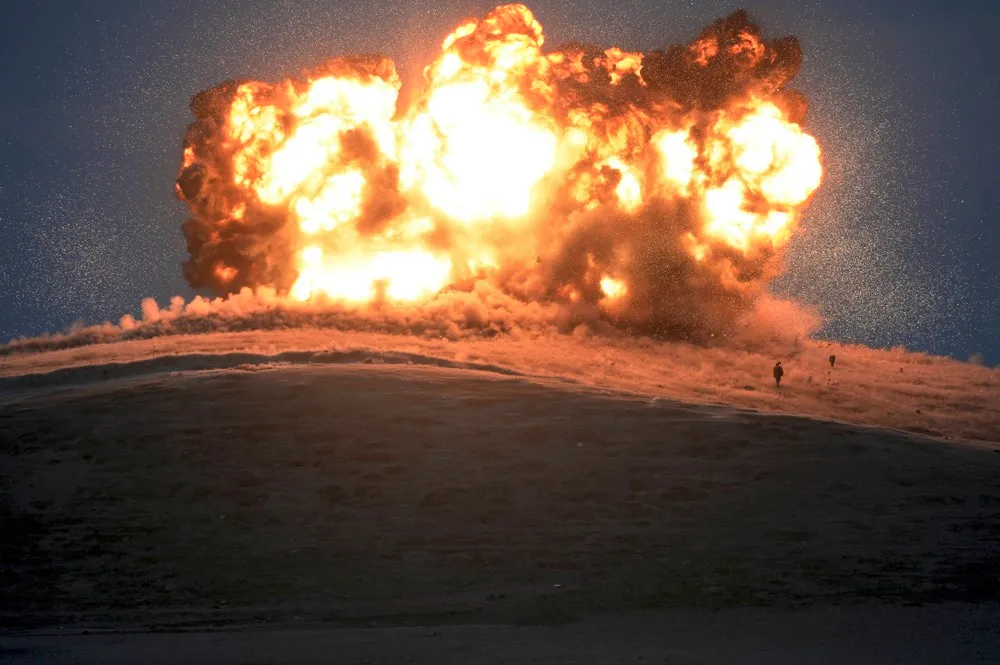
Inferno and Paradiso is where that question becomes a room. Jaar invited twenty photojournalists from around the world to select two images from their archives: the most horrific photograph they had ever taken, and the most joyful. Across all twenty, the response was identical: for the horrific image, they knew immediately. For the joyful one, they had to think. The installation presents the twenty images of inferno in a large dark space. Visitors move through it; their shadows fall onto the projections, implicating them. After twenty minutes, all images change simultaneously to paradise. If you leave too soon, you miss half. The structure enforces the attention that everything else conspires to prevent.
It is also a tribute — to the photojournalists who leave their homes to enter the most dangerous places on earth because they believe the image they bring back will matter. More than three hundred journalists and photojournalists have been killed in recent years while documenting conflicts. They are killed because of what they carry. The image is dangerous not because it is violent, but because it is true.
The Image that cannot be shown
Perhaps art cannot change the world. Jaar says this without apology and without resignation — it is a fact he has made his peace with, one that does not diminish the work but locates it correctly. What art can do is show that the world can be different. That the order of reality we have inherited is constructed, not given, and therefore can, in principle, be otherwise.
Speaking at Prada Frames about images no one in the room could see, Jaar was demonstrating exactly that. The audience had to imagine the sealed boxes, the blurred photograph, the sixty years of missing covers. They had to do the work themselves, in the gap between the description and the thing described. That gap — between the reality and the representation of it, between the person who was there and the person who receives the account — is where his entire practice lives. It is where all honest representation eventually arrives.
The blur is not a flaw. It is the only accurate description of the distance between us and what we are trying to see. And the image that is not shown — withheld not out of timidity but out of precision, out of respect for what the photograph cannot hold — is sometimes the one that sees most clearly.
Ario Mezzolani