Primo Piano: a perfume inspired by the unfinished palace of Luisa Casati in Venice
Primo Piano transforms Palazzo Venier dei Leoni into an olfactory project built around tuberose, incense, leather accords, cultural memory, and twentieth-century Venetian lifestyle
Primo Piano by Casati Laboratory: a Venetian salon in perfume form
Venice appears in the history of perfume. Not only because of the spice routes that once crossed the lagoon, but also because the city has functioned as a theater of self-representation. Palazzi, masked rituals, salons, literary circles, aristocratic eccentricities: Venice has transformed identity into mise-en-scène.
Primo Piano, the extrait de parfum by Casati Laboratory, enters this territory . The project combines olfactory composition, artistic direction, and the reconstruction of a cultural imaginary tied to Luisa Casati Stampa and the spaces she inhabited. An Italian aristocrat active between Venice, Paris, and London during the early twentieth century, Casati turned her life into an act of self-staging.
The fragrance is the first chapter of Collection Exhibition, the second line developed by Casati Laboratory with Christopher Chong, former creative director of Amouage. The collection focuses on residences, salons, ateliers, and places associated with artistic production and cultural exchange. Venice becomes the opening act.
Elena Paolini, founder of Casati Laboratory, describes the project as rooted in the intellectual salons of the twentieth century. Luisa Casati moved through European avant-garde circles where aristocracy, literature, theater, visual arts, and performance overlapped.
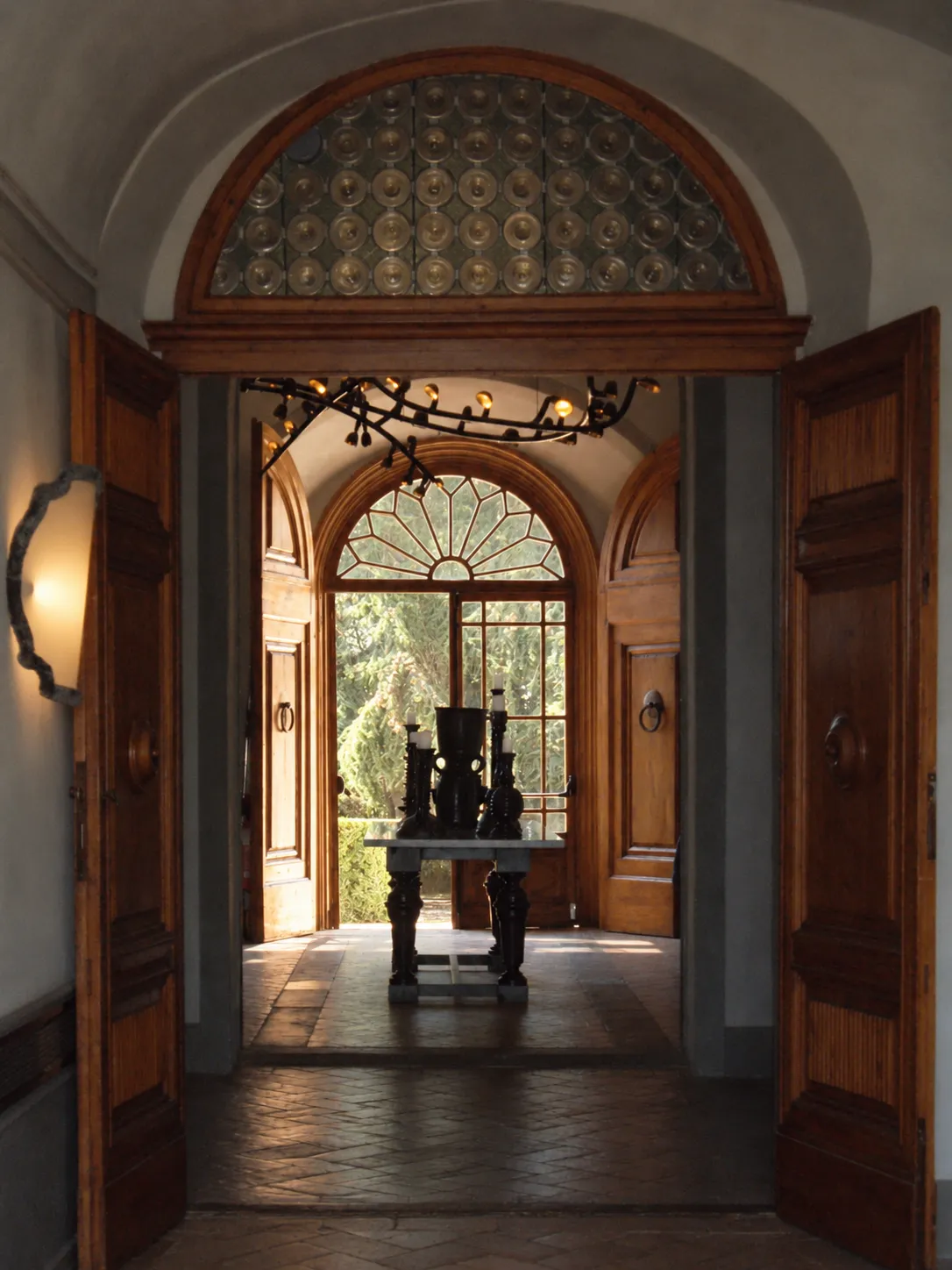
The perfume takes its name from Palazzo Venier dei Leoni, the unfinished residence on the Grand Canal later transformed into the Peggy Guggenheim Collection. Unlike the surrounding Venetian palazzi, its structure develops on a single level facing the canal. Primo Piano refers to that anomaly: «It is the only unfinished palace on the Grand Canal».
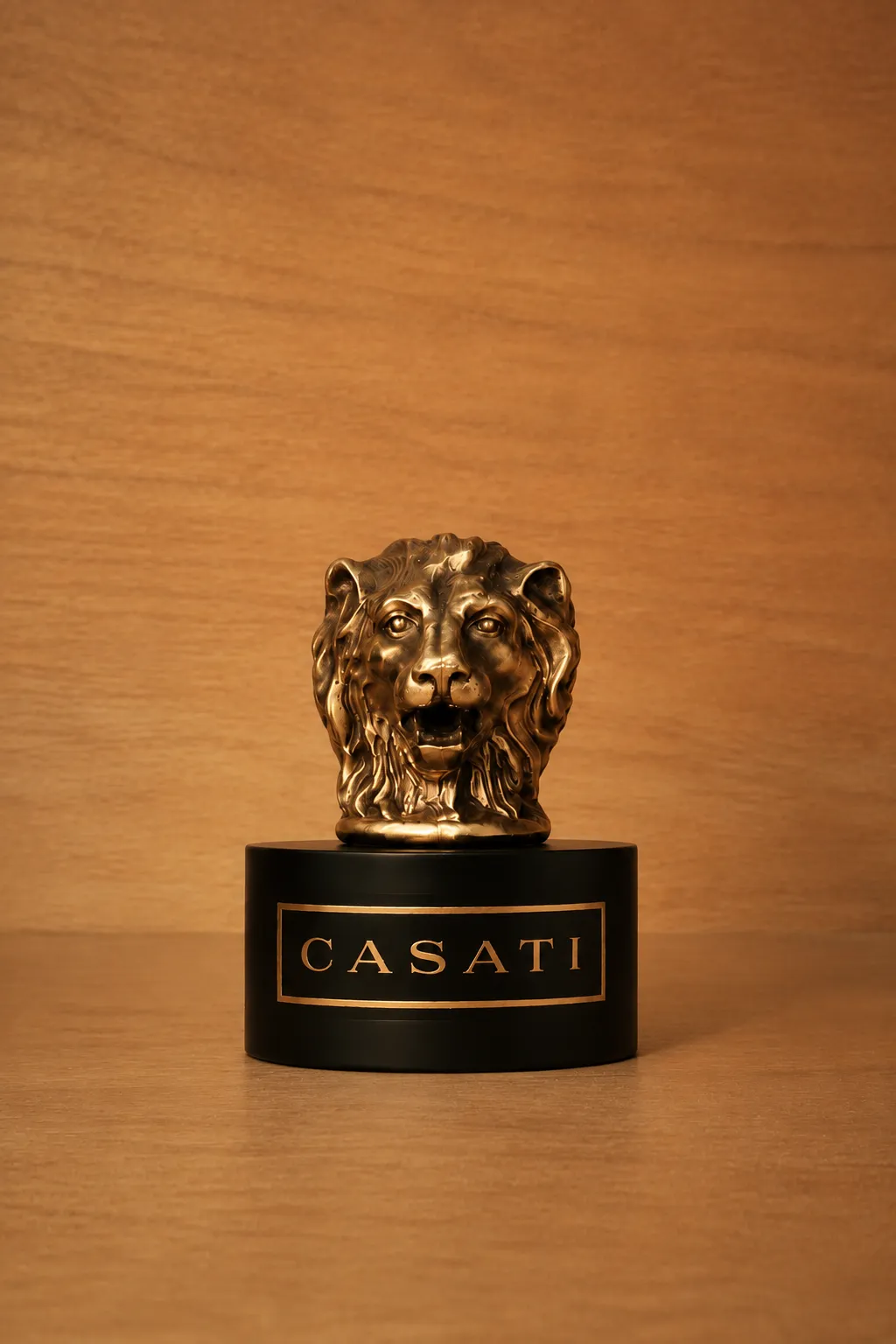
The connection between the fragrance and the architecture extends into the object itself. The bottle is produced in alabaster-white glass with a gold lion emblem — the lion recurring both as a symbol of Venice and as the iconographic mark adopted by Casati Laboratory: «Nothing is produced in the East; everything is made by Italian artisans».
Tuberose from Grasse and the return to raw materials in perfumery
Primo Piano is structured around tuberose from Grasse, while tobacco, myrrh, incense, and animalic accords construct the foundation of the extrait. The fragrance pyramid lists pink pepper, ambrette, and a poison accord in the opening; tuberose, ylang-ylang, latex, and leather in the heart; tobacco, myrrh, cedarwood, incense, and animalic notes in the base.
Karine Vinchon-Spehner, the French perfumer who composed the fragrance, has worked with Robertet, the Grasse-based company specialized in natural raw materials and extraction techniques. Referring to the tuberose used in Primo Piano and to her visit to Robertet’s facilities, Paolini says: «There is this connection with the flower, with the care that gives life to an essential oil that cannot be compared to synthetic tuberoses».
The attention to raw materials in perfumery reflects a shift within niche fragrance culture. Provenance, cultivation methods, extraction techniques, and sourcing practices become part of the narrative surrounding a fragrance. In perfumery history tuberose is linked both to the flower cultivation tradition of Grasse and to an olfactory imagery built around sensuality, excess, and religious symbolism.
Vinchon-Spehner connects these tensions to Luisa Casati: «I used green tones, but also something almost toxic. There is smoke, latex, leather, and different musks as well».
Karine Vinchon-Spehner and the construction of tension through flowers
Although Christopher Chong shaped the curatorial direction of Collection Exhibition, French perfumer Karine Vinchon-Spehner developed the olfactory structure of Primo Piano.
Vinchon-Spehner has collaborated with fragrance houses and independent brands. Her work relies on contrasts between natural richness and controlled structure.
This attention to balance emerges in the technical construction of Primo Piano. She focused on selecting fractions of incense and floral materials in order to preserve brightness and freshness inside a composition built around dark notes. The fragrance develops through shifts in intensity rather than through a linear floral construction.
The composition reflects the role perfumers now occupy within niche fragrance culture. In artistic perfumery, noses are no longer invisible technicians working behind luxury branding structures. Their methods, ingredient choices, sourcing preferences, and stylistic signatures have become part of the cultural narrative surrounding the perfume itself.
Christopher Chong and the cultural life of niche perfumery
Before entering fragrance, Christopher Chong studied literature, opera, and cultural studies in London. Throughout his career he has described perfume as a narrative form connected to memory, theater, music, and visual culture rather than to luxury marketing alone. During his years at Amouage, Chong pushed the Omani house toward conceptual and literary structures, transforming fragrances into narrative systems built around atmosphere and symbolism.
«Today, for us, the work of art is the perfume», Paolini says. Primo Piano attempts to reposition the olfactory composition as the artistic gesture.
Speaking about his collaboration with Casati Laboratory, Chong describes the project as a form of «cultural collaboration» rooted in a search for creative independence.
Ethics, aesthetics, and the unfinished palace on the Grand Canal
Casati Laboratory frames perfume through curatorial language. Paolini is a patron and curator who gathers perfumers and artists around a shared imaginative universe. Her background explains this approach. A jurist and scholar linked to the University of Bologna, she studied under Francesco Galgano, an Italian legal scholar who also practiced painting. From him she learned that interpretation is itself a creative act: «To interpret is always to give form to what did not previously exist».
The project therefore situates itself between fragrance production, collecting culture, exhibition design, and historical reconstruction. The references to salons, artistic circles, Venetian palazzi, and intellectual exchange function as an attempt to build a cultural framework around scent. Collection Exhibition places material production, cultural research, and visual identity on the same level, moving between ethics and aesthetics rather than treating them as separate dimensions.
At the same time, Primo Piano embraces theatricality: «At Palazzo Venier dei Leoni Luisa Casati held extravagant parties involving circuses, animals, and staged spectacles».
That tension between spectacle and restraint emerges in the fragrance itself. According to Paolini, the perfume «approaches timidly» before expanding and filling the room. Rather than relying on impact, the composition develops over time, reactivating itself through movement, skin, and temperature. Primo Piano was conceived as «a light canvas» that each wearer can complete, a surface onto which memory, projection, and interpretation continue to accumulate.
Collection Exhibition is expected to expand toward other locations connected to literature, art, and intellectual life. Paolini describes the development of the project as «a journey» through places associated with Luisa Casati, Gabriele D’Annunzio, and intellectual exchange across Europe.