The SPARE project relaunches hemp in the EU for prefabricated and biobased materials
Prefabricated panels, composites and road signs: the European model aiming to make industrial hemp a competitive construction material, from cultivation to on-site assembly
SPARE project: hemp enters prefabricated construction
For years, industrial hemp remained on the margins of the construction sector. Its most widespread applications involved food, cosmetics and textile production, while the use of hemp shives in construction materials continued to develop in a fragmented way, mainly through small building sites, university experiments and companies specializing in bio-construction. In recent years, the growth of the biobased materials market, regulatory pressure on emissions and interest in low-impact local supply chains have increased attention towards this material, valued for its breathability, its ability to regulate indoor humidity and its thermal insulation properties.
This is the context in which SPARE was created, a European project involving Veneto, Friuli-Venezia Giulia, Styria and South Tyrol to work on transforming industrial hemp into a supply chain applicable to construction, prefabrication and other production sectors. The project brings together training bodies, universities, farms, processing companies and technical operators.
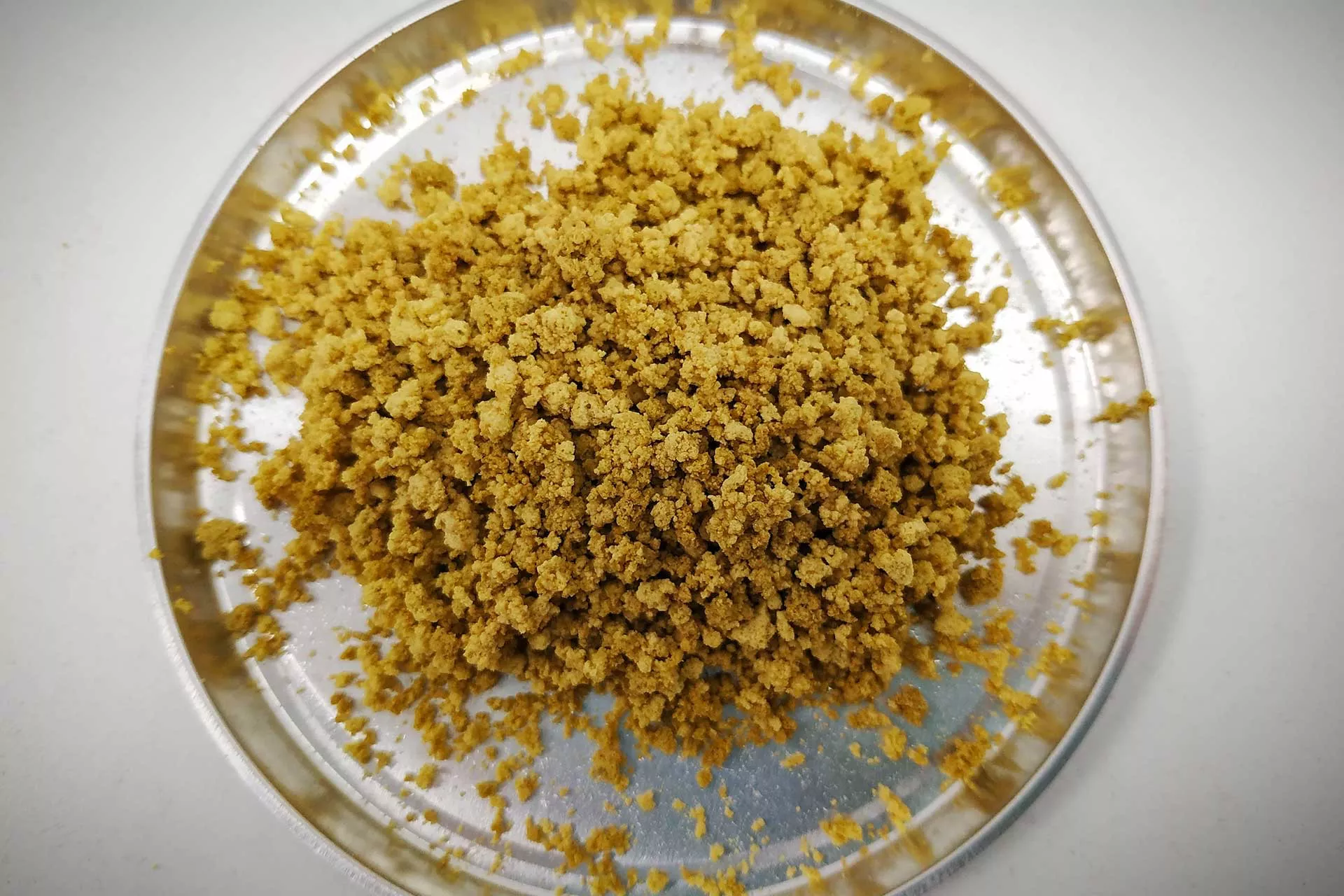
The SPARE project focused on finding stable industrial applications for hemp shives, the inner woody component of the stalk, which accounts for around seventy percent of the plant but is not used in other fields. Hemp reaches the market mainly in the form of seeds, oils and food products. In construction, hemp shives are used mainly in combination with lime to produce lightweight cast mixtures, blocks, screeds and plasters. The fibers, meanwhile, are used for thermal and acoustic insulation panels.
From hemp shives to panels: how the hemp supply chain is changing
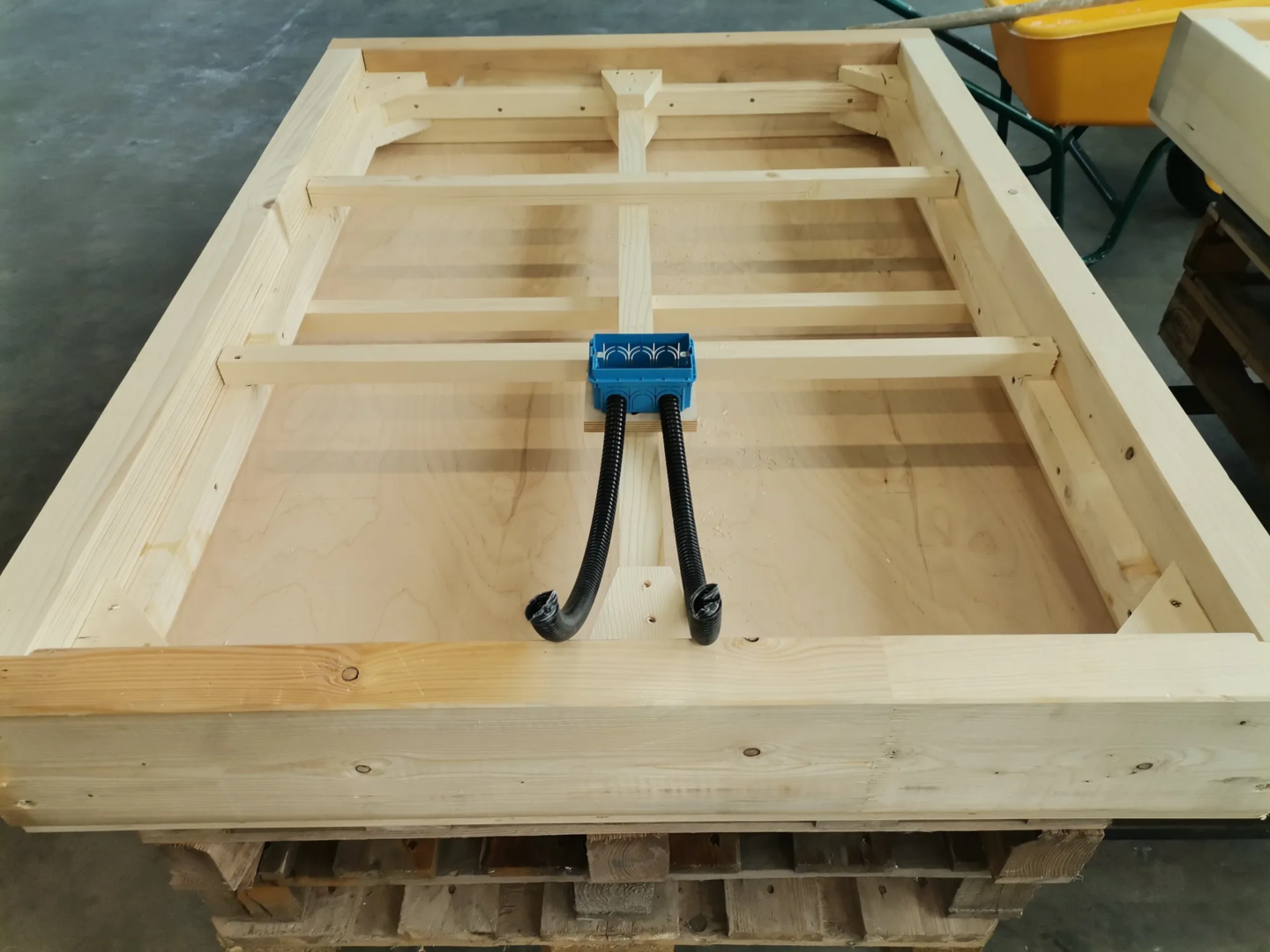
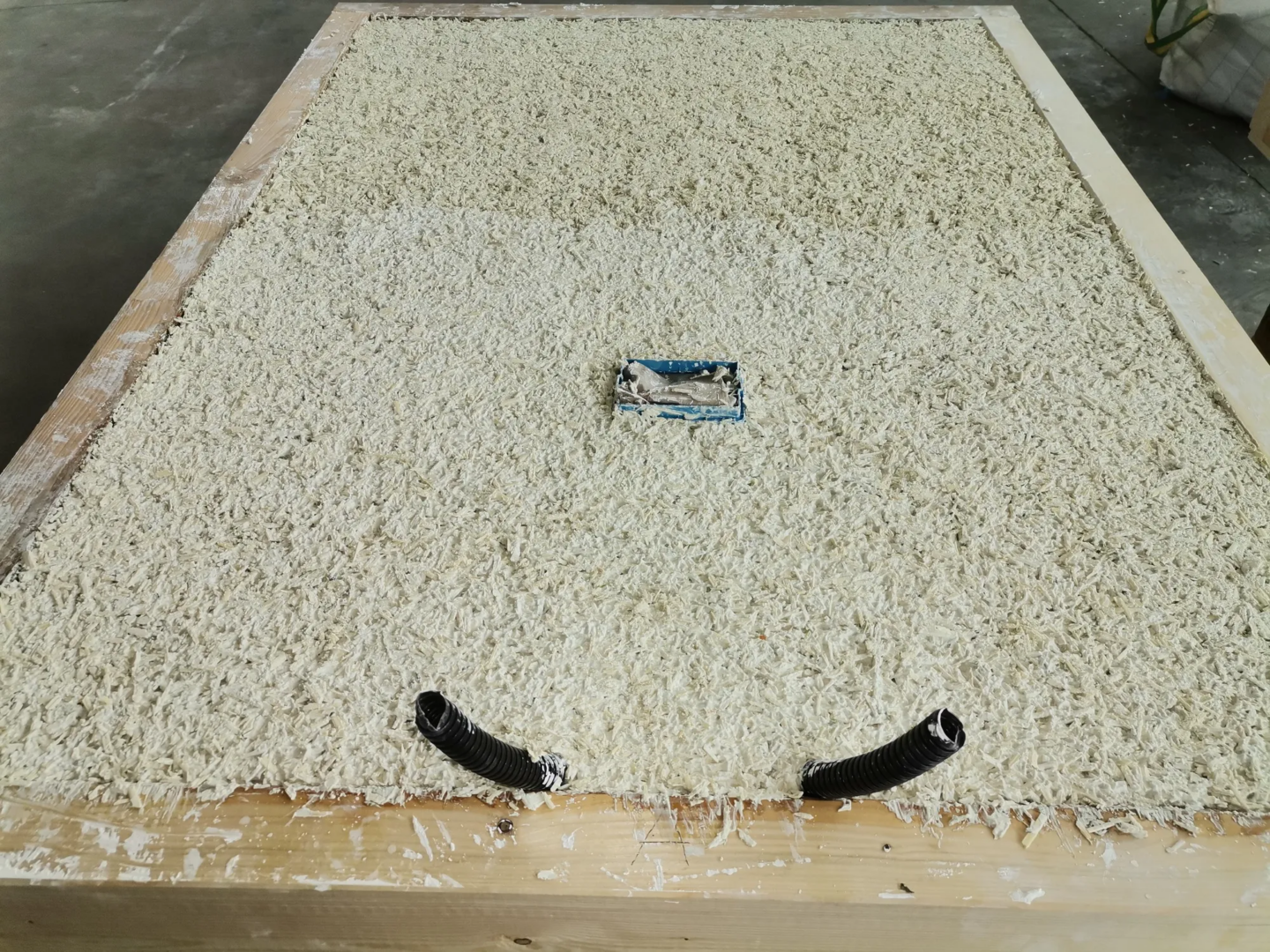
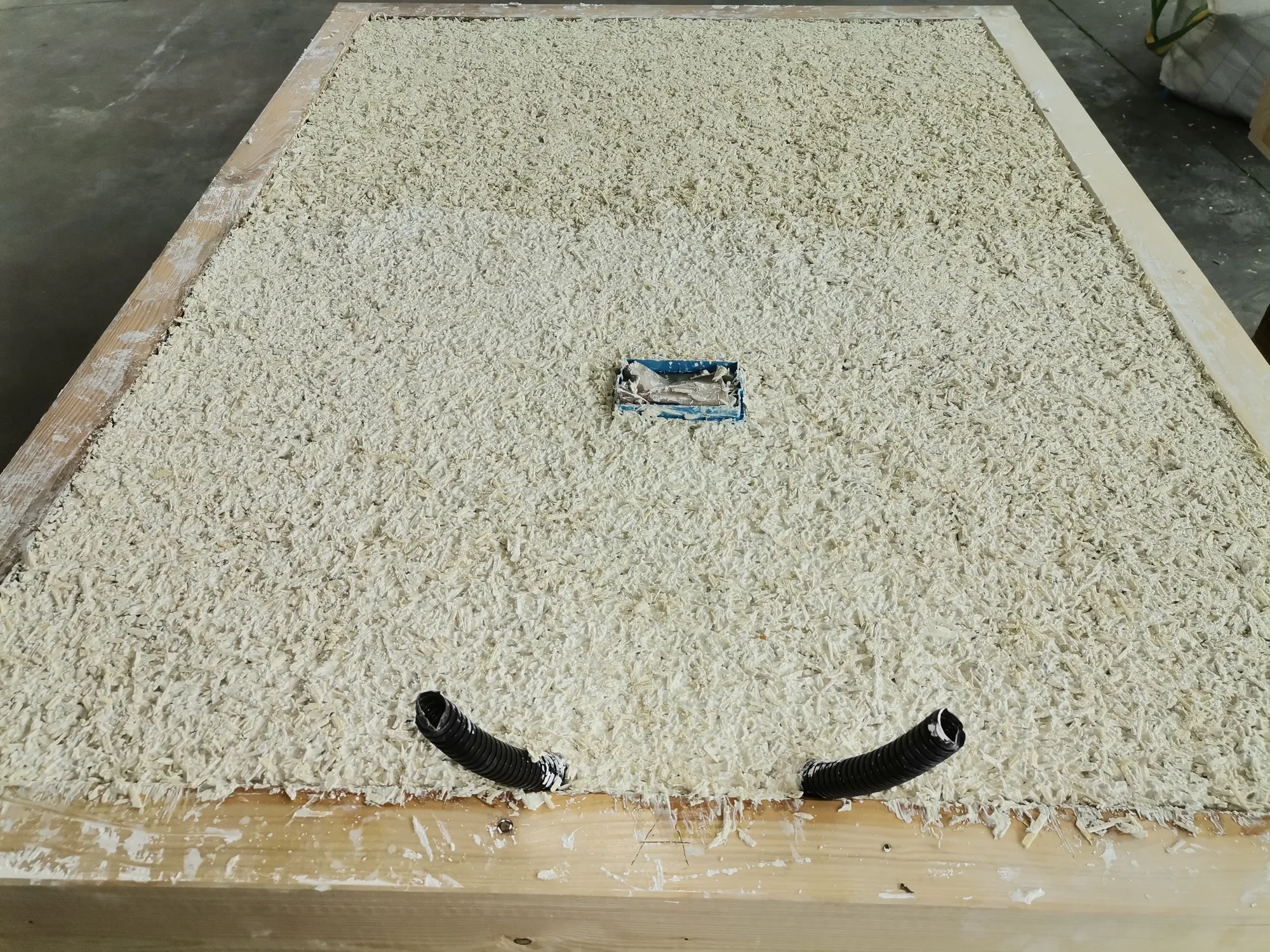
Olver Zaccanti, an architect and A.N.A.B. representative for natural materials, has been involved for years in training activities and building sites connected with bio-construction. Within the SPARE project, he worked on the design of prefabricated prototypes in wood, hemp and lime: «The idea behind the project was to work above all on the fibers and hemp shives, the part of the plant that often remains without a clear destination. Centro Consorzi involved me as a consultant on the use of hemp in construction, and from there came the proposal to create prefabricated prototypes in hemp, lime and wood. In Italy, hemp-fiber insulation panels and applications for screeds and thermal-acoustic insulation already exist, but we decided to produce large prefabricated walls already prepared for systems, openings and windows and doors».
Hemp-and-lime prefabrication already exists in France and the United Kingdom, while industrial applications remain limited in Italy. Most hemp buildings consist of single-family homes, extensions or small-scale projects: «In France, I followed the construction of a building intended for offices and laboratories, made with prefabricated panels in wood, hemp and lime. Prefabrication significantly reduces construction times. The panels cure directly in the workshops where they are produced and are installed after around a month or a month and a half. Within a few days, the building is already erected with all its structures».
Reducing construction times also affects the organization and cost of the work. In the prefabricated sector, a substantial share of operations takes place in the factory, where panels are produced, left to cure and prepared for final assembly. In the case of hemp and lime, this makes it possible to control the drying of the mixture before it reaches the building site, reducing work carried out on site and limiting the materials’ exposure to weather conditions.
Hemp and short supply chains: the model developed between the Brenta area and Veneto
One of the objectives of the SPARE project is to build a local supply chain around industrial hemp. The Italian prototypes were developed by involving companies located within a radius of around fifteen kilometers, active in hemp cultivation, decortication, lime production and timber prefabrication.
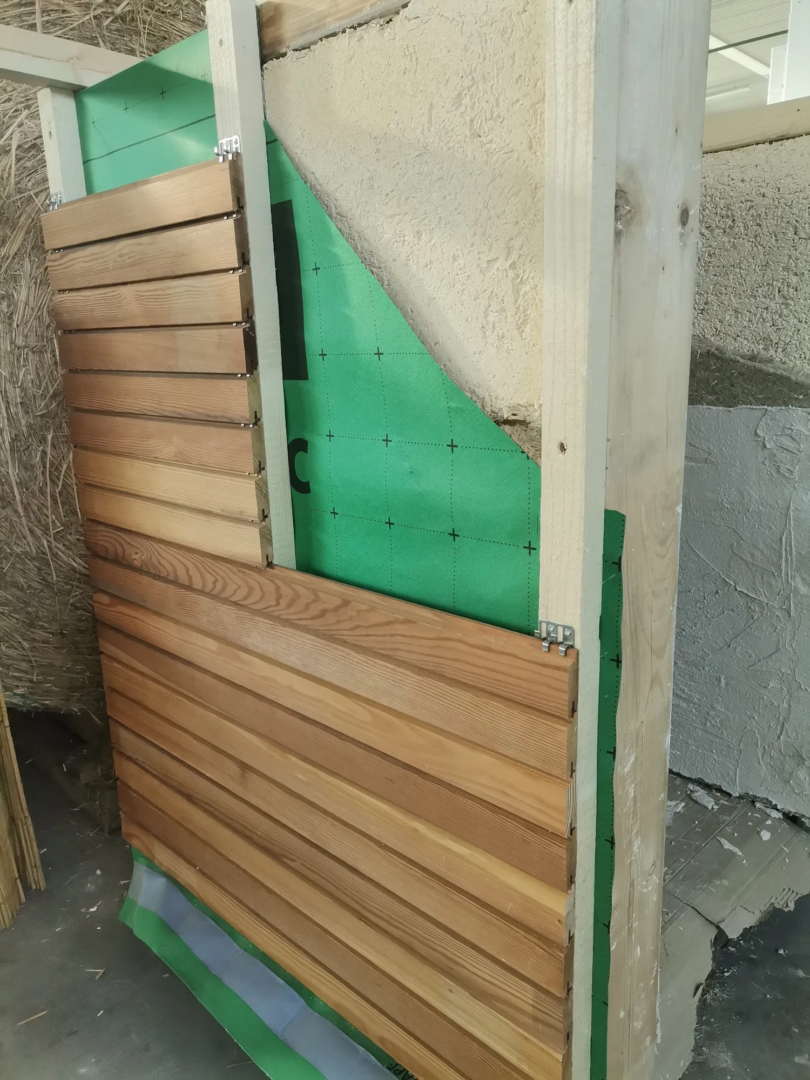
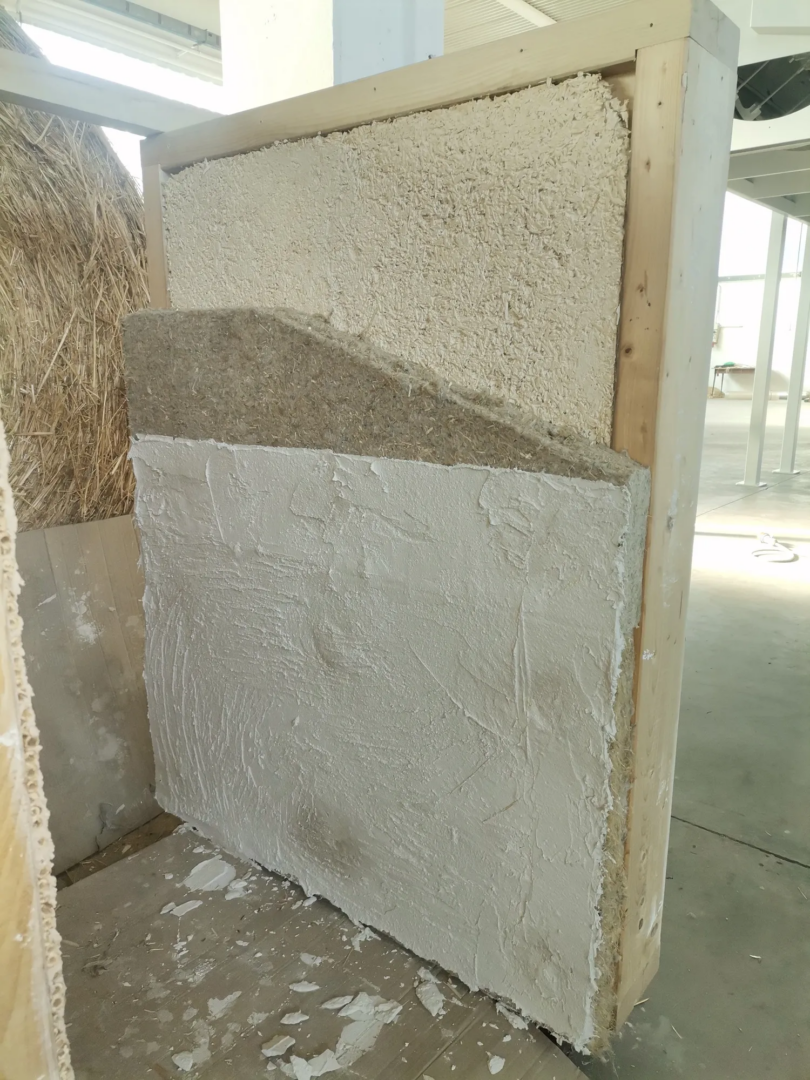
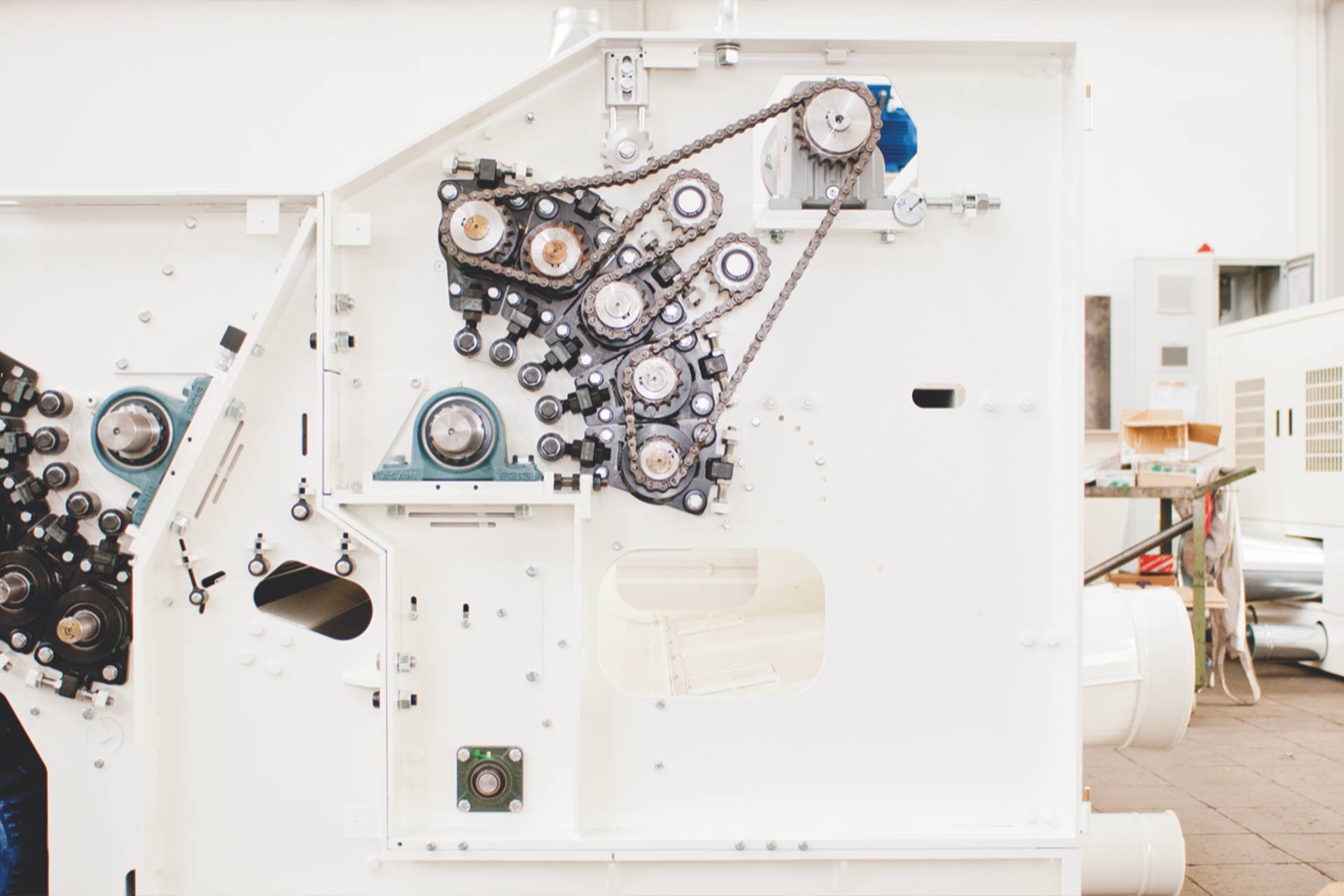
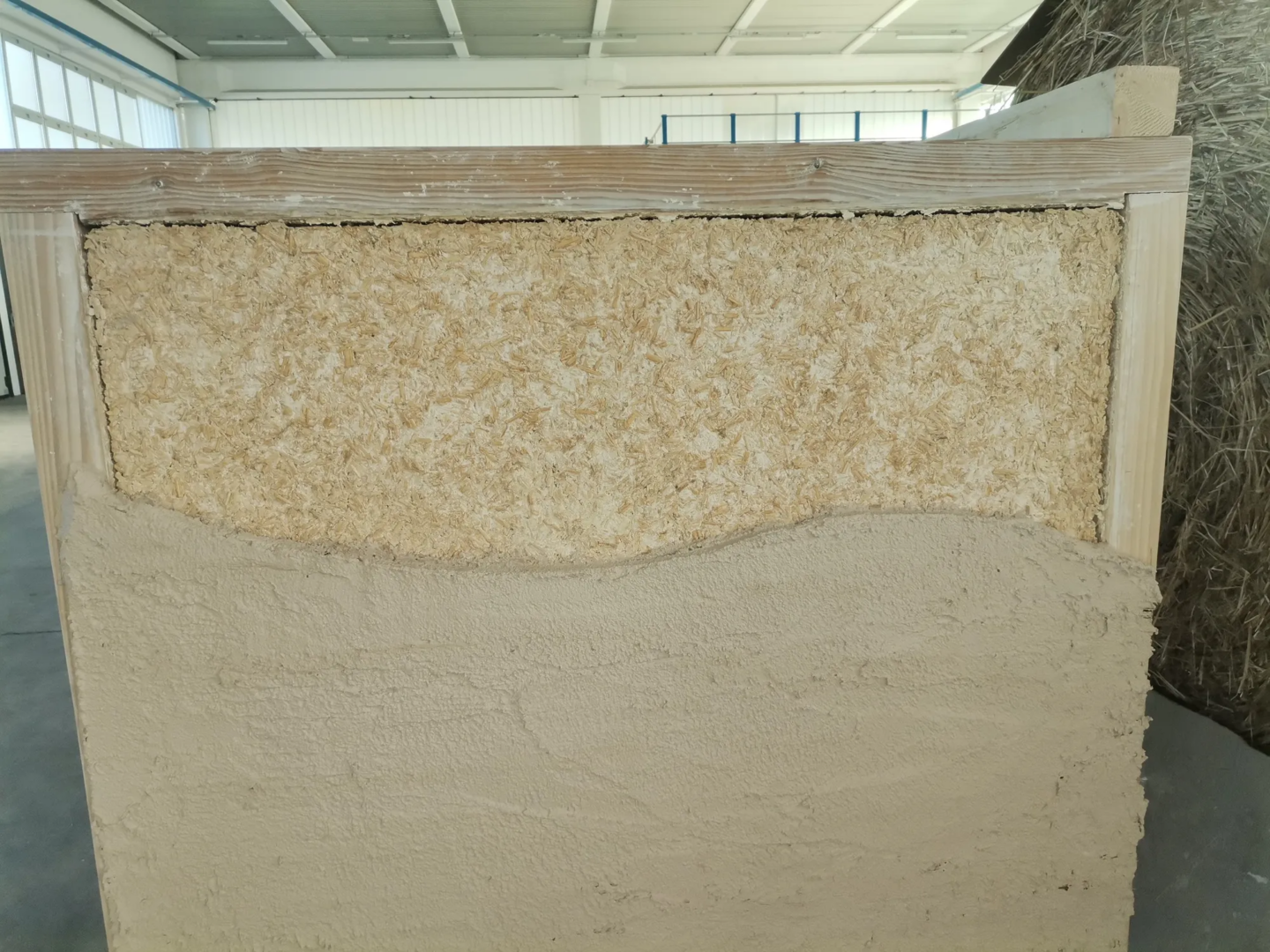
Decortication — the process that separates the fiber from the hemp shives — remains one of the most delicate stages in the plant’s primary processing. In Italy, dedicated facilities are still few and unevenly distributed, with plant material frequently transported to other processing areas: «We wanted to concentrate cultivation, processing and prefabrication within the same territory. The prototypes involved a lime producer from the Brenta area, a farm active in hemp cultivation and decortication, and a timber prefabricator. Four panels were produced with different finishes, including lime plasters, raw earth and earth-hemp and lime-hemp mixtures».
Hemp shives occupy large volumes, weigh little and require several stages between harvesting, processing and final use. The distance between these stages has a direct impact on the costs of handling and storing the raw material.
Training sites, mixtures and drying times: hemp moves from theory to the building site
Among the activities developed by SPARE in Italy, Belgium, France and Spain are workshops, technical visits and training sites dedicated to hemp-and-lime construction, particularly the laying of mixtures, drying times and wall finishes. Unlike many standardized industrial systems, the hemp-and-lime mixture changes according to humidity, the particle size of the hemp shives and climatic conditions during installation. The compaction of the mixture, ventilation of the rooms and type of finish also influence how the wall dries.
Zaccanti links part of the project precisely to the need to verify these aspects under real conditions: «The point was to create concrete prototypes. There is a great deal of theory around hemp, but then companies are needed that can actually work with these materials and manage the curing times of the mixtures and the wall finishes».
In hemp-and-lime systems, the material is used mainly as insulating infill within timber structures or other prefabricated systems. The walls are non-load-bearing, and the behavior of the mixture depends largely on the management of humidity and drying times, factors that directly affect the breathability of the structure. For this reason, on training sites devoted to hemp-and-lime construction, part of the training focuses specifically on preparing the mixtures and on compatibility between different materials, from raw-earth mixtures to lime-based finishes.
Finishes also influence the wall’s final behavior. Plasters that are too impermeable can trap moisture within the system, altering the balance between drying and the material’s breathability. In recent years, the spread of prefabricated timber construction has also encouraged some applications of hemp in building: in several European projects, timber structures are combined with hemp-and-lime infill for walling and thermal insulation, following the same principle used in the prototypes developed for SPARE.
From pressed fibers to road signs: hemp composites
Research into plant-based composites has for years involved sectors such as automotive, technical design and lightweight prefabrication. Hemp, flax and kenaf fibers are used for technical panels, composite surfaces and lightweight components, particularly where low weight and rigidity need to coexist.
In Austria, some SPARE project partners worked on compressing hemp fibers to produce composite panels for sectors outside construction: «The University of Innsbruck worked on pressing hemp fibers to obtain composite materials for different applications. Prototypes were produced for skateboards, skis, information panels and road signs. In the case of signs, the experiment also stems from the number of supports replaced every year: more than fifty thousand in Austria and almost half a million in Germany».
In the case of road signs, the experiment concerns panels made from pressed plant fibers bonded with resins, replacing supports normally produced from metals or petrochemical-derived composite materials. The applications developed during the SPARE project therefore range across construction, composite materials and the processing of the plant components of hemp, with the aim of expanding the industrial uses of hemp after the separation of fibers and shives.
According to Zaccanti, part of the work carried out during the project concerns precisely the possibility of building production continuity around these applications: «The University of Trieste followed the socioeconomic part of the project, and work is underway on a subsequent pathway dedicated to hemp supply chains. Some of the companies involved in producing the prototypes are already assessing possible applications».
Debora Vitulano