The right to disappear: nun core and the end of the hot girl summer
From Nun Girl Summer to the medieval Beguines, Melissa Febos’s The Dry Season traces what remains when desire stops pointing toward someone else — and who, finally, it belongs to
Sex is overrated, and Gen Z is proving it. For years, summer had a single protagonist: the hot girl. A figure built around visibility, desire, and self-performance. The girl who travels, shows herself, seduces, and turns every moment of her life into an image. But in a summer defined by climate anxiety, wars at Europe’s doorstep, economic uncertainty, and digital exhaustion, the paradigm seems to have shifted. The new generational fantasy is no longer about being seen. It is about disappearing. Welcome to Nun Girl Summer.
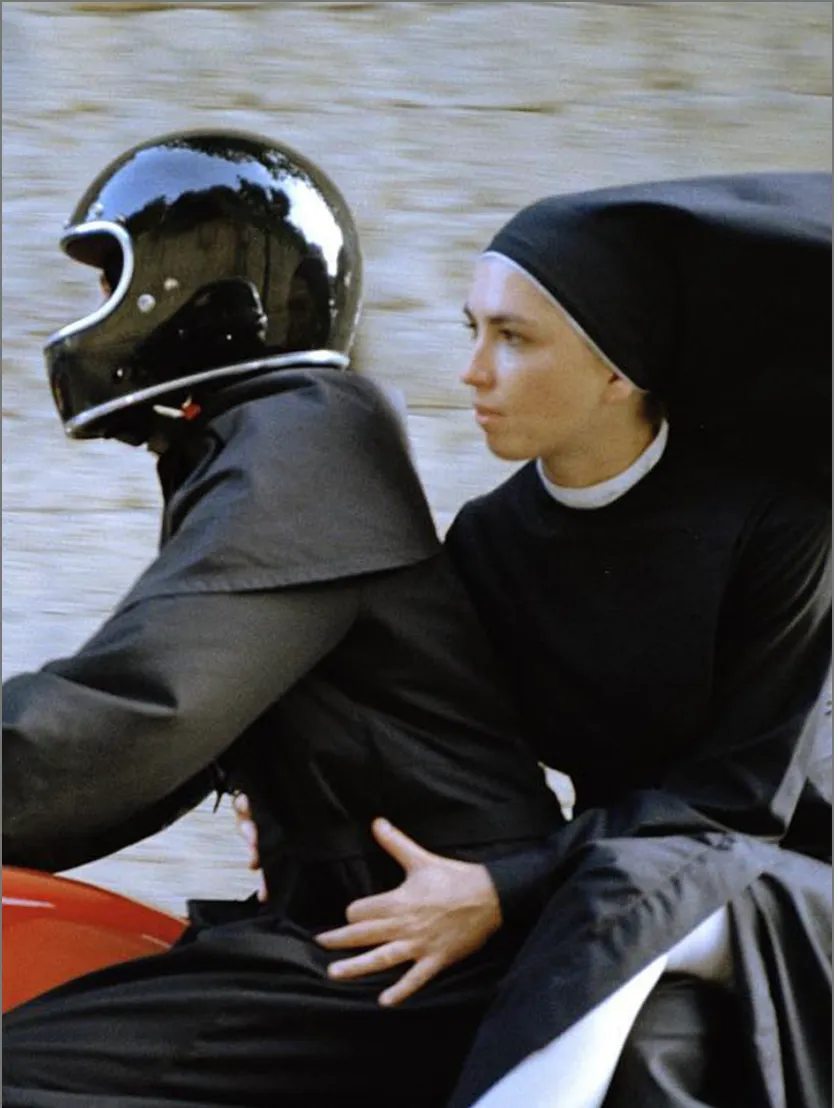
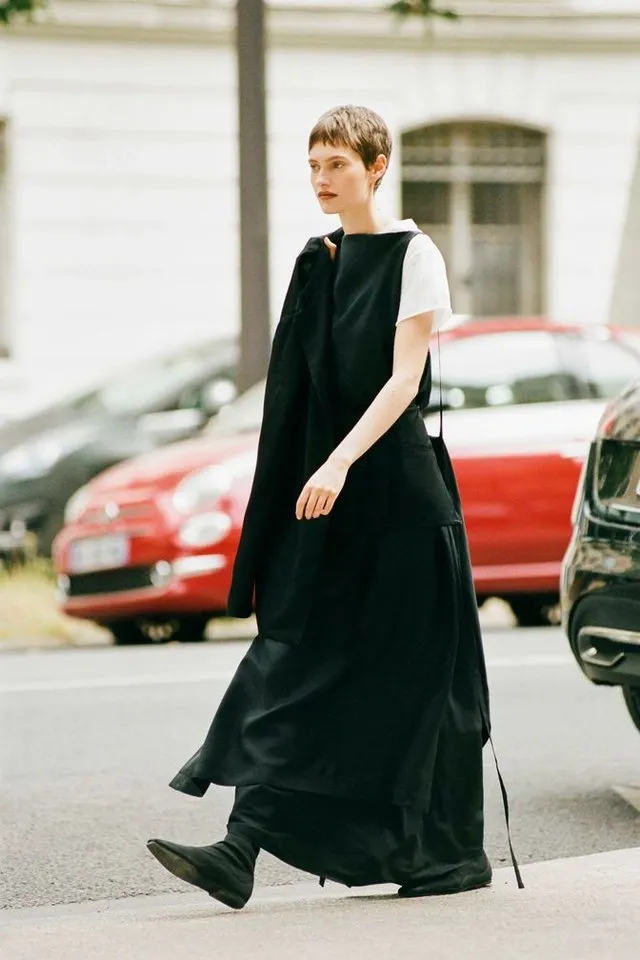
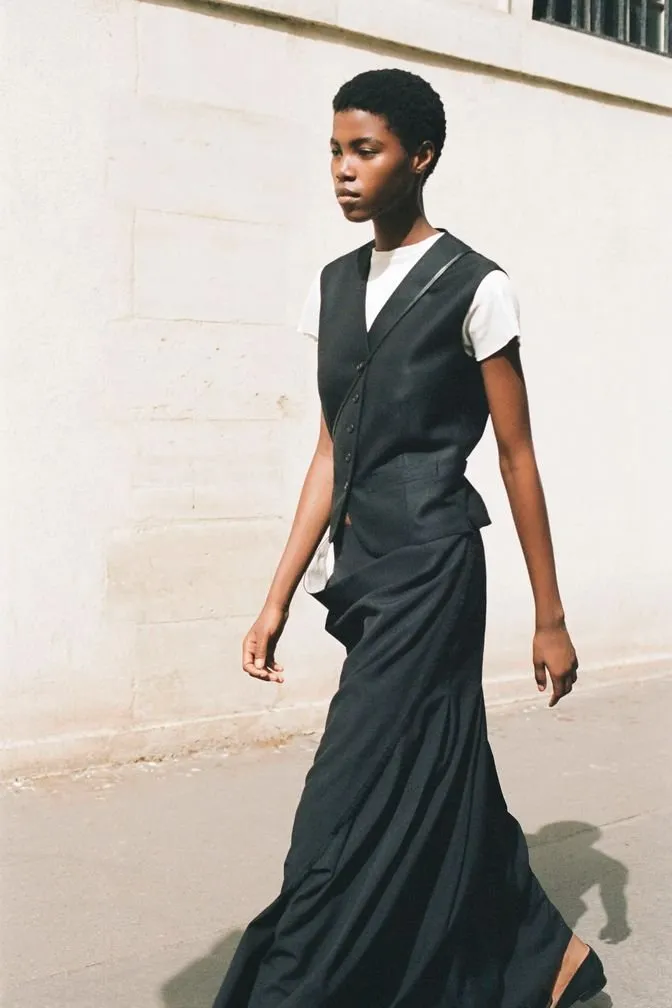
On TikTok and Instagram, the figure of the nun has suddenly become an aesthetic: white veils, austere clothing, rosaries, silence, rituals, bare rooms, books, candles. An imaginary world that seems to have arrived from another century. Gen Z, raised within a system of constant exposure, appears fascinated by a figure who represents the absolute opposite: a woman who does not need to be desirable, who does not need to build a personal brand, who does not need to prove anything.
The phenomenon has become even more visible with the viral success of the podcast Dominican Sisters Open Mic, where Dominican nuns discuss their daily lives, spirituality, culture, and contemporary issues with an unexpectedly ironic and accessible tone. As reported by The Telegraph in its article on the phenomenon, the fascination surrounding these figures does not seem to be driven solely by religion. What attracts younger audiences is their apparent freedom. Nuns seem to exist outside many of the rules that govern contemporary life: the need to be desired, the pressure to find a partner, and the obsession with success, productivity, and image.
The return of the sacred in times of crisis
Every era of instability produces a search for order. When the outside world appears incomprehensible, symbolic systems capable of offering structure regain their power. It is no coincidence that recent years have seen a renewed interest in spirituality, rituals, and religious traditions. Catholicism, with its powerful aesthetic language of images, architecture, clothing, and ceremonies, possesses a narrative force that is almost impossible to replicate. But the return of the sacred is not only aesthetic. It is also political.
The trad wife movement and Nun Core
In the United States, as well as in parts of Europe, the rise of conservative movements has brought back to the center an idea of femininity rooted in modesty, family, and devotion. The online success of anti-feminist communities and the trad wife movement, such as the one we saw at the Turning Point Women’s Leadership Summit 2026, has transformed the traditional woman into a new cultural symbol: a figure who rejects emancipation understood as competition and returns to roles perceived as more “natural.”
Nun Core’s paradox: modesty without a man
Yet this is precisely where the paradox of Nun Core lies: the nun belongs to the same visual vocabulary as the conservative woman – covered body, modesty, rejection of sexualization – but represents a completely different trajectory. The trad wife chooses an existence defined by her relationship with a man. The nun, on the other hand, symbolically exists outside that relationship. She does not need to be chosen. She does not need to be desired. She does not need to negotiate her value through the male gaze. Perhaps this is the real reason why the figure of the nun fascinates a generation raised within a culture of constant validation: she represents a radical possibility of withdrawal.
Melissa Febos and desire beyond performance
What happens when a woman stops building her identity around the desires of others? That lies at the heart of Dry Season, Melissa Febos’s memoir. The book chronicles a year of voluntary celibacy, but it is not a story of renunciation. Febos does not describe the absence of sex as deprivation, moral discipline, or a rejection of pleasure. On the contrary, celibacy becomes a method of observation: an experiment to understand how much of desire truly belongs to us and how much is instead shaped by social expectations.
For years, Febos explains, romantic relationships had occupied a central place in her life. Pausing that momentum meant creating an empty space, but also allowing something new to emerge. The question wasn’t: What happens when I eliminate desire? But rather: What happens when desire ceases to be directed toward someone else? The connection to Nun Core is immediate. The fantasy of the contemporary nun does not necessarily concern faith, but rather the idea of a life removed from the usual logic of consumption, seduction, and performance.
As Febos explains, desire never arises in a space completely free from cultural influences. It is the result of a dialogue between personal experience and social conditioning.
Desire and social conditioning
«I don’t think it’s possible to fully distinguish between the factors that influence the nature of our desire» – says Febos – «Nor do I think the need to be seen and wanted is necessarily a corrupting or harmful one. Of course, sometimes it is. When we privilege the gaze of others to an extent that compromises our own integrity or pleasure, or when our socially conditioned desires cause harm to us or others, then it is grounds for rejection. And rejection of social conditioning is no easy task; it is more of a lifestyle than a single choice. One must create an alternate social atmosphere that aligns with one’s truer beliefs».
The problem is not desiring to be loved or desired, deeply human needs, but when these become the sole measure by which we define ourselves. Rejecting that dynamic can then become a political act.
Melissa Febos’s literary career
Melissa Febos has built a literary career by turning experiences often relegated to shame or secrecy into rigorous works of memoir and cultural criticism. An award-winning American writer, essayist, and professor at the University of Iowa, she is the author of Whip Smart, Abandon Me, Girlhood, Body Work, and most recently The Dry Season. Across her work, she has consistently explored the intersections of sexuality, addiction, feminism, queer identity, and the stories women tell about their own bodies.
Melissa Febos on desire, sex and celibacy
Long before becoming one of the most influential voices in contemporary feminist nonfiction, Febos worked as a professional dominatrix while studying literature at The New School in New York. The experience, recounted in her debut memoir Whip Smart (2010), was not one of prostitution but of erotic performance: clients paid for elaborate psychological role-play, domination, and power exchange rather than sexual acts. That unusual perspective gave Febos an intimate understanding of how desire operates, not as something purely instinctive, but as a language shaped by fantasy, power, performance, and consent. Her past as a sex worker is never treated in her writing as a provocative anecdote or a scandalous confession. Instead, it becomes the foundation of a broader investigation into the politics of intimacy.
«My history in sex work made me more tolerant of sexual difference and more fluent in the language of consent. Sex work spaces often have more direct and transparent communication than private sex spaces, especially in heterosexual culture.»
From whip smart to The Dry Season
If Whip Smart examined the ways desire is performed, The Dry Season asks what happens when desire is deliberately interrupted. After writing about sex, addiction, and romantic obsession for years, Febos turns toward celibacy, not as moral discipline, but as a feminist experiment in reclaiming agency. The result is a memoir that shifts the focus from being desired to discovering what remains when desire no longer revolves around another person.
The body regaining its own identity — autobiography and autoeroticism
One of the central themes of Dry Season is the relationship between female desire and bodily autonomy. Febos describes how temporarily stepping outside the so-called “sexual economy” allowed her to rediscover a form of intimacy with herself. Without the need to be looked at, chosen, or interpreted through the lens of others’ desire, the body once again becomes a private space.
«Removing myself from the sexual economy allowed me a sense of privacy that I hadn’t enjoyed since childhood. My body became mine again. I dressed for myself, moved in ways that pleased me, and prioritized my own comfort in unprecedented ways. These changes created a new sense of trust in myself; I became a better carer of my own body and therefore more comfortable in my own skin».
From this perspective, pleasure no longer coincides exclusively with sexuality. It can arise from solitude, creativity, attention to one’s own body, and the possibility of inhabiting oneself without having to constantly perform. This is where, for Febos, autoeroticism intersects with autobiographical writing.
«Like autobiographical writing, autoeroticism both depends upon and cultivates a greater sense of comfort with oneself».
Both are practices of self-knowledge: ways through which a person stops viewing themselves from the outside and finally begins to tell their own story from within. Speaking openly about female pleasure remains unsettling precisely because it challenges one of the most deeply rooted ideas in patriarchal culture: the notion that women’s sexuality must necessarily include the male gaze or presence.
«I’ve spoken openly about it [female self-pleasure] for long enough that it doesn’t make me uncomfortable anymore. I think a lot of men are uncomfortable with any conception of women’s sexuality that doesn’t include or require them. I don’t think I can change minds about this on any grand scale, but I have successfully created a micro-climate in my own life where there is no taboo. Other people’s discomfort with my pleasure is no longer my problem».
The beguines, the mystics, and the first women outside the system
To truly understand the imagery of Dry Season, we must look back to the Middle Ages. Among the figures that inform Febos’s reflection are the Beguines: communities of lay religious women who, between the twelfth and thirteenth centuries, forged alternative ways of life without necessarily entering traditional convents and without marrying. The Beguines are fascinating because they defied the categories available to women of their time. They were not wives, nor were they nuns completely subject to ecclesiastical authority. They formed communities, worked, studied, wrote, and developed an autonomous spirituality. For Febos, they represent a radical example of feminine imagination: women capable of inventing a different existence when all the paths prescribed by society were built around marriage and motherhood.
Medieval mystics and unconventional devotion
«I am amazed at the gumption and creativity it took for the beguines to envision and build a life that was so counter to the prescriptions for women’s lives in that time period» – says Febos – «They were truly vanguard, and willing to risk their lives in order to live according to their beliefs. They were true heroines. The mystics were often similar, I relate to the obsessiveness of their devotion, and admire their ability to forge unconventional paths through patriarchal social and institutional structures. These women were often artists, activists, and deeply spiritual people. I think if I had lived in the middle ages, I would have probably followed a similar path, as would have many of the people in my life.»
A room of one’s own: From the convent to Virginia Woolf
It is no coincidence that Dry Season also evokes Virginia Woolf and her A Room of One’s Own. That private space Woolf advocated for women, a physical and mental place where they could think, create, and imagine, has a striking affinity with the idea of the convent. Both represent a temporary respite from the demands of the outside world. In the contemporary imagination, the convent thus becomes less a place of isolation and more a symbol of autonomy. An amplified room. A space where a woman can exist without having to constantly justify her existence through a relationship, a job, or a social role.
«Virginia Woolf didn’t write that book for women; she wrote it explicitly for a male audience. I think many women still hope to convince men that they deserve their own space and time. Girls and women are still socialized to prioritize the needs and time of everyone else over their own».
Women’s space in the twentieth century
The question posed by Woolf in the twentieth century returns today in a new form: what would happen if women were granted not only a space of their own, but also a desire of their own?
«Perhaps one of the biggest differences [between Woolf’s times and now] is that even women who have the liberty to make a space of their own often police themselves by trying to meet the needs of others and choosing to be self-sacrificing. They feel guilty when they choose themselves and take the time to be alone and think and dream and create. It’s easy to internalize the idea that we are bad partners or mothers or daughters when we fail to value other people’s happiness over our own. The work of liberating ourselves must be done internally as well as externally».
Nun core isn’t about religion
«[I learned] that pleasure can be found everywhere. I am not dependent on a partner for happiness or satisfaction and ironically that has made me capable of true long-term commitment» says Febos.
Perhaps the success of Nun Core doesn’t stem from a desire to return to the past, but from the need to imagine a different future. The nun who captivates Gen Z isn’t necessarily a religious figure. She is a figure of defiance. A woman who doesn’t participate in the attention economy, who doesn’t measure her worth through seduction, who chooses a life not defined by the absence of someone else. In this sense, Nun Core is less an aesthetic trend than a cultural fantasy: the dream of radical freedom.
After years in which everything had to be displayed, shared, and monetized, perhaps the new form of luxury is precisely what nuns have represented for centuries: the right to silence, to solitude, and to an existence that belongs first and foremost to oneself.