The Back Studio, industrial scrap for the hottest lamps around
Neon bends, aluminum scratches, glass suspends: The Back Studio’s work lives in the tension between mechanical precision and raw imperfection. An interview with Eugenio Rossi and Yaazd Contractor
The logic of disassembly didn’t begin in the Back Studio
Yaazd Contractor: I was drawn to open structures – also the smallest things at home. Chairs, old telephones, mechanical objects. I would take them apart to understand how they were built. Then I would try to put them back together. Maybe because I grow up in India, my interests were craft based. It wasn’t about the finished object, but about its internal logic.
I come from a family of architects, so I was exposed to buildings in progress. I didn’t just see the final structure. I saw the skeleton, the wiring, the unfinished stages. Watching something move from bare bones to completion trained my eye. It taught me to understand how things hold themselves together.
Eugenio Rossi: Concrete. Steel when it was rusted. Seeing architecture before it was covered or polished. I was drawn to materials in their raw state, before they were concealed behind plaster or paint. From a young age, artists and architects were references, but through the material itself.
The Back Studio: when it all began
Eugenio Rossi: The Back Studio began with an idea of achieving perfection. We were working with prefabricated objects, expecting them to be identical — manufactured, standardized. Instead, we found errors everywhere. Nothing was the same. We work with mechanical mistakes every day now.
Yaazd Contractor: It’s almost contradictory — imperfection and industrialization. Industrial objects are supposed to be precise. You assume that if something is machine-made, perfection is guaranteed. That’s not always true. Machines produce errors too. The precision is raw. You have to consider positioning, placement, distance, proportions within the layout. That’s where the imperfections begin to matter.
SG: What began as an error became a principle. Industrial remnants carried the memory of pressure
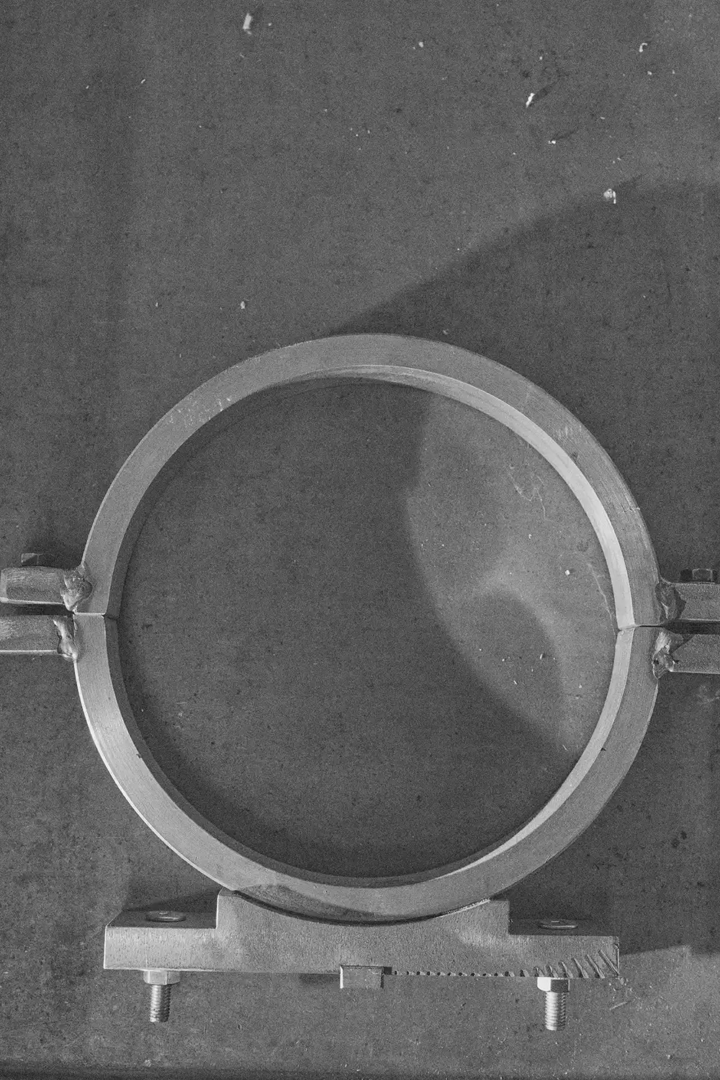
Eugenio Rossi: We work primarily with industrial remnants. We’re drawn to aluminum. It doesn’t decay easily. It carries time differently. The patina, the scratches from production or from being thrown into scrap — those traces matter. We never apply finishes to conceal anything. The scratches remain, and the imperfections are already part of the work.
Yaazd Contractor: When you search, you never know where the right object will show up. In a pile of scrap, there’s the possibility of the perfect form. What metal shops discard as waste sometimes becomes usable for us. It’s about the story embedded in it. You cut that story at a certain point and relocate it into a new structure. From there, it continues. Time and process, and not erasing them, is what it’s about.
Industrial remnants are not aesthetic decisions only. They dictate how the work is built, and how it can be undone
Eugenio Rossi: Everything we build can come apart. Nothing is permanently fixed. Components can be removed, replaced, repositioned. If something fails, it doesn’t require replacing the entire structure. It can be disassembled and reworked.
Yaazd Contractor: When the work is assembled rather than fused means it can be repaired. You don’t discard the whole piece. You intervene. That’s our approach to regeneration. We use glass extensively and avoid plastic whenever possible. We don’t glue or permanently weld elements together. Keeping the structure raw allows it to have a second life. Not everything is secondhand, though. Some components are newly sourced. The system itself remains modular.
Eugenio Rossi: Access also determines material choice. Secondhand aluminum, for example, isn’t always available.
Yaazd Contractor: The most regenerative element is the neon. Glass is fully recyclable. The gas inside the tubes already exists in the air. When a tube breaks, the glass returns to recycling, and the gas disperses. The material can be used again. It’s a closed cycle.
Metal repeats throughout the Back Studio’s works. It functions more as a foundation than a decoration
Yaazd Contractor: Metal plays two roles for us. It acts as a base — neutral, like concrete or a white canvas. It holds the composition without overpowering it. At the same time, it reflects. It interacts with light without losing itself.
We mostly work with aluminum. It’s lightweight but structurally strong, which makes it ideal for our modular systems. It also carries scratches, marks, traces. Those “imperfections” are what document the process. There’s also a temperature to it. It feels cold. And that coldness creates a tension with neon. The sharpness of metal against the charged softness of light.
Eugenio Rossi: We stay true to the material. No finishes. No covering. The scratches are part of the work. They’re evidence of making.
Material is never static, not at the Back Studio. It doesn’t sit still long enough to become a signature. Nothing repeats
Eugenio Rossi: The process is the part we care about most. We never remake a piece. Once it’s done and sold, it’s over. Because of that, we work in phases. We immerse ourselves in one material or one idea for a period of time and push it until it feels resolved. Then we move on. This keeps our material language unstable, deliberately so.
Yaazd Contractor: Recently, we brought in a few new components. Fishing hooks, for example, which we got from a boat supply store. We also had access to materials connected to space technology. Components that were originally meant for satellites but couldn’t be used anymore. Titanium parts. Extremely precise tolerances. Threading systems that demand accuracy. Working with those elements pushed us outside our usual approach. Until now, much of our vocabulary has come from hardware stores and scrap yards — standard parts, industrial leftovers, off-the-shelf systems reconfigured into something else.
Eugenio Rossi: We take found objects and modify them. We’ve started thinking about producing our own industrial components — using tools like laser cutters, expanding what we can fabricate ourselves. After working with space-related materials, we realized there are limits to what you can source. We could generate our own parts and see how they interact with prefabricated ones.
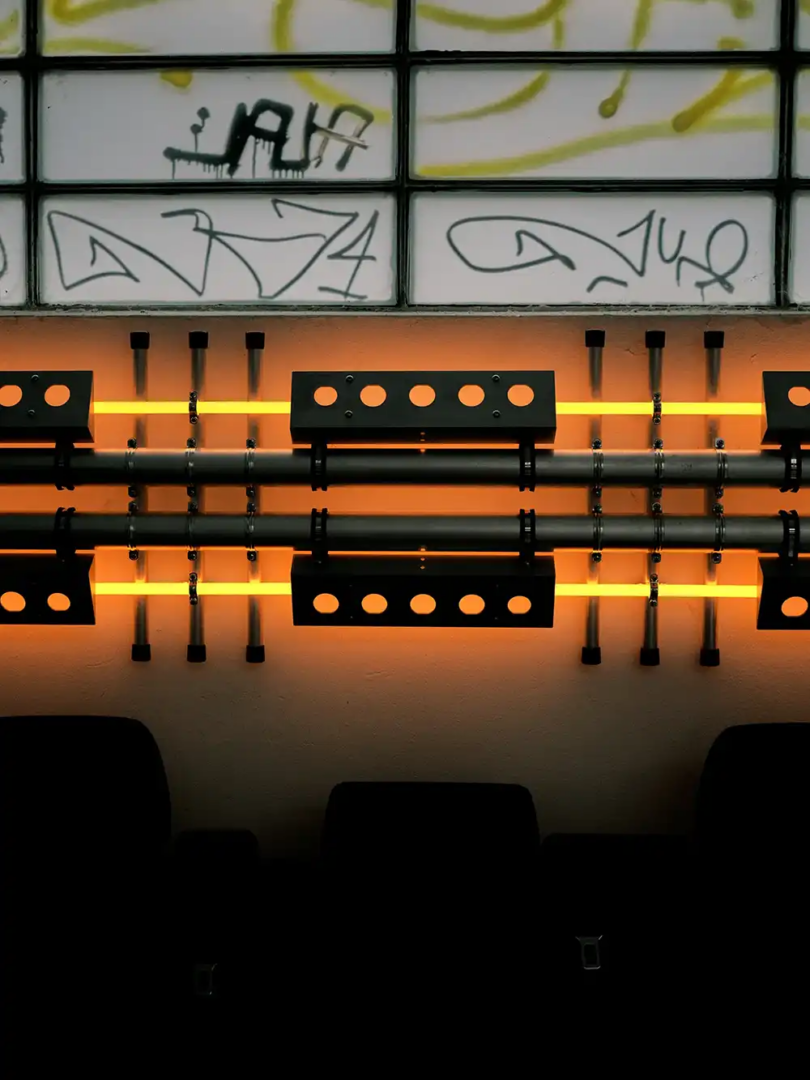
Eugenio Rossi: It’s less about finding a new material and more about pushing the limits of the ones we already use. We’ve worked with aluminum in a very direct way. We used mostly what we found. Now we want to push it further by producing our own elements and testing new structural possibilities. With neon, it’s similar. We’ve used it in straight lines. Controlled. Direct. Neon has a strong association with signage and commercial language. We wanted to avoid that, so we kept it straight — stripped of typography, stripped of message. Now we’re starting to bend it. Introducing curves. It’s a return, but on our terms. We want to see how far we can move into that territory without slipping back into signage. The tension is in control versus expression. Straight neon held at a distance. Bent neon flirting with spectacle.
Yaazd Contractor: It’s about using it in a way it wasn’t meant to be used. Not breaking it, but through redirection. Taking something designed for one function and forcing it into another logic.
Eugenio Rossi: At university, I worked with concrete, plaster, silicone, resin, wax. I stopped for a while. We could reintroduce those materials with the new processes we’ve learned since.
Materials are negotiations. Between scrap and precision. Between straight lines and curves. Between what an object was built to do and what it’s forced to become
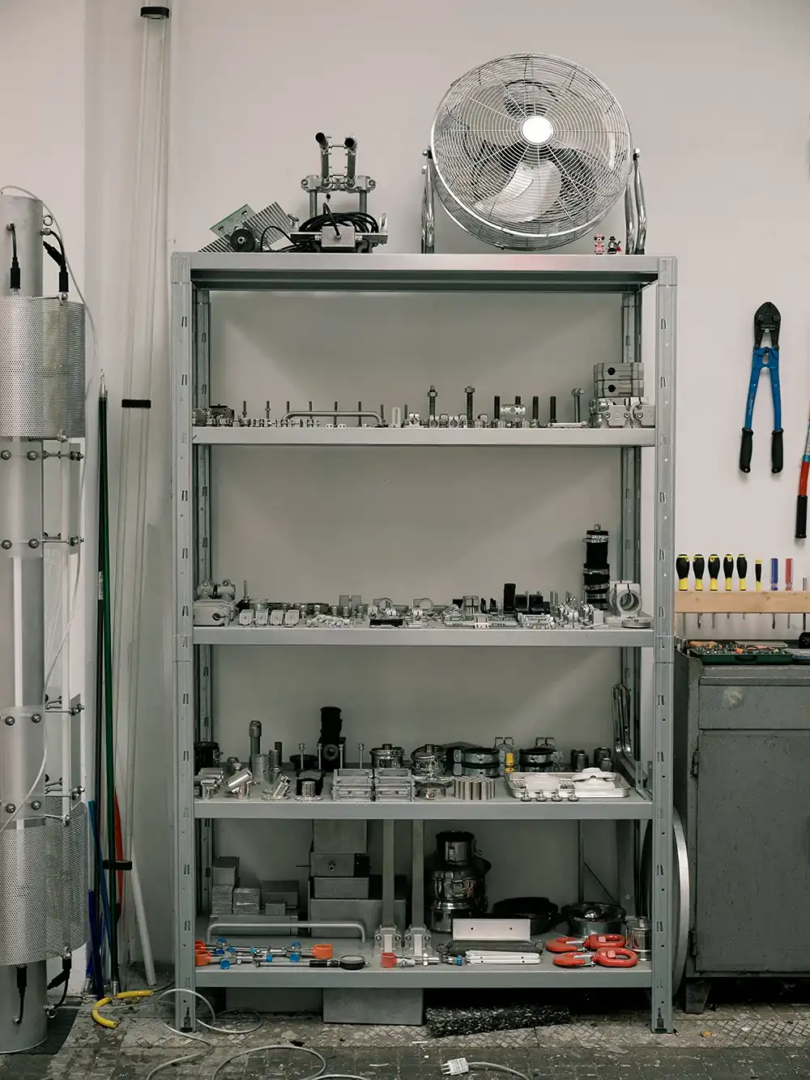
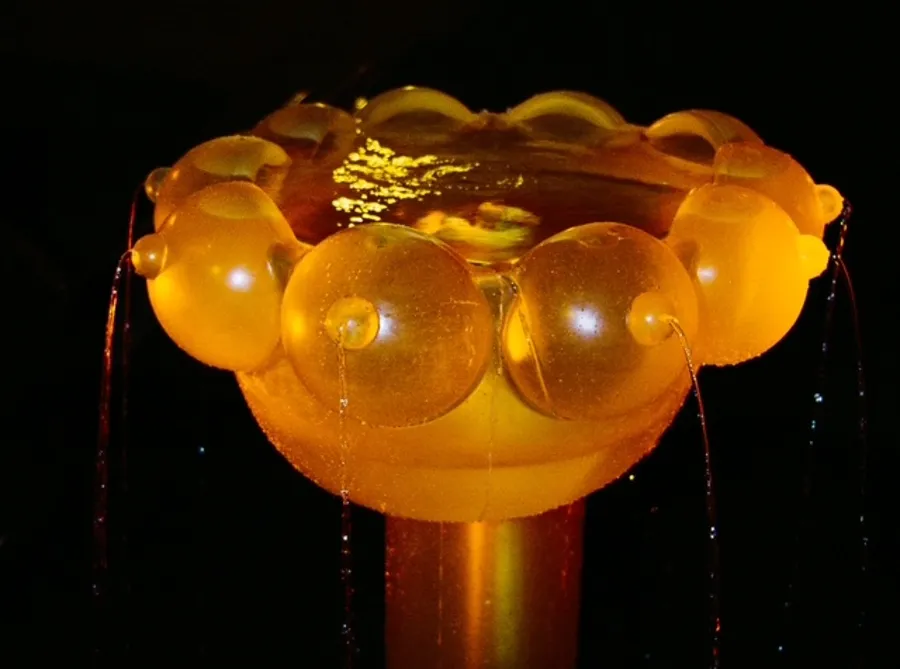
Eugenio Rossi: We collect objects without a clear purpose. They sit on shelves for months, sometimes years. Then the alignment happens. We were working with a vintage glass lampshade — fragile, almost too delicate to touch. The fishing hook was sharp and aggressive. It seemed incompatible. It became the only viable solution. Precision here was disguised as improvisation.
Yaazd Contractor: There’s something powerful about when two objects from completely different systems suddenly match. Most manufactured objects follow standardized sizes. When two things that were never designed to meet suddenly fit, it feels almost improbable.
Eugenio Rossi: It gives you a spike. That collision point is where our material language sharpens. Not in invention from scratch, not in blind reuse. Incompatibility turns structural.
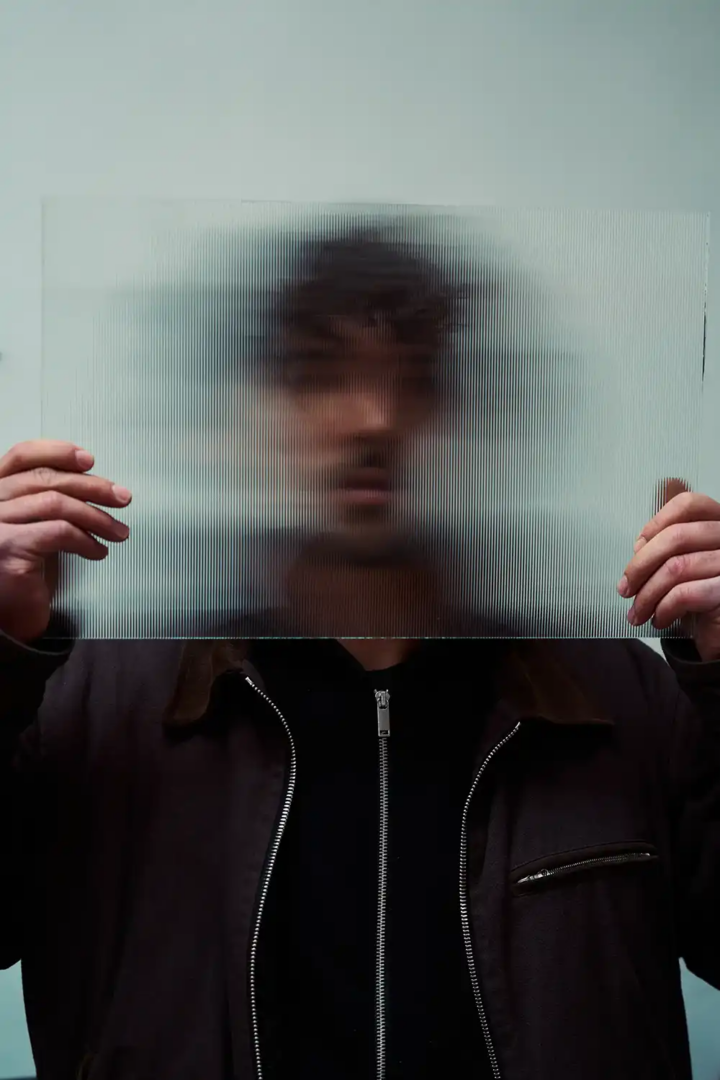
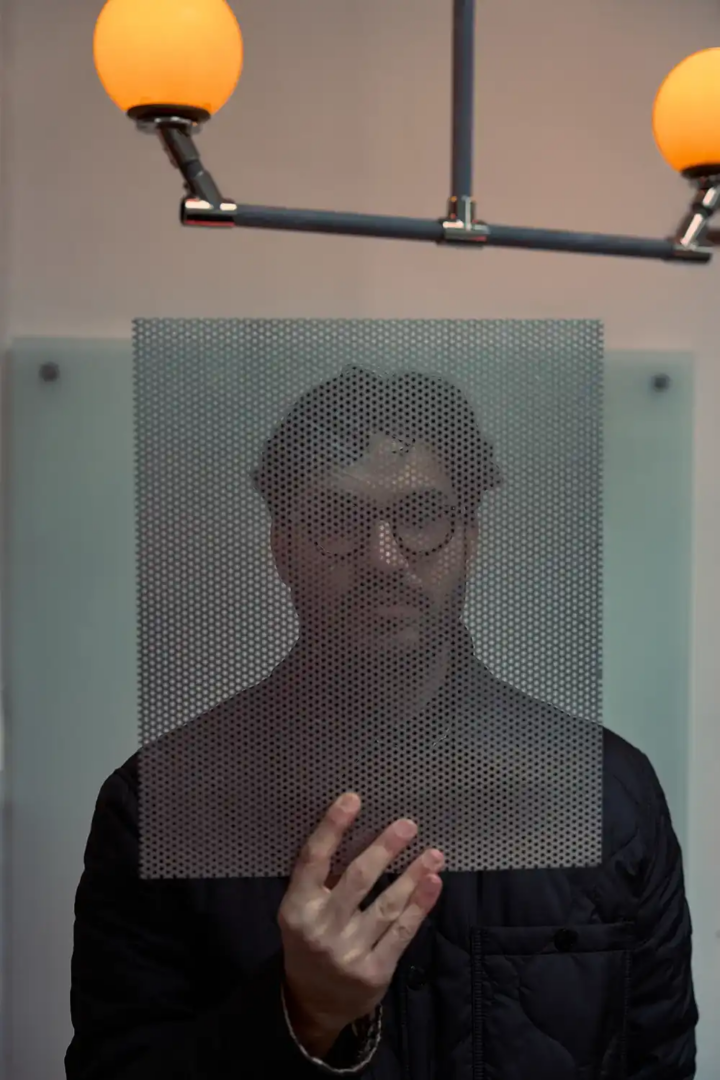
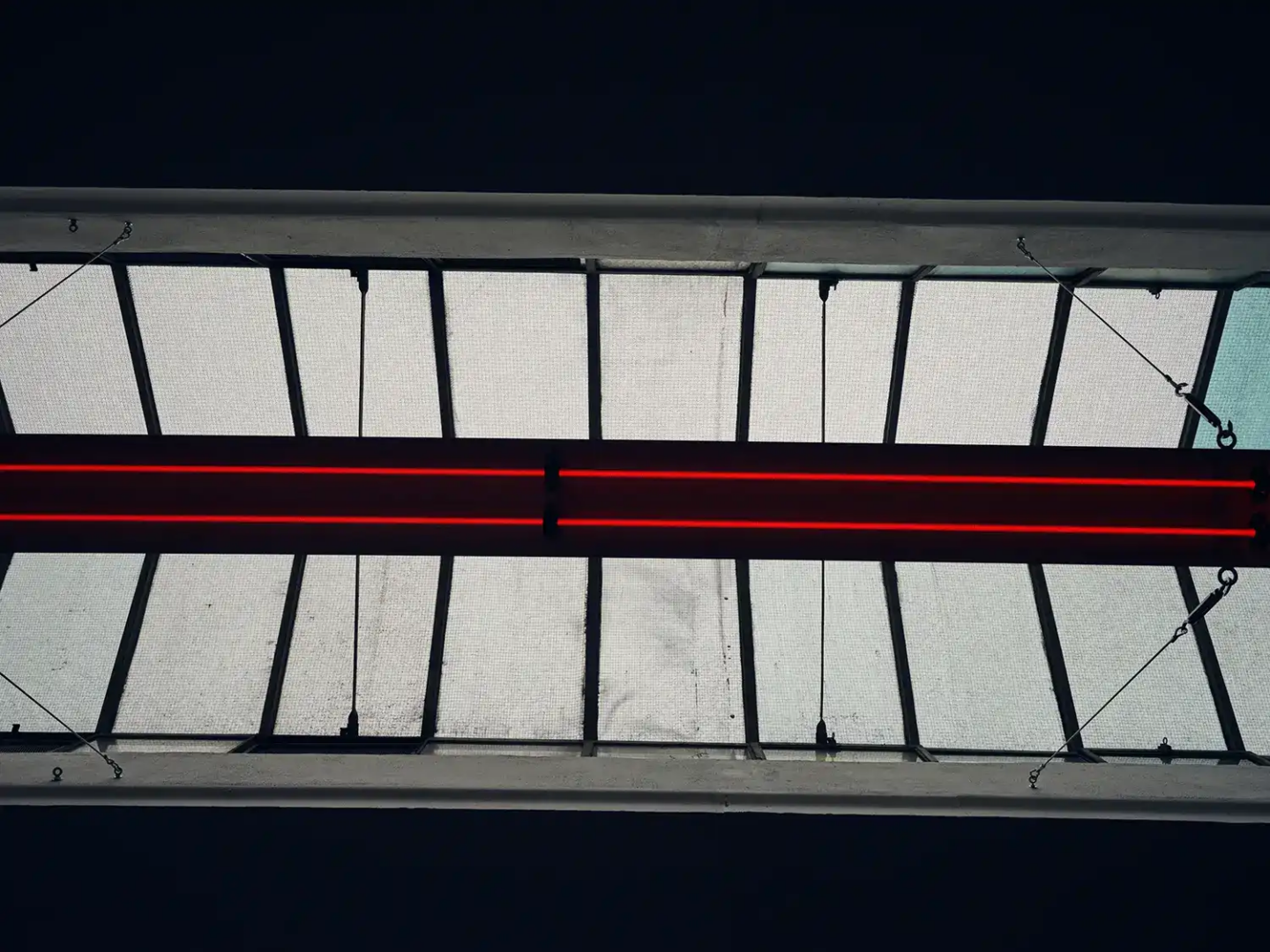
Process here is not diagrammed or drafted into submission. It’s built under pressure, adjusted in real time, negotiated between instinct and constraint
Eugenio Rossi: We don’t begin with drawings. The work starts intuitively. There’s a spontaneous act guided by everything we’ve learned about how materials behave and how elements interact. It always begins with a conversation between us, an exchange of imagination. Most of the time, there’s one object we want to use, one element that carries a certain charge. That object dictates the atmosphere of the piece. Everything else is constructed around it. We build toward it, layer by layer.
Then reality intervenes. Wiring is one of the hardest parts — cables, connections, making the piece actually function. If the wiring becomes impossible, the idea has to shift. The mechanism corrects the vision. We like to work in one shot. Once we begin, we push through every technical problem until the work resolves. Stepping back and redesigning is not part of our process. It’s finishing that’s difficult. When we both feel it’s complete, we shake hands. That agreement is the closure.
Yaazd Contractor: There’s always a technical negotiation. Once we decide on a direction, we have to understand how it will stand, how it will connect, how it will operate. And it still has to remain clean, precise, controlled. Technical limits often determine the form. If we can only use a certain number of tubes, then the structure adjusts to that fact.
Each piece begins differently. Sometimes it’s just a base, a raw structure. Sometimes it’s a specific tension, like wanting to suspend glass and discovering that a spring becomes the mechanism. Once that element works, once it holds and balances, the rest of the work grows around it. Every piece has its own origin point, but all of them start with dialogue and move forward through testing, correction and structural decisions. Mechanics are not theoretical here. They are the process itself.
The name of the Back Studio comes from the back of the house — this is where the studio is. It functions like one of their works, assembled from parts, tested under pressure, adjusted over time.
Eugenio Rossi: We met at the University of Chicago. We became friends, then roommates. There was a constant exchange of conversations in that house. At some point, we went to Home Depot and started combining neon with prefabricated objects. I was studying sculpture; Yaazd was focused on art and technology. The moment we put those elements together, the obsession began. We started with no business plan. Just work. Our first show happened in Chicago, just before the pandemic lockdown. It barely had the chance to exist physically.
Yaazd Contractor: At the beginning, we were simply making objects because we wanted to. It grew from repetition and persistence. Now the focus is on structure, both within the works and within the studio itself. We’re working on organizing the studio into something more solid, more efficient.
We have a solo show with Matta Gallery at the end of this year. That’s where we want to shift direction slightly — breaking the symmetry, displacing elements, pushing the compositions further. What started in the back of a house is expanding. The mechanism is the same. The scale is different.
Each Back Studio piece works like a unit within a larger mechanism — autonomous yet interconnected. An assemblage on its own. A component in a broader system of extraction and relocation
Eugenio Rossi: They function both ways. Individually, each work stands as its own mechanism. Conceptually, they’re part of a wider system built from what surrounds us — architecture, infrastructure, the anonymous elements of urban space. The studio is about what is usually ignored. Glass from public bathrooms, designed to obscure visibility. Industrial elements hidden behind plaster, never meant to be seen. We remove them from that context and recompose them. Once relocated, they enter a new structure. They stop being background and become active.
When you encounter these components in their original state, they’re often dirty, damaged or dismissed. We extract them from that condition and force a dialogue between materials that were never intended to meet. That tension is structural. It’s about shifting function without erasing origin.
Yaazd Contractor: Most of the works are titled Assemblage 1, 2, 3, 4. They’re serial, modular in thinking. Each one is independent, produced at a different time, built around a different constraint or idea. But they belong to the same language. The same mechanical vocabulary. We consistently remove objects from their original roles and expose them to show their utility and their form. Their function remains visible, but so does their structure.
We have an internal naming system as well. We have works called Butterfly, Cloud, Flower, Ribcage.
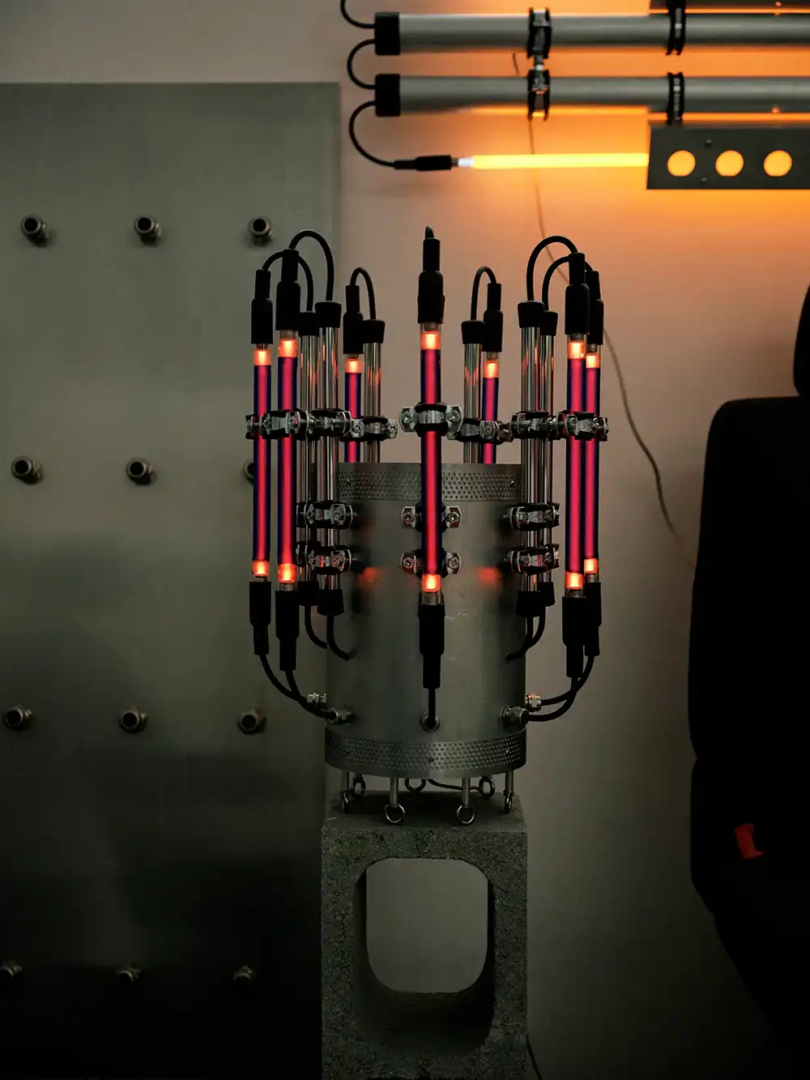
Eugenio Rossi: These names bring something organic and natural, almost anatomical, against materials that are rigid, metallic, engineered. We still consider the works sculptures. Even when they light up, even when they function, they remain sculptural compositions. They emit light doesn’t reduce them to devices. Some neon tubes are deliberately subtle — pale blue, soft white, silver gases that barely glow. Light gives the work a pulse. It doesn’t redefine its nature.
Mechanics measures motion in forces and vectors. Here, motion is slower, harder to pin down. It’s embedded in light, electricity, the way a body passes through space
Yaazd Contractor: The first form of movement is the work existing in space over time. People enter and leave. Light shifts. Shadows stretch, collapse, disappear. Sunlight hits the glass differently throughout the day, and that changes what the piece gives back into the room. For us, motion is tied to duration — the slow back-and-forth of life around the object.
Neon itself carries movement. If you spend time with it, you begin to notice that it isn’t static. Depending on the gas and the diameter of the tube, you can see the electrons reacting to the current. They vibrate, shift, sometimes even twirl slightly. These are subtle instabilities inside something that is expected to be uniform. There’s motion even in such a stable system.
Eugenio Rossi: There’s also the movement of light through the day. In sunlight, the work has one presence. As the room darkens, another structure emerges. Neon begins to isolate certain components, and fragments that were secondary before getting highlighted.
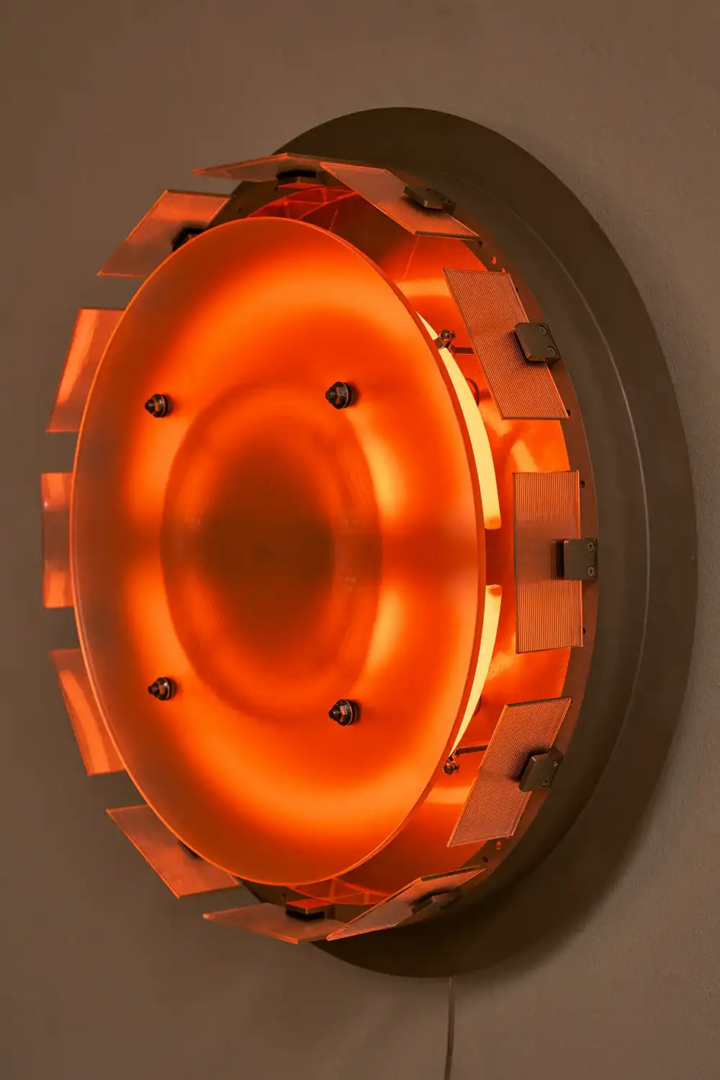
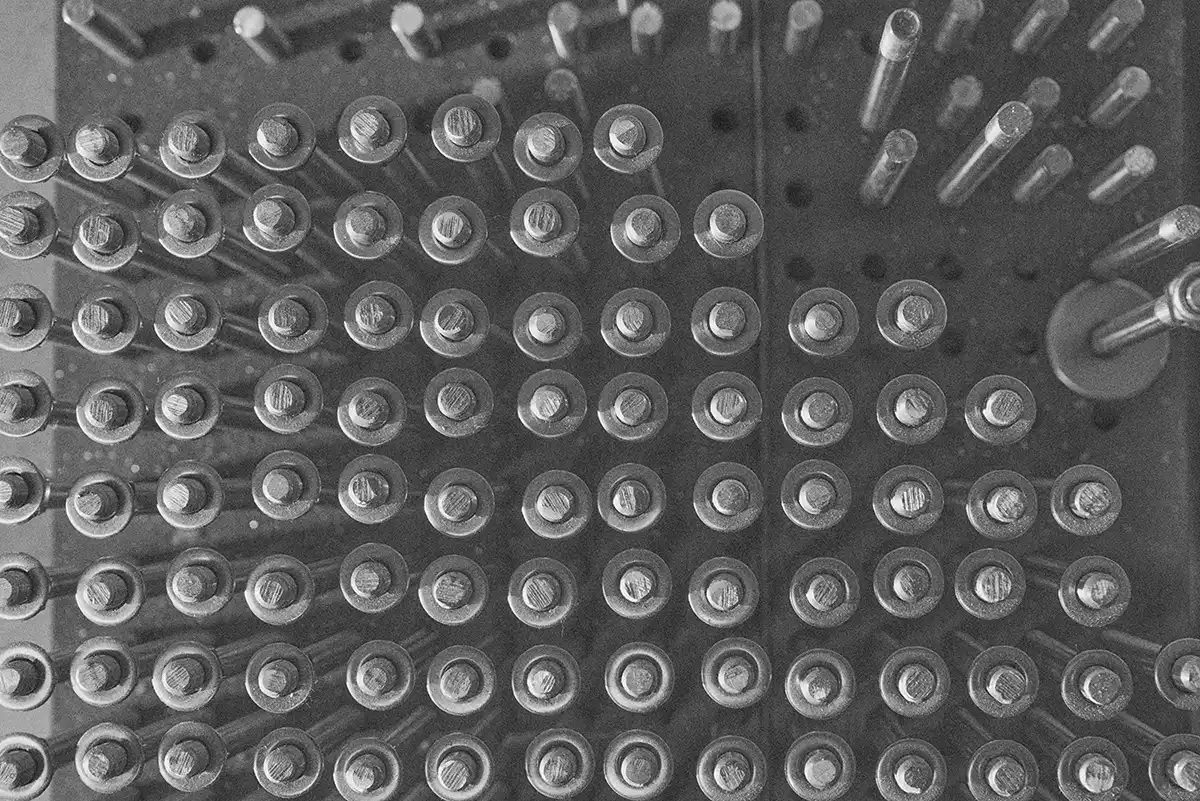
Yaazd Contractor: It’s perspective that creates a layer of motion. As you move through the space, the work changes. At forty-five degrees, it reads differently than at ninety. The layered glass, the perforated grids, the overlapping circles — everything shifts as the viewer shifts.
Space is not neutral. It’s in constant interaction with the piece. The same object can carry multiple personalities depending on context
Eugenio Rossi: We prefer to know the space in advance. Dimensions, scale, color temperature. We produce work, but site-specific projects allow us to calibrate the piece precisely. We focus on brightness of tubes, saturation of color, proportion to architecture. When the space becomes part of the equation, the mechanism expands beyond the object itself.
Susanna Galstyan