The Telegraph Tbilisi shows that adaptive reuse can resist nostalgia
One year after opening, The Telegraph continues to chart Tbilisi’s evolution: how the 1964 Brutalist Central Post and Telegraph Office was transformed, and the references that help decode its identity
In September 2026, The Telegraph marked one year since its opening. The hotel stands in central Tbilisi, on Republic Square, as evidence of a city looking forward while continuing to negotiate with its own past – in a country whose cultural proximity to Europe becomes clearer from within. Architecture is one part of it: the monumental grid and concrete severity of a building such as The Telegraph would sit comfortably in Milan or Brussels, part of the same postwar architectural language that moved across the continent under different political systems. Food is another: plain raw materials, mastery in baking, a wine tradition that runs through the country. Around them, Tbilisi has developed a lively, experimental cultural scene, with a music-driven nightlife that draws young people from abroad and, by day, a network of community spaces, independent bookstores and venues defined by a rough contemporary aesthetic.
The Telegraph contributes to that argument. A Brutalist building designed in 1964 by the Georgian architects Lado Alexi-Meskhishvili and Teimuraz Mikashavidze and completed the following decade, awarded the State Prize of Georgia in 1983 together with its architects, has been converted into a hotel: 239 rooms and suites across roughly 30,600 square metres, four years of design and construction between 2021 and 2025, and an investment of around 65 million euros. The commission came from George Ramishvili, founder of Silk Road Group; Silk Development delivered the redevelopment; Silk Hospitality operates the property; Shanghai-based Neri&Hu designed the architecture and interiors.
Neri&Hu turns reflective nostalgia into architecture: Inside The Telegraph Tbilisi
Neri&Hu presents the project as a critical reinterpretation, and declines to call it a restoration. The studio refers to the concept Svetlana Boym called reflective nostalgia, which separates the desire to reconstruct the past from the attempt to remain in dialogue with what survives of it. Restorative nostalgia seeks coherence: it imagines that a lost world can be rebuilt and made whole again. Reflective nostalgia accepts interruption and contradiction. It works with fragments and traces, allowing the past to remain visible while conceding that it cannot be recovered intact. At The Telegraph this means preserving evidence of the original building while making the new intervention contemporary.
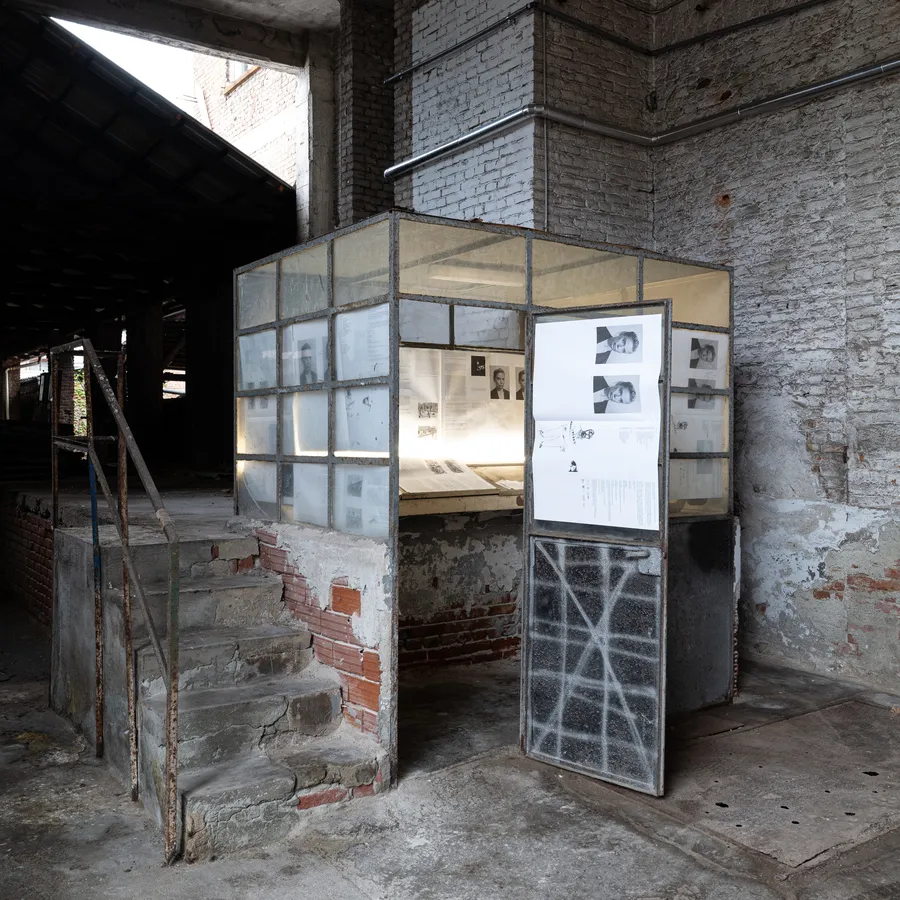
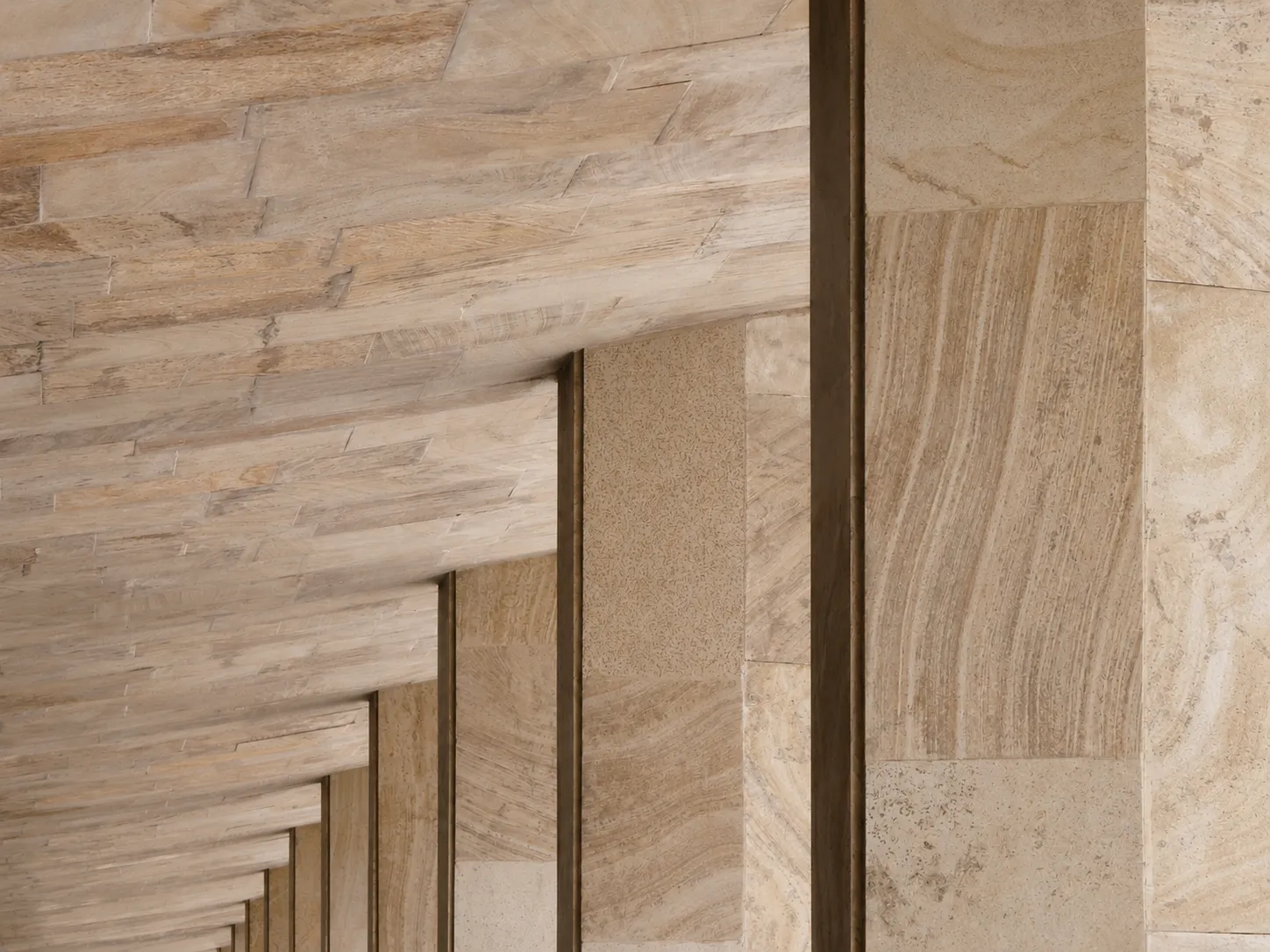
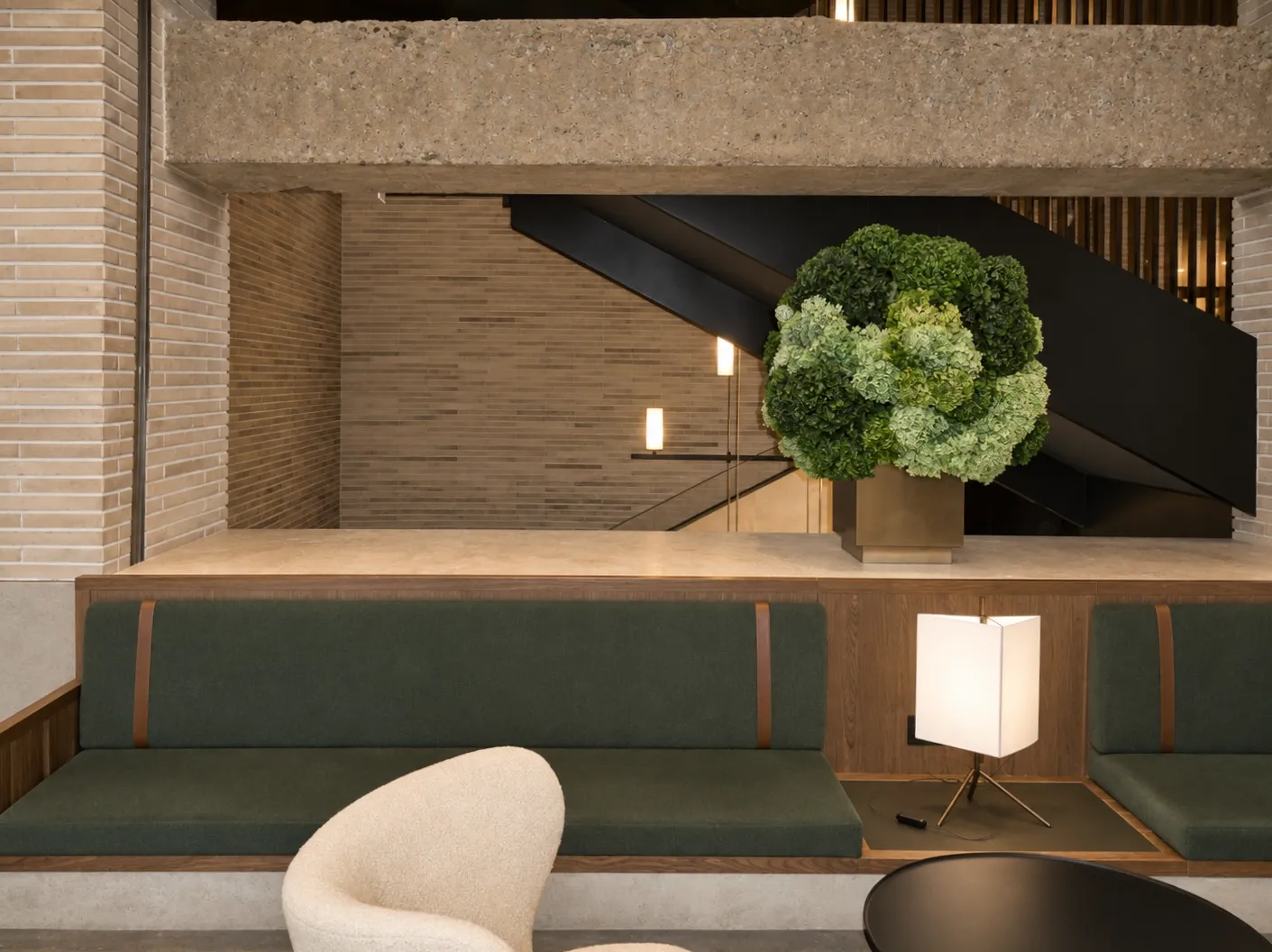
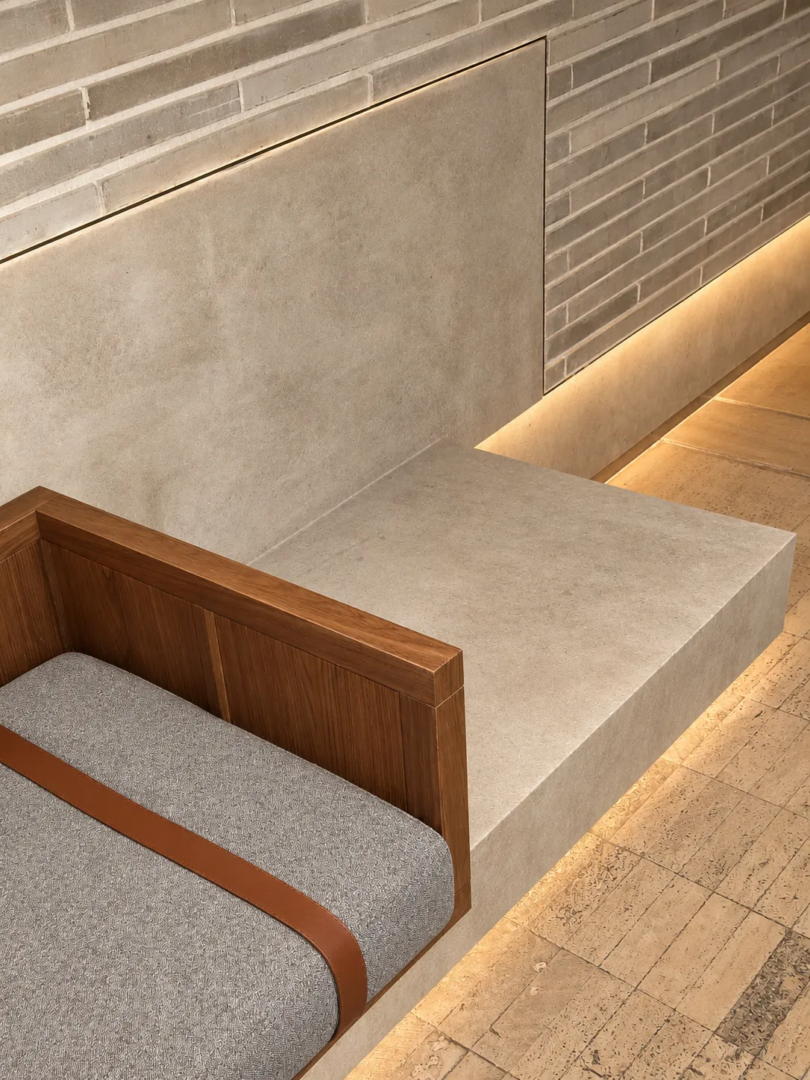
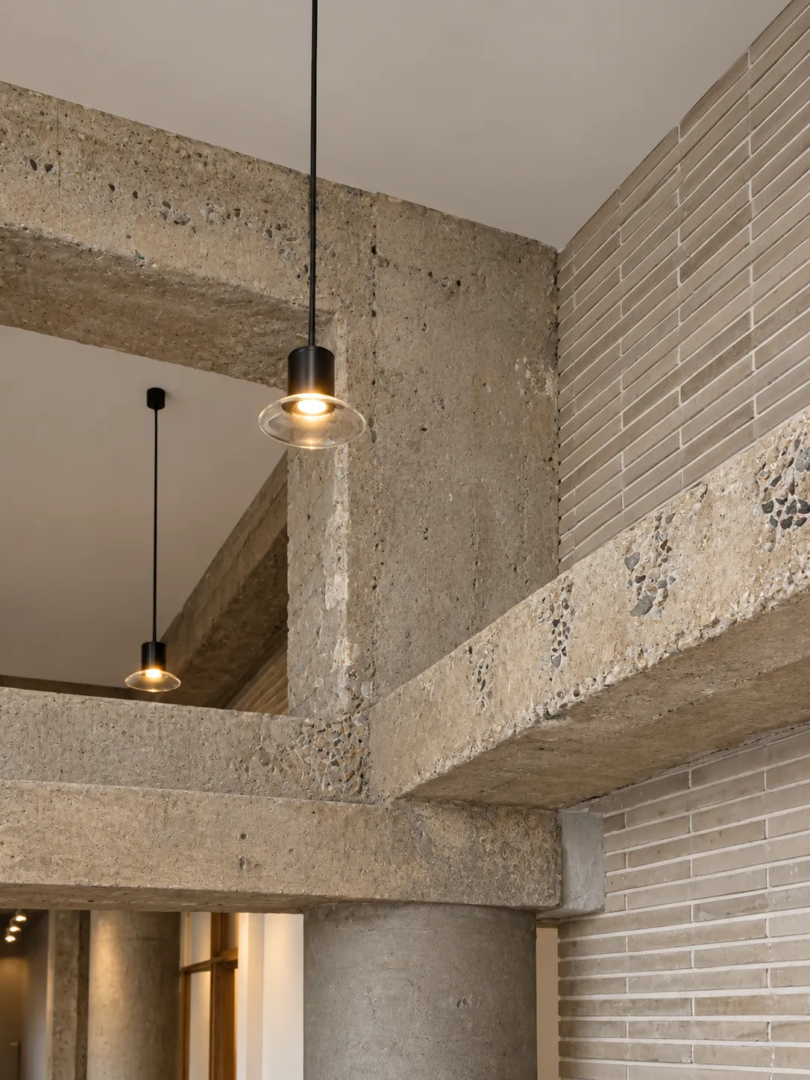
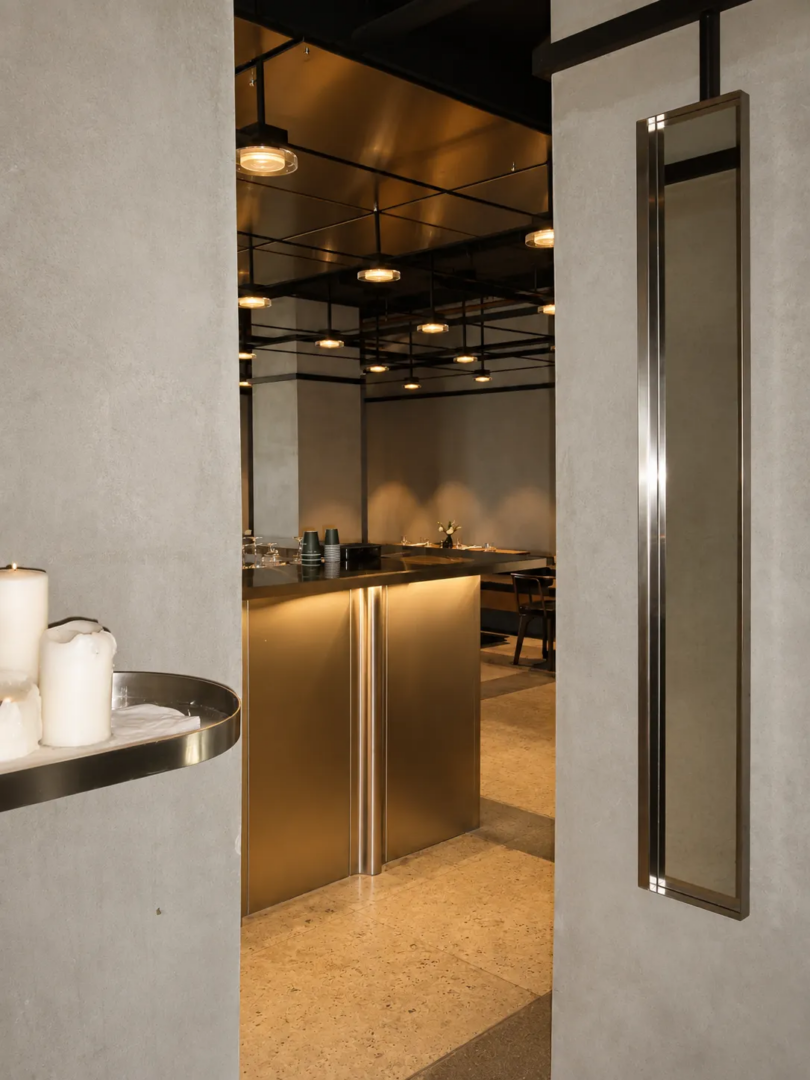
The reinforced-concrete structure was retained and left visible. Weathered columns stand inside finished interiors; the new materials — walnut, travertine, brass, fluted glass and blackened metal — declare their own date and leave the 1960s unimitated. Rough and polished remain distinct, and each makes the other legible. Retaining the existing structure is also the project’s most significant environmental decision. More than fifty years of concrete, material and embodied energy remain in use rather than being replaced. New materials and building systems were then developed in accordance with LEED Gold standards.
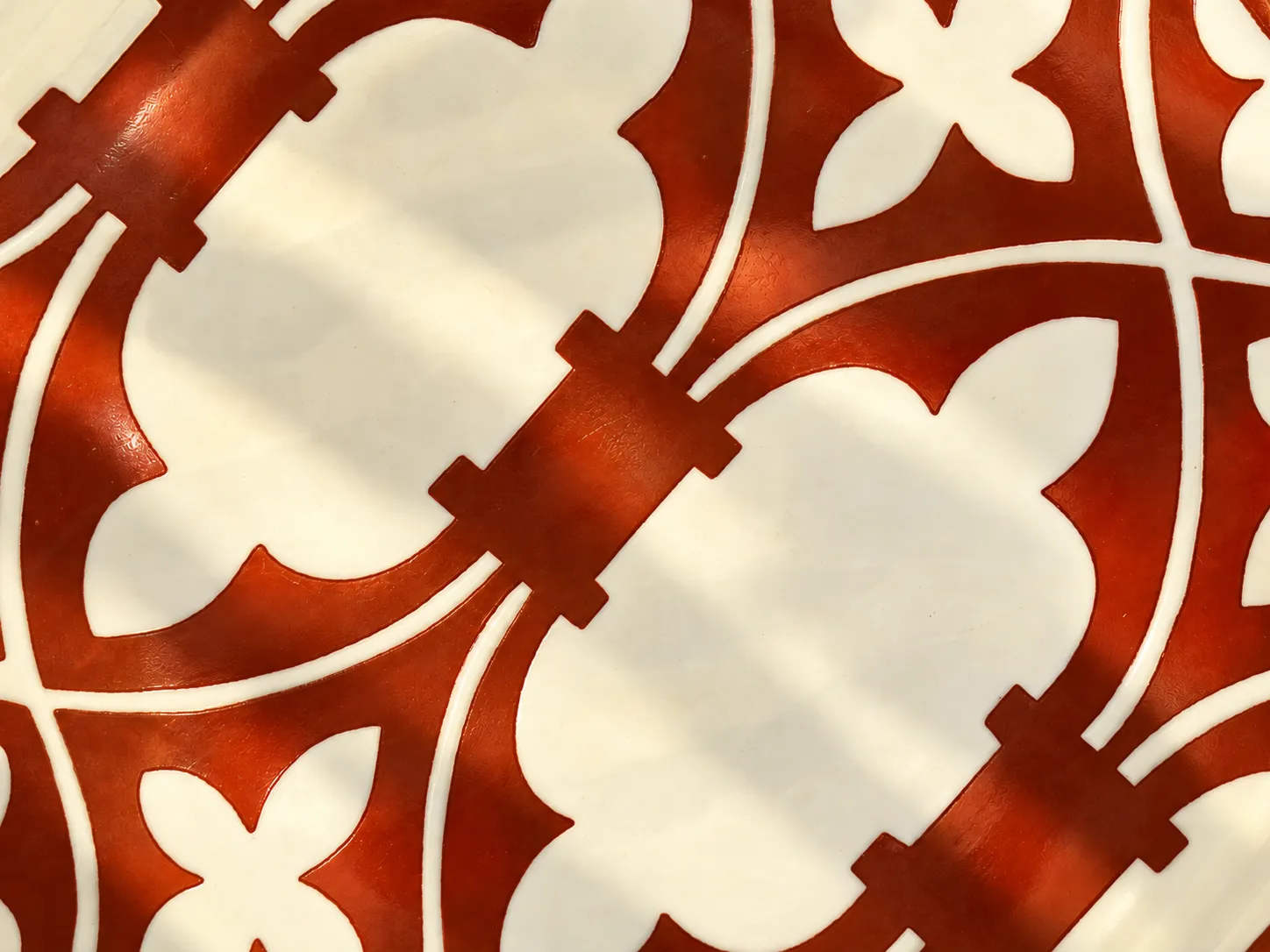
References to the building’s former telecommunications function are integrated into the design. Green accents recall the indicator lights of telephone switchboards, while dots and dashes across the revolving entrance doors form a graphic pattern that also reads as Morse code.
How Aldo Rossi and Richard Sennett help read The Telegraph
The studio also invokes Aldo Rossi. In L’architettura della città, published in 1966, two years after this building was designed, Rossi argued that a city is built from urban artifacts: constructions whose form persists while the reasons for building them expire. A Roman amphitheatre becomes a housing block, a convent becomes a barracks, and the form survives the institution that produced it, because the city keeps using it as a fixed point in its own memory. Function is the temporary part; form is the permanent one.
Richard Sennett supplies another reference. In The Uses of Disorder and, more recently, Building and Dwelling, Sennett separates two kinds of edge. One closes: a wall, a gate, a lobby that admits only those with a reason to be there. The other lets things through, and it is where a city produces its social life, because activities overlap at the edges instead of staying in their own zones. His complaint about contemporary development is that it builds the first kind and calls it public space. A hotel lobby is the standard case, which makes the distinction a test.
The ground floor of The Telegraph Tbilisi: corridors like streets, a courtyard as internal square
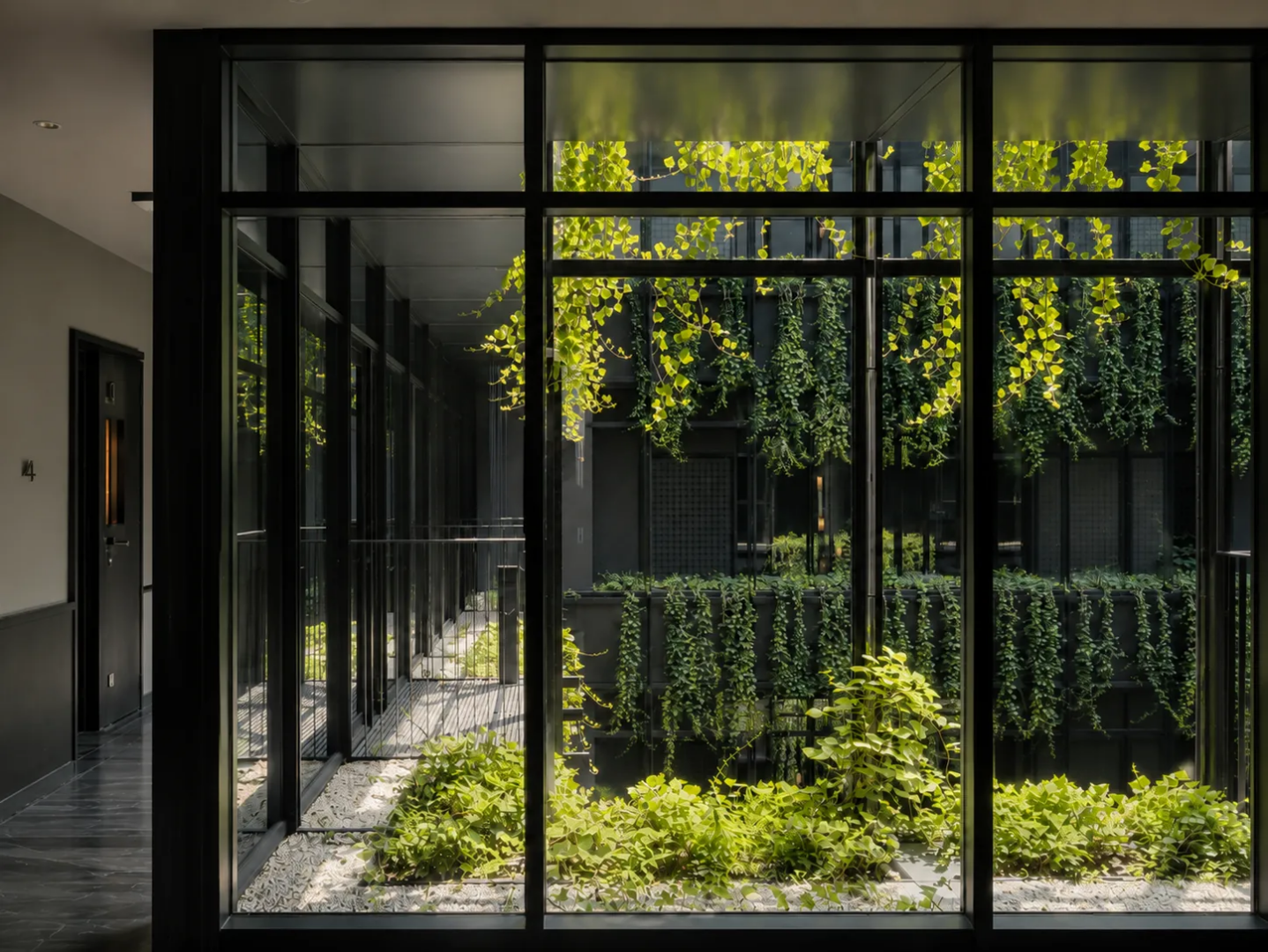
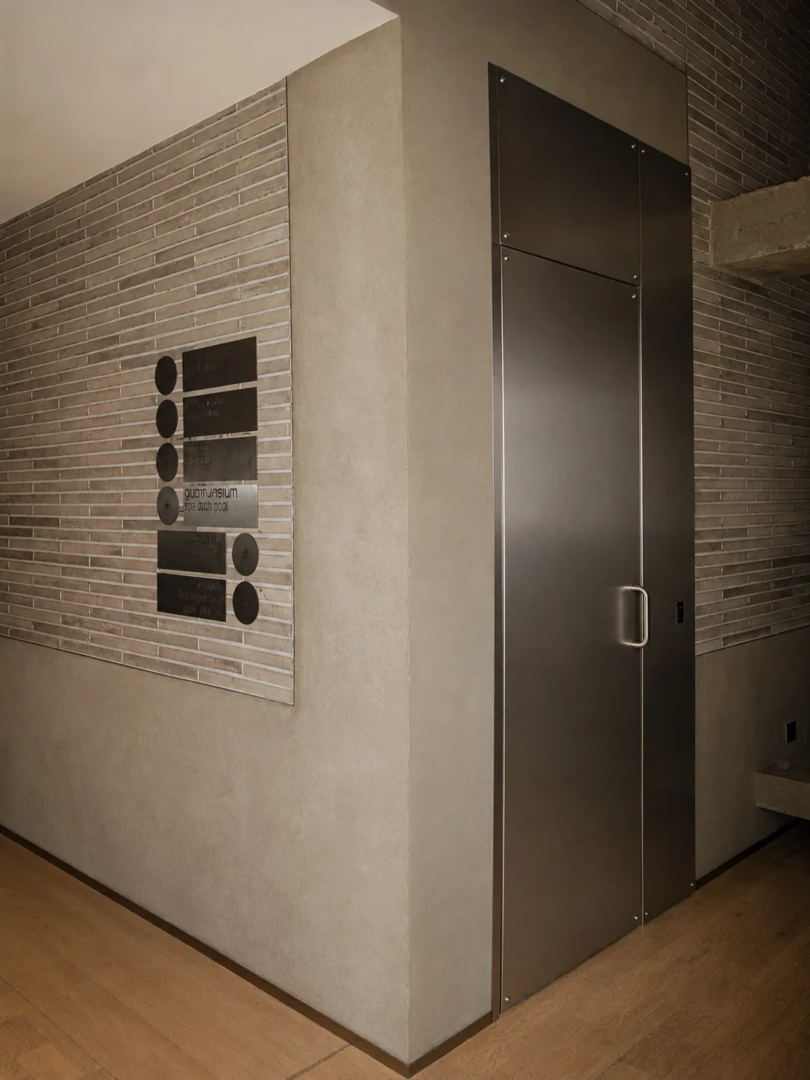
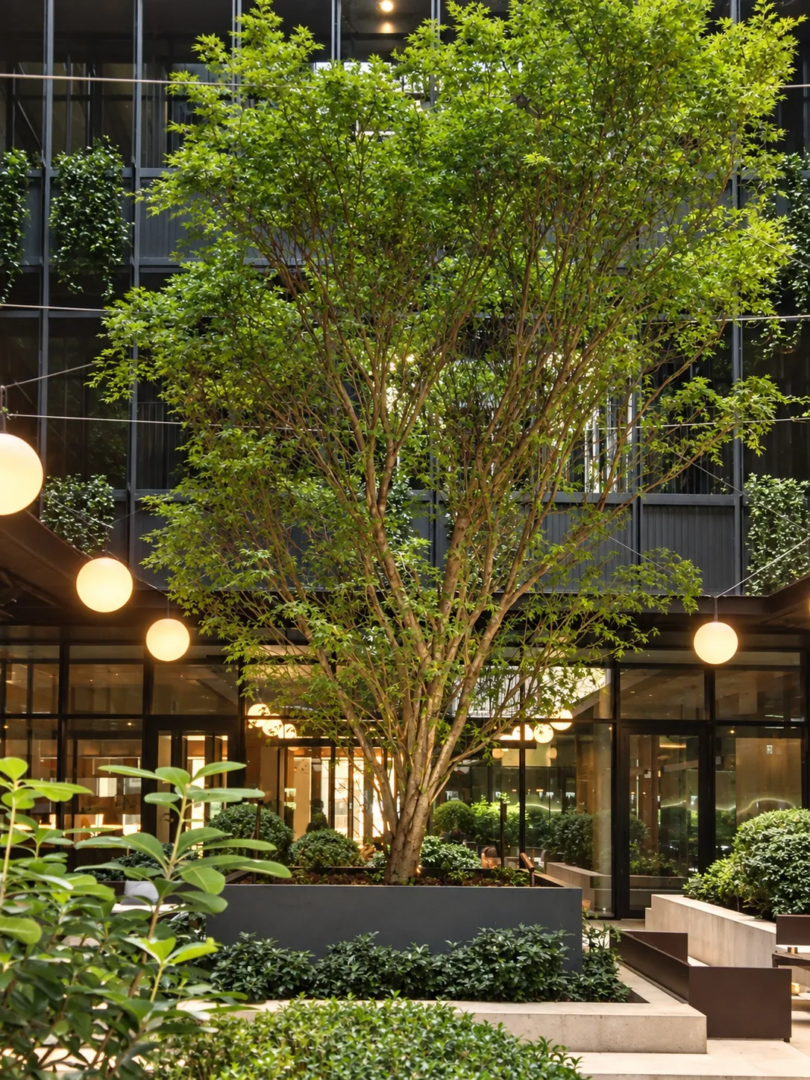
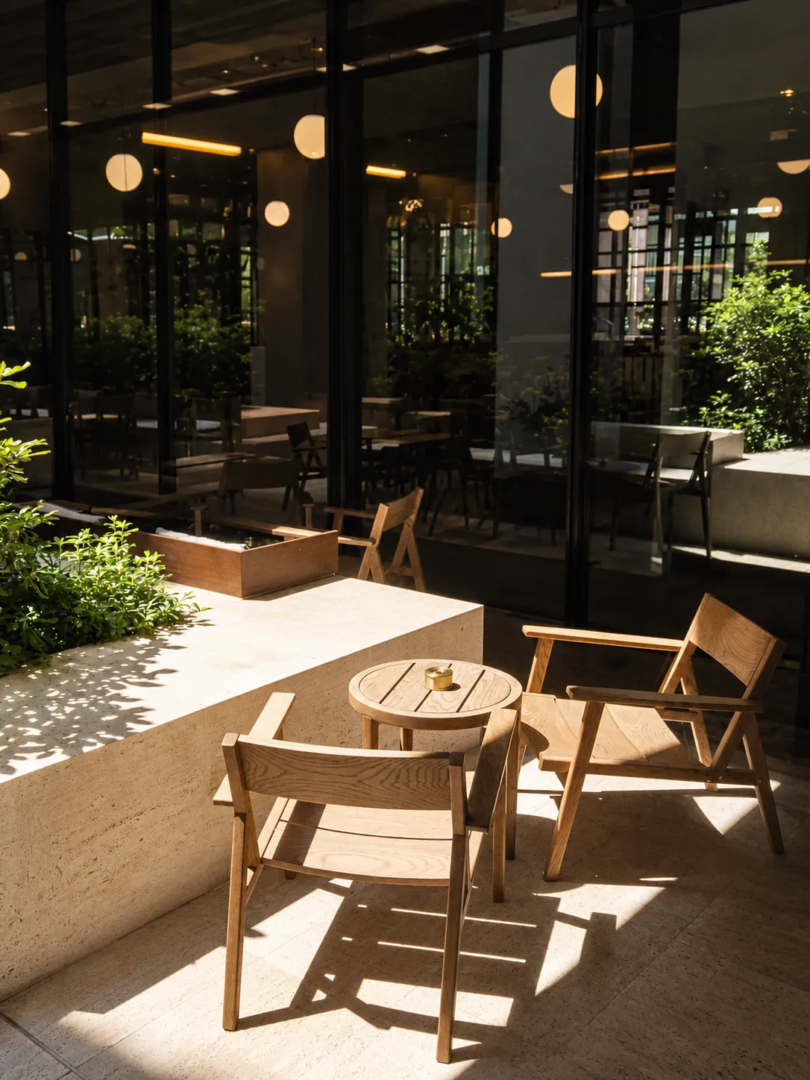
The decisive part of the project is the ground floor, conceived as a fragment of city. Corridors behave like streets. Restaurants and public rooms sit along them almost as separate addresses. Routes intersect and open onto a central courtyard, with balconies overlooking it from above. Tbilisi has always built this way: courtyards, shared balconies, houses that look inward.
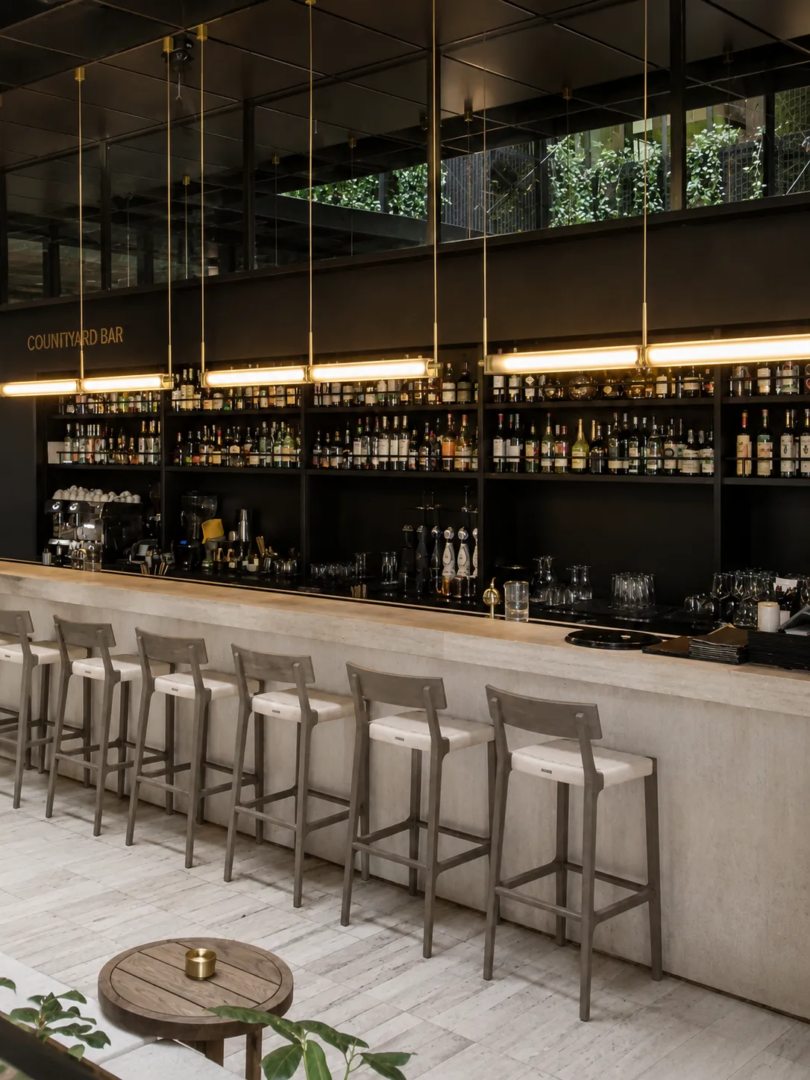
The courtyard is an internal square. A blackened metal framework rises through it, crossed by vegetation and terraces, and nothing closes over it.
There is a second reference, further back: the caravanserai. Tbilisi grew for centuries as a city of transit, and its caravanserais combined lodging with commerce, storage, food and social exchange, all arranged around a courtyard entered from the street.
Where to eat at The Telegraph Tbilisi: Grand Café, Philosophico and the Wine Library
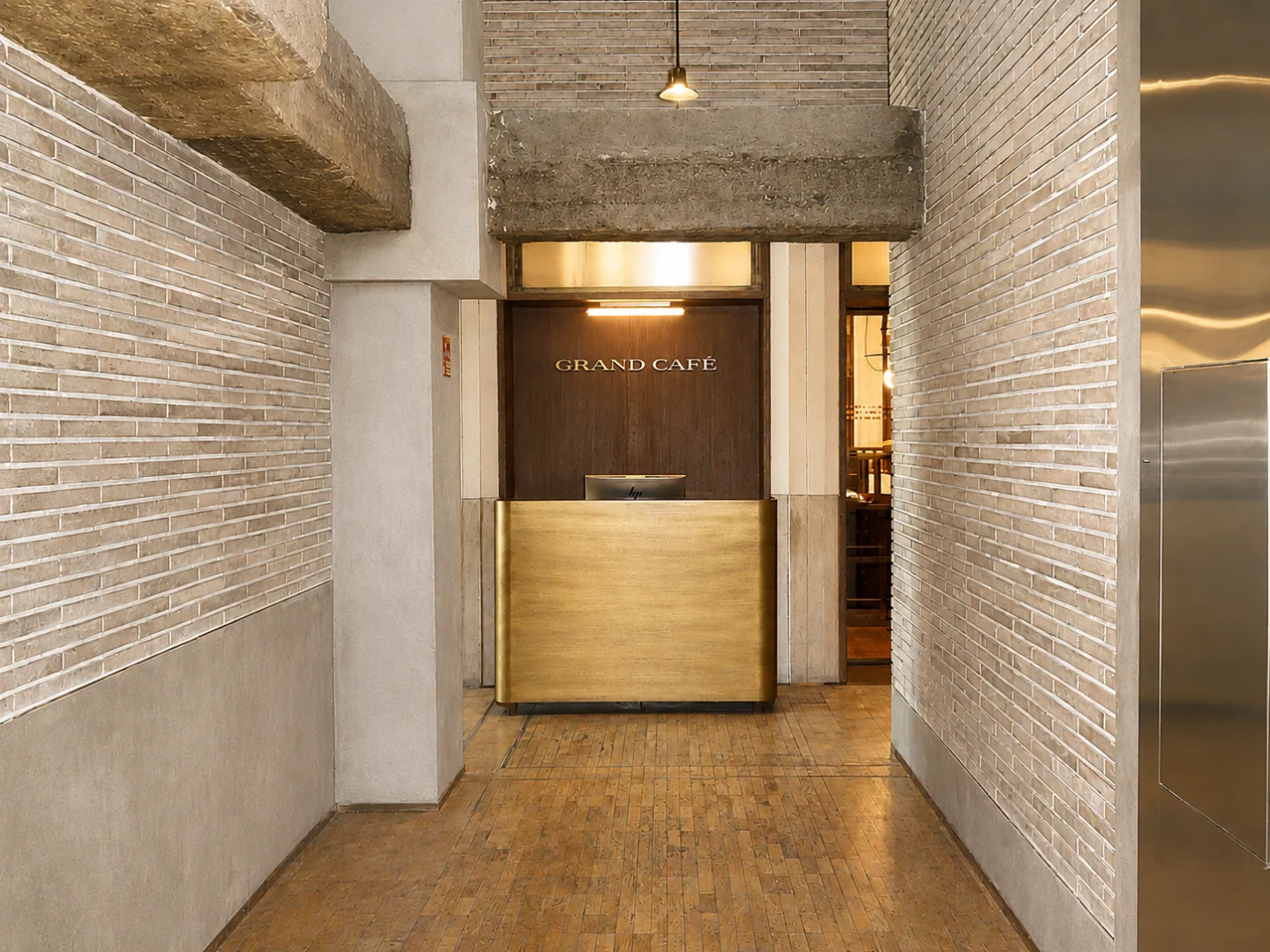
Grand Café is the representative restaurant, open all day from breakfast through to dinner, the hour when the lighting turns it into an intimate room and locals come for the atmosphere. Georgian ingredients and preparations are placed inside the format of the European grand café and brasserie, with white tablecloths, walnut banquettes, mirrors and tableside service.
Philosophico takes Italian dining culture as its reference and is tied more directly to the building. Near the restaurant, a sculpture of a twentieth-century Georgian philosopher that predates the hotel was retained in place, and the venue took its name from it.
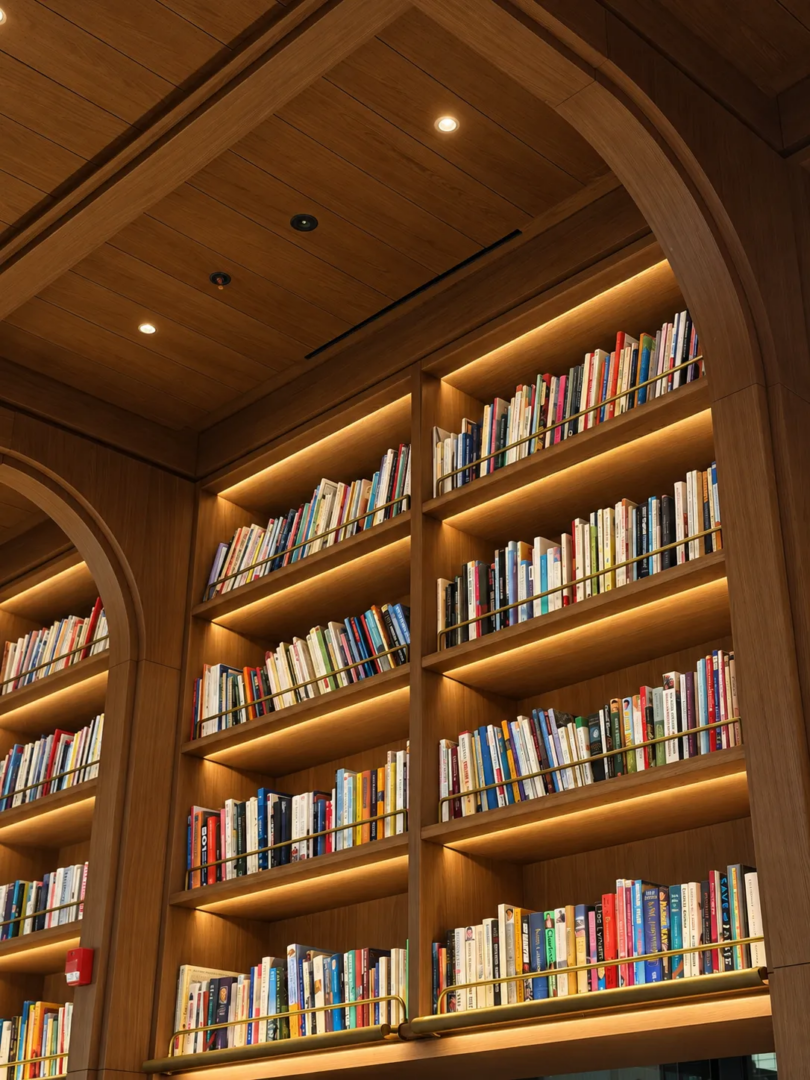
Around these spaces, other restaurants, lounges and social rooms extend the life of the ground floor beyond the rhythms of check-in and check-out. In the Wine Library, repeated arches and curved walnut surfaces make the caravanserai reference explicit, while Georgian wines sit beside international labels, connecting the hotel with Kakheti and with Tsinandali Estate, also part of the Silk Hospitality portfolio. The room serves reading, work and meetings as much as wine, acquiring a function independent of the accommodation above it. A second room, given over to networking, hosts temporary exhibitions of work by Georgian artists.
The 239 rooms of The Telegraph Tbilisi: railway carriages inside a grid from 1964
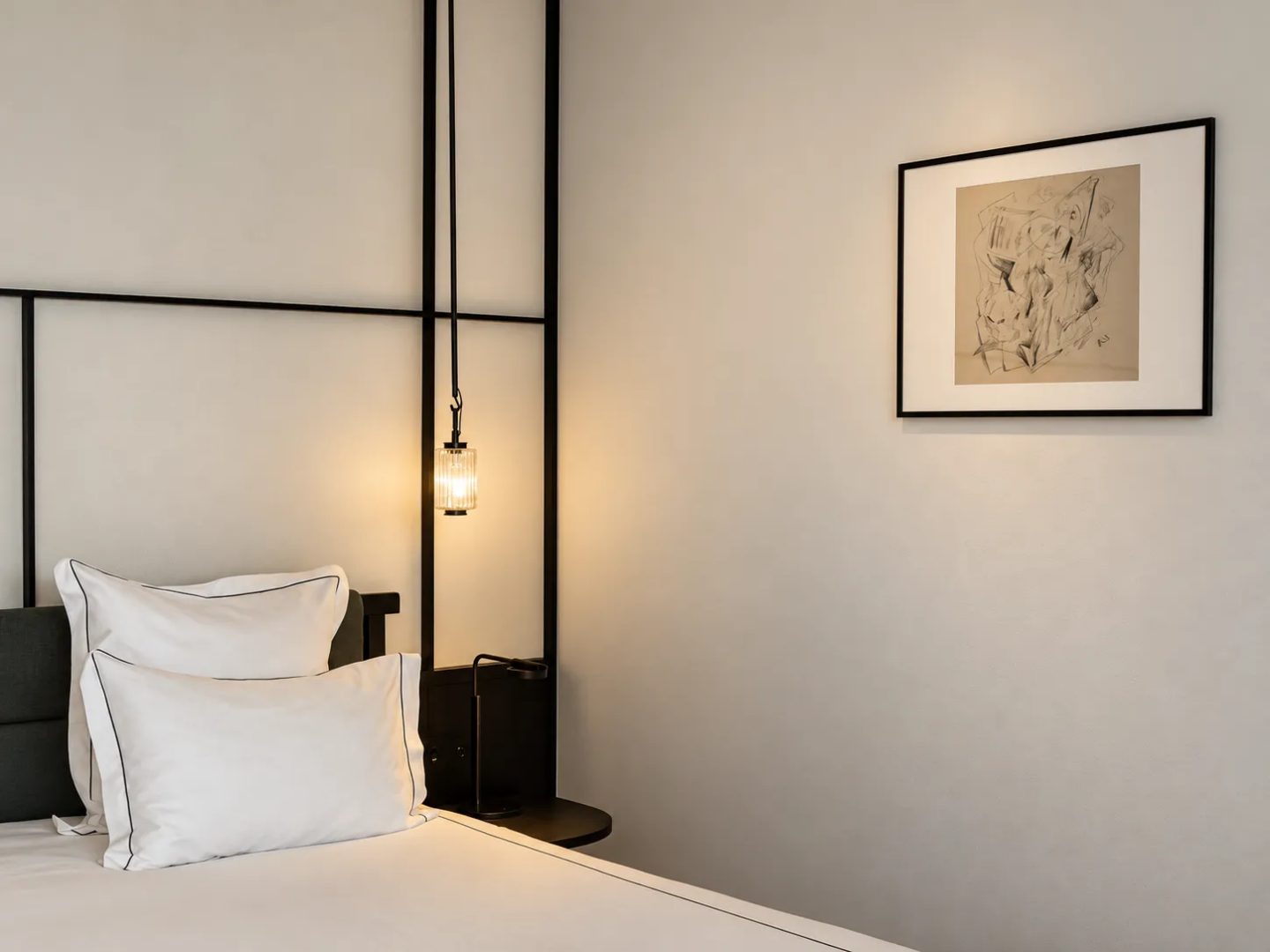
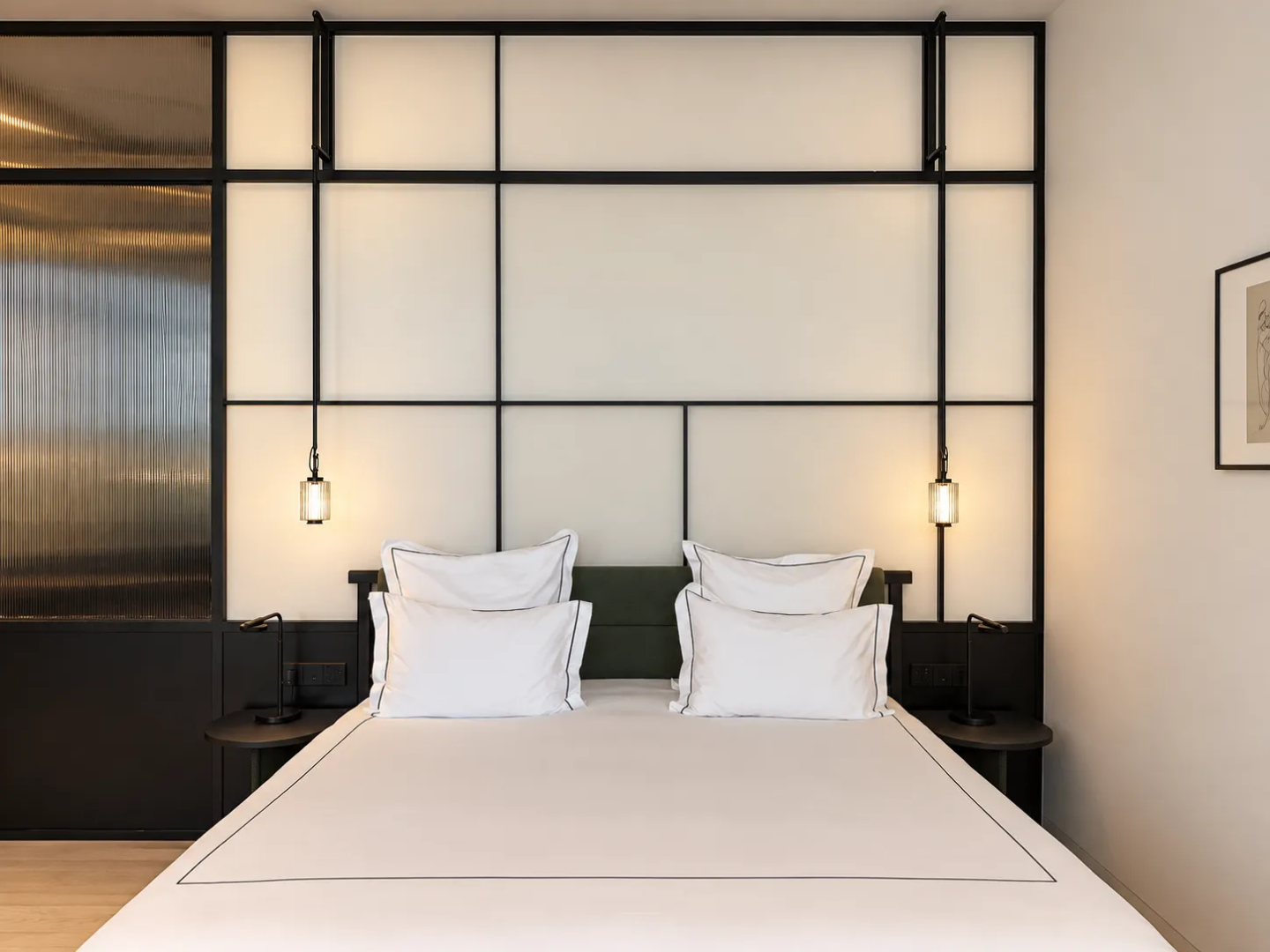
Upstairs, the rooms are inserted into the structural grid inherited from the Telegraph, and the grid determines their organisation. The sequence runs linear: entrance, bathroom and dressing, sleeping or living space, window. Neri&Hu compares it to the compartment of a railway carriage, which shifts the communication metaphor from information to bodies — the post office transmitted messages, the railway moved people, the hotel holds them between one movement and the next. The studio links the idea to The Sheltering Sky by Paul Bowles and its distinction between the tourist, who counts the days until the return, and the traveller, who accepts displacement as an open condition.
Materially the rooms repeat the tension of the ground floor at smaller scale. Fluted-glass partitions sit in matte-black frames. Pale timber, curtains and upholstery soften the geometry. Black detailing runs through furniture and textiles, and the switchboard green returns in headboards and upholstered elements. The nh1217 lamps Neri&Hu designed for Artemide bring blown glass and brushed brass into the composition; some suites use the Cuna bathtub Patricia Urquiola designed for Agape, others the Immersion bath by Neri&Hu, produced by the same company. Amenities are Diptyque Fleur de Peau.
Categories run from Classic rooms of around 30 square metres through Deluxe and Deluxe Terrace configurations and larger Club rooms to a sequence of suites, up to the Telegraph Presidential Suite at around 260 square metres. Luxury renovation usually removes the evidence of previous use, repairing surfaces until age becomes imperceptible. Here age is part of the value.
Nightlife at The Telegraph Tbilisi: Tatuza Jazz Club and the first Rolling Stone rooftop
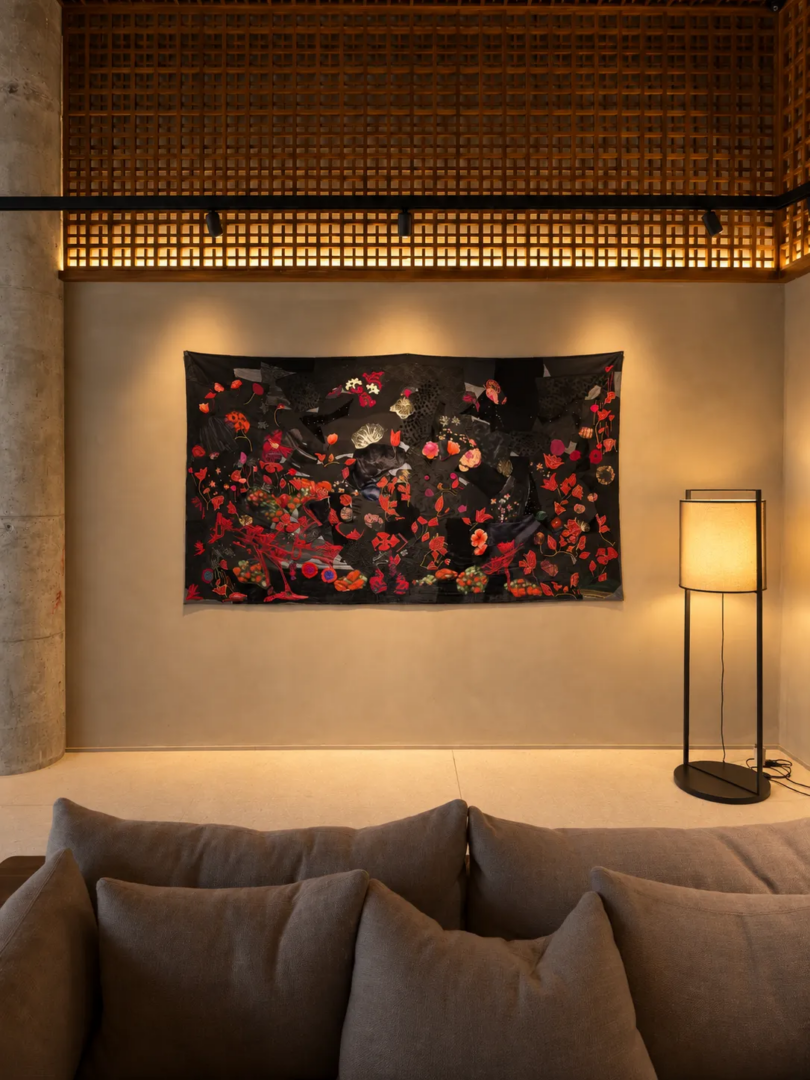
After dark the building changes register. Tatuza Jazz Club is named after the Georgian jazz musician Tamaz «Tatuza» Kurashvili and programmes local players alongside international musicians; its language is more theatrical than the restrained interiors above, with red velvet, metallic surfaces and locally produced furniture. Jazz suits a building organised around communication, since improvisation runs on listening and response.
At the other end, the Rolling Stone Rooftop Bar opened in September 2025 as the first Rolling Stone rooftop worldwide, and the partnership extends to the music identity and the event programming. Vertically the hotel reads as a compressed section through nightlife: jazz below ground, restaurants and circulation at street level, rooms above, music again on the roof.
The Telegraph Tbilisi one year on: Leading Hotels, Two MICHELIN Keys, Prix Versailles
Silk Road Group operates a broader Georgian portfolio, from urban hotels to landscape properties between Kakheti and the Black Sea; The Telegraph functions as its urban flagship. International positioning came fast. The property became the first in Georgia and the Caucasus to join The Leading Hotels of the World, the MICHELIN Guide awarded it Two MICHELIN Keys, and in 2026 Prix Versailles included it among sixteen World’s Most Beautiful Hotels.