Jaguar Type 01: the aluminum panel the software said couldn’t be made
From the Impossible Panel to anodized aluminum and technical textiles, Alexey Andreev and Axel Goulée explain the materials and industrial challenges behind the Jaguar Type 01 shown at Artissima
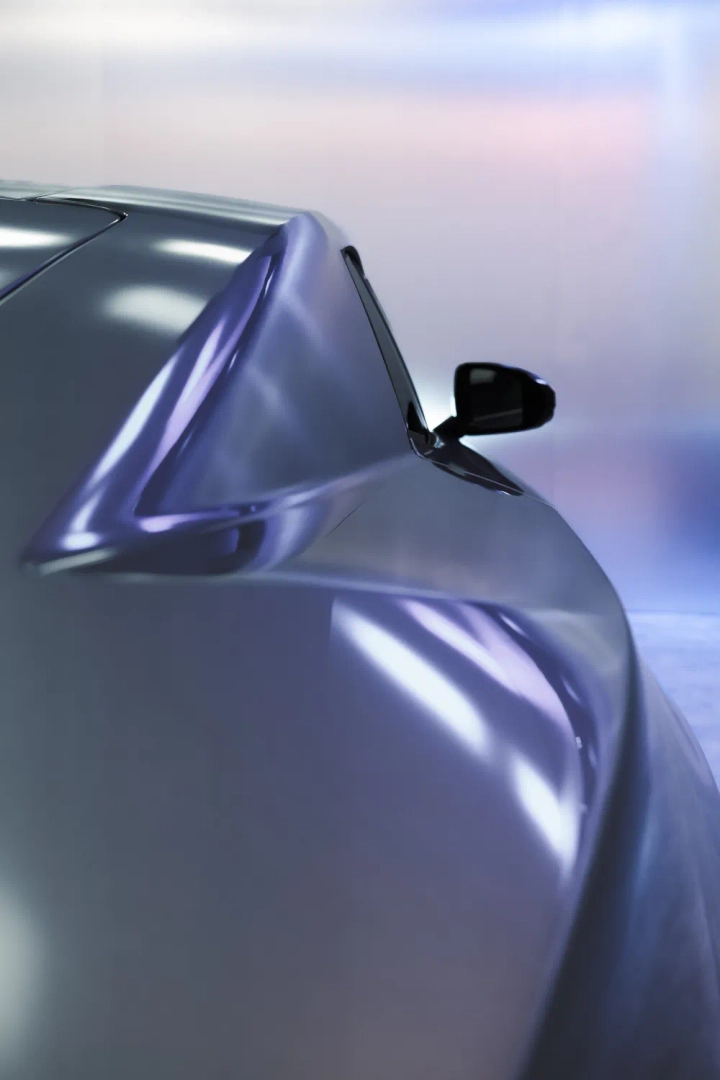
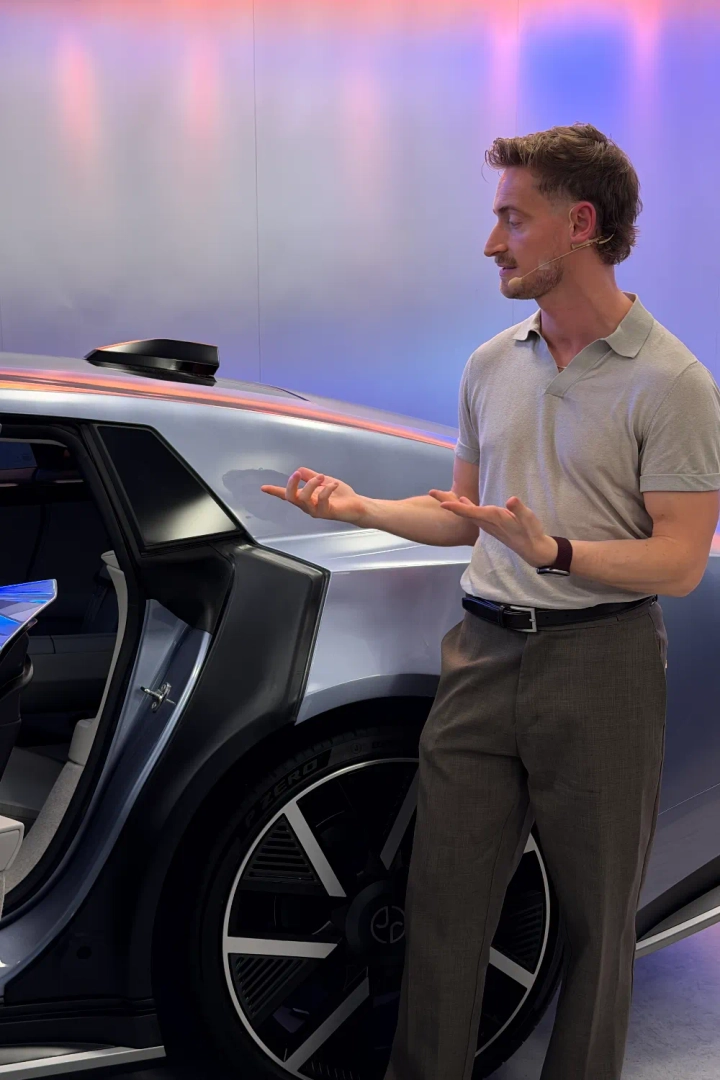
«It’s a single piece of aluminum, stamped in one go. Before this project, something like it would have been considered impossible to produce». Alexey Andreev, Lead Exterior Designer at Jaguar, stops at the point where the flank of the Type 01 turns into the rear. He asks you to look at the surface from several angles and to run a hand along the profile. The line starts sharp, almost a blade. Toward the back it loses definition and becomes one continuous curve.
The part is called the Impossible Panel: a sheet of aluminum roughly three meters long, developed to hold the silhouette in one piece, without the joints that normally break up body panels of that size.
The four-door electric grand tourer is the first production model of the Jaguar rebuilt around Exuberant Modernism, the design philosophy that sets reduced, modernist form against deliberately expressive volumes, colors and details. The world debut took place in New York on October 6, two years after the Type 00 concept was shown at Miami Art Week. Getting from concept to production meant working through metal forming, surface construction, interior ergonomics and the choice of materials.
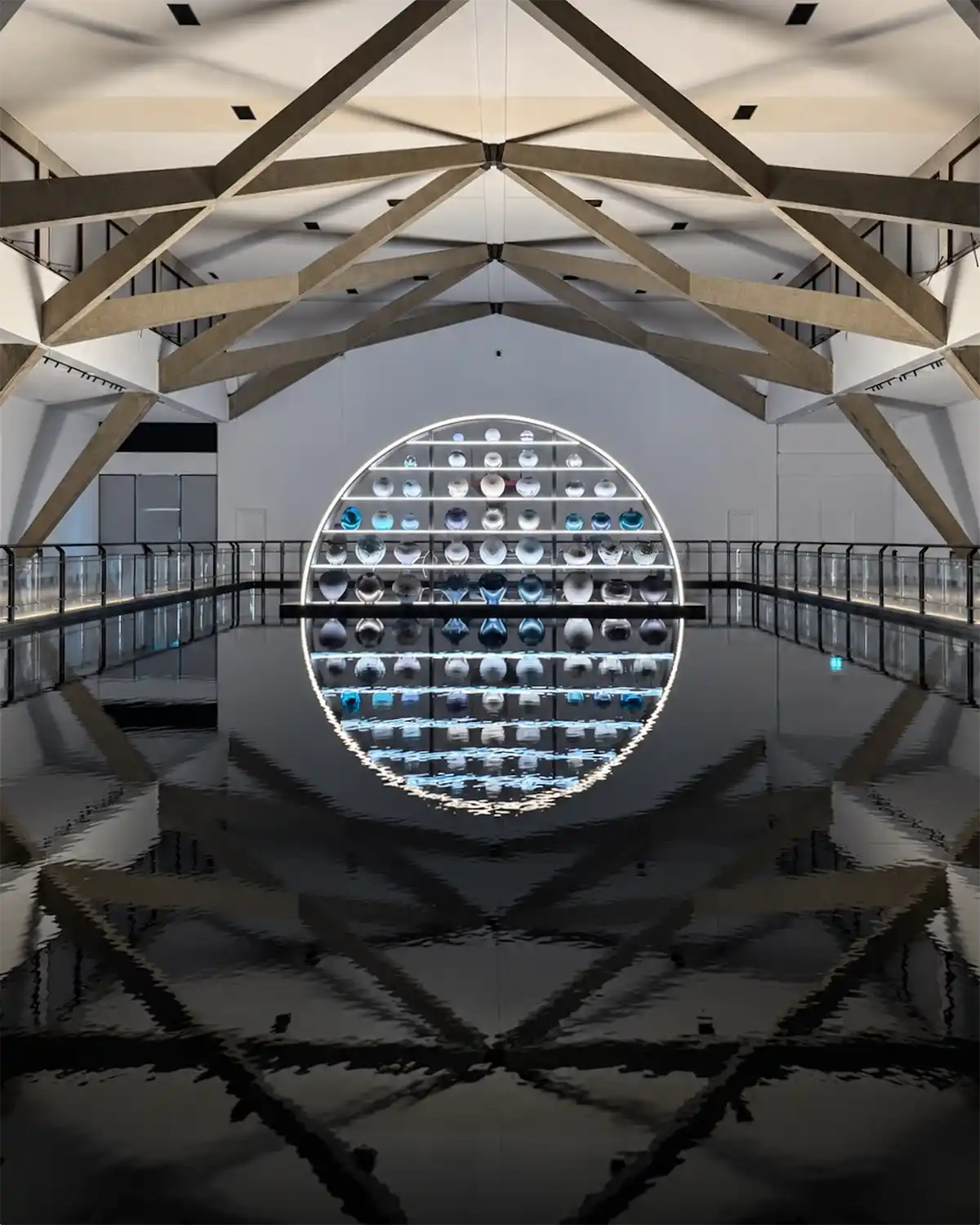
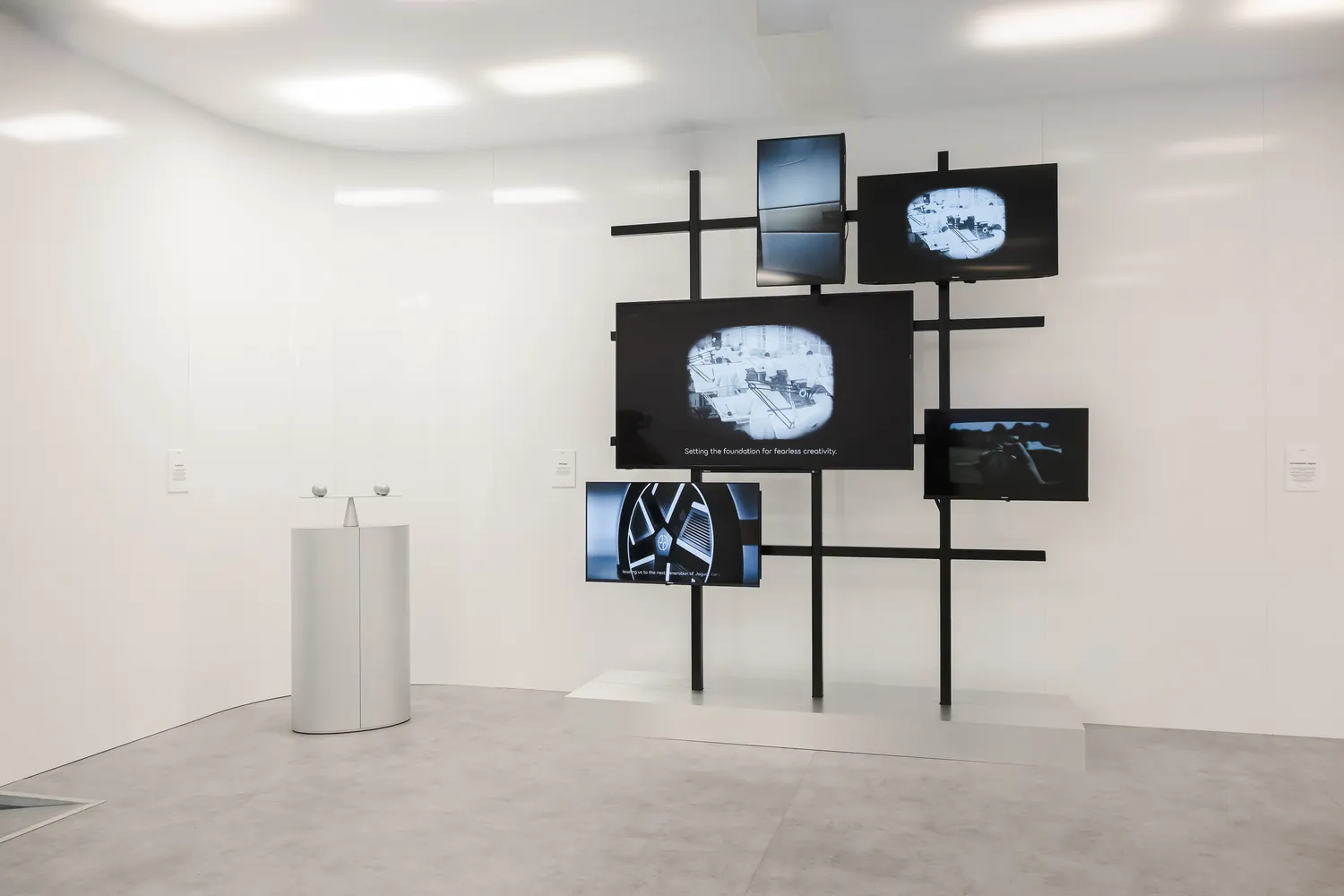
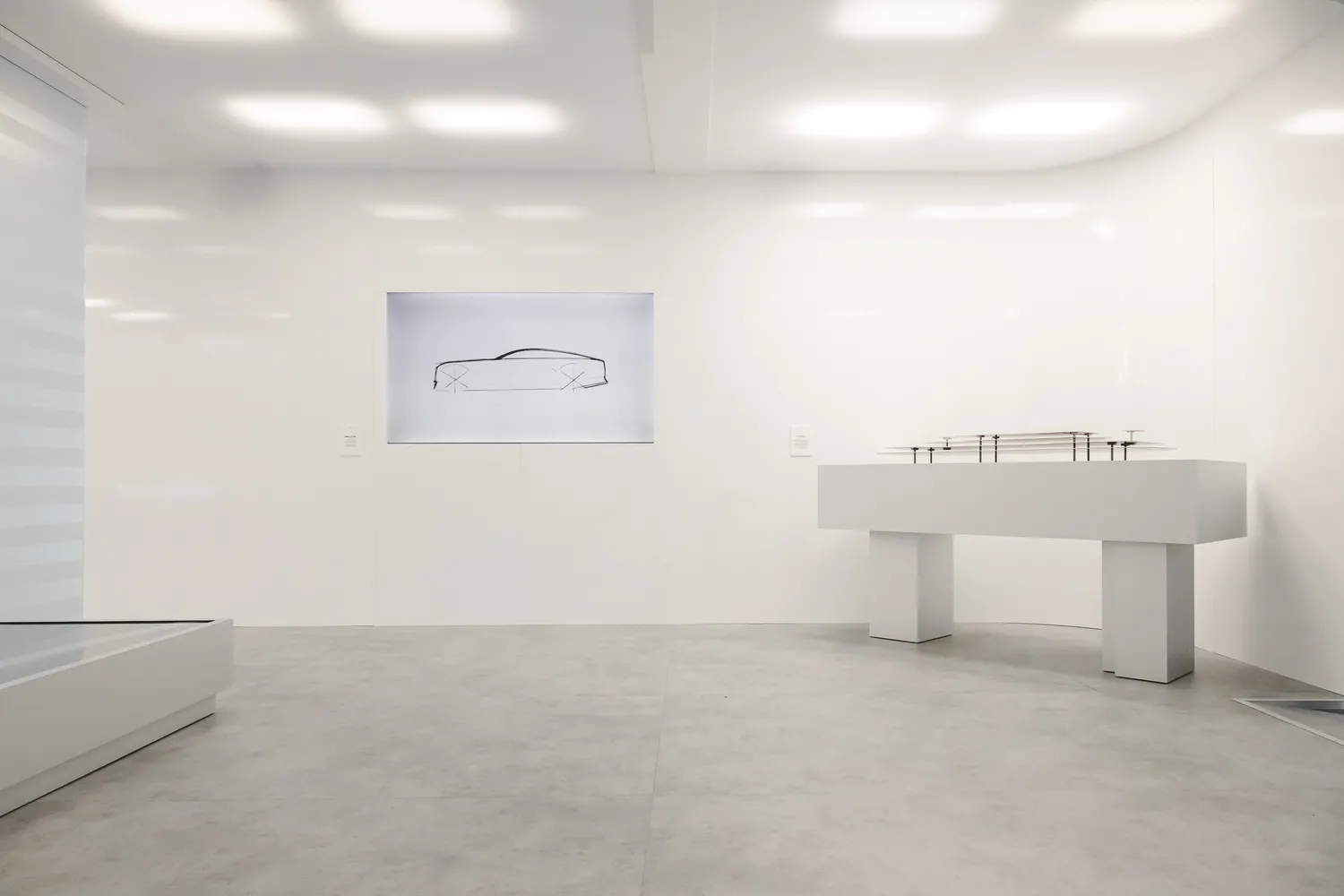
In Europe, the Type 01 was shown for the first time on October 29, 2026 at Artissima, the international contemporary art fair in Turin, where Jaguar took part as Official Partner with an installation called 01 of a Kind, built for the occasion. The space works in brushed stainless-steel effect surfaces, glossy white lacquer, frosted glass and concrete-effect finishes. Beside the car, objects and materials from the design process made some of its stages visible.
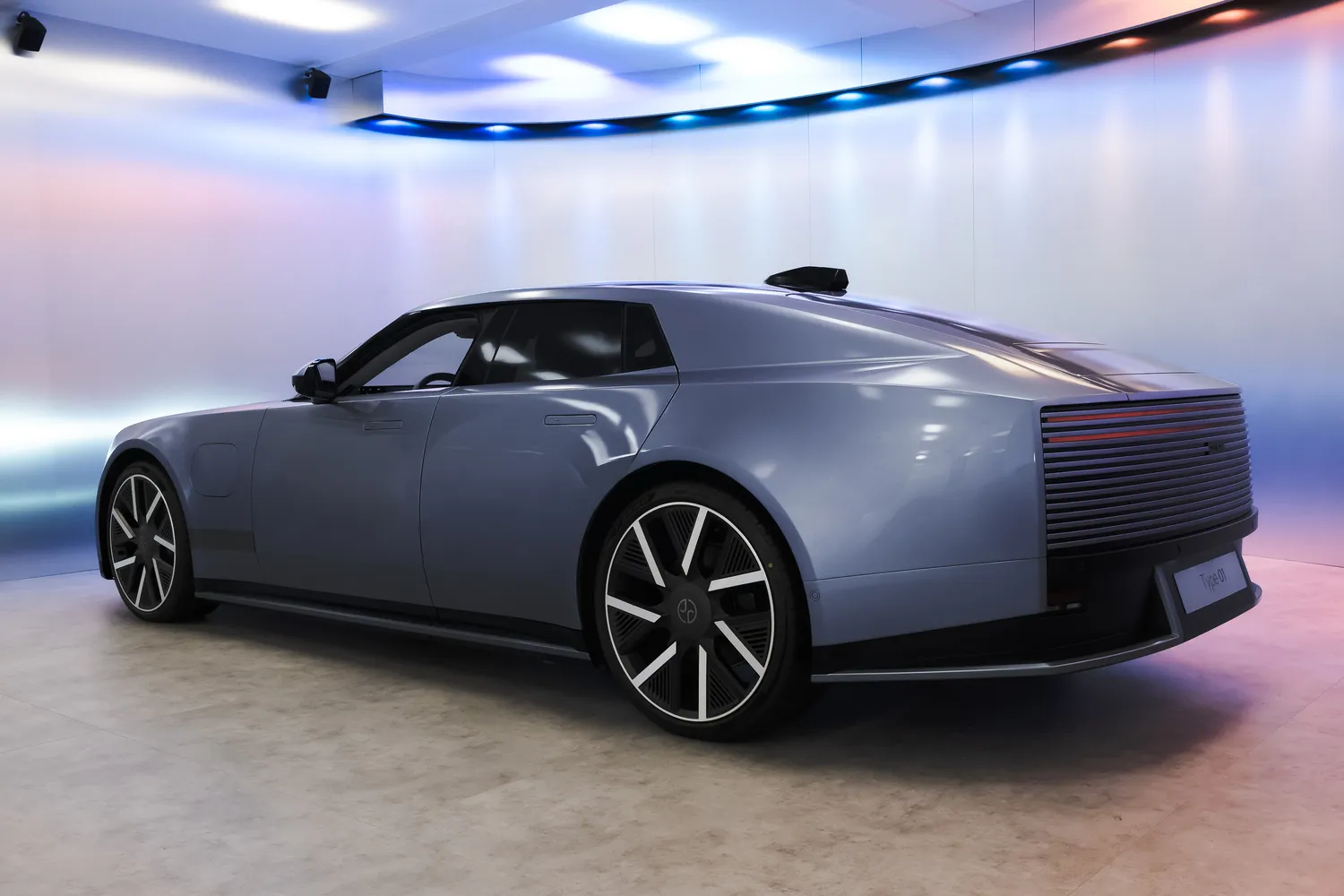
The Impossible Panel on the Jaguar Type 01, three meters of aluminum in one piece
The Impossible Panel covers one of the hardest areas of the body, where the flank meets the rear shoulder. In conventional construction, a surface that size would be split into several parts and assembled at joints. Jaguar kept it continuous.
Andreev says the first obstacle came from the simulation software engineers use to judge whether a part can be made. «When we put the design into the software, the program said it would be impossible to produce. Now the panel is here. We found a solution, and they even had to update the software, because it now recognizes that this kind of forming is possible».
The problem was metal deformation: under curves that complex, aluminum risks tearing, or springing partway back to its earlier shape once the press releases it.
The answer was a six-stage cold stamping process developed at the Halewood plant, near Liverpool. A press four stories tall, exerting 2,500 tons of force, works a single aluminum sheet step by step into five geometric surfaces that converge on one point, crossed by three lines. Engineers reworked the dies repeatedly to compensate for springback: more than 1,500 hours of development, which kept the panel continuous and the body free of joints.
The car also has frameless doors, with the glass meeting the body directly: a compressed-radius hemming spec hides the seals without adding decorative trim. Surfaces that continuous set tight requirements for the body-in-white and for the tolerances between moving and fixed parts.
For Andreev, the reason to keep the panel in one piece came down to the rear shoulder. That is where the beltline, the side volume and the rear surface meet. A joint would have cut the eye exactly where the design needed continuity.

From Type 00 to Type 01, the proportions of a 5,235-millimeter electric GT
The Type 01 comes out of the repositioning JLR announced in 2021: an all-electric range, a recognizable design language and more room for personalization, with Jaguar moving up market. The Type 00, shown in Miami in December 2024, set the direction through a concept car with exaggerated proportions. The Type 01 carries some of those principles into a car built to be sold.
It measures 5,235 millimeters long and about 1,403 millimeters high. The hood is long, the roof low, the cabin pushed back. The front overhang is short, the rear more pronounced. The wheels, up to 23 inches, carry much of the visual balance.
Andreev points out that car designers use wheel size as a yardstick for overall proportion, the way artists measure the human figure against the size of the head. On the Type 01 the wheel diameter is more than half the total height of the car, and the layout of the silver and black surfaces on the rims was worked out to make them read larger still.
«We didn’t start by asking what an electric car should look like. We concentrated on making a Jaguar first», Andreev says. The electric platform would have allowed a shorter hood and a bigger cabin, following the logic of packaging efficiency. Jaguar kept proportions that belong to the grand touring tradition, on a completely different mechanical architecture.
The relationship with the brand’s history also shows in the distance between the front axle and the edge of the door, the luxury gap. On the Type 01 it measures 898 millimeters, about 17 percent of the length of the car: close to the proportion of the Jaguar E-Type. The project recovers some of the mass relationships that defined the historic Jaguars. The surfaces work in another vocabulary altogether, far from the curves of twentieth-century cars: large expanses of metal, controlled geometric transitions, few dividing elements.
The rear with no window and the Strikethrough signature of the Jaguar Type 01
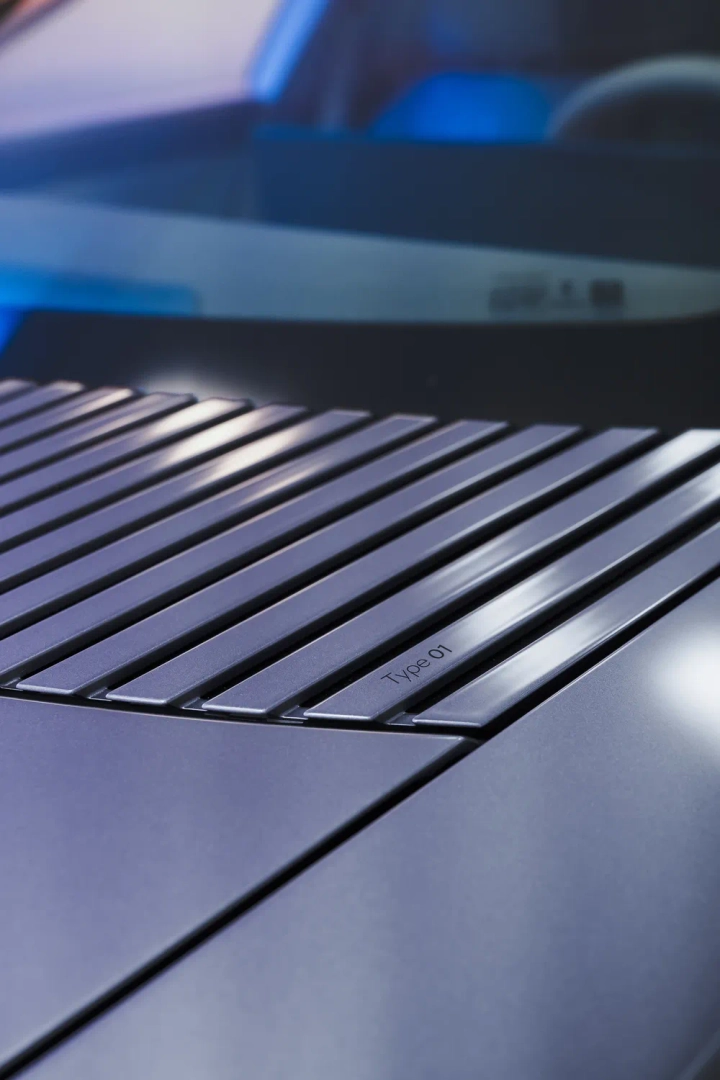
One of the most radical decisions was to delete the rear window. The Type 01 ends in a closed surface, crossed by a sequence of parallel horizontal lines Jaguar calls Strikethrough. The lamps are built into that graphic and stay hidden until they come on. For Andreev, the aim was a rear made of two recognizable elements: the monolithic volume of the body and the horizontal graphic.
«Imagine putting a piece of glass into this surface. It would interrupt the way the eye follows the body. Without the rear window, we can read the whole back as one sculpted volume».
With no glass, visibility is handled another way, through a camera system feeding a ClearSight digital display at the base of the windshield. The rear also carries a three-stage active aerodynamic spoiler, hidden when it isn’t working. The Strikethrough does the job of identification: a repeated line lets the car be recognized through one simple mark, without elaborately shaped lamps.
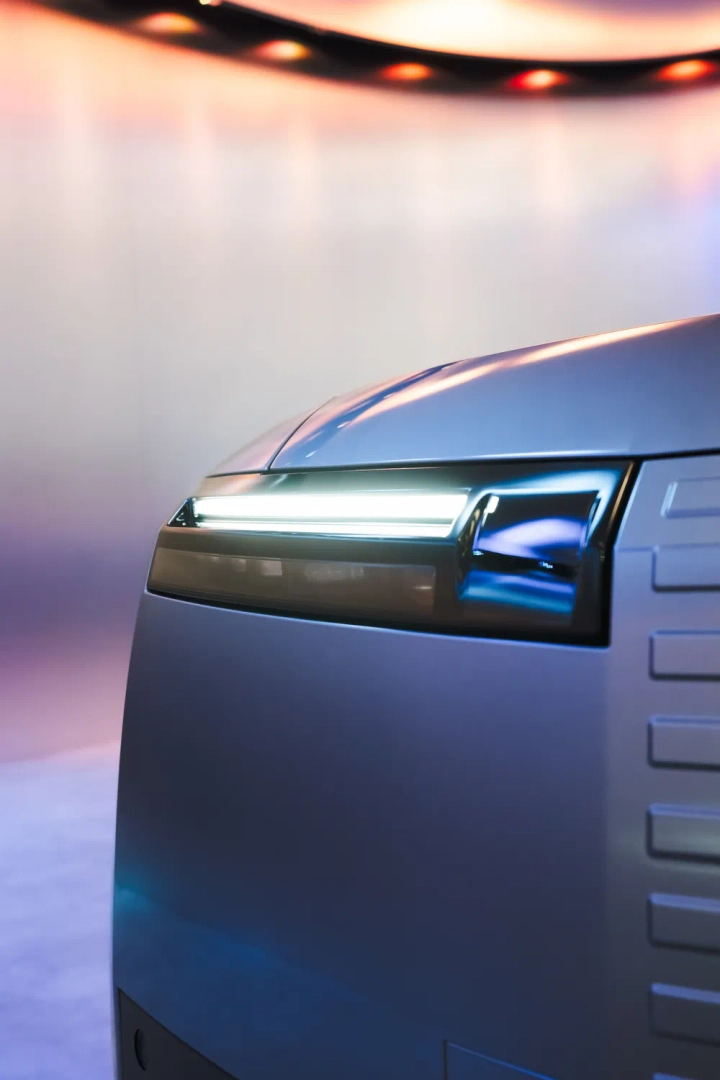
The same principle appears at the front, where four thin light elements define the new Jaguar signature. The lights sit toward the outer edges of the body to emphasize width; the active aerodynamic parts sit below them. At the presentation, Andreev describes the order in which the front should be read: first the light signature, then the width and the proportions, and only after that the technical detail.
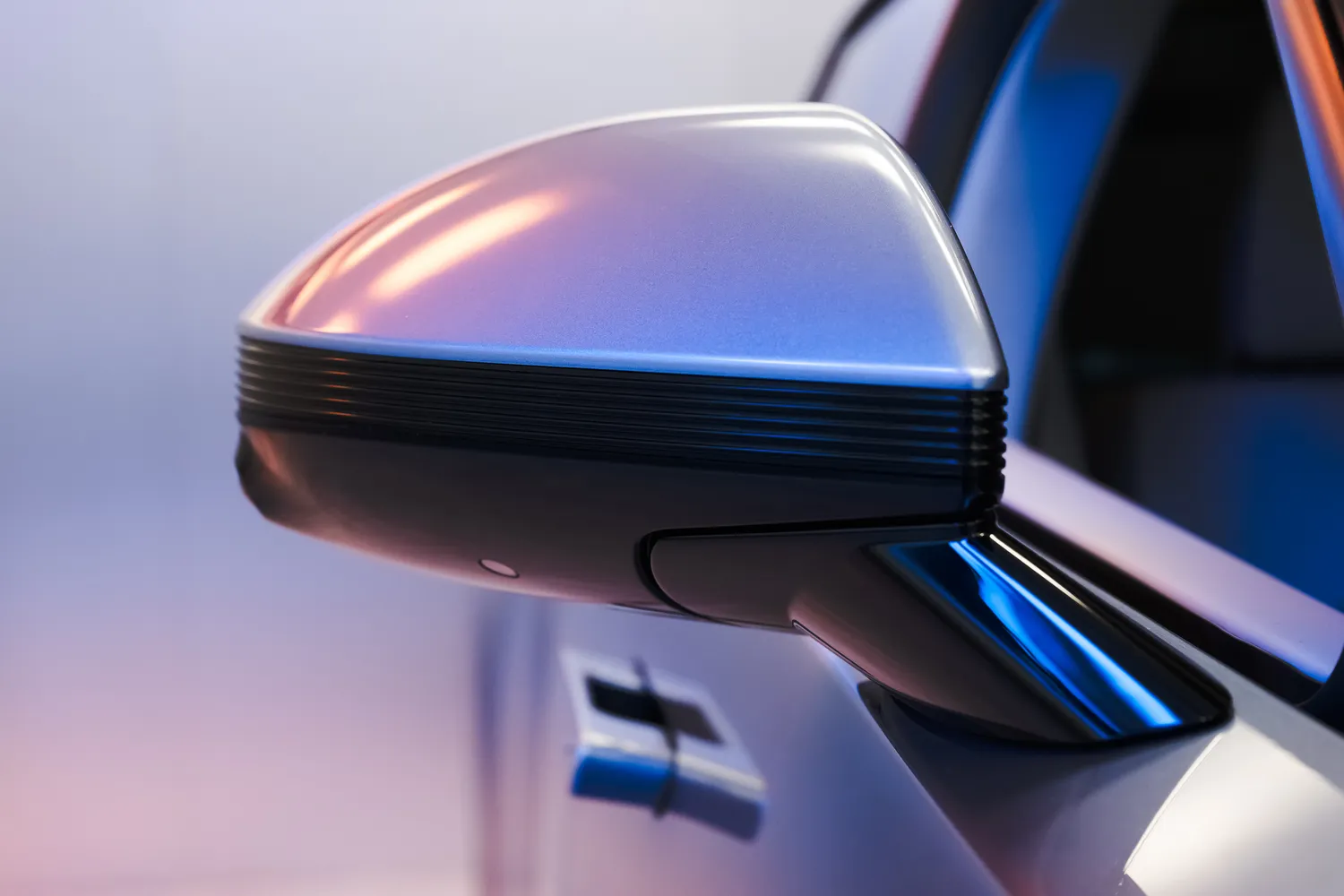
Form comes before graphics. Jaguar develops the volumes through full-size clay models, at first with no lights, finishes or other details. Proportion and surface treatment determine the first reading of the car. The same attention governs the relationship between front and rear: some metal details repeat similar curvatures at both ends, correspondences you only catch up close.
Inside the Jaguar Type 01, Axel Goulée and the tonal layers of travertine
Inside the Type 01 the approach changes. The surfaces keep a strict geometric order, and the aim is an environment less monumental than the body. Axel Goulée, Lead Materiality Designer at Jaguar, runs research and development on colors, materials and finishes. He separates his work from that of the designers responsible for ergonomics and human factors: the seating group studied different builds, heights and proportions to establish a comfortable position, while the materiality team worked on how people perceive the space through color, texture and surface.
«We wanted to create an atmosphere through what we call tonal layers, layers of color. There are no hard contrasts between black and white, and that’s intentional. The exterior is monumental, but we didn’t want the car to feel intimidating once you’re inside», Goulée says. The palette is built from tones close to one another, with variations that recall the layering of natural stone. The main reference is travertine, used as the chromatic and material source for the combinations in the cabin.
Another reference came from outside the car industry. «Rick Owens was a source of inspiration for us. He builds in monolithic, ancestral blocks: volumes that feel primordial – a form before any detail is added», Goulée says.
A longitudinal structure, the central spine, runs the length of the car and divides the space into four individual zones. The metal finishes follow it, continuing along the top of the doors. The architecture connects elements usually perceived as separate: seats, floor, side panels, pillars. The upholstery extends down onto the lower door surfaces, and the arrangement of the seats borrows from domestic furniture.
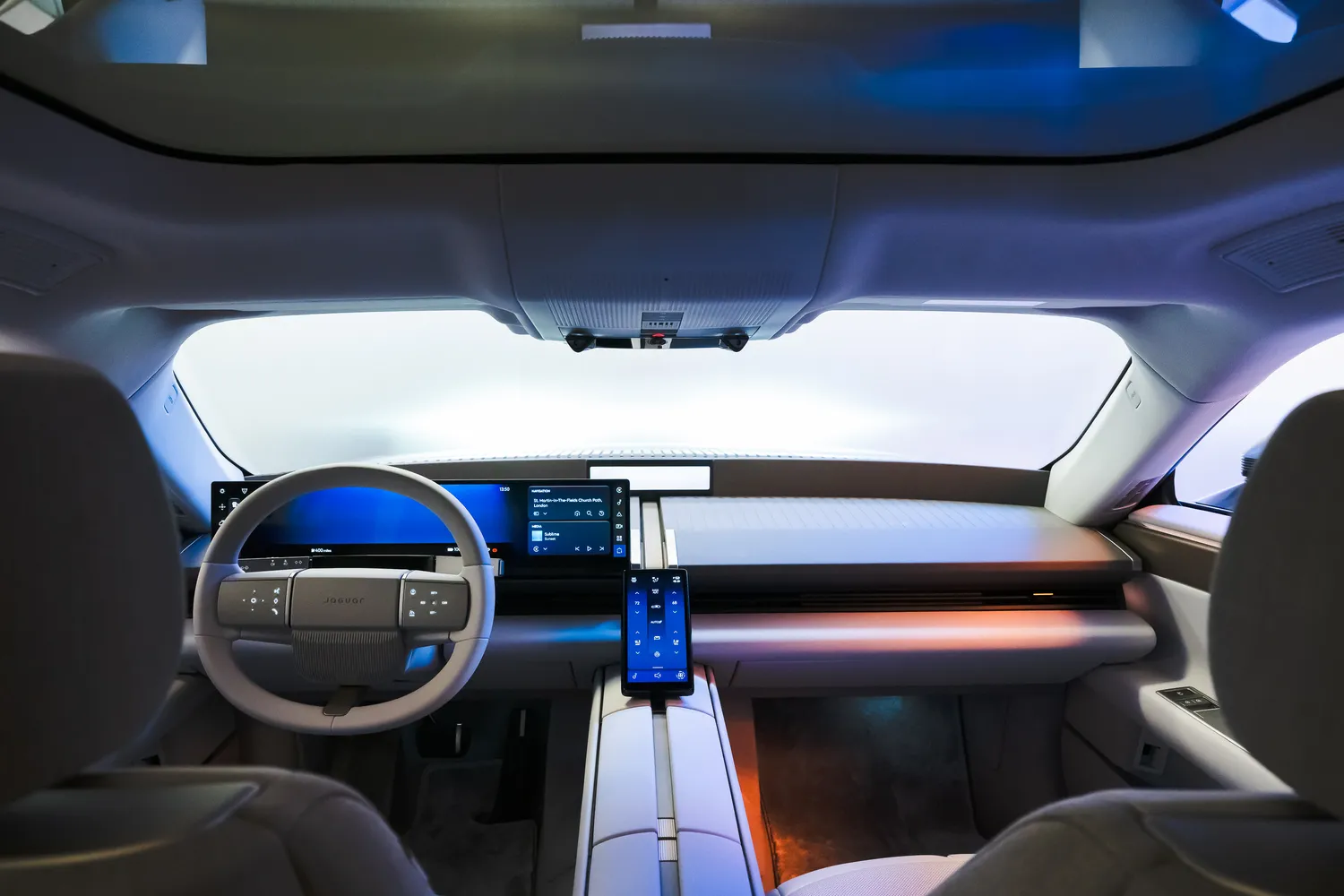
Technology is folded into the same order. The instrument panel uses a 24-inch OLED display, a 7-inch central touchscreen handles the main functions. The immersive audio system includes a full-width soundbar and seats with Sensory Audio technology. Goulée notes that the experience of the interior changes with distance, light and physical contact with the surfaces: touch contributes to the perception of the space as much as sight. In a later conversation he compares working with materials to composing music: as music has pauses and silences, a room needs textures that alternate between pronounced elements and visually quiet surfaces. The organization of materials therefore has an architectural function: it covers the components, and it also sets the relationship between body and space.
No wood in a Jaguar interior, from brass to anodized aluminum
The absence of wood is the sharpest break with the tradition of Jaguar interiors. For decades wood veneer was a reference point of British automotive luxury, together with leather and polished metal. On the Type 01 that language gives way to technical textiles, metal surfaces and color combinations drawn from stone.
Goulée starts by acknowledging what wood does: a natural material, able to introduce warmth and an immediate connection with the domestic interior. The decision to leave it out came from research the team carried out into contemporary residential interiors, living rooms, luxury hotels and architecture. «We looked at some very beautiful contemporary spaces and realized that wood was starting to step back. For the new Jaguar we decided to move away from that material. Aesthetically, the moment you put wood in a car, you risk being taken straight back to the past».
Goulée also raises questions of sourcing, deforestation and climate, and notes that wood could return in future. The warmth it used to give the interior is handled by another element: brass.
On the Type 00 concept, brass had a visible role in the architecture of the interior. Moving to a production car, Jaguar worked to keep some of its visual and tactile qualities through solutions compatible with the requirements of the automotive industry. The Type 01 uses longitudinal finishes in anodized aluminum with a brass effect: the surface treatment produces the metallic color, the surface working defines how it feels. The difference from solid brass is also one of mass: aluminum is far less dense, which matters when components run several meters through a cabin.
The design group went looking for expertise outside the car industry. In the early stages of development, Goulée says, Jaguar worked with a London silversmith and jeweler. «We asked her to experiment with brass, but also with silver, copper and nickel. We wanted to understand how these metals behave, what interesting reactions they might have, and what could be explored beyond brass». Techniques developed for jewelry offer references for finishes on much larger parts, and in Goulée’s view the experiments could continue in small series or special editions, where processes that are hard to scale can still be tested.
Kvadrat DuoWeave, Ultrafabrics NeoGrain and semi-aniline leather
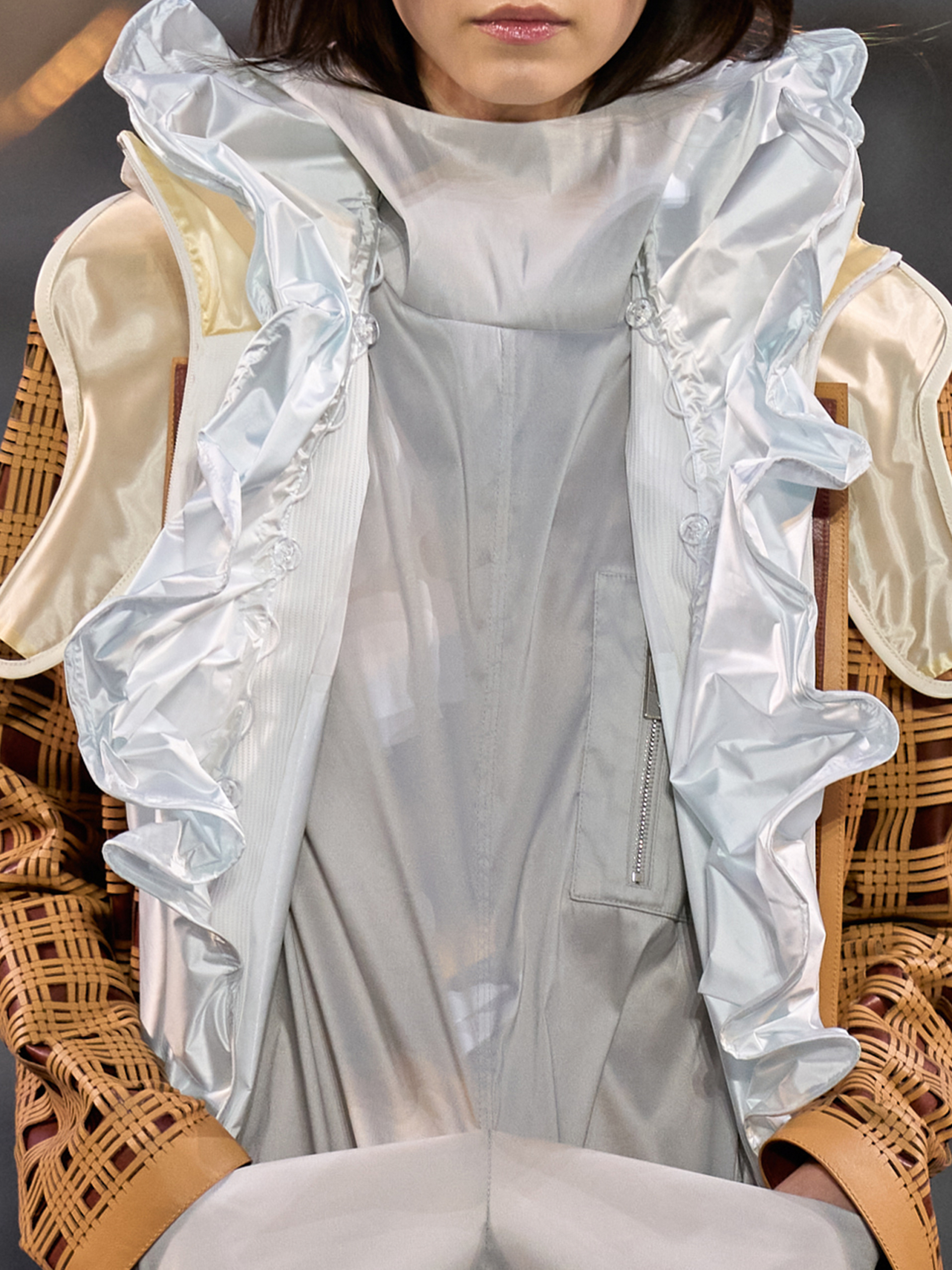
The interior materials of the Type 01 include wool-blend textiles, technical upholstery and leather. Among them is Kvadrat DuoWeave, a fabric developed by the Danish company Kvadrat, which specializes in materials for furniture and architecture, and which helps hold the continuity between the seats and the surfaces around them. Jaguar also uses Ultrafabrics NeoGrain, a lightweight technical material drawn from architectural interiors. The textile flooring, extended to the lower door surfaces and the pillars, contains recycled content.
The color combinations are organized into three interpretations. Light Story works in Dusk Grey, Dark Story in Dark Oyster; both offer a choice between Ultrafabrics NeoGrain and leather. The third, Original Story, belongs to the Design Vision version and pairs NeoGrain Orchid White with Kvadrat DuoWeave Dusk Grey.
Alternative materials have not displaced leather. Goulée says Jaguar assessed different types and chose semi-aniline, for its quality and its finish. Semi-aniline keeps part of the visual character of natural leather while carrying a surface treatment that can increase protection compared with an uncoated aniline hide; the result depends on the formulation and on the processes used.
«All our materials have to pass durability tests designed to simulate ten years of use. The textiles, for example, go through tests with coffee, ketchup and dirt. We want people to be able to live in their cars without constantly worrying about staining or damaging the interior».
Jaguar Electric Architecture, 1,030 hp, 118 kWh and more than 360 patents
Under the body sits the Jaguar Electric Architecture, the electric platform developed specifically for the Type 01. Three motors and variable torque distribution bring output to 1,030 horsepower and torque to 1,365 Nm: from a standstill, the car reaches 100 km/h in 3.2 seconds.
Usable battery capacity is 118 kWh, for a claimed 720 kilometers on the WLTP cycle. The 850-volt system takes fast charging up to 350 kW and recovers 321 kilometers in about 13 minutes under the stated conditions. To hold consumption down at speed, Jaguar worked the aerodynamics — active elements at the front, a three-stage rear spoiler — to a drag coefficient of 0.23, without touching the proportions the design had set. The development produced more than 360 patent applications.
The Type 01 will be built at Solihull, in the United Kingdom, with motors and batteries from Wolverhampton and panels stamped at Halewood. Production starts in 2027: orders early in the year, first deliveries in the second half. The announced starting price for the British market is 130,000 pounds, in a segment — high-performance electric grand tourers — where Jaguar will meet established competitors.