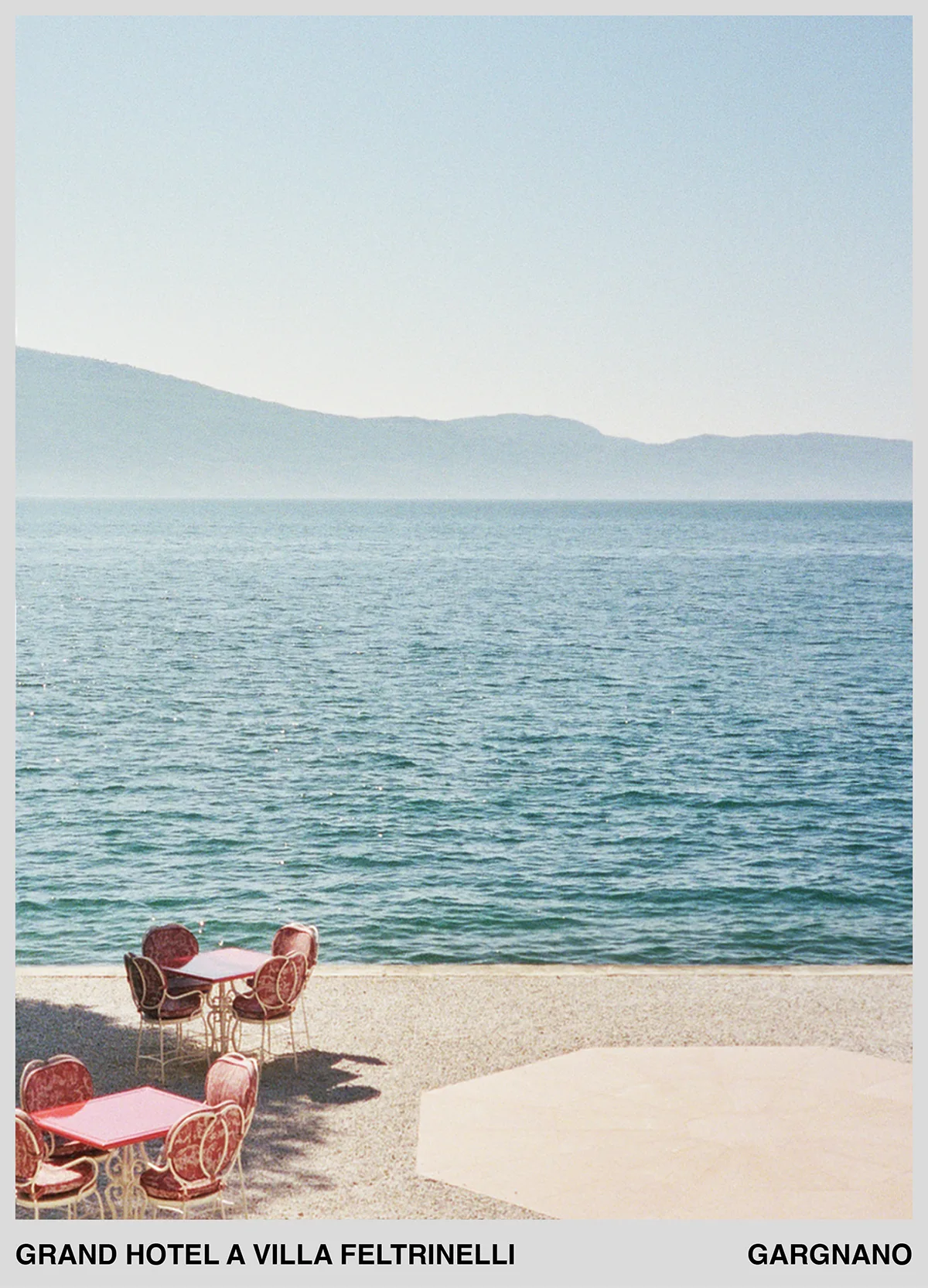
Why Villa Feltrinelli is in a category of its own
Twenty rooms, three hectares of botanical park, two Michelin stars since 2013: Grand Hotel a Villa Feltrinelli operates on a scale that standard hotel categories cannot contain
Villa Feltrinelli and Gargnano: position as narrative
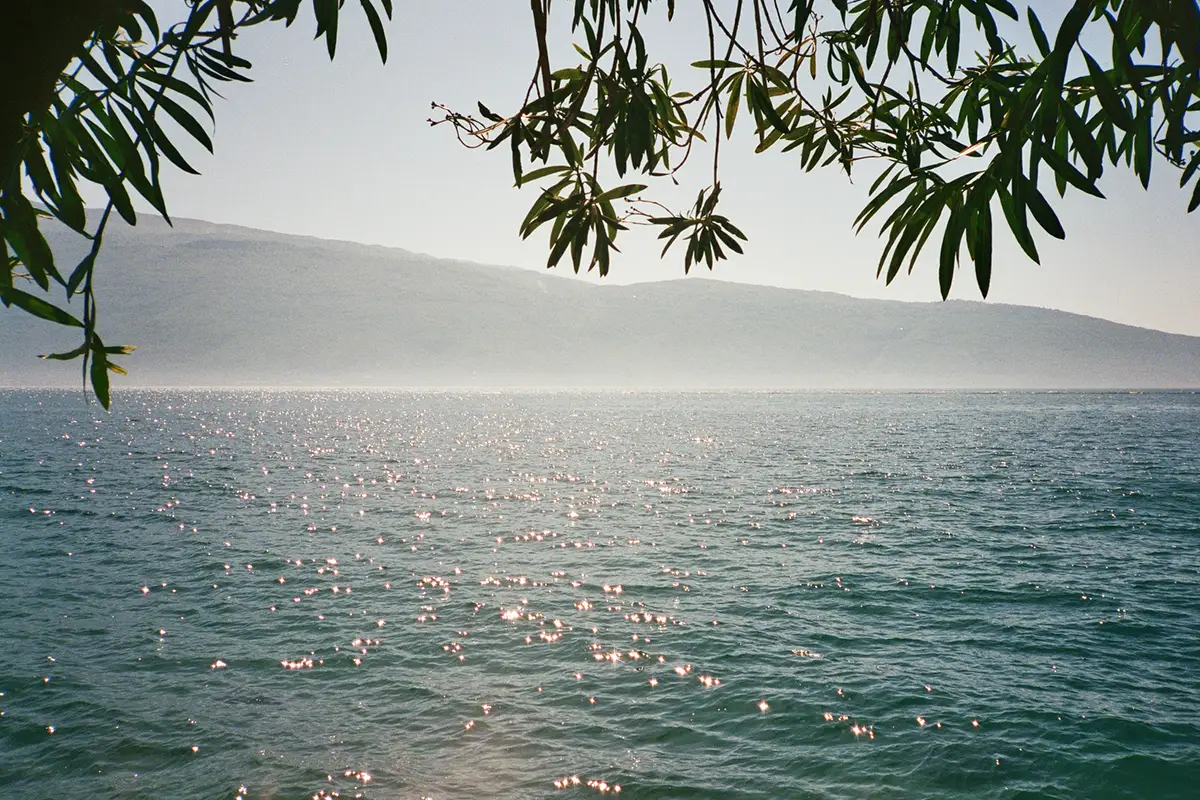
Via Rimembranza, 38/40. Gargnano, province of Brescia, western shore of Lake Garda. The address is precise; the context requires more. Lake Garda is the largest lake in Italy, a body of water whose scale flattens distance and dissolves direction. The western shore — the Lombard shore — runs colder and more vertical than the Veneto side: mountains close behind, the lake wide in front, the towns compressed between cliff and water. Gargnano sits at roughly the midpoint of this shore, a village whose historical character has been shaped far more by what it was used for than by what it was built to be.
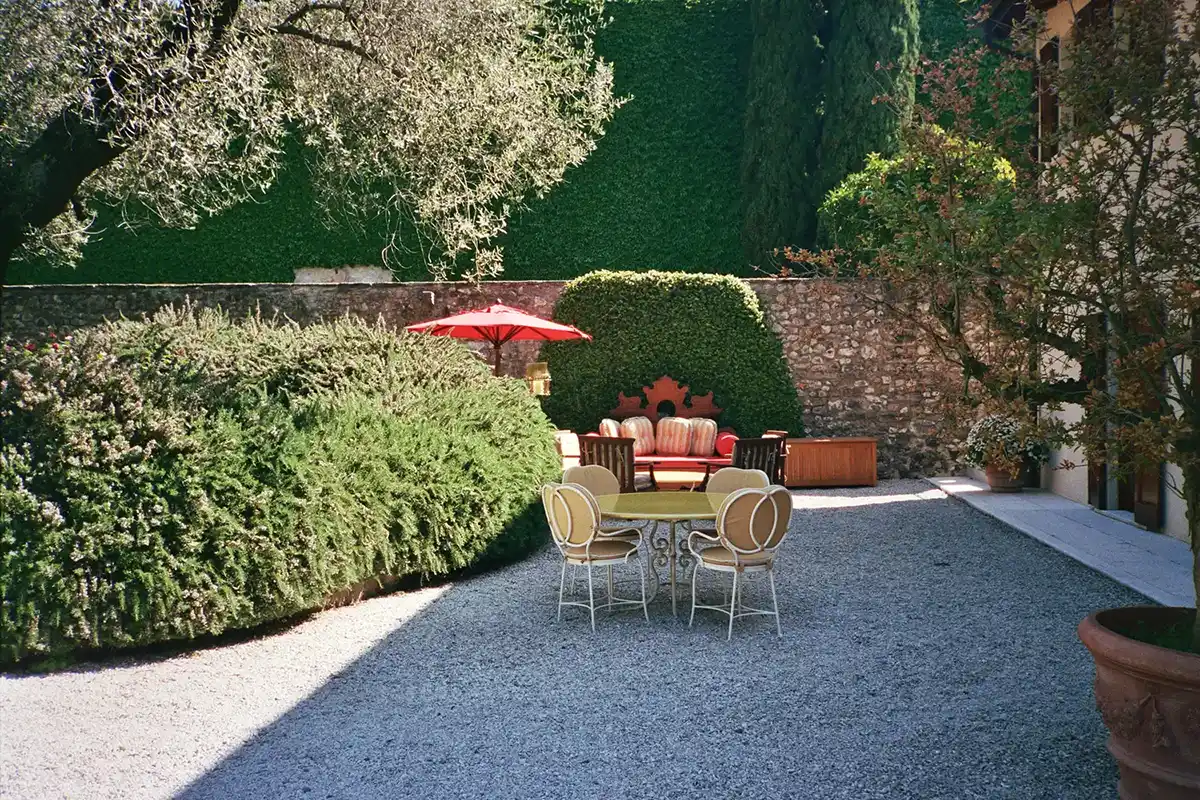
The compound stands behind vegetation, screened from the road and the village, accessible through a defined sequence of arrival. This physical containment is deliberate. It belongs to the logic of the place: a private house designed to separate its inhabitants from the landscape they nevertheless dominated.
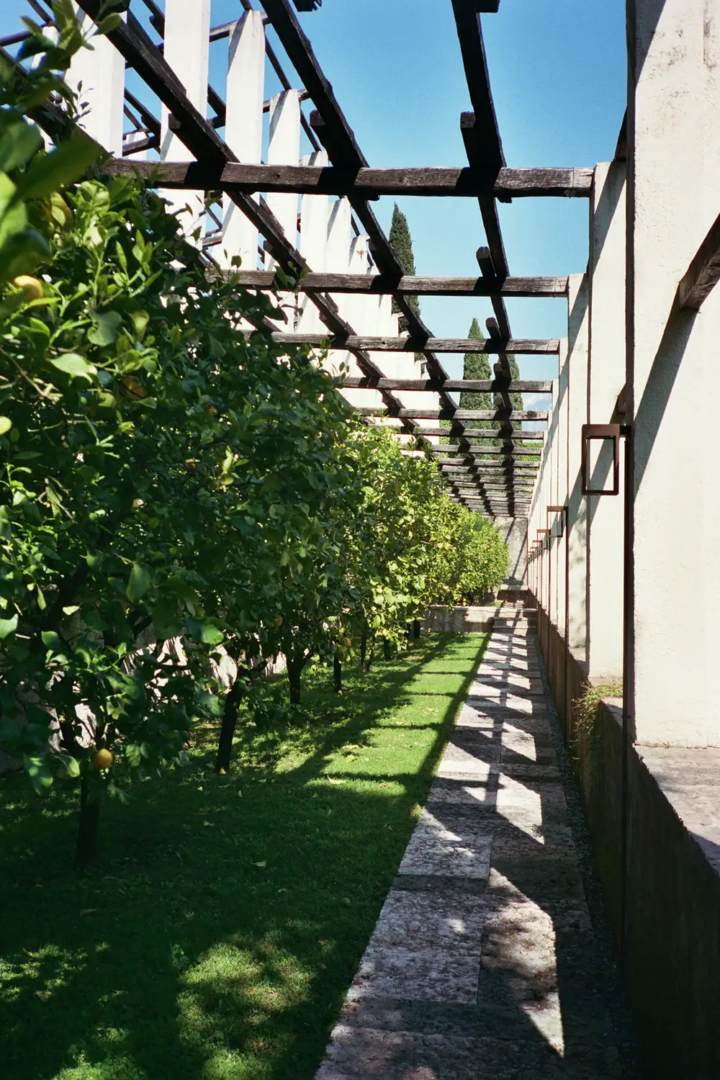
A microclimate mild enough to sustain olive groves, citrus trees, and the limonaie — the lemon houses, stone-and-glass structures that have defined the visual identity of this stretch of the lake since the seventeenth century. Lemons, olives, cypresses, palm trees from North Africa planted in the nineteenth century by families who could afford to reshape their immediate environment: these are indicators of the economic weight of the people who built here, written into the soil.
Villa Feltrinelli, architecture: Neo-Gothic, Eclectic, and the logic of representation
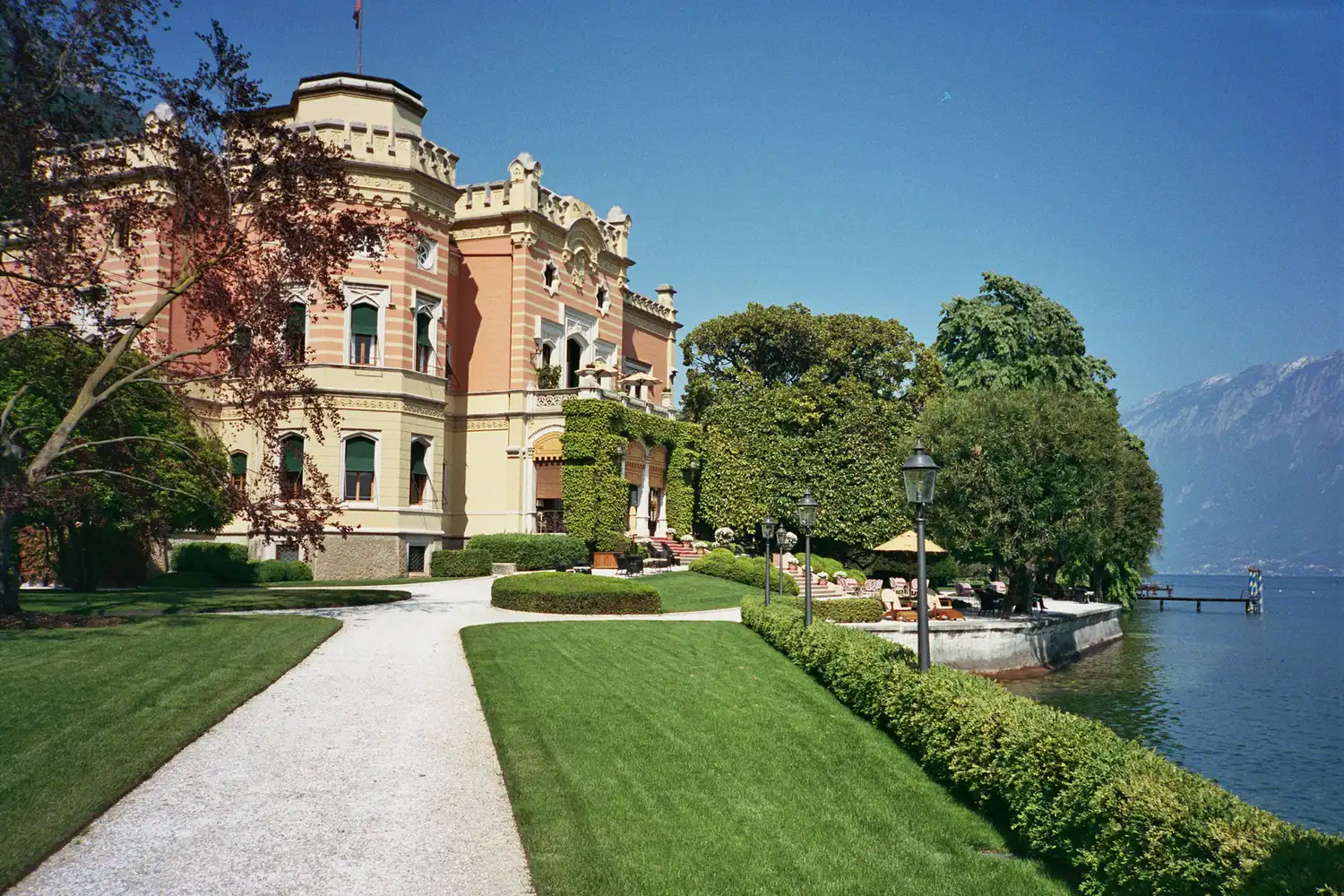
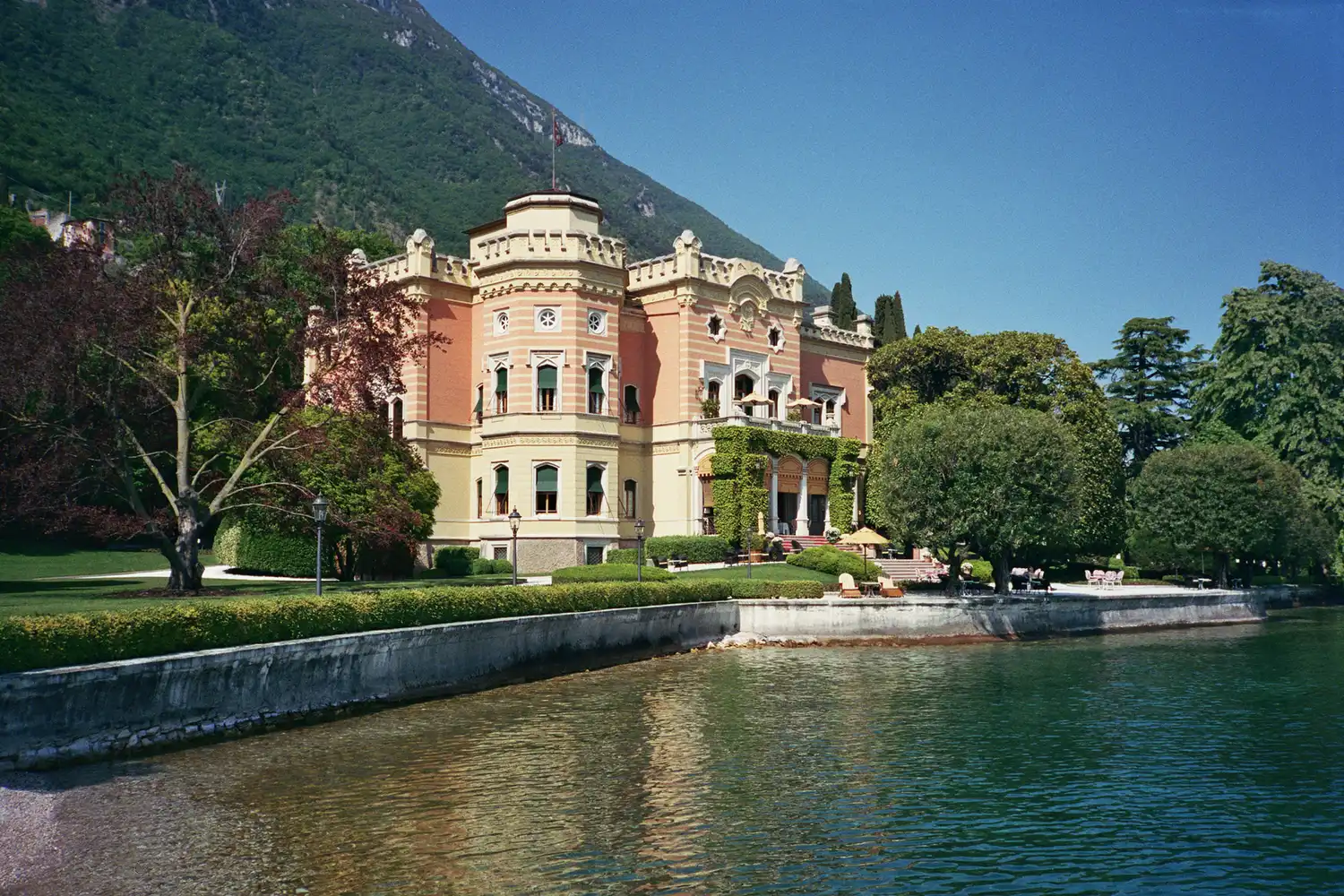
Villa Feltrinelli belongs to the late nineteenth-century tradition in which northern Italian industrial families constructed lakeside residences in historicist architectural languages: turrets, arches, crenellations, references to Gothic and Renaissance precedents assembled as signals of genealogical depth. The building communicated status through accumulated forms, layered over a structure whose mass already spoke of permanence and control. The architectural language looked backward — toward a feudal imagery the industrial bourgeoisie was actively constructing for itself.
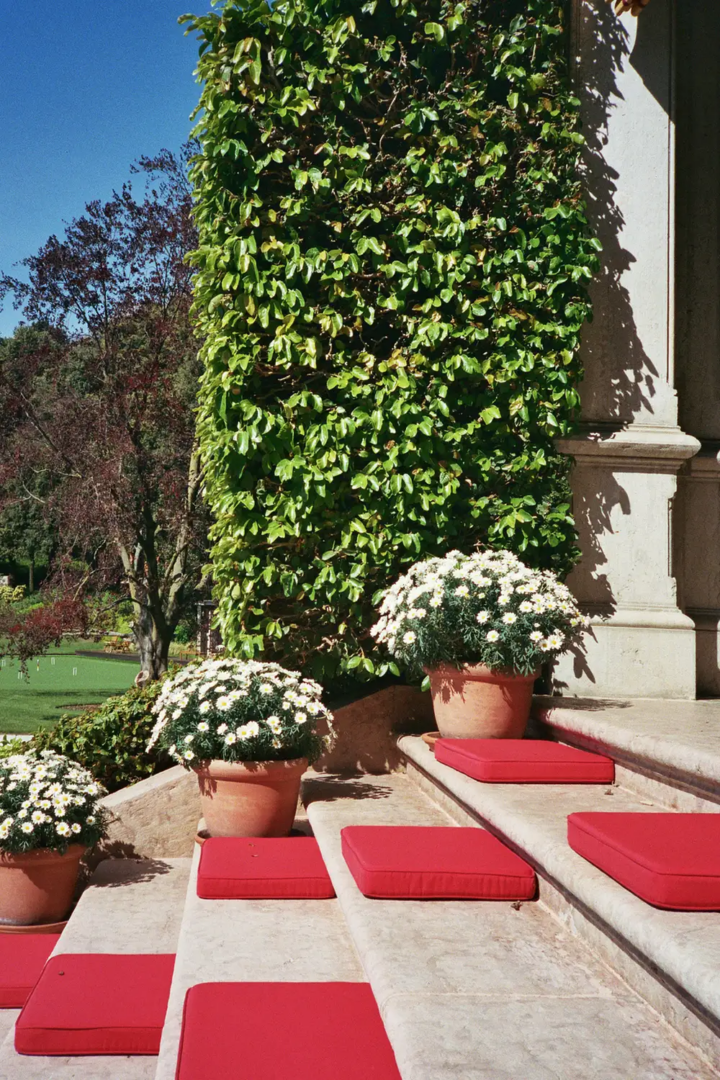
The building faces the lake with a scenographic frontality. Its design is attributed to Alberico Barbiano di Belgiojoso. The complex as it stands today includes several distinct bodies: the main Villa, Casa dei Fiori, Casa Rustica, the Limonaia, and the Boat House.
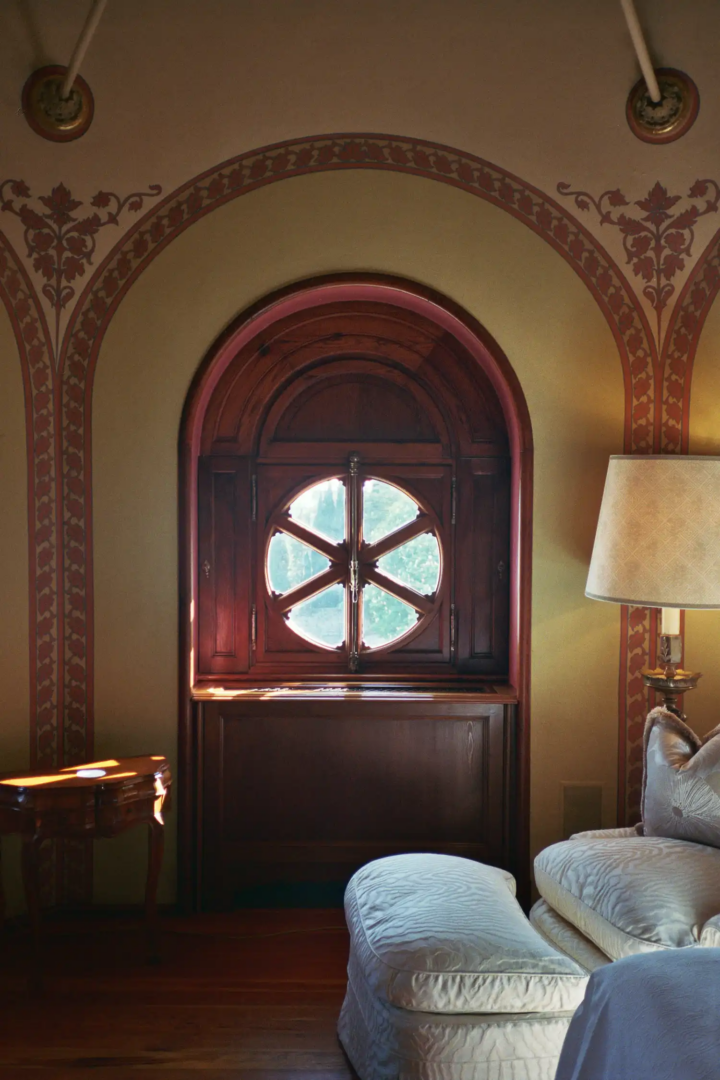
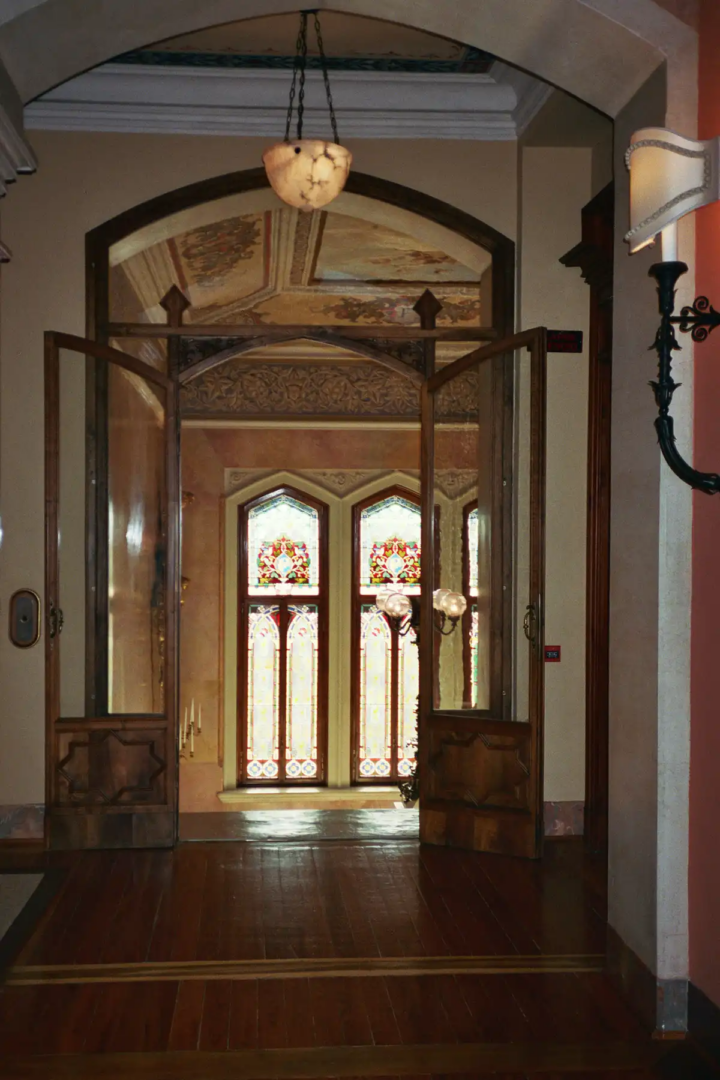
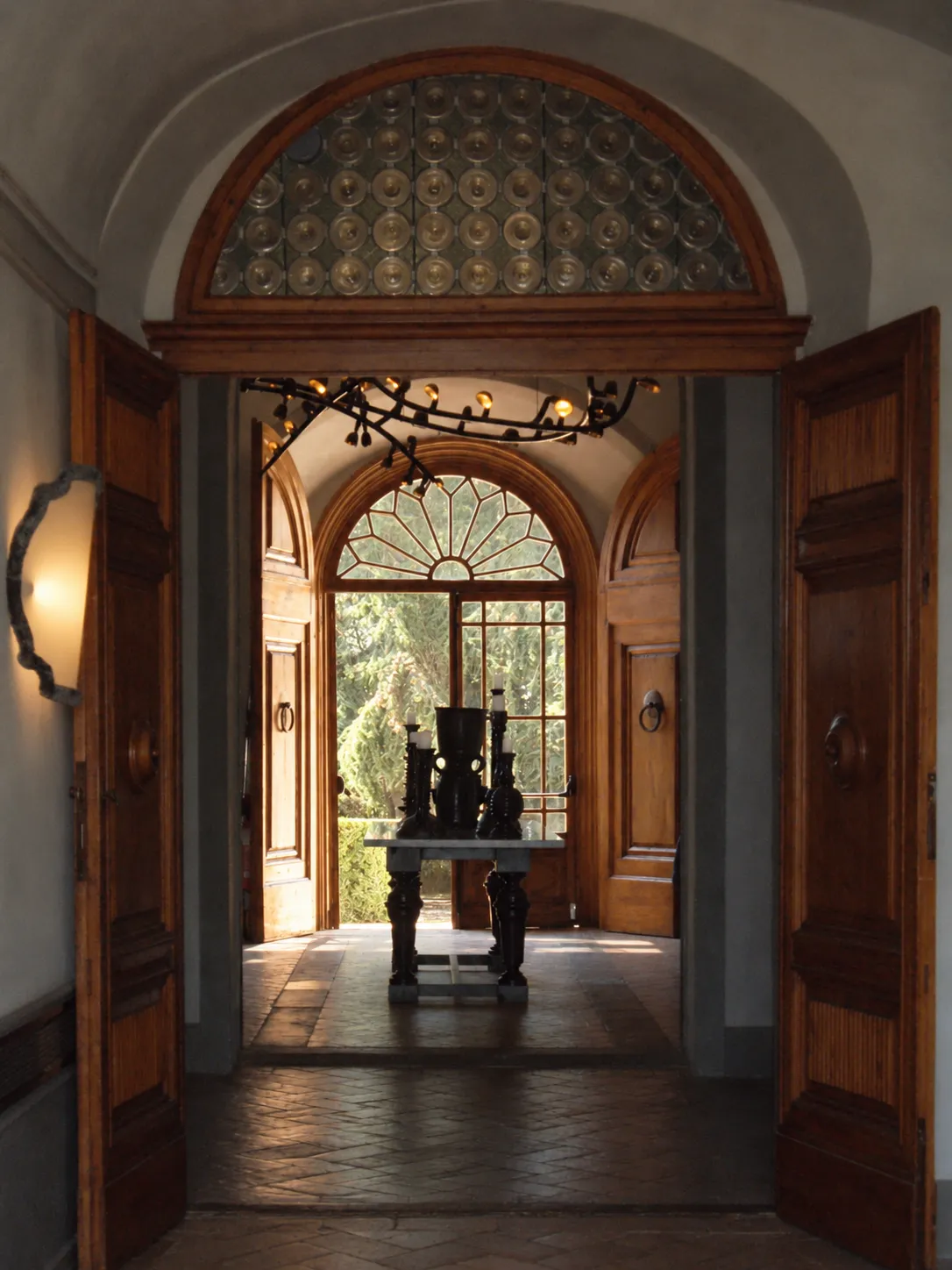
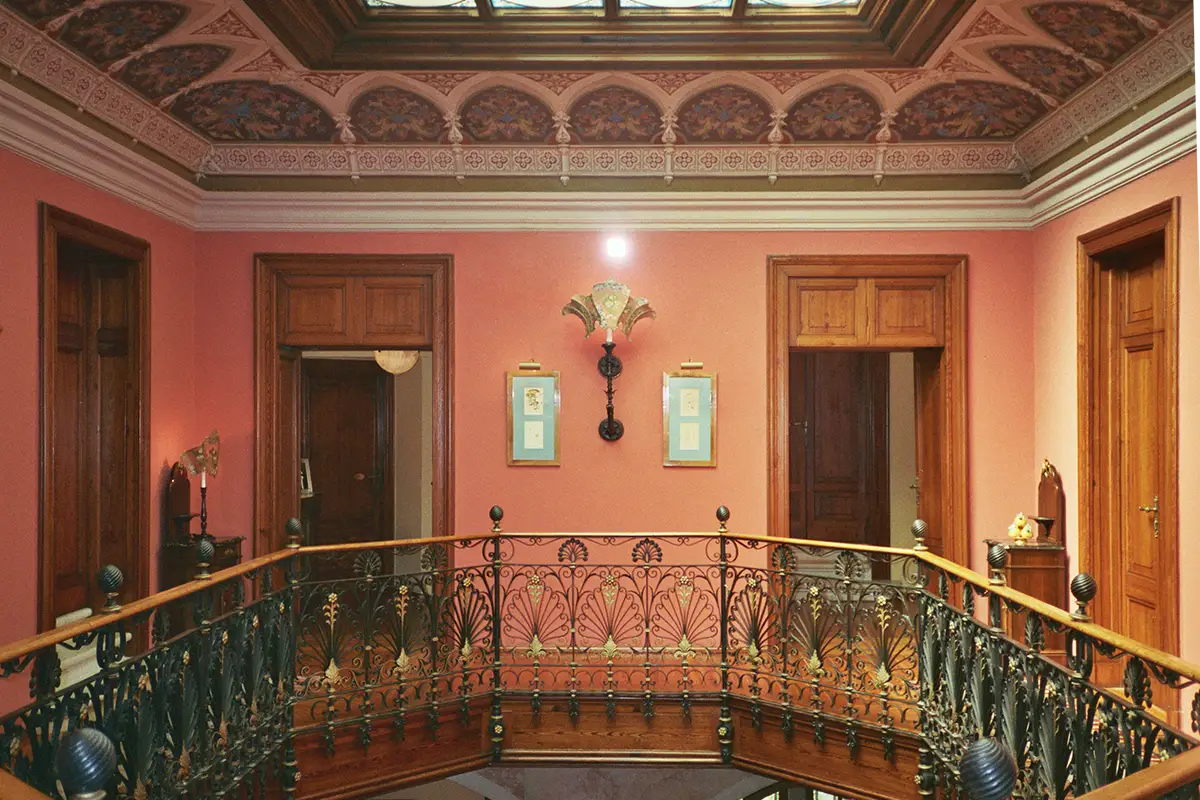
The interior logic of the original Villa worked from its industrial origins outward. The wooden panels lining many of the rooms were a tribute to the Feltrinelli family’s primary economic activity. Wood was source material and, simultaneously, iconography — the empire’s raw material turned into the decoration of its domestic headquarters. The frescoed ceilings on the first floor, painted in the nineteenth century by the brothers Lieti, were preserved during the restoration. The marble bathrooms, some reaching fifty square meters, were fitted with heated floors.
One architectural detail connects form and history with particular directness. The Villa’s tower was shortened during the period of the Repubblica Sociale Italiana, 1943–1945, for security reasons. The building was physically altered by the political circumstances of its occupation. Architecture and wartime administration intersected at the level of stone.
The twenty rooms at Villa Feltrinelli: the scale of a house
The Grand Hotel a Villa Feltrinelli operates twenty rooms and suites. The number is the first signal of what the property intends to be.
The main Villa houses twelve rooms, two with lake terraces, ranging between forty and eighty square meters. Seventy original pieces and antique furniture are integrated into the décor across the compound. The eight-channel audio system — jazz, opera, classical, pop — installed in every room belongs to the category of invisible comfort: provision designed to function without being noticed.
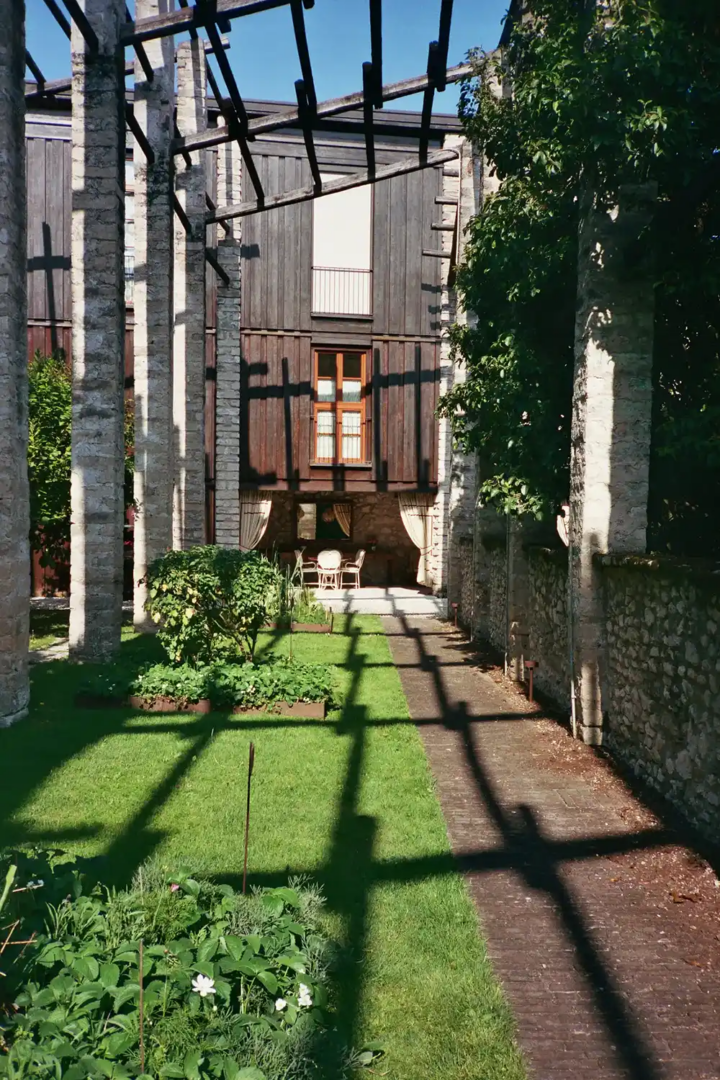
Beyond the main building, accommodation distributes across four additional structures. Casa dei Fiori is a three-story building containing two One-Bedroom Suites and a Junior Suite; the second-floor suite accesses a private entrance leading to a Two-Bedroom Suite above. Casa Rustica offers three rooms of approximately fifty square meters each, with views toward the limonaie and the lake. The Limonaia is a cottage with a ground-floor covered patio, bedroom on the first floor, and sitting room above. The Boat House, the most autonomous unit, measures 175 square meters and includes dining room, kitchen, a sitting room with fireplace, an external terrace, a first-floor bedroom, wardrobe, and a marble bathroom. It functions as a separate house within the compound.
The distribution of rooms across multiple buildings preserves the scale of a private property — several structures on one piece of land — while satisfying a hotel’s operational requirements. Each room has a distinct character, a different relationship to light, garden, or water, a specific set of historical or artistic references.
Villa Feltrinelli’s park: three hectares and a botanical history
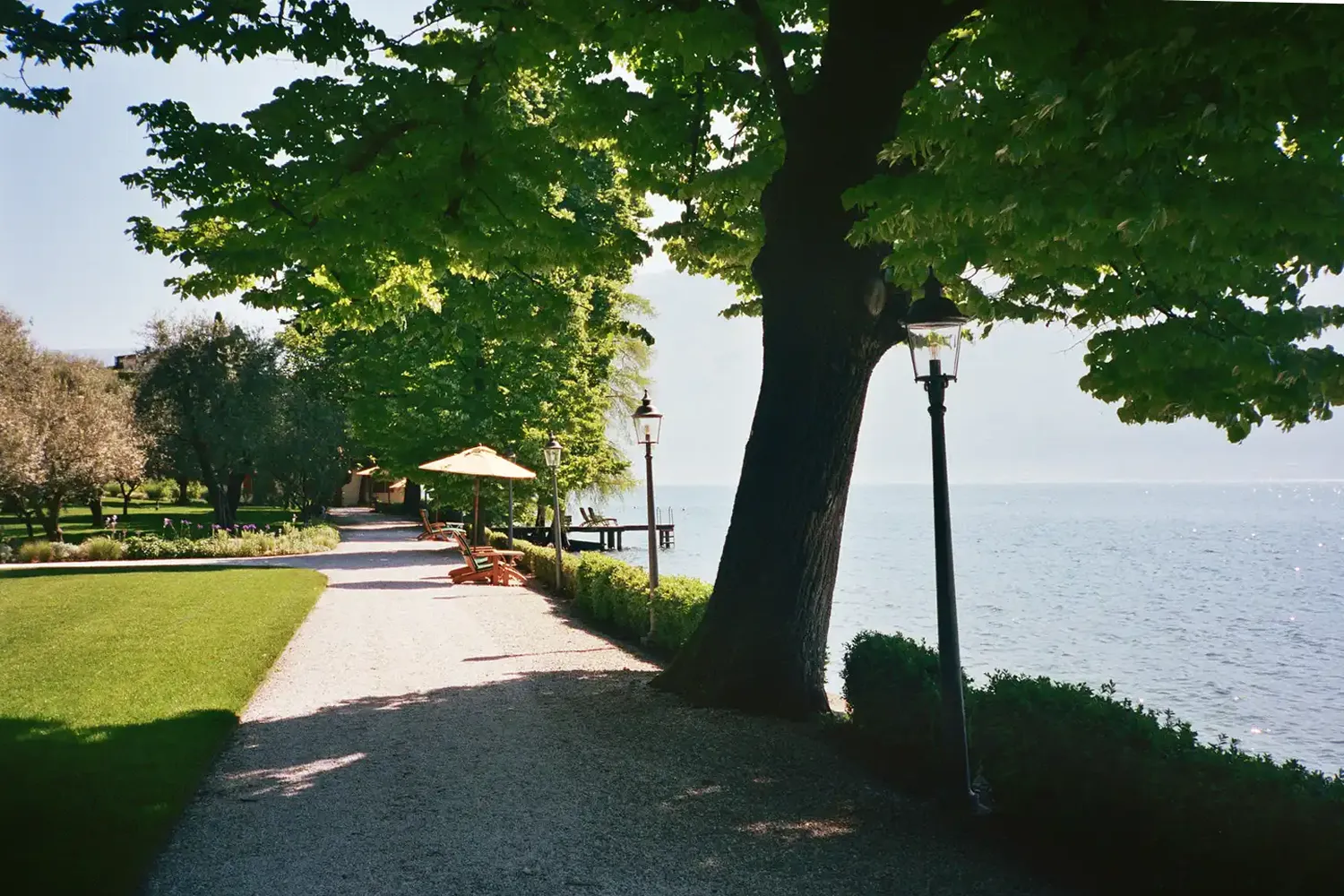
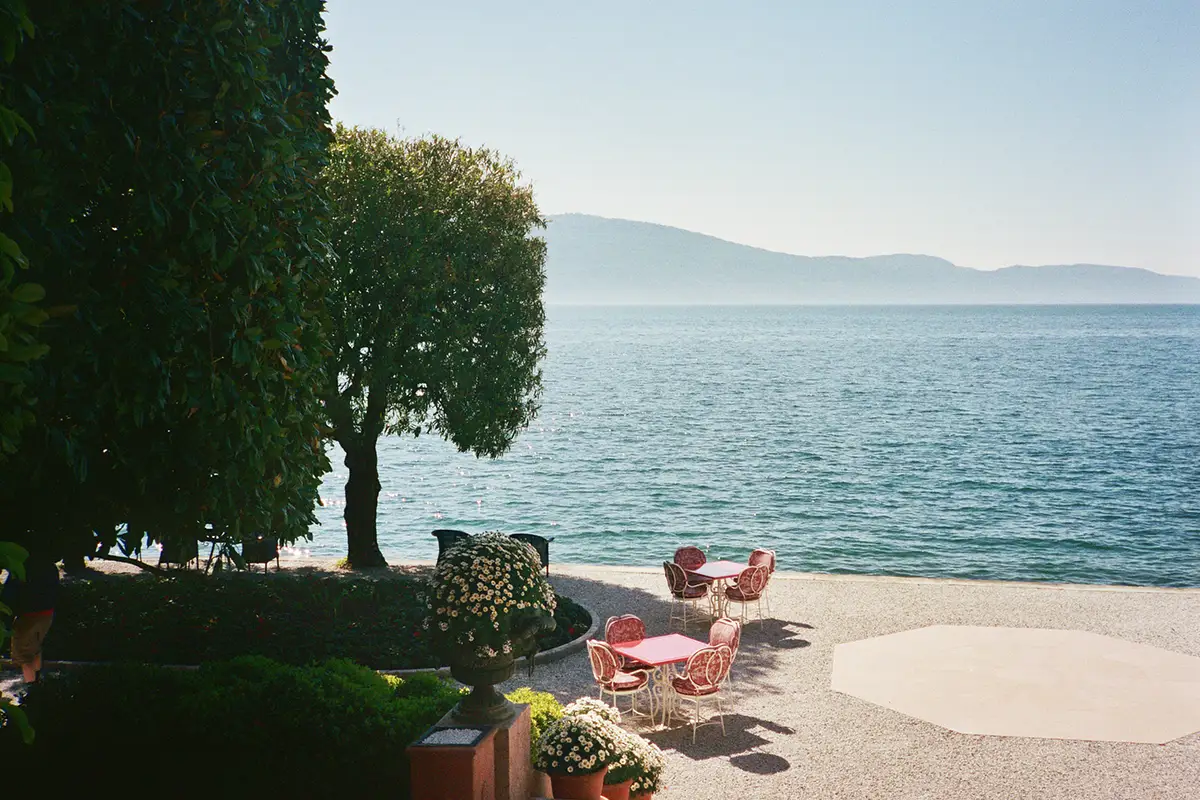
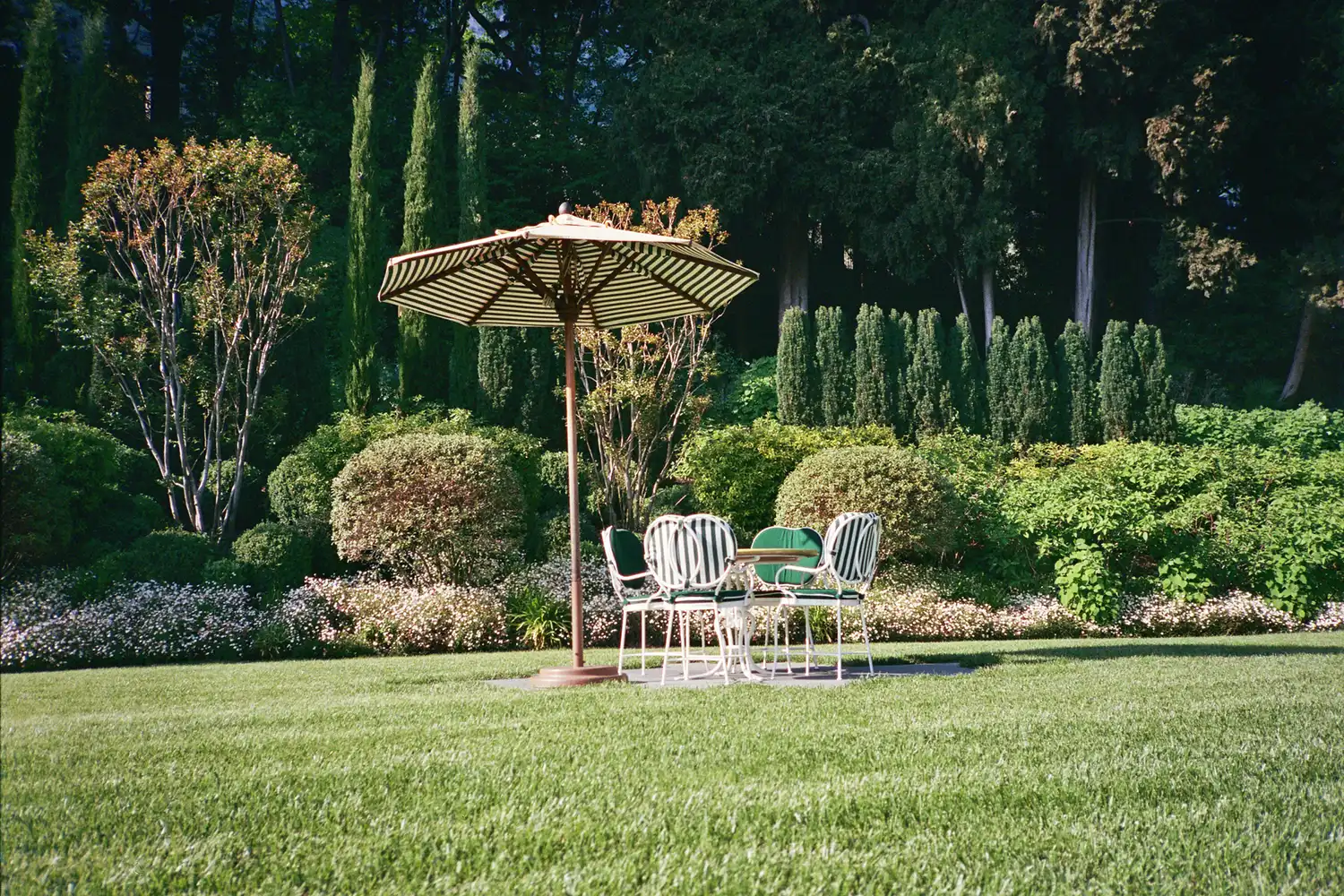
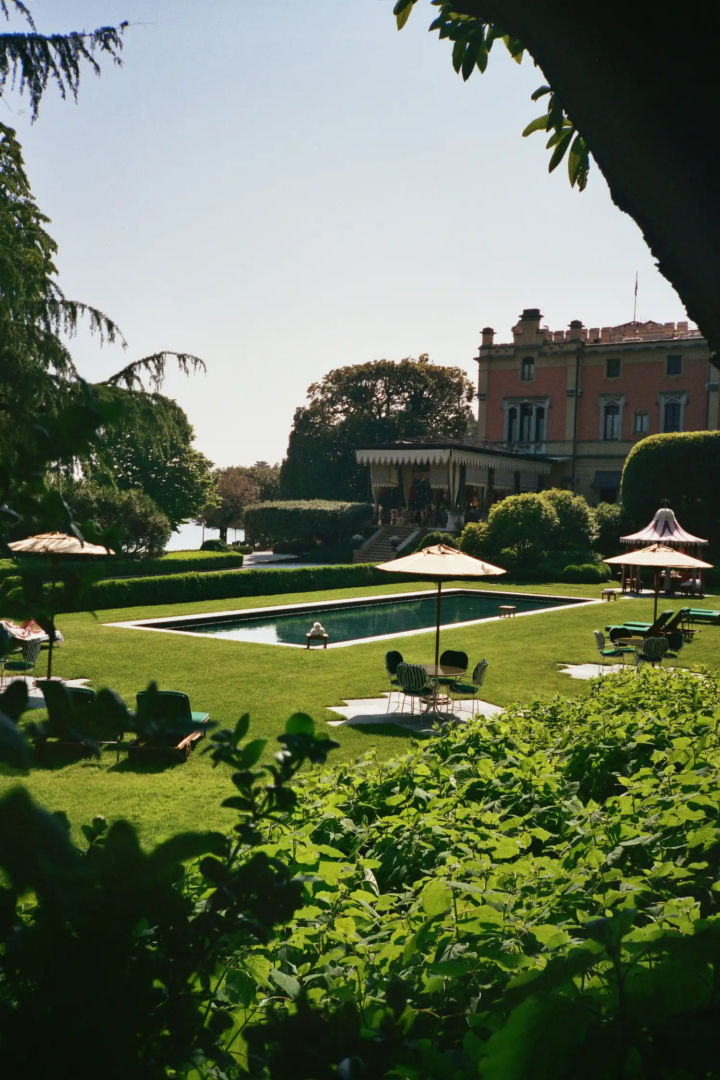
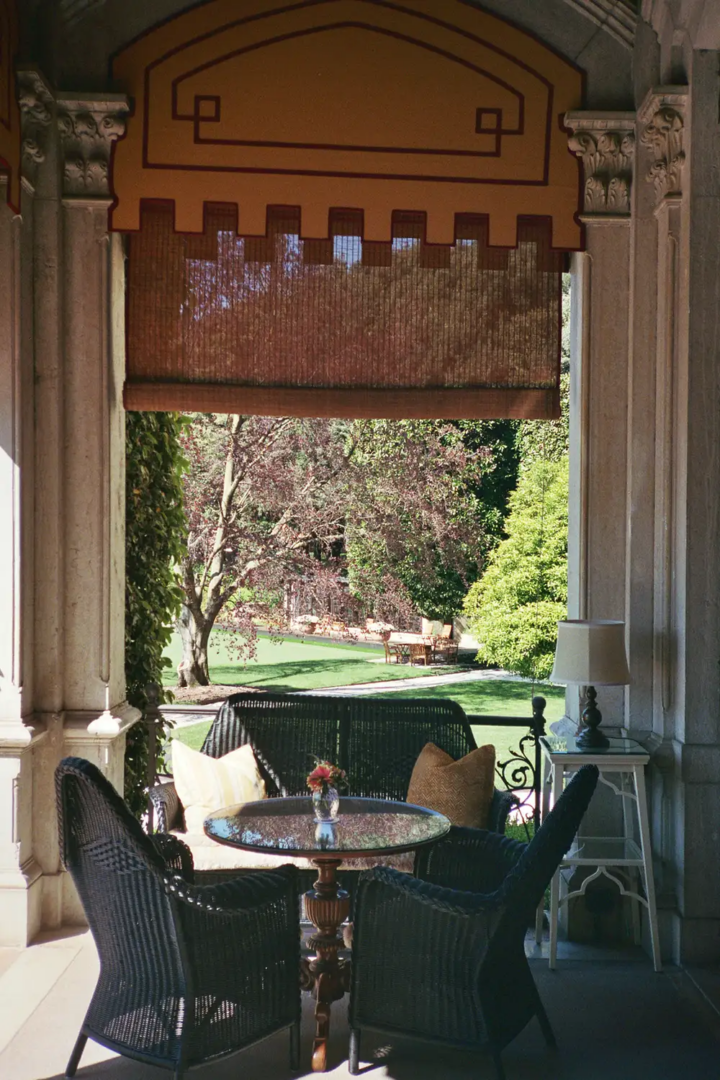
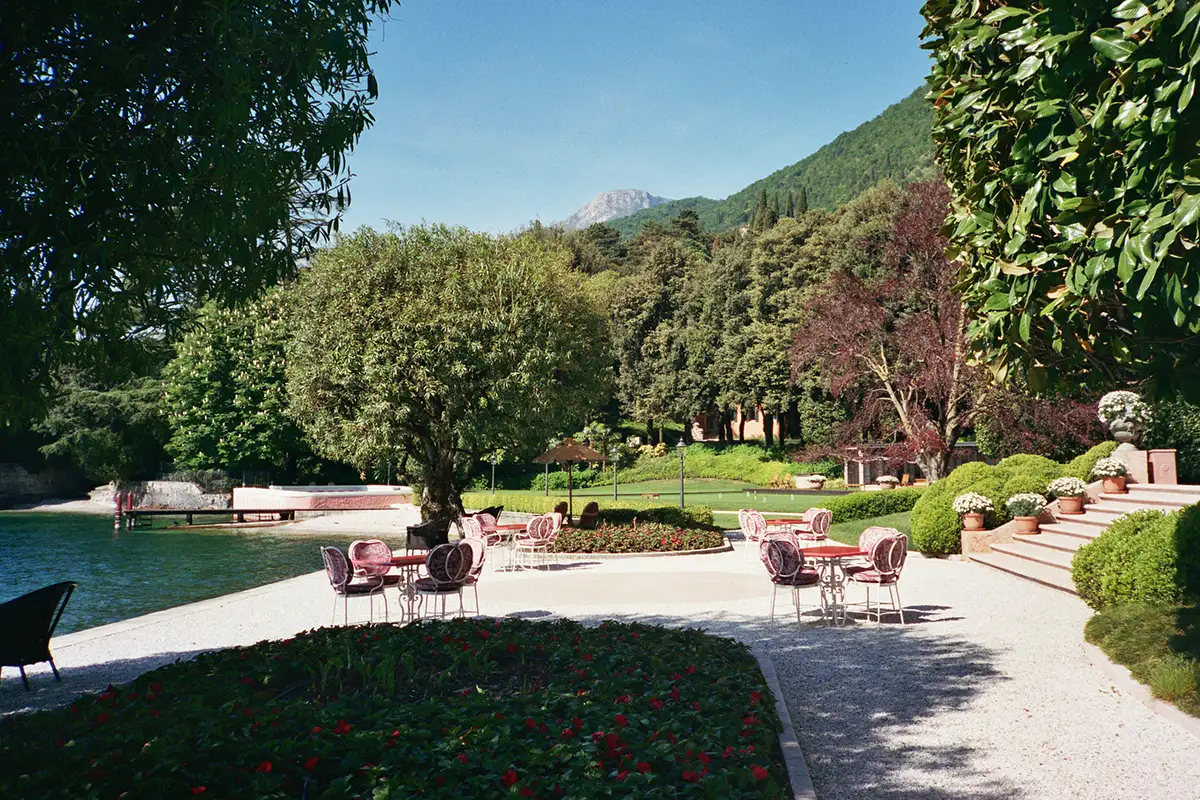
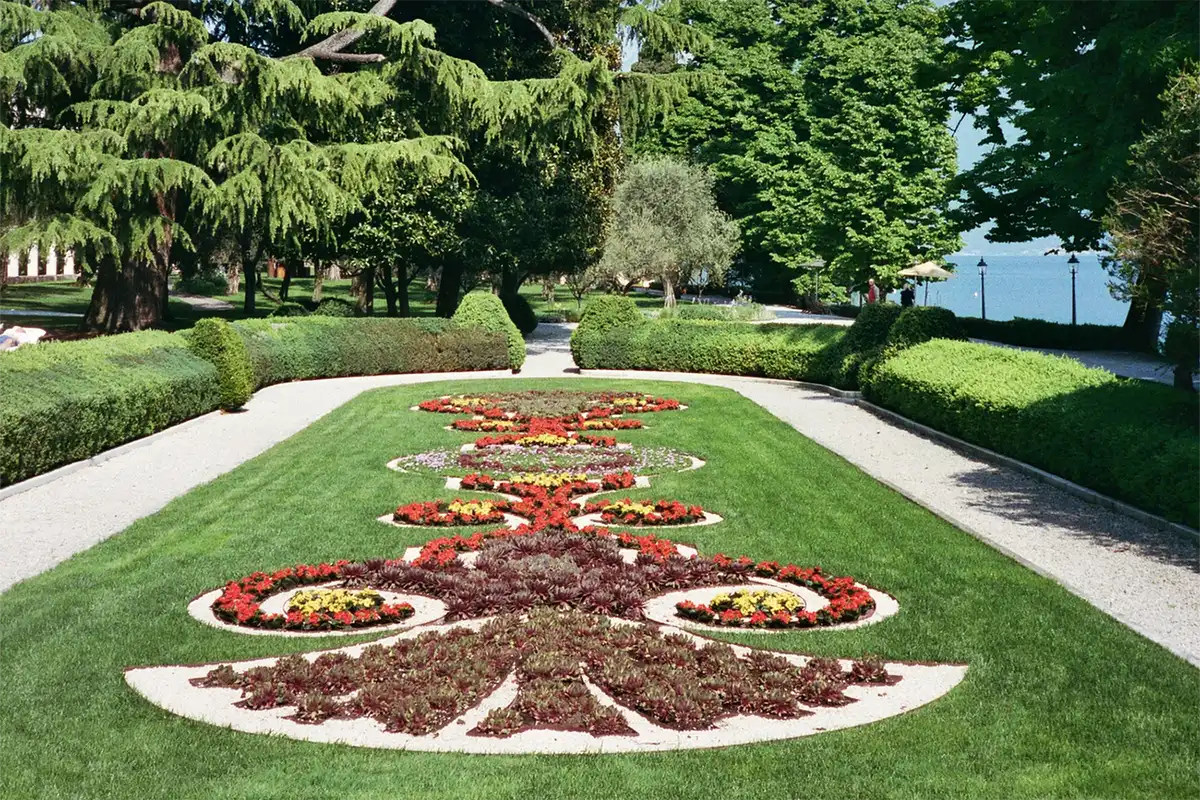
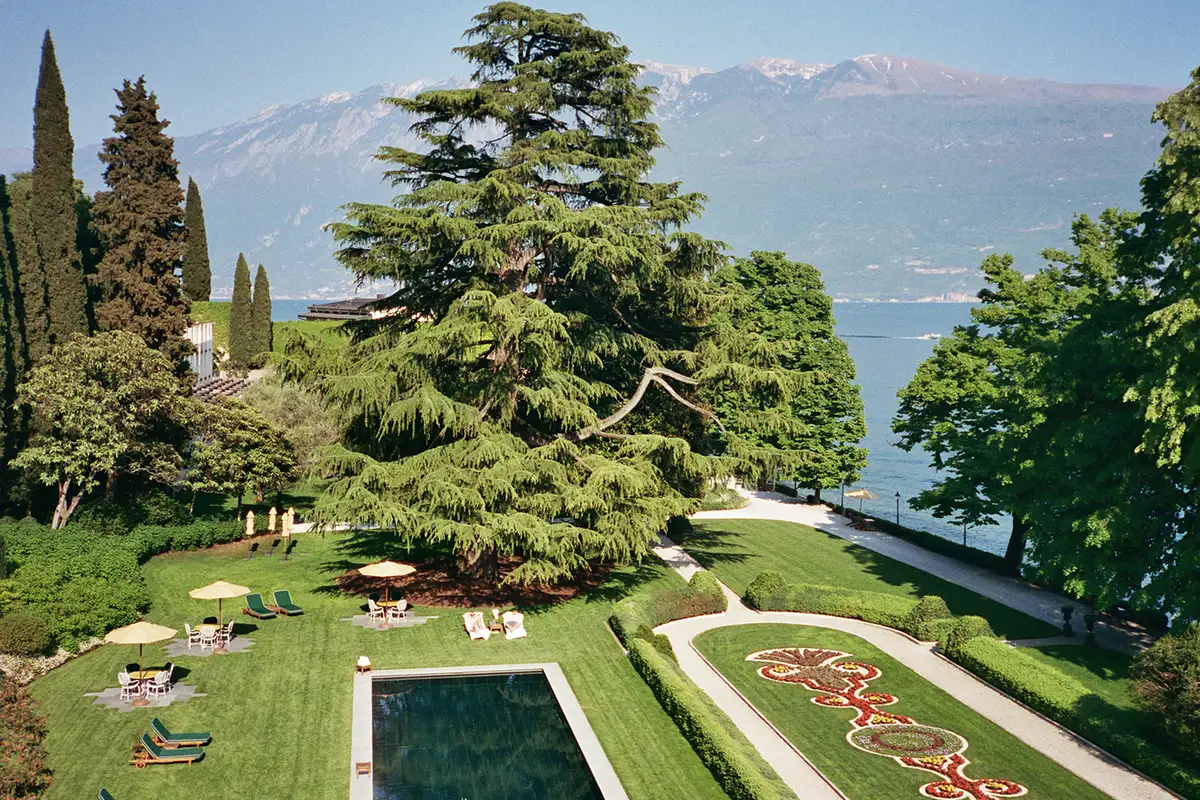
Outside. The park surrounding Villa Feltrinelli extends across approximately three hectares. Nineteenth-century planting included species imported from North Africa — palms and exotica appropriate to a family that could reorder its immediate landscape according to taste and purchasing power.
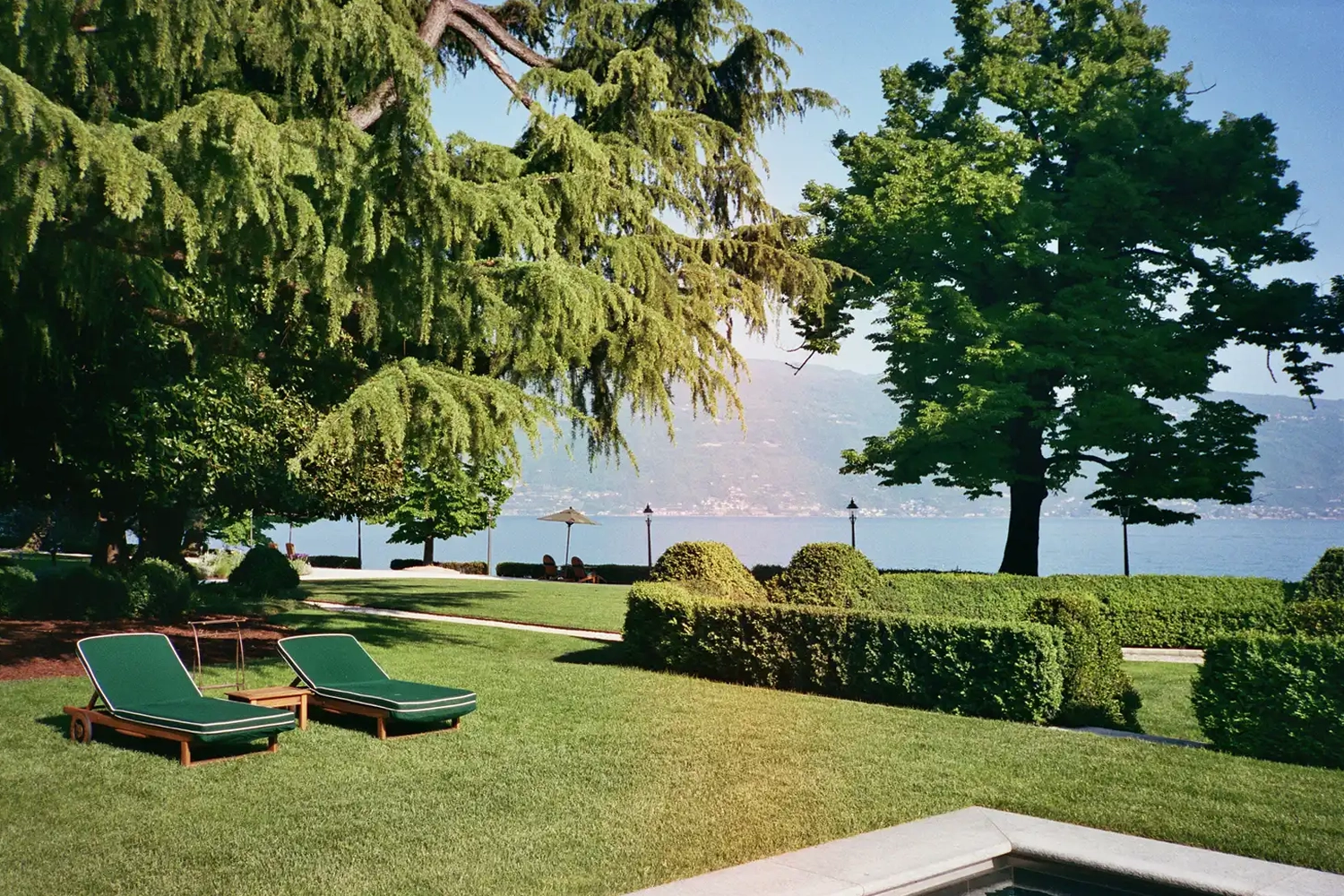
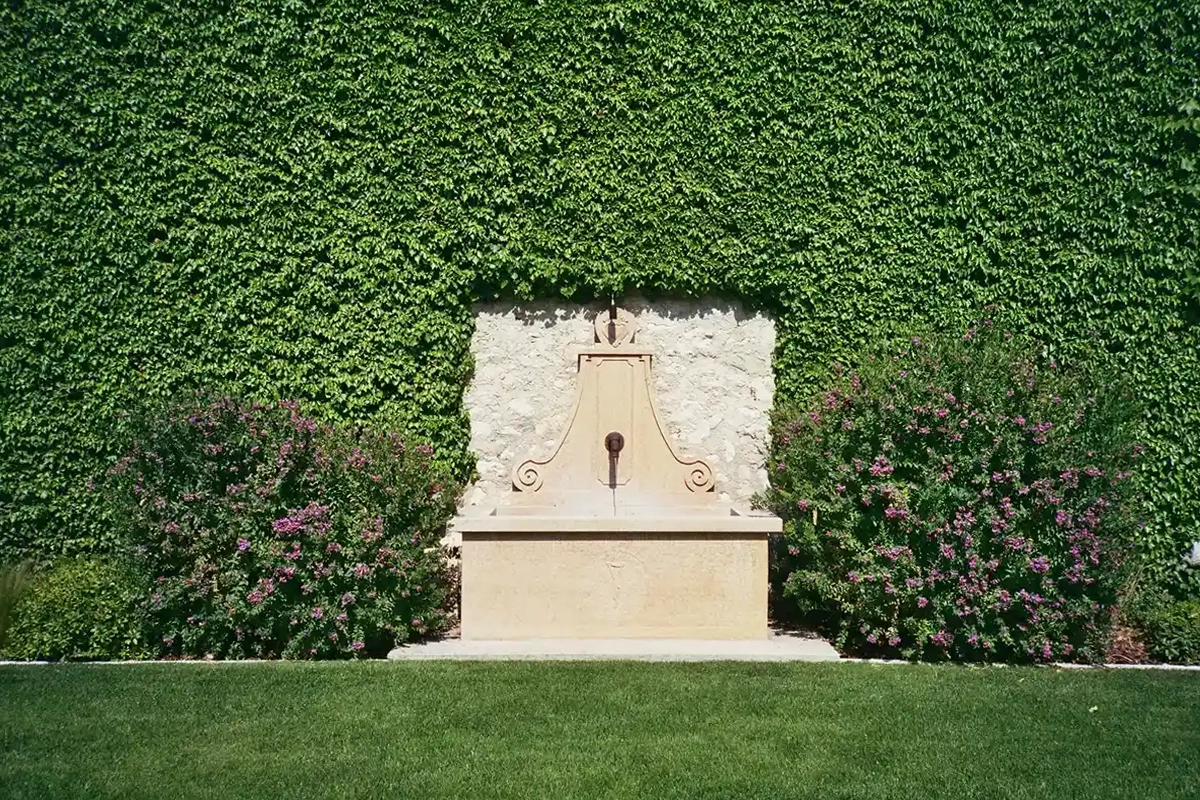
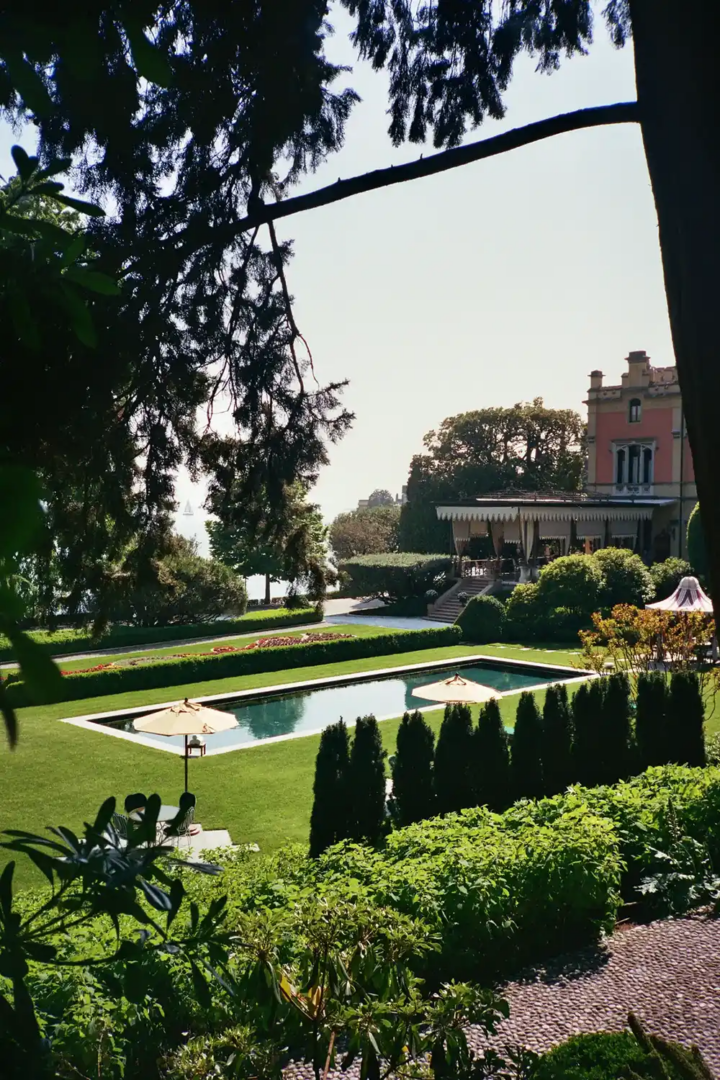
After more than twenty-five years of abandonment, the park had lost structural coherence. Landscape architect Andreas Kipar was engaged for the restoration, with a brief to recover the late-nineteenth-century character of the garden while integrating elements appropriate to contemporary use: an Italian formal garden, an olive grove, fruit trees — oranges, pears, figs — roses, hibiscus, hydrangeas, bougainvillea, and the limonaie that connect the property to the agricultural tradition of the western Garda shore.
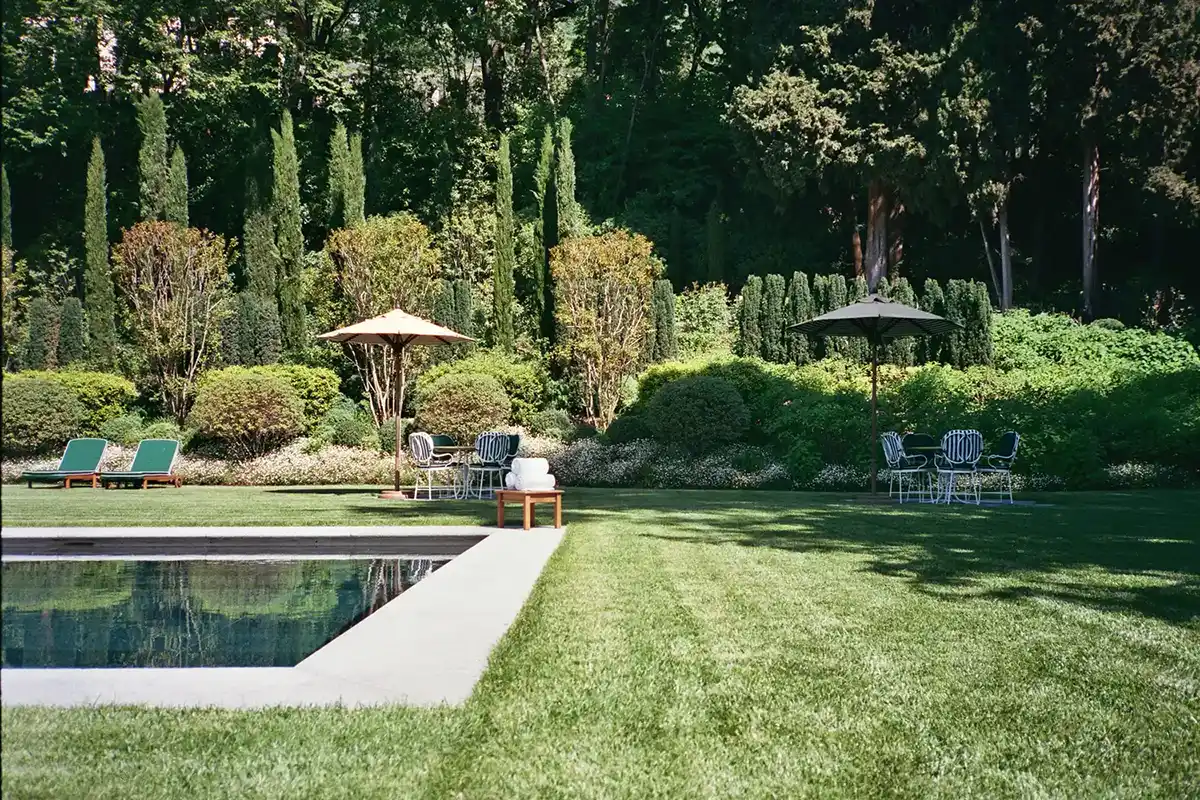
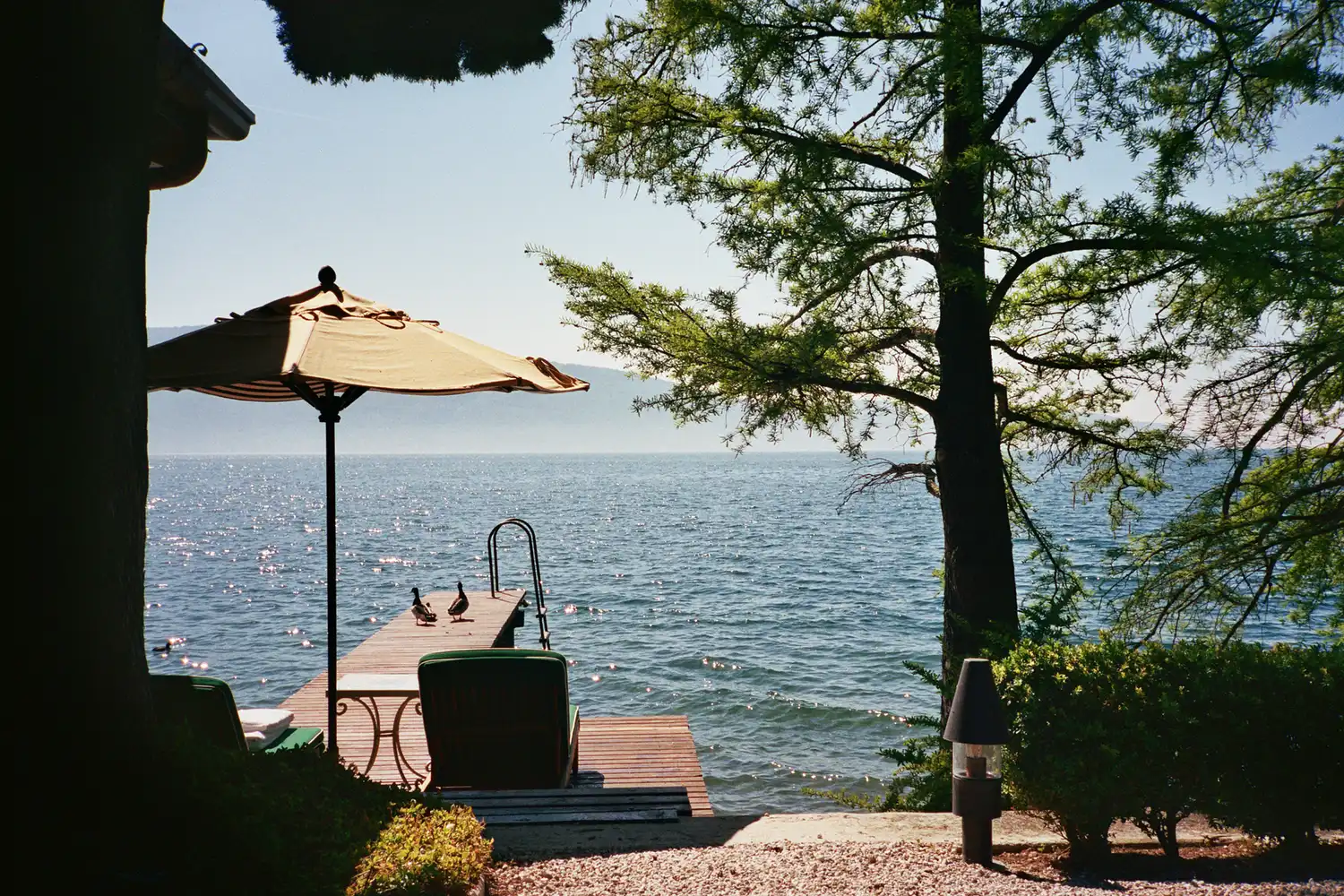
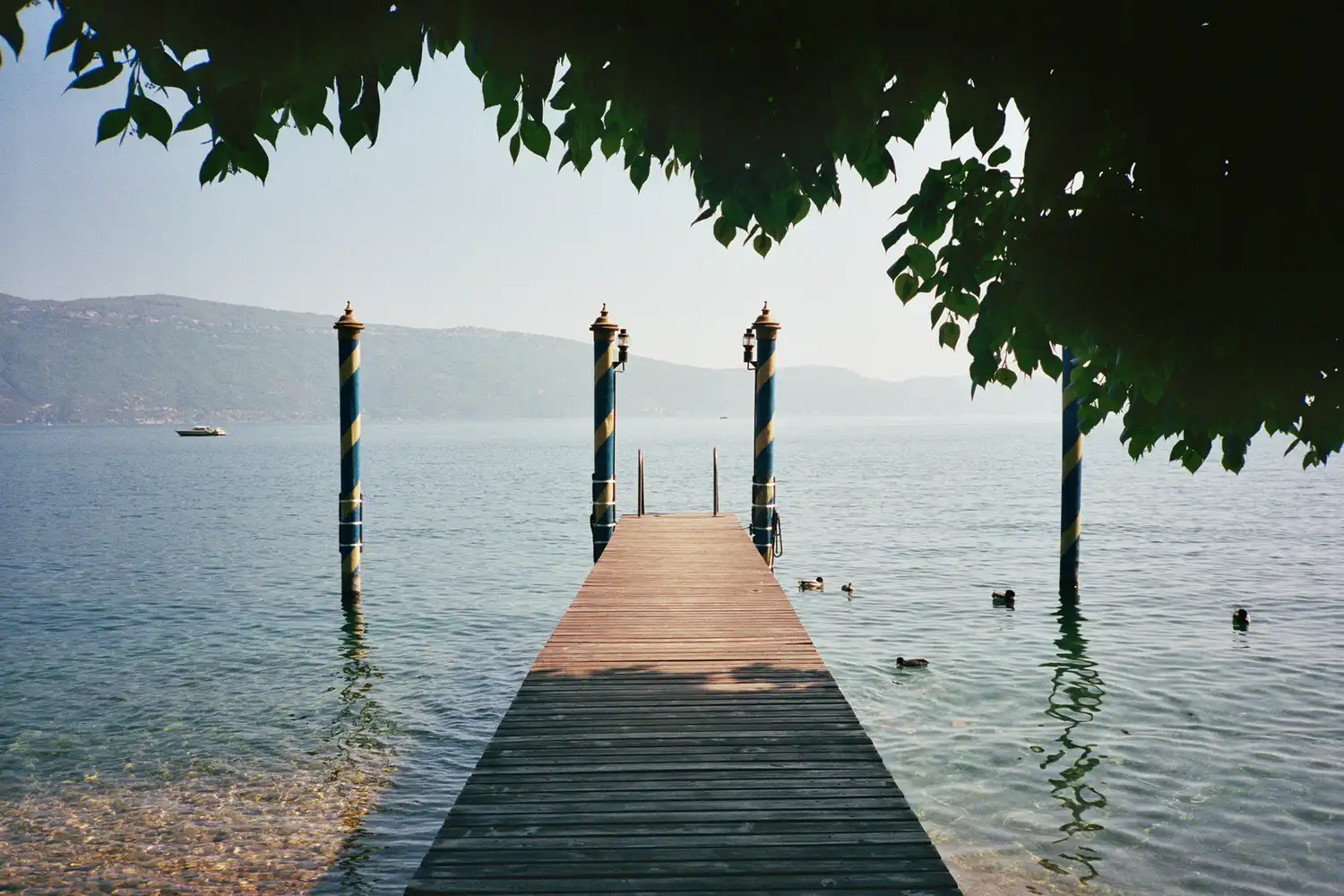
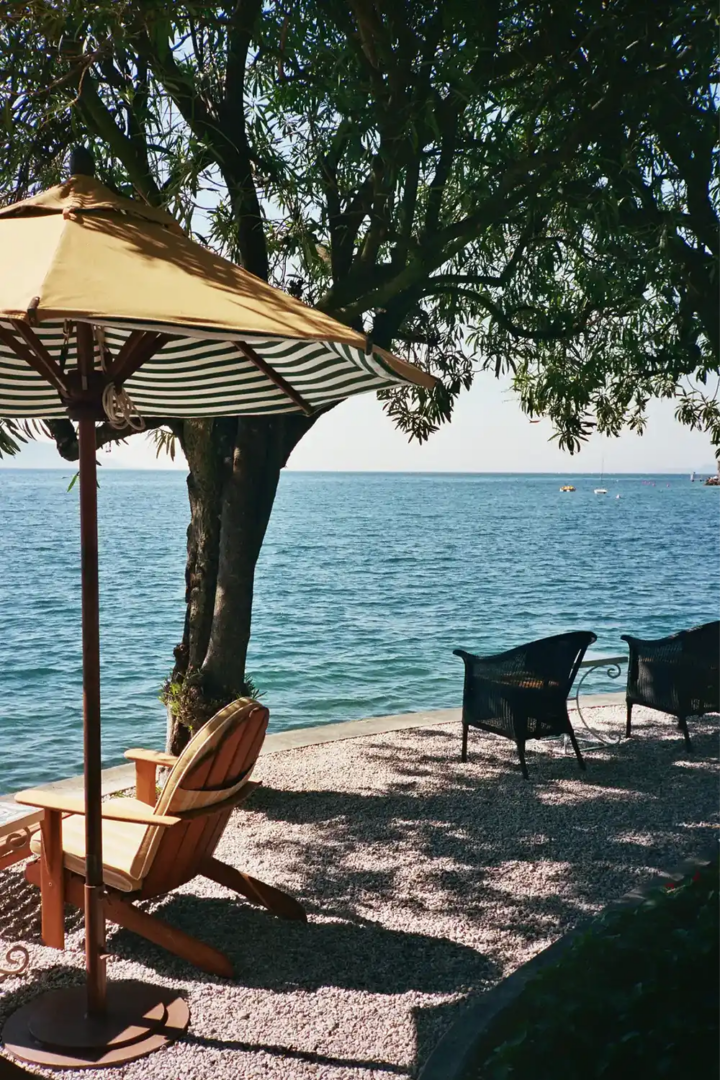
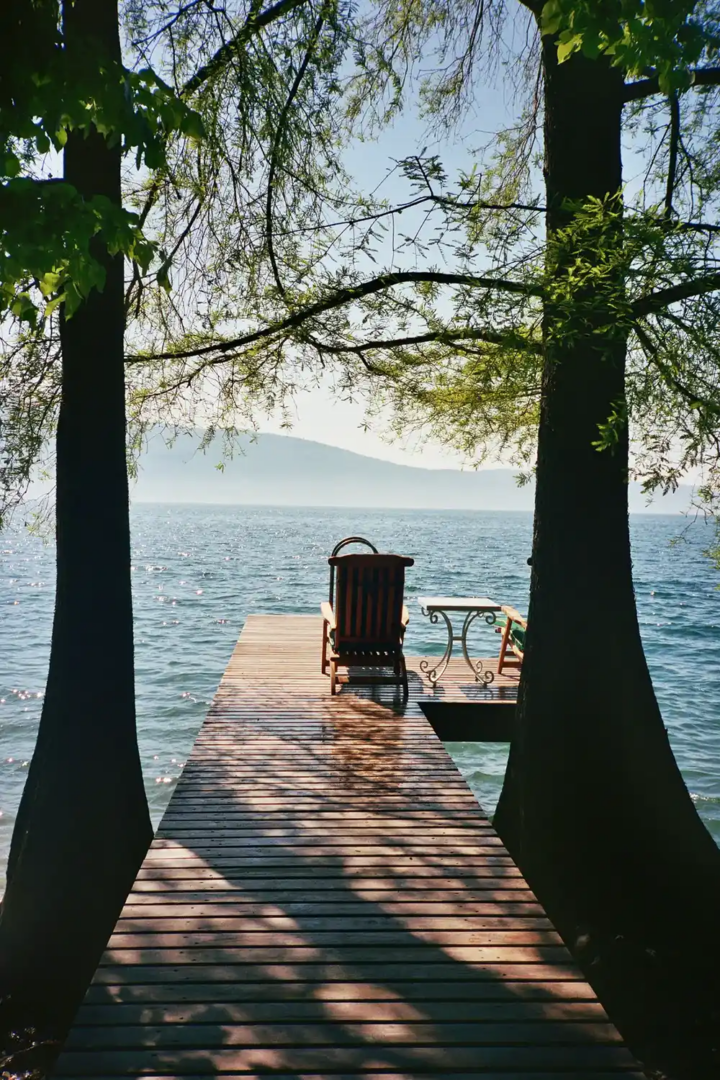
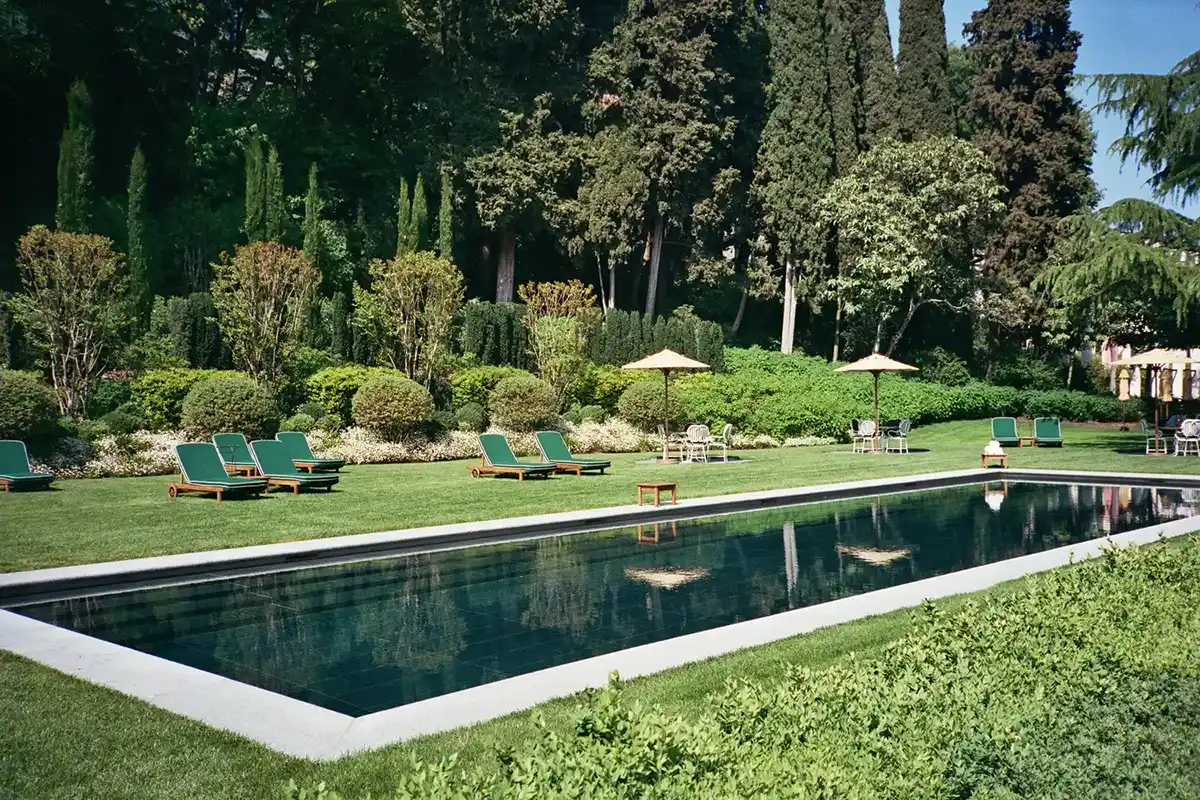
The pool, lined in grey-green granite, is set within the park’s green mass. The private jetty extends from the park directly into the lake. These two points of water access — one enclosed within the property, one opening onto the lake — define the spatial grammar of the outdoor experience.
The park operates simultaneously as an archive of botanical history, a system of physical privacy, a climate filter, and a productive resource. The vegetable garden and herb plots supply Stefano Baiocco’s kitchen. The limonaia produces fruit used in cooking. The distance between garden and plate is measured in meters.
Stefano Baiocco and the two-michelin-star restaurant inside Villa Feltrinelli
Stefano Baiocco arrived at Villa Feltrinelli in 2004. Born in Ancona in 1973, his professional formation ran through the principal structures of late-twentieth-century European haute cuisine: the Enoteca Pinchiorri in Florence; then France, with Alain Ducasse and Pierre Gagnaire; then Spain, with the Adrià brothers at elBulli, the Roca brothers at Celler de Can Roca, Andoni Luis Aduriz at Mugaritz, and Quique Dacosta; then Japan, with Ryugin and the Kyoto kaiseki institution Kikunoi.
The Michelin Guide awarded the restaurant its first star in 2007. The second followed in 2013. In 2017, the restaurant was admitted to Les Grandes Tables du Monde. The 2026 edition of the Michelin Guide Italia confirms the two-star standing.
The evening service offers a single option: a surprise tasting menu of eight courses, designated “100% Baiocco.” The kitchen’s organizing principle is botanical precision. The Villa’s garden and herb plots function as a structural input — fresh herbs and vegetables from the property enter the menu as primary material. Baiocco’s formation in Japanese cuisine, particularly in kaiseki, is relevant to the method. Kaiseki works from restraint and seasonality: each element on the plate accounts for itself. The relationship between the park and the plate is a circuit rather than a figure of speech.
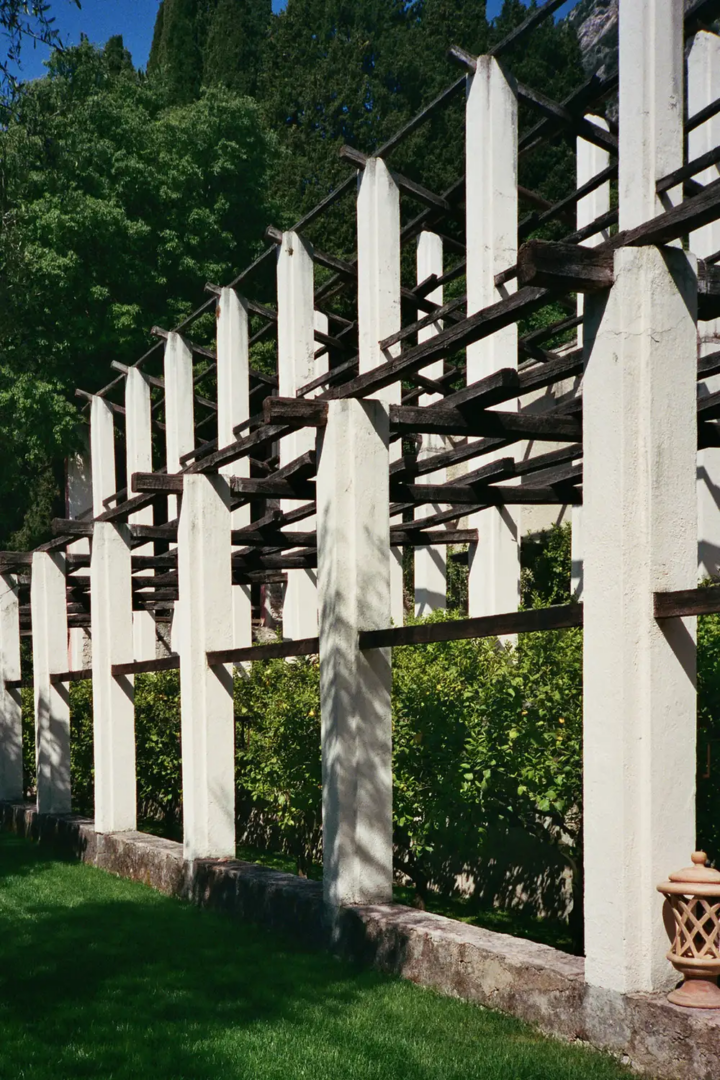
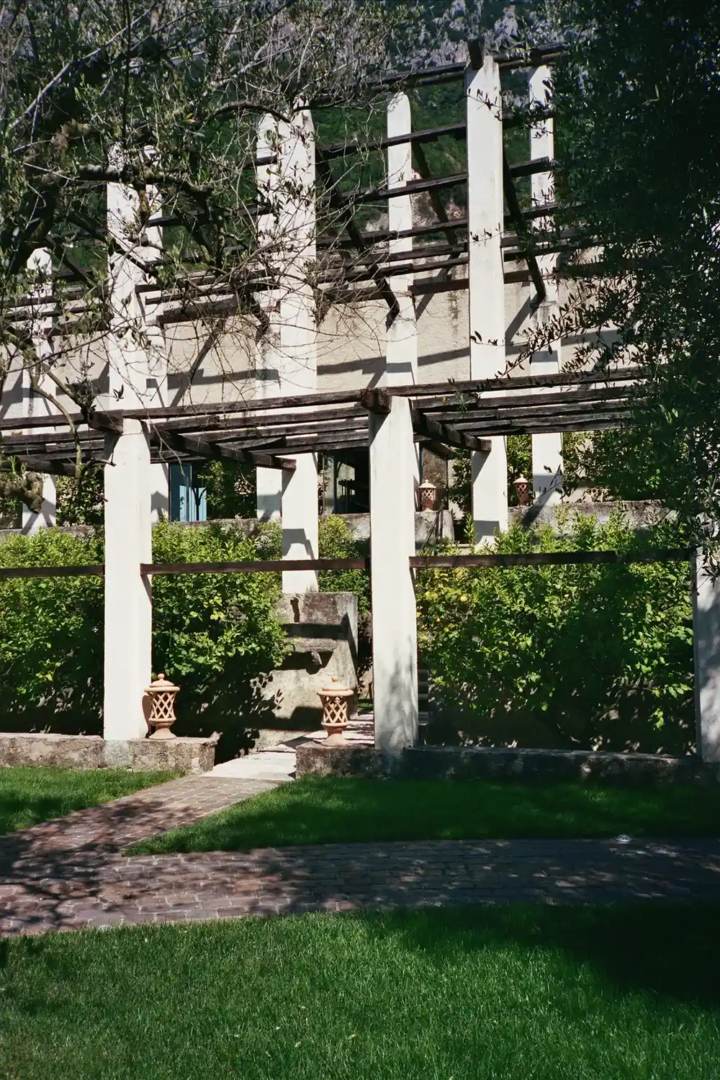
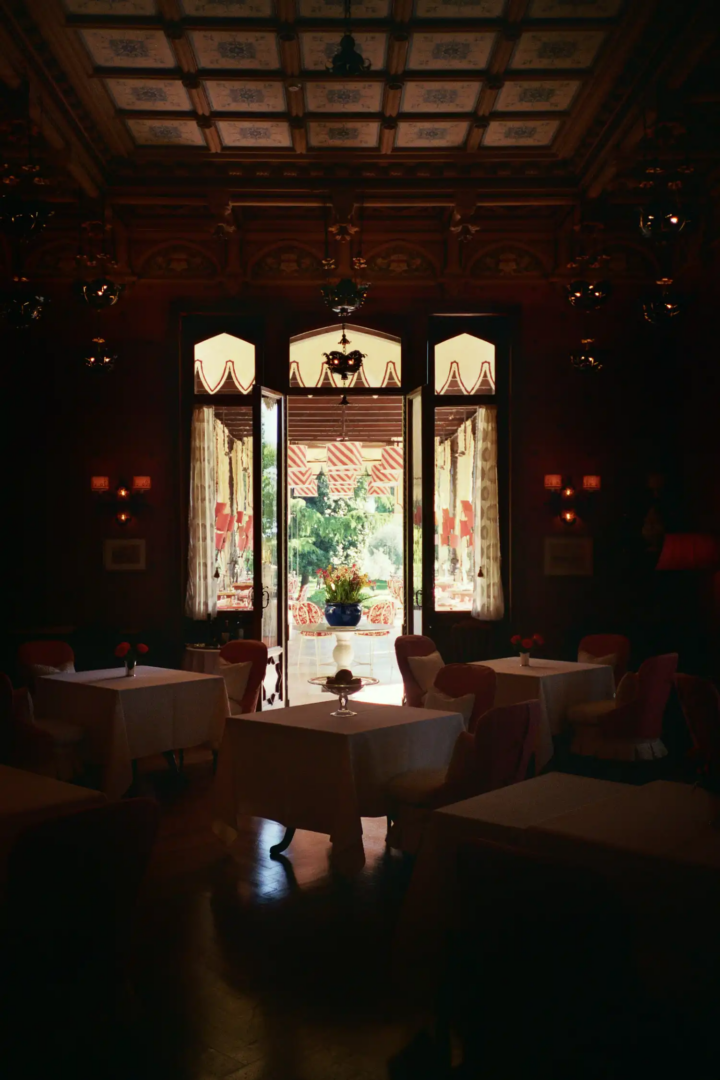
Dinner is served in the sala da pranzo with its fireplace or, in warmer months, on the pergola overlooking the lake. The setting shifts; the architecture of the cooking remains constant.
Markus Odermatt: the management of discretion
The operational continuity of Villa Feltrinelli is carried by Markus Odermatt, sole director, present at the property since its 2001 opening. His tenure of more than twenty years represents an unusual form of institutional memory in a sector defined by turnover.
With twenty rooms, the staff-to-guest ratio allows and requires a form of anticipatory service: attention calibrated to individual rhythm rather than applied as a uniform protocol. Breakfast can be served in the library. Lunch can be arranged under the olive trees.
The fleet of boats owned by the Villa — La Contessa and the Aquariva — allows lake access through the property’s own means. Excursions to Verona, Brescia, Milan, and Venice are organized with private drivers. An evening at the Arena di Verona, with transport arranged by the Villa, is part of the experience catalogue.
History: the Feltrinelli family, timber to publishing
The Feltrinelli presence in Gargnano dates to at least the seventeenth century. By the nineteenth century, the family had built its fortune in timber — specifically in the exploitation and commercialization of wood from the Alpine and pre-Alpine territories of northern Italy. The patriarch of the modern dynasty, Faustino Feltrinelli, gave the enterprise its industrial scale. His sons Angelo and Giacomo extended it into adjacent sectors.
The Villa was commissioned by Angelo and Giacomo in 1892, though construction continued until approximately 1899. In 1913, the property entered a further chapter of the family’s history. Carlo Feltrinelli, nephew of Angelo and Giacomo, was among the founders and served as president of Edison — Italy’s central electricity company — and of the Credito Italiano. The Villa stood as the residence of someone who had helped wire and finance industrial Italy.
After the Second World War, the Villa was occupied in summer months by Giangiacomo Feltrinelli — founder in 1954 of the publishing house that bears the family name — and his sister Antonella. Giangiacomo’s biography adds another layer that resists any simple narrative of aristocratic continuity: publisher of Pasternak’s Doctor Zhivago in the West, political radical, eventual involvement with European armed groups, death in March 1972 in unclear circumstances outside Milan — officially attributed to the premature explosion of a device he was attempting to attach to an electricity pylon. After his death, the Villa entered a long period of abandonment.
History: 1943–1945, the Repubblica Sociale Italiana
In October 1943, following the fall of Mussolini’s government, his liberation by German forces, and the establishment of the German-backed Italian Social Republic in the north, the western shore of Lake Garda became the administrative and military axis of the RSI. The geography was functional: the lake provided a natural barrier, the towns were small and controllable, the villas requisitionable.
Gargnano was designated a restricted zone. Mussolini was installed at Villa Feltrinelli; the RSI’s Council of Ministers met at Palazzo Feltrinelli in the village center; the presidency of the Council occupied Palazzo Bettoni at nearby Bogliaco. The country’s parallel government ran its operations from summer residences built by industrial families on a recreational lake.
Mussolini remained at Villa Feltrinelli until April 1945. He experienced the house as a place of confinement, under constant German oversight. The Villa was a residence imposed on a figure whose own authority had been curtailed by the military and political structure that nominally supported him. The house became the container of a diminished power rather than the seat of one intact.
Gargnano operated under a system of passes and access controls. Zone B, covering the head of government’s residence, required specific authorization to enter. Historical accounts describe the militarization of the park, SS guard posts, anti-aircraft shelters in the area, a bunker near the Villa. The house was used by a collapsing political system as an administrative headquarters. The park, the lake view, the architecture — all of it was absorbed into a function it had never been built for.
History: abandonment, acquisition, restoration
After Giangiacomo Feltrinelli’s death in 1972, the Villa stood largely empty for more than two decades. The property passed to a large Brescia-based construction company before the 1997 acquisition by Robert H. Burns, founder of Regent International Hotels, with the explicit intention of transformation into a hotel.
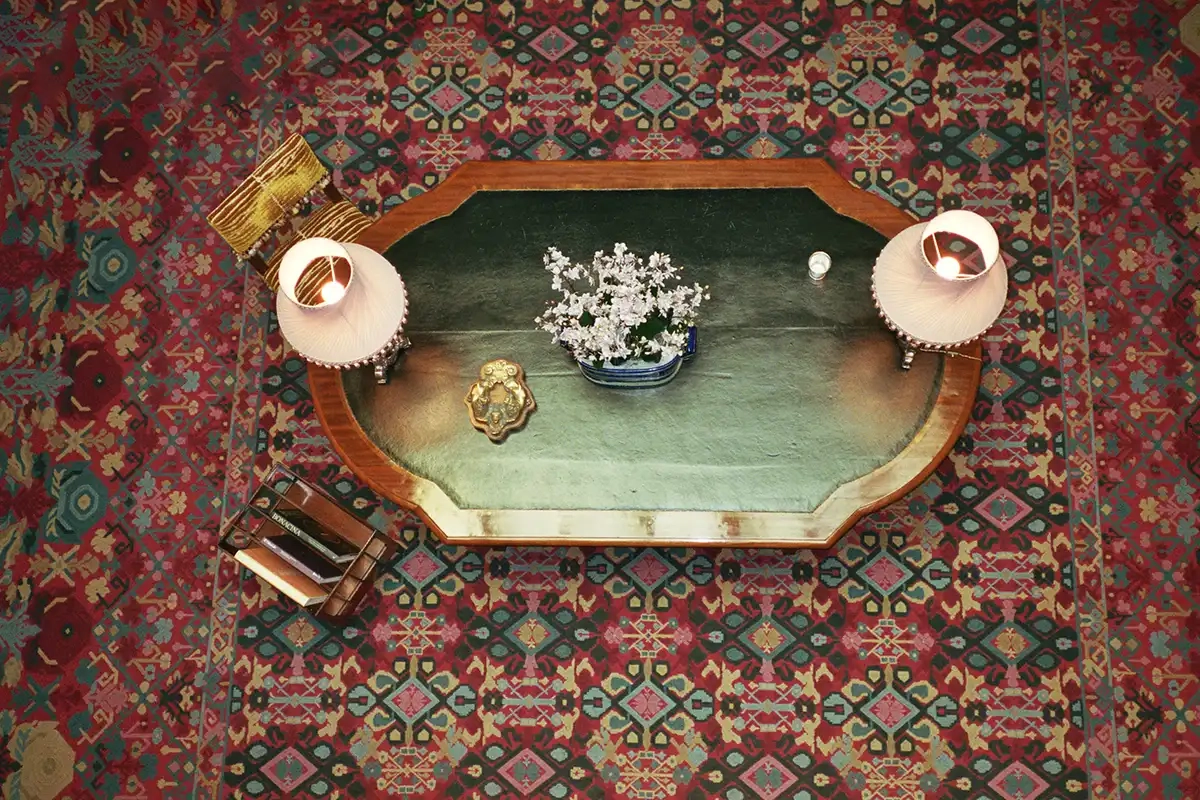
The restoration was conducted under the supervision of the Soprintendenza delle Belle Arti of the provinces of Brescia and Mantua and took four years. The local work — recovery of ceilings, plasterwork, and boiseries, in some cases reconstructed from surviving fragments — was led by Brescia-based specialist Guido Malzani. The decorative and furnishing project was assigned to BAMO, a San Francisco studio. Interna, a Friuli-based company, delivered its work in 2000: fixed and mobile furnishings, curtains, carpets, lamps, accessories, and more than two thousand articles made to specification, including restored antique pieces. Rubelli reproduced original fabric patterns for the textiles.
BAMO’s approach was organized around the idea of a private residence: a liveable accumulation of stratifications, with restored furniture sitting alongside new custom-made pieces, details calibrated to appear sedimentated over time. The result is a form of controlled artifice — transparent to anyone who examines it closely, but executed with enough internal consistency that the overall atmosphere holds.
The hotel opened as the Grand Hotel a Villa Feltrinelli in 2001. Questions around subsequent ownership — including reports in French and Italian press of a stake or acquisition by Russian industrialist Viktor Vekselberg — are documented in external journalistic sources and remain unconfirmed by the property itself.
Matteo Mammoli