Ānti: perfume begins with sweat and salt – not flowers
While presenting the fragrance Paura dell’Acqua, the founders of Ānti took us through the chronology of the brand, from the Egyptian “sweat of the gods” to plague-era opulence – how scent can react to heat?
Sweat-soaked gods weep myrrh across ancient altars. Ānti bottles that primal perspiration — the first perfume in human history — viscous flesh, saline skin, historical seduction melting into heat. Rejecting founder fables of childhood forests, these time capsules resurrect 4,000 years of raw humanity: from pharaohs’ incense to plague-era tuberose invading terror-stricken streets, blending archaeological nerve with contemporary irreverence and body-forward power.
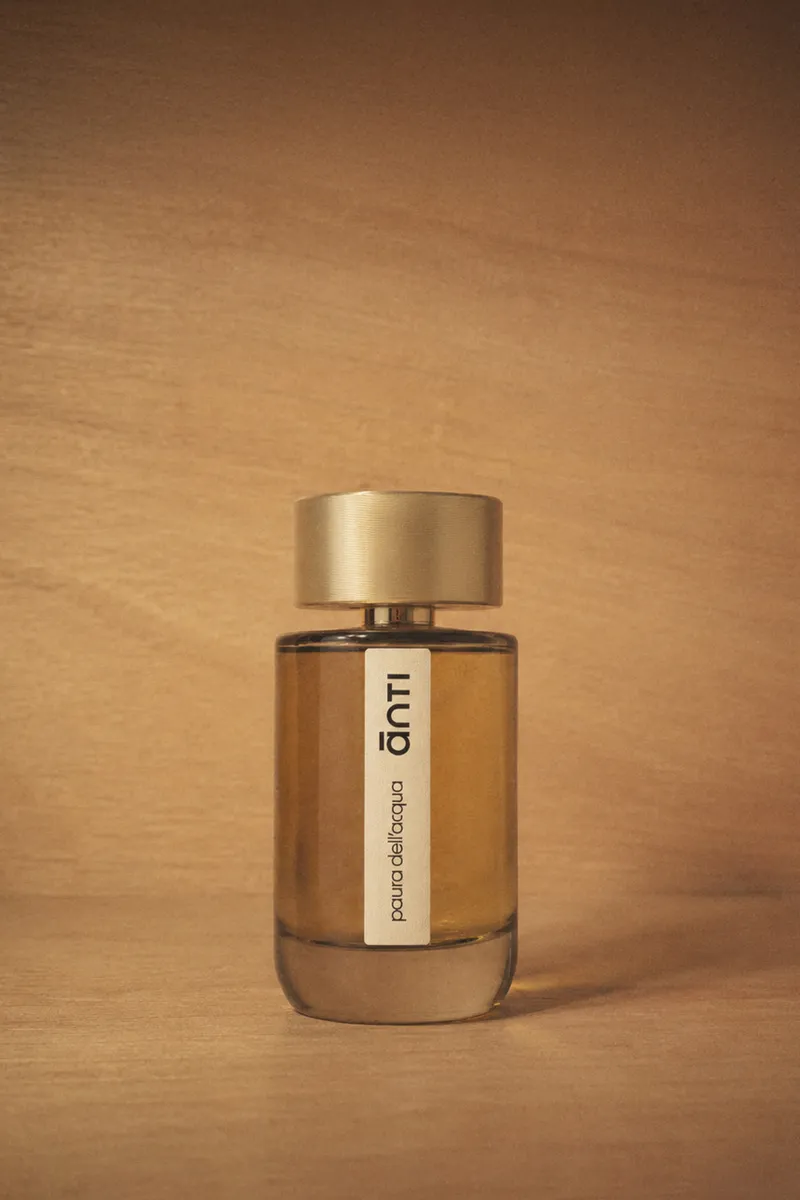
Lampoon spoke with Larissa Sugaipova e Brieuc Larsonneur – founders of Ānti – about olfactory archaeology, sweat, sex, history, and why luxury is ultimately a way of selling time.
How a niche perfume brand built its identity around the oldest fragrance in human history
“We came from the fashion world. I worked at the concept store Nose in Paris — that’s where I understood I wanted to move into perfume. Brieuc worked as an architect creating retail concepts for brands. We met while working for a niche perfume house five or six years ago. Eventually we quit and decided to do something on our own. We’re very different, but we almost have the same brain.”
The founding logic emerged from a shared irritation. “When we analyzed perfumery, we noticed how many founders were telling the same story: ‘When I was a child walking in the forest with my grandfather…’ We thought: why should people care? So we decided to work with the history of humanity instead. That speaks to everyone.”
From the beginning, the brand was built around the idea of the madeleine de Proust — the smell that triggers memory. The question became: could a fragrance do this on the scale of humanity? Could a smell bring you back to ancient Rome or the pharaohs?
The name comes from antiu — the first known perfume in human history, described in ancient Egyptian texts as “the sweat of the gods,” built on myrrh and incense, used to link the living with the afterlife. “We discovered it through a book by the French historian Annick Le Guérer. It sounded strong, simple, international. Four letters. Easy to read, easy to design. We checked trademarks worldwide and it wasn’t taken. That felt like a sign.”
Why niche perfumers are turning to sweat, salt, and skin as the new fragrance frontier
The brand’s central proposition is that perfume is a body event — one that changes with heat, season, and skin. “Antinoüs is the clearest expression of that: a botanical construction driven by sage and cumin, with a salty skin accord. In summer, when it’s hot, it melts into your own body odor; in winter it becomes more spicy-fresh. That movement — heat, salt, skin — is the texture.”
The fragrance pays tribute to Antinous, the divine ephebe who sacrificed himself in the Nile on October 30, 130 AD, through Mediterranean cumin, sage, and sea-spray-salted skin. Not every scent projects outward: Nashi Toro — crisp Nashi pear against Hinoki wood, with the freshness of rain on rice paddies — is designed to live quietly on skin, more atmosphere than sillage. Some fragrances stay close; others are built to project like atmosphere. The era provides the frame, but the wearer’s temperature, sweat, and time complete it.
The fragrance brand using archaeological research and historical seduction to redefine luxury perfumery
“At the beginning we focused strongly on archaeology and historical research. But smelling like ruins is not for everyone. We still want people to wear the perfumes.” The shift was toward connecting archaeological research with intimacy and empowerment — the idea of walking into an ancient perfume shop, or wearing the scent of powerful Roman figures. “We don’t want to be a museum brand. It’s always a fine balance between history and being powerful. We sometimes joke: make history great again.”
The collection frames its first seven fragrances as a journey through time and space — from ancient Egypt to the Italian Renaissance, from Pompeii to London — fixing chronology as format, not mere storytelling. From Bast (2000 BC), blending frankincense, myrrh, cardamom, and amber, to Rosa Antiqua (79 BC), where Pompeii’s Damask rose and olive oil darken into smoky birch; from Nashi Toro (66 AD) to Antinoüs (130 AD); through Paura dell’Acqua (1572), channeling plague-era opulence through jasmine, tuberose, and woody amber; Le Jardinier (1772), capturing the morning after one of Marie-Antoinette’s parties in lilies, water buckets, and fresh grass; to Duke’s Carpet (1953), closing the sequence with a London dry martini ritual — vermouth soaked into carpet, Amalfi lemon zest, gin.
Each perfumer brief combines historical research with pop culture references — “sometimes Gladiator, sometimes Sofia Coppola” — and restricts ingredients to those available in a specific place and time, then allows one modern twist. “The public doesn’t see all of this, but it’s essential to our process.” For one scent, the brief drew on Tanya from The White Lotus as a modern Renaissance woman: loud, excessive, classy. They call it olfactory archaeology. Even Bast — rooted in frankincense, myrrh, saffron, cypriol, cardamom — shifts through amber in the base, so the ritual becomes wearable rather than archaeological dust. That one modern twist is what keeps the project from becoming reenactment.
How luxury perfume brands sell time: heritage, reconstruction, and the anti-nostalgia approach
“When we analyzed luxury brands, we realized most luxury products sell time. Old wine, handcrafted watches, artisan bags — they all represent time invested. As a new brand, we asked: how can we look like we’ve existed for a long time? The answer was to go back to the origins of everything.”
The principle that governs the project: “We do not invent our heritage; we just have to remember it.” Not a slogan — a production logic. Heritage is something you reconstruct, not something you pretend to own. The goal is not nostalgia but continuity — remembering as a way of deciding what deserves to survive.
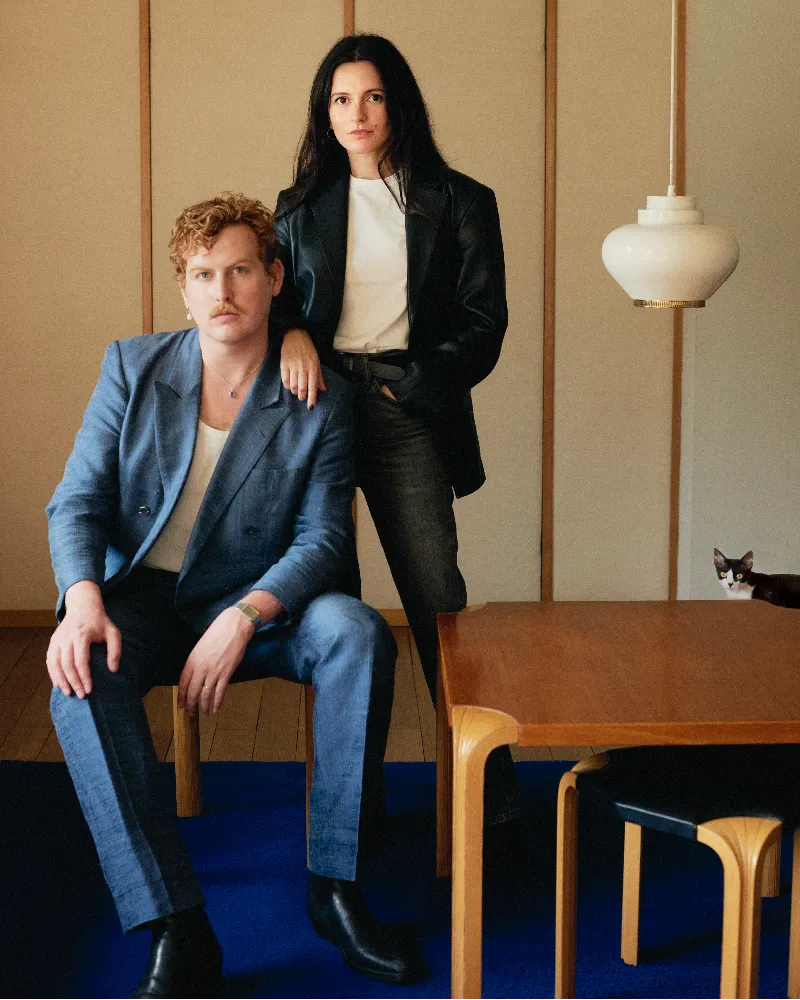
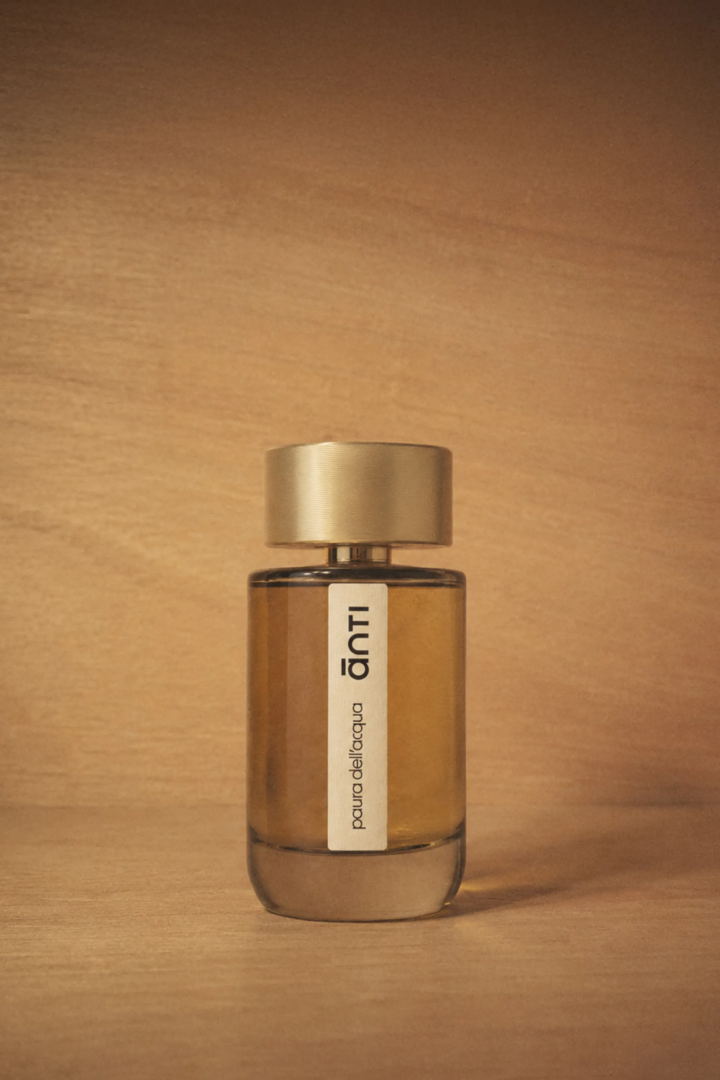
Paura dell’Acqua: the Renaissance perfume inspired by the plague-era fear of water and Catherine de’ Medici
Inspired by Catherine de’ Medici and the Renaissance fear of water following the plague, when royal courts stopped bathing and used heavy perfumes as hygiene, Paura dell’Acqua opens with petit grain mandarin and fresh ginger, blooms through tuberose absolute, jasmine absolute (Egypt), and rose absolute, then settles into tonka, cistus, and woody amber. “We wanted the feeling of the inside of a very rich woman’s handbag — leather, makeup, perfume. The kind of scent that fills a cabin when she enters first class.”
The contradiction is the point. “Fear reshapes cleanliness into obsession, and obsession into luxury. Perfume covers everything — like a French shower — but that gesture is also violent: scent as atmosphere, scent as protection, scent as substitution.” White florals behave like territory — tuberose especially — so the wearer doesn’t disappear behind the perfume; they arrive with it. The architecture moves from citrus bite to white-floral dominance, settling into a warm, animalic woodiness that clings: presence that travels before language.
The perfumer is Sidonie Lancesseur (Robertet), whose handwriting leans toward legible, floral-forward formulas — a fit the founders describe as friction made productive when the brief is a world, not a moodboard. “We want the perfume to be legible, but we also want it to feel like a contemporary decision — not historical cosplay.”
Why the best niche perfumes are built for skin, not sillage: the case for body-reactive fragrance
“Many perfumes today are extremely complex — beautiful, but unreadable unless you’re an expert. With ānti we aim for simplicity and clarity. The formulas are not short, but we want them legible. Usually two or three notes that anyone can recognize. That simplicity creates rawness.”
Rawness here means clarity — so the body can recognize itself in the perfume. Antinoüs is body-forward but structured: sage, cumin, salty skin, wheat absolute, vetiver, sandalwood. The Bauhaus parallel is deliberate: strip away what is unnecessary, keep enough richness to avoid sterility. Designers like Marcel Breuer asked what we really need, then removed everything else. “Our first bottle designs were terrible. You learn by removing.” The brand was built the same way — four letters, a logo readable even very small, two founders whose disciplines force the same question Bauhaus asked: what is essential, and what is noise.
From ancient Egyptian ritual to Cleopatra’s beauty secrets: what olfactory archaeology reveals about perfume history
The technical intelligence of ancient perfumers continues to reframe how the founders think about ingredients. Olive oil and rose shouldn’t work on paper — but they do. Modern distillation only arrived in the 7th century; before that, perfume came from oils and wine infusions, and the smell of the oil itself was part of the fragrance. “It starts with technique — how clever ancient blends were — but it ends with motivation. Funeral rituals, court anxieties, bath rituals, seduction, status: the reasons people perfumed themselves are never superficial. Once you realise that, you stop treating raw materials as notes and start treating them as cultural evidence.”
Working through archives also reframes the relationship with nature. Ingredients move through trade routes, through access, through disappearance. Reconstruction becomes a form of preservation — not as nostalgia, but as a way of remembering what was possible before it becomes impossible.
From ancient Egyptian ritual to Cleopatra’s beauty secrets: what comes next for ānti
Ānti approaches fragrance as a reconstruction practice rather than a lifestyle product. Drawing from ancient rituals, historical research, and contemporary culture, the brand creates perfumes as chronological environments that react to heat, skin, and time — positioning scent as cultural evidence, a living archive shaped by memory, materiality, and the human body.
Next: a gourmand inspired by Cleopatra’s beauty rituals. “We didn’t want something sugary — we wanted mouth-watering and sophisticated. Cleopatra felt right: diplomacy, seduction, power. The full package.