1 Hotel Central Park: a green façade for Manhattan hospitality
A few steps from Central Park, 1 Hotel Central Park turns reclaimed wood, living plants, low-impact systems and biophilic design into the grammar of contemporary luxury
One block south of Central Park, 1 Hotel Central Park
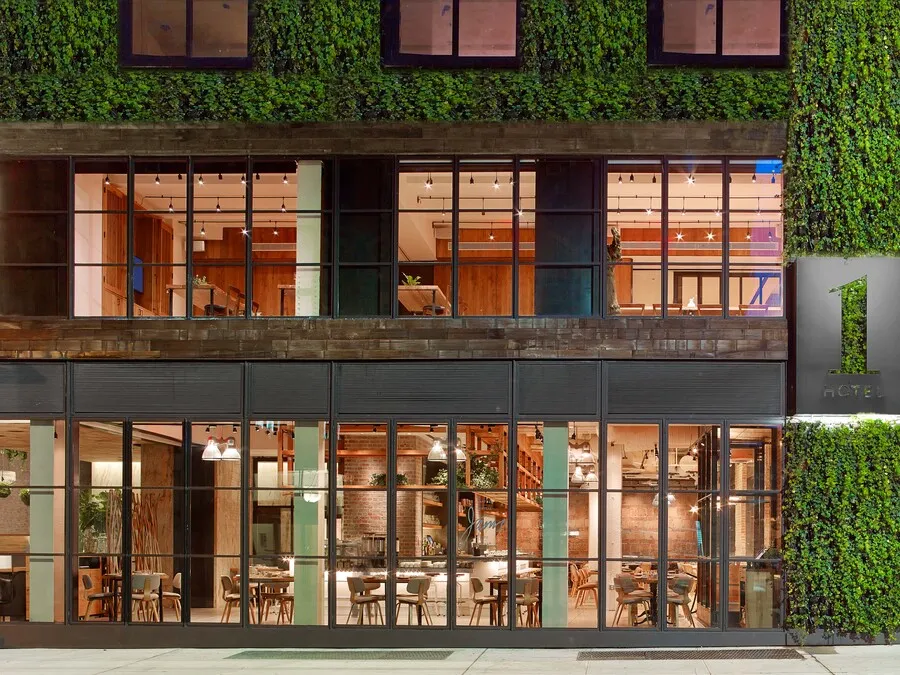
Manhattan is not built for softness. It is built on pressure, mineral surfaces, glass, concrete, traffic, heat, and vertical ambition. On Sixth Avenue, one block south of Central Park, 1 Hotel Central Park works against that condition without leaving it. The building remains part of Midtown: compressed between office towers, retail windows, corporate movement and tourist flow. Yet its façade interrupts the street with vegetation. Ivy climbs across the exterior. Inside, wood, stone, moss, linen, terracotta and plants replace the polished anonymity of the corporate hotel.
1 Hotel Central Park opened in 2015 as one of the first properties of 1 Hotels, the hospitality brand developed around sustainability, nature-led design and urban wellness. The hotel sits at 1414 Sixth Avenue, at the edge of Central Park South and close to Fifth Avenue, Carnegie Hall, MoMA and the retail corridor of Midtown. The address matters. The project does not use nature as an escape from the city. It places it inside one of the densest commercial districts in New York.
The result is not a country house fantasy. It is a controlled urban refuge. The hotel translates the idea of Central Park into materials, surfaces and atmosphere: reclaimed timber, living greenery, stone, filtered water, natural textures, daylight, food sourcing and a restaurant built around seasonal ingredients. Nature becomes part of the service model.
The hotel as an extension of Central Park
Central Park is more than a backdrop for the property. It is the conceptual engine of the project. The hotel stands one block from the park, yet it does not rely only on proximity. Its design attempts to pull the park into the building.
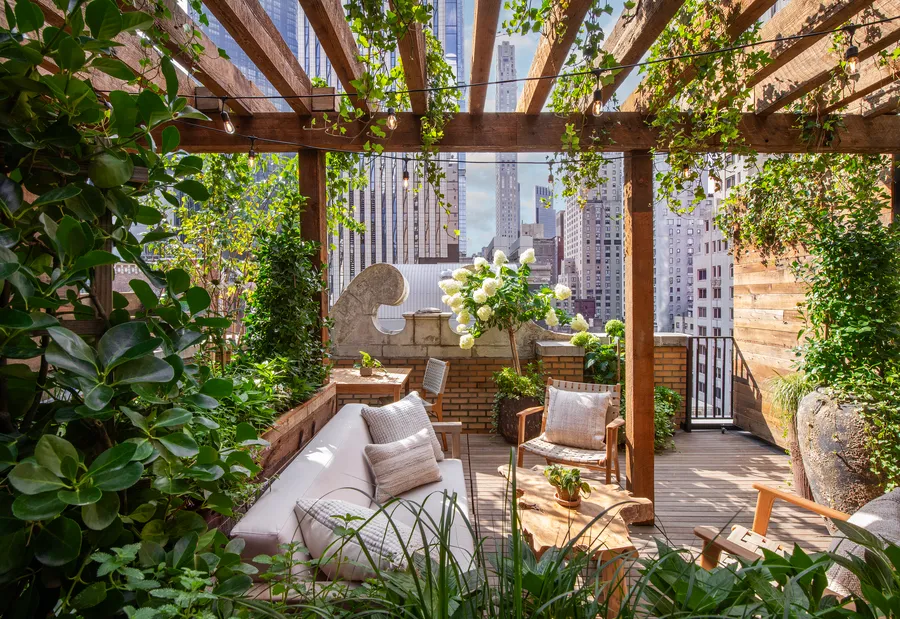
The exterior is the clearest sign. The façade is covered with thousands of plants, creating a vertical green surface in a section of Manhattan dominated by hard infrastructure. The gesture is visual, environmental and commercial at the same time. It softens the street view, shades parts of the building and immediately identifies the hotel within the crowded hotel geography of Midtown.
Inside, the reference continues through biophilic design. Plants are not used as accessories placed after completion. They become spatial markers. Moss appears in circulation areas. Wood defines ceilings, floors and walls. Stone and terracotta introduce mass and irregularity. The atmosphere is tactile rather than glossy.
This is the central operation of 1 Hotel Central Park: it transforms the language of sustainability into hospitality experience. Guests do not only read about environmental commitments. They touch them through materials. They see them in the vegetation. They encounter them through water systems, lighting, food, furniture and spatial rhythm.
AvroKO and the material language of reuse
The design of 1 Hotel Central Park was developed by AvroKO, the New York-based studio known for hospitality interiors that combine narrative, material research and strong spatial identity. Here, the studio worked with an existing structure rather than producing a new architectural object from the ground up. That condition matters. The project does not erase the building. It overlays it with a new material intelligence.
Concrete, exposed structure and urban mass remain present. Around them, AvroKO builds a softer vocabulary: reclaimed wood from water tanks, branches, stone, blackened steel, leather, linen screens, terracotta and vegetation. The hotel’s interiors avoid the frictionless smoothness often associated with luxury hotels. Surfaces show grain. Materials carry visible irregularity. The rooms are refined, yet not sterile.
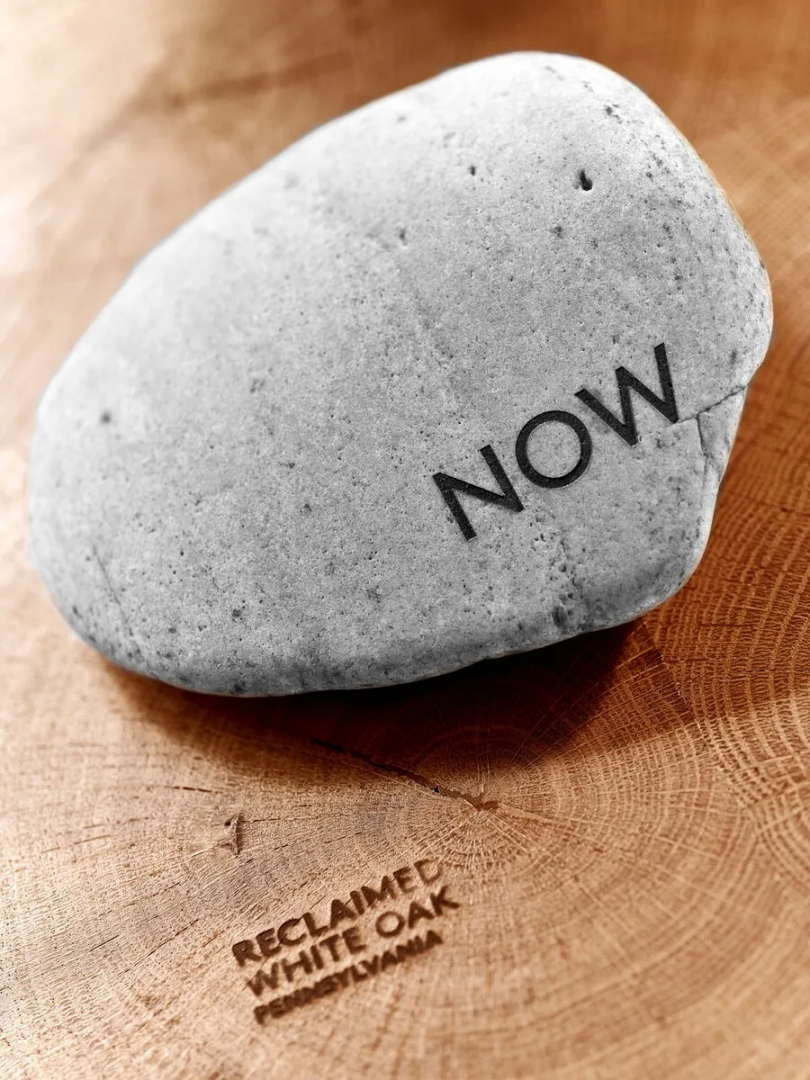
The use of reclaimed wood is one of the clearest design statements. It gives the hotel warmth, yet it also serves as evidence of reuse. In the lobby, restaurant and guestrooms, timber is not only decorative. It provides continuity between sustainability claim and physical space.
The lobby works almost like a compressed landscape. Wood frames the room. Plants occupy vertical and horizontal surfaces. Light moves across natural textures. The space is urban in scale, yet domestic in temperature. It avoids the monumental language of the traditional Manhattan hotel lobby and moves closer to the idea of a designed shelter.
Rooms built around texture, light and restraint
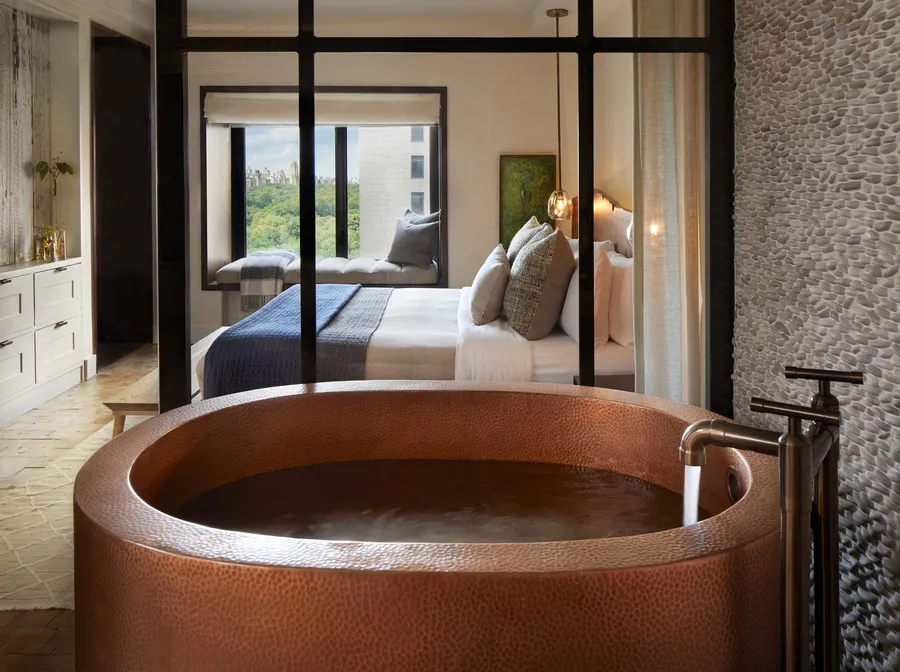
The guestrooms continue the same logic. They are not large by resort standards, yet they are designed to feel less mechanical than the average Midtown room. The material palette reduces visual noise: pale woods, neutral fabrics, stone surfaces, plants, soft lighting and deep windows. Some rooms and suites face Central Park, while others look toward the city grid.
The most successful rooms use contrast. Outside: traffic, glass, asphalt, sirens, office towers. Inside: timber floors, green accents, linen, filtered water, wellness tools, plants and a deliberate reduction of decorative excess. The hotel does not remove the city. It edits it.
The suites extend this approach with terraces, larger living areas and stronger links to the park. The Greenhouse Suite, among the property’s most recognizable accommodations, makes the connection between hospitality and plant life explicit. Yet the more interesting point is not the spectacle of greenery. It is the way the hotel uses natural materials to create a marketable sense of calm inside an environment defined by acceleration.
In that sense, 1 Hotel Central Park belongs to a wider shift in luxury hospitality. The old codes of luxury — marble, symmetry, chandeliers, visual abundance — are replaced by another vocabulary: reclaimed surfaces, wellness amenities, low lighting, local sourcing, organic texture, visible plants. Comfort is no longer expressed only through expense. It is expressed through the promise of reduced friction.
Sustainability as system and image
1 Hotel Central Park has built its identity around sustainability, with LEED certification, energy-efficient systems, LED lighting, occupancy-based controls, water-saving fixtures, filtered water, reusable bottles and reduced single-use plastic. The hotel also emphasizes reclaimed materials, including substantial use of reclaimed wood throughout the property.
These choices give the hotel credibility beyond visual branding. Sustainability here is not limited to a green wall or plant-filled lobby. It enters operations: water management, lighting, energy performance, materials, waste reduction and sourcing.
At the same time, the project raises a more complex question. In contemporary luxury hotels, sustainability has become both practice and aesthetic. It is an operational framework, but also a language. Guests recognize it through signs: raw wood, linen, plants, ceramics, filtered water taps, seasonal menus, visible reuse. The environmental system becomes part of the luxury experience.
This is not necessarily a contradiction. It is the condition of hospitality now. Hotels must turn values into atmospheres. The question is whether the atmosphere remains connected to measurable practice. 1 Hotel Central Park is interesting because it makes that tension visible. Its sustainability is not hidden in technical documents; it is staged through design. The hotel asks guests to feel sustainability before they audit it.
Jams and the return of a New York restaurant name
The hotel’s restaurant, Jams, adds another layer to the project. Led by chef Jonathan Waxman, Jams revives the name of the influential restaurant he opened in New York in the 1980s. Waxman is associated with California cuisine: seasonal ingredients, lighter preparations, attention to sourcing and a more relaxed approach to fine dining.
Inside 1 Hotel Central Park, Jams connects the hotel’s environmental language to food. The restaurant works with regional farmers, producers and seasonal ingredients. Its design follows the broader material palette of the hotel: wood, exposed elements, open kitchen, warm surfaces, a casual rhythm rather than formal theatricality.
Jams is useful to understand the hotel because it prevents sustainability from remaining a visual theme. Food makes the claim operational. A hotel can place plants in a lobby and still function like any other luxury machine. A restaurant based on sourcing, seasonality and waste awareness forces the conversation into supply chains, agriculture and daily practice.
The connection with Waxman also gives the property a New York memory. Jams is not an anonymous hotel restaurant built for breakfast service and room charge convenience. It carries a name from the city’s culinary past and adapts it to the contemporary language of wellness, locality and lower-impact dining.
Midtown, wellness and the private version of nature
The strongest reading of 1 Hotel Central Park is urban. This is not a retreat in nature. It is a private, designed version of nature installed beside one of the most public landscapes in New York.
Central Park was built as a civic project: a constructed landscape for the city, open to millions, democratic in theory even as its histories are marked by displacement and planning conflict. 1 Hotel Central Park draws power from that public landscape, then translates it into a private hospitality environment. The park becomes view, atmosphere, brand code and room category.
This is not a criticism alone. It is the central tension of the property. The hotel is effective because it understands that contemporary luxury in dense cities is no longer only about access to restaurants, shopping or cultural institutions. It is about managed relief. Silence, air, plants, filtered water, softer light, a slower breakfast, a room that reduces the violence of the street.
Wellness here is architectural before it is programmatic. The guest is placed inside a sensory system designed to lower urban intensity. Materials absorb. Plants soften. Light is controlled. Food is framed as nourishing. The proximity to Central Park completes the fiction: the city is still there, but the hotel gives it edges.
Mireia Noguer Artigas