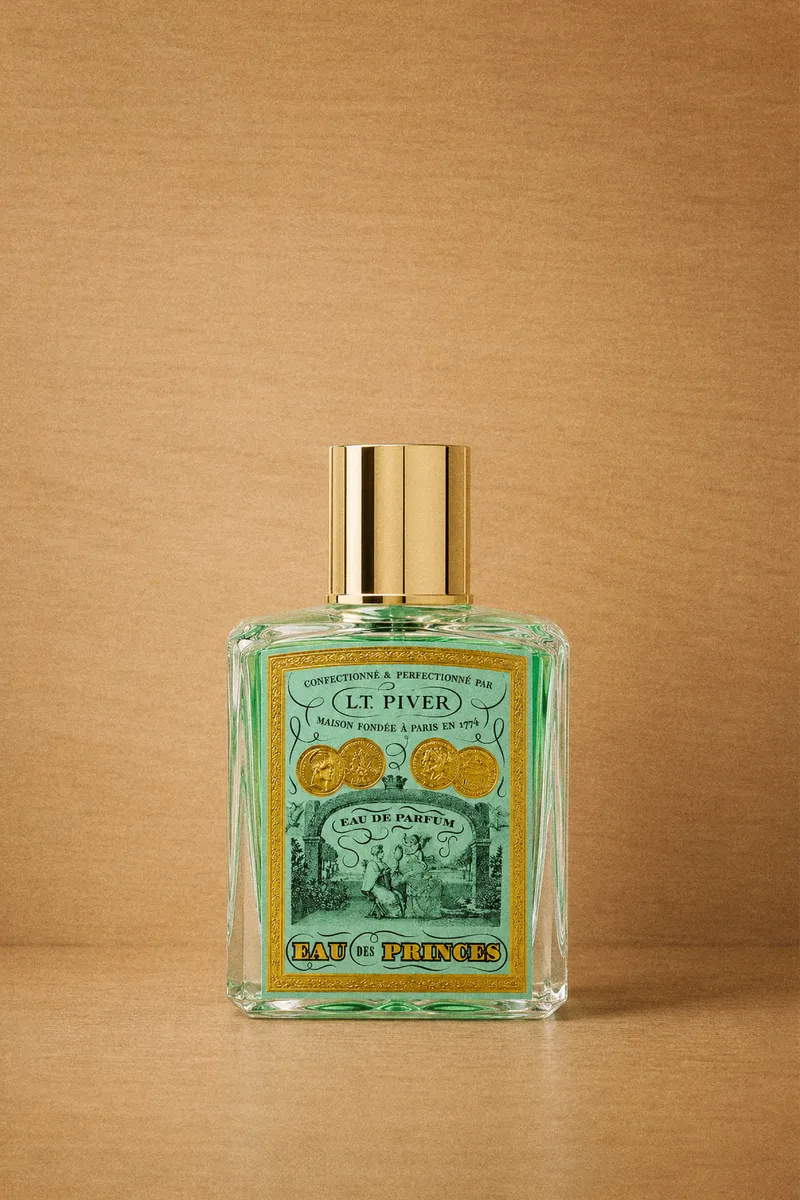
Eau des Princes, L.T. Piver: the Politics of Mint
An aromatic built on nineteenth-century mythology, herb-driven composition, and the question of what “heritage” actually means in fragrance
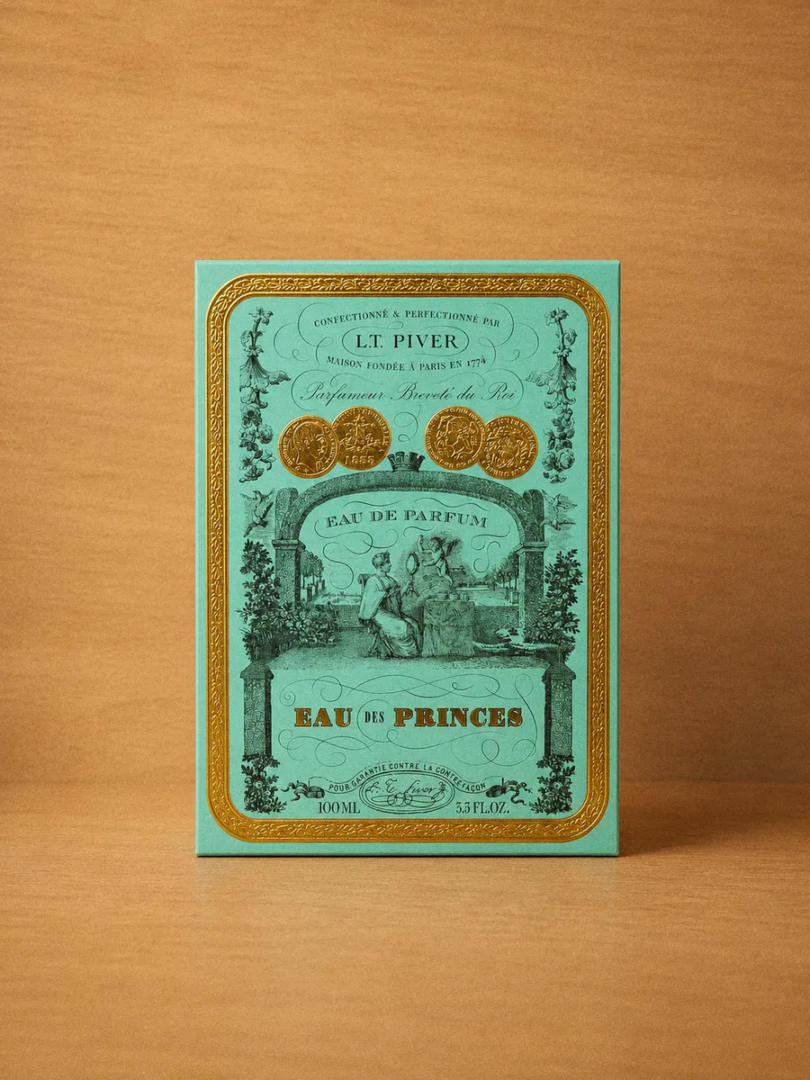
The story L.T. Piver tells about itself is compelling. Founded in Paris in 1774, operating today from a production facility in Chartres, the house claims an unbroken thread connecting Ancien Régime perfumery to the present. Whether that thread is continuous or reconstructed is a question worth sitting with. Many heritage fragrance brands that disappeared for decades and were subsequently revived carry legitimacy that is partly archival and partly mythological. L.T. Piver is no exception — dormant for years before Nelly Chenelat undertook a systematic revival from 2001 onward, working through historical archives to reissue formulas that had existed largely on paper.
Eau des Princes is the house’s most historically loaded proposition. The reference to Napoleon I — reportedly partial to dropping a few doses onto a sugar cube — functions in the press materials as authentication, a kind of olfactory provenance. It is also, it should be noted, unverifiable. Napoleonic France had a well-documented obsession with cologne-style fragrances, particularly those built around the architecture of what would become the classic eau de cologne structure: citrus, aromatics, herbs, and a restrained base. If the Emperor did favor something in this register, it would fit. But the anecdote belongs to the same class of fragrance mythology that surrounds Chanel No. 5 and Shalimar — stories useful for positioning, impossible to fully corroborate.
Eau des Princes, L.T. Piver: the Aromatic Register
Eau des Princes opens on mint — and not a single variety of it, but several, layered to produce an effect that is simultaneously cool and complex. Mint, in perfumery, is a notoriously difficult material to handle with precision. Spearmint (Mentha spicata) carries a sweeter, more herbaceous quality; peppermint (Mentha × piperita) is sharper, almost clinical. Used together, they risk canceling each other out or producing something closer to toothpaste than to perfume. Here, the opening registers as genuinely fresh without collapsing into mere freshness — a distinction that matters. There is body underneath the chill.
The heart is structured around an aromatic accord, the kind that dominated French perfumery through much of the nineteenth century before florals and orientals took over the market. Lavender, rosemary, thyme, clary sage — plants historically associated with both hygiene and medicine, which is not incidental. Pre-synthetic perfumery operated in close proximity to pharmacy: the same raw materials that went into colognes also went into tonics. The aromatic register was not merely aesthetic but carried a cultural weight around cleanliness, health, and social distinction.
This is the olfactory vocabulary of the fougère family, though Eau des Princes predates the formal classification. Paul Parquet’s Fougère Royale (1882) would later codify the lavender-coumarin-oakmoss accord that defines the genre, but the aromatic lineage stretches back further, into exactly the kind of herb-driven compositions that houses like Piver were producing during the early 1800s.
Eau des Princes, L.T. Piver: base Materials and Construction
The drydown moves into woods and musks — the materials responsible for fixation and for what perfumers call sillage, the trail a fragrance leaves in the air. The precise base materials are not disclosed in available documentation, which is standard practice. The sensory effect is warm without being heavy, with a smoothness that suggests the use of sandalwood-adjacent materials or modern musks alongside older fixatives.
What is worth noting is the production process itself. Piver states that each fragrance still undergoes maceration, filtration, and manual bottling at Chartres — a claim that, if accurate, distinguishes its methodology from the majority of the industry, where blending and bottling are largely automated. Maceration time affects the integration of fragrance materials into the alcohol base; longer maceration generally produces a rounder, more cohesive result. Whether this translates into perceptible quality is a matter for the nose rather than the press sheet.