Archambault built Essential Parfums on extraction methods
Essential Parfums pairs high-concentration naturals with direct distribution and puts the perfumer’s name on the bottle
MANE: the scientific foundation behind the raw materials
What remains has to be supported by craft and chemistry. No packaging, no campaigns to lean on. Science must be held.
Essential Parfums’ primary partner for sourcing, extraction, and production is MANE, the French fragrance and flavor company. Understanding MANE’s methods is necessary to understand what distinguishes the house’s formulas at the ingredient level.
The problem with conventional extraction is heat and chemistry. Steam distillation degrades delicate molecules before they reach the bottle. Solvent extraction uses petrochemicals such as hexane, which leaves residue and flattens the olfactory profile. In both cases, the formula receives a processed version of the raw ingredient rather than the source itself. MANE’s answer is supercritical CO₂ extraction: no heat, no solvents, closed-loop. The CO₂ is recovered and reused; the extract retains the full olfactory profile of the raw material.
MANE’s research extends further than extraction alone. The company has spent over two decades developing natural lactones — aromatic molecules synthesized through processes that meet EU natural classification. These molecules introduce creamy, fruity, and milky facets that pure botanical extracts rarely carry, giving perfumers access to complexity that was previously the territory of synthetics, without leaving the natural palette.
The sourcing logic follows the same principle. MANE applies what it terms a biomass balance approach: by-products of food and beverage production, agricultural cuttings, and industrial residues serve as raw materials rather than being discarded. The cedarwood in Osmanthus Absolu’s base derives from furniture industry sawdust; cypress in other MANE-sourced materials comes from seasonal garden cuttings. This infrastructure, extraction process, ingredient development, and sourcing model, runs through each Essential Parfums release.
Essential Parfums gives perfumers like Mr. Bisch, Mrs. Flipo, and Mrs. Becker carte blanche and their name on every bottle
Essential Parfums positions the perfumer as a visible artist rather than an anonymous technician behind a corporate brief. In traditional commercial perfumery, creators work under restrictive briefs with budgetary constraints. Essential Parfums offers its collaborators «Carte Blanche», no creative or financial limits. This opens access to high-concentration natural extracts and biotechnology captives that standard market releases rarely use. Each bottle and box features the perfumer’s name and portrait alongside the MOD number of the laboratory test selected as the final formula. Bois Impérial carries «MOD 1151EX» on its label: a disclosure that traces the iterative process behind each decision.
Bois Impérial: Mr. Bisch applies enzymatic oxidation to patchouli
Mr. Bisch restructures patchouli through enzymatic oxidation. The process targets the heavy, damp fractions of the patchouli leaf, isolating a peppery vibrancy and removing the earthiness of the raw root. The result is Akigalawood, a Givaudan biotech captive developed in parallel with MANE’s own biotechnology methods applied elsewhere in the range. Timut pepper contributes grapefruit-adjacent sharpness at the top; Haitian vetiver, sourced through MANE’s supply network, grounds the base with green and mineral character. Georgywood and Ambrofix carry amber warmth into the dry-down.
Divine Vanille: Mrs. Ropion Pescheux works with Madagascar vanilla as a base material
Mrs. Ropion Pescheux approaches vanilla not as a flavoring note but as a raw material. Natural vanilla contains hundreds of aromatic molecules beyond vanillin, among them dark, leathery, and balsamic facets that synthetic versions do not replicate. MANE’s extraction process preserves this molecular range intact, where conventional distillation would reduce it. Tonka bean and benzoin temper the sweetness; benzoin also slows the vanilla’s evaporation rate, fixing it to skin. Cinnamon and osmanthus add dry, animalic texture.
Orange X Santal: Italian bitter orange leads into Australian sandalwood
Mrs. Gracia-Cetto opens with Italian bitter orange, its peel acidity sharpened by Egyptian basil and French cypress wood, the latter sourced from seasonal garden cuttings under MANE’s biomass balance model. Citrus is volatile; the herbal components manage the transition before the composition moves into a base of Australian sandalwood, which controls the evaporation rate and makes the shift from citrus to wood gradual.
Vetiver delivers crispness as a structural base note
Haitian vetiver, or its Java variant, the latter carrying more smoke, layers green, mineral character into a composition without redirecting it. The material offers staying power as a base without competing with other elements, anchoring sweeter profiles while remaining subordinate to them. MANE’s CO₂ extraction preserves the volatile fractions that give vetiver its green register, which heat-based methods compromise.
The Musc: Mrs. Salamagne Becker works against laundry musk conventions
Mrs. Salamagne Becker uses Laotian ginger to open the composition, green and fresh. French lavandin adds herbal structure; beeswax absolute, sourced through MANE’s natural ingredient network, contributes a honey register.Unlike synthetic musks, beeswax modulates with the wearer’s skin temperature, functioning as a natural fixative. The result sits close to skin.
Osmanthus Absolu: MANE’s extraction methods and a collaboration with Skins
Essential Parfums’ most recent release, Osmanthus Absolu, pairs Mr. Nardin with the retailer Skins, and represents the application of MANE’s full technical range in a single formula. The composition reaches eighty-eight percent natural content.
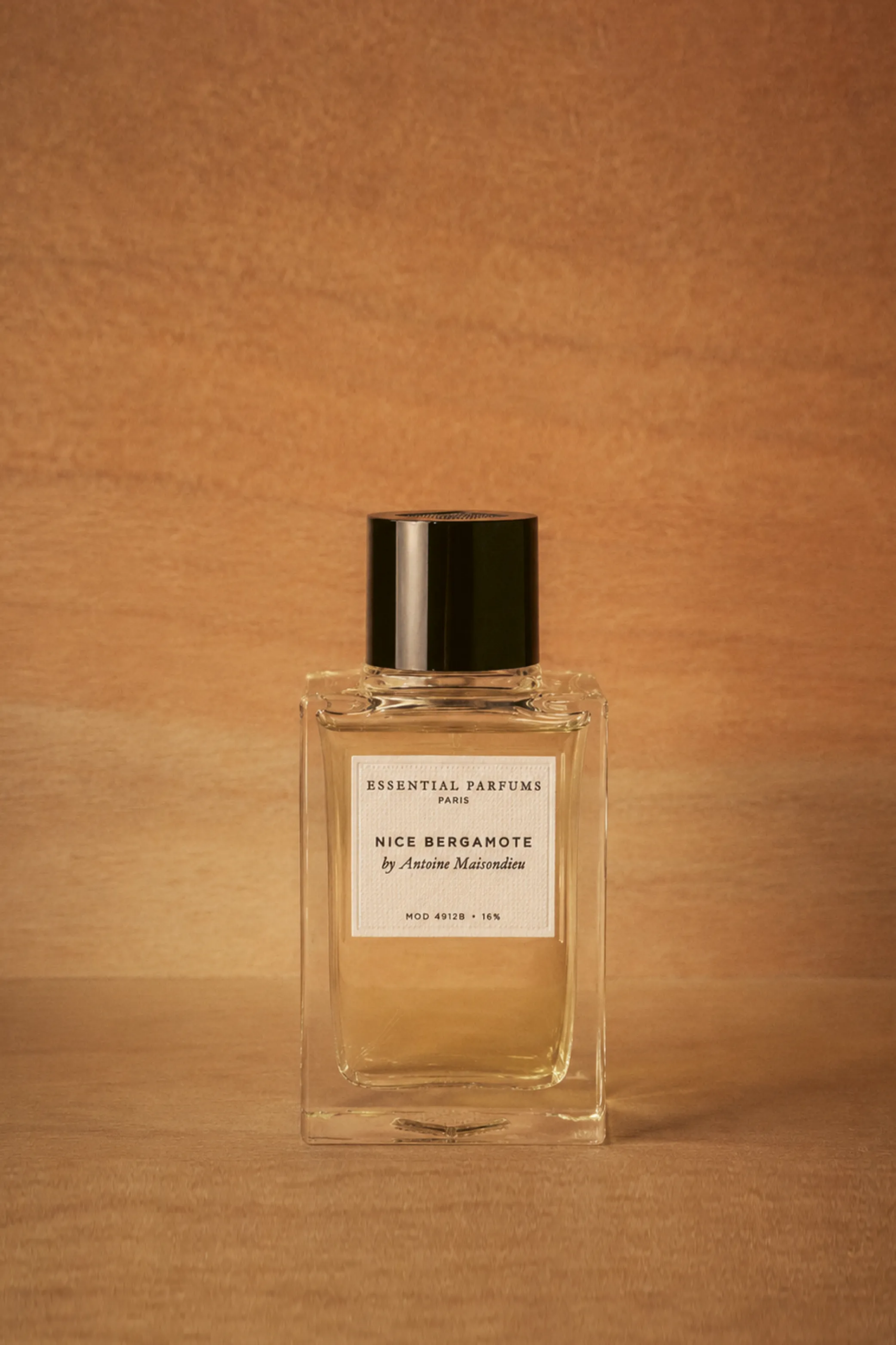
The Black Tea Pure Jungle Essence™ captures the leaf’s volatile and woody registers through the CO₂ process; standard solvent extraction renders the same material bitter and flat. The Pêche Osmanthus Neo Jungle Essence™ co-extracts peach and osmanthus together through the same method, producing a continuity between fruit and flower that blending separate oils would not achieve. MANE’s natural lactones introduce the creamy facets that carry the transition from osmanthus heart to base. Bergamot and cardamom open the composition; reclaimed cedarwood, from furniture industry sawdust, and vanilla close the base woody and warm. The release follows Mrs. Ropion’s Velvet Iris, Nice Bergamote, and The Musc from 2025.
Home fragrance: the same operating model applied to candles
The house extends its production logic to a candle line, handmade in France in a mineral wax blend at twelve percent fragrance concentration, against the industry standard of six to eight percent. That load sustains the scent across a ninety-hour burn. All candles are vegan and cruelty-free, with no animal-based fats. The move into home fragrance reflects a question Mrs. Archambault has raised herself: whether personal scents translate into domestic environments. The candle line suggests they do.
Essential Parfums
Mrs. Archambault founded Essential Parfums in Paris in 2018 to redirect fragrance budgets away from marketing and toward raw materials and creative freedom. The house collaborates with perfumers on high-concentration, natural fragrances, sourcing ingredients and extraction methods through its primary partner MANE. Each release is signed by its creator and sourced with attention to material origin and process. Bottles: plain recyclable glass, laser-etched with the nose’s name.