Persol, Cassina and Olivetti: two collaborations looking to the future of Italian design
From furniture design to the Lettera 22, Persol engages with two icons of Italian design and reinterprets their legacy through eyewear
PERSOL, CASSINA AND OLIVETTI: WHEN DESIGN MEETS HERITAGE
Nostalgia often feeds on objects. It preserves them, pulls them out of time and, at times, turns them into icons. But what happens when an object from the past becomes, once again, the inspiration for a new project? It is something closely tied to the concept of heritage, which is not merely an archive to draw from or a synonym for prestige, but a living legacy of ideas, languages and practices of innovation with which to engage.
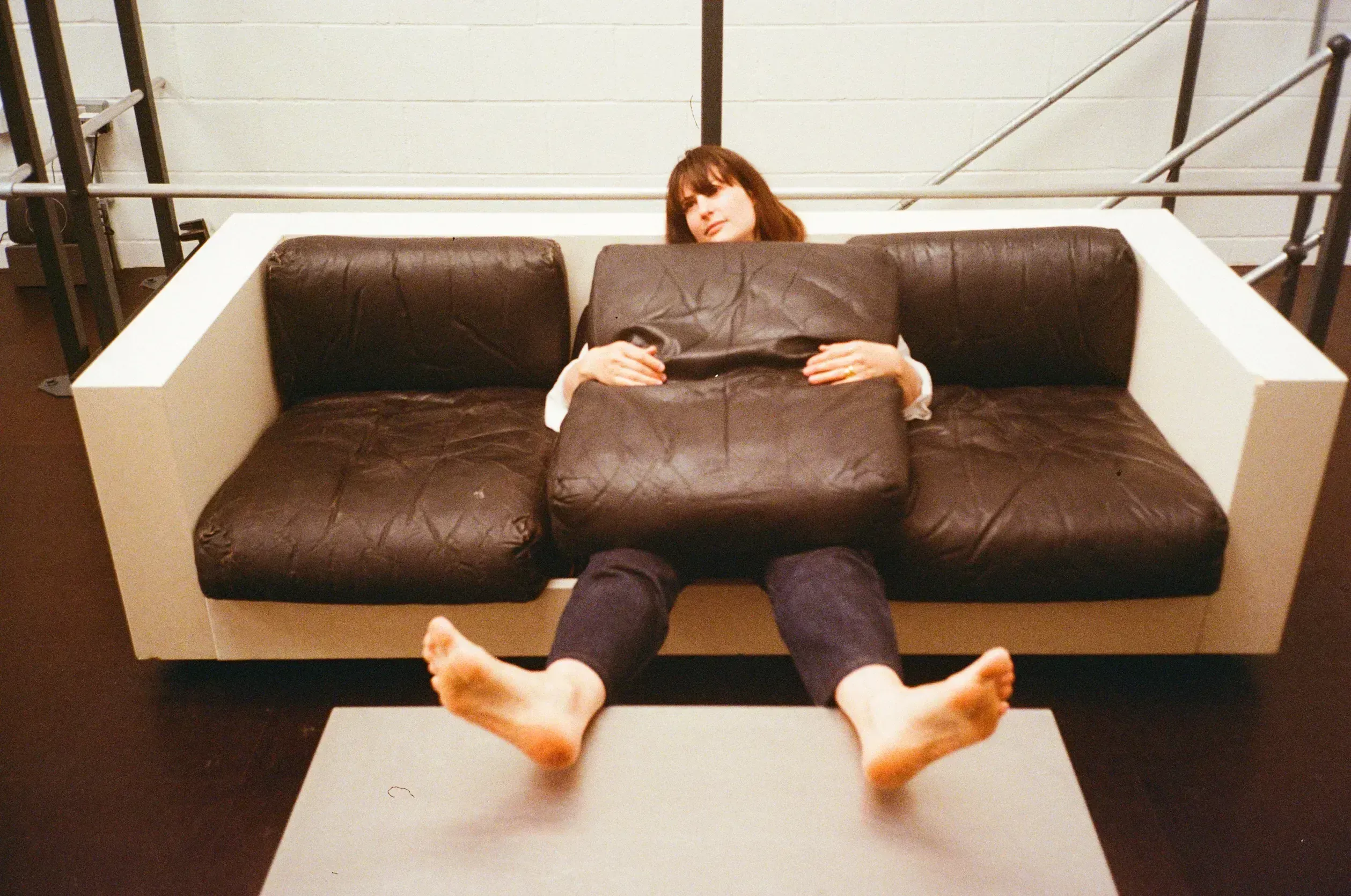
Persol’s collaborations with Cassina and Olivetti start from precisely this premise. Three companies from seemingly distant sectors and worlds, yet united by an idea of design, and of the design process, that goes beyond the making of an object. On one side, Cassina’s ongoing exploration of form, materials and the relationship between object and space; on the other, Olivetti’s industrial culture, in which design, technology and social culture helped define a different way of understanding enterprise. At the center, Persol’s idea of intercepting these two visions and translating them into a different language: that of eyewear.
“At first glance, these are companies operating in very different fields, but in reality they share the same cultural roots”, says Riccardo Pozzoli, Creative Director of Persol. “Persol, Cassina and Olivetti were born of the conviction that an object should fulfill a function without giving up on expressing a vision of the world.” The point of contact between these companies, then, was not the product but the approach, “the almost obsessive attention to design, the dialogue between craftsmanship and innovation, and the desire to create objects made to last.”
PERSOL X CASSINA: BEYOND THE FORM OF THE OBJECT
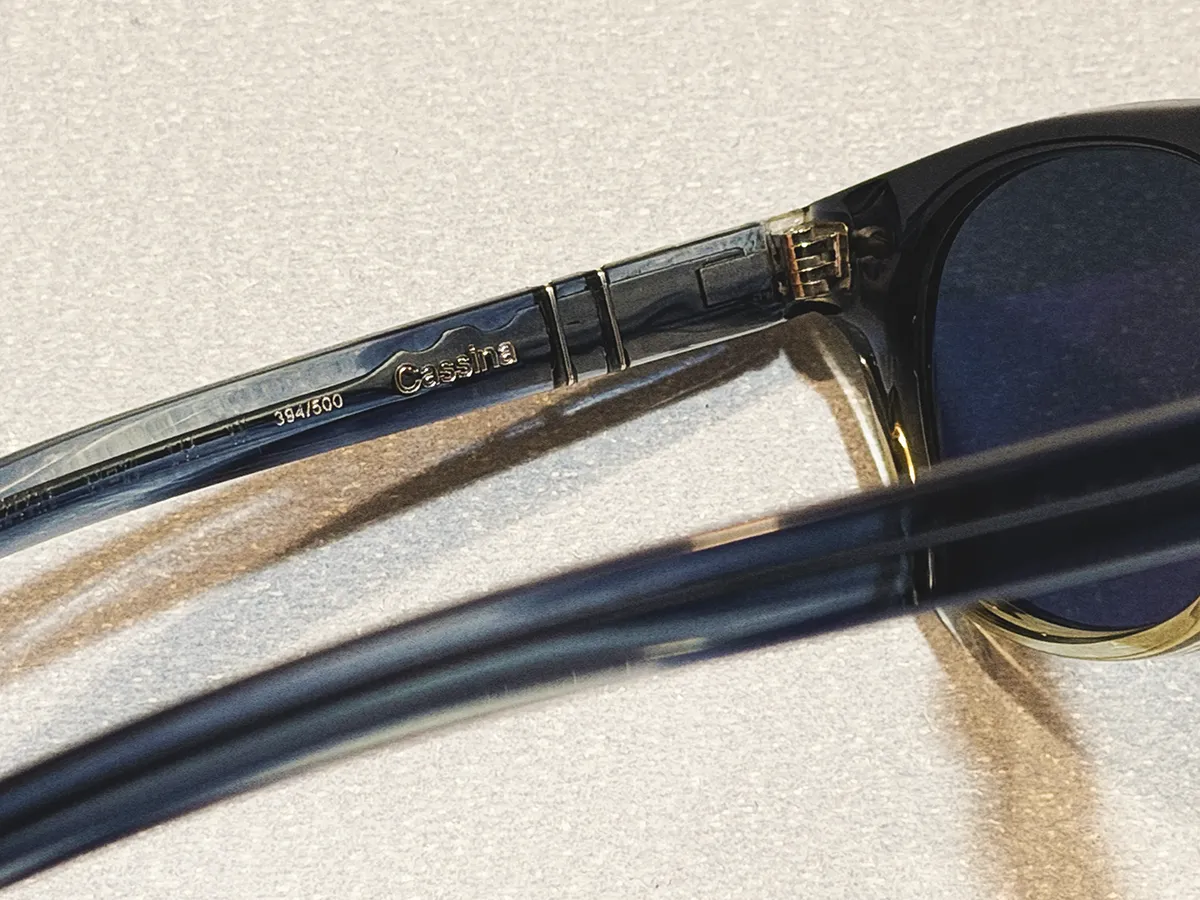
In the case of the collaboration between Persol and Cassina, everything began with research, even before any wish to transfer a recognizable form onto a frame. The need was to understand what lay hidden behind the objects. In this sense, the Cassina archive played a fundamental role in shaping the collaboration. Drawings, details and materials became tools to bring Persol closer to a design culture in which nothing is ever reduced to mere decoration. The challenge, as Persol’s Creative Director explains, was to avoid mere citation: “We didn’t want to create a pair of glasses that imitated a chair, but to bring into eyewear the principles that made Cassina’s products so innovative.”
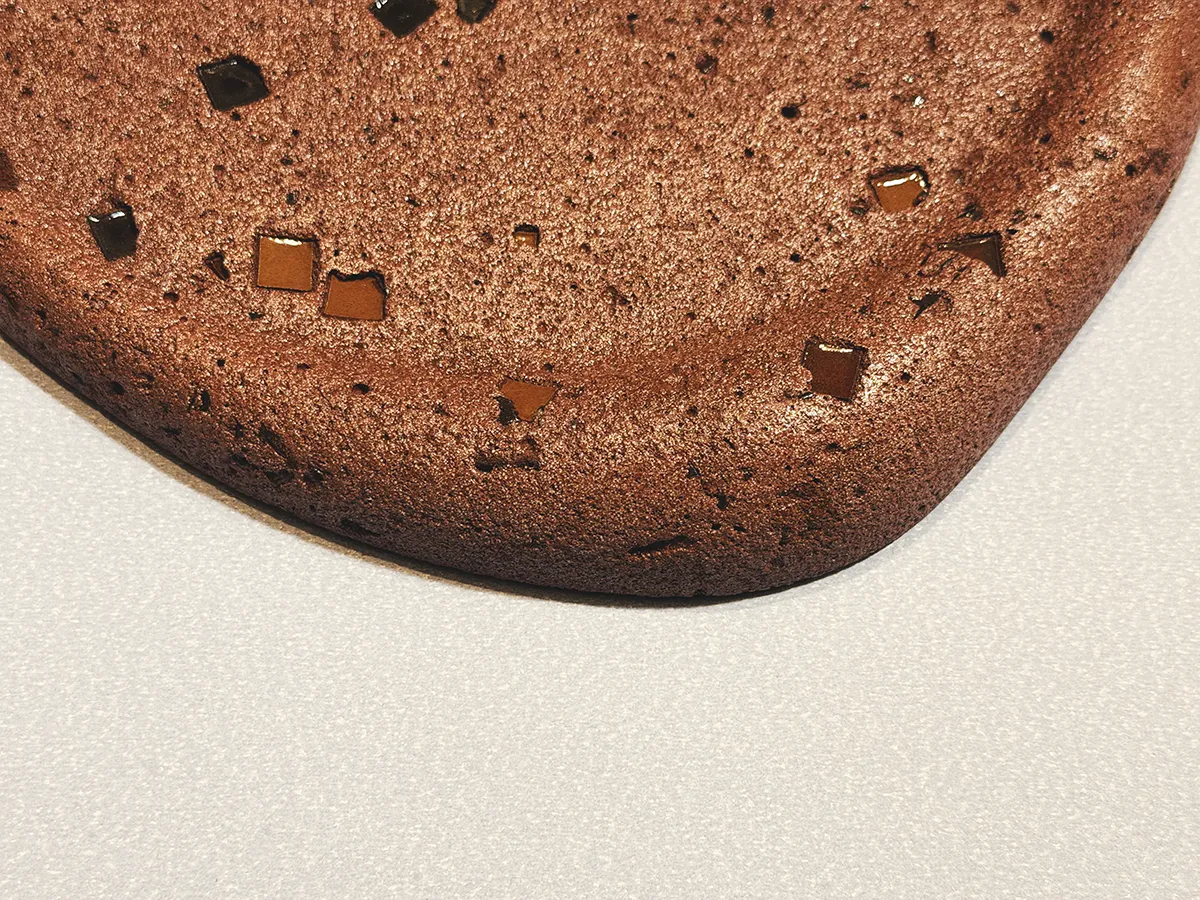
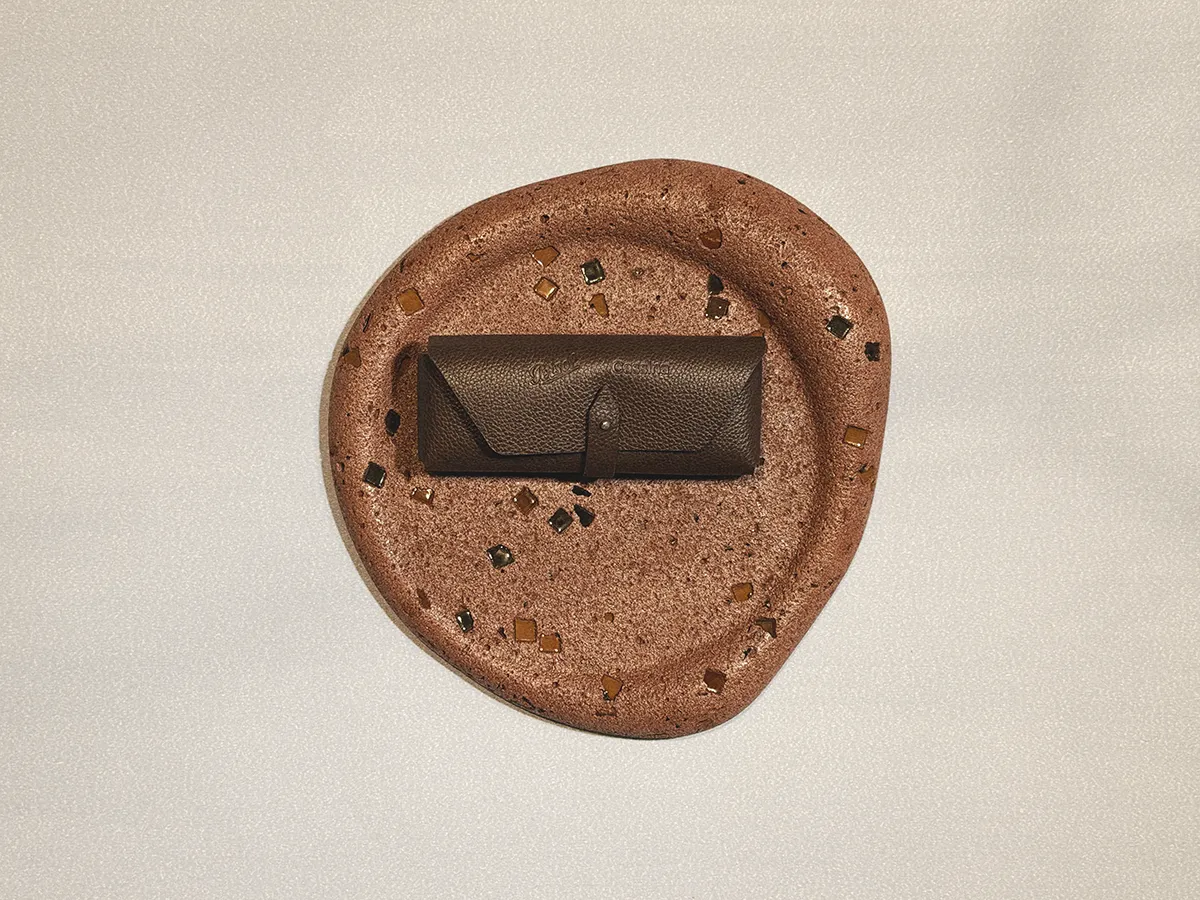
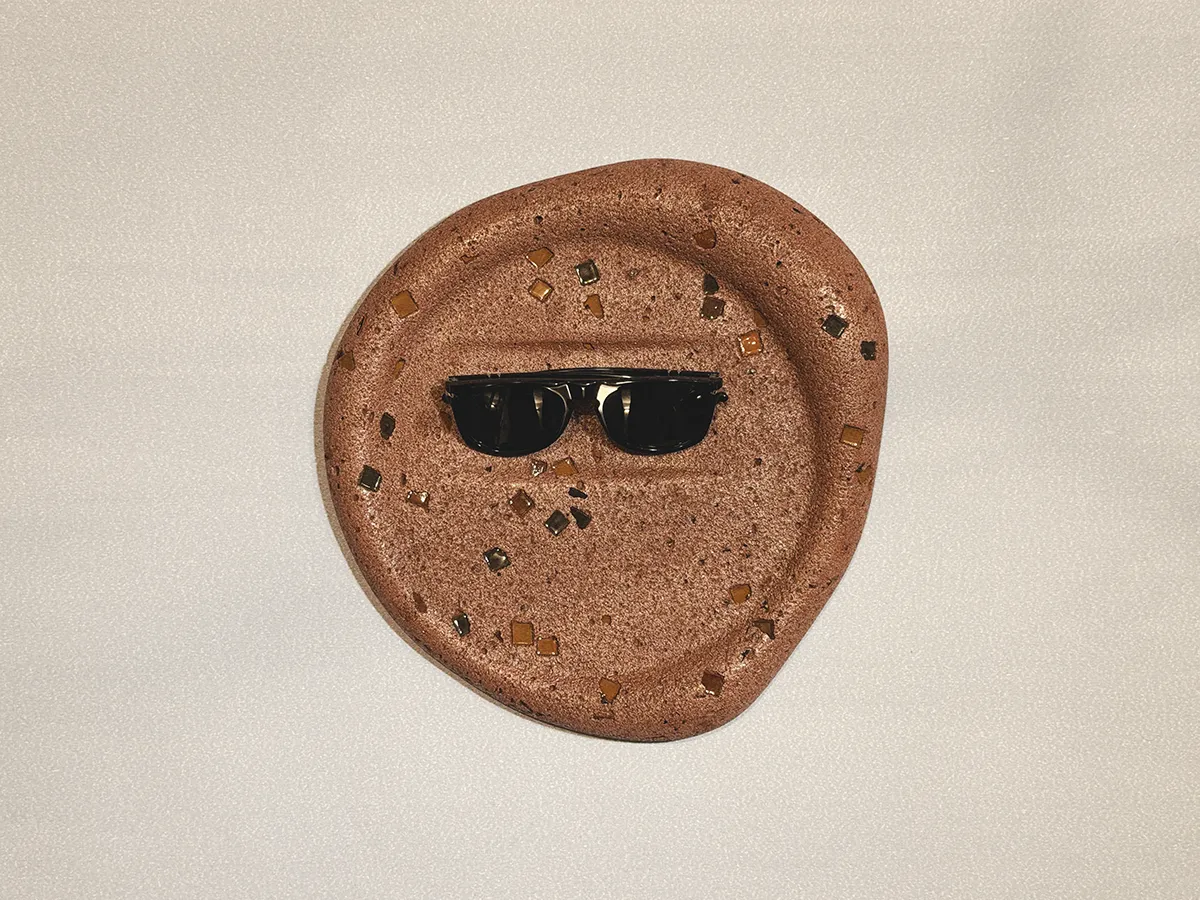
The collaboration between Persol and Cassina did not stop at the frames; it also extended to a valet tray designed by Patricia Urquiola, which reuses leather offcuts from Cassina’s production and leftover Persol acetate. An object that pushed the collaboration beyond the language of eyewear and brought it closer to a very concrete question of furniture design: the relationship between objects and everyday gestures.
Material recovery became part of the project as a conscious design choice. “More than simply a responsible decision, we saw it as a creative opportunity: to show that materials destined to become waste can take on a new function and a new meaning.”
PERSOL X OLIVETTI: THE LETTERA 22 AND ITALIAN INDUSTRIAL DESIGN
With Olivetti, the starting point could only be the iconic Lettera 22, the portable typewriter designed by the Ivrea-based company in 1950, which in the decades that followed would become much more than a work tool. Its essential design, together with its extreme functionality, made it a benchmark of Italian design, turning it into an object bound up with a precise cultural imaginary.
“The Lettera 22 represents much more than a typewriter; it is the symbol of a way of conceiving creative work, culture and innovation”, Pozzoli emphasizes. In translating it into eyewear, Persol worked on a few essential elements of Olivetti’s original design: “formal rigor, precision of detail, lightness and a highly deliberate relationship between function and aesthetics.”
The collaboration, carried out with the Fondazione Adriano Olivetti and the Olivetti Archives, translated the typewriter’s most recognizable details into the construction of the frames. The engraved metal bridge recalls the typebars, while the red tip of the temples is a clear reference to the tab key. But that’s not all. The colors and packaging of the Persol glasses also hark back to the Lettera 22, bringing recognizable references into an object that serves an entirely different function.
Then there is an aspect that goes beyond Persol’s tribute to the Lettera 22. In the twentieth century, Olivetti was a pioneering model of enterprise, capable of holding together industry, culture and the social dimension. “Adriano Olivetti showed that a company can be innovative and competitive, while at the same time contributing to the cultural and social growth of the communities in which it operates.” A legacy, then, that is not limited to the design of objects, but encompasses the very way of imagining a progressive model of society, one within which business actively takes part.
PERSOL: DESIGN DOESN’T NEED TO LIVE IN THE PAST
There is a risk in co-branding operations like these. The legacy of the past can become a commercial guarantee, a way of making a product recognizable, but it can also become a shortcut that empties the very nature of the collaboration of its meaning. That is why, as Pozzoli points out, the true strength of a collaboration lies in calling the inherited legacy into question. “The past is only useful when it helps us ask new questions. Nostalgia tends to freeze objects in an idealized image; design, on the other hand, sets them back in motion.”
A distinction that also extends to the way brands choose to collaborate: one that goes beyond simply putting two recognizable names together and places a meaningful, genuine exchange at its core.
“You can sense the difference in the quality of the conversation that comes before the product”, Pozzoli observes. And he adds: “If a collaboration is born purely out of a logic of visibility, the result risks being predictable.” It is no coincidence that, in Persol’s collaborations with Cassina and Olivetti, the dialogue also touched on processes, values and visions of design, not merely on matters of aesthetics.
The reference to Made in Italy thus shifts, too, from the terrain of geographical belonging to that of design culture. “I believe Made in Italy still carries a very strong meaning, but only when it is interpreted as a culture of design and not as a slogan.” A definition that refuses to reduce an industrial and cultural heritage to a label to be stuck on a box.
PERSOL: WHAT THE ENCOUNTER WITH CASSINA AND OLIVETTI LEAVES BEHIND
In some cases, a collaboration runs its course with the product launch, a media campaign or a handful of archival images. In others, it leaves something that goes beyond the finished product. Persol’s experiences with Cassina and Olivetti belong to the second category: two opportunities to look at its own work from different perspectives, without giving up its identity, while engaging with aspects capable of broadening its vision.
“Paradoxically — Pozzoli explains — the more solid an identity is, the more it can afford to open itself up to dialogue. When you know who you are, you don’t experience the influence of others as a threat, but as an opportunity for growth.”
The collaborations with Cassina and Olivetti, Pozzoli concludes, have “strengthened Persol’s awareness that design should never be limited to the product. Cassina reminded us of the value of design research as a cultural process; Olivetti showed us how powerful a vision can be. These are lessons that go beyond the individual collaborations and will continue to shape the way we imagine future projects.”
This is perhaps the most interesting point of these collaborations: not using the past to prove one’s roots in a history, but to understand how that history can contribute to building the future.
Marco Frattaruolo