Clitoris: an intersectional perspective on sexual pleasure
Desire is never neutral. From the clitoris erased by theory to a $43 billion wellness market, who gets to feel pleasure safely, and who still doesn’t
Why did Western thought erase the clitoris from its history
The clitoris has no reproductive function. That single fact is why Western thought spent centuries looking past it. In Pleasure Erased: The Clitoris Unthought (2022), philosopher Catherine Malabou describes this omission as structural rather than accidental: an organ built for pleasure alone unsettles a system that grants legitimacy only to what serves procreation. Its erasure was never a gap in knowledge. It was a defense of a binary, essentialist logic that could not accommodate an anatomy with no function beyond enjoyment.
Malabou treats the clitoris as an epistemological and political device, not merely a body part. Read through transfeminist and queer theory — she engages closely with Paul B. Preciado — the organ moves past its role as a marker of female identity. It becomes a libidinal device that questions essentialist femininity itself, opening pleasure to bodies beyond the categories built to contain it. Preciado’s Dysphoria Mundi (2022) maps a comparable “dysphoric zone,” an off-center vantage point from which the social order reveals itself as constructed rather than natural. Seen from there, the clitoris stops being an anatomical symbol and becomes a theoretical instrument for imagining pleasure outside binaries and fixed roles. Malabou calls the shift “anarchic”: a fracture in the heteronormative symbolic order, a sexuality that resists authority, escapes assigned roles, and refuses obedience on principle. The body stops being biologically “neutral” and becomes a site of transformation, where pleasure shapes identity fluidly instead of fixing it in place.
How gender studies reframe pleasure as a political and social device
That single organ, and the theory built around it, opens onto a wider argument. Contemporary thinkers in gender and sexuality studies — Sara Ahmed, Amia Srinivasan, Malabou, Preciado among them — converge on a claim: sexual pleasure is not private or natural. It is a practice situated inside affective regimes, biopolitical devices, and normative systems that decide which bodies and desires count as the norm, and which are pushed outside it.
Contemporary societies run on patriarchal structures layered with a neoliberal insistence that everything depends on the individual’s capacity to choose and optimize the self. Together these produce real hierarchies of pleasure. Katherine Angel has traced how female desire moves inside contradictory demands: spontaneous, even free, but never excessive, never something that might read as a threat to the social order. Recent conversations about sexual experience — especially where female or feminized subjectivities are concerned — sit exactly on that tension, between the drive toward self-determination and the pull of internalized, traditional gender expectations.
“Women,” in this frame, is not a biological fact. It names a social and political position — one that includes cisgender women, transgender women, and, more broadly, any body placed in the feminine slot within an asymmetrical symbolic order. For a long time the representation of female pleasure has passed through an external gaze: cis-het, white, male. That gaze privileged sexual imagery over embodied experience, producing subjectivities more observed than recognized as agents of their own desire. Inside the heteronormative system, authorization to desire and be desired is unevenly distributed. Gender, race, class, disability, age, and citizenship each reshape the terms of access.
Why is female desire still shaped by race, class, and disability
If body and pleasure are not neutral biological givens, sexual desire does not simply emerge on its own — it is shaped and mediated by language, image, and social script. Judith Butler’s argument applies directly here: bodies become intelligible within cultural frameworks that decide which desires count as legitimate and which are cast as deviant. Not every woman, not every feminized body, holds equal entitlement to desire or to being desired. Black bodies are routinely hypersexualized. Disabled bodies are desexualized. Trans bodies are medicalized or met with suspicion. Migrant bodies are governed through controls that fuse sexuality with citizenship status.
Pleasure, then, is not an authentic core waiting to be liberated. It is a field of forces shaped by histories of representation, racial hierarchy, affective economy, and biomedical discourse — a surface where political boundaries get inscribed, far from the private realm it claims to occupy.
What Amia Srinivasan means when she calls sex a public thing
Philosopher Amia Srinivasan, in The Right to Sex (2021), shifts the question away from whether desire is truly “free” and toward the conditions that make desire possible at all. Desire is not neutral: it can reinforce hierarchy, fueling fantasies of domination, exclusion, oppression. It can also crack the status quo open, making room for tension and for the reinvention of identity. What matters, Srinivasan argues, is examining the structures that make pleasure accessible to some and off-limits to others:
«There is another sense of the word ‘sex’: sex as a thing we do with our sexed bodies. Some bodies are for other bodies to have sex with. Some bodies are for the pleasure, the possession, the consumption, the worshipping, the servicing, the validating of other bodies. ‘Sex’ in this second sense is also said to be a natural thing, a thing that exists outside politics. Feminism shows that this too is a fiction, and a fiction that serves certain interests. Sex, which we think of as the most private of acts, is in reality a public thing. The roles we play, the emotions we feel, who gives, who takes, who demands, who serves, who wants, who is wanted, who benefits, who suffers: the rules for all this were set long before we entered the world.»

Learning to become a desiring subject
Sexual and emotional education creates the conditions for inhabiting these normative structures differently, for developing into a desiring subject rather than simply occupying a position assigned by others. That development is a practice of agency: understanding one’s own feelings, recognizing the ambivalence of sexed bodies, choosing and withdrawing consent, accepting rejection, respecting the boundaries of others. Research consistently links the absence of preventive education to gender-based violence, and in Italy access to that education remains unevenly distributed by region.
How many young people in Italy actually receive sex education
A 2025 study by Save the Children with IPSOS found that roughly 47% of students have received no sex education at school; where programs exist, they tend to run sporadically rather than as a structured curriculum. The demand runs in the opposite direction. Durex and Skuola.net (2024) found that over 90% of young people want structured courses, and a comparable share of parents support integrating them into school curricula. The gap between social need and institutional offer is not a resourcing problem alone — it is a marker of political inefficiency, and of schools failing a role they are formally assigned. Teaching sexuality and consent is a precondition for respecting human rights and gender equality; it is also a lens onto the social and cultural conditions that shape desire itself.
The numbers sharpen the point. Only 33% of young people aged 11 to 24 believe it is necessary to explicitly request consent from a partner, steady or casual. Meanwhile 55% name the internet or pornography as their primary source of information about sex — a share that continues to grow.
How Italy’s sex education policy compares with the rest of Europe
Italy lags its European neighbors on this front. Sweden and the Netherlands make sex education compulsory from the earliest years of school; Germany and France address sexuality through biological, relational, and ethical registers together. UNESCO (2023) found that only 20% of countries worldwide have specific legislation on sex education, and just 39% have adopted structured initiatives. Italy sits among the European countries where courses remain fragmented or non-compulsory, their implementation left to regional decision rather than governed by a unified national curriculum.
From the shopping cart to the body
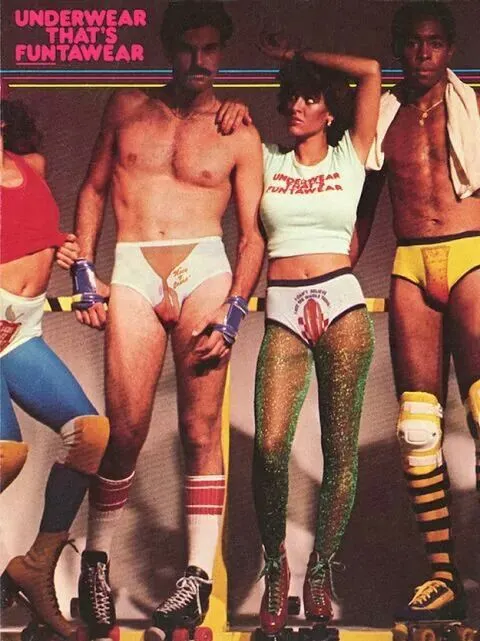
Formal schooling is one site where desire gets learned — not the only one. Many young people turn instead to informal spaces: Instagram and TikTok communities, online forums, and, increasingly, the consumer market itself, to explore pleasure and experiment with sexuality. The growth of the sexual wellness industry, from sex toys to digital intimacy tools, is a commercial opportunity, certainly. It is also a cultural recognition of desire — particularly among women and queer people — that formal education alone has not managed to provide.
How big is the sexual wellness market in Italy and worldwide
In Italy, the sector was valued at around $5.5 billion in 2024, with forecasts putting it at $14.5 billion by 2035 (Market Research Future, 2024). The sex toy market alone reaches roughly €600 million (Nordest24, 2025), with over 60% of sales made online. That dominance of e-commerce tracks a demand for discretion, for private space to experiment away from the scrutiny that still attaches to brick-and-mortar shops (Fortune Business Insights, 2026).
Do LGBTQ+ consumers buy and use sex toys differently
Across Europe, women account for over 55% of sex toy buyers (Global Growth Insights, 2024). Among LGBTQ+ consumers, engagement runs higher still: a 2024 Lovesense study found that 71.15% of single queer respondents use sex toys weekly for masturbation, 15.8 points above their heterosexual peers. Sixty percent of LGBTQ+ respondents consider it acceptable to use sex toys with a partner within the first three weeks of a relationship, against 44.93% of heterosexual respondents. Preferences diverge by orientation too: queer women lean toward clitoral suction devices and wand vibrators (both at 24.32%), while heterosexual women more often choose rabbit vibrators (27.27%) and clitoral suction toys (21.21%).
Globally, the sexual wellness market was valued at $43.6 billion in 2024, with growth projected to $78.6 billion by 2034 — of which roughly $25 billion will go to sex toys alone (Global Growth Insights, 2024). Economic expansion in the sector runs parallel to cultural representation. The market’s growth and the rising visibility of different sexualities open space for recognition; the shift “from the shopping cart to the body” is both symbolic and material.
Why access to pleasure still depends on class, ability, and identity
Commercial presence can translate into real experiences of pleasure. But structural inequality — class, sexual orientation, ability, economic resource — continues to determine who gets to experience desire safely, and independently. A politics of pleasure names these dynamics: it examines the conditions under which some expressions of desire become socially acceptable while others remain constrained. The pleasures of queer women, trans people, disabled women, migrant women pass through cultural and political filters that recognize certain intensities of joy and limit others. Not all forms of euphoria are tolerated equally, even where the tools for pleasure sit within easy reach.