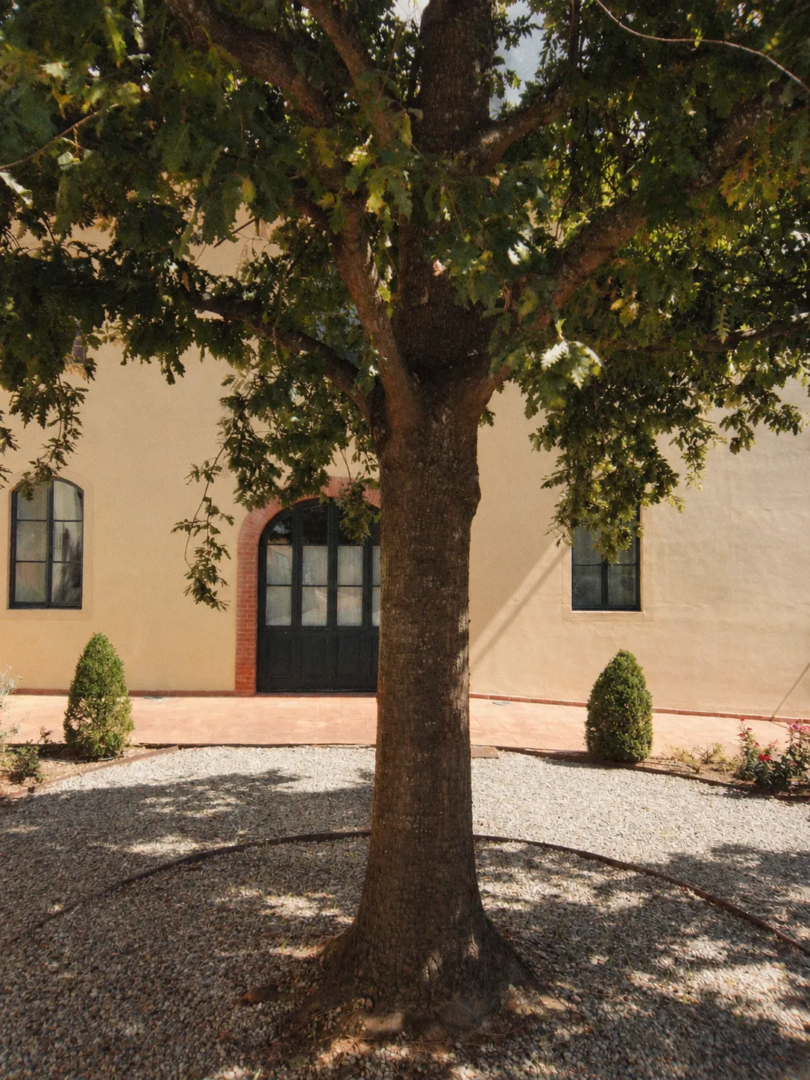
A 400-year-old cedar at the entrance to COMO Castello del Nero
In Chianti, between Florence and Siena, a medieval residence turned hotel: Paola Navone’s interiors, a Michelin kitchen fed by its own garden, and 300 hectares that still make wine and oil
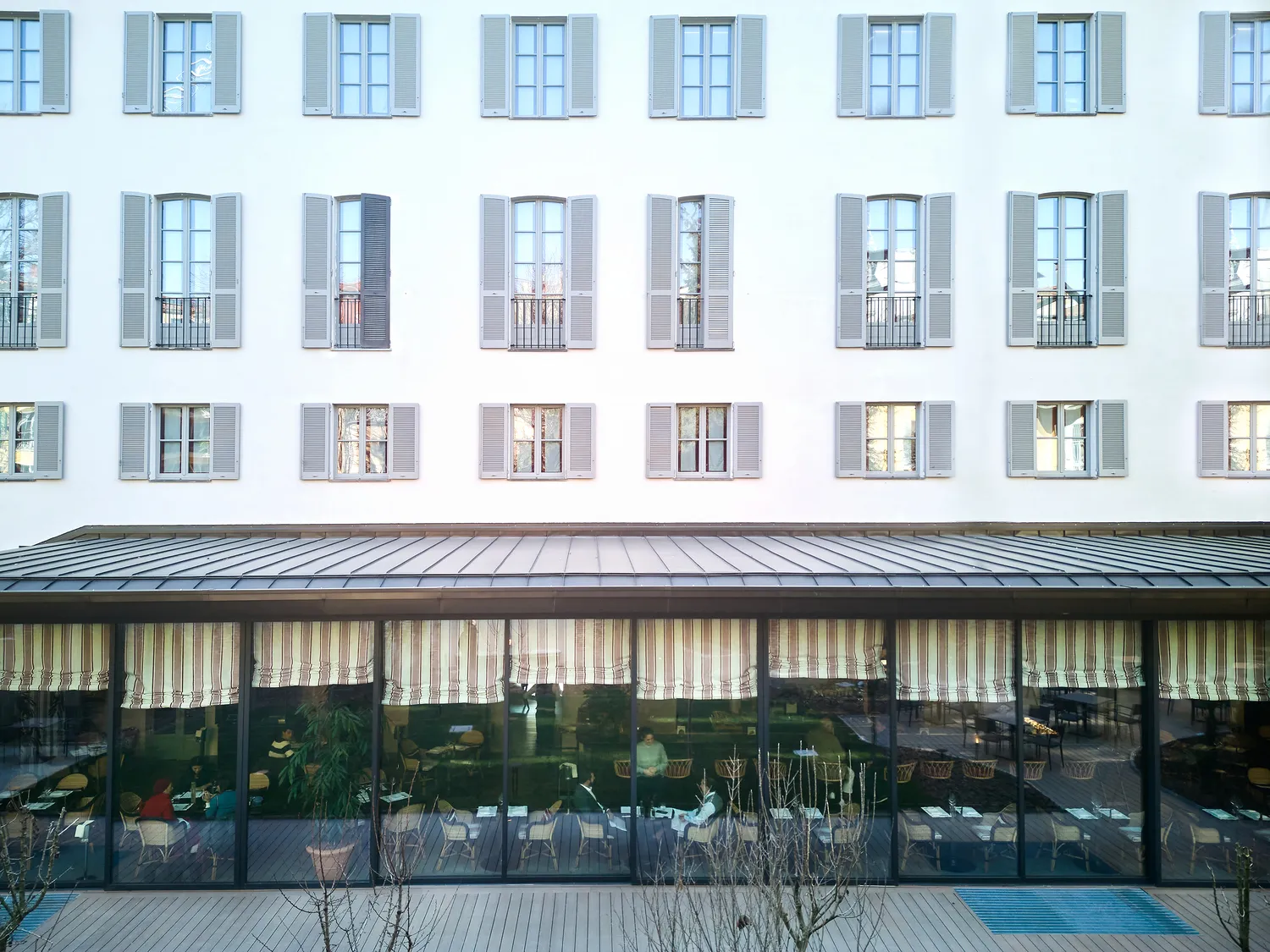
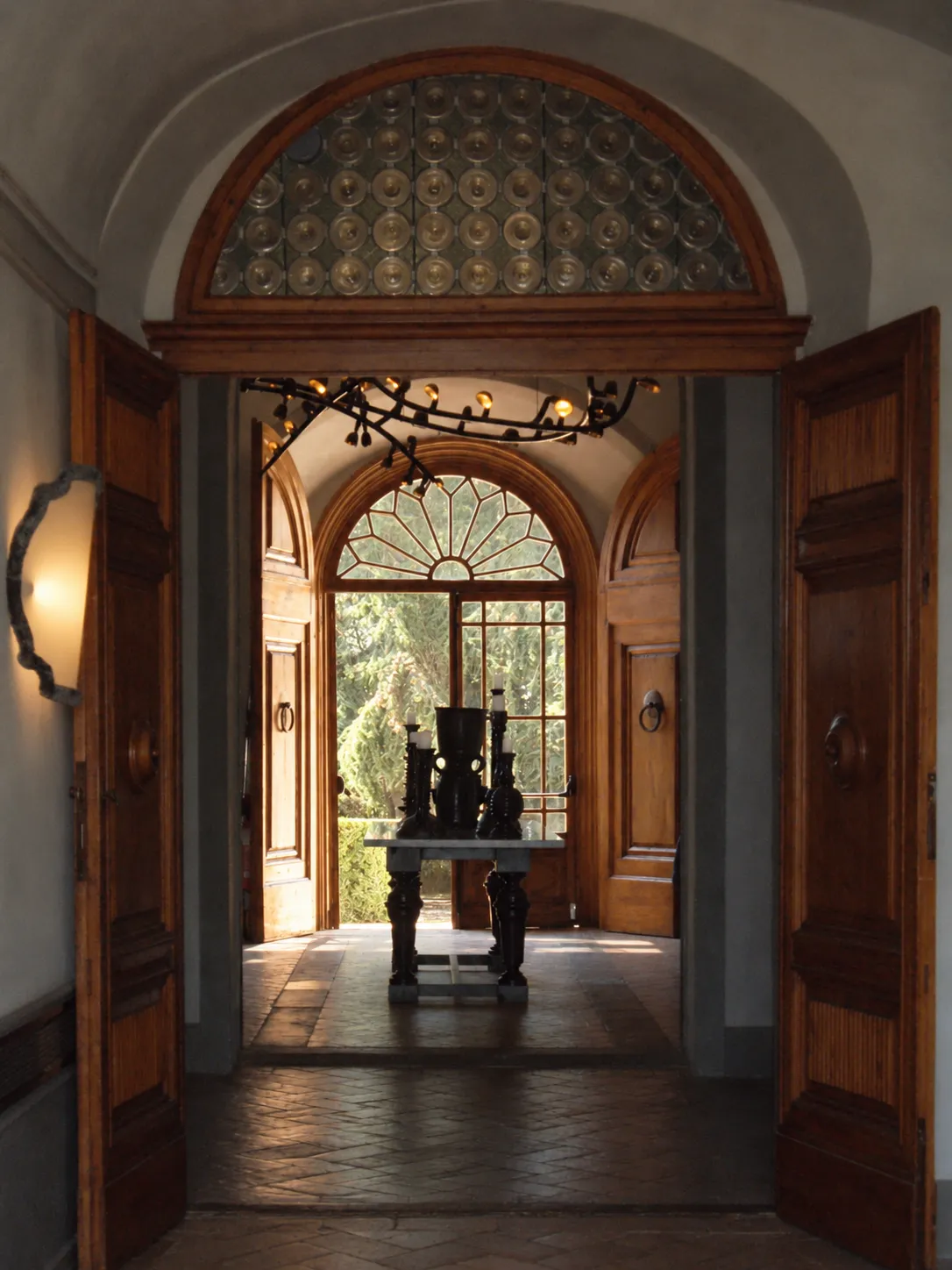
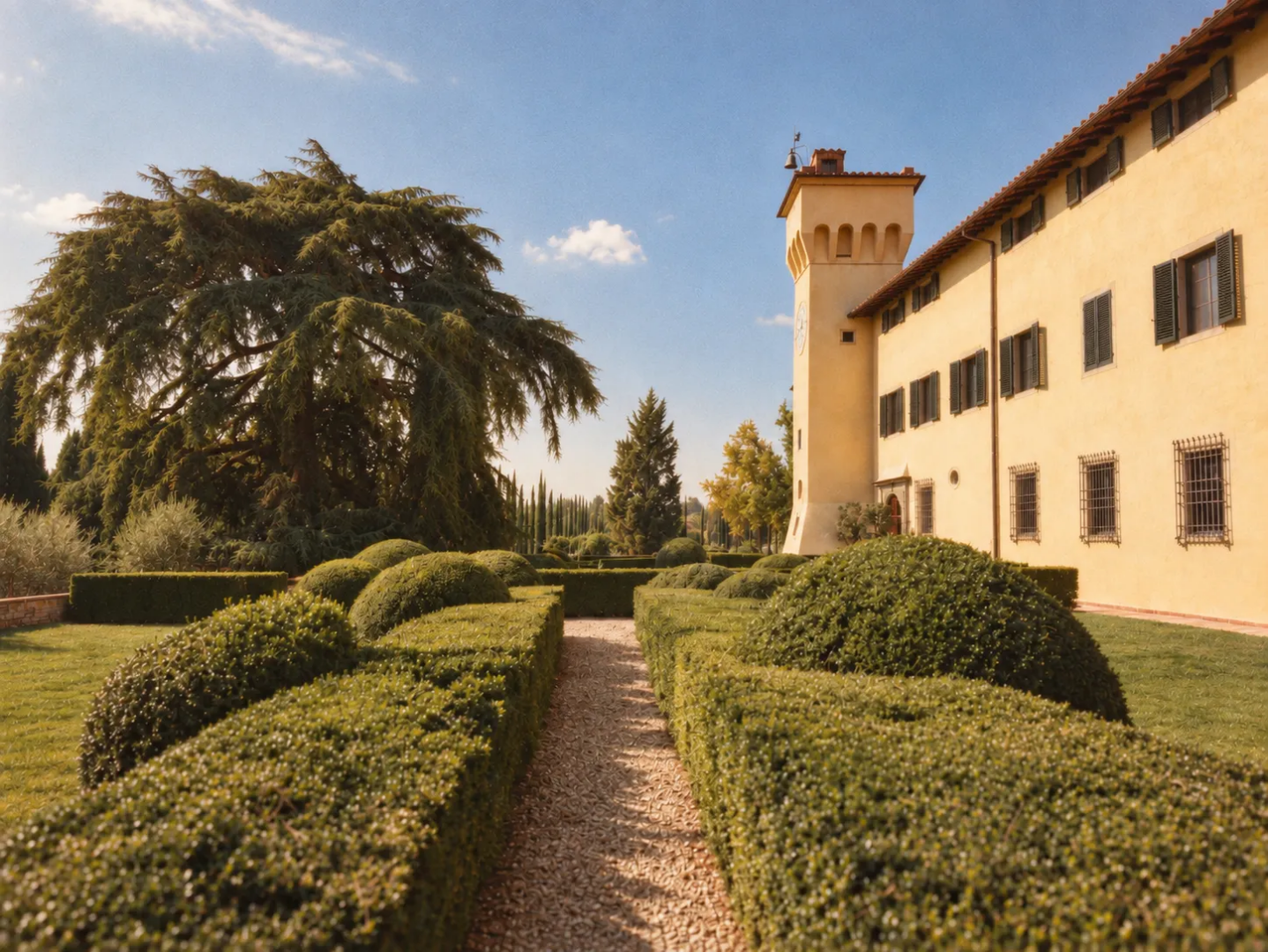
A stone arch built for carriages still marks the way in. Beyond it, COMO Castello del Nero — a twelfth-century residence on the hills of Chianti — wears its history in plain sight: the conversion into a hotel left the old use of many rooms legible, along with the families who passed through.
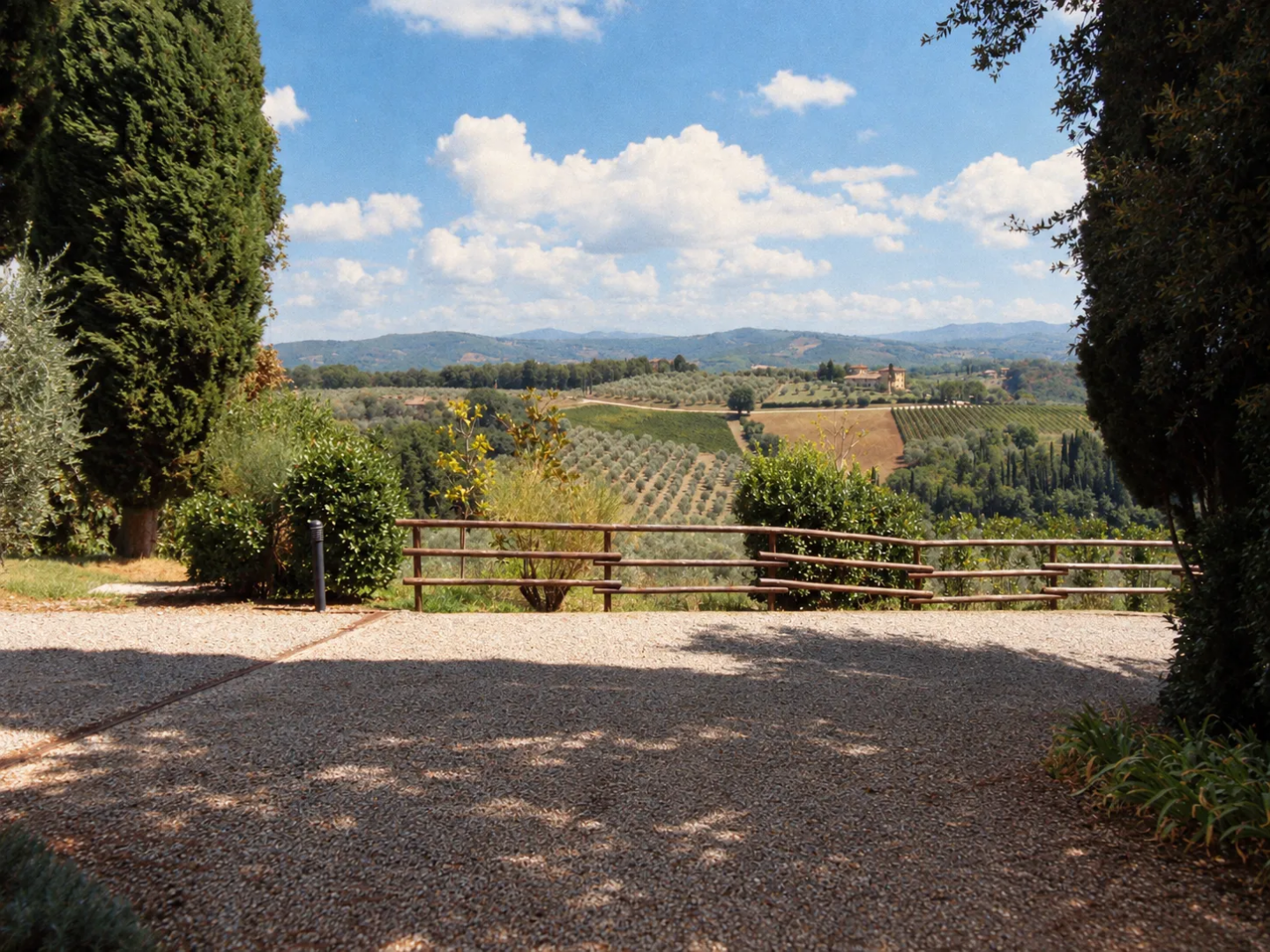
The estate runs to about 300 hectares of vineyards, olive groves, woods and fields, and it has not stopped farming: around 300 litres of extra virgin olive oil a year, Sangiovese for three estate wines, and an organic garden growing 22 kinds of tomato for the kitchen. In September guests pick grapes, in October olives. That garden feeds La Torre, the Michelin-starred restaurant in the former stables, where chef Giovanni Luca Di Pirro sources 95 percent of what he cooks within Tuscany. Indoors, Paola Navone has reworked 50 rooms, two residences and the common spaces, leaving the frescoes, pietra serena and terracotta where they were.
COMO Castello del Nero: from the Del Nero family to a Chianti hotel
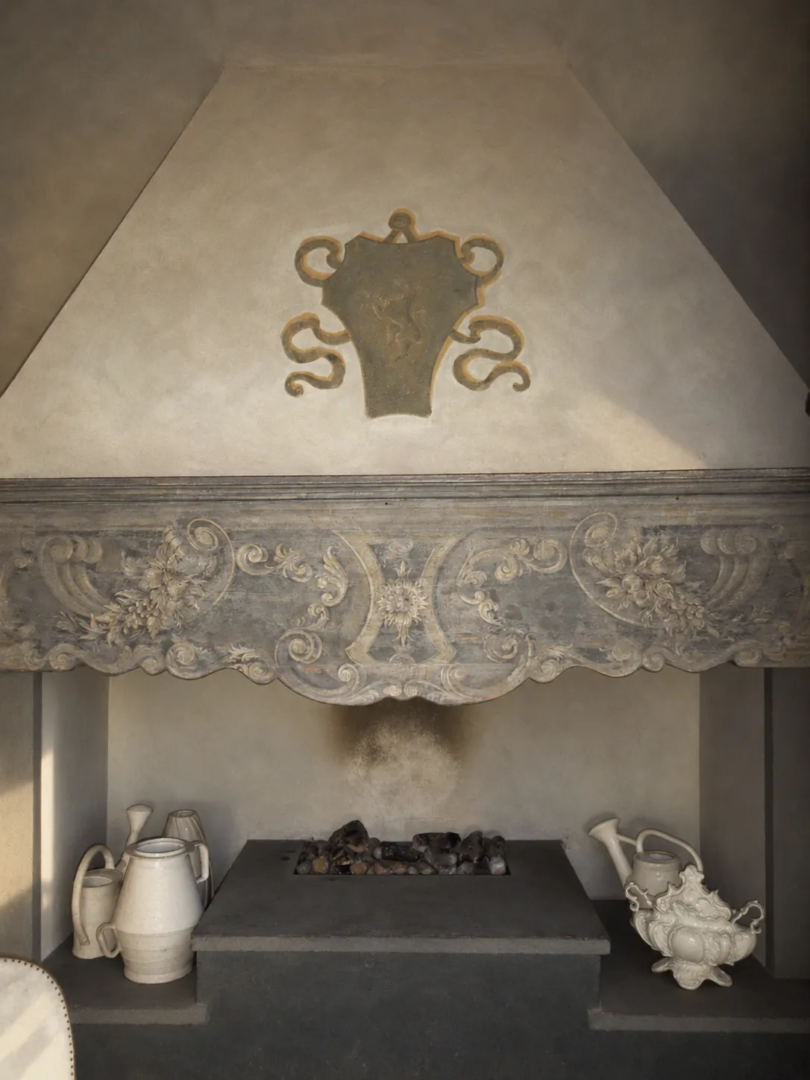
The house started as the country seat of the Florentine Del Nero family and passed by marriage to the Torrigiani in the early nineteenth century; they held it until the early 2000s. Both families left their mark on the first floor — a rampant greyhound over the monumental Del Nero fireplace, the Torrigiani emblem in a restored fresco — amid Renaissance decoration, vaulted ceilings and terracotta floors. The library keeps the paperwork: eighteenth-century account ledgers and hand-painted maps of the estate’s holdings in the 1820s, catalogued under the heritage authorities.
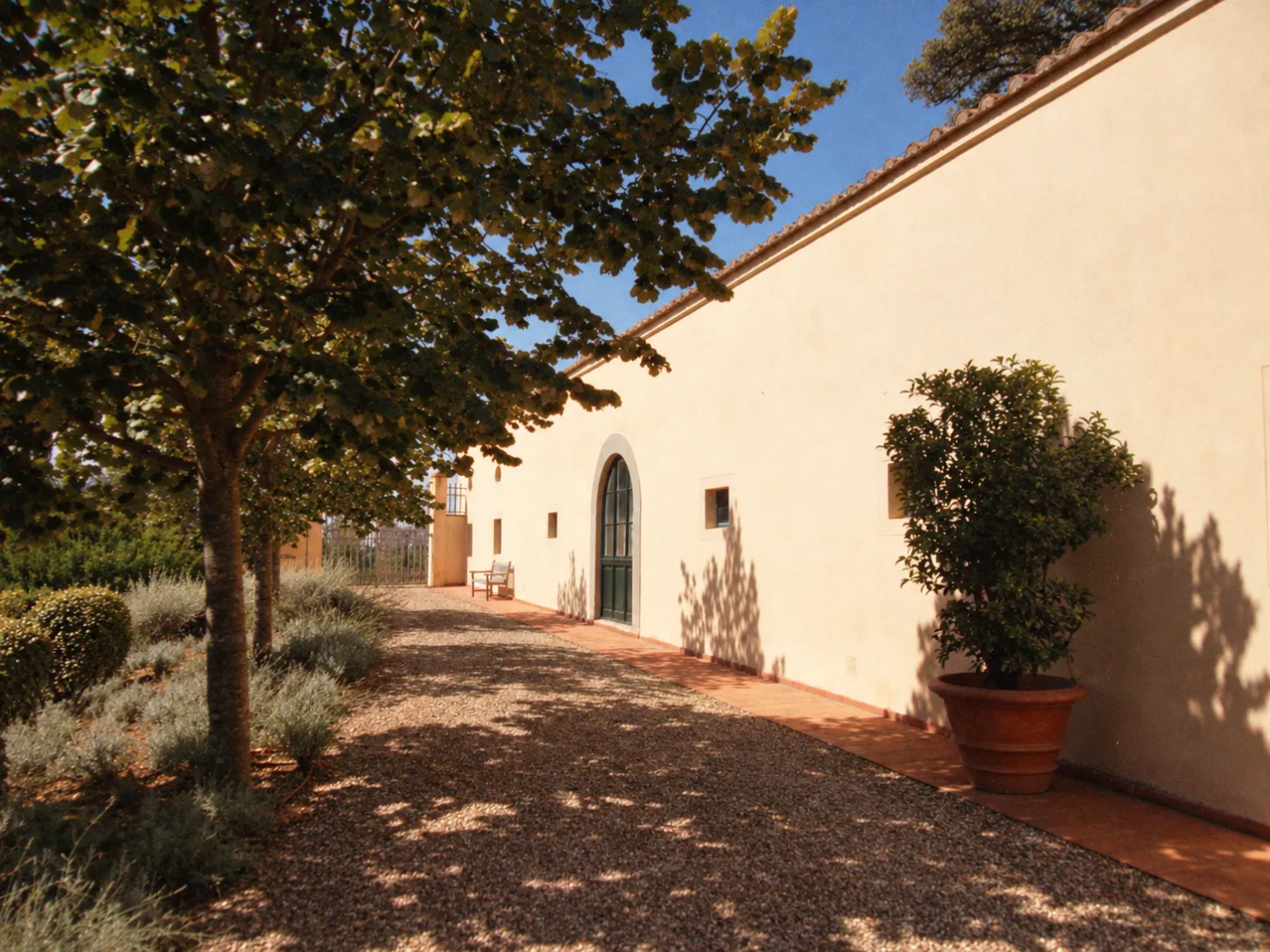
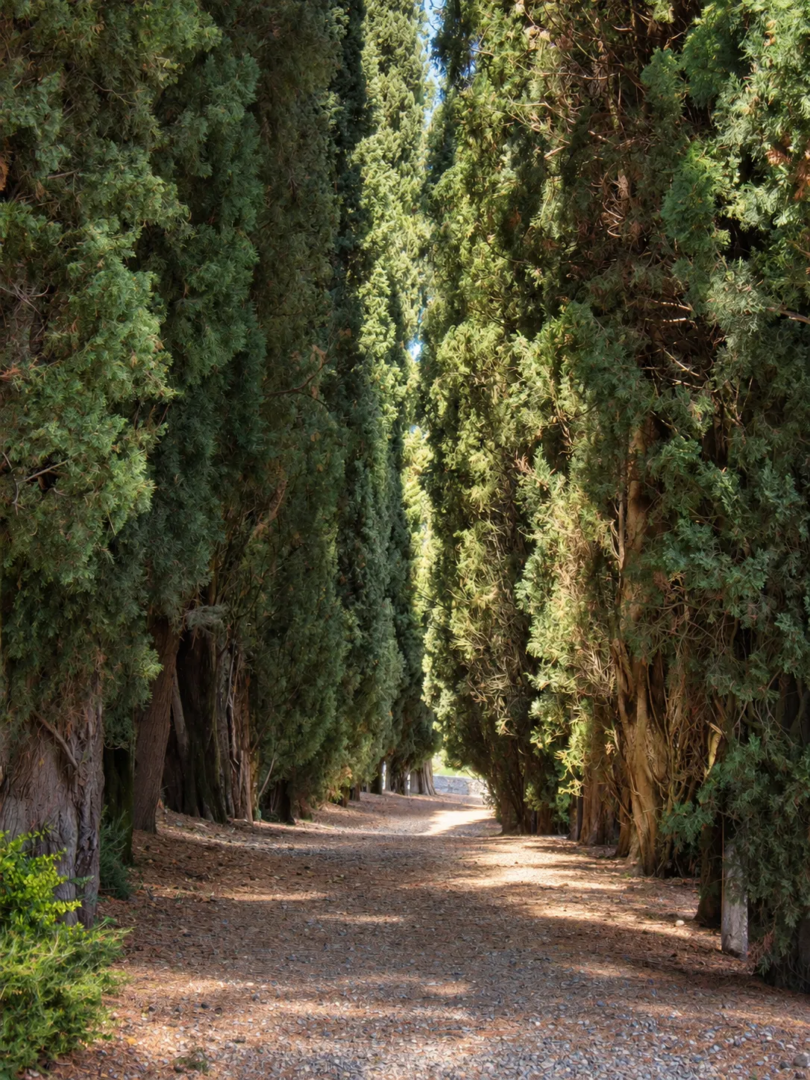
Outside, a Lebanon cedar about 400 years old stands at the entrance; the private chapel and the tower clock date to the late eighteenth century, and two rows of cypresses trace a path laid out by Anna Torrigiani Fry, wife of the marchese Carlo Torrigiani, running from the castle to an old oak wood. The hotel itself is recent: it opened as Castello del Nero Hotel & Spa in 2006, and in 2018 was bought by COMO Hotels and Resorts, Christina Ong’s group, which reopened it under its own name in 2019 — its first hotel in continental Europe. The interiors went to Paola Navone, already at work on COMO properties in Asia.
Paola Navone’s interiors: frescoes, pietra serena and Gervasoni furniture
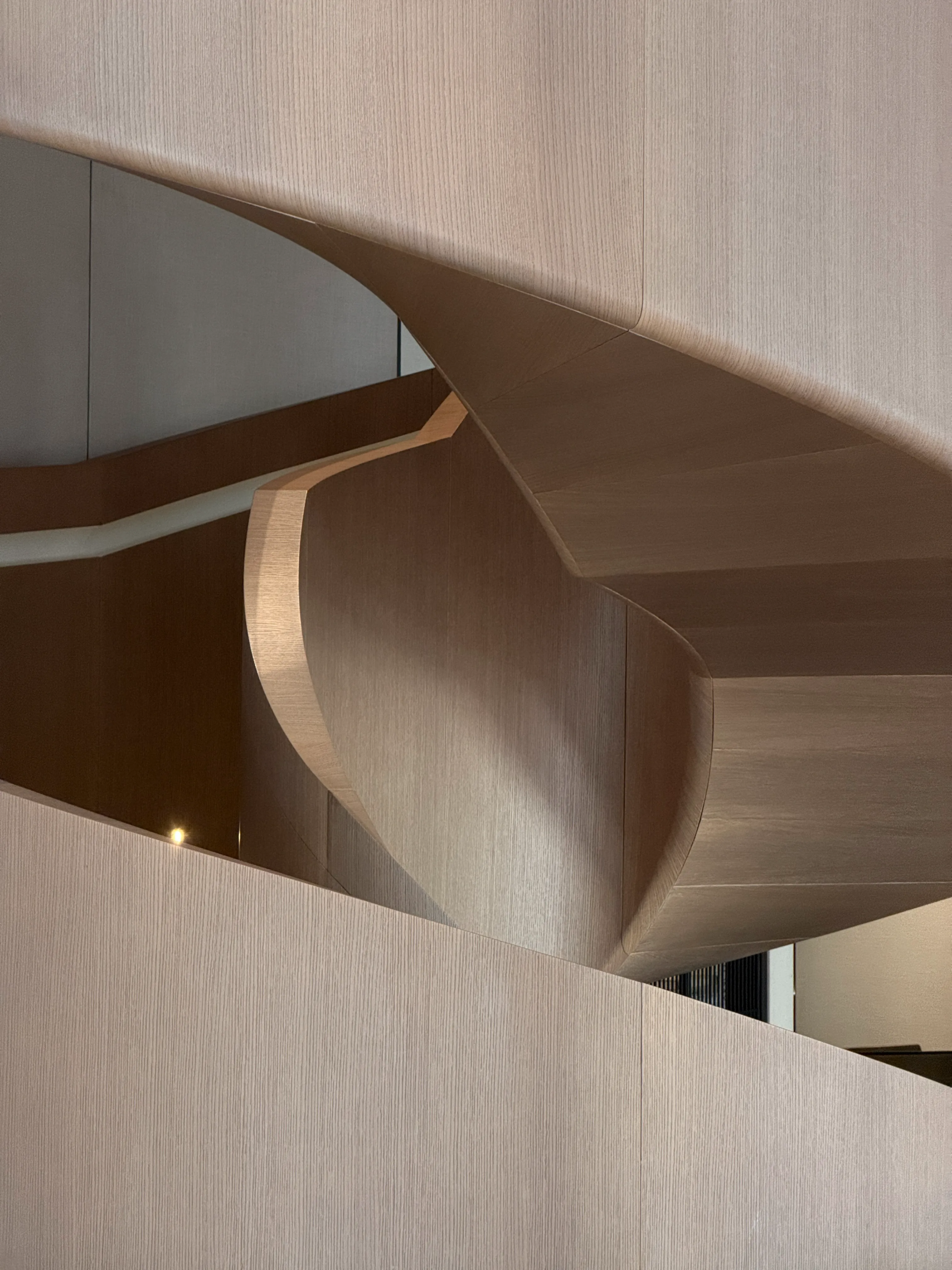
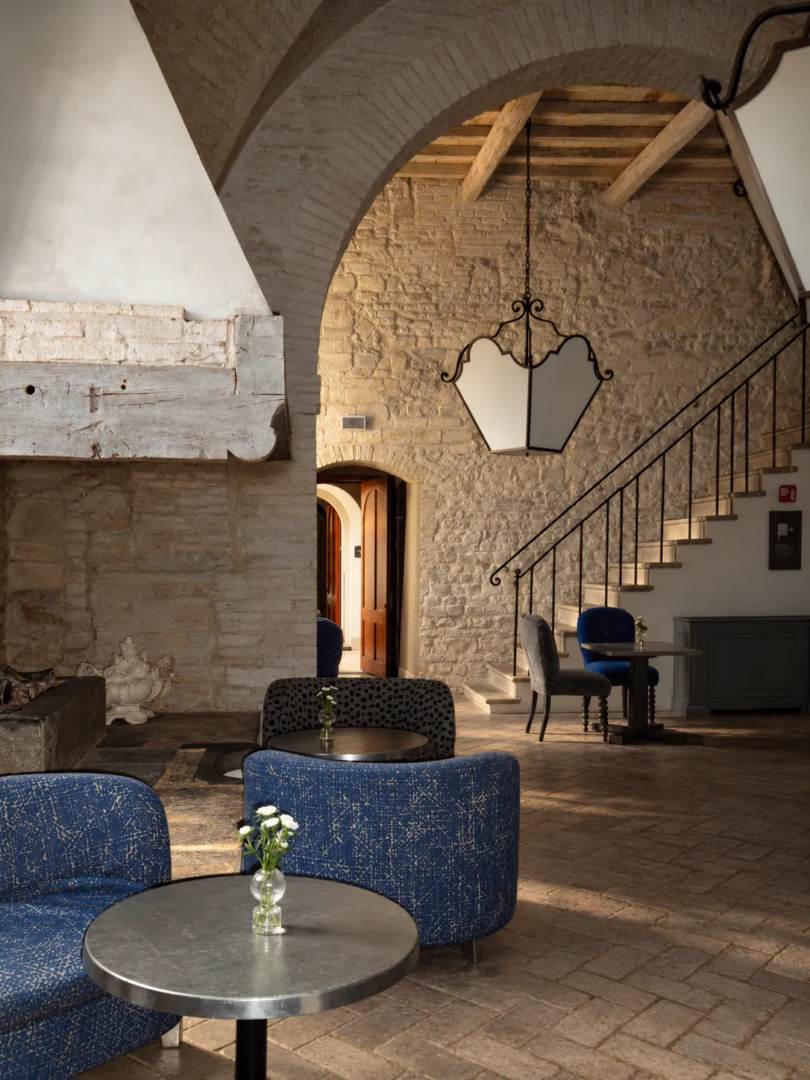
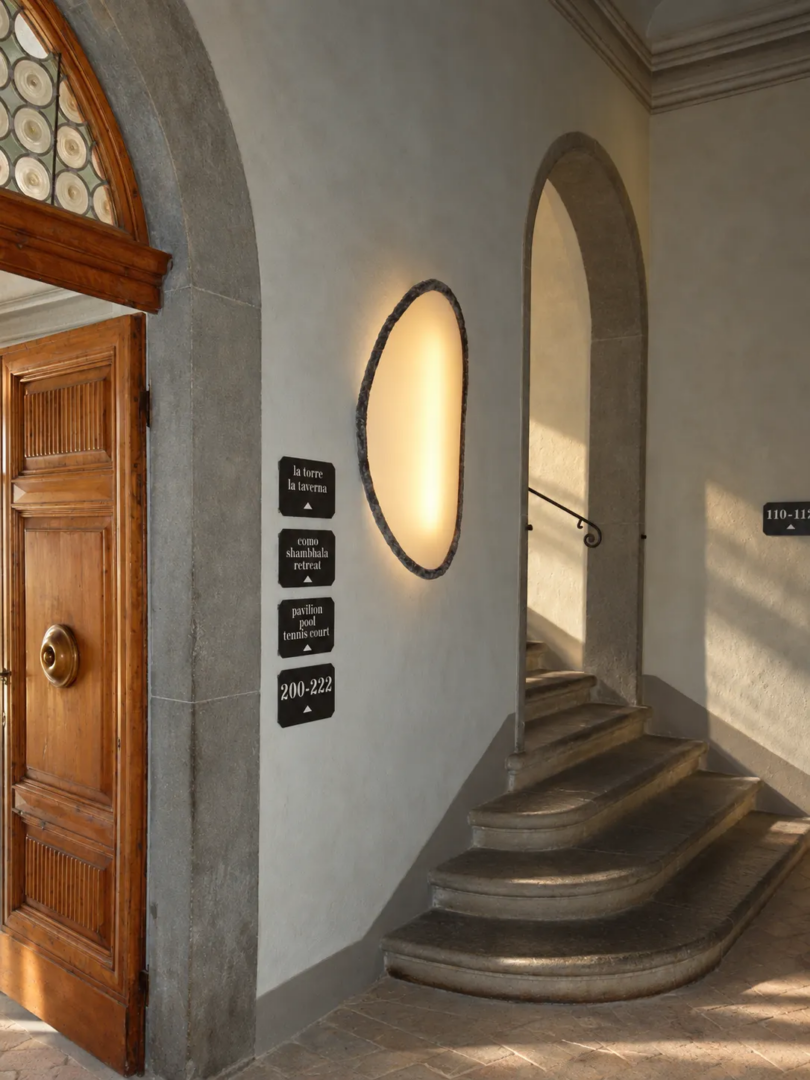
Ms. Navone started from what was already there. The terracotta floors, frescoed walls and vaulted ceilings stay; over them she lays a neutral palette of natural whites, greys and light tones, lets the daylight do some of the work, and fits the contemporary pieces to each room. The materials are plain — wood, Carrara marble, pietra serena, lime paint — from makers she has used for years: furniture by Gervasoni and Lando, Rubelli textiles, Reichenbach porcelain, much of it made to measure. Gervasoni supplies the Ghost, Gray, Next, InOut, More, Up, Brass and LC lines, with bespoke headboards, benches and rugs, and the same hand carries into La Torre and the common rooms.
The push and pull of old and new is clearest in the three Heritage Suites: 70 to 77 square metres on the first floor, with frescoes, painted ceilings and original fireplaces intact. In all, the 50 rooms come in seven categories — Estate Rooms onto the gardens or courtyard, Tavarnelle Rooms onto the hills, two-level Loft Suites, a COMO Terrace Suite of 90 square metres plus a 50-square-metre terrace, and the COMO Suite in the historic Belvedere building, with two bedrooms and a separate sitting room.
Villa San Luigi and Podere San Filippo: the estate’s farm buildings
The work spreads to the farm buildings. Podere San Filippo, an eighteenth-century farmhouse and former hay barn, now holds 12 independent apartments — one to three bedrooms, some on two levels, with fitted kitchens and a reserved pool. Villa San Luigi goes further: redesigned by Ms. Navone with OTTO Studio across three buildings and 652 square metres, it keeps the main rooms in the Casa Colonica, puts further bedrooms and a cinema room in a dépendance, and gives the third building to wellness — gym, yoga studio, sauna, steam room. Five bedrooms, a 16-metre pool, a library, indoor and outdoor dining, and a Villa Ambassador to arrange meals, treatments and transfers to the castle.
La Torre: Giovanni Luca Di Pirro and the producers of Chianti and the Casentino
The old stables hold La Torre, reread by Ms. Navone and, in summer, spilling onto the terrace. Mr. Di Pirro builds the menu on the season and on a network of producers across Chianti, the Valdarno and the Casentino. “I use local products for 95 percent of what I cook,” he says; the territory, for him, is wider than Chianti and runs through much of Tuscany.
One name is Laura Peri, a Valdarno breeder of free-range chickens, guinea fowl and pigeons, whose birds give him a chicken closer to the one he ate as a child, when texture and cooking times were other things. Another is Simone Fracassi, a butcher from Rassina, in the Casentino, who works the whole animal. “He has a particular philosophy: the animal is everything,” Mr. Di Pirro explains. “If he has to sell a hundred loins, he should have a hundred animals. He has to be able to sell all the rest too.” That is the real problem of the trade — demand piles onto the prized cuts and leaves the rest stranded — and Mr. Di Pirro answers by putting exactly those parts on the menu.
The kitchen garden and 22 tomato varieties: vegetables at La Torre
The estate’s organic garden supplies tomatoes, seasonal vegetables and herbs. “We have 22 varieties of tomato. Twenty-two different kinds, each one different from the next,” says Mr. Di Pirro, who uses the spread to play one texture and flavour against another. Autumn turns the menu to roots, cabbages, broccolini and leaf vegetables; black kale, he notes, is on sale all year but earns its place only in its own months. The farming calendar beats the commercial one.
Autumn also brings white truffle and game. Still, for all the weight on meat and breeders, he is blunt about the direction of fine dining: “The future of dining is vegetal.” La Torre runs three tasting menus — Evoluzione Vegetali on the garden, La Terra on meat, Il Mare on fish — and on the vegetables the kitchen leans on cooking, fermentation, roasting and reduction to build dishes that stand on their own.
Circular cooking and the lesson of Gualtiero Marchesi
Sustainability, for Mr. Di Pirro, is not the vegetable patch. “It has to be 360 degrees. It isn’t having the organic garden. It starts from the people.” Using the whole ingredient is part of it: “From a celery stalk or a chard I make three things. I throw nothing away.” One result is a vegetal demi-glace — roasted, cooked and reduced, the heat swung against blast-chilling — dark as a meat stock and made entirely from vegetables.
From Gualtiero Marchesi he took both the rigour and the creativity. At La Torre the meal is built as a journey that also entertains, a piece of storytelling: over two and a half to three hours, each dish carries a story you read in its ingredients and in the way they are assembled.
Harvest, olive picking and truffle hunting: autumn 2026
Farming is part of the programme. In September the grape harvest took guests into the vineyards for a guided walk, barefoot pressing and the first steps of winemaking, closing on three estate wines — Chianti Classico DOCG, Riserva and Gran Selezione. October moves to the olive groves, with picking, a visit to a local mill and a tasting of the oil. There is also an hour-long truffle hunt in the estate’s woods, led by an experienced hunter and ending in a four-course lunch at the Pavilion, where Mr. Di Pirro builds the dishes around the truffle. The groves yield about 300 litres of extra virgin oil a year, plus some 50 litres of sunflower oil.
Pavilion and La Taverna: the castle’s other tables
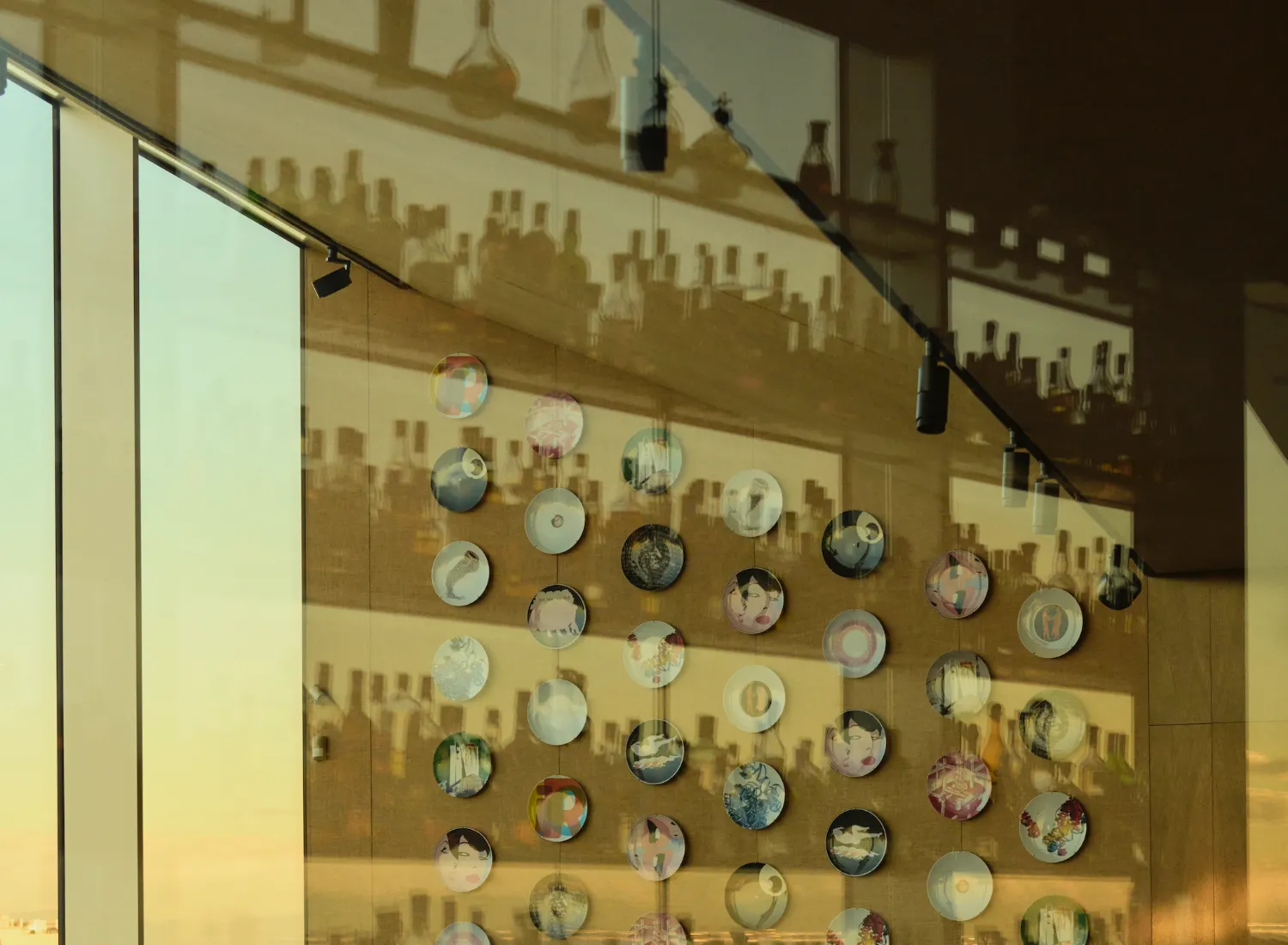
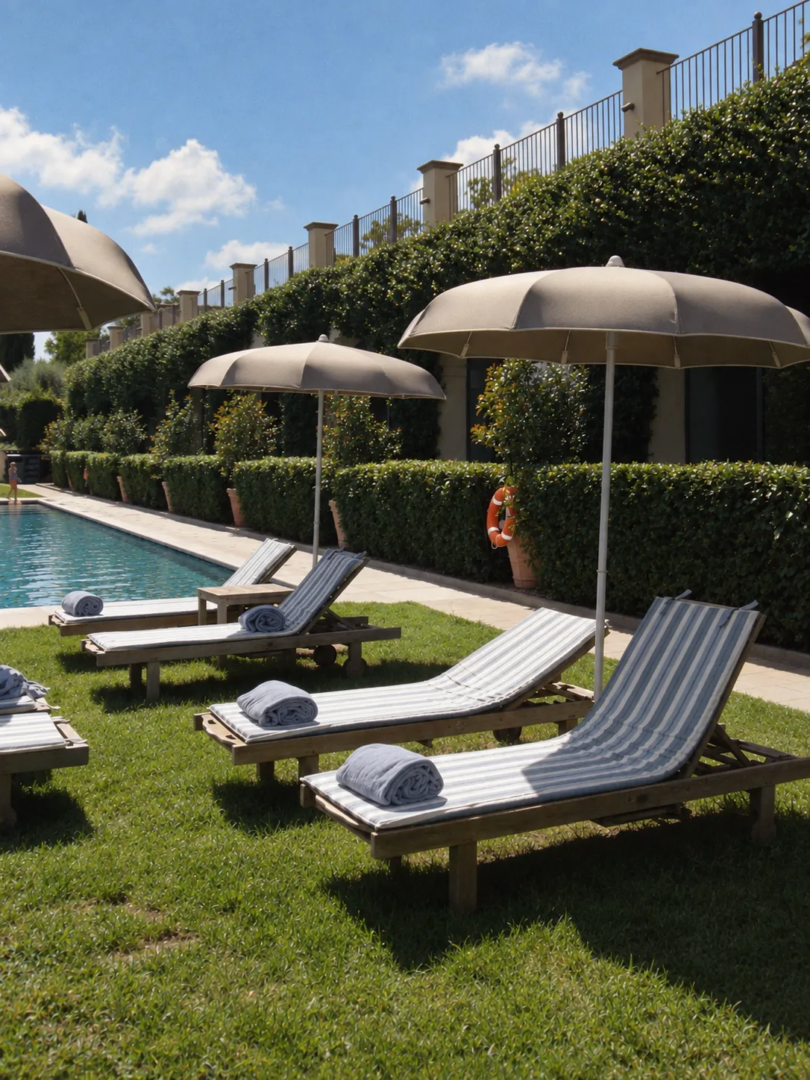
Two more tables sit beside La Torre. La Taverna, in the castle’s old kitchens around a large original fireplace, is now mostly a cocktail bar — contemporary mixing, Champagne, cognac, grappa, whisky — with a Tuscan menu in winter. Pavilion is outdoors over the Chianti hills: wood-fired oven, Mediterranean cooking, breakfast in summer, and dinners that move out among the olives and into the garden. A historic cellar, reached by a stone staircase still flanked by the ramps once used to roll the barrels, keeps the wine and hosts private tastings.
COMO Shambhala Retreat: spa, pools and Tuscan raw materials
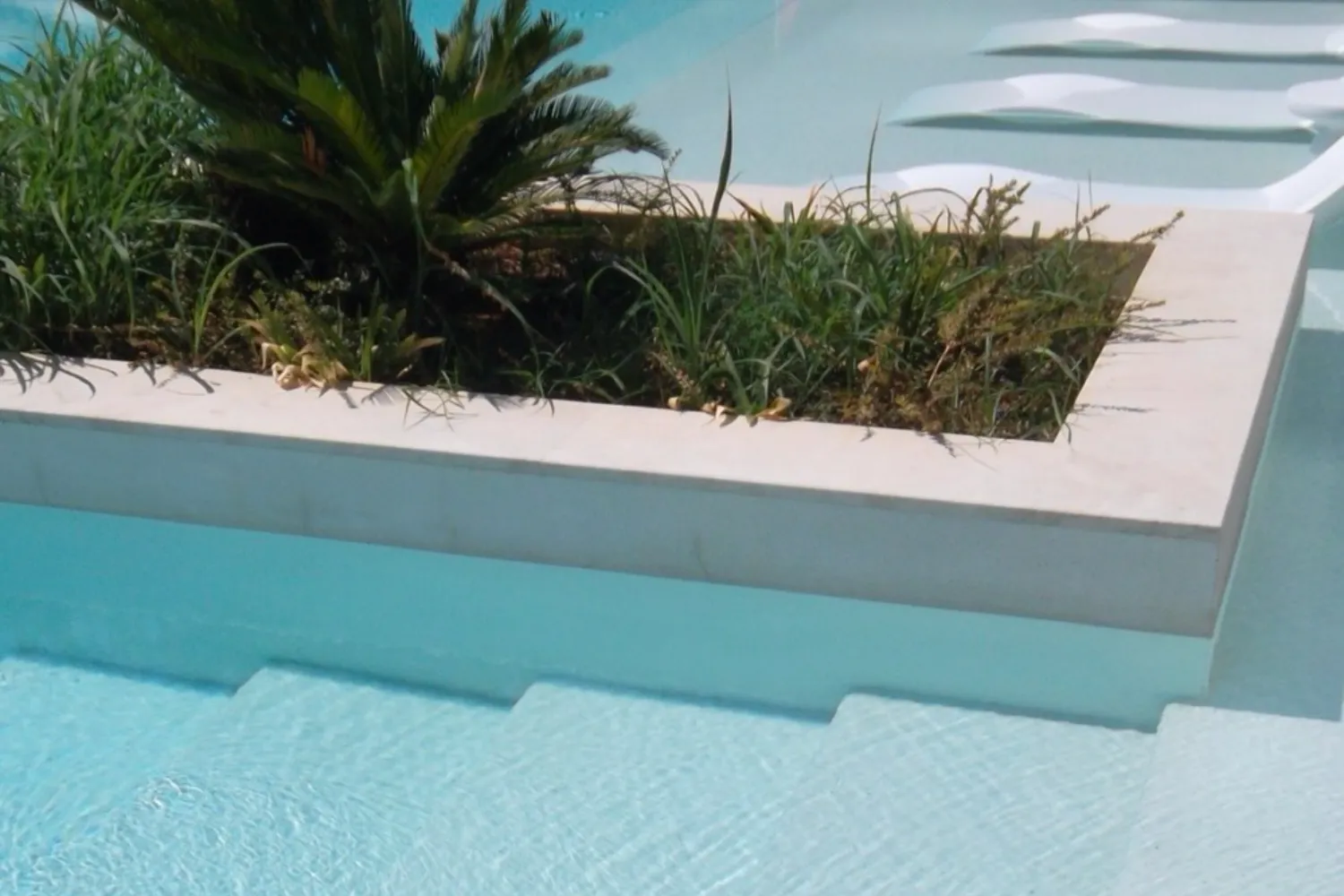
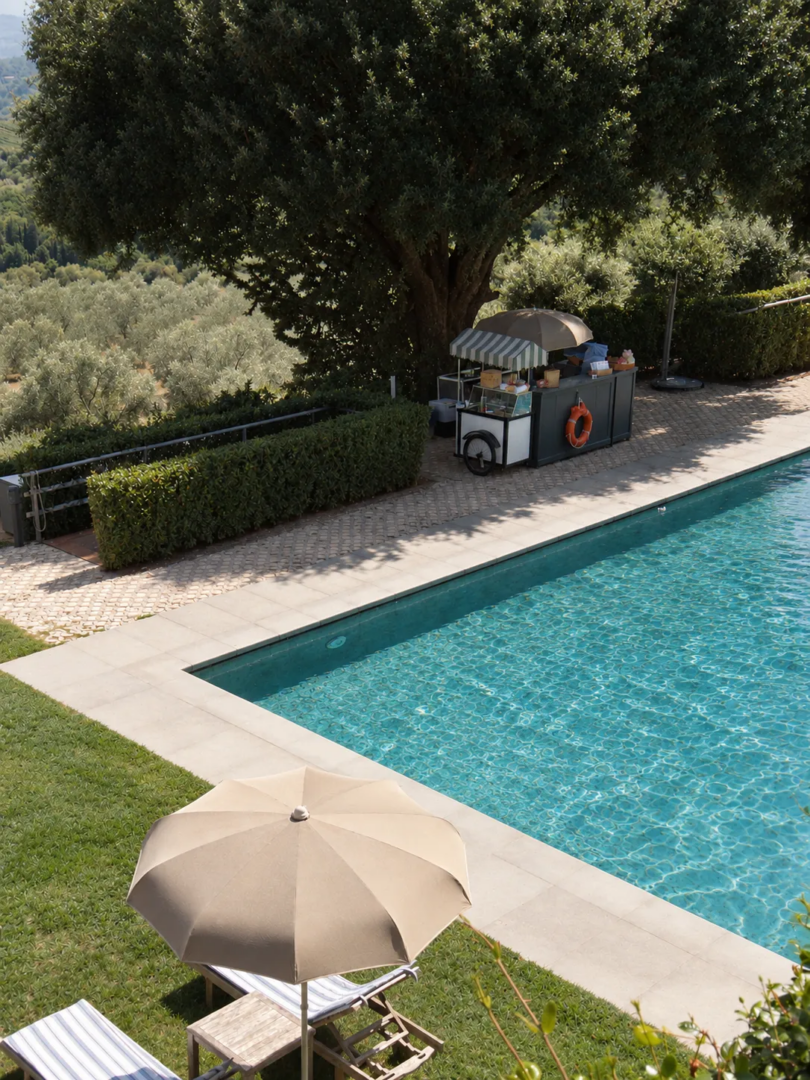
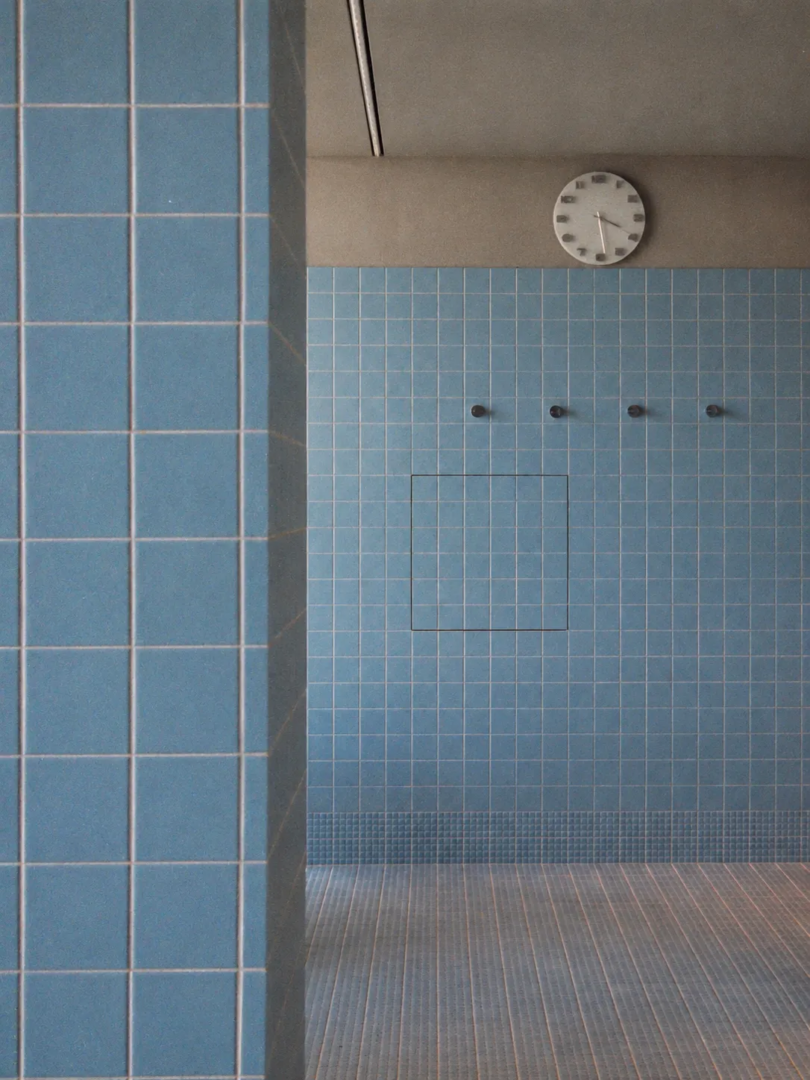
The COMO Shambhala Retreat has five treatment cabins and two couples’ rooms, a thermal area with sauna, aromatic steam bath, ice fountain and heated hydrotherapy pool, and a 25-metre outdoor pool facing the hills in summer. Massages, facials, yoga and Pilates, a movement studio and gym, four walking trails, tennis and padel; some rituals use the estate’s own olive oil and Tuscan lavender. In summer 2026 the retreat brought in Matteo Pasquali, a specialist in physiology and anatomy, for muscle recovery and mobility.
Certification, local hiring and running a 300-hectare estate
Running 300 hectares is as much farming and upkeep as hospitality. COMO Castello del Nero holds EarthCheck Silver certification, has cut single-use plastics, switched to low-consumption lighting and works with local producers. 70 percent of managerial posts are held by people living within 20 kilometres, and the property has been recognised by the United Nations for its refugee employment programme.