Learning from time: the logic of multi-vintage blending
With 36% reserve wines and a base harvest from 2018, Krug Grande Cuvée 174ème Édition shows how time, ageing and assemblage are used to construct continuity
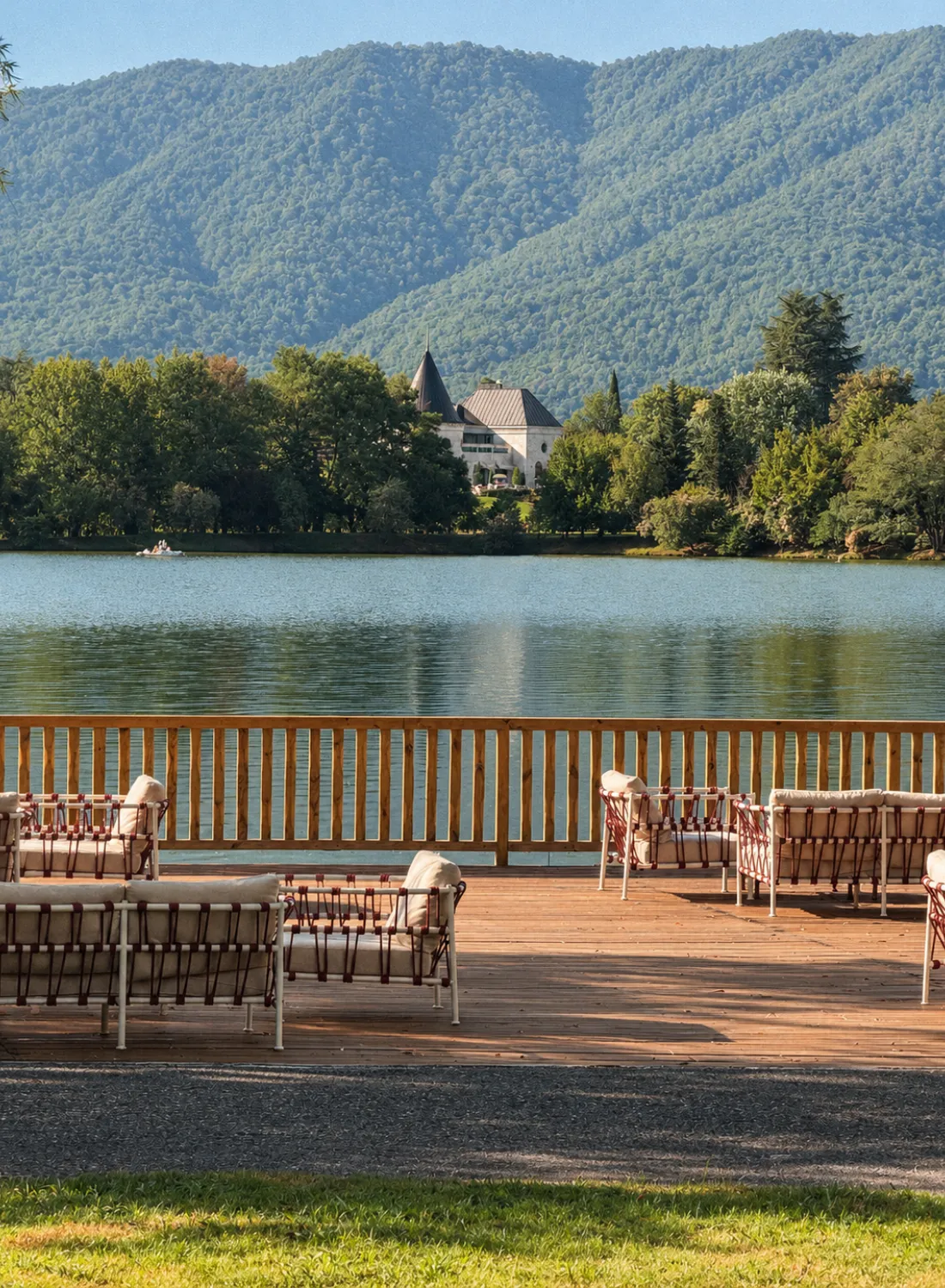
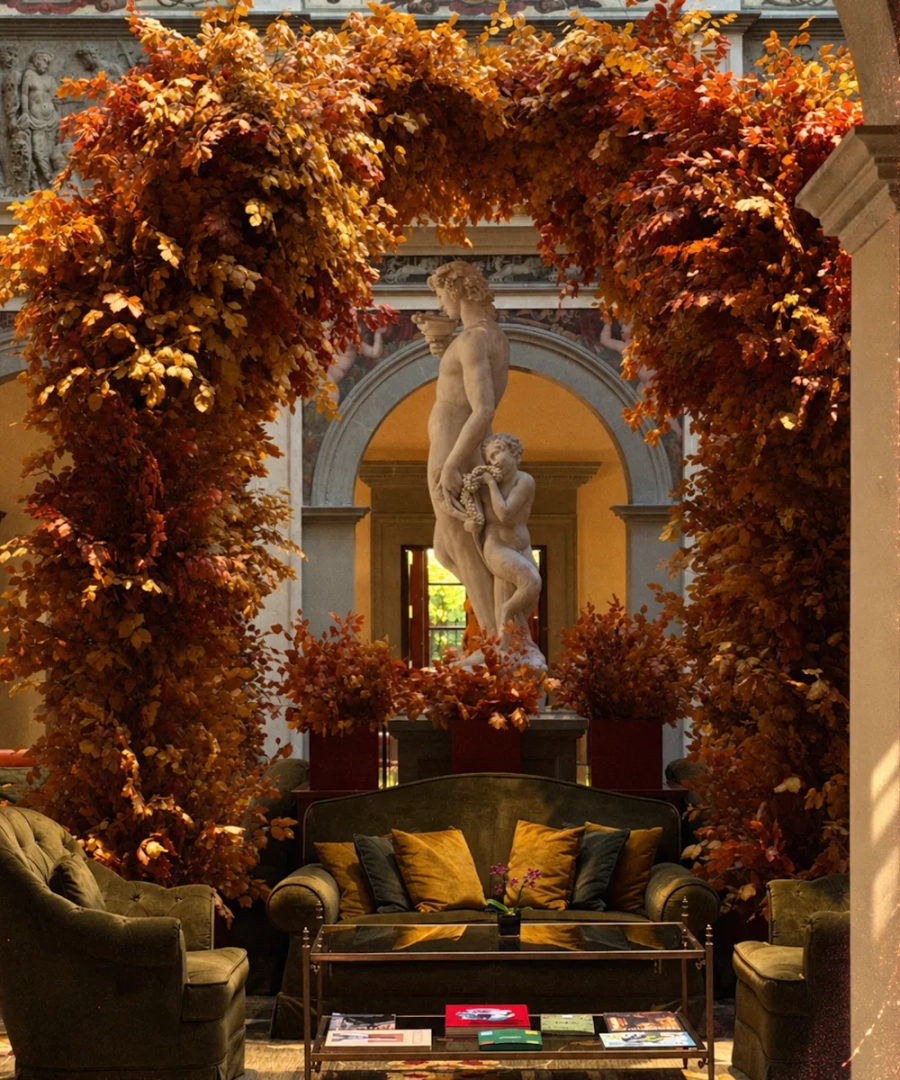
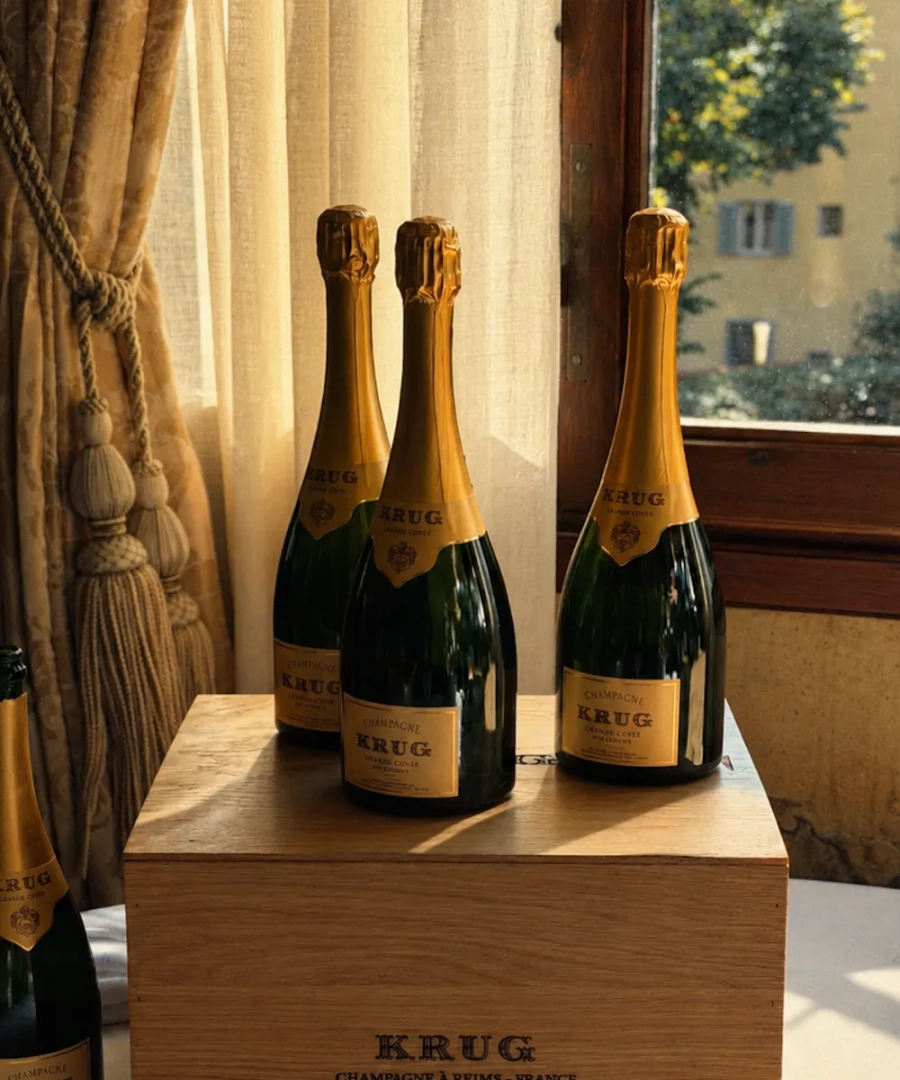
There are 143 wines from 10 different vintages in the bottle, the oldest from 2001, the youngest from 2018, with 36% reserve wines drawn from the library at Maison Krug in Reims. It is the mechanism Joseph Krug established in 1843, to compose the best possible champagne every year regardless of a single harvest. Krug Grande Cuvée 174ème Édition was presented by Julie Cavil, cellar master of the house, at Il Palagio, the restaurant inside Four Seasons Hotel Firenze, with the cooking of executive chef Paolo Lavezzini. The occasion opened the Maison’s Tuscany programme, running through November.
Joseph Krug in 1843 and a champagne independent of the harvest
Before founding his own house, Joseph Krug worked for another producer, and the variability of each harvest troubled him: one year gave grapes of high quality, the next could be compromised by rain, insufficient ripeness or acidity. Instead of relying on one vintage, he built a method based on individual wines from separate plots and different harvests, assessed independently and assembled by their contribution. The aim was not to reproduce an identical wine, but to hold the character of Grande Cuvée through different combinations of raw materials.
The 2017 and 2018 harvests in Champagne, two assemblages compared
The 173ème was built around 2017, a difficult year of heavy rainfall and disease pressure; some grapes were picked before full maturity, and the tasting sessions met pronounced acidity, limited aromatic expression and roughness. The work was to find texture, generosity and balance.
The following year ran almost opposite. A wet winter had replenished the soil’s water reserves; spring and summer were warmer and drier, but the vines had enough water to ripen. Disease pressure stayed limited, and 2018 delivered healthy grapes and generous yields. The harvest began early, around 20–21 August — the Comité Champagne set the marketable yield at 10,800 kilograms per hectare, and Krug picked between 23 August and 10 September. One concern ran through it: acidity kept falling, and the analytical figures suggested wines that might lack freshness for long ageing.
For Cavil, those figures could not settle the assessment. For 6 months the oenological team and tasting committee meet daily at 11 a.m. and taste blind, each sample judged without its origin, grape or reputation. In 2018, despite the low measured acidity, the wines kept a perceptible freshness, tension and equilibrium: the relationship between sugar, acidity, aromatic concentration and texture counted for more than any single measurement.
Krug’s plot-by-plot vinification, blind tasting and 400 wines a year
Krug’s approach begins with the parcel. Grapes from each plot are vinified separately in small oak casks, and before composing Grande Cuvée the team assesses around 400 wines — about 250 from the latest harvest and 150 reserves. A wine can carry aromatic intensity but lack length; another may be quieter on the nose yet provide structure or persistence. The task is to read each wine’s individuality and the role it might play, since a component incomplete on its own can become essential in combination. The method depends on complementary characteristics, not on a hierarchy of superior wines.
For the 174ème, 2018 accounts for 64% of the assemblage and reserves for 36%. The 2018 harvest was already balanced, so the reserves were chosen for what a young wine cannot yet offer — the aromatic patina of ageing, notes recalling beeswax, honey and fruit preserves — introducing maturity without flattening the young wines’ character. The final blend is 54% Pinot Noir, 29% Chardonnay, 17% Meunier: Pinot Noir for structure and length, Chardonnay for elegance and vivacity, Meunier for intensity and richness.
Krug Grande Cuvée 174ème, 143 wines from 10 harvests and 20 years of work
The 174ème combines 143 wines from 10 harvest years, 2001 to 2018 — a limited range for Grande Cuvée, which can run to 11, 12 or 13 years. After bottling, the champagne ages at least 7 years in the cellars at Reims; counting the oldest reserves, each Grande Cuvée takes more than 20 years of work. The dosage is 5 grams per litre. On the nose, toasted aromas with dried fruit, light smoke, mandarin and candied citrus; on the palate, fresh citrus moving towards chocolate, beeswax and fruit confectionery, with a generous texture and a slightly bitter finish.
Krug Rosé 29ème Édition and the six-digit Krug iD
Krug Rosé 29ème Édition, composed around 2017, brings together 29 wines from 5 harvest years between 2010 and 2017, with 33% reserves. The blend is 53% Pinot Noir — including 11% traditionally macerated red Pinot Noir from Les Crayons in Mutigny (2017) and Côte Valnon in Aÿ (2016) — 28% Chardonnay and 19% Meunier, carrying raspberry, strawberry and cherry, pastry notes and the bitterness of pink grapefruit. Each bottle also carries a 6-digit Krug iD on the back label, giving the composition, the oldest and youngest wines, the grape varieties and the disgorgement period — so a champagne of 143 wines across 10 years reads through a single reference, and different disgorgements can be told apart.
Krug in the Kitchen, the carrot chapter and Lavezzini’s gnocchi
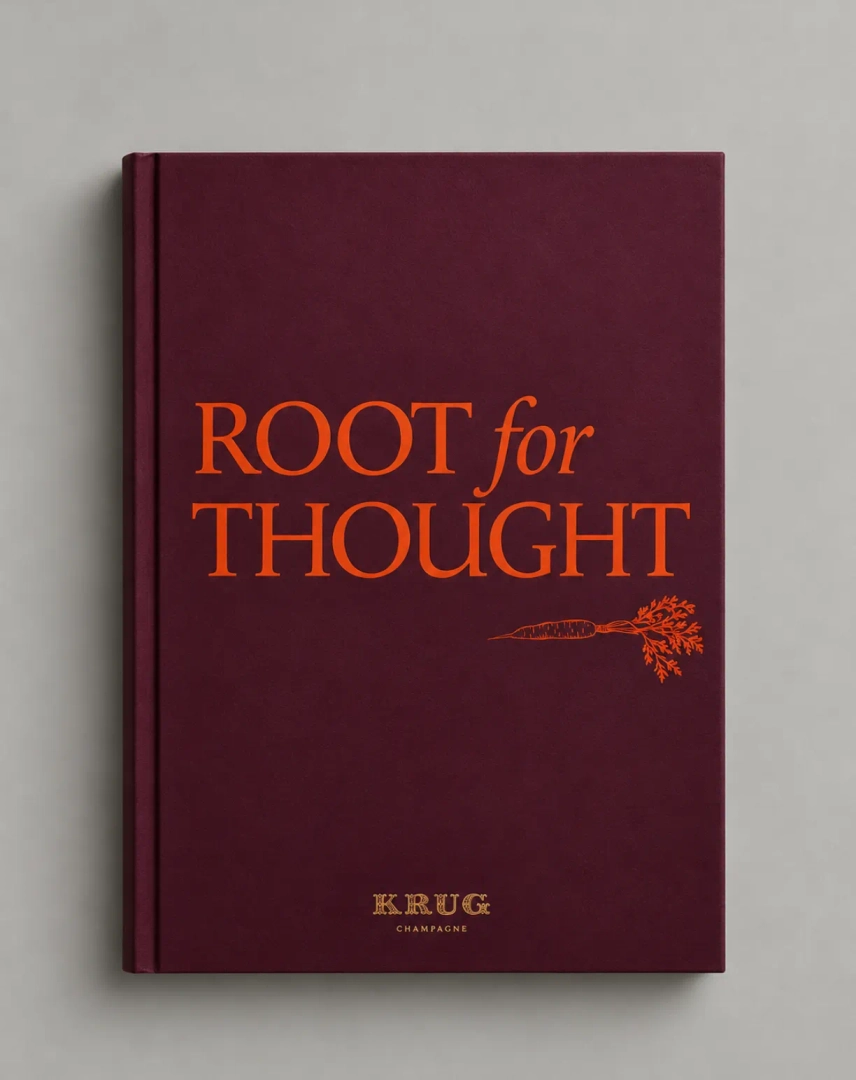
Since 2014, Krug has asked chefs from its Ambassades to interpret one ingredient — tomato, then potato, eggs, mushrooms, rice, lemons; the 2025–2026 chapter takes the carrot, on the same principle of individuality as the wine. A carrot looks uniform, yet varies with growing conditions, terroir, season and preparation, and roasting, steaming, fermenting, caramelising or juicing change it. The Maison gathered 146 recipes from Ambassade chefs in 34 countries in the volume Root for Thought, each built to accompany Grande Cuvée or Rosé.
At Il Palagio, a Krug Ambassade since 2018, Paolo Lavezzini served roasted carrot gnocchi with a cream of goat’s cheese from Greve in Chianti and coastal herbs. Roasting develops the carrot’s sugars, the cheese adds acidity, the herbs vegetal notes; the vegetable holds the centre of the dish without standing in for a more prestigious ingredient, the way a single wine need not dominate an assemblage to matter.