News & Coffee, Barcelona. The kiosk is a social nexus
From Passeig de Sant Joan to an international network of kiosks: News & Coffee brings together specialty coffee, newspapers and independent magazines without leaving the street
Passeig de Sant Joan, Barcelona’s Dreta de l’Eixample: News & Coffee
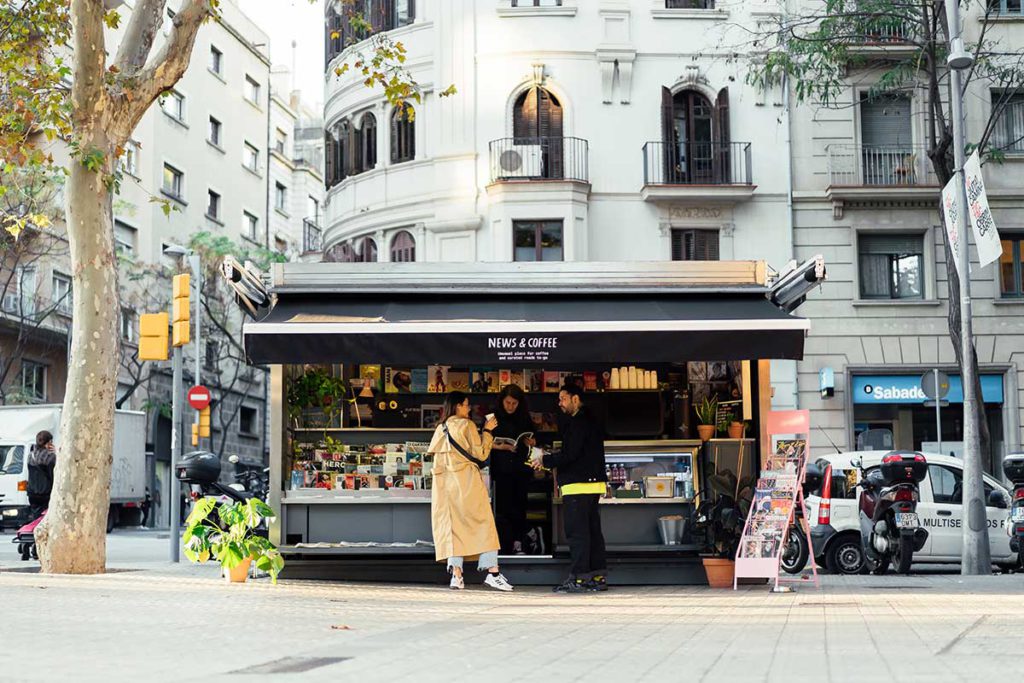
On Passeig de Sant Joan, in Barcelona’s Dreta de l’Eixample, News & Coffee began with a simple, deliberate gesture: to return the newsstand to the street without turning it into a nostalgic artifact. The format is straightforward — coffee to go, newspapers, independent magazines, zines, books and postcards. No enclosed shop. No threshold to cross. No fixed ritual of entry.
“We are on the street. We don’t belong within four walls. There is no window frame or doorway standing between us and the city.”
That single sentence captures the project more precisely than any retail category could. News & Coffee is not merely a point of sale. It is a small urban device. People stop on their way to work, buy a coffee, scan the covers, pick up a daily newspaper, ask about a magazine, exchange a few words with whoever is behind the counter. The kiosk works because it stays open to the city — exposed, accessible, unhurried.
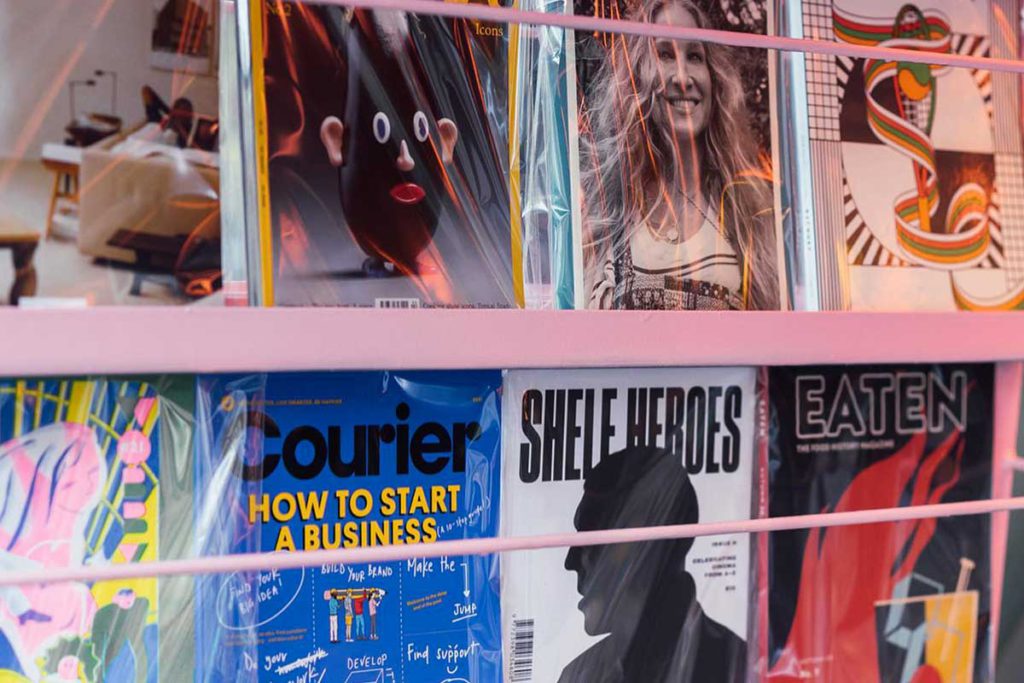
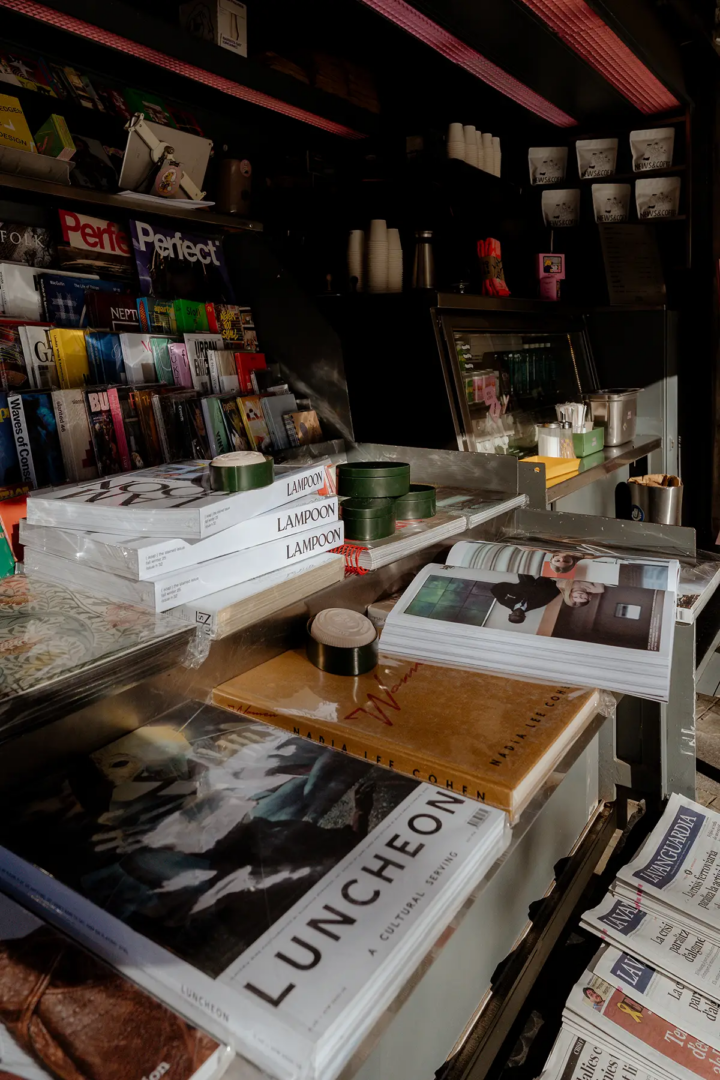
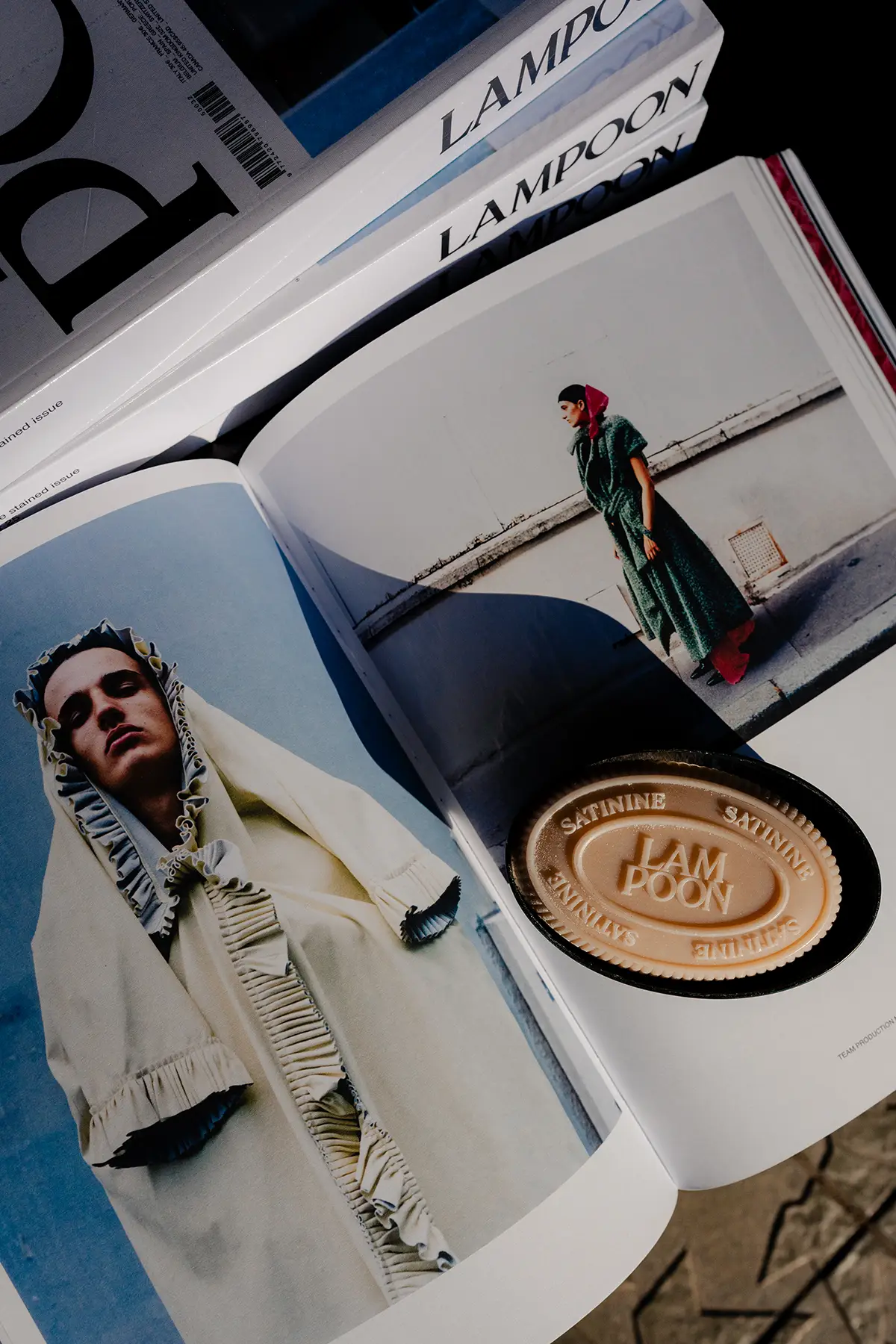
The first News & Coffee kiosk occupied around eight square metres. Its scale was modest, but its cultural ambition was not. It stocked international newspapers, independent magazines and a coffee offering usually associated with specialty cafés. The shelves carried titles such as Apartamento, Fucking Young, Ark Journal, 032c, Popeye, Victory Journal and The Gourmand. The format made print visible again in a place where people were already passing.
Passeig de Sant Joan and the culture of the kiosk
Passeig de Sant Joan is one of Barcelona’s great civic boulevards — a street that belongs to daily life rather than to the postcard economy. Art nouveau apartment buildings line the avenue alongside bicycle lanes, cafés, garden beds, fountains, comic bookshops and public benches. Nearby stands Casa Macaya, the Catalan modernist building designed by Josep Puig i Cadafalch and completed in 1901.
The location is not incidental. News & Coffee did not begin inside a shopping mall or a design district. It began in a residential neighborhood, where the kiosk could reclaim its older function: a place for the morning newspaper, a brief conversation and a small daily purchase.
In Barcelona, the newsstand has long been woven into neighborhood routine. For generations, a day might begin at the kiosk, continue at the bar and unfold through a newspaper read over coffee. As print sales declined and tourism reshaped the city’s surface, many kiosks lost that function. Some closed. Others became souvenir stands stacked with magnets, postcards and keychains.
News & Coffee entered that crisis with a different proposal. It did not reject the existing kiosk. It edited it — clearing the visual clutter, preserving the street-facing structure and rebuilding the offer around coffee, print and a sharper selection of objects.
“We took what existed, cleaned up the clutter, removed the dust, and presented it with a focused concept,” says Yaël Hupert.
The beginning of News & Coffee
The idea came to Pablo Pardo while cycling through the neighborhood. The kiosk on Passeig de Sant Joan had stood closed and neglected for years. Pardo saw in it the possibility of an entirely new format.
“It was a lightbulb moment.”
His reference was the street culture of New York: people moving through the city with coffee and a newspaper in hand. The image was simple, but it demanded a precise retail structure. The kiosk had to be fast without being anonymous. It had to serve coffee without becoming just another coffee bar. It had to sell newspapers and magazines without reproducing the outdated model of the old newsstand.
Pardo arrived in Barcelona from Argentina more than twenty years ago, entering hospitality through practice rather than formal training. He worked in a five-star hotel, assisted aboard a private yacht, drafted menus for restaurants and roasted coffee in his spare time. Over the years he became a hospitality consultant and founded Mis-en-place, an agency focused on food and beverage concepts.
That background gave News & Coffee its operational foundation. The project was never only an aesthetic intervention on a kiosk. It was a compressed hospitality system. In eight square metres, every movement had to be carefully considered: coffee machine, grinder, cups, newspapers, magazines, display, storage, payment, conversation.
Pardo had already worked with constrained commercial formats. He launched Rolling Food, a food truck in Barcelona, and learned how to make limited space productive. News & Coffee pushed that experience considerably further.
Pablo Pardo, Gautier Robial, Yaël Hupert and the News & Coffee team
News & Coffee grew through a group of people with markedly different professional backgrounds. Pardo brought hospitality and food and beverage experience, along with the original concept. Davide Datti, a coffee specialist and brand ambassador for Victoria Arduino machines in Spain, supported the technical side of the coffee operation.
Gautier Robial, previously Digital Lead for Wrangler in Europe, joined the project through strategy and business development. “I’m a strategy and numbers guy, while Pablo is the ideas man. I create business models out of Pablo’s ideas and give them structure,” says Robial.
Yaël Hupert, born in Antwerp and shaped by a background in make-up, painting and visual culture, defined both the editorial selection and the art direction of the kiosk. Her work expanded the magazine offer from a small initial selection to more than one hundred titles. The result is not a generic magazine shelf. It is a curated system in which independent publishing, fashion, architecture, design, culture, photography, food, sport and social commentary coexist with genuine coherence.
The mix of backgrounds is integral to the project’s logic. A Belgian, an Italian, a Frenchman and an Argentine built a Barcelona kiosk through fashion, fine art, hospitality, specialty coffee and brand development. Pardo sees that collective structure as the project’s real engine.
“The success of this project depends on the people behind it. It is the synergy of the team’s skill sets, honed over the years, that created all of this.”
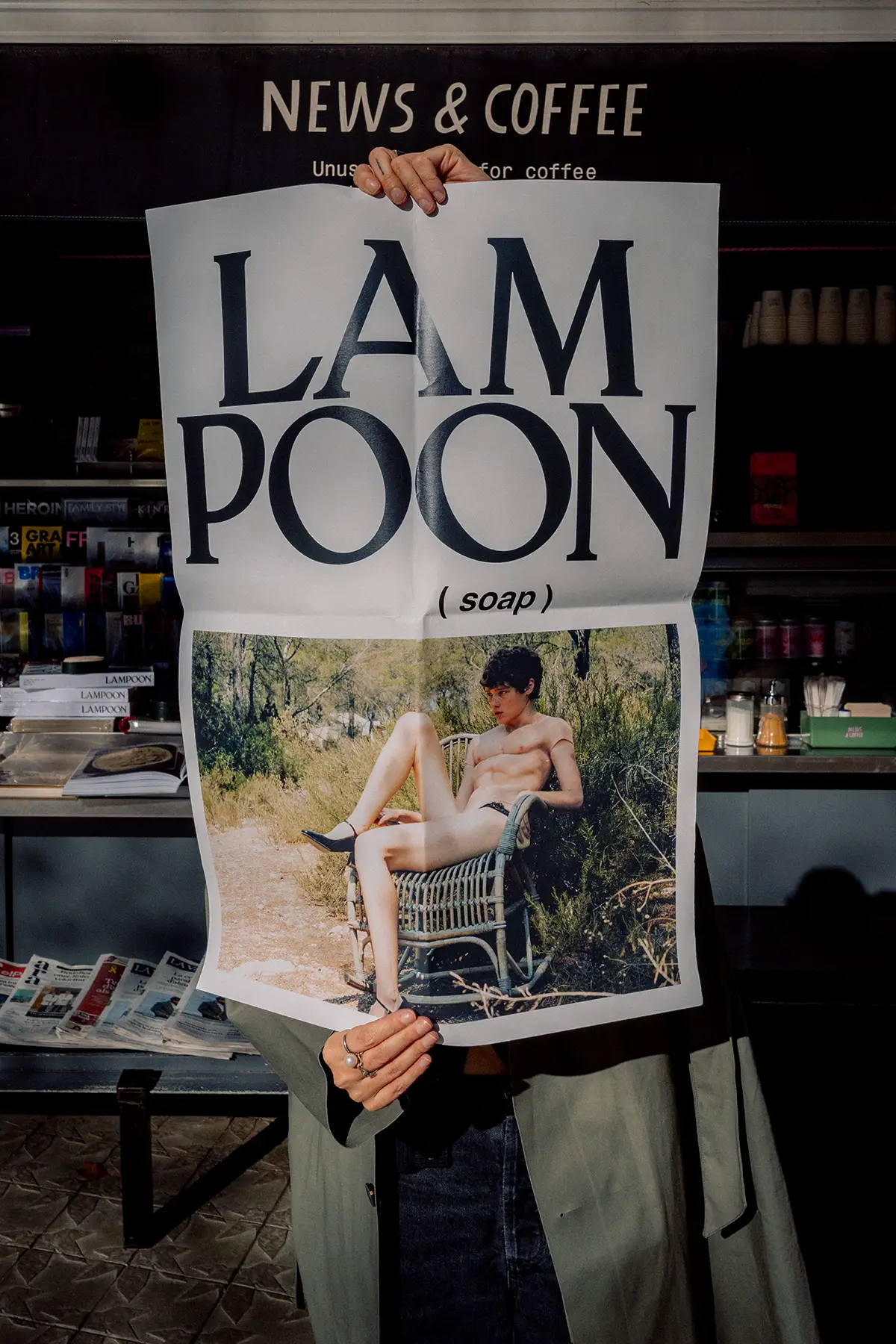
News & Coffee as a new model for the Barcelona kiosk
News & Coffee did not invent the kiosk. It changed the way the kiosk could be understood. The format is small, yet it contains several systems at once: a bar, a newsstand, a magazine shop, a neighborhood meeting point, a local service and a brand platform.
This is precisely why the model is harder to replicate than it appears. From the street, the execution looks effortless: a coffee machine, a counter, newspapers, magazines, music and a queue of customers. Behind that surface lies procurement, display strategy, service rhythm, product rotation, supply management, licensing, urban regulation and staff training.
“People think it’s a simple execution. But there is more than what meets the eye. It is Pablo’s eighteen years of hospitality experience compressed into an eight-square-metre space,” says Robial.
The kiosk belongs to the city government, which meant the team could not significantly alter its physical structure. The operation had to be built through visual identity, display, service, coffee and selection. Each kiosk also carries an artwork by a visual artist connected to Barcelona, including Robert Lönnqvist, Super Roger and Noemí Rebull.
“From Instagram visuals to the layout of the store, a great deal of strategic thought has gone into every aspect of building this brand,” adds Robial.
The kiosk as a social nexus
The strength of News & Coffee lies in its exposure. A shop with four walls can decide who enters. A kiosk cannot. It stands in the open and receives everyone: office workers, residents, students, tourists, older neighbors, cyclists, children, artists, dedicated magazine readers and people who simply want a coffee.
That openness transforms the kiosk into a social nexus. Catalan grandparents stop for their morning newspaper. Younger customers order flat whites and listen to hip-hop. Artists search for new issues. Readers ask whether a title has arrived yet. Neighbors use the kiosk as a point of orientation in the daily rhythm of the street.
“News & Coffee is a concept for everyone,” says Pardo.
This is not a branding formula. It is a spatial fact. The kiosk demands no commitment. A person can stop for thirty seconds or linger through a longer exchange. Its publicness is what separates it from a conventional coffee bar or bookshop. News & Coffee is not hidden behind a façade. It belongs to the pavement.
Specialty coffee without luxury codes
Coffee is the second pillar of the project. For Pardo, the goal was never to turn specialty coffee into a luxury signifier. It had to remain accessible to people moving through the city.
Pardo learned to roast through Christian Meier, the former professional cyclist who later opened specialty coffee shops in Barcelona. “Christian offered to teach me to roast. After a few months of learning, I found myself in charge of roasting coffee for all their shops,” says Pardo. Through Meier, he also met Davide Datti.
News & Coffee’s mission was to bring quality coffee into the street economy of the kiosk — fresh, fast and served in a recyclable cup, as much a part of the morning as picking up a newspaper.
“Our mission is to make specialty coffee more affordable and accessible for pedestrians as well as locals. Why should something like coffee be turned into a luxury commodity?” says Pardo.
The question remains central to the format. News & Coffee works because it does not separate cultural consumption from daily life. A magazine, a newspaper and a coffee can belong to the same morning.
Print is not dead at News & Coffee
For the team, print is not a relic. It is a format in need of better circulation and better visibility. The kiosk makes printed matter immediate again. Covers face the street. Newspapers remain within reach. Magazines are not buried inside a bookstore or a concept store.
“We are tired of this narrative and want to change it,” says Hupert, referring to the claim that print is dying.
Her position is pragmatic rather than nostalgic. Printed media changes function over time. Newspapers can re-enter daily habit. Magazines can become collectible objects. Zines can carry voices that do not fit mainstream publishing. Hupert draws a parallel with vinyl, whose resurgence showed how older formats can regain relevance once their material qualities are properly appreciated.
“Nowadays vinyl sells more than it has in decades — it is a market that is growing again. Old-fashioned becomes fashionable. In the end, everything comes full circle.”
At News & Coffee, coffee helps print travel further. A customer stops for a drink, then notices a cover, a title, a headline. The kiosk does not ask people to enter a specialized retail environment. It places independent publishing directly in their path.
From Barcelona to a wider network
News & Coffee began on Passeig de Sant Joan and expanded to other locations across Barcelona, including Plaça de Francesc Macià and Gràcia. What started as a local intervention became a broader model for reactivating the city’s neglected kiosks.
The pandemic sharpened the need for neighborhood-scale retail with a clear purpose. As tourism slowed, residential areas became newly visible. Barcelona’s streets were no longer read primarily through the eyes of visitors, but through those of the people who actually lived in them. News & Coffee matched that shift because it had never been designed with tourists in mind.
“We want to do meaningful things for the people of Barcelona and sustain what is falling apart. The tourists will follow,” says Robial.
Today, the project has grown well beyond its first kiosk. News & Coffee is now an expanding network with locations across Spain and abroad. Yet its origin remains specific: a neglected Barcelona newsstand, a coffee machine, a carefully chosen selection of print and a team that understood the kiosk as one of the city’s smallest, most public cultural infrastructures.
News & Coffee today
News & Coffee is no longer only a kiosk on Passeig de Sant Joan. It is a format built around the revival of the newsstand, the accessibility of specialty coffee and the visibility of independent publishing. Its growth has not erased its founding idea. The kiosk still works best when it stays close to the street.
The project is not about preserving the old newsstand unchanged. It is about keeping its civic function alive. A kiosk can still be a point of sale, a meeting point, a reading point and a fragment of urban culture — all at once.
News & Coffee proves that the street can still hold print. It also proves that the smallest spaces in a city can carry the most public forms of exchange.