Charli XCX killed the erotic album cover
Charli XCX replaced it with something far more seductive. From Roxy Music’s exposed bodies to Scorsese, Jacobs, and Cale in a kitchen: desire in music learned to live inside cultural recognition
Charli XCX announces new album: Music, Fashion, Film
When Charli XCX announces a new album, the expectation is momentum — something that carries the electricity and immediacy of brat (2024) forward, another entry into the self-aware ecosystem of hyperpop excess, digital intimacy, and controlled chaos that has defined her recent work. Music, Fashion, Film, set for release on July 24, breaks that expectation before a single note plays.
The first disruption happens on a visual level. The album cover refuses every convention of pop imagery. Charli XCX is absent. There is no neon green, no body to anchor the viewer, no implied scene or mood. Instead, a black-and-white image shows three figures looking directly at you from across a kitchen: John Cale, Marc Jacobs, and Martin Scorsese.
Music, Fashion, Film: how cultural authority replaces the body as erotic charge
The immediate effect of the cover is disorientation, despite the image being fully legible and recognizable. What it refuses is familiarity. Three figures, each carrying the weight of an entire industry: Cale connects the work to an experimental music lineage, Jacobs embodies institutionalized fashion taste-making, Scorsese stands for cinematic authorship. Music, fashion, film — the title is almost a key.
The image produces a charge that operates outside traditional categories of album-cover eroticism. It is bodily exposure replaced by structure; the seduction comes through recognition rather than vision. Without knowledge of who these figures are, the cover collapses into blankness. With that knowledge, it becomes loaded. This is the shift the cover announces: attraction used to depend on seeing. Here it depends on knowing.
How album covers sold desire through the body: from Roxy Music to Electric Ladyland
Before album covers became systems of cultural reference, desire was staged directly. The body was the proposition, and the viewer’s relationship to it was immediate — look, react, be absorbed.
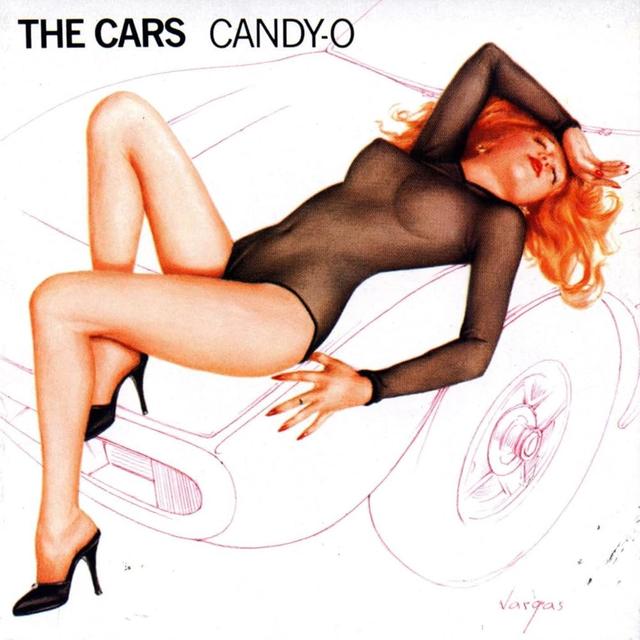
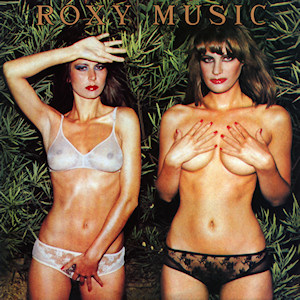
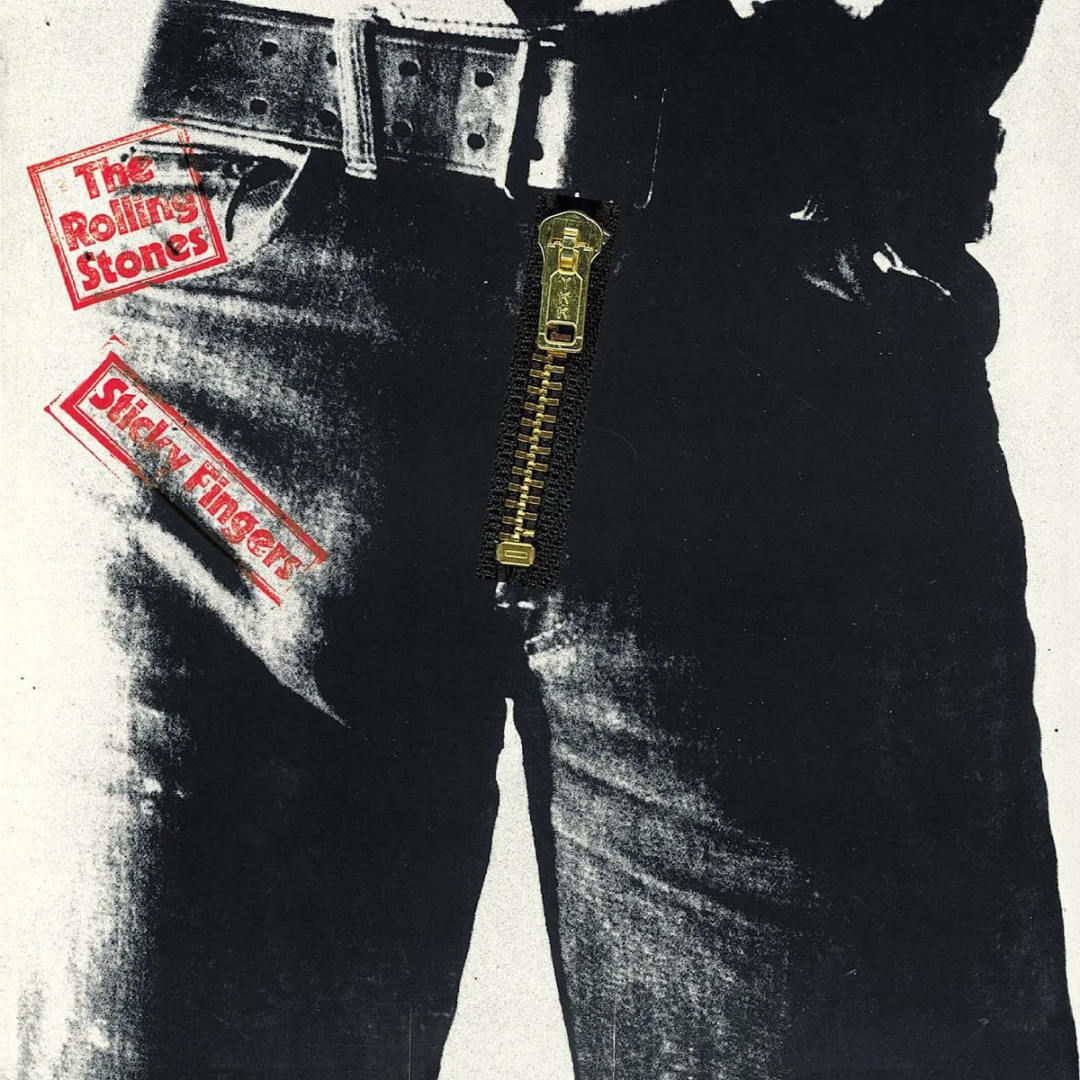
When Roxy Music’s Country Life (1974) was released, conservative markets reacted with intensity. Two women positioned as fashion objects within a controlled fantasy environment: the image offers visibility as provocation, already stylized, already editorial in its precision. Andy Warhol’s zipper for the Rolling Stones’ Sticky Fingers (1971) worked with the same clarity but through concealment — the mechanism of anticipation rather than exposure, the promise of what lies just beneath the surface. The Cars’ Candy-O (1979) pushed this into pure illustration. Alberto Vargas’ pin-up aesthetic transforms the body into a graphic surface: airbrushed, idealized, detached from lived reality and fully absorbed into pop reproduction. The woman on the cover is a perfected image of desire, a projection rendered with industrial smoothness.
Jimi Hendrix Experience’s Electric Ladyland (1968) took the opposite direction. The original UK cover’s chaotic assembly of nude figures resists any single focal point, producing overflow rather than composition. Eroticism here is saturated rather than refined — destabilizing, as if the image cannot contain its own visual charge.
Between eroticism and spirituality: album covers where desire becomes mythic and symbolic
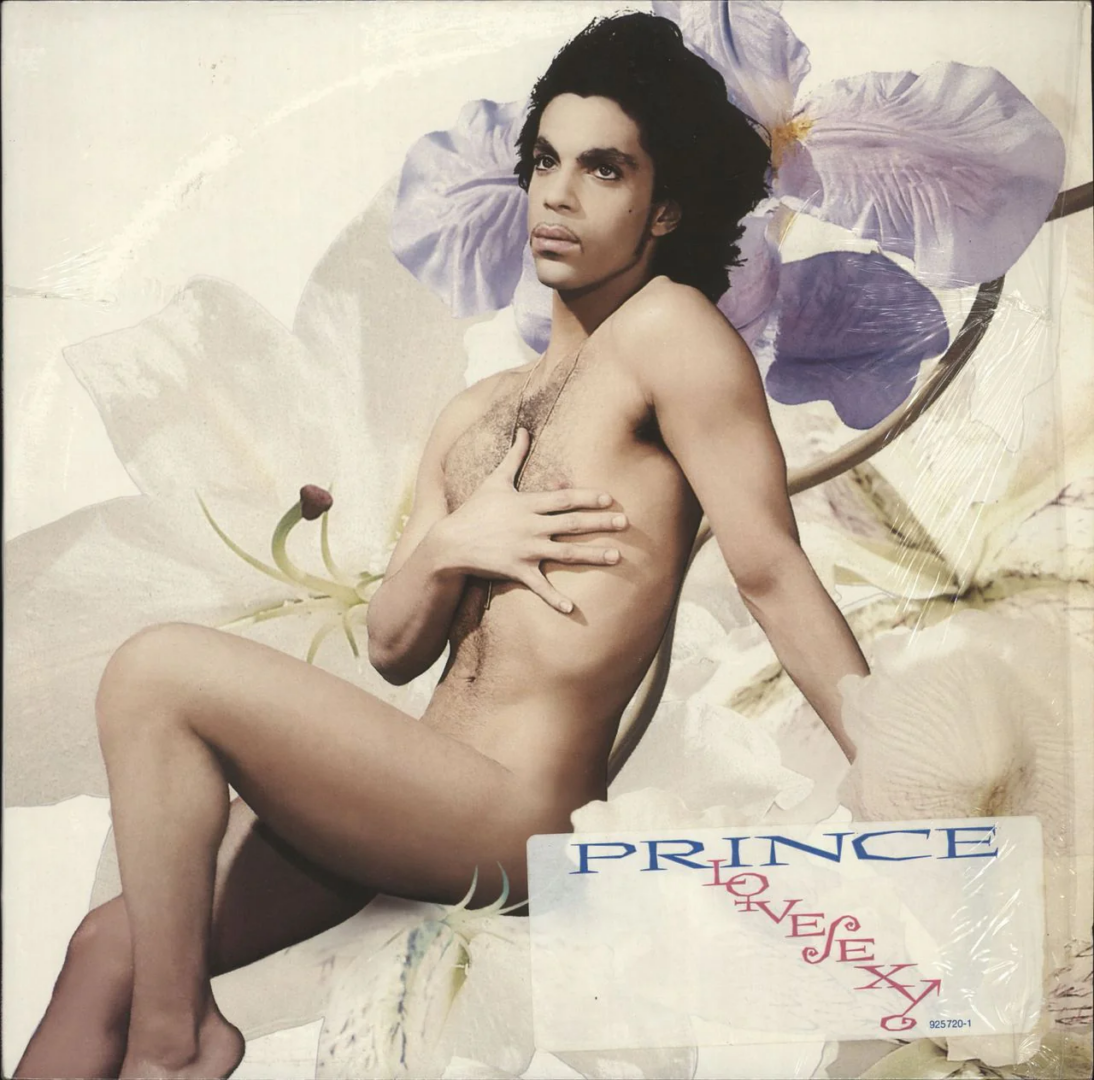
Prince’s Lovesexy (1988) pushed this into different territory. The nude body is placed directly into a floral, mythic composition — maximal and spiritual at once, unapologetic and yet removed from realism. The body here functions as symbol rather than object, suggesting a desire that is total rather than fragmented.
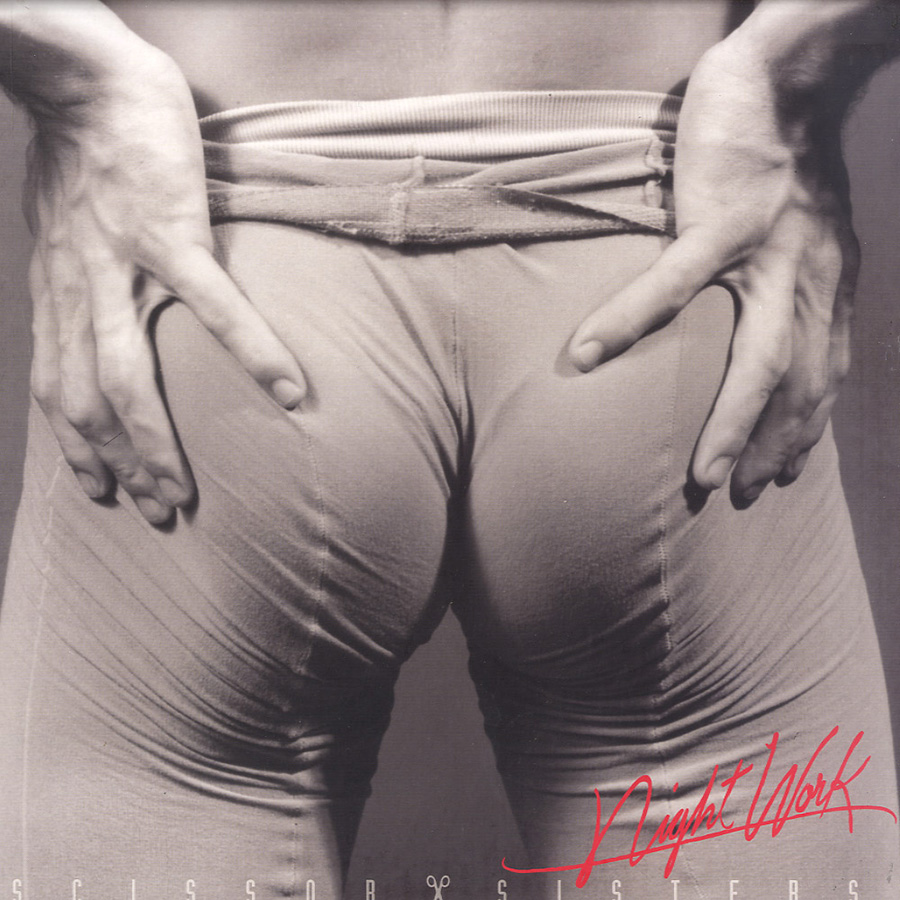
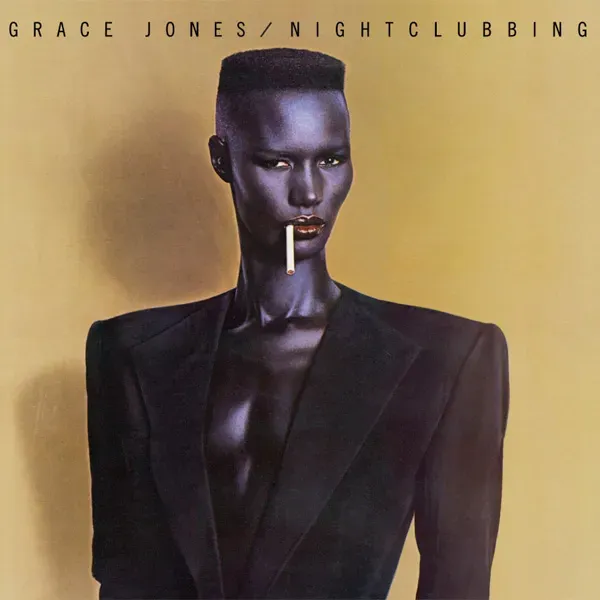
Grace Jones’ Nightclubbing (1981) offers a different integration. Controlled, sculptural, fashion-forward, the image intensifies physical presence by transforming it into a statement of power and androgyny. Nightclubbing is where fashion and eroticism meet as a unified visual language.
These covers shared a direct relationship between image and desire. For decades, the body was the primary site of meaning — exposed, stylized, fetishized, or partially concealed — and the viewer’s position was legible: look, react, be drawn in. Eroticism was a surface phenomenon, designable and distributable without translation, an advertisement for fantasy anchored in physical recognition.
From exposure to concept: how eroticism in music shifted from the visible body to constructed identity
The shift was gradual. Covers did not abandon direct eroticism so much as detach it from visibility. The body remained central but stopped being handed directly to the viewer.
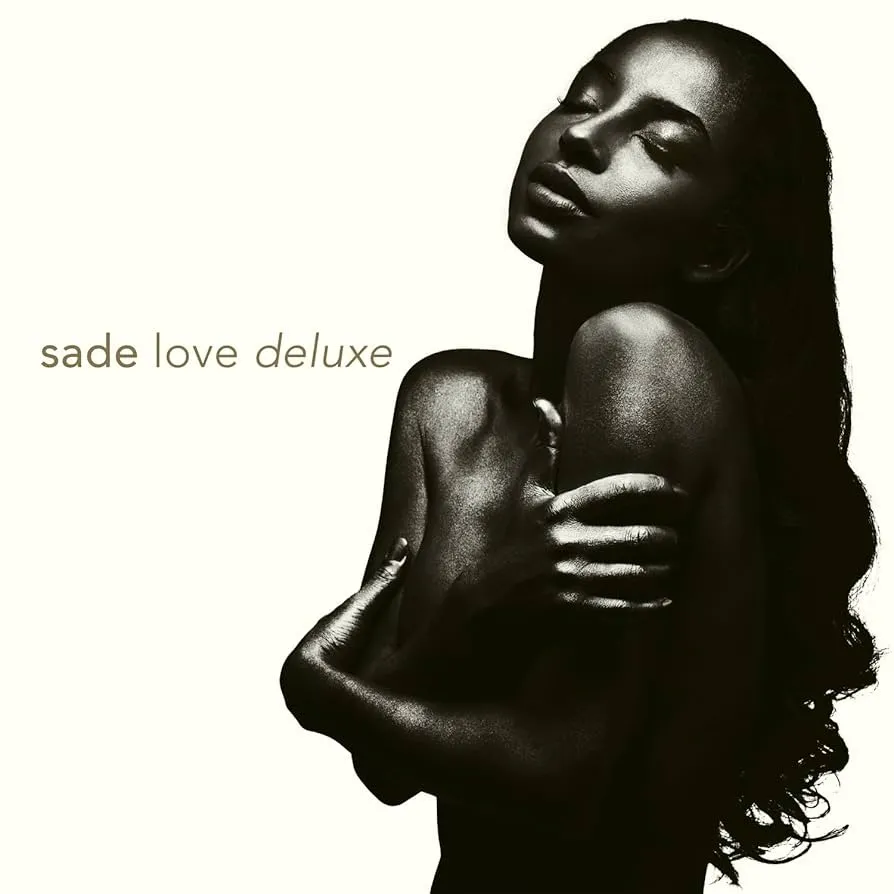
Sade’s Love Deluxe (1992) was an early signal. The face is present, the framing refuses performance, and the erotic charge comes from withholding rather than revealing. The body becomes atmosphere. Björk’s Post (1995) pushed this into fragmentation — identity dispersed across styling, expression, and aesthetic dislocation, with desire displaced into unpredictability. By Homogenic (1997), abstraction had taken over: the body appears as an engineered emotional landscape, makeup and costume assembling an artificiality that rejects intimacy even while generating emotional intensity. Eroticism here is about constructed identity, assembled rather than revealed.
Massive Attack’s Mezzanine (1998) removed the body almost entirely, replacing it with a form that feels simultaneously organic, decaying, and mechanical. The absence of the human figure does not remove desire; it redirects it into texture, surface, and ambiguity. Attraction operates without clarity, discomfort without rejection.
Fashion photography entered where straightforward sexual imagery had been, introducing staging, editorial logic, and conceptual framing into what was once direct visual provocation. Desire became intellectualized. The viewer was presented with the idea of the body rather than the body itself — something to read and interpret rather than simply react to.
Subcultural desire and the nerdy eroticism of Joy Division, Kraftwerk, and Aphex Twin
Running parallel to these shifts, a different erotic register had always existed in music — charged with appeal but entirely removed from the body. These covers offer the desire of belonging.
Joy Division’s Unknown Pleasures (1979) produces a pull that is neither visual pleasure nor bodily recognition but something closer to alignment: the feeling of being tuned to a signal others cannot read. Kraftwerk’s Computer World (1981) extends this logic, dissolving the human into systems, interfaces, and technological minimalism. The attraction is directed at conceptual clarity. Aphex Twin’s Selected Ambient Works 85-92 (1992) became heavily fetishized within music subculture precisely because of its resistance to interpretation — anonymous, minimal, coded. Daft Punk’s Discovery (2001) folded this back into pop exposure while maintaining the same underlying structure: identity mediated through concept and aesthetic system.
Across these works, eroticism operates as cultural fluency. To recognize the codes, to own the records, to move within the references becomes a form of participation. What becomes desirable is access to a specific literacy — the pleasure of knowing what others do not.
Music, Fashion, Film and the new grammar of desire: seduction through cultural recognition and intellectual aspiration
Charli XCX’s album arrives at the intersection of all these trajectories. It does not return to bodily eroticism, lean into full abstraction, or rely on subcultural coding alone. It removes the body entirely and replaces it with a structure of names, industries, and authorities — and makes that structure the site of seduction.
Scorsese, Jacobs, Cale function as condensed cultural systems. Recognizing them produces a charge that is intellectual, aspirational, and social simultaneously. The cover flatters the viewer’s knowledge while making that knowledge a condition of entry. Desire, here, is access to cultural power — and the image’s eroticism belongs entirely to those who can feel it.