Martin Margiela at the Kudan House: between the historic cedar and the void
Martin Margiela marks his first large-scale solo exhibition in Japan by treating a 1927 heritage residence as a site of memory and disappearance – a graft of Spanish Colonial Revival and traditional Japanese timber
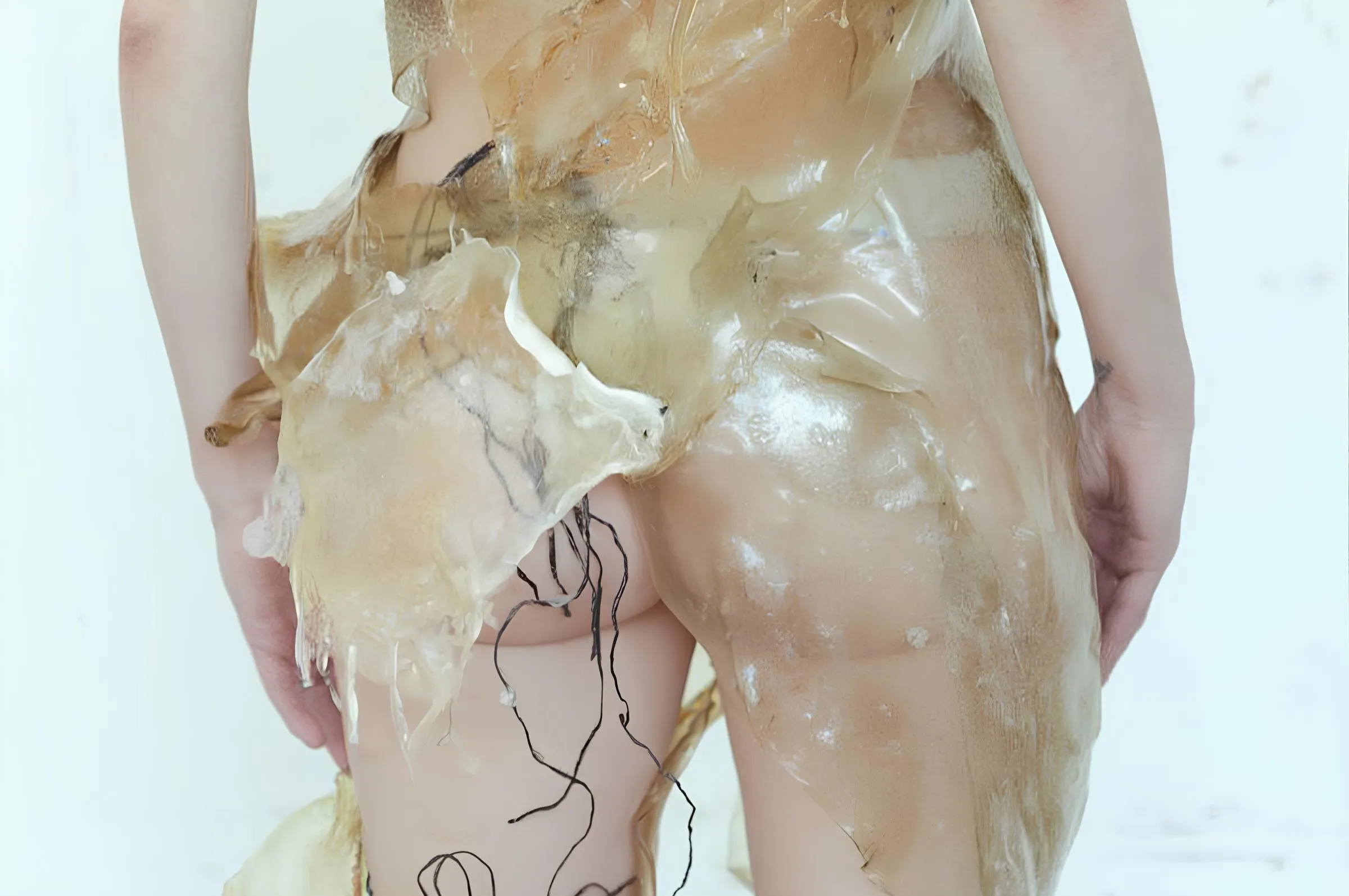
Martin Margiela exhibition Tokyo 2026: sweat, body trace and invisible presence
The first thing you encounter is a deodorant stick. The packaging is stripped back to essentials — just the necessary information printed on the label. Sweat is among the hardest bodily traces to see: involuntary, biological, intimate. Margiela begins there.
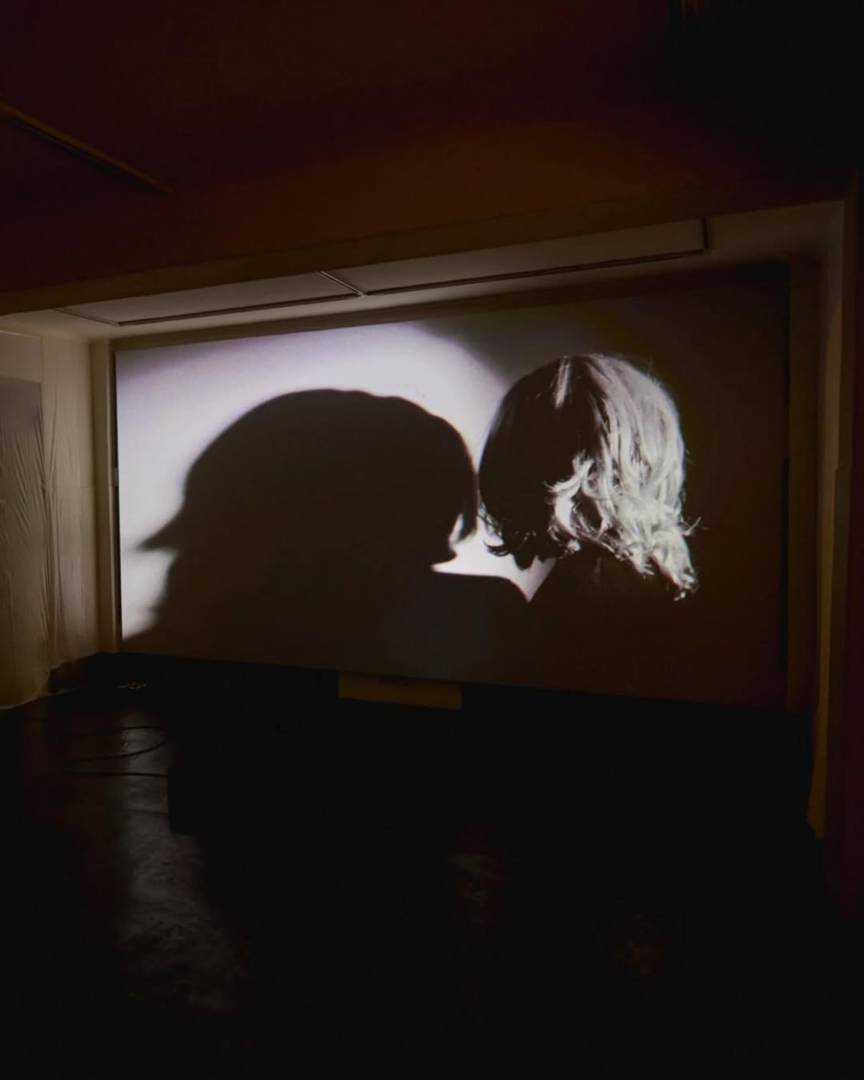
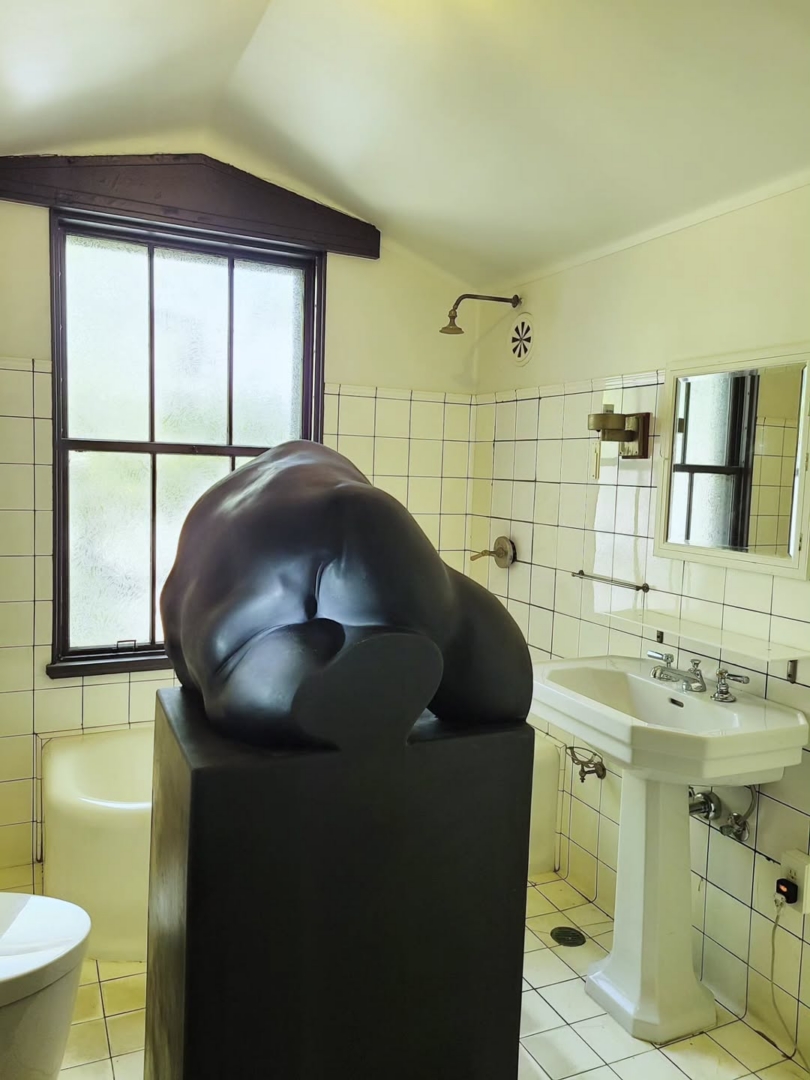
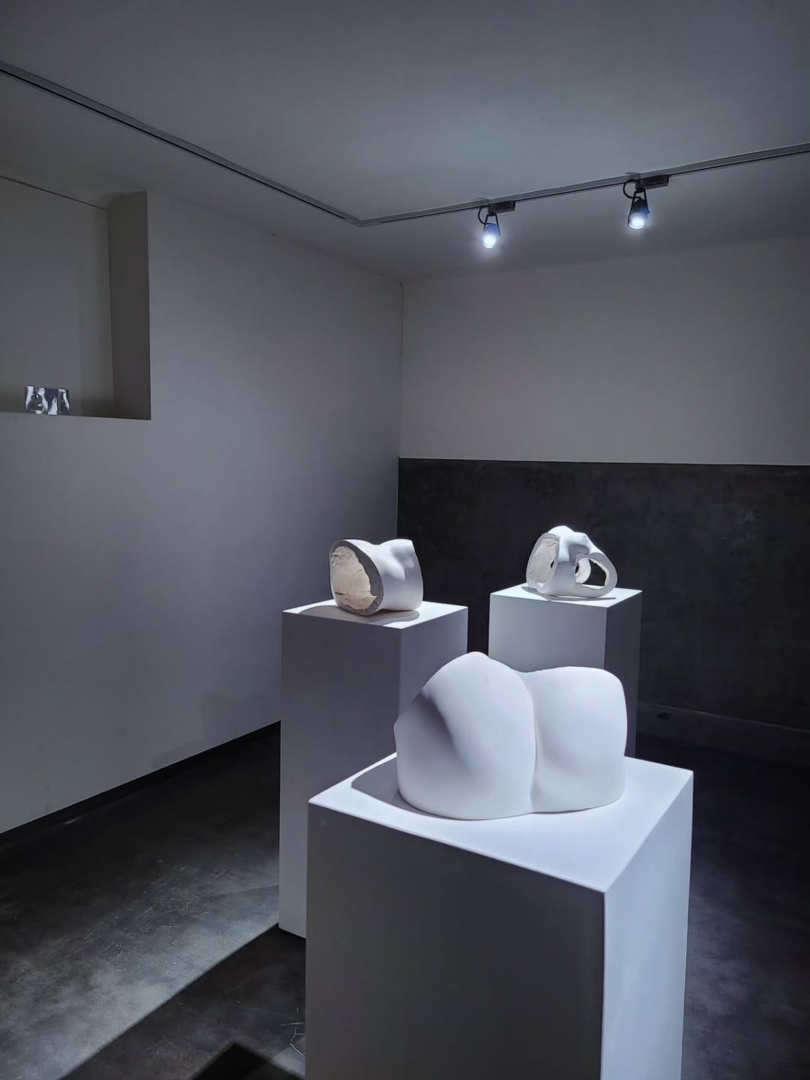
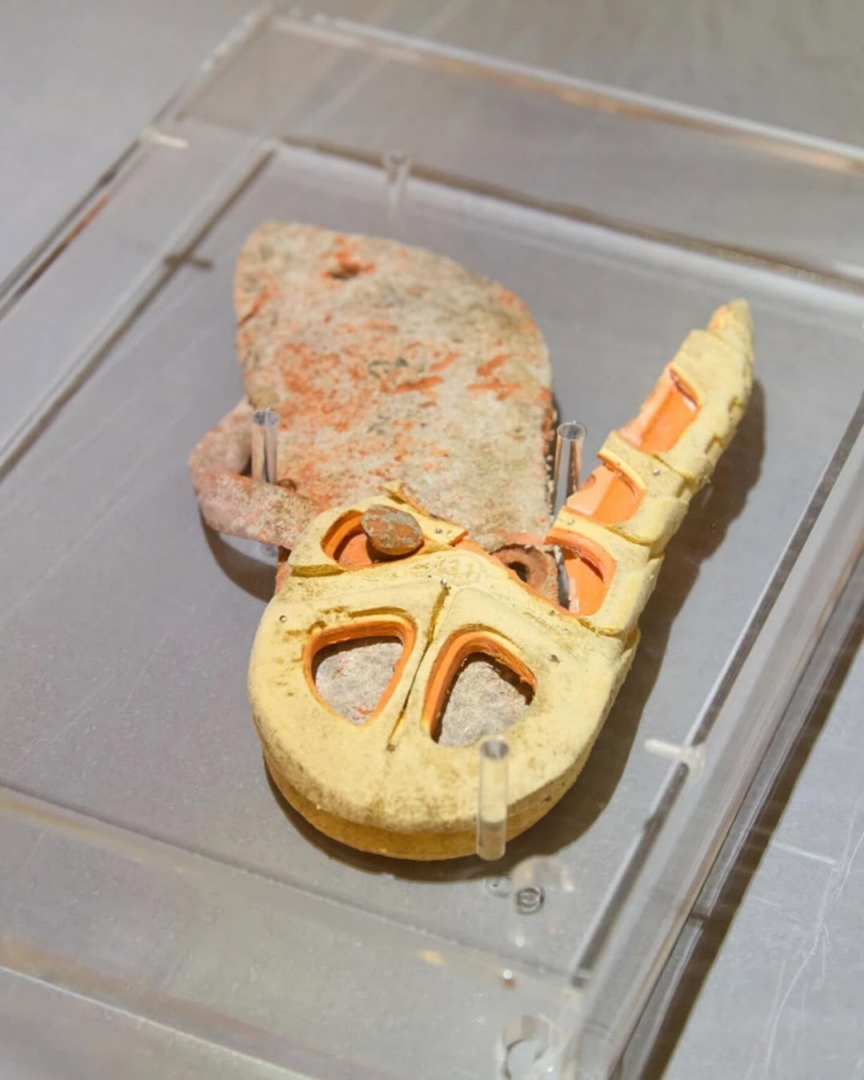
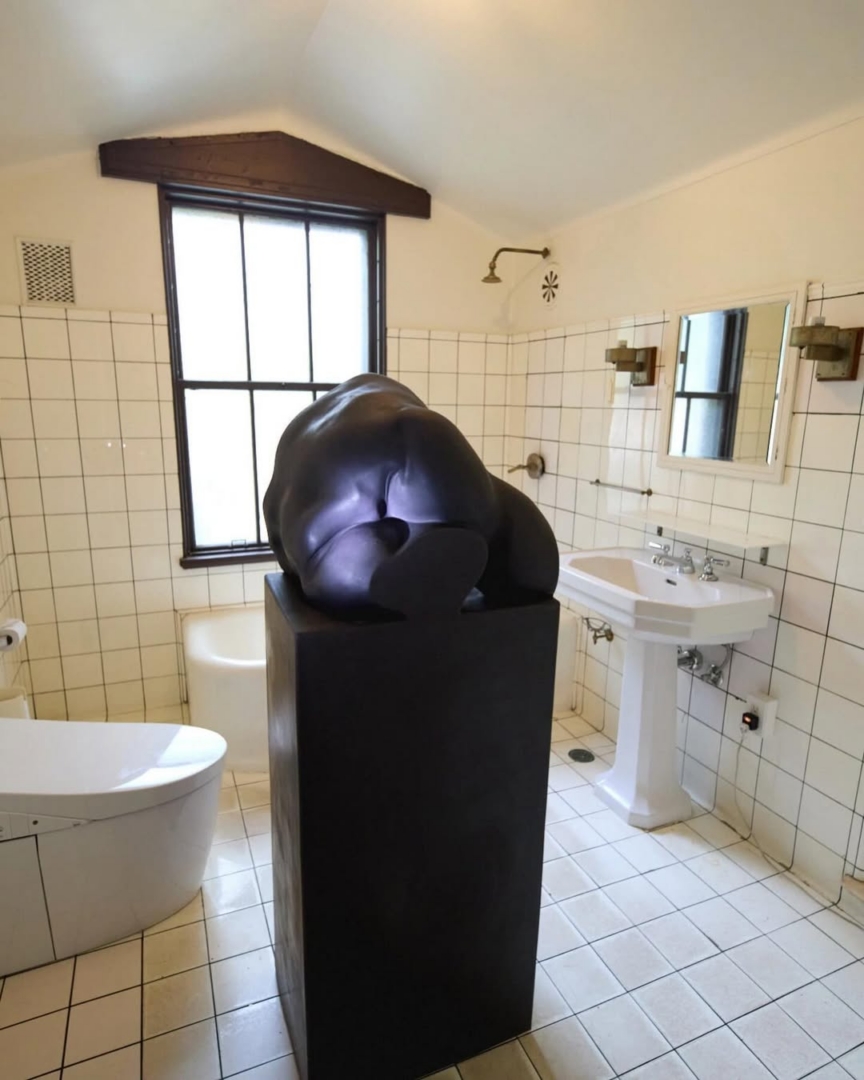
Since stepping away from fashion in 2008, his practice has shifted toward the body, its traces, and the weight of what disappears. From April 11 to 29, 2026, the Kudan House in Tokyo’s Chiyoda ward hosts his first comprehensive solo show in Japan. Assemblages, sculptures, video works — all distributed through the rooms of a private villa that never pretended to be an exhibition space, and that works precisely because of it.
Martin Margiela at Kudan House: architecture duplication and spatial sequencing
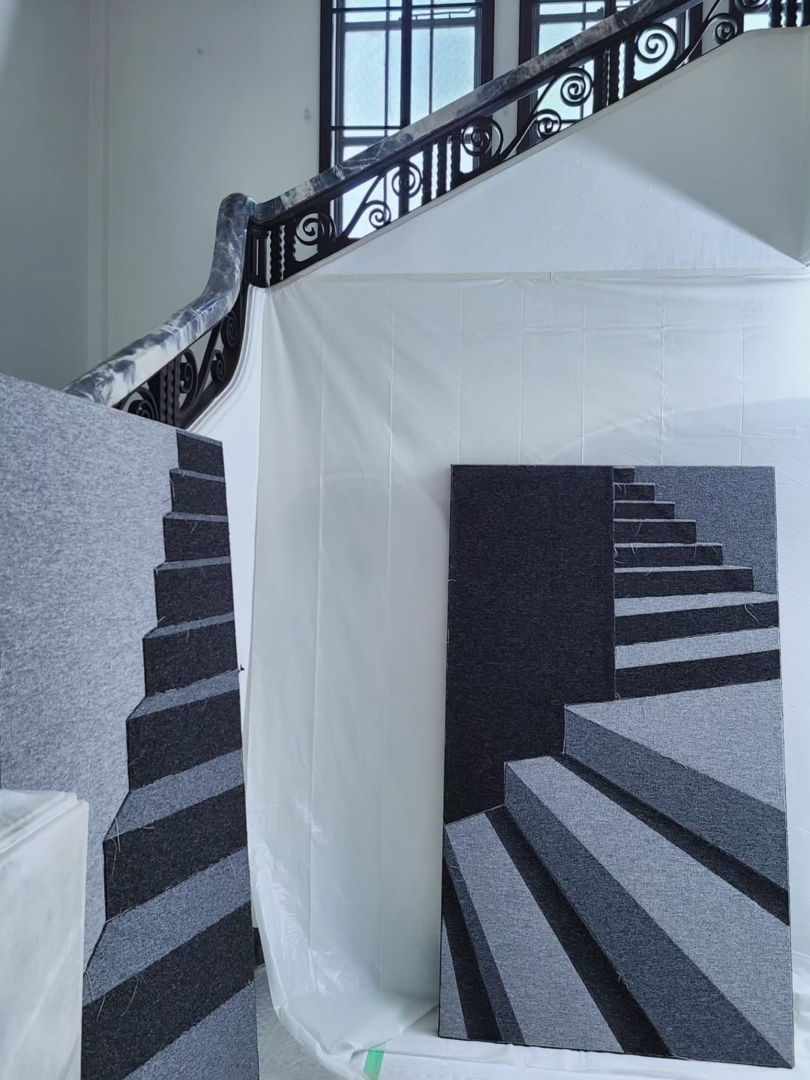
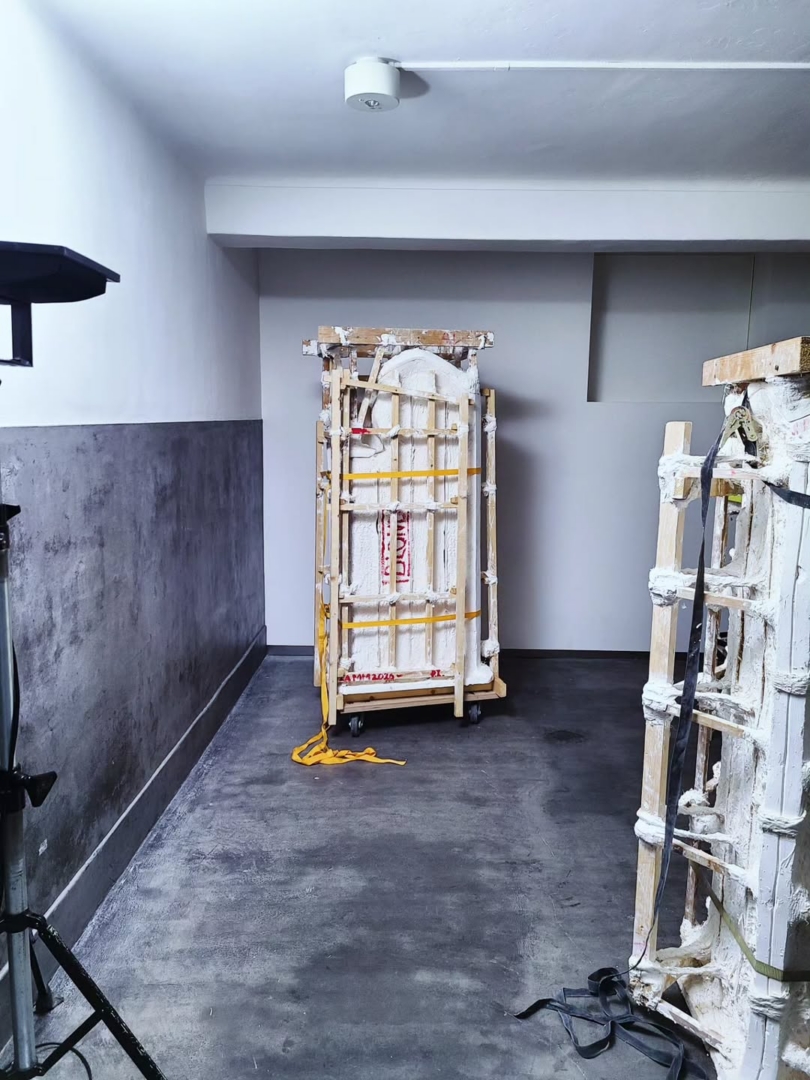
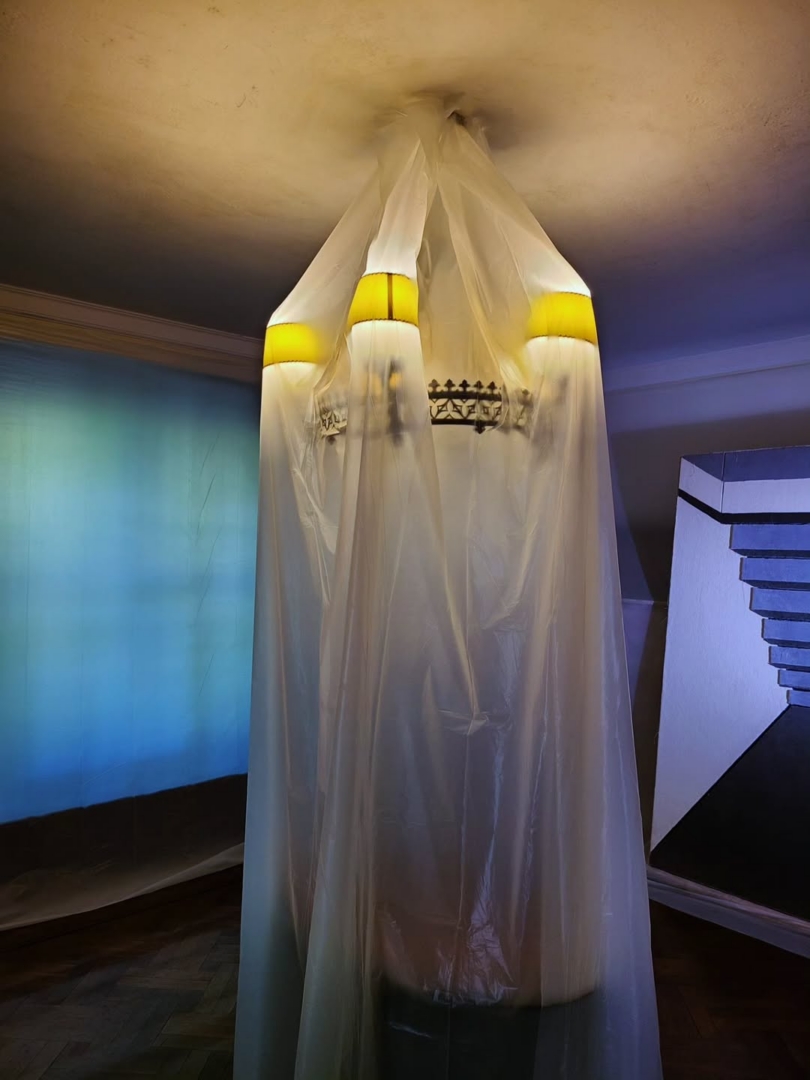
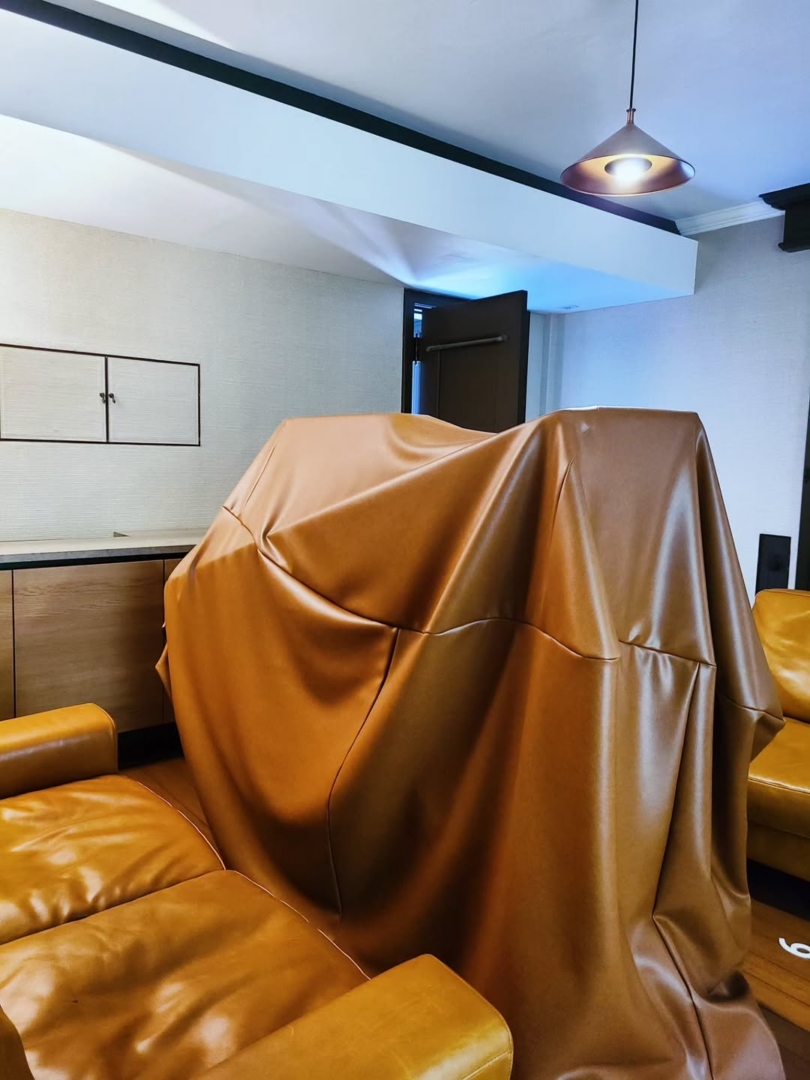
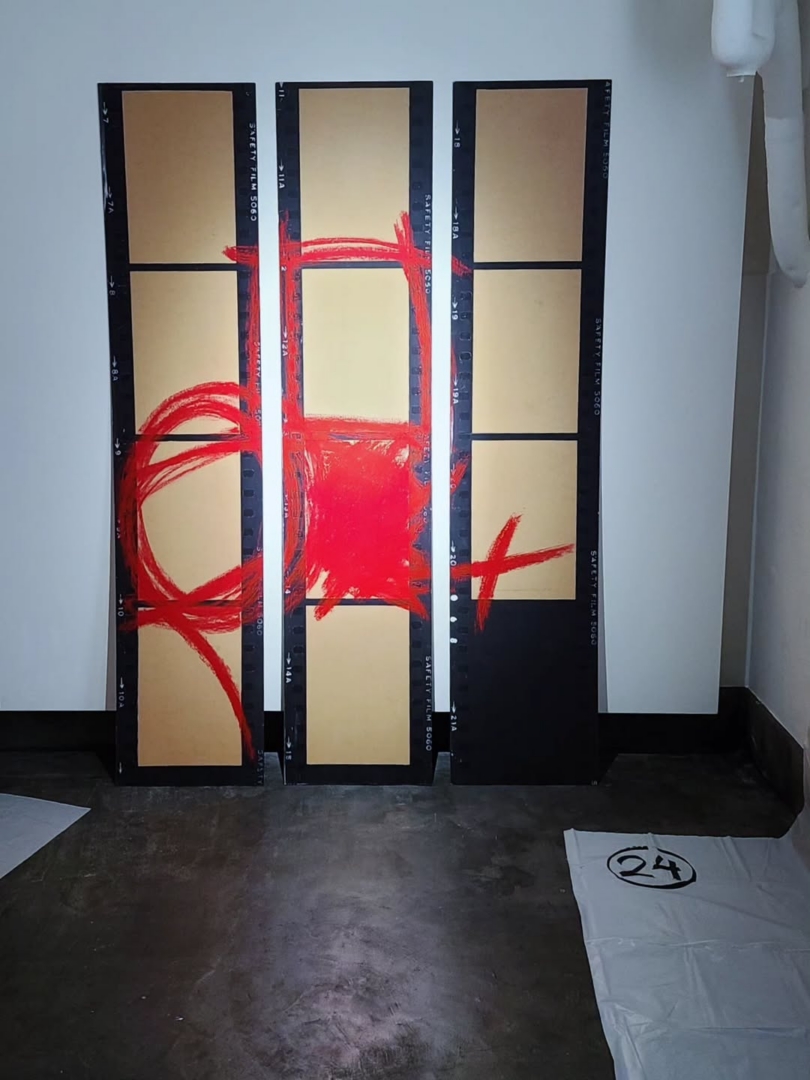
Photographic panels depicting staircases are installed next to an actual stairwell: the architecture doubles back on itself, the structure and its representation facing each other without explanation. Some rooms are partially enclosed in transparent plastic sheeting, certain ones numbered, as though the show were a sequence of isolated sample environments.
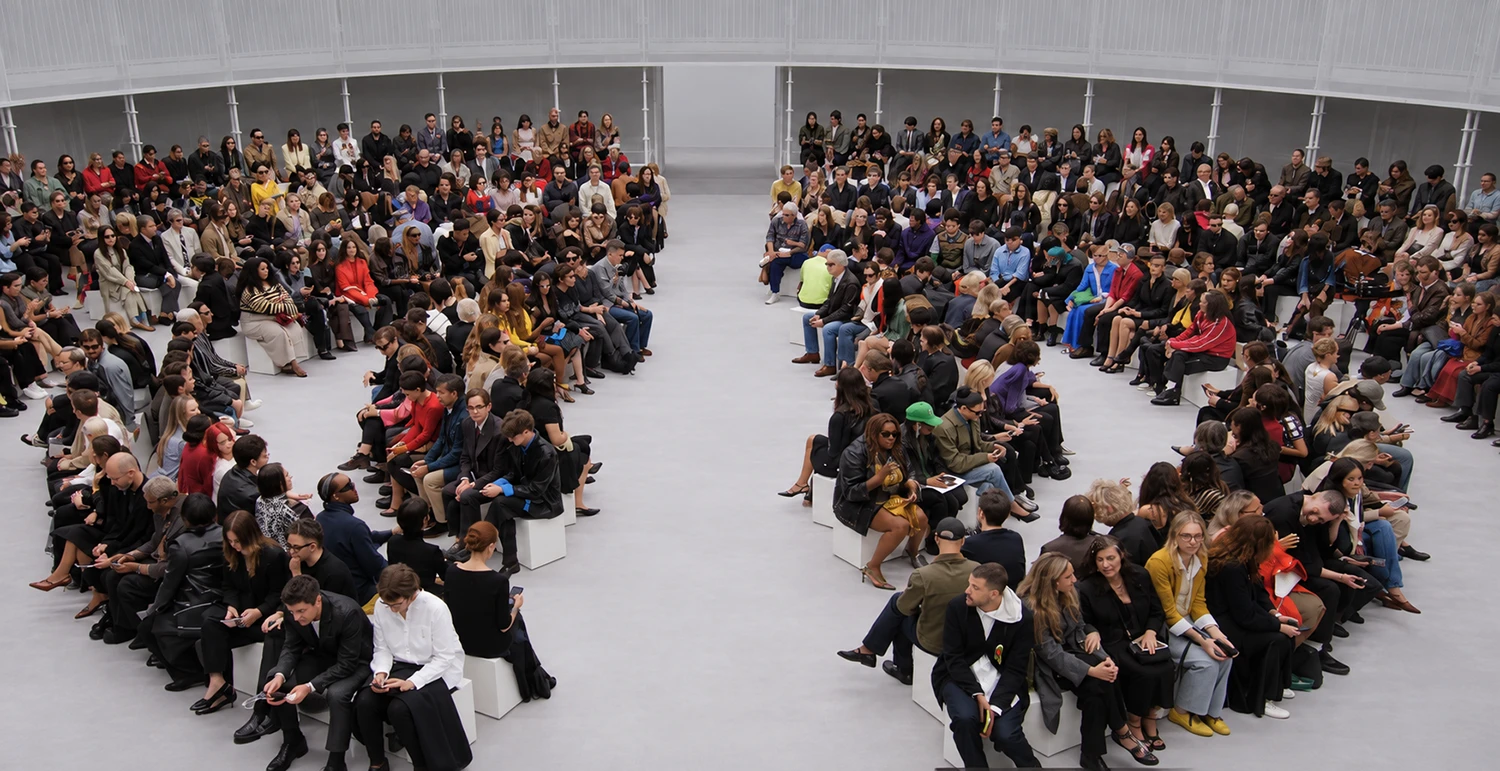
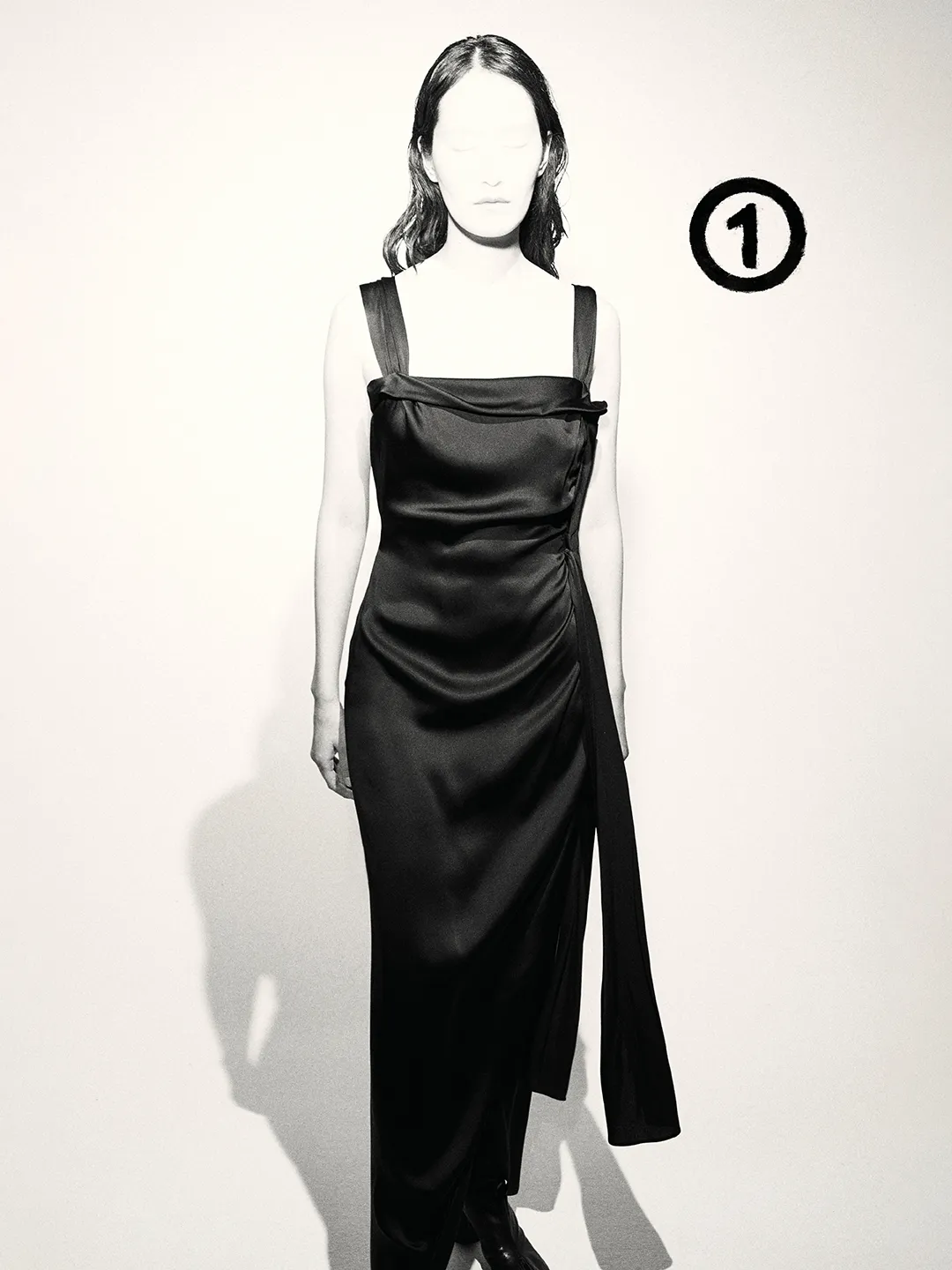
The exhibition draws from specific moments in the career. Spring/Summer 1996, when garments were constructed on Stockman forms using brown paper patterns, then worked directly on the body during the presentation. Autumn/Winter 2005–06, when models wore masks built from their own hair extensions and wigs. Spring/Summer 2006, staged in a derelict Parisian garage.
Kudan means “nine steps,” a reference to the terraced slopes of the Edo period. The area, close to the Imperial Palace, has an unusual stillness for Tokyo — and a marked history. The Great Kanto Earthquake of 1923 physically reshaped the landscape and forced a shift in construction: reinforced concrete replaced timber, and the architecture of the reconstruction period became a testing ground where European aesthetics collided with Japanese sensibility and seismic engineering.
Naito Tachu architecture: earthquake-resistant structure at Kudan House
The villa was commissioned in 1927 by Mankichi Yamaguchi V, who wanted a house that would not give way. The engineer Naito Tachu applied his theory of earthquake-resistant walls, producing a reinforced concrete shell that survived both tremors and the air raids of 1945. For Margiela, this resilience is more than historical context. It is a structure that holds the weight of time the way his garments held the weight of the body — by showing the skeleton, not concealing it.
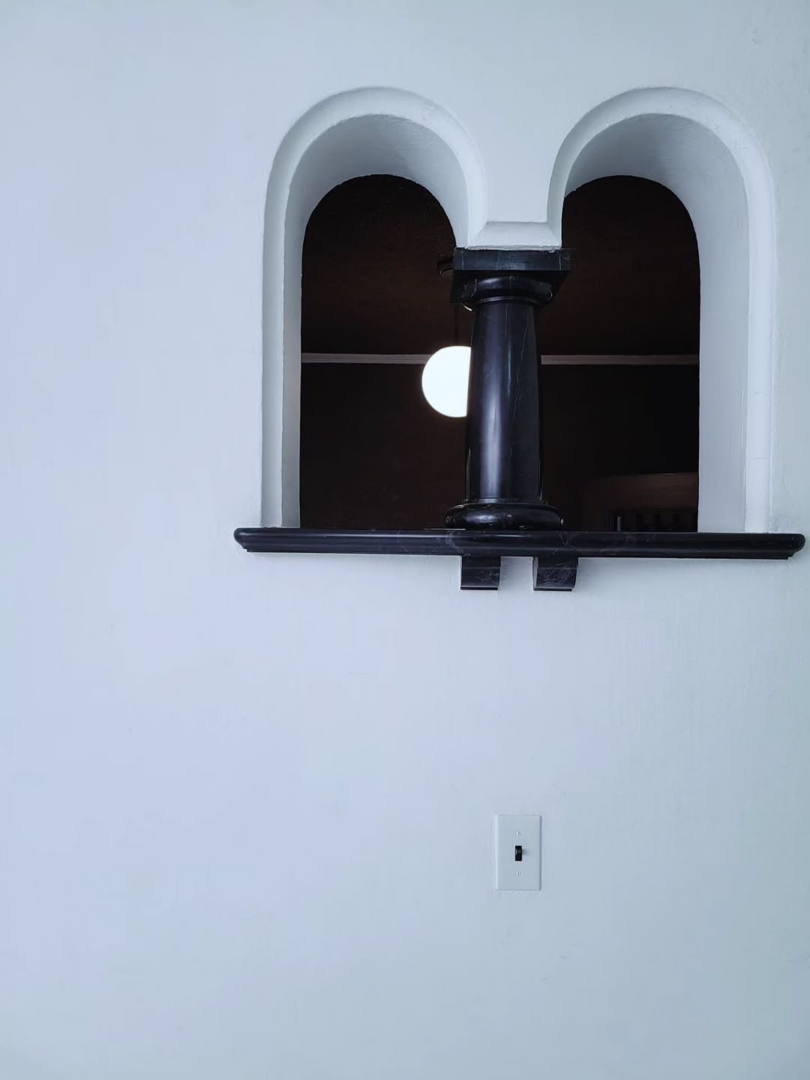
The villa has Iberian roof tiles and arched windows, but its interior conceals a traditional tatami room. Yamaguchi V had commissioned the cabinetmaker Megumi Kajita to furnish the house. Nearby, the Yasuda residence was Yoko Ono’s childhood home, featuring a Castilian rotunda from which a young Ono would watch the parties below.
Margiela enters this layered space by refusing the white cube. He occupies basements, kitchens, private quarters. Domestic memory replaces the neutrality of the museum. It is not the first time: in 2000 he opened a store inside a historic Ebisu residence. Twenty-five years later, the return to the domestic format confirms that for him, commercial neutrality is an abdication, not a choice.
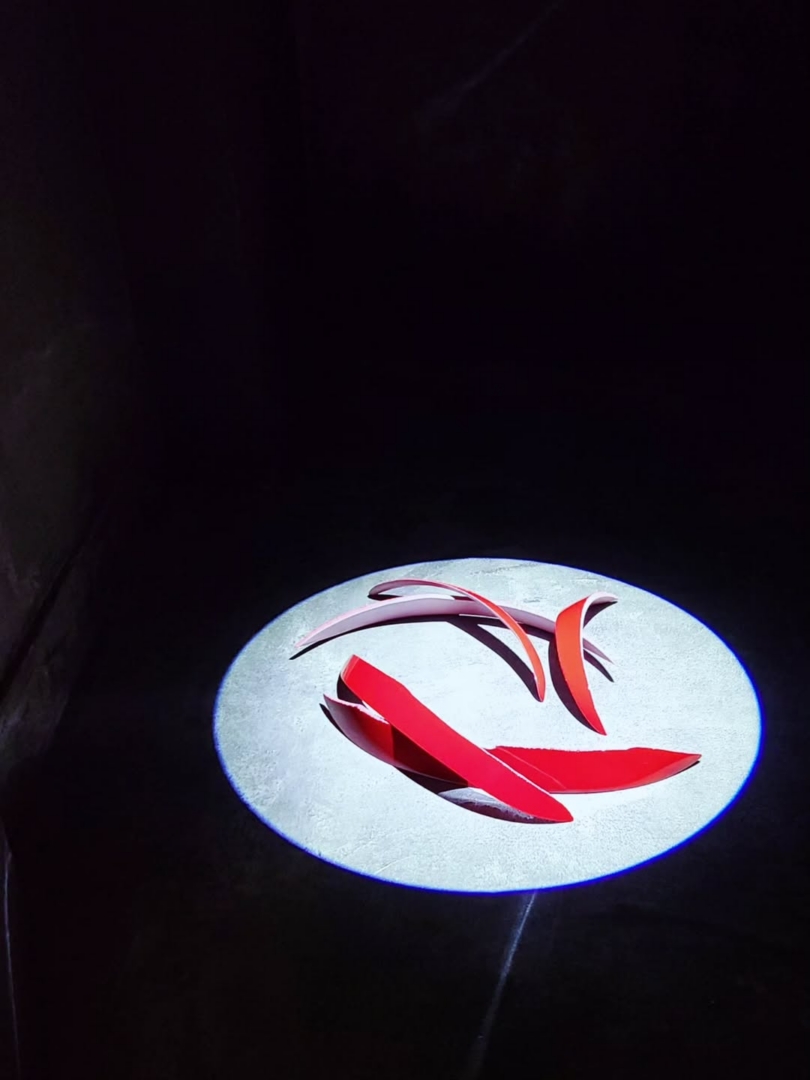
The exhibition moves through separation. Works are distributed across individual rooms, corridors, and transitional spaces. Doorways frame partial views. Objects are positioned at a distance. Some installations occupy corners; others stand at the centre of otherwise empty rooms. Nothing fills the surrounding space. Each work answers only to its immediate environment — and the silence around it is part of the work.
Martin Margiela exhibition design: domestic space versus white cube
The thread running through Margiela’s career has always been the trace. In his 1989 debut, models wore Tabi boots dipped in red paint and walked across a white fabric runway. The Kudan House picks up that logic: the villa’s cedar has darkened over time, and for Margiela that darkening is the same kind of registration. The architecture becomes a surface that absorbs the passing of time — a permanent version of paint on a floor.
Film Dust and Vanitas by Martin Margiela: time, decay and body materials
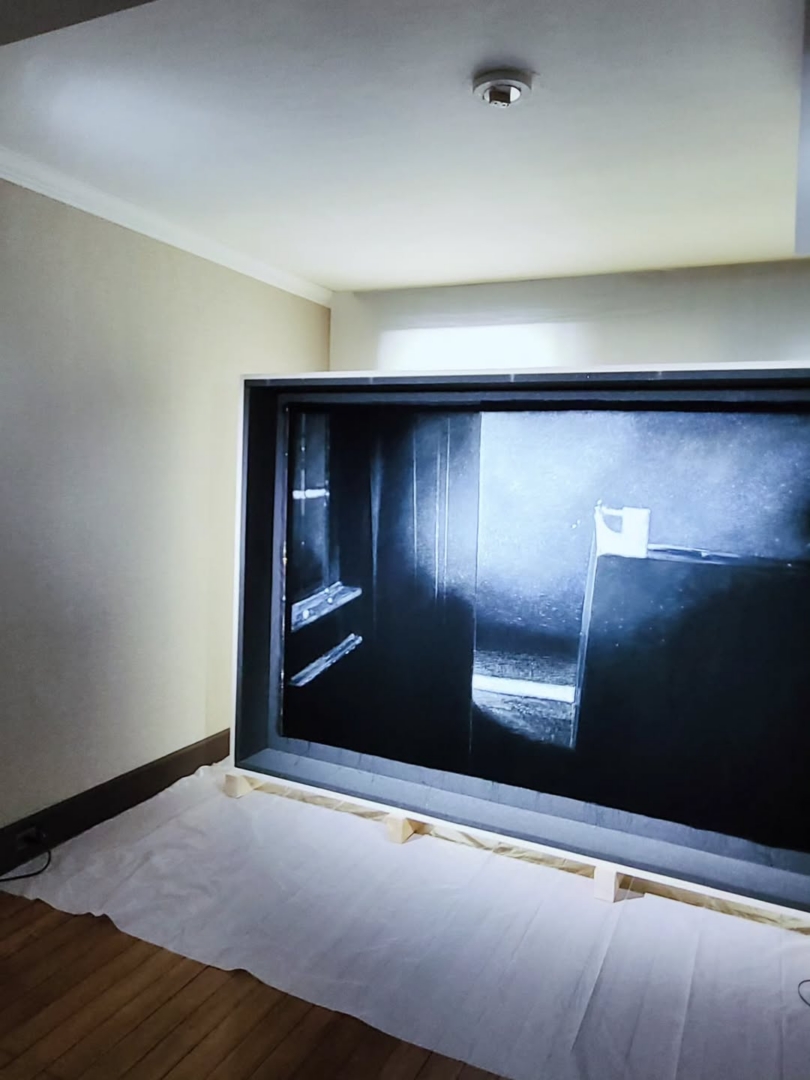
In the Film Dust series, Margiela works from microscopic particles found on Super-8 film — the organic residue that accumulates on any surface left to time — and enlarges them into oil paintings treated with glass beads. What is usually removed during image production becomes the subject here. The scale shifts: the invisible is made visible. Dust on film is time passing, reduced to matter, finally made legible.
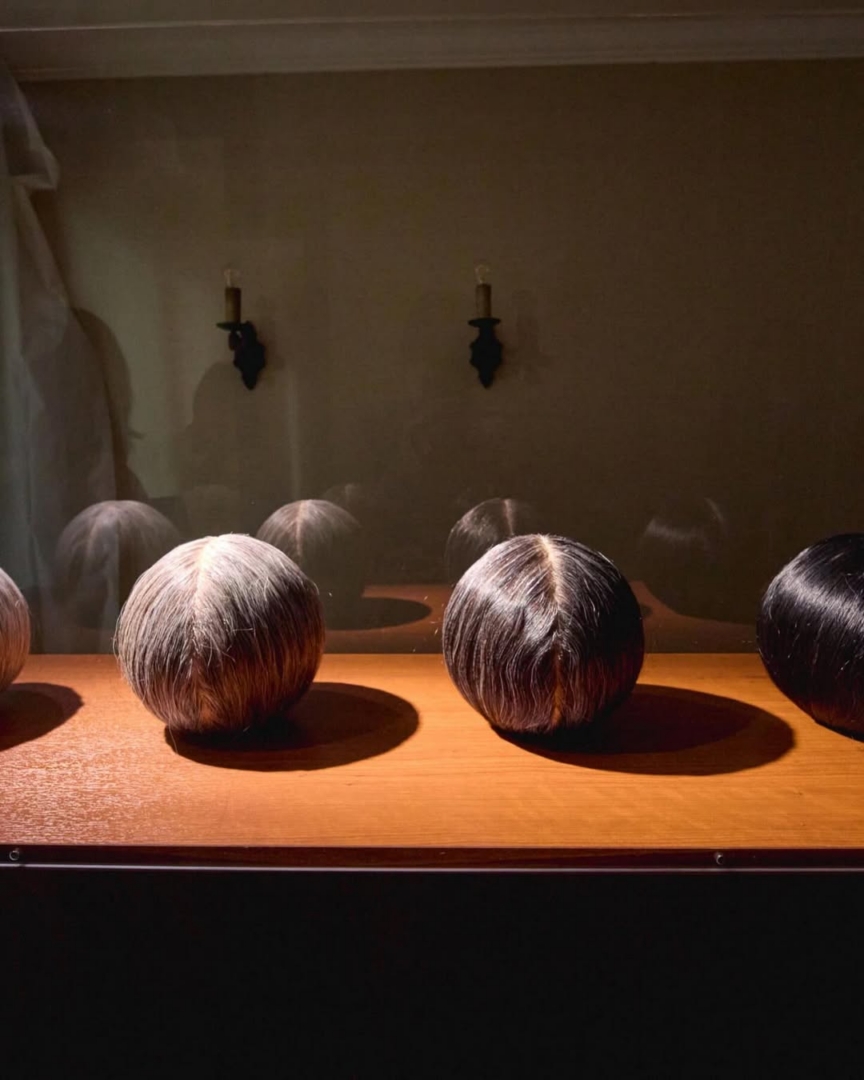
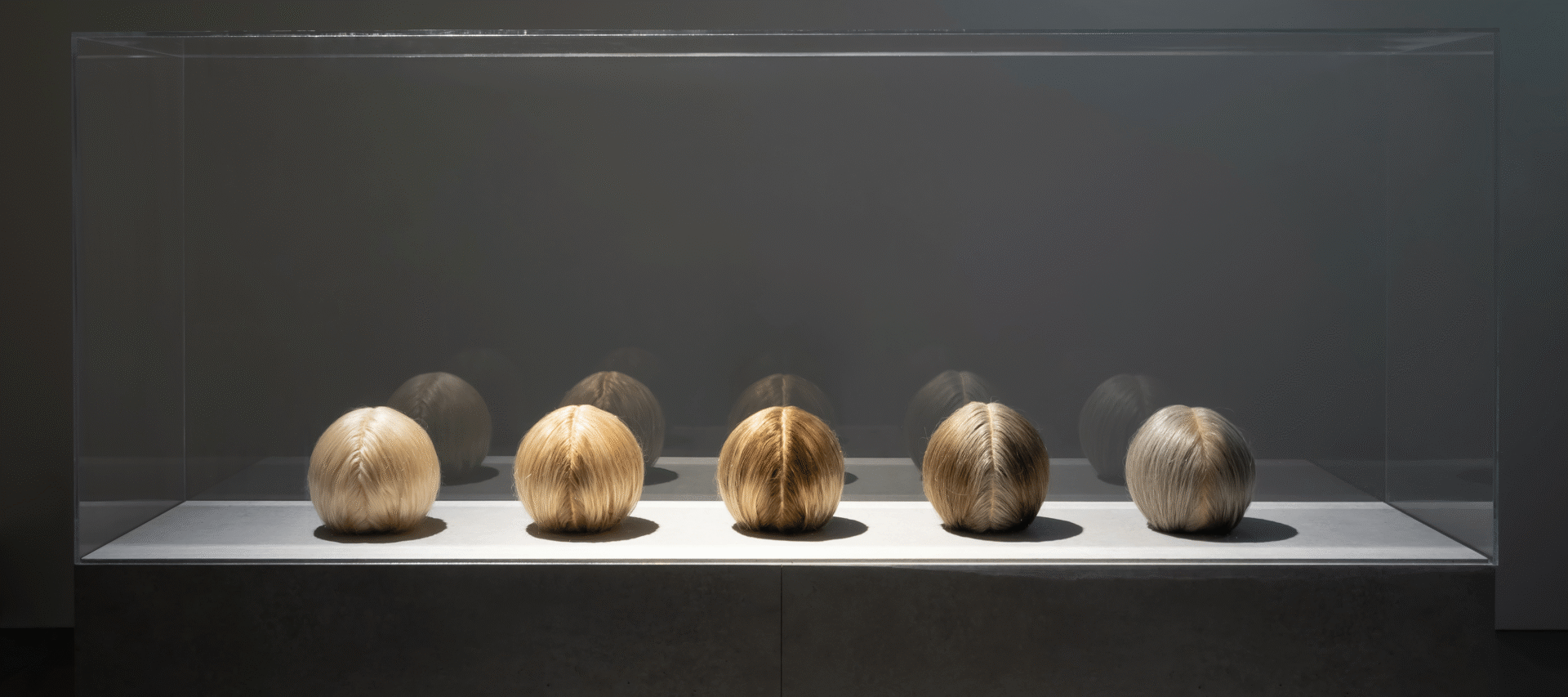
The Vanitas series takes this logic into biological territory. Silicone spheres covered in natural hair, shifting in hue from blonde through to grey. Hair is a recurring material in Margiela’s work; he has often cited the influence of his father’s profession as a hairdresser — a childhood observation that returned as raw material in his mature practice. The same material appeared in Autumn/Winter 2005–06, when hair masks obscured the models’ faces while maintaining a direct physical relationship with the body.
Barrier Sculpture by Margiela: urban objects and surface transformation
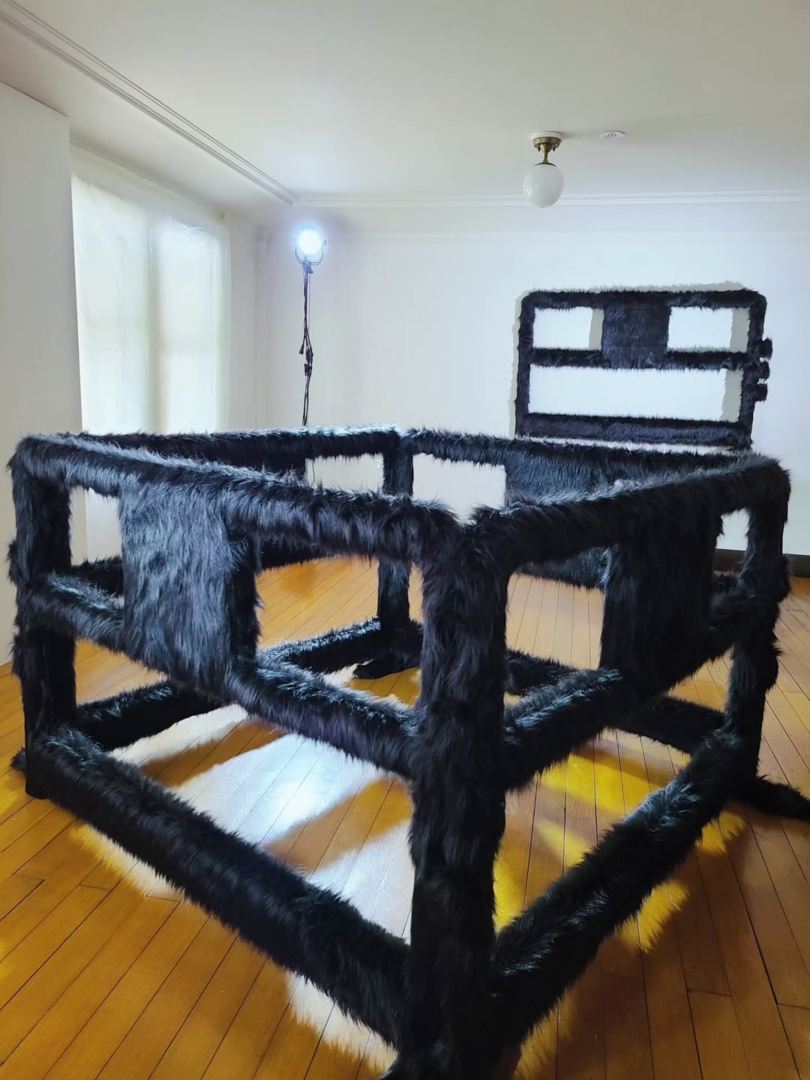
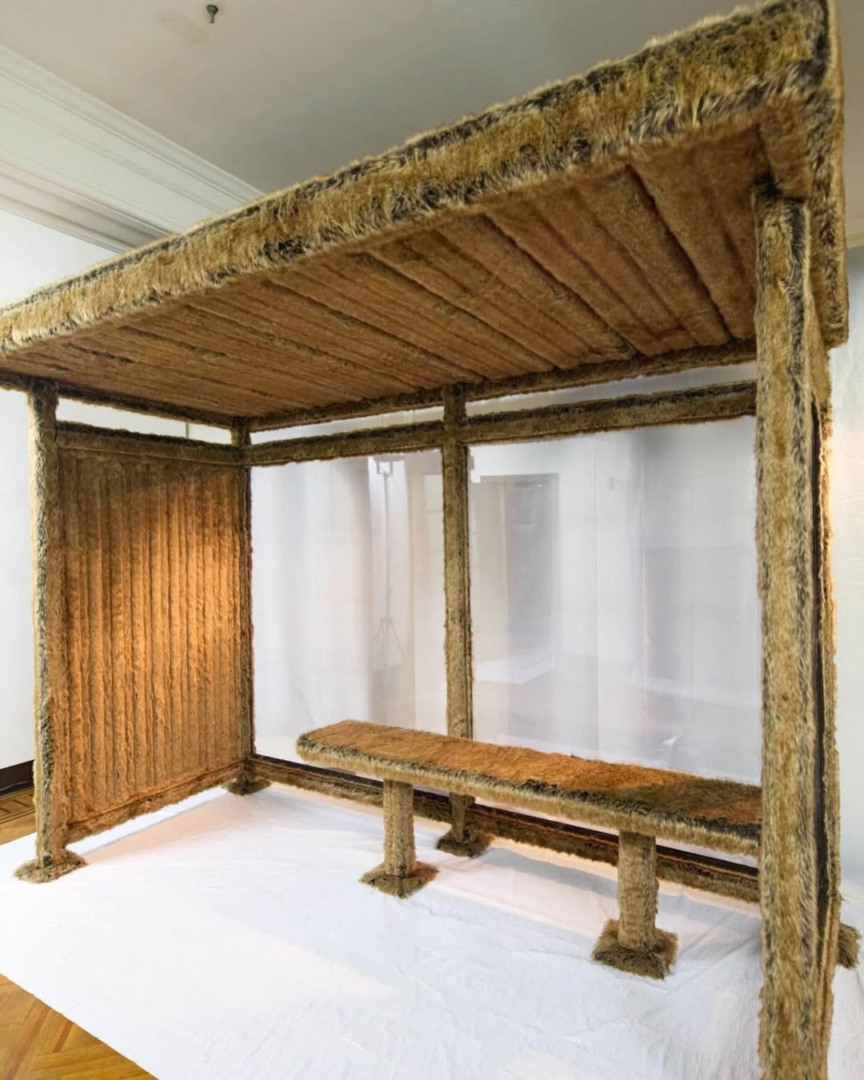
With Barrier Sculpture, Margiela covers cold metal street barriers in artificial fur. The gesture recalls his early work coating jewellery in white paint and watching it crack to expose the object beneath. Softening an urban barrier is not decoration: it is a way of making a functional object visible through its opposite.
Inside the Kudan House, this approach extends to the architecture itself. The change of surface registers time without reconstructing anything.
The 1927 cedar is still there, having outlasted war and earthquake. The house held. What Margiela leaves behind, having passed through it, is the same thing he has always been after: the trace of a presence that has already stepped aside.
Exhibition: Martin Margiela at Kudan House, Tokyo — April 11–29, 2026. The villa, a Registered Tangible Cultural Property, was designed by Naito Tachu, Shichiro Kigo, and Kenji Imai.