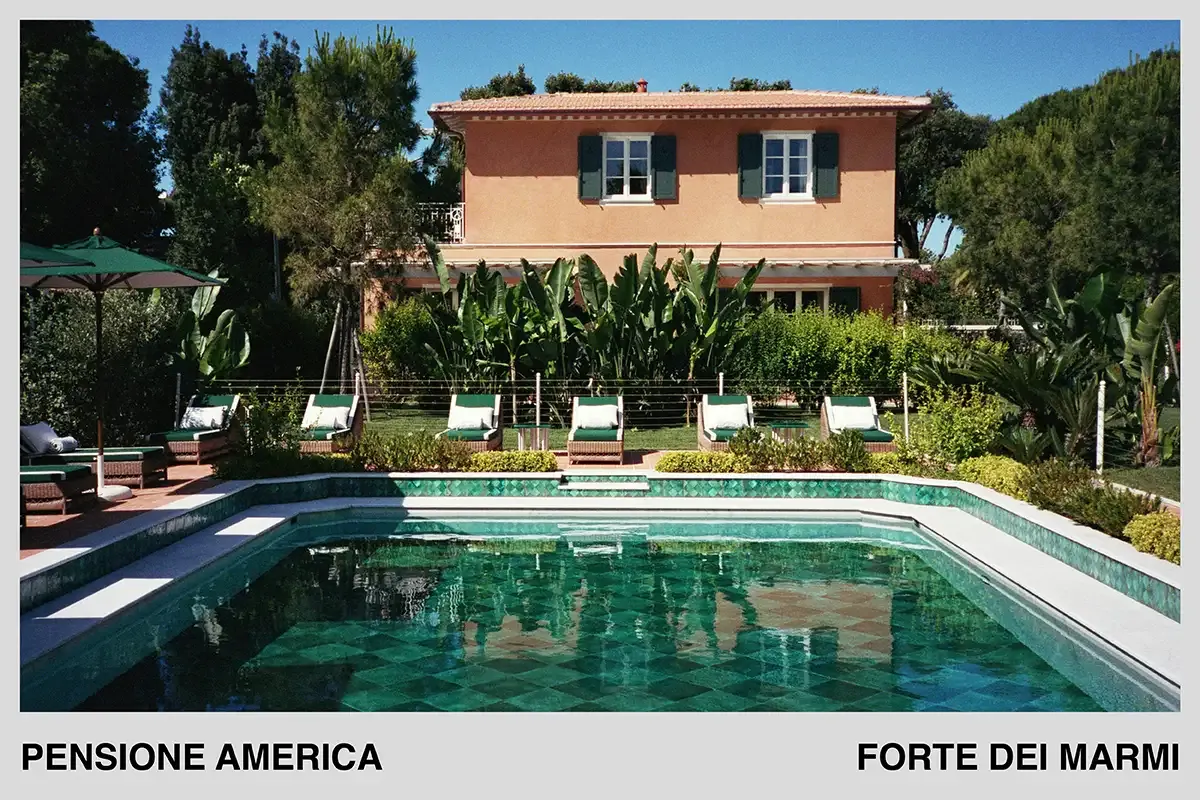
Pensione America’s garden restoration recovers the villa’s 1920s and 1930s botany
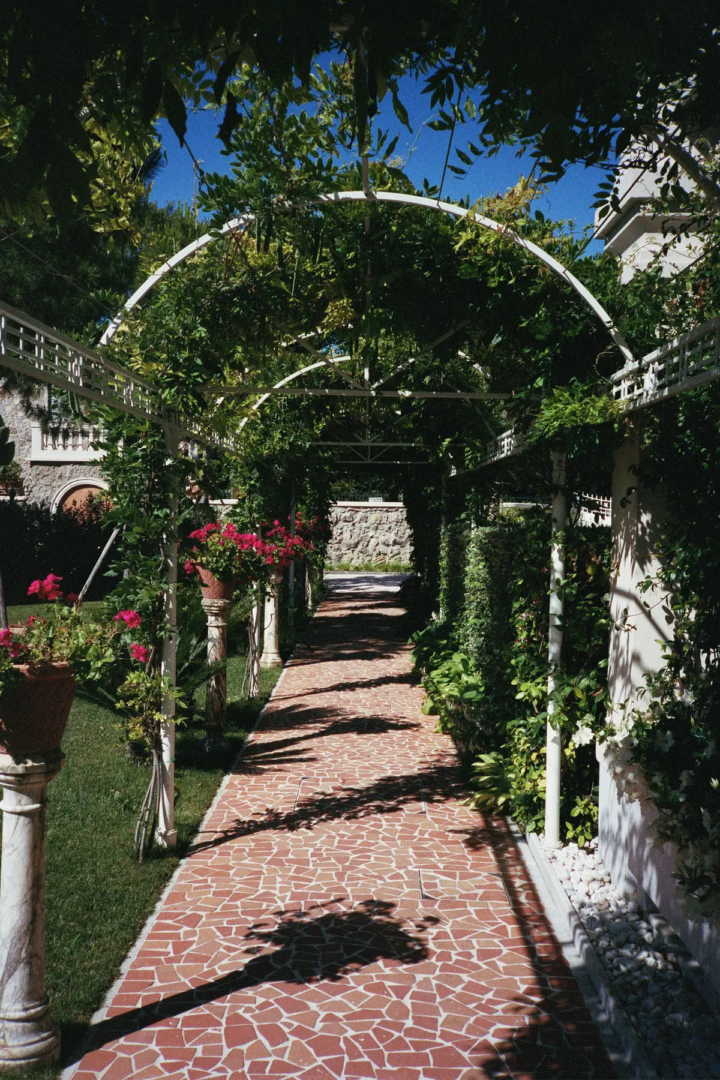
Banana trees, palms, lemons, bougainvillea, and the original loggia wisteria trace Pensione America’s garden back to Forte dei Marmi’s Roma Imperiale in the Twenties and Thirties heyday
Pensione America in Forte dei Marmi: the rhythm of the day comes before the hotel
Pensione America occupies a 1899 villa in Roma Imperiale, the part of Forte dei Marmi where villas sit behind hedges, tennis courts carry family histories, and beach clubs define the grammar of summer. The property became a pensione in 1922 and has now entered Collezione Em, the hospitality group of the Maestrelli family, which also includes Villa Roma Imperiale and Bagno Assunta in Forte dei Marmi, Violino d’Oro in Venice, and Grand Hotel Minerva and Hotel Brunelleschi in Florence.
Pensione America has 18 rooms and suites, including the villetta. Under twenty rooms, a hotel can still recognize faces. Service becomes conversation. The day can stretch. Guests meet the same people at breakfast, at the gate, by the pool, at the beach. The house keeps a domestic register inside a five-star structure.
For Sara Maestrelli, who directs the creative and operational side of Collezione Em, Pensione America begins from a question of transmission. The project carries a private way of living Forte dei Marmi: family summers, morning conversations, the tennis courts, the beach, the market, the habit of returning to the same places. Opening it as a hotel meant deciding how those memories, sensations, and forms of local knowledge could become part of a stay for people arriving from elsewhere.
“The renovation mattered,” Maestrelli says. “Pensione America is a five-star hotel now. With a high level of finishing, we wanted to keep the memory of what the pensione had been.”
How several generations of Forte dei Marmi shaped Pensione America’s design
The past Maestrelli speaks about belongs to several generations: the family, the town, and the architect Piera Tempesti Benelli, who has known Forte dei Marmi since childhood. “Piera is seventy-six and has been going to Forte since she was born,” Maestrelli explains. “She has memories from the Forties and Fifties. In that sense, Pensione America comes from several generations of memory of Forte.”
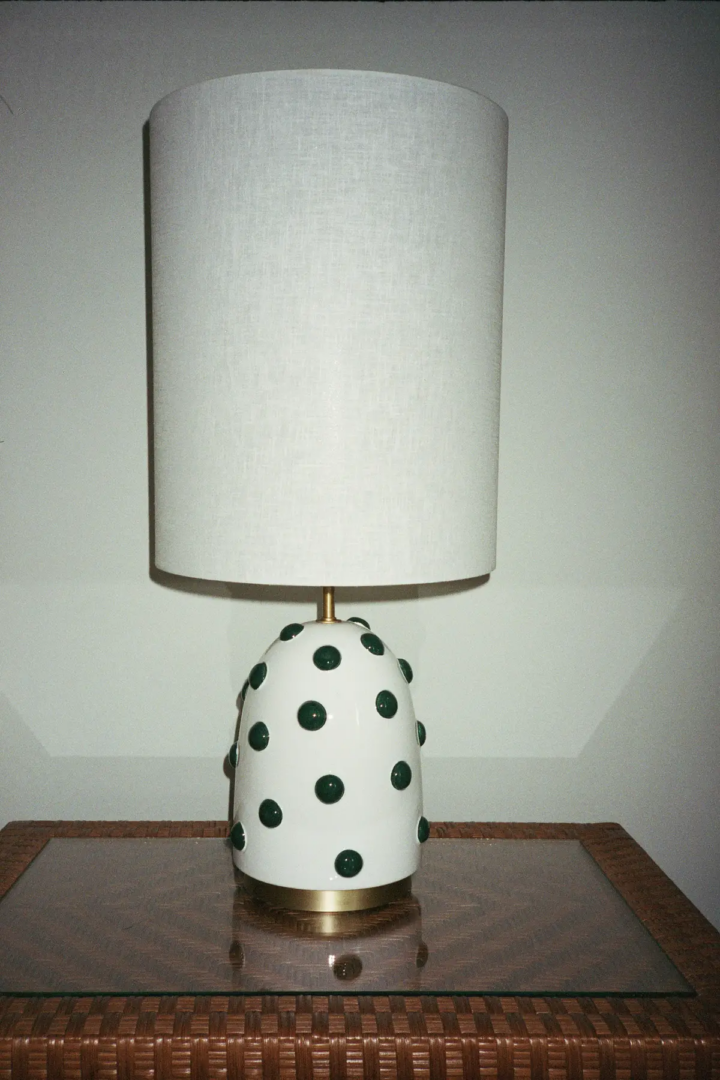
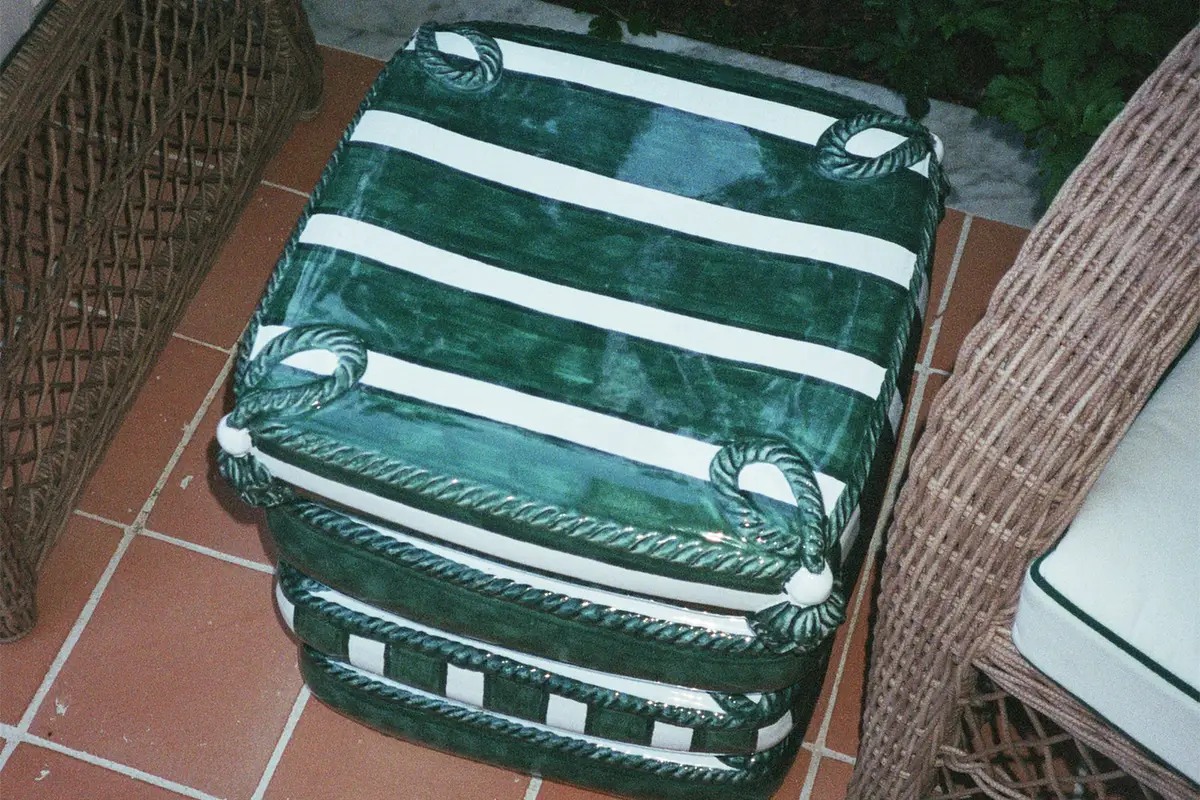
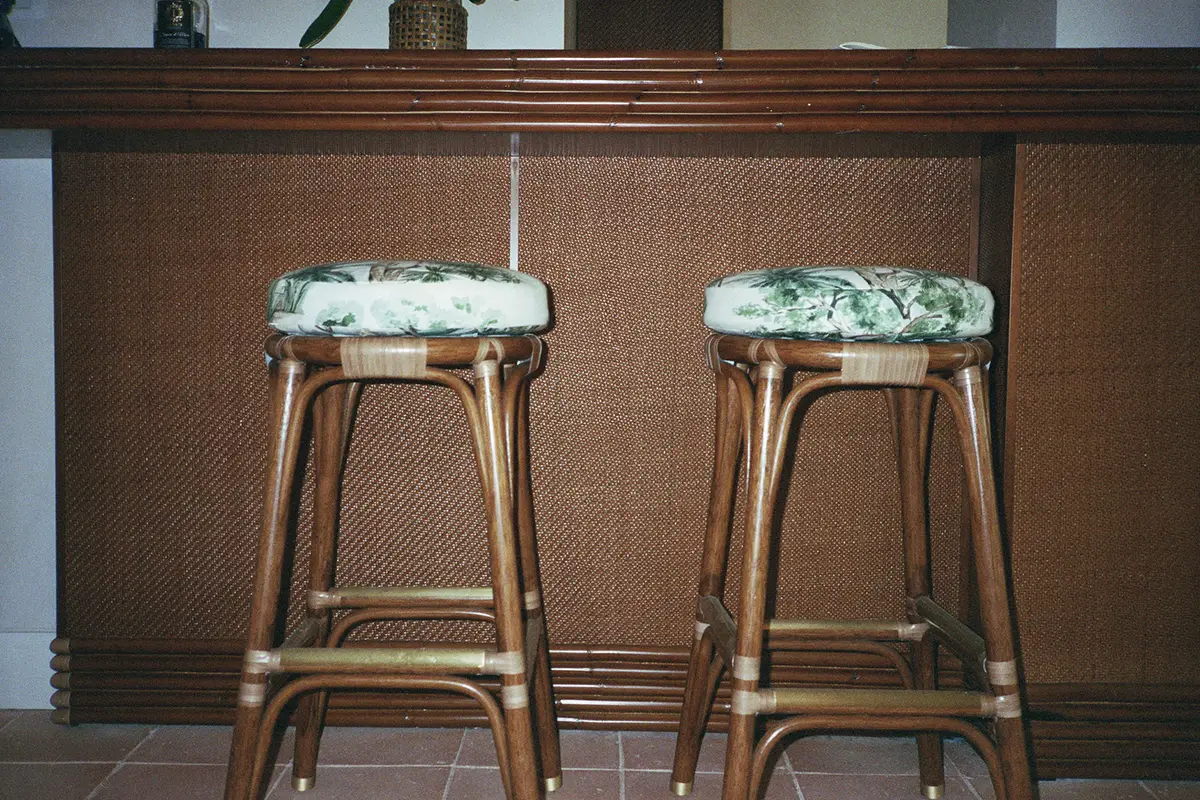
That continuity gives the project its position. Pensione America grows from people who knew the place before it became a project. The renovation follows this line: hand-painted ceramic tiles, bamboo furniture made by hand, and materials that keep the trace of touch and domestic familiarity.
“The tiles are by Nicolò Giuliano, a Sicilian artisan near Monreale, Palermo,” Maestrelli says. “In our family house at Forte, which dates between the late Sixties and the early Eighties, we have bathrooms with small hand-painted ceramic tiles. Pensione America has, in a way, the same idea as the bathrooms of our home.”
The bathroom becomes an example of the whole method: finishings reach the level expected from the property while keeping the trace of the old pensione, close to a seaside house, a family interior, an Italian culture of craft.
Why Pensione America’s 18 rooms create a different kind of hospitality
A small number of rooms creates a form of attention. Maestrelli speaks of the hotel as a place of privacy and quiet. Guests can remain reserved, as many do, and sense that someone is present, close, and available.
“There is a sense of home and, at the same time, a sense of privacy,” she says. “Our guests are respectful. They live the hotel in a calm way. The ratio between guests and staff means that someone is always there, discreetly, for them. At home there were many of us. Breakfast happened in waves. One person arrived, sat down, got up. Then someone else came. My aunt would return from the market and say: I bought this, go to the market and turn left. In a different way, we do the same with guests who stay longer. You sit down for a coffee and tell them where you went that morning, where to walk, where you had dinner.”
At Pensione America, private knowledge becomes hospitality through time, repetition, and small forms of recognition. Breakfast, advice, repetition, local names, small directions: these are the tools.
How Pensione America’s garden recovers the villa’s original 1920s character
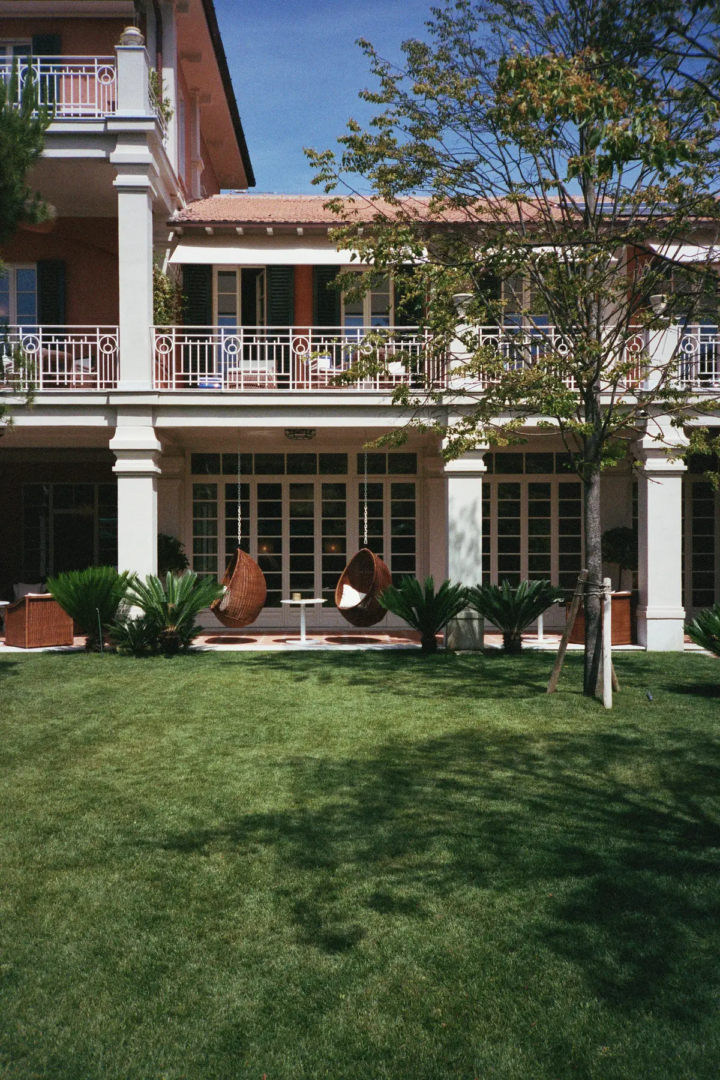
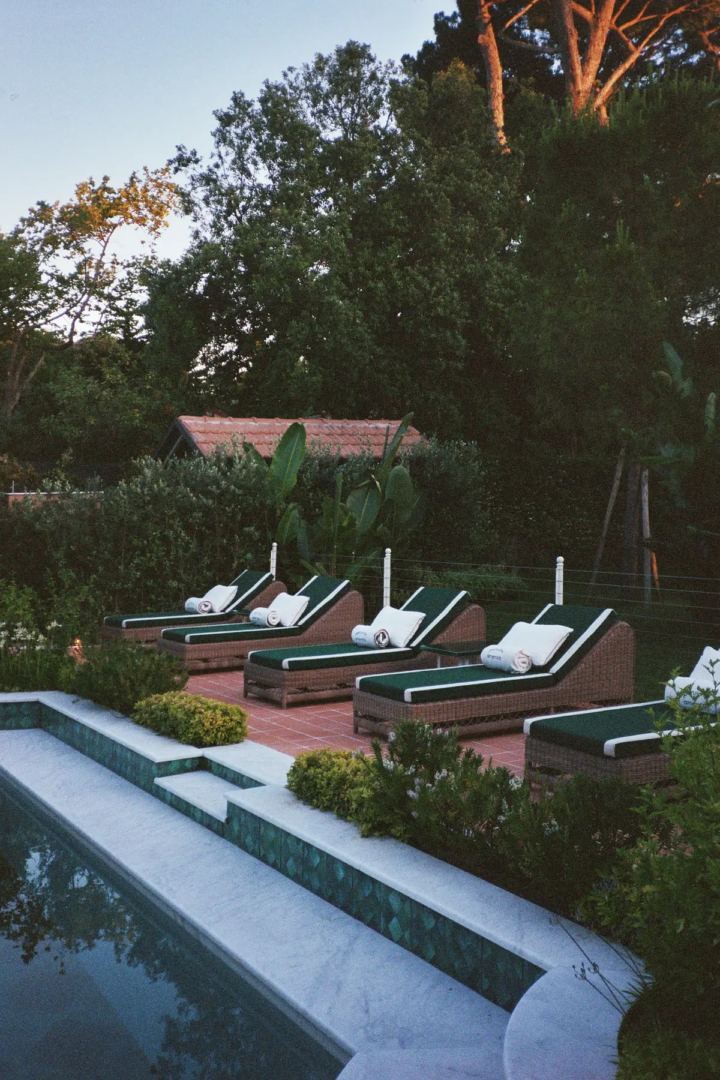
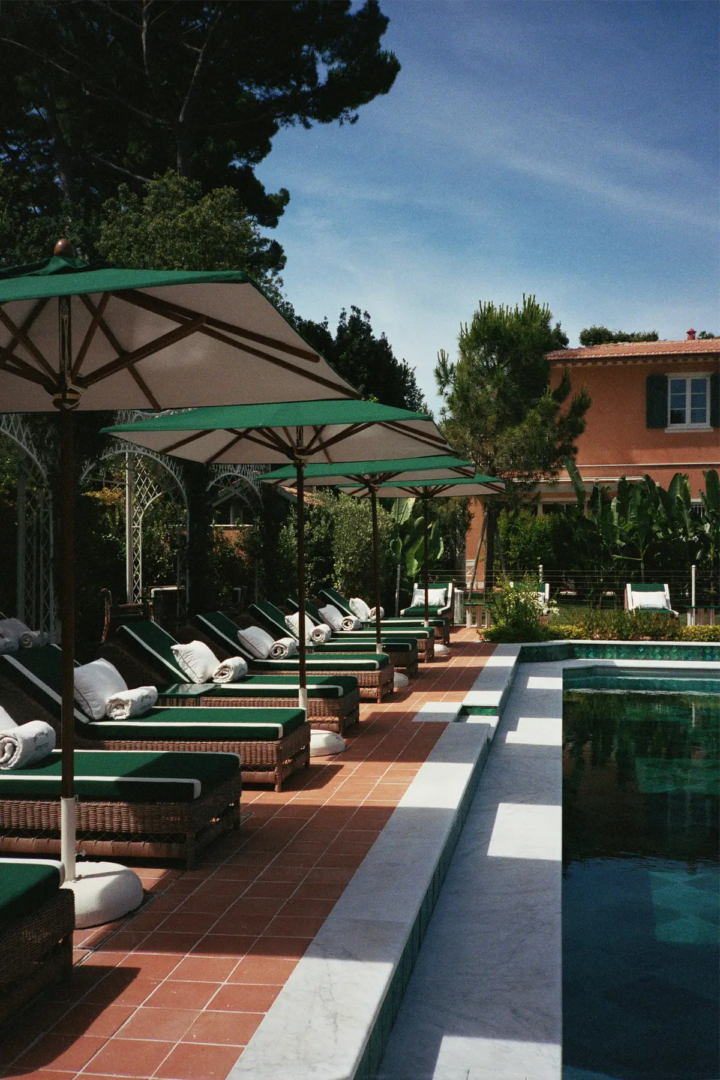
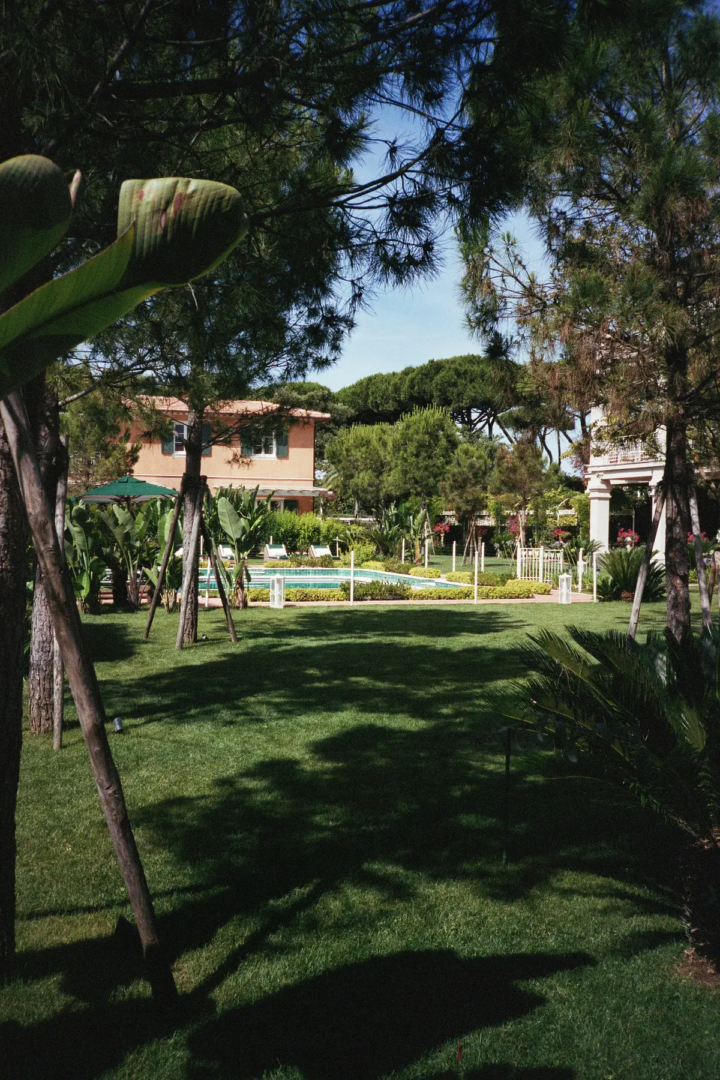
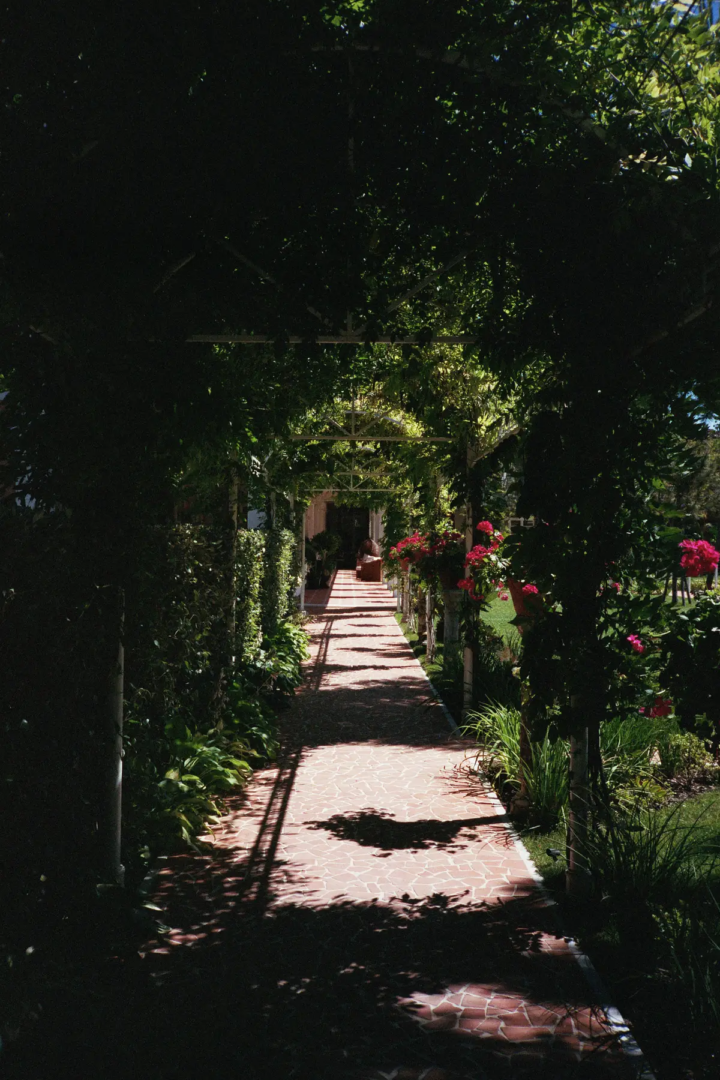
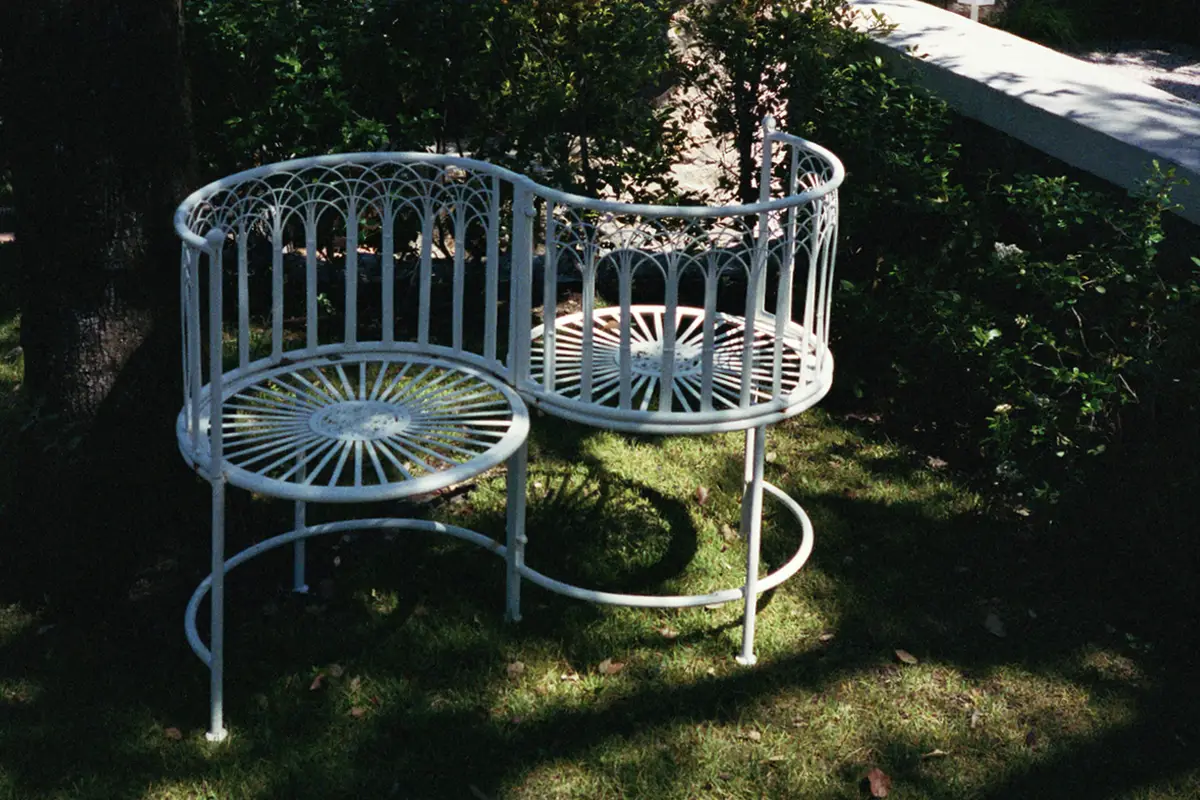
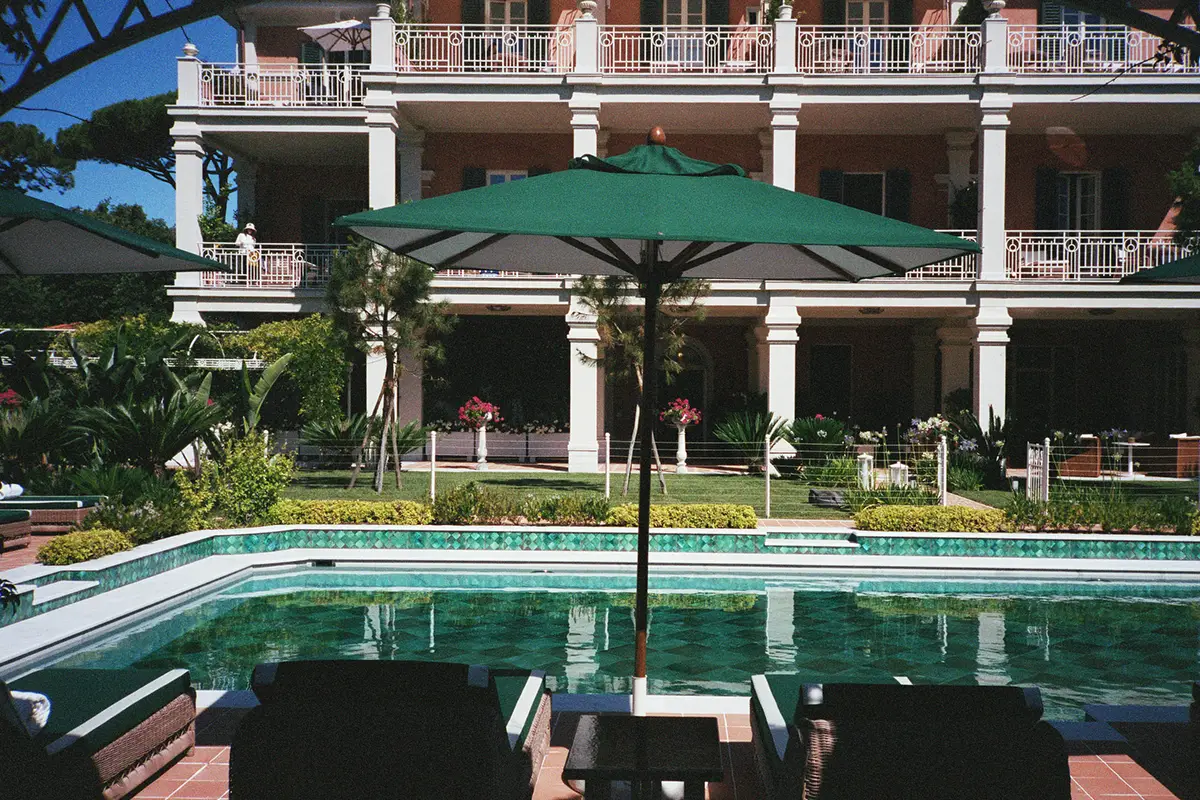
The garden follows the age and character of the villa. Maestrelli describes the planting as part of the architectural identity of Pensione America. “There is a specific botany that follows the architecture of the house,” she explains. “It is a little like the garden of The Philadelphia Story, George Cukor’s 1940 film with Katharine Hepburn, because that is probably how the villa was in its moment of greatest glory, in the Twenties and Thirties.”
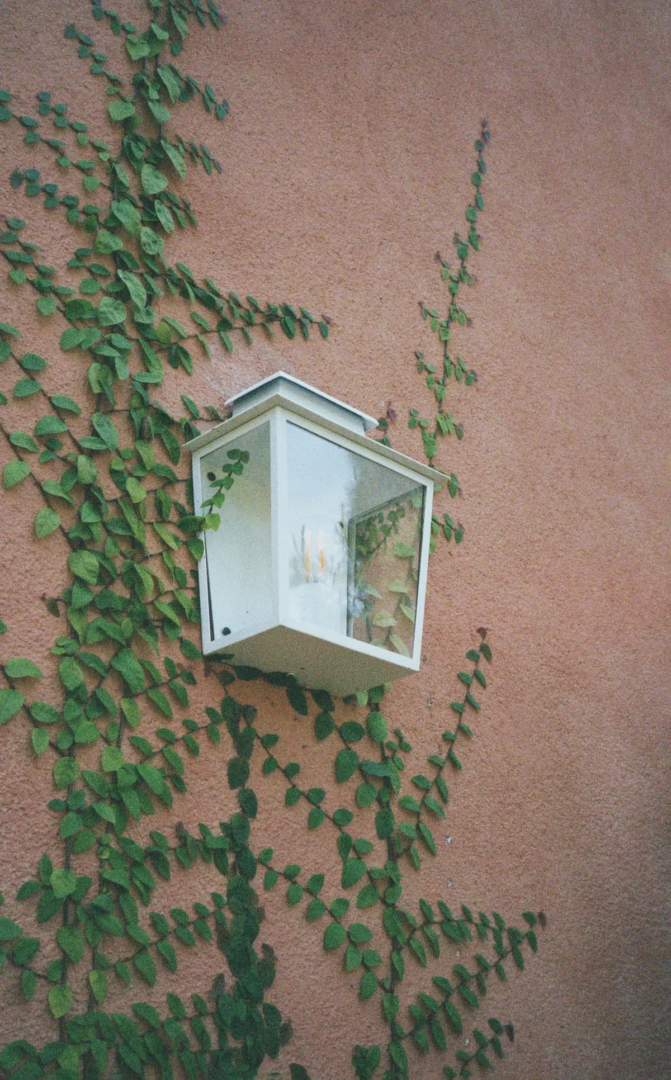
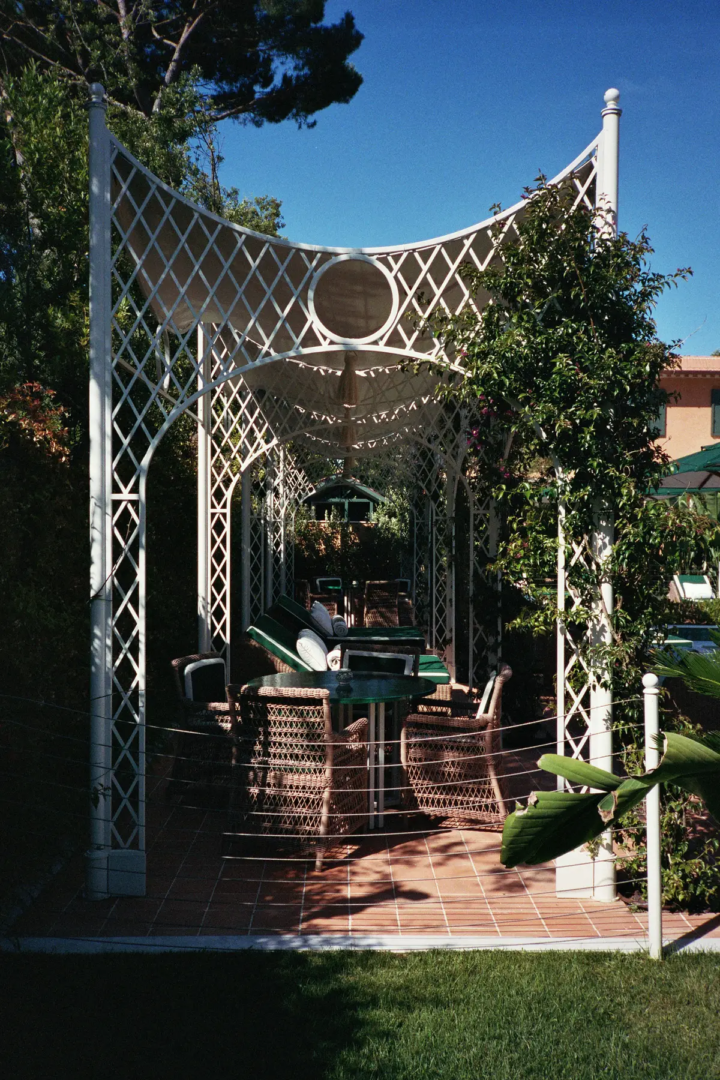
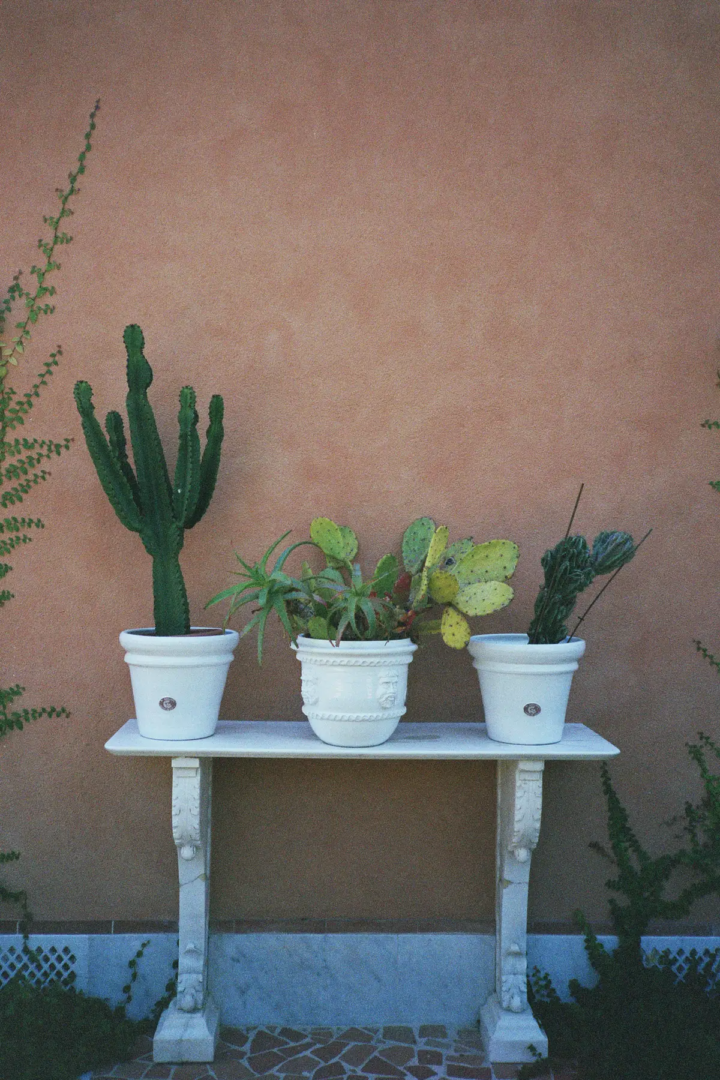
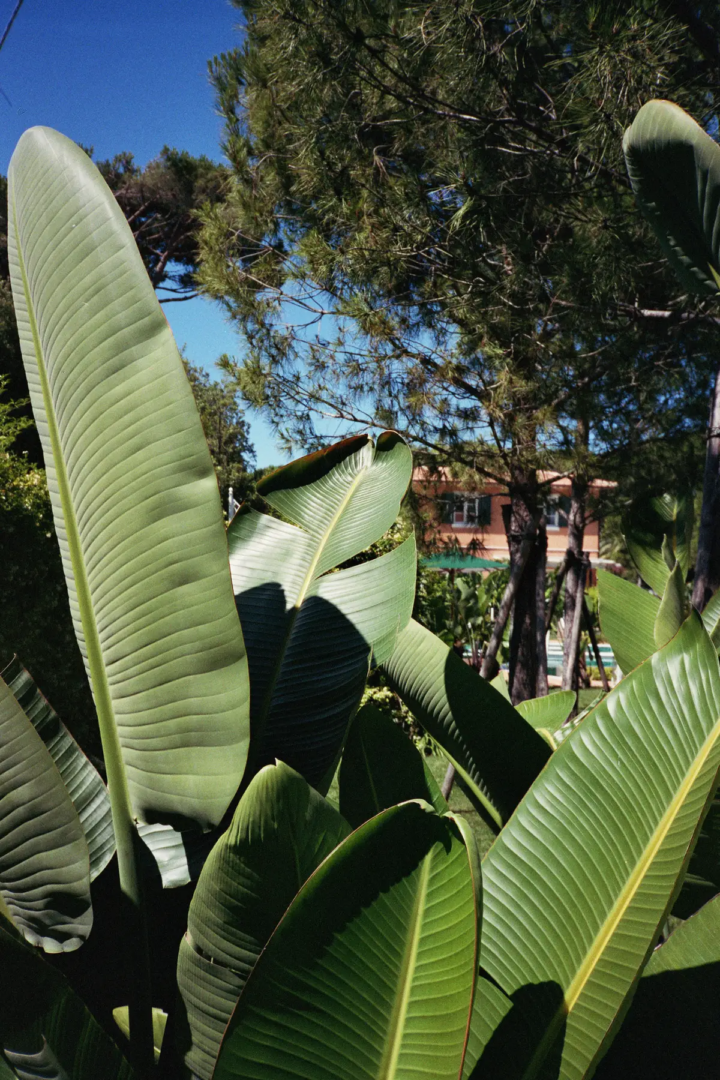
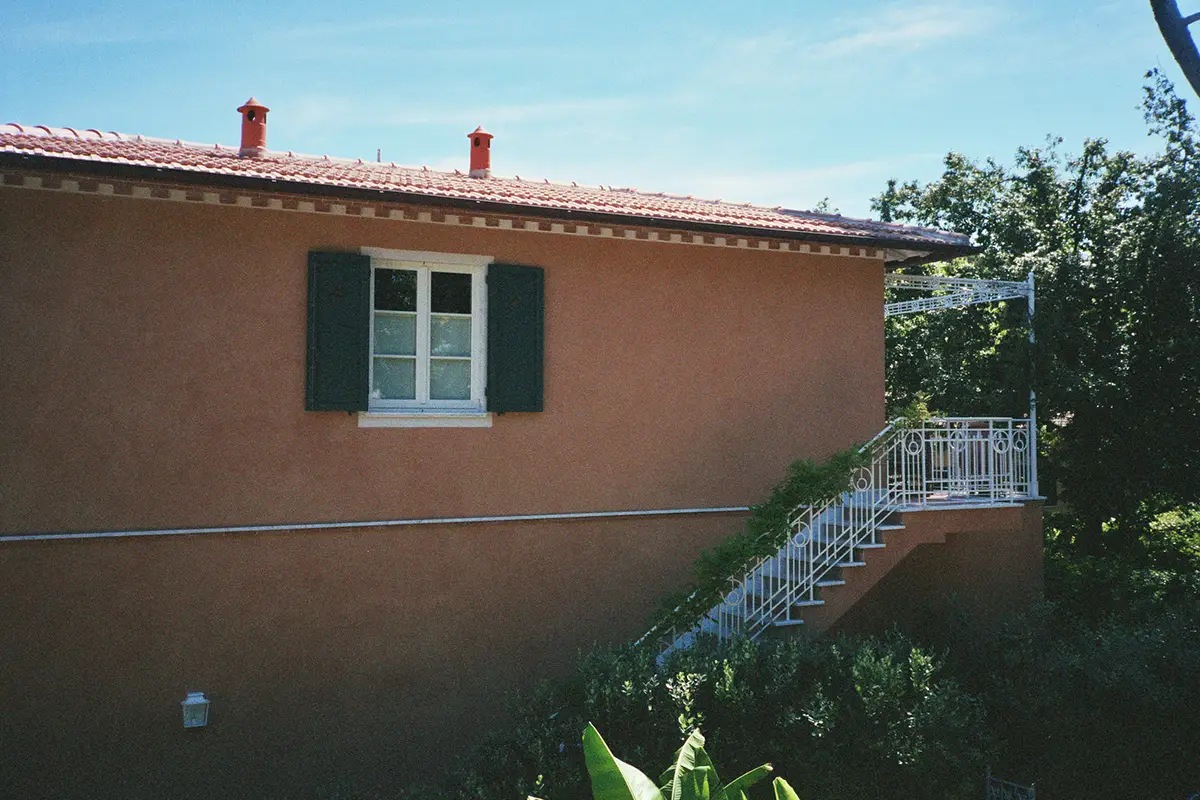
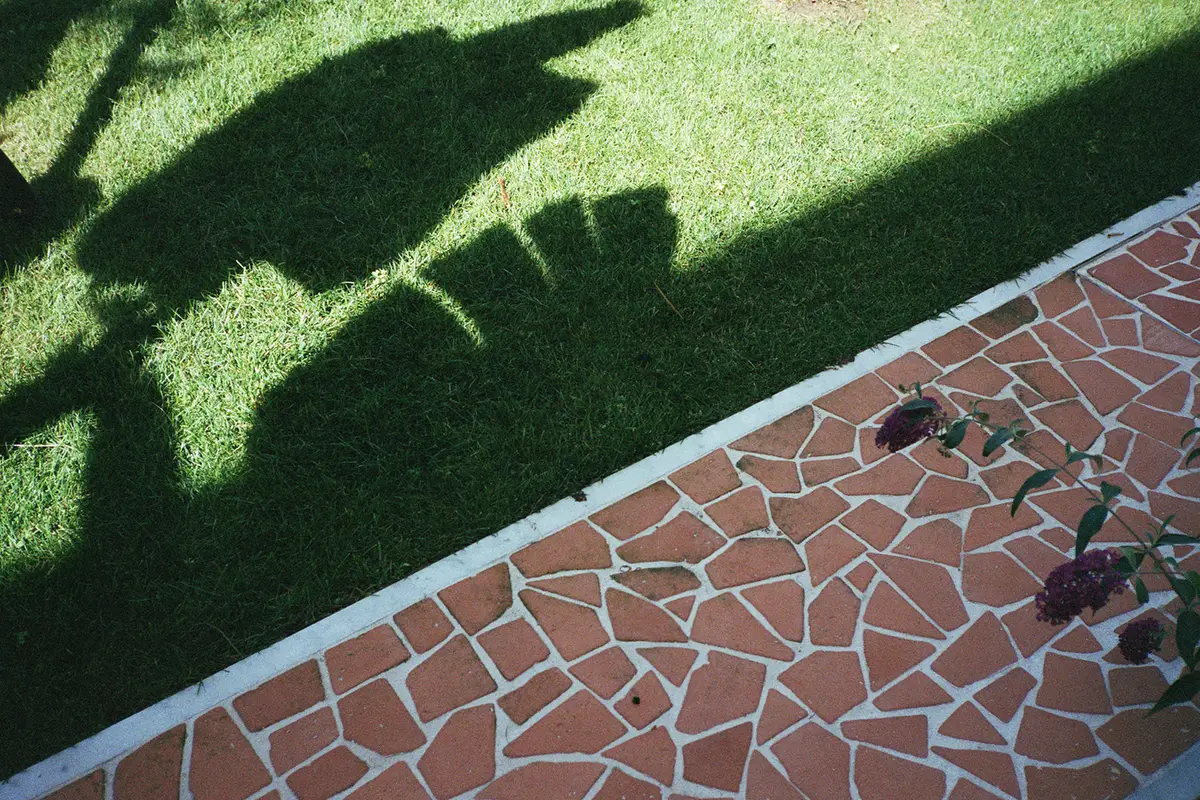
The original color of the façade was recovered by scraping through later layers, then repainted according to that trace. Around it are banana trees, palms, lemons, pines, bougainvillea, and wisteria. The wisteria along the loggia was already there and was kept alive and integrated. The garden gives the house its climate and situates the building in the villa’s period of maturity.
Inside La Villetta, the private 90-square-meter house within the hotel
Pensione America calls it La Villetta. It is not treated as an added suite, but as a house within the property. Set in the garden among pine trees and palms, it extends over two levels and measures around 90 square meters, with a garden terrace, a plunge pool, a rooftop terrace, a living area, two bedrooms, and two bathrooms. Its scale allows Pensione America to offer another way of staying: independent, domestic, still held within the rhythm of the hotel.
“It was already there, even if it was different and smaller,” Maestrelli says. “It recalls the typical house by the sea, with the main house and the smaller dependence for guests.”
Pensione America welcomes guests from thirteen years old. La Villetta can host families with older children, friends, or parents, giving them their own place at Forte dei Marmi while remaining inside the garden, the breakfast, the beach, the restaurant, the service, and the tempo of the house.
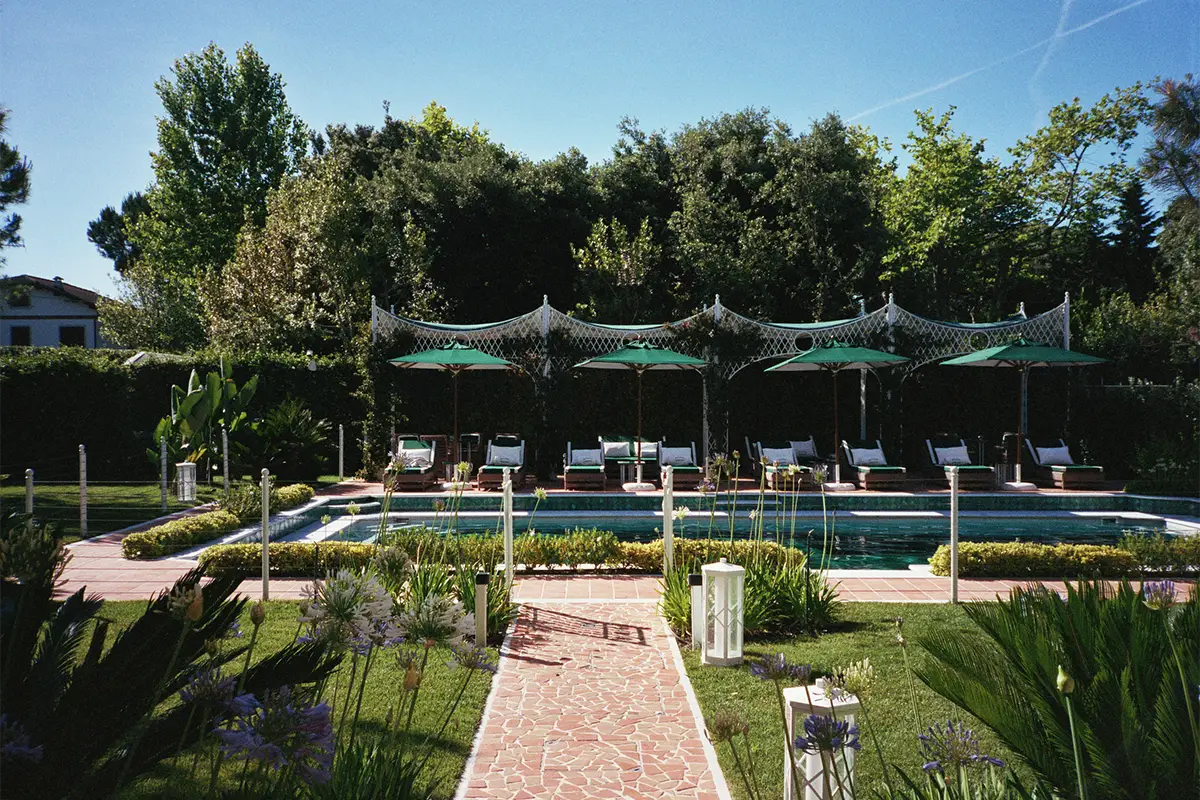
Why Pensione America works as a full system of villeggiatura in Forte dei Marmi
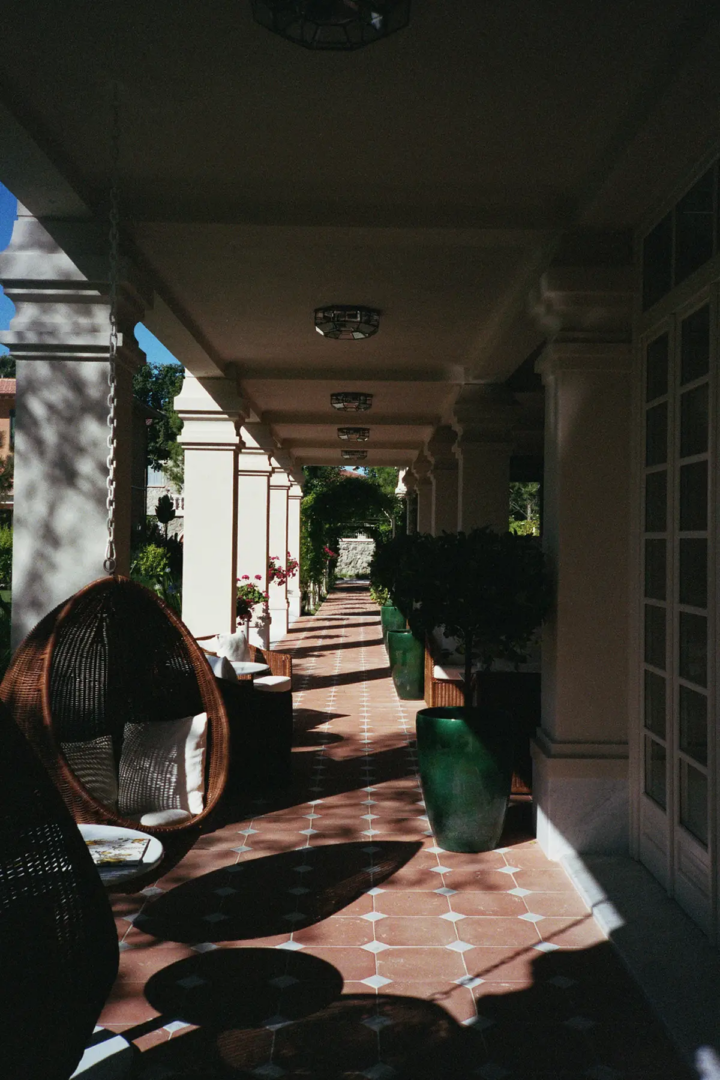
The room, the veranda, the garden, the bicycle, Tennis Roma, Bagno Assunta, the restaurant, and the villetta form a sequence: a way of passing the day.
“For us, Forte is villeggiatura,” Maestrelli says. “Florence and Venice are different. They are cities. There, you transmit to a guest what you know as someone who lives there, as an insider. At Forte dei Marmi, the experience is the same for us and for the guest. What I recommend to a guest is what I do myself: breakfast, conviviality, rest, bicycle, beach, tennis.”
Maestrelli likes to think that Forte dei Marmi has guests, a word that describes duration, return, and habit. Many visitors come back. Some stay for longer periods. They know the rhythm of the town and repeat it. Pensione America gives shape to that rhythm for people discovering it for the first time. Tennis Roma is inside the garden. Bagno Assunta is two minutes away by bicycle. The restaurant marks the day. The property becomes a seasonal geography.
How chef Sabrina Pucci sets the daily rhythm of Pensione America’s kitchen
Food is central because a pensione is organized by meals. Breakfast, lunch, and dinner are the clock of the house. At Pensione America, chef Sabrina Pucci gives the kitchen a direct, generous character. Maestrelli speaks about her with affection. “Sabrina makes you eat,” she says. “Sometimes I order one thing and five arrive.”
The cooking is simple in appearance and precise in work. The clearest example is spaghetti alle arselle, one of the dishes tied to the Versilian coast. “We have spaghetti alle arselle with fresh handmade spaghetti,” Maestrelli says. “The pasta is made that morning. Nobody does that.” Breakfast follows the same logic: croissants are filled to order. “They ask how you want them filled, and Sabrina prepares the cream at that moment.”
The kitchen stays close to the language of Forte dei Marmi: pasta, fish, breakfast creams, focacce, sweets, lunches after the sea, dinners in the garden. Its work lies in keeping simplicity precise, tied to a place, free from excess explanation.
Inside Bagno Assunta, Pensione America’s beach club in Forte dei Marmi
Bagno Assunta belongs to Collezione Em, part of the same family geography as Pensione America and Villa Roma Imperiale. At Forte dei Marmi, each stabilimento has its temperament. Some are brighter and louder, with aperitivo, music, children’s pools, a more visible scene.
“The bagno is the main experience of Forte,” Maestrelli says. “It is a microcosm, and each bagno has its own character.” Bagno Assunta is the kind of beach club Maestrelli knew as a child. “Quiet, with seasonal guests and families,” she says. “You eat well. You can sleep under the tent and no one talks too much next to you. Music never overwhelms the beach. It is the classic bagno.”
The beach at Forte dei Marmi carries a social structure: tent, cabin, position, family, season, shade, silence. Each element speaks. Bagno Assunta opens this code to the guests of Pensione America through familiarity; the guest enters a local ritual and learns it by using it.
Even the colors belong to a protected language: Maestrelli notes that the names and colors of the bagni in Forte dei Marmi are protected by heritage authorities. Bagno Assunta’s colors are green and blue, and its renovation has now been completed.
What Pensione America’s Crafted Collection reveals about its network of local artisans
Pensione America also has its Crafted Collection: a group of objects made by people connected to Forte dei Marmi through their own summers. The story began with Loretta Caponi, the Florentine atelier known for hand-embroidered clothing, linens, and home textiles. Guido Conti Caponi, Maestrelli’s childhood friend, worked on the uniforms. Maestrelli describes it as a matter of affinity: a form of Italian taste understood by those who know its codes.
“The uniforms were difficult to make because hotel uniforms are usually produced by specialized suppliers. Choosing Loretta Caponi meant accepting another rhythm of work. The result feels inseparable from the house, in a way a standard uniform could not.”
From there, other objects emerged: embroidered cabins inspired by drawings by Caponi’s grandfather; a foulard and pareo developed with Monica Sarti from illustrations made for Pensione America; ceramic shells by Margherita Bojola, linked to memories of the sea and summer nights; crochet bandanas by women who grew up in Forte dei Marmi and built a brand from the sailor-style clothes of their childhood; caps made in Florence, using the same tone of green linen chosen for the hotel.
These objects can leave the property as fragments of the network that shaped the house: family, friendship, craft, summer, Florence, Forte dei Marmi. The guest takes away part of a living circle.
Why Forte dei Marmi asks for repetition, unlike Florence or Venice
Pensione America is strongest when it stays close to the source of its own knowledge. The hotel is built from things Maestrelli and her family know directly: how breakfast unfolds in a house full of people, how a bagno works, what a market morning sounds like, how the day slows after the beach, what a quiet tent means, how a garden should look around a villa from another period.
This is where Forte dei Marmi differs from Florence or Venice within the geography of Collezione Em. The three places are saturated with images, each already described, photographed, consumed. Forte dei Marmi asks for repetition; the town is lived through habits, and its elegance depends on gestures more than monuments.
Pensione America gives those gestures a structure. One leaves with something more precise than the memory of a stay: the sense of having entered a private constellation of Forte dei Marmi, a rhythm learned by staying.