Art Basel 2026: the market wants the first look back
With Basel Exclusive, Art Basel 2026 keeps selected works out of previews and pre-sales, asking who gets to see first, choose first, and arrive before the image circulates
No early PDF. No private viewing link. No online room. No work already placed before the booth opens. This is the rule behind Basel Exclusive, the new initiative introduced by Art Basel for its 2026 edition. Participating galleries will keep at least one major work, a selected group of works, or an entire presentation away from pre-fair previews, online viewing rooms and pre-sales. These works will be seen for the first time during the VIP opening, in the First Choice Preview hour.
Art Basel returns to Basel from 18 to 21 June 2026, with Preview Days on 16 and 17 June. The fair brings together 290 galleries from 43 countries and territories, including 22 new joiners across its sectors. The scale is expected. Basel Exclusive is the sharper detail.
What looks like a technical rule is a statement of control. Art Basel is trying to recover a moment the market has almost lost: the first encounter with an artwork.
Art Basel 2026: what happens before the fair opens?
The contemporary art market rarely begins at the booth. It begins earlier, in inboxes, calls, adviser networks, forwarded images, collector dinners, studio visits, private rooms, soft holds. A work can reach Basel already half consumed by conversation. It may have been seen, priced, compared, discussed, declined, reserved or bought before most visitors enter the hall.
The booth still matters. It offers scale, surface, context, presence. Yet it often confirms a decision that started elsewhere. Basel Exclusive interrupts that habit. The fair is not pretending to reset the market. It is taking back a portion of the opening. It asks galleries to withhold the image long enough for the first public encounter to happen in Basel, not before Basel.
That delay changes the temperature. A work that has not circulated arrives differently. It has not been flattened into a preview economy. It has not been reduced to a file name, a price line, a quick reply. It can still produce the slight imbalance of being met. In a market that starts before the fair opens, this matters.
Buying art in 2026: a market recovering without euphoria
The Art Basel and UBS Global Art Market Report 2026 estimates global sales at 59.6 billion dollars in 2025, up 4% after two years of decline. Dealer sales rose by 2%. Public auction sales rose by 9%. The recovery is real, but not generous. It remains below the 2022 peak and uneven across regions and segments.
This is the market in which Basel opens: no collapse, no euphoria. Costs remain high. Tariffs, trade barriers, inflation and geopolitical pressure still affect margins. Confidence exists, but it has become more selective.
In such a climate, the fair has to do more than gather inventory. For one week, Basel brings galleries, collectors, museum directors, advisers, curators, artists, critics and foundations into the same city. It creates comparison, pressure, memory. It gives the market a shared clock. Basel Exclusive adjusts that clock. It makes arrival count again.
After the online viewing room: why the fair still matters
The online viewing room did not kill the fair. The fair survived because the market still needs bodies, rooms, meals, rumors, handshakes, queues, delays, hesitation. A collector may see an image online, but the decision often requires proximity: to the work, to the gallery, to other people looking at the same thing.
What has changed is the order. Images often arrive before objects. A work is known before it is seen. Its first life happens as circulation. Basel Exclusive responds to that order. Some works should not arrive as attachments. They should arrive as works.
The distinction is commercially precise: a work held back from circulation creates urgency. It rewards presence. It makes the VIP opening matter. It gives the gallery a story without adding another layer of explanation. Basel Exclusive turns the first hour of the fair into the place where advantage begins.

Unlimited: works that cannot fit the booth
The 2026 edition also brings a new Unlimited, curated for the first time by Ruba Katrib, Chief Curator and Director of Curatorial Affairs at MoMA PS1. The sector includes 59 large-scale projects presented by 66 international galleries.
Unlimited is the part of Basel where the body still has work to do. These are not booth-friendly “objects”. They ask for scale, sound, obstruction, distance, time. They slow the fair down, or at least interrupt its pace.
Isa Genzken’s Untitled, built from airplane windows and abandoned passenger seats, turns the architecture of travel into a damaged system of looking. Bruce Nauman’s Dead End Tunnel Folded into Four Arms with Common Walls makes space behave like pressure. Theaster Gates’s A libation in Uncertain Times gathers more than one thousand sake bottles on wooden shelving, moving between ritual, craft and accumulation. Alfredo Jaar’s The Power of Words uses projection, neon and found material to return to the violence and circulation of media images.
These works remain inside a commercial fair. They do not escape the market. Yet they expose the limit of deciding from images. Some works need to be entered, crossed, heard, endured. That pushes back against the preview PDF.
Parcours: Art Basel beyond the booth
Parcours takes 21 projects by 30 galleries into Basel’s public spaces, historic buildings, empty apartments, shops and outdoor sites. The 2026 edition is curated by Stefanie Hessler, Director of Swiss Institute in New York, around conviviality: how people share space, resources, memory and conflict.
Kader Attia’s Untitled (Rainsticks) fills the atrium of UBS Aeschenvorstadt with mechanised rainsticks. Haegue Yang works between the Mittlere Brücke and an artisanal distillery, drawing from the Korean myth of the imoogi, a water-linked proto-dragon. Amol K Patil’s Burning Speeches brings together social housing, labour movements, political activism and Dalit identity through drawing, sculpture and video.
Parcours leaves the sales floor, but not the fair. The street, the bridge, the bank atrium, the apartment and the civic route become part of the week’s attention. Public space is folded into the way Basel is experienced. The booth no longer carries the whole story. The market wants context. It wants atmosphere. It wants the impression that art is moving through public life, even when the collector audience remains close by.
Venice, Basel and the quick passage from public frame to market frame
Art Basel 2026 opens close to the 61st Venice Biennale. The two events have different histories, different languages, different claims. They also speak to each other more than either side likes to admit.
Venice gives artists public visibility, national representation, curatorial framing. Basel tests how that visibility travels through the market. A name can move from a pavilion to a booth, from institutional attention to collector attention, from critical context to price conversation. The passage is often fast.
This does not make Venice commercial, nor Basel institutional. It shows how closely the calendars are connected. The market follows Venice closely, even when the conversation remains public and curatorial. Basel does more than present what galleries bring. It tests what recent visibility can become in the market.
Art Basel 2026: who sees first, who chooses first
Basel Exclusive is the clearest move in the 2026 edition because it does not hide behind language. It says that being there first still has value. It says that the fair wants some decisions to happen inside the fair again.
The risk is clear. When surprise is scheduled, it can become another format. When access is marked, it can harden into hierarchy. The first person allowed to see is often the first person allowed to choose. Still, the move is accurate. Too many works arrive already tired by circulation. Too many images are seen before anything has been encountered.
Basel Exclusive does not solve this. It draws a line around a few works and holds them back long enough to make the opening feel consequential. For galleries, it creates tension. For collectors, it rewards presence. For Art Basel, it restores control over the first hour. In Basel, the first sale may not be the work. It may be the right to stand in front of it before anyone else.
Federico Jonathan Cusin
Art Basel Paris 2025: found objects, fabrics, flesh and the return of materiality
Art Basel Paris is the French capital’s flagship contemporary art fair, born in 2022 from the merger of the historic FIAC with the global Art Basel network. Held annually in the newly restored Grand Palais, the 2025 edition, running October 24 to 26, marks its first fully settled chapter.
This current edition, the fourth since its inception, marks a major coming-of-age for Art Basel Paris. After three years defined by constant adaptation and Olympic-related hurdles, the fair is finally and fully installed within the newly renovated Grand Palais, signifying what Director Clément Delépine calls its “first ‘normal’ edition.” Delépine, who will step down in November 2025, notes that this newfound stability has allowed the fair to consolidate its vision, transitioning beyond a simple marketplace to become a vital space for exploration, discovery, and exchange. This edition is doubly significant as the fair cements its permanent home while simultaneously refining its identity, successfully blending the structural integrity of Art Basel with the inherent flexibility of Parisian culture to create a truly “profoundly Parisian fair.”
The Art market’s new center of gravity
The fair’s consolidation coincides with a crucial moment for the global art market. While the high-end sector has seen contraction globally, Paris has strategically cemented its position as the undisputed European epicenter of the contemporary art market. This ascent is fueled by favorable French tax and auction regulations, the city’s profound institutional wealth, and the shift of major international players, including top-tier galleries and auction houses, from London to the continent following Brexit. Art Basel Paris serves as the ultimate catalyst and showcase for this concentration of power, providing a gravitational pull for global collectors and further solidifying the French capital’s commercial dominance.
Paris, an active participant
As Clément Delépine states, “Art Basel Paris isn’t Art Basel in Paris”. During the last three years, he has sought to construct a true identity: “The French way of operating has proven to be a strength, injecting flexibility into the established structure”. This shared responsibility and overarching narrative are forged through continuous collaboration with institutions like the Louvre, the Centre Pompidou, and the École de Beaux-Arts, confirming that “Paris has never been more desirable”.
This active partnership is reflected not only in the multifaceted public programming but also in the digital involvement of Parisian cultural figures, carefully selected by the fair. Through inside stories promoted on Art Basel Paris’s digital channels, figures like gallerist Cécile Fakhoury, artist Ibrahim Meïté Sikely, journalist Sophie Fontanel, and editor Thibaut Wychowanok share their personal style strategies, offering the perspective of the city’s insiders. The common theme in these narratives is the merging of fashion and art, where style acts as a “belonging code”: Fakhoury champions African designers, Sikely favors the “nerd” aesthetic of Supreme (seeing his art as an extension of his look), while Wychowanok compares the Grand Palais to an elite club where “the better you look, the more you see.” This constant focus on personal style and textiles hints not only at the fashion DNA of Paris, but also at a deeper engagement with physicality, a red thread of this year’s edition.
French roots, global reach: the public program
Extending the narrative from the local to the global, the fair’s research into its host city is accompanied by a carefully curated public program free and open to all, which will take over the French capital with exhibitions, monumental installations, as well as a series of talks and debates. Miu Miu is the Public Program Official Partner for the second consecutive year, and the program exemplifies the will to transform institutional but also public key places of the city into platforms for international experiment. Monumental interventions punctuate the urban landscape, most notably Alex Da Corte’s colossal, half-deflated Kermit the Frog inflatable, Kermit the Frog, Even, dominating Place Vendôme, and Ugo Rondinone’s towering blue-rock sculpture, the innocent, erected on the Parvis de l’Institut de France. Inside institutions, the program attempts to create dynamic juxtapositions, merging local with international talent.
Between Past and Future: Galeries, Emergence, Premise
The Art Basel Paris fair is structurally organized across three distinct exhibition sectors that collectively define its curatorial scope. The primary sector is Galeries, where established exhibitors present the comprehensive range of their programs, spanning both Modern and contemporary art. Looking toward the future, the Emergence sector is dedicated entirely to emerging galleries and artists, often showcasing focused solo presentations that champion new voices in the art world. Finally, the Premise sector presents highly unique curatorial proposals. This area distinguishes itself by deliberately challenging linear history, notably by including works created before 1900 alongside contemporary pieces, thereby fostering rich and unconventional dialogues across different eras of art.
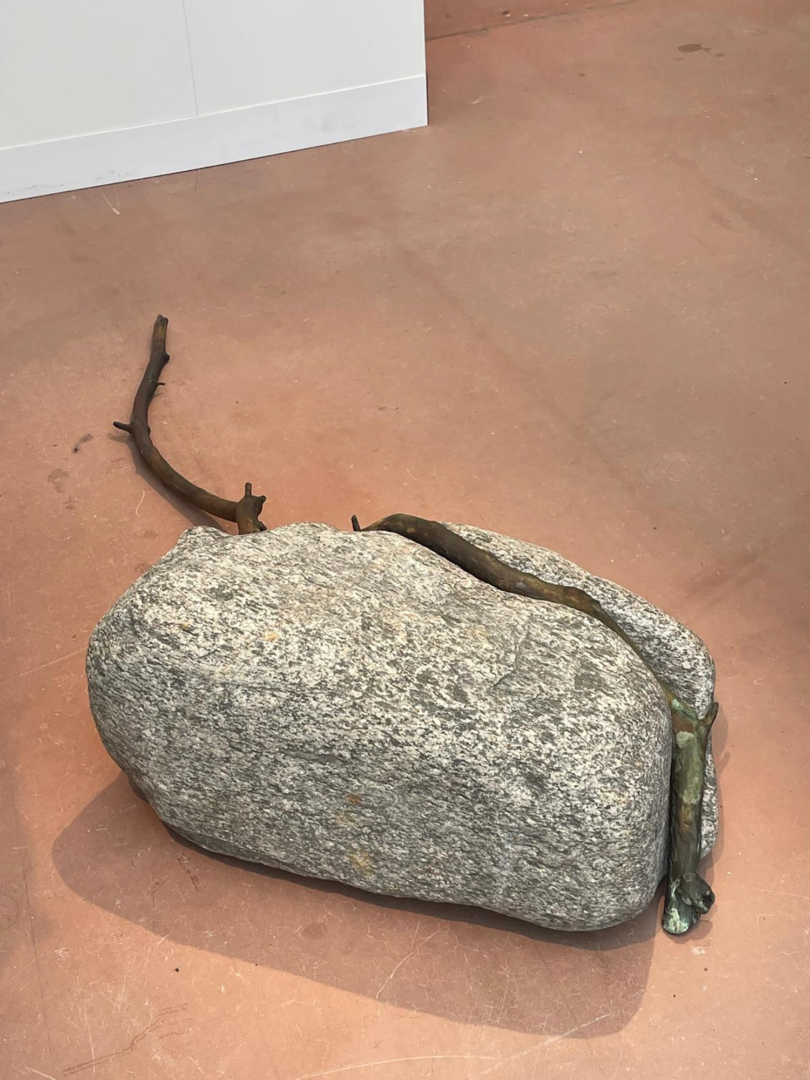
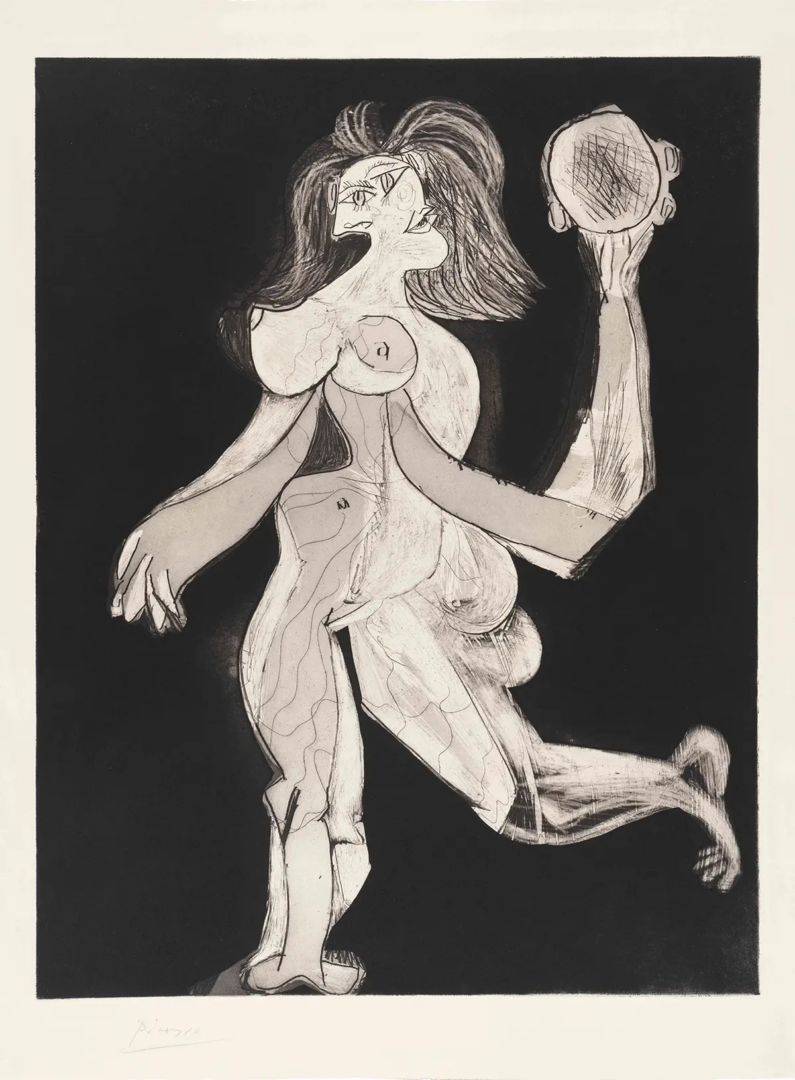
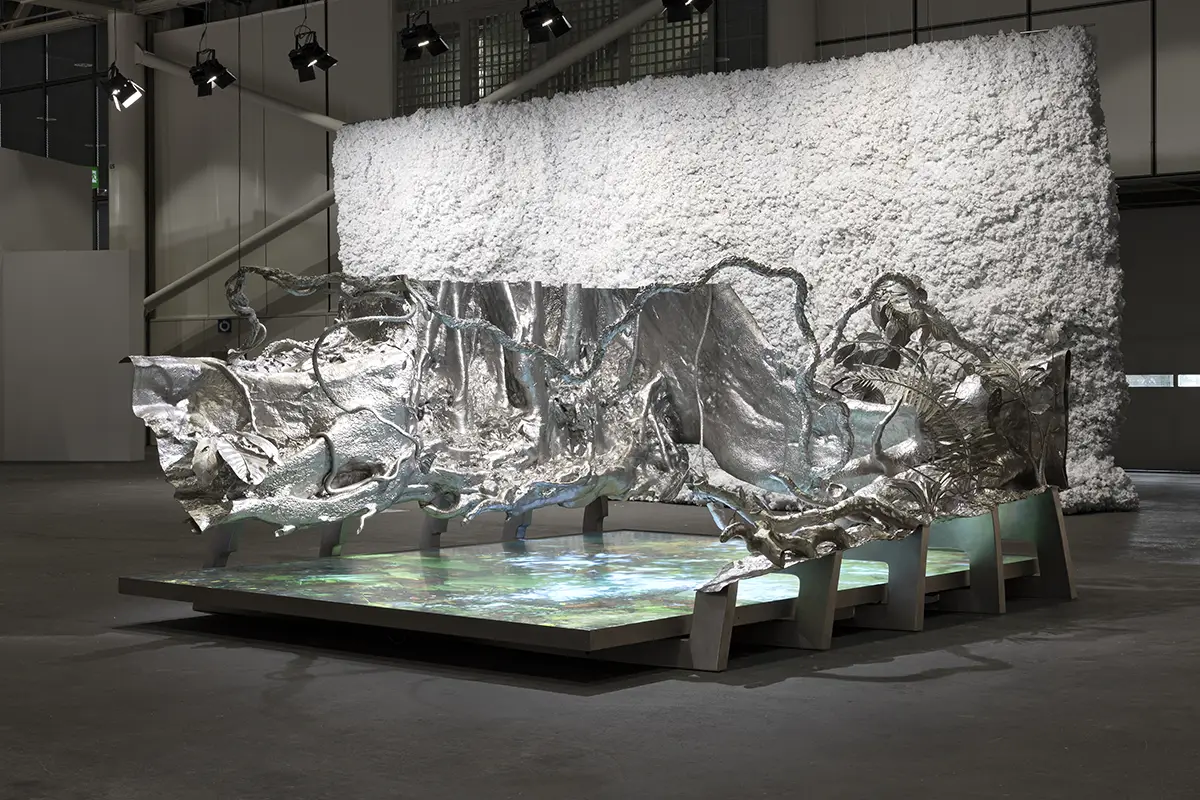
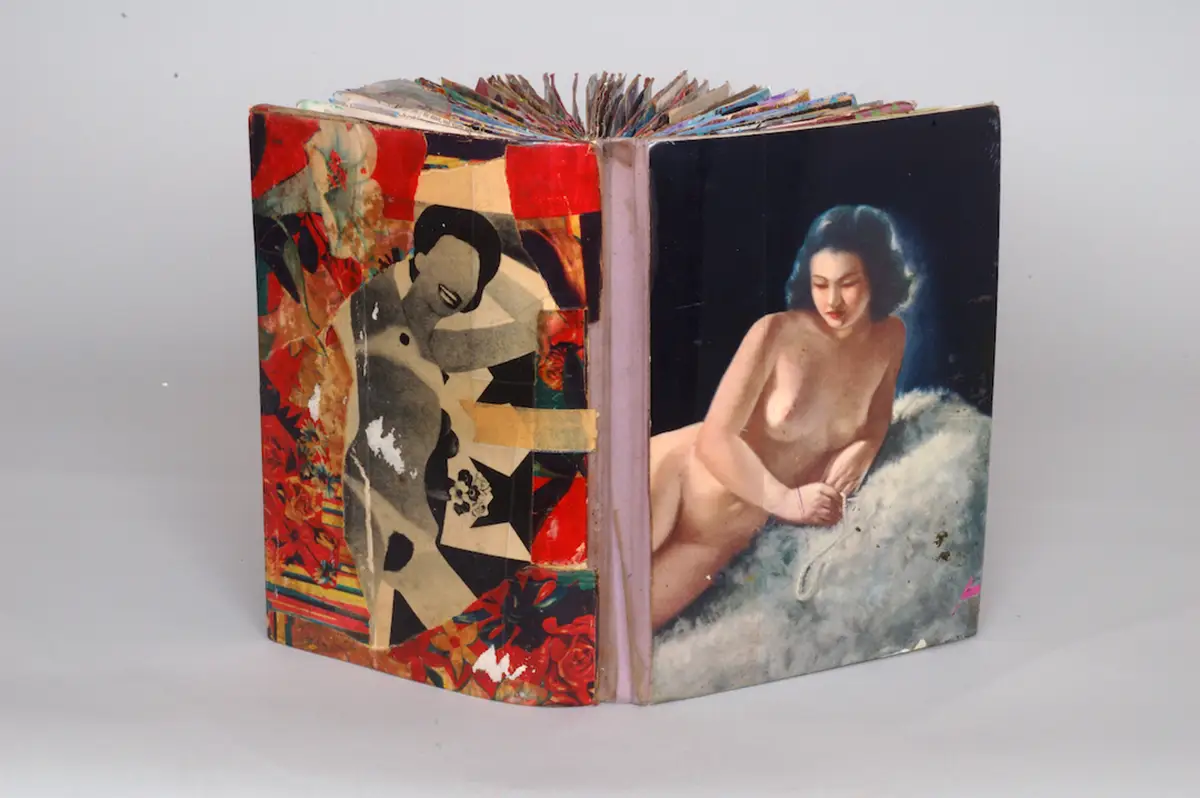
What seemed to unify these disparate voices this year was a clear turn towards raw materials and a purpose economy in which scavenged stone, fabric, and repurposed objects carry meaning beyond decoration. Throughout the fair, both inside the Grand Palais and across the public program, artists and curators showed a shared interest in the physical: ready-mades, found objects, clothes and artifacts, and our bodily, tactile relation to matter were central to many presentations,
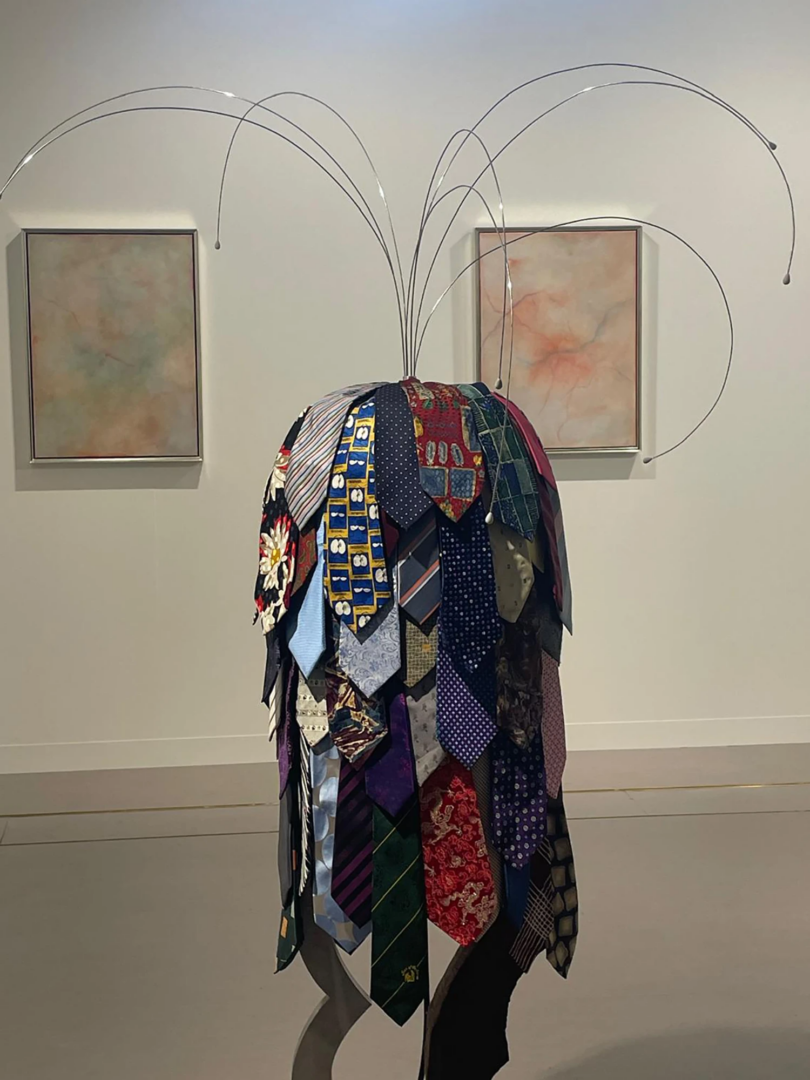
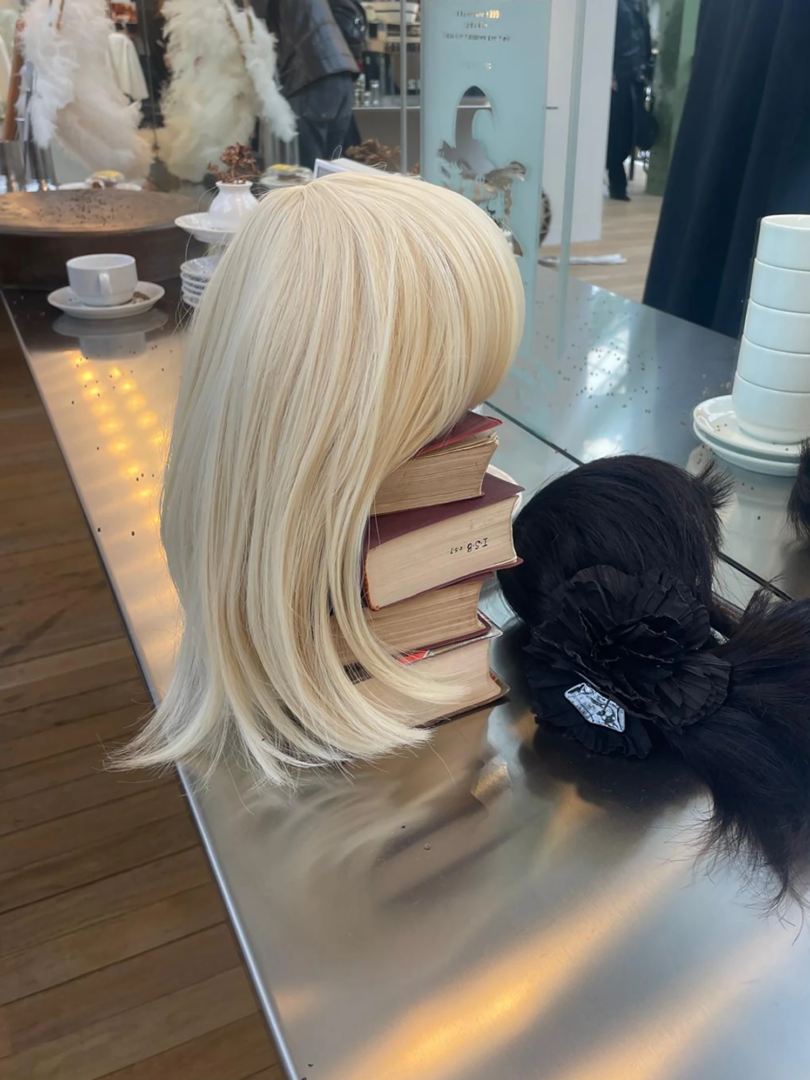
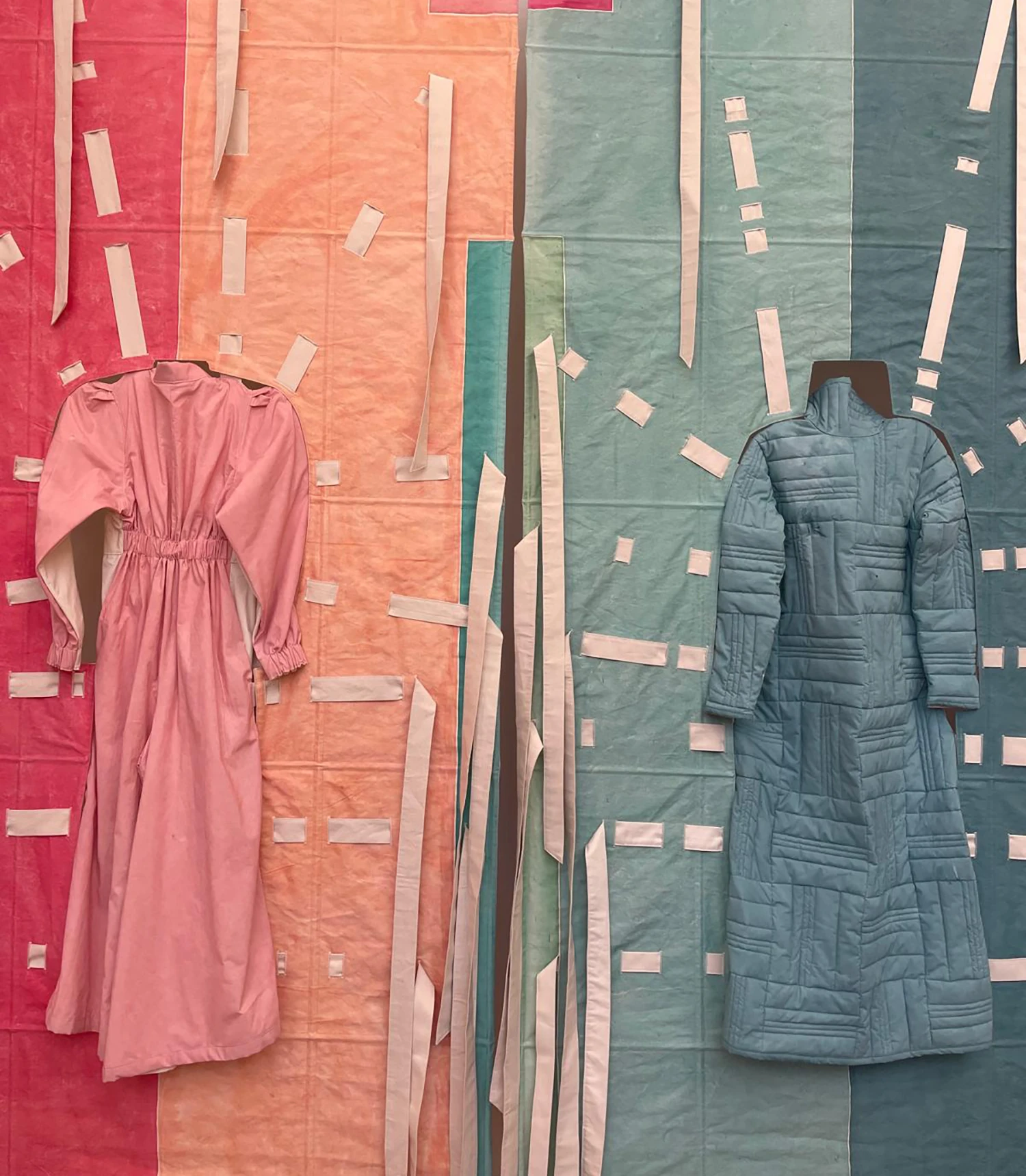
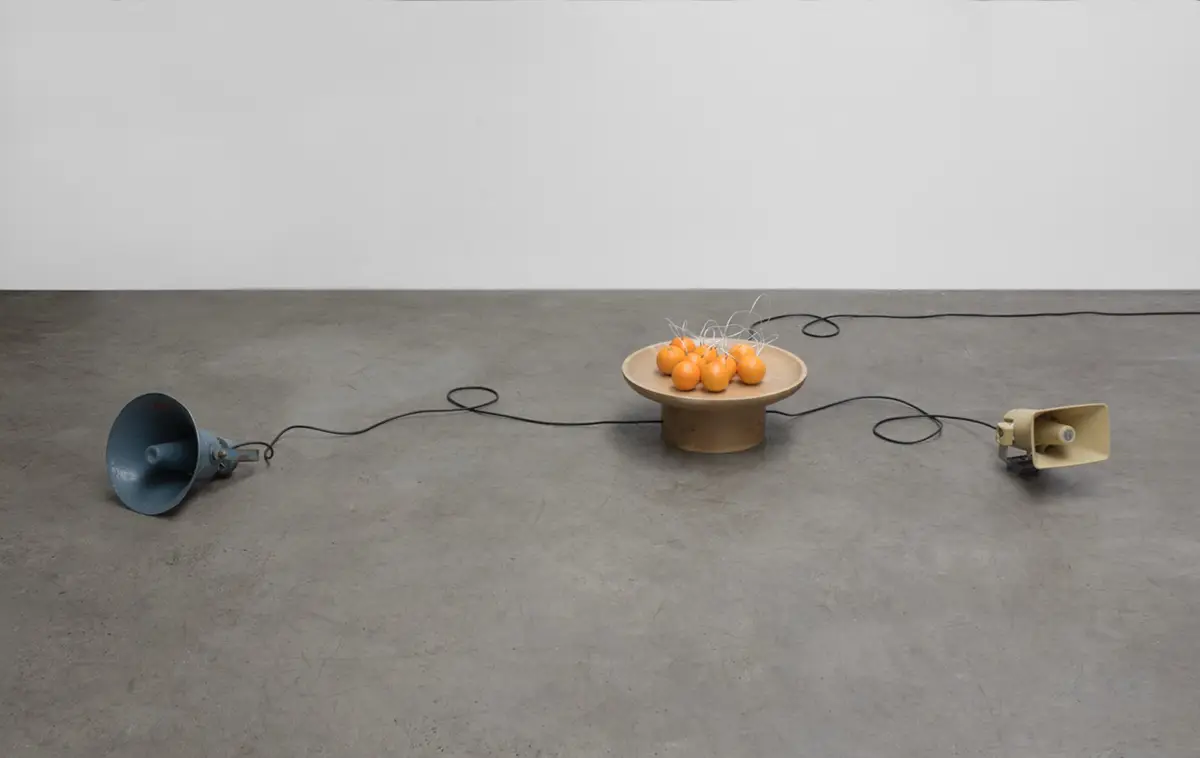
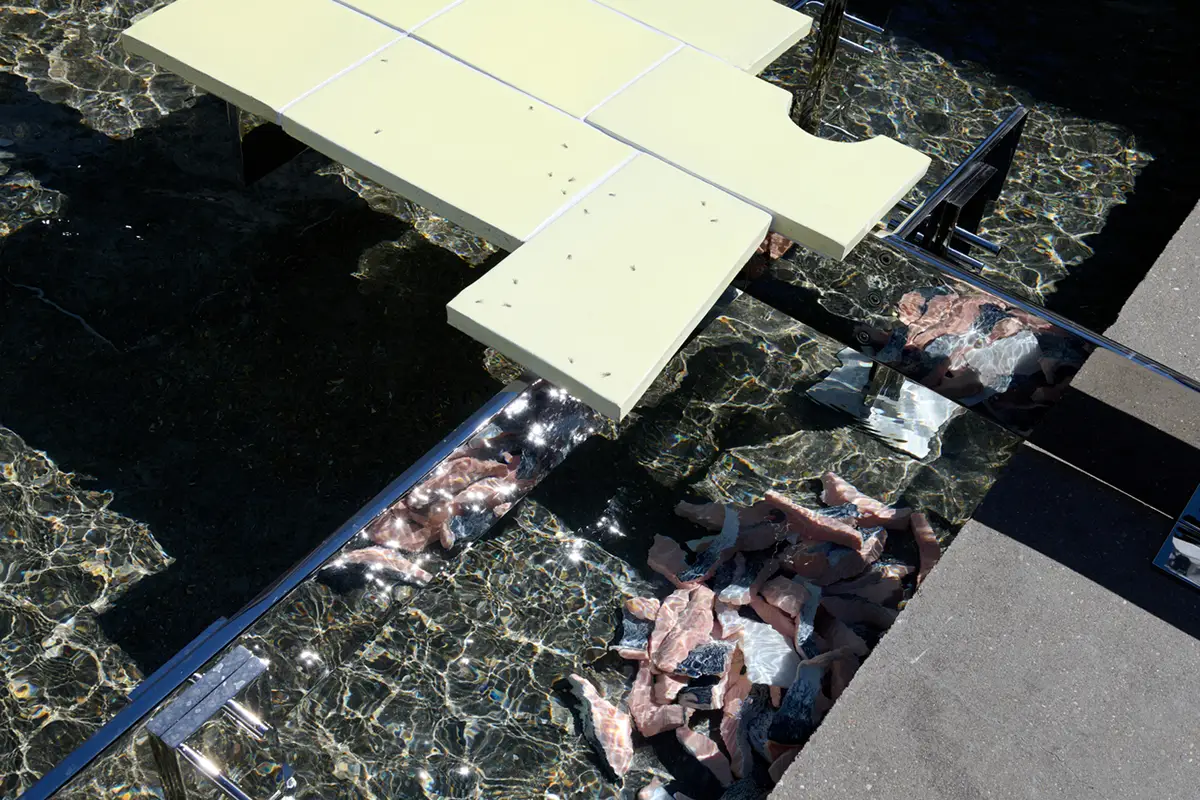
At Pace Gallery, Alicja Kwade’s stone installation functions as silent witnesses to geological time, interlacing human memory with the earth’s own archive. Galerie Allen Paris displayed Jason Dodge’s constellation of light bulbs, torches, and matches: everyday objects charged with latent energy, traces of past activity, waiting for a hand to ignite them. Rodrigo Matheus, at Fortes D’Aloia & Gabriel, wove processed acrylic threads into Grafite, a three-dimensional drawing that quivered like human hair, uncanny in its mimicry of touch. Fabric returned insistently also in the Emergence section: Meriem Bennani’s Cravate Monster at Galerie Ludovico Corsini, a monstrous tie sculpture, swollen and sentient, while Nefeli Papadimouli at Gallery The Pill draped actual tunics on the booth’s wall, their folds holding the ghost of a body. Installed as performative relic in the booth of Galerie DREI, empty wigs by artist Mira Mann stare at visitors, reminiscent of invisible past and future wearers.
This material awakening ran thus equally with a potent exploration of the body as site, agent, interlocutor. Works probed the intimate choreography between flesh and object: how we hold, wear, exchange, or inherit things; how function, memory, and desire are enacted through touch. This comes across as a peculiar shift, a reclamation of embodiment in an age of dematerialization, a quiet but insistent return to the haptic as a mode of understanding.
Towards new models of sustainability: material shifts
This newfound interest in a physical perception of the world extends into different outputs of the public program too. The first example outside the fair itself can be found at the historic Chapelle des Petits-Augustins des Beaux-Arts de Paris, where Russian artist Harry Nuriev, presented by Sultana, unveils an engaging and thought-provoking interactive installation titled Objets Trouvés (2025). This work transforms the venerable chapel into a site of radical exchange and reflection. Visitors are invited to participate in a symbolic barter system: they deposit personal belongings they no longer need into provided bins, and in turn, are free to take an object left by someone else. Objets Trouvés is a pointed critique of the “normalized absurdity of consumerism,” the overwhelming plenitude of “stuff” we relentlessly accumulate, yet it also gestures toward a purpose economy, where raw materials are not consumed but re-circulated, re-valued, re-lived. Nuriev’s setup formalizes this process of detachment and acquisition, with each unique transaction meticulously recorded in a dedicated certificate, ultimately to be compiled into a sleekly designed catalog.
Oh La La! A Fashion-Art convergence
Second example of a material reading of contemporary culture can be found in this year’s choice for the in-booth initiative Oh La La!, a special project where Art Basel Paris invites galleries to present new works at their booths on the Friday and Saturday of the fair. This year’s edition is art-directed by fashion expert and journalist Loïc Prigent, and the theme will be “À la mode” (In Fashion), challenging exhibitors to refresh their stands on Friday and Saturday with pieces that trace the rich conversation between the two fields, from textiles and tailoring to social codes and contemporary style. Here again we notice an interest towards physical objects, in this case read through the lens of fashion, in what seems to be a new approach towards art and reality, one that is contaminated by different disciplines in order to gain a better understanding of contemporaneity.
Helen Marten’s 30 Blizzards and the body as a vehicle of investigation
Last example of this increased interest towards new forms of physicality includes a new crucial focus on the body and its different declinations, like choreography and performance. This is exemplified by the highly anticipated presentation by artist Helen Marten at the Palais d’Iéna titled 30 Blizzards, organized by Miu Miu as Public Program Official Partner. The presentation is a cross-section of different disciplines, referencing moments of experience through childhood, community, sexuality, interiority, and loss. The exhibition is structured around a counterpoint between five sculptures and five videos, and a sequenced, live performance, conceived with opera director Fabio Cherstich and composer Beatrice Dillon, creating an immersive choreography of libretto, image, sound, and presence. The sculptures, which symbolize five stages of life from childhood to loss, are conglomerates composed of small objects, carefully crafted or sourced by Helen Marten herself. This material presence of what appear to be random sums of small everyday objects is put in physical dialogue with the performers, who move across them and interact with them, exploring a physical dimension. Here the body is used as a vessel of meaning, a tool for allegory and symbolism but also as a concrete, breathing archive: flesh that carries, collides with, and ultimately reclaims the weight of things.
Art Basel Paris as a sensory chronicle of contemporary culture
The general impression is that the fair has definitively shifted toward an approach that investigates materiality and embodiment in a profound way. Physical elements, from objects found and exchanged to fabrics, or stories of life and artistic creation approached through the lens of fashion, are focused on reuse and symbolic value. At the same time, attention toward performance, choreography, and the body hints toward a holistic new understanding of physicality as the essential subject of contemporary art. In this tactile turn, Art Basel Paris positions itself as a laboratory for the post-digital real, a space where the weight of raw materials, and the bodies that carry them, reassert their claim on contemporary meaning—quietly modeling a purpose economy where matter is not consumed, but re-inhabited.