What “bionic” really means in prosthetics, according to Ottobock’s Corrado Polzoni
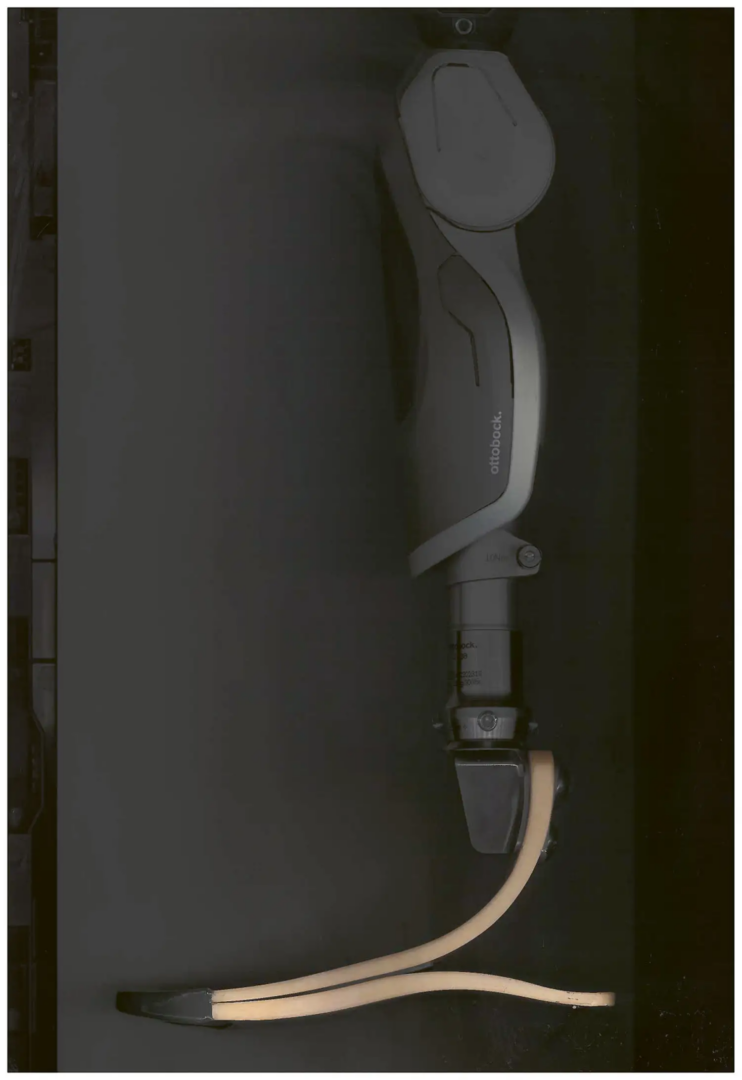
Corrado Polzoni, head of prosthetics at Ottobock, redefines bionic not as added power but as reduced cognitive load — the point where a prosthesis stops demanding attention and becomes part of the body
Bionic meaning in prosthetics: Corrado Polzoni at Ottobock on technology and the body
In Alphabet, Amanda Lear sings a private alphabet for “the children of my generation.” Each letter is a fragment of the world. The B, in two words, detonates an entire imaginary: “B for bionic and Bach.” Bionic set against Bach — an unlikely pairing where the implant meets classical structure. Not science fiction as escape, but technology as discipline: a gesture that becomes legible again, a system that holds. From there, the horizon became familiar: the Bionic Woman, the bionic eye, the bionic hand. An era’s promise that life and machine might finally reconcile.
Yet the moment you leave the imaginary and enter prosthetics, “bionic” stops being a label and becomes a question: how much attention does it cost to be supported by a machine? That question runs through this conversation with Dr. Corrado Polzoni, Head of Prosthetics at Ottobock. He speaks as someone who knows the difference between the lab and the sidewalk, between performance and skin, between marketing and interface. He brings “bionic” back to where it matters: the point at which a prosthesis must become part of the body without pretending to be flesh.
Definition of bionics in medicine and technology: from biology and electronics to prosthetic design
The Oxford English Dictionary is defining bionics cleanly: a compound of biology and electronics, a field that studies structural and functional analogies between living organisms and electronic devices, translating the functions of the living into technical solutions. A neat, industrial genealogy.
“Bionic” never remains purely technical. It carries a second life: the echo of bìos, life, and the seductive illusion that life can be replicated in an auxiliary organ. That is why “bionic” colonized cinema and pop culture: it does not just describe an object; it describes a desire. When desire meets an amputated body, it can heal — or it can harm. It depends on honesty.
Bionic prosthetics and cognitive load: Corrado Polzoni on attention and control
Dr. Polzoni gives nothing to slogans. His definition is precise, without being reductive. It concentrates on one point: “bionic, as a concept, reduces cognitive load to the absolute minimum; technology should free up more attention than it demands to be managed.”
This reverses the naïve idea of innovation. The winner is not the device that adds features. The winner is the device that removes thought. Here, bionic is not “power.” It is silence: the machine that works without occupying consciousness.
When a prosthesis becomes part of the body: proprioception, automatism and trust
A question that sounds philosophical proves practical: when does an external object stop being external? Dr. Polzoni anchors it to a single threshold — no longer having to supervise each step.
“A prosthesis becomes part of you when it works well and stops drawing attention — others’ attention, but above all your own. It happens when you no longer need to think actively about control. You accompany the person in discovering, step by step, what the device can do, until its use becomes automatic and they can move through life with ease.”
Proprioception is not conference jargon here. It names a pact. You do not “install” a prosthesis. You rebuild a gesture. In 1934, Marcel Mauss wrote about the “techniques of the body” — learned, social, transmitted ways of inhabiting a body. Dr. Polzoni describes the same process in clinical terms: first tool, then automatism, then trust.
Expectations in prosthetics: Corrado Polzoni on recovery, frustration and realistic goals
When people ask for “the best prosthesis,” they are often asking for something else without naming it: the intact return of the life that existed before. Dr. Corrado Polzoni identifies this as one of the most delicate fault lines in prosthetic rehabilitation, because this is where fractures begin.
“Frustration usually arrives when the goals you set cannot be reached — sometimes for technical reasons, sometimes motivational. The obsession with fully recovering the exact lifestyle you had before the trauma is Russian roulette. We all hope to recover as much as possible, but total recovery is not always possible. A shift of scenario is needed: many people return to doing things they did before, but they also discover new possibilities, new energies they did not know they had.”
This is not motivational rhetoric. It is a safeguard for the body–machine relationship against its most damaging illusion: the promise of perfect equivalence.
Dr. Polzoni also introduces what technology narratives often omit, even though it is structurally part of the prosthetic system. “Psychological support can be useful, and the social and family context matters: the messages around the person have to be the right ones.” The device does not function in isolation. It operates within a network of expectations, language and support.
Designing failure in bionic prosthetics: safety systems, trust and risk management
A high-end prosthesis reduces effort, increases safety and frees attention. Yet precisely because it frees attention, it generates trust. When trust is shaken, its weight exceeds that of any technical malfunction.
“The more performant a prosthesis is, the more you rely on it — even psychologically, because it relieves you from constantly managing your mobility. That is a double-edged sword: the more you trust it, the more, if it betrays you, you risk losing the securities you had built.”
His conclusion reads as both an engineering principle and an ethical one: “Failure has to be designed.” Not accepted as fate but contained through safety behaviors so that a fault does not escalate into a fall, panic or renewed trauma.
“If the electronics have a problem and the system allows it, it shifts into its maximum safety condition: it stiffens. It supports the person — they may walk with a rigid leg until they reach service, but they will not end up on the ground. There are also acoustic and vibration alerts that inform the user that something has gone wrong.”
Bionic, here, is not the fantasy of the infallible. It is the design of the manageable.
Predictive prosthetics and real-time control: Corrado Polzoni on safety beyond reaction
Dr. Corrado Polzoni introduces a counter-intuitive point: real time is no longer sufficient. Reacting is not enough. In advanced bionic prosthetics, safety also means prediction — reading what precedes the gesture.
“The idea of ‘real time’ is almost outdated: these prostheses can be predictive with respect to the gesture the person intends to make. They analyze tiny movements that precede actions like sitting down or changing walking speed, and that has major consequences for preventing incidents.”
This is not an autonomous machine replacing the user. It is a system that anticipates interpretive error before it becomes an accident. Prediction functions as risk mitigation, not spectacle.
Prosthetic knees beyond the lab: environmental stress, corrosion and system reliability
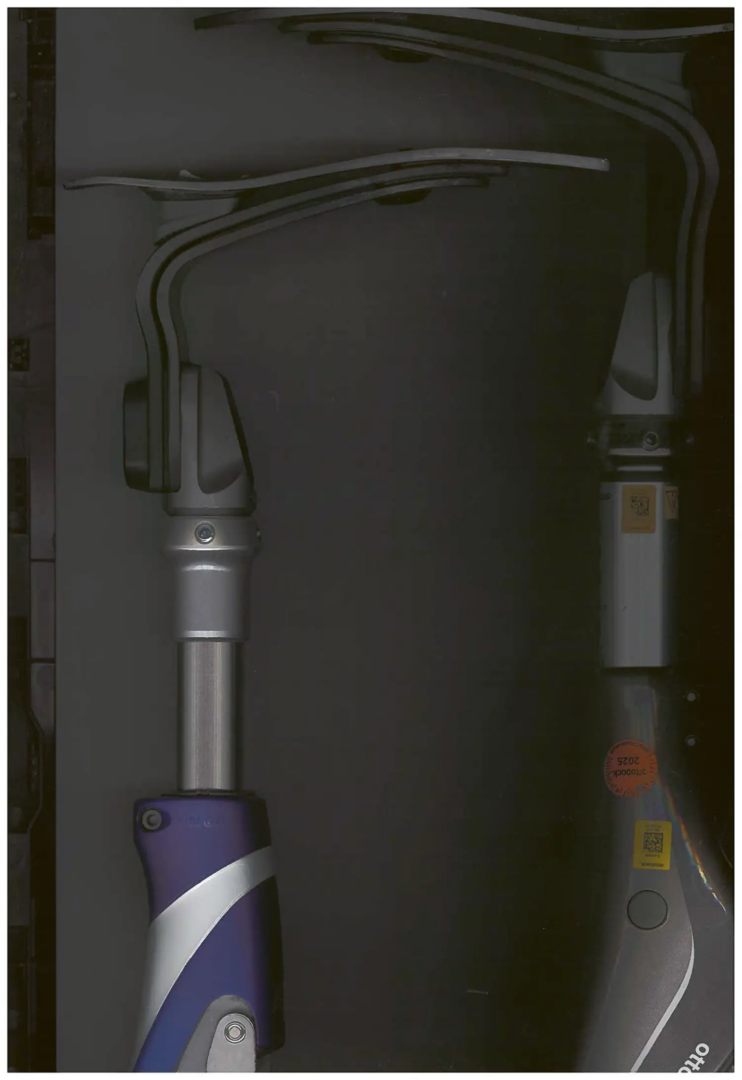
A prosthetic knee may perform flawlessly in a controlled environment. Life does not replicate laboratory conditions. Life is accumulation: salt and sand together, cold and humidity together, sweat and corrosion together. The decisive factor is not the single variable; it is their simultaneity.
“The lab is a clean, protected environment; outside is a reality full of hazards. The biggest problem is not protecting a device from one agent, but from the sum and simultaneity of all these situations.”
Reliability depends on invisible chains of detail. A system can be certified waterproof and still fail because one minor component is not: a single cable becomes the weak point, water migrates, electronics collapse. What preserves a prosthesis is not the heroic component; it is the coherence of the entire system.
Dr. Polzoni reframes the objective: “The lab is necessary, but a prosthesis must be used, not protected: when something gives way, it must do so without betraying the trust of the person using it.” Durability is measured in lived exposure, not specifications.
Prosthetic interface and socket design: skin, anchoring and multidisciplinary care
If there is a decisive border in bionic prosthetics, it lies at the interface between engineered matter and living tissue. Friction, pressure, heat, sweat, micro-pain — this is where performance is negotiated. Polzoni places interfacing above all other parameters.
He uses a practical analogy: “Sometimes I say: it’s like asking for the best car when you don’t yet know how to drive. In that moment, the best car is the one that’s most comfortable and easiest to manage. If I give you something too powerful and you go off the road at the first bend, that wasn’t the best car for you.”
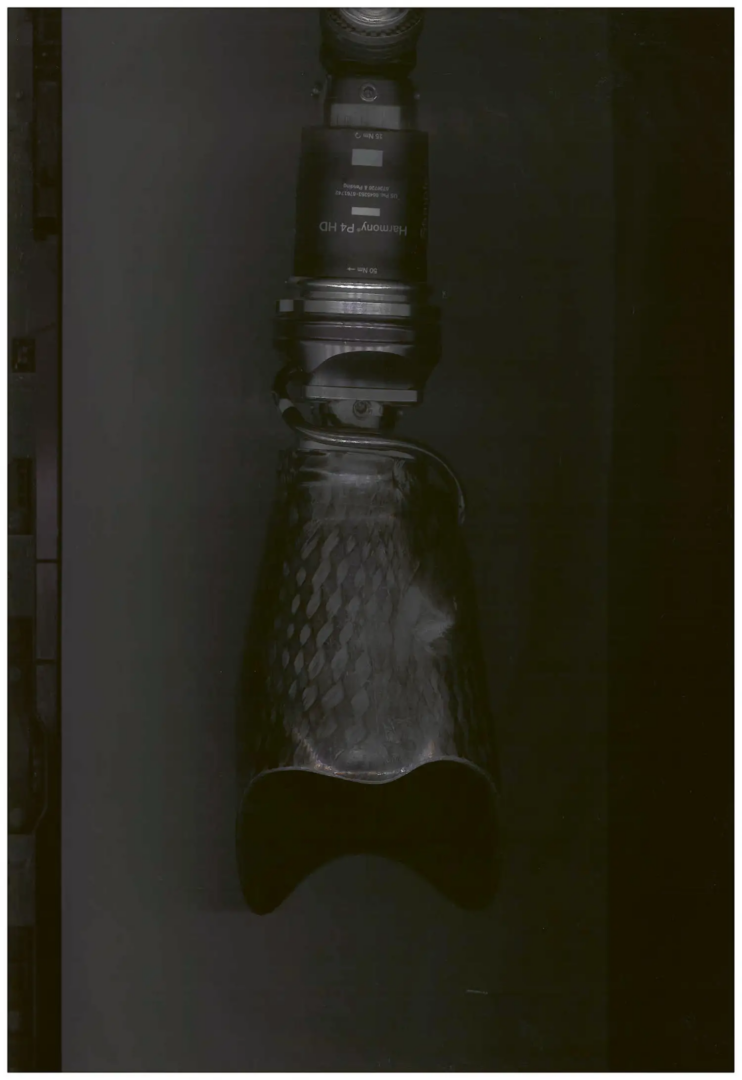
Bodies change configuration. Cross-sections shift with posture; pressure redistributes. Standing is not sitting. The socket must coexist with physiology without violating it. “The cross-section of our limbs changes depending on the situation: standing it’s roughly circular; sitting it becomes more oval. The socket has to adapt, within limits, to those forms — this is why we increasingly use flexible materials that can conform, while maintaining structural solidity.”
As prosthetic technology advances, mechanical stress increases not only at the interface but across the entire body. “With ever more performant prostheses, stresses at the interface increase. You have to consider the rest of the body, the spine, compensations, habits. The decision should never come from a single viewpoint: it has to be multidisciplinary.”
Sports prosthetics and performance: race machines, energy return and real bodies
In sport, everyday rules are suspended. Dr. Corrado Polzoni uses a direct analogy: motorsport. “In sport, the concepts valid for normal life are turned upside down. Prostheses for competition have to be race machines: setups that would be unthinkable in daily life, but maximally performant for the athletic gesture.”
Competition prosthetics are not calibrated for discretion or long-term comfort. They are optimized for a specific biomechanical output. Yet performance is not confined to the track. Extreme solutions often migrate into daily prosthetic design. Energy return is not only about speed; it can mean reduced fatigue for users with limited energy resources — a measurable improvement in quality of life.
“If I can capitalize even a little of the resources I have, I will fatigue less and cover greater distances.” The discussion inevitably enters a grey zone: fairness, regulation, advantage. Polzoni distinguishes between unilateral and bilateral amputations and acknowledges the controversy without moral framing. In bilateral cases, geometry changes. With geometry, the parameters of advantage and compensation also shift.
Prosthetic access in Italy: reimbursement, INAIL and inequality
The most complex issue is not technical. It is administrative. Who receives advanced prosthetic technology, and under what criteria? Dr. Polzoni says it clearly: “In many Western countries, electronically controlled knees are reimbursed by national health systems. In Italy, these technologies remain accessible mainly to a subset of work-related invalids, because INAIL makes them available; civil invalids do not have them.”
The proposal is pragmatic rather than idealistic: define criteria, limit volumes, allocate based on measurable parameters. “France initially limited access and created evaluation grids and objective criteria. Germans, French, Spanish, British — they have done it. It would take very little to learn from that experience and move forward gradually.” At this point, “bionic” ceases to be an evocative term and becomes a public policy issue. If a prosthesis reduces falls, lowers fatigue and increases autonomy, it is not a luxury device. It is prevention. It is mobility. It is functional dignity.
Prosthetics in art and disability studies: beyond the posthuman metaphor
There is a recurring cultural impulse to aestheticize the prosthesis as a symbol of the posthuman. In reality, prosthetics operate in sweat, friction and skin. Art is relevant only when it does not abstract that material condition.
In the early 1970s, Rebecca Horn constructed bodily extensions that did not “upgrade” the body so much as expose its constraints and mechanics. Stelarc treated the body as a platform for extension; Third Hand did not repair absence but reprogrammed gesture. Donna Haraway theorized the cyborg as a hybrid that dismantles the fantasy of a pure natural origin. Within disability studies, Vivian Sobchack argued explicitly against turning prosthesis into a fashionable metaphor, insisting that prosthetics remain anchored to lived, material experience.
These references do not elevate prosthetics through art. They impose discipline on the narrative. Prosthesis is not allegory; it is a device that alters daily life and demands precision.
Bionic as continuity: from Freud’s prosthetic god to Corrado Polzoni’s criterion
Sigmund Freud described modern man as a “prosthetic god”: empowered by auxiliary organs, unsettled because they did not grow with him. Dr. Polzoni translates that tension into an operational standard. The best device is not the one that performs spectacularly on command. It is the one that disappears.
“A prosthesis becomes part of you when it stops drawing attention. Technology should free up more attention than it demands.”
“Bionic and Bach” thus shifts from a pop formula to a structural criterion. Bach functions not as ornament, but as order: a form that holds without requiring conscious supervision. If bionic deserves its name, it should resemble this model — not superpower, but continuity. Continuity negotiated through skin, trust, the design of failure and, inevitably, access. Without access, even the most refined mechanics remain an unrealized promise rather than a practical condition.