The Director Who Came From Fashion: Pop Music’s New Image Economy
Today, pop artists hire directors from fashion’s inner circle. The resulting videos carry fashion’s grammar — and what that trade costs the music remains an open question
The Music Video Before Fashion Arrived to Direct It
The music video has always imported its directors from somewhere else. In the 1980s, photographers moved behind the camera. In the nineties, directors like Mark Romanek and David Fincher treated the three-minute clip as a site of formal experimentation, later crossing into cinema. Fashion played a role — costumes, styling — but rarely drove the conceptual frame. The director’s outside perspective was the point. What has changed, across the past decade, is the nature of that outside.
The directors arriving at major pop commissions now come increasingly from fashion films. They bring with them a specific vocabulary — the grammar of the campaign, the lookbook, the runway record. They are fluent in desirability as a visual construction. And the artists commissioning them have, in many cases, already entered fashion’s orbit as ambassadors and muses before a single video is shot.
Nick Knight and Lady Gaga — Fashion Photography Enters the Pop Frame
The collaboration between Nick Knight and Lady Gaga, which began in the fall of 2009 through the circle around Alexander McQueen, established one version of how these exchanges could work. Knight, founder of SHOWstudio, is a British fashion photographer whose career had been built at the intersection of image-making and fashion’s creative process — from Yohji Yamamoto’s 1986 catalog to McQueen’s runway. He had directed music videos before Gaga: Björk’s Pagan Poetry in 2001 and Massive Attack’s short film for 100th Window in 2003. He wasn’t a stranger to pop, but fashion was his language.
The work Knight produced for Gaga — interludes for the Monster Ball tour, the video for Born This Way in 2011, campaigns and subsequent collaborations through the Chromatica Ball in 2022 — was defined by a particular dynamic. Gaga herself described calling Knight when she needed someone to execute an enormous creative vision under a deadline. She wore McQueen, Mugler, and Maison Margiela. The fashion references ran deep and deliberate. Knight has described the experience of trying to keep pace with her — sessions lasting from Saturday morning through Monday, Gaga in front of the camera without pause. She was the generator. He kept up. The fashion director, in this collaboration, served a vision that was primarily the artist’s.

Gordon von Steiner — When the Fashion Director Becomes the Album’s Author
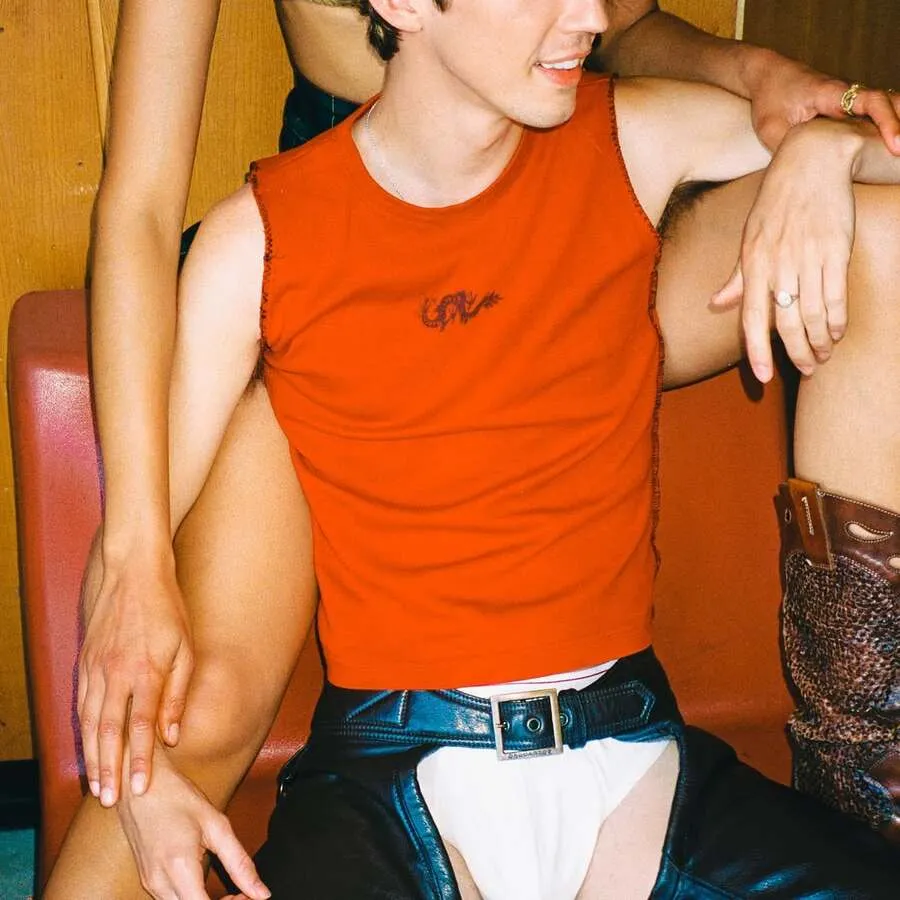
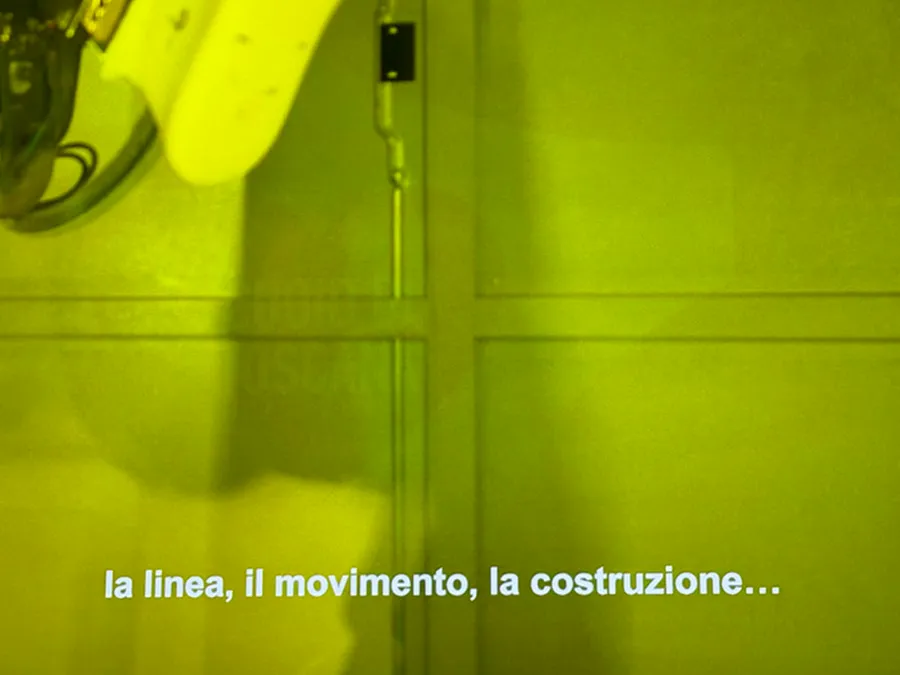
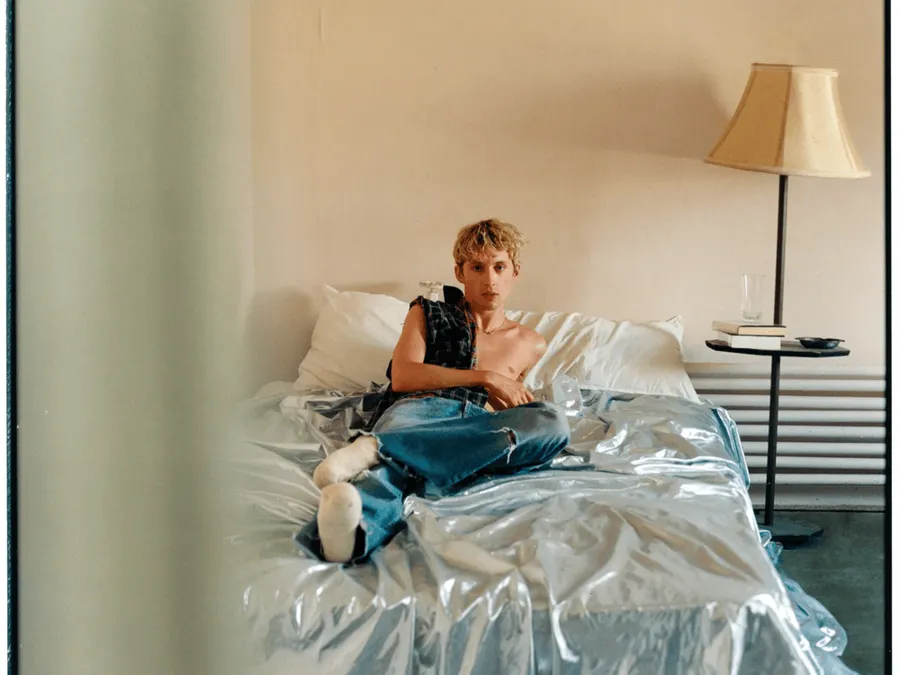
Gordon von Steiner has been exhibited his works at Palais Galliera in Paris, Fondazione Forma per la Fotografia in Milan, and Museum Bellerive in Zurich. The collaboration between Troye Sivan and Gordon von Steiner, which produced three videos for Sivan’s 2023 album Something to Give Each Other. Von Steiner had built his career in fashion film — campaigns for Chanel, Hermès, Louis Vuitton — and was championed early by photographer Steven Meisel. He was not commissioned to direct one video. He served as creative director for the entire album.
The visual identity of the record — its references to Wolfgang Tillmans-style portraiture, its archive fashion pulls, its treatment of queer desire through choreography and costume — was built with von Steiner as its primary architect across all the videos. Rush, Got Me Started, and One of Your Girls. Rush received a Grammy nomination for Best Music Video at the 2024 ceremony. The tour that followed required translating that visual language into a live experience. Sivan brought in Jean Paul Gaultier for a recreation of Madonna’s cone bra from the 1990 Blonde Ambition tour, Helmut Lang reissues, Prada from Sivan’s existing ambassadorship, and younger labels including JordanLuca and Ludovic de Saint Sernin.
The visual language of the videos became the visual language of the artist. That language came from fashion. What the collaboration introduced was not simply a look — it was a system, built by a director whose entire practice had been the construction of desire in fashion’s image.
The Question of Who Calls Whom
Sivan arrived at von Steiner’s collaboration already embedded in fashion. The Prada ambassadorship predated the album. The reverse is true of the collaborations that defined von Steiner’s earlier career: fashion brands commissioned him because he understood their visual grammar. In the Sivan collaboration, that grammar moved in a new direction — into music. The question this raises is not whether the resulting work is good. It’s whether the direction of influence has reversed.
Eli Russell Linnetz represents an earlier and more explicit version of this convergence. Linnetz is the founder of the Venice Beach fashion label ERL, recipient of the LVMH Karl Lagerfeld Prize in 2022, and a director whose credits include Kanye West’s Famous and Fade videos and the set design for Lady Gaga’s Enigma Las Vegas residency. His label launched in 2018 under the support of Comme des Garçons, following a meeting with its president, Adrian Joffe. His customers have included Dua Lipa and Justin Bieber. He has described beginning each fashion collection by imagining a character and a narrative — a cinematic process rather than a garment-based one.
Linnetz never crossed from fashion into music direction — he worked in both from the start. A music video and a fashion campaign are, in his practice, the same thing approached from two angles: the construction of a world, documented on film.
Charli XCX and the Album That Declared Fashion a Co-Author
The clearest current statement of where this tendency has arrived is the work of Charli XCX. The visual identity of Brat, released in June 2024, was developed by Brent David Freaney, Global Art Director of i-D magazine, alongside creative director Imogene Strauss. The work won the Grammy for Best Recording Package at the 2025 ceremony. The cover — a smudged lime green rectangle, blurred sans-serif typeface — became one of the most recognized images of 2024. Collins Dictionary named “brat” its word of the year. The color entered fashion, political campaigns, and meme culture simultaneously.
Charli also worked with Nick Knight during the Brat era, who shot a fashion film for her Vogue Singapore April 2024 cover — combining three-dimensional Gaussian scans with film — soundtracked to the instrumental of Von Dutch. The visual system around the album drew from fashion’s personnel and fashion’s visual methods, though the tone it produced — lo-res, deliberately unfinished, operating under what Freaney described as a principle of the “death of the finished state,” speaking at the Config 2026 design conference — ran against fashion’s usual investment in polish.
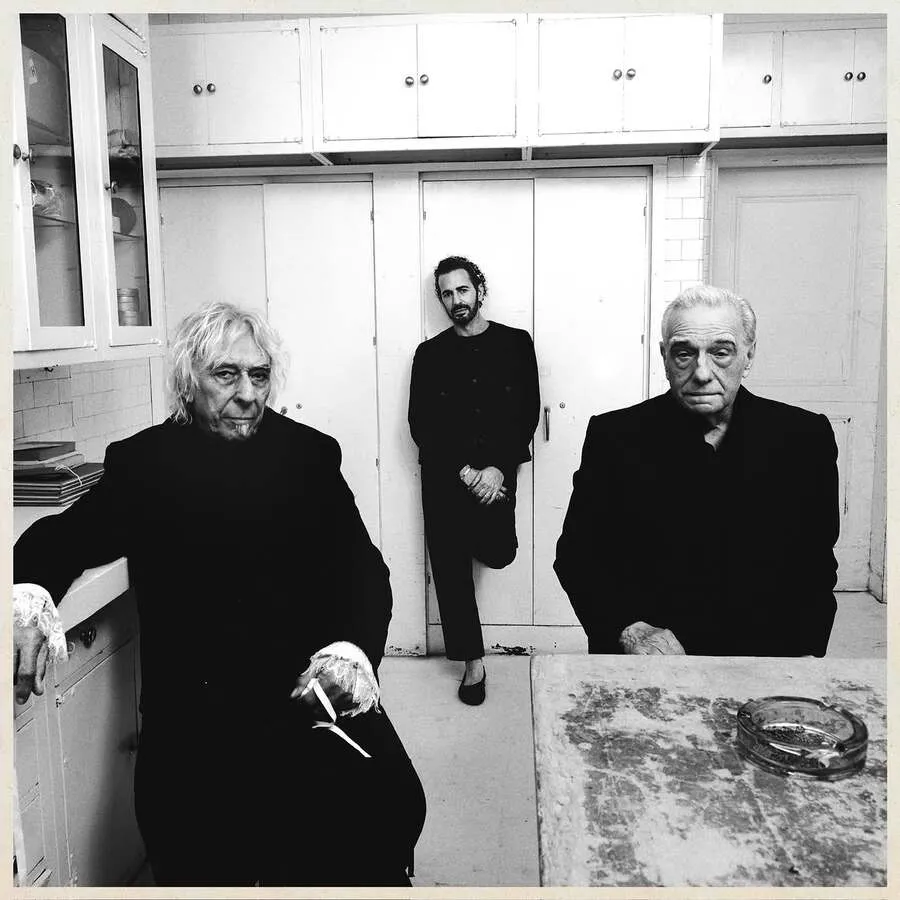
Her album, released July 24, 2026, is titled Music, Fashion, Film. Its cover features three figures: John Cale for music, Marc Jacobs for fashion, and Martin Scorsese for film. The naming is not incidental. It positions fashion as one of three coequal industries shaping the album’s identity. The single SS26 — titled with fashion-season shorthand — centers runway and backstage imagery in its video. Charli has been described as the muse of Saint Laurent creative director Anthony Vaccarello. She recorded the album in Paris during Fashion Week.
What the Music Videos Say — and Whether That Has Changed
The message did not leave when the fashion director arrived. Rush was about queer desire and the body. One of Your Girls documented a specific erotic dynamic between gay men and straight-identifying partners. Brat used songs like Rewind to examine what it costs to want mainstream success. The director’s identity does not determine what the work contains.
What the fashion-director collaborations have altered is distinct from the videos’ content. The change is in the origin of the visual grammar — who controls it, what system it answers to, and what economy of desirability it serves. In each case examined here, the artist arrived at the collaboration already embedded in fashion’s network. Sivan had Prada. Charli had Saint Laurent. The fashion director did not introduce a foreign visual language. He or she formalized one that the artist had already adopted and translated it into a video format.
What the Gaga-Knight collaboration established was a clear hierarchy: the artist held the vision, the fashion director served it. A decade later, that hierarchy has blurred. The question of which industry’s logic governs the frame — fashion’s or music’s — no longer has an obvious answer.
The Civic Question Pop Music Cannot Currently Answer
Pop music’s history as a vehicle for social and civic statement runs from the 1960s through hip-hop’s address of systemic inequality and into the present. The relationship between image-making and message is not new as a tension — Madonna’s videos were simultaneously fashion statements and cultural provocations, often indistinguishable between the two. What has changed is the institutional weight behind the image. A Gordon von Steiner brings the authority of Chanel and Hermès campaigns. A Brent David Freaney brings the visual system of i-D. The artist who commissions them acquires, along with the image, a form of cultural legitimacy that fashion’s economy produces and pop music now seeks.
Whether that legitimacy substitutes for, or coexists with, a broader civic or social message is a question the videos themselves leave open. Rush was queer, physical, and produced with fashion’s visual tools. These facts are not contradictory. But the logic of fashion — which organizes desire around the purchasable, the aspirational, the brand — is different from the logic of a protest anthem or a manifesto. The image that comes from fashion’s grammar is constructed, above all, to be wanted.
What Comes After the Fashion Director
Charli XCX named her next album after the three industries that have most defined her recent output. The title Music, Fashion, Film is both a description and a declaration. It acknowledges that the music can no longer be separated from the image system that surrounds it, and that the image system has more than one industry inside it. Film is there alongside fashion. So is music — named first, but no longer alone.
Ashley Fike